
How to Choose Bilingual-Friendly Baby Names

A baby name can feel perfect in one language and complicated in another.
It may sound beautiful when one parent says it, then become unfamiliar when the other side of the family tries. It may look clear on a birth announcement but become difficult on school forms. It may carry deep heritage, yet require explanation in the community where the child will grow up. Or it may be easy in the dominant language, while quietly giving up too much family meaning.
That is why bilingual naming is not simply a matter of finding a name “everyone can pronounce.”
Many families are choosing a name that must move between home, school, relatives, documents, travel, and more than one accent. The name may be spoken in one language at breakfast, another language at school, a different accent at a grandparent’s house, and a formal legal version on official records.
A bilingual-friendly name does not have to be the simplest international option available. It does not need to sound identical everywhere. It should not erase heritage for convenience.
A good bilingual name can be spoken, explained, loved, and carried with dignity across the child’s real language worlds.
If language, culture, or heritage is your starting point, Baby Names by Origin is the most natural place to begin. This guide moves from broad origin-based inspiration toward a practical decision: which name actually works for your family, your languages, and your child’s daily life?
For the wider naming process, Expert Baby Naming Guides for Choosing the Right Name can help you keep bilingual fit in proportion with sound, style, meaning, popularity, surname flow, spelling, nicknames, and long-term usability.

A Bilingual-Friendly Name Works in the Child’s Real Language Life
A bilingual-friendly baby name is not simply a name that appears in many countries.
Some international names still create pronunciation issues in certain languages. Some rare names travel well because their sounds are clear. Some heritage names require explanation but are worth choosing because they carry identity. Some names have different versions across languages, and that can become a strength rather than a flaw.
The practical test is whether the name can live well in the languages that will matter most to your child.
A name may look international in a list but feel awkward when relatives say it. Another may seem culturally specific at first, then prove easy once people hear it aloud.
A bilingual-friendly name should be speakable by the people who will use it often. That does not mean everyone needs native-level pronunciation. It means the name should not create constant stress, embarrassment, avoidance, or replacement in one important part of the child’s life.
Think about who will say the name regularly:
- Parents. The name needs to feel natural in the voices your child hears most.
- Siblings. Children will often simplify, shorten, or reshape a name quickly.
- Grandparents. Accent shifts may be affectionate; avoidance is a different signal.
- Teachers and classmates. The name should have a clear introduction path.
- Cousins and extended family. Family speech often creates the name’s emotional texture.
- Doctors and appointment staff. Practical systems reveal spelling and pronunciation friction.
- Community members. The name will exist outside the family’s controlled setting.
- Relatives abroad. A name may have a second life in another country or language.
A natural accent shift from one side of the family may be completely fine. When relatives avoid the name, replace it with something unrelated, or struggle every time, the choice needs more testing.
A bilingual name should feel like the child’s name in both language contexts, not like a compromise that belongs nowhere.
The Name Does Not Need to Sound Identical Everywhere
Many names naturally shift across languages and accents.
Maria may change vowel shape. Daniel may shift stress. Gabriel may sound softer or more syllabic depending on language. Clara and Sofia can vary across regions without losing their identity.
Variation is not automatically a problem. In many bilingual families, different pronunciations become part of the name’s life. A grandparent may say the name one way, school friends another, and parents another. The child may grow up recognizing all of them as affectionate and legitimate.
The important question is whether the differences feel acceptable.
Ask:
- Does the variation still sound like the same name?
- Does one version bother either parent?
- Does the pronunciation change the name’s meaning or associations?
- Would we be comfortable hearing both versions for years?
- Could the child introduce one preferred version clearly if they wanted to?
A bilingual-friendly name can have more than one sound. It simply needs a sound range the family can live with.
The strongest bilingual names usually balance three needs:
- Sound. Both language communities can say the name reasonably well, even with accent differences.
- Meaning or origin. The name respects something important: culture, family history, faith, values, language, or personal taste.
- Daily usability. The child can introduce, spell, and explain the name without constant strain.
Some names are strong in all three areas. Others ask parents to choose priorities. A name may be extremely meaningful but require more pronunciation guidance. Another may be easy but less connected to heritage. Another may work in speech but create spelling issues on forms.
A good bilingual decision is not always the easiest decision.
It is the one you can explain and support with confidence.

Choose for the Languages That Will Actually Shape the Child’s Life
It is easy to over-test bilingual names.
Parents may ask whether a name works in English, Spanish, French, Vietnamese, German, Arabic, Japanese, Italian, and every country the child might someday visit. That can make almost every name feel flawed.
A name does not need to work everywhere.
It needs to work in the child’s real language life.
Start with the languages and accents that will matter most:
- The language spoken at home.
- The language used at school or in the wider community.
- The language spoken by grandparents or close relatives.
- The language used on official documents.
- A heritage language you want the child to feel connected to.
- A likely future country or community, when migration or frequent travel is realistic.
For many families, two languages matter most. For others, there may be three: one parent’s language, the other parent’s language, and the dominant community language. Once you identify the real settings, the decision becomes clearer.
A name does not have to be easy for every stranger. It should be manageable for the people and systems that will shape the child’s everyday life.
This overlaps with the broader decision in How to Choose a Name That Works in Two Languages, but bilingual-friendly naming also includes family emotion, spelling, nicknames, surname fit, and identity.

Decide Which Language Leads When the Name Cannot Do Everything
Some bilingual names create tension because one language needs to lead.
A name may be perfect in the heritage language but difficult in the school language. Another may be easy at school but feel weak or disconnected in family speech. A third may sound good in both languages while losing the meaning or cultural tie you hoped for.
This is not only a technical problem.
It is a values decision.
Ask:
- Is heritage pronunciation more important than mainstream ease?
- Is school usability more important than preserving an original spelling?
- Does one side of the family need more representation in the name?
- Would a middle name solve part of the tension?
- Are we choosing this name from love, pressure, or avoidance?
When family heritage matters but feels difficult to balance, read How to Honor Heritage Without Forcing Tradition and How to Use Family Heritage as a Starting Point for Baby Names. Those decisions are rarely solved by sound alone.
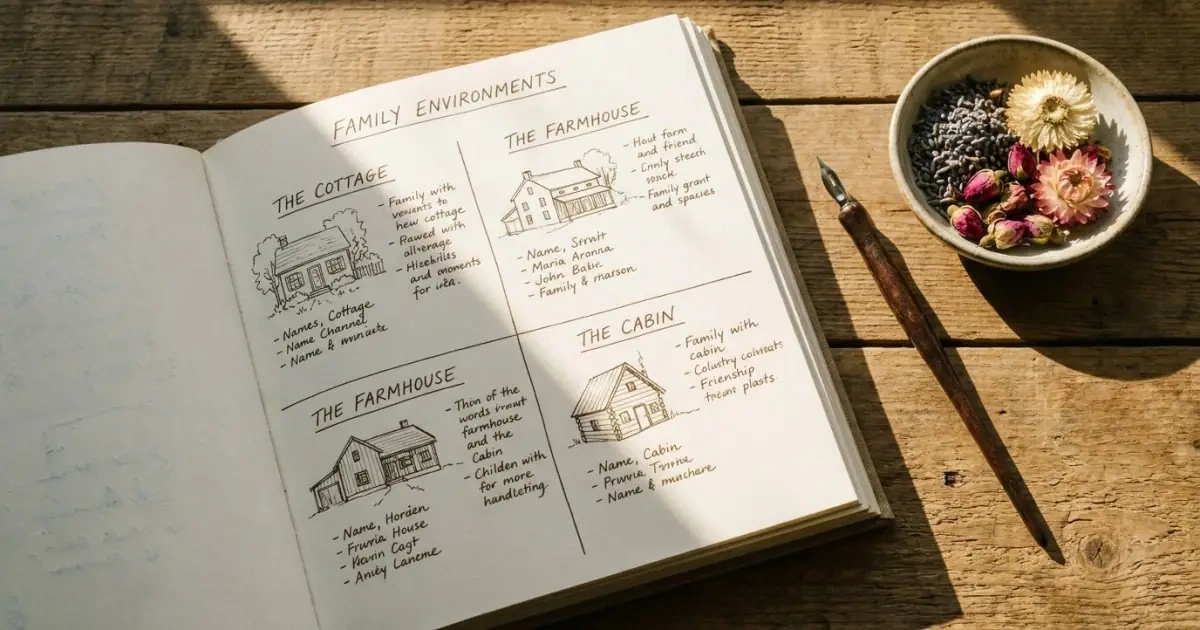
Build a Two-Language Use Map Before You Judge the Name
A simple use map can reveal which name problems are real and which are theoretical.
Use this table for each serious name on your shortlist.
| Setting | Language Used | Name Form Tested | What to Notice |
| Home | Language A | Full name and family nickname | Natural family speech |
| School | Language B | First name + surname | Clarity and introduction ease |
| Grandparents | Language A or B | Spoken name and affectionate nickname | Comfort, accent shifts, avoidance |
| Official forms | Legal/document language | Spelling, accents, surname order | System friction |
| Travel or extended family | Both languages | Pronunciation and recognition | Portability |
A name may not be perfect in every row. That is normal. But when a name fails in the setting that matters most to your family, pay attention.
If you are still working from a long list, use How to Build a Baby Name Shortlist first. The bilingual use map works best once the options are serious.

Pronunciation Checks Should Be Practical, Not Punitive
Pronunciation is often the first concern in bilingual naming, but it needs to be handled gently.
Different languages have different sound systems. A relative who cannot say a sound is not being careless. A teacher who guesses a pronunciation may be using the rules of their own language. A child may hear their name shift slightly depending on who is speaking.
The goal is not perfect pronunciation everywhere.
The goal is manageable pronunciation in the child’s real world.
Test sounds that may not exist in both languages:
- R sounds. Rory can shift strongly across accents because of its repeated R sounds.
- TH sounds. Theo may change in languages that do not use the English TH.
- J sounds. The same letter may carry very different sounds across languages.
- V and W distinctions. Victor may change in languages where those sounds overlap.
- Final consonants. Grace may soften or change where final clusters are less natural.
- Consonant clusters. Several consonants in a row can make a name harder to repeat.
- Vowel length. Short and long vowels may not map neatly between languages.
- Rolled or tapped sounds. A sound that feels easy in one language may be difficult in another.
- Tones. Tonal languages may reshape the name in ways parents should hear early.
These names are not bad choices. They simply need to be heard in the languages that matter to your family.
Say the name naturally in both languages. Then ask someone else to say it naturally. Do not overcorrect the first attempt. Listen for what the name becomes.
For a deeper sound process, use How to Evaluate Pronunciation Ease, How to Choose Names That Work Across Different Accents, and How to Say a Baby Name Out Loud and Hear Its Real Flow.

Pronunciation Variation Can Feel Affectionate or Frustrating
Some pronunciation differences are charming. They make the name feel at home in more than one language.
Others change the name so much that one parent feels they are hearing a different name.
A small vowel shift may be easy to accept. A stress shift may even sound beautiful. But when the name loses a key sound, becomes confused with another name, or turns into a word with an unwanted meaning, the variation may be too much.
Ask:
- Does the changed pronunciation still feel affectionate?
- Does it bother one parent more than the other?
- Will the child need to correct it constantly?
- Does the name become another name entirely?
- Is there a nickname that works better across both languages?
Bilingual naming often requires accepting some variation. The question is whether the variation feels livable.
When you ask native speakers for feedback, do not begin with taste approval. “Do you like this name?” invites personal associations, age impressions, trends, and family memories. Useful feedback is more precise.
Ask:
- “How would you naturally say this?”
- “Is this hard to pronounce?”
- “Does it sound like another word?”
- “Would people shorten it?”
- “Can you repeat it after hearing it once?”
- “Does it sound old-fashioned, modern, formal, or childish in your language?”
You can still choose the name even if not everyone loves it. You should know how it sounds to native speakers before you decide.
Spelling Must Be Intentional Across Languages
A bilingual name has to be heard, but it also has to be read.
Sometimes pronunciation is manageable once people hear it, while spelling creates confusion. Sometimes spelling is meaningful in one language and misleading in another. Sometimes official systems make accents, hyphens, apostrophes, or non-English letters harder than parents expected.
Spelling does not need to be effortless.
It needs to be intentional.
Letter-sound rules differ across languages. Javier may be intuitive in Spanish but misread by English speakers unfamiliar with it. Giovanni carries Italian sound rules. Cian, Niamh, Aoife, and Saoirse may be meaningful and familiar in Irish contexts but require teaching elsewhere.
That teaching burden may be completely worth it.
The question is not whether the spelling will confuse some people. Many good names do. The question is whether the spelling matters enough to preserve, and whether you are comfortable helping the child teach it.
A child can learn to say, “It’s Aoife, pronounced EE-fa,” or “It’s Niamh, pronounced NEEV,” with confidence when the family treats the name as something worth explaining rather than apologizing for.
Before simplifying a culturally rooted spelling, ask:
- Does this spelling carry family, cultural, or historical meaning?
- Would simplifying it feel helpful or like a loss?
- Can we teach the spelling and pronunciation confidently?
- Will the child have a positive story behind the name?
- Is the correction manageable in daily life?

Phonetic Spellings Can Help, but They May Change the Name’s Identity
Some parents choose a more phonetic spelling for daily ease. Others choose the original spelling because it carries heritage.
Both choices can be valid.
Compare decisions like:
- Niamh vs. Neve. One preserves Irish spelling; the other reduces English-reading friction.
- Ciaran vs. Kieran. Both may be usable, but the visual identity changes.
- Sofia vs. Sophia. Sofia may feel more European or Latin-language aligned; Sophia may feel more familiar in English-dominant settings.
- Sara vs. Sarah. Sara can feel streamlined and cross-language; Sarah carries a different English-language familiarity.
- Isabel vs. Isabelle. Isabel may feel leaner and more international; Isabelle may read more French or decorative depending on context.
A phonetic or more familiar spelling may reduce correction. It may also make the name feel less connected to a specific language tradition. An original spelling may preserve identity while creating more explanation.
There is no universal answer.
If spelling is one of the harder parts of your decision, use How to Avoid Spelling Regret. When pronunciation and spelling are both in tension, How to Choose Names That Work Across Different Accents can help you separate accent variation from spelling burden.
Check Document, Keyboard, and Form Realities Before Finalizing
Some names include accents, diacritics, hyphens, apostrophes, or letters that may not travel smoothly through every system.
Examples include:
- José.
- Zoë.
- Chloé.
- Renée.
- Oisín.
Some parents keep diacritics legally. Some use them socially but not on documents. Some choose the unaccented version because official systems in their country are inconsistent. Others feel the marks are part of the name and worth preserving.
Before deciding, check:
- Birth registration rules where you live.
- Passport and travel document conventions.
- School system forms.
- Keyboard access.
- Whether relatives will use the marks.
- Whether dropping the mark changes pronunciation or meaning.
A bilingual-friendly name should work emotionally and practically.

Names That Travel Easily Still Need Personality
Some names travel easily because their sounds are short, open, and familiar in many languages. Others travel because they have long international use. Some feel modern and global without losing individual style.
This does not mean these names are automatically better. It means they illustrate features that often help bilingual names work.
Names like Maya, Lina, Nina, Mila, Leo, Noah, Eva, and Luca bridge linguistic gaps by avoiding heavy consonant clusters in favor of short, open sounds. That brevity makes them easy to repeat, and it often lets them anchor longer surnames across different language settings.
The tradeoff is familiarity. Noah or Leo may be easy partly because many people already know them. That can be an advantage when recognition matters and a drawback when distinctiveness matters more. Use Baby Names by Popularity when you need to compare familiar international names with rarer options.
Classic cross-language names carry another kind of ease. Anna, Maria, Daniel, David, Sara, Adam, Elena, and Gabriel have long use across religious, historical, or linguistic traditions. Familiarity helps with recognition and pronunciation, though it may reduce surprise. Anna may feel timeless and clear, not unusual. Daniel may be widely recognized, not especially distinctive.
That is not a weakness unless originality is one of your main goals. If you are deciding between familiar and distinctive, use Popular vs Rare Baby Names: How to Decide to clarify the tradeoff.

International-Style Names Can Feel Flexible Without Becoming Plain
Some names feel globally stylish without being too difficult to pronounce.
Amara, Nora, Mira, Elio, Mateo, Hugo, Isabel, and Naomi often appeal to parents who want something less plain than the most widely shared classics, but still usable across language lines.
Some carry strong origin ties. Others feel broadly international.
The key is to test each name in your actual languages. Mateo may feel stylish in English-speaking communities and familiar in Spanish-speaking ones. Hugo may be easy in several European languages but sound different depending on whether the H is pronounced. Naomi may shift stress across speakers.
If you are comparing feel as much as origin, use Baby Names by Style alongside origin research. For long-term use, pair this decision with How to Choose a Name That Ages Well.

Bilingual-Friendly Should Not Mean Culturally Empty
Ease matters.
It should not be the only measure.
Sometimes parents feel pressure to choose the name that is easiest for the dominant language: the school language, the workplace language, the country where the child will live. That can be sensible. But if heritage, faith, family memory, or language pride matters to you, ease should not be allowed to erase everything else.
A name can be bilingual-friendly and still carry identity.
A heritage name may take more teaching, but it may also give the child a strong connection to family history. It may honor grandparents. It may preserve a language sound. It may reflect faith, place, migration, or cultural continuity.
Choosing only for convenience can create a different kind of regret later.
Families solve this tension in different ways:
- A familiar first name with a heritage middle.
- A heritage first name with an easier everyday nickname.
- A name used in both cultures.
- A related form across languages.
- A first name from one parent’s language and a middle name from the other.
- A family surname used in the middle-name position.
When meaning is part of your decision, explore Baby Names by Theme and How to Choose a Baby Name by Meaning. If the name is tied to faith or sacred tradition, How to Choose Spiritual and Sacred Baby Names can help you weigh meaning against daily usability.

Decide What You Want the Name to Carry
Bilingual families often have more than one naming goal.
You might want the name to carry:
- One parent’s heritage.
- Both parents’ languages.
- A religious tradition.
- A family surname.
- A shared meaning.
- A sound that works internationally.
- A name that feels easy in the school community.
- A middle name that protects cultural depth.
Different structures solve different problems. A first name may come from one parent’s heritage, while the middle name honors the other. A shared name may exist in both cultures. A familiar first name may be paired with a distinctive heritage middle. A heritage first name may be supported by a simple everyday nickname.
When the emotional priority is unclear, read How to Choose a Baby Name by Origin, How to Choose a Middle Name, and How to Balance Meaning, Sound, and Style in a Baby Name.
Sometimes one first name cannot carry every need. The first name may need to be easy in the school language; the middle name can hold heritage. Or the first name may be a heritage name, while the middle gives the child a familiar option later.
This can reduce pressure on the first name without reducing meaning.
For more on that structure, use How Middle Names Work When You Are Building a Full Name and How to Build a First-Middle-Surname Combination That Flows.

Related Forms Across Languages Need Careful Handling
Some bilingual families do not need to invent a compromise because the name already has relatives across languages.
These related forms can be useful, but they need care. Not every similar-looking name is an exact equivalent. Not every family wants multiple versions in use. Not every version carries the same feeling.
Many familiar names have forms in different languages:
- John, Juan, Jean, and Giovanni.
- Mary, Maria, and Marie.
- James, Jaime, and Diego.
- Helen, Elena, and Helena.
- Nicholas and Nicolas.
A family might choose one official form and let relatives use a cultural version. Or they might choose the form that best fits the child’s primary language environment. Both approaches can work.
What matters is intention.
Some children grow up comfortably with different name forms in different family contexts. A child may be Maria at school and Mari at home. Gabriel may be Gabe in one language and Gabi in another. Isabella may be Bella to one side of the family and Isa to another.
That can feel rich and affectionate when everyone understands the pattern. It can feel confusing when no one agrees on what the child is actually called.
Ask:
- Do we want one consistent name everywhere?
- Are we comfortable with family-language variants?
- Which version will appear on legal documents?
- Which version will school use?
- Which version do we expect the child to introduce?
- Are the different forms equally respectful?
Variation is not a problem when it is intentional.
Be careful with forms that are not exact equivalents. Similar names may not share the same origin, meaning, or cultural role. When meaning, religious tradition, or family honor matters, verify the connection before treating one name as a substitute for another.
A bilingual name does not have to pass an academic test. But if the meaning matters to the family story, check it before building the story around it.
Nicknames Can Bridge Languages or Create New Friction
Nicknames can either solve bilingual naming problems or create new ones.
A formal name may be difficult in one language, while the nickname is easy. A nickname may feel sweet in one culture and childish in another. A short form may change gender impression, age feel, or social tone depending on language.
That is why nickname testing is essential in bilingual naming.
Some full names are flexible because they offer multiple short forms:
- Alexander → Alex, Xander, Sasha.
- Isabella → Isa, Bella, Izzy.
- Gabriel → Gabe, Gabi.
- Daniel → Dan, Dani.
- Victoria → Vicky, Tori, Vika.
A nickname can make the name easier for relatives, more natural in school, or more affectionate at home. It can also give the child options later.
Isabella may feel familiar across languages, while Isa may be easier in some family speech. Gabriel may be pronounced differently across languages, but Gabi or Gabe may create a comfortable everyday form depending on the community.
Some nicknames shift tone across cultures. A nickname that feels natural in one language may feel too childish, too informal, or gendered differently in another.
Ask native speakers:
- Does this nickname sound like a child’s name or an adult’s name?
- Is it usually used for boys, girls, or both in your language?
- Does it sound affectionate, silly, formal, or old-fashioned?
- Does it resemble another word?
- Would a teenager or adult use it comfortably?
A nickname can be a useful bridge, but only when it works in the settings where it will actually be used.
Do not only test the formal name. Say the nickname with the surname in each language or accent. Listen for rhyme, awkward transitions, repeated sounds, or unintended words. A full name may be smooth while the nickname becomes too abrupt or too cute.
For deeper support, read How to Check Nickname Potential Before You Choose and How to Say a Baby Name Out Loud and Hear Its Real Flow.

Surname Fit Changes the Bilingual Name’s Message
The surname often carries its own cultural and linguistic weight.
A first name may match the surname’s origin, balance it, contrast with it, or represent the other side of the family. None of these patterns is automatically better. The right choice depends on what you want the full name to express.
When the surname is strongly tied to one language, parents may choose:
- A first name from the same origin for cohesion.
- A cross-language first name for balance.
- A name from the other parent’s heritage for representation.
- A familiar first name with a heritage middle.
- A heritage first name that makes the full name more culturally specific.
A Spanish surname may pair beautifully with a Spanish first name, but it may also work with an international name like Maya, Leo, Naomi, or Daniel. A strongly Irish surname may make Niamh feel cohesive, while a cross-language first name may create easier everyday use.
The surname does not dictate the first name.
It simply changes how the full name reads.
When surname order may change, test both versions aloud and in writing. Some cultures use surname first. Others use given name first. Some families switch order depending on country, document, or language context.
Check:
- School forms.
- Passports.
- Official documents.
- Family announcements.
- Email-style written forms.
- How relatives will say the full name.
A name that sounds smooth in one order may feel different in another. This does not have to stop you, but it is better to know before the birth certificate is complete.
Also ask native speakers about:
- Slang.
- Rude meanings.
- Awkward rhymes.
- Brand names.
- Famous associations.
- Words that sound nearly identical.
- Phrases created by first name plus surname.
For fuller usability, use How to Match a First Name With Your Surname, How to Check Initials, Monograms, and Awkward Combinations, and How to Use Syllable Flow to Choose a Better Name.
Popularity Can Shift Dramatically Across Countries and Communities
A bilingual name may feel very different depending on where you are.
A name that feels stylish and fresh in one language may be ordinary in another. A name that feels classic in one country may feel dated elsewhere. A name that seems rare in your current community may be highly popular among relatives abroad.
This matters because popularity affects how people hear a name.
Mateo may feel stylish in English-speaking contexts but familiar in Spanish-speaking ones. Luca may feel international and modern in one place, standard in another. Maya, Leo, Noah, and Sofia can have very different popularity levels depending on country and community.
That difference is not necessarily a problem. It may even be useful. A name can feel accessible in one setting and more distinctive in another.
Ask:
- Where will the child mostly live?
- Which peer group will shape the child’s name experience?
- Is the name common among cousins or classmates?
- Do we want familiar, distinctive, or somewhere in between?
- Does popularity help relatives recognize the name, or make it feel overused?
Popularity should be judged in the child’s real environment, not only through one national list.
A name often becomes international because many people recognize it. That recognition can help. Teachers may say it more confidently. Relatives may feel familiar with it. The child may spend less time correcting pronunciation.
When a name is extremely common in both communities, parents may want more individuality through a middle name, nickname, variant, or meaningful family connection.
Use How to Read Baby Name Popularity Data, Popular vs Rare Baby Names: How to Decide, and Baby Names by Popularity to compare recognition with distinctiveness.

Real-Life Tests for Bilingual-Friendly Names
A bilingual name should be tested in real situations, not only compared in a list.
The most useful tests are simple. They show how the name behaves when spoken, written, shortened, and explained.
The two-language introduction test
Say the name in both languages using sentences like:
- “Hi, my name is ___.”
- “This is our baby, ___.”
- “We named her ___.”
- “We named him ___.”
- “This is ___ [surname].”
Then repeat the same idea in the other language.
Listen for whether the name feels natural as self-introduction, family introduction, and full-name introduction. A name may sound good when parents say it, but feel awkward when imagined from the child’s point of view.
The grandparent test
Ask grandparents or older relatives to say the name naturally.
Listen for:
- Whether they can say it.
- Whether they change it.
- Whether they create a nickname.
- Whether the name sounds affectionate in their language.
- Whether they avoid saying it.
Do not treat every accent difference as a problem. The goal is to know whether the name can become part of family speech.
The school form test
Write the name exactly as it would appear on school forms.
Check:
- Spelling.
- Diacritics.
- Initials.
- Surname order.
- Hyphenation.
- Middle names.
- Whether the child will need to explain pronunciation every year.
This test is not meant to scare you away from meaningful names. It simply makes the practical side visible.
The playground and passport test
The playground test asks whether the name can be called aloud easily. The passport test asks whether the name can move through official systems clearly.
Both matter.
A name that is easy to call but difficult to document may create administrative friction. A name that looks beautiful on a passport but feels hard to call every day may create spoken friction.
For a fuller practical check, read How to Test a Baby Name Before Finalizing It.
Mistakes That Make Bilingual Naming Harder Than It Needs to Be
Bilingual naming is emotional because it touches language, family, identity, and belonging. Most mistakes come from trying to solve only one part of the problem.
A stronger decision considers ease and meaning together.
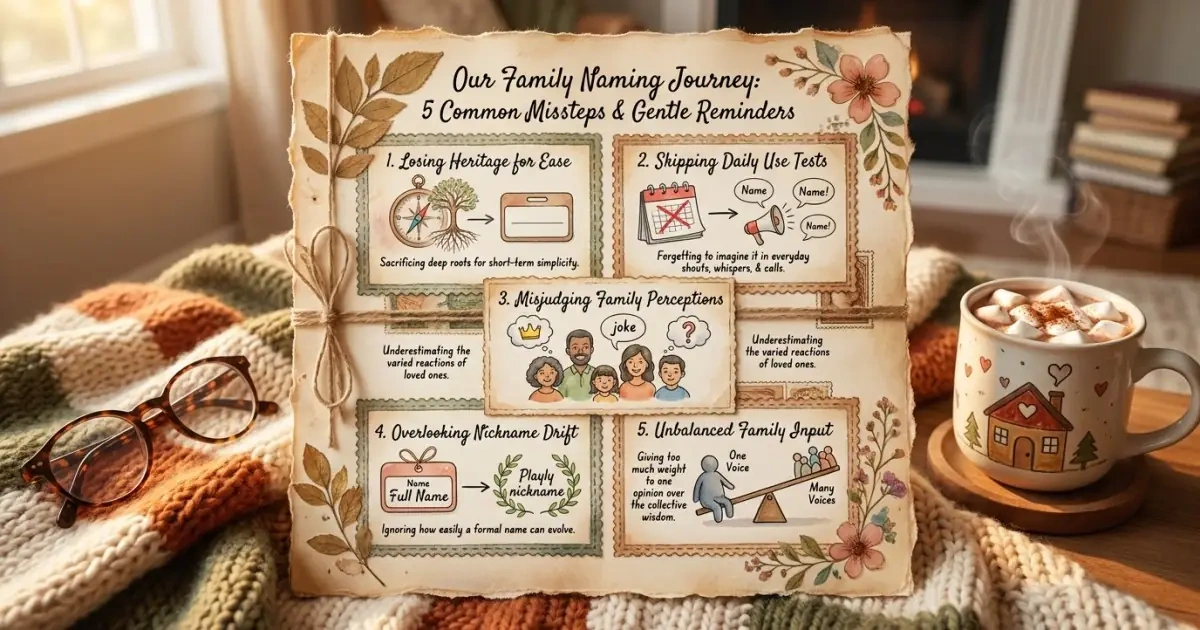
Choosing the easiest name and later regretting the lost heritage
Ease is useful. It should not be dismissed.
But when heritage matters deeply, choosing only the easiest name can lead to regret. Parents sometimes avoid a meaningful name because they fear correction, then later feel the chosen name does not carry enough family identity.
Before abandoning a heritage name, consider:
- A heritage middle name.
- A related variant.
- A nickname that travels better.
- A simpler spelling with the same root.
- A first name from one language and a middle from another.
Convenience is one factor. It should not be the only factor.
Choosing the most authentic form without testing daily use
The opposite mistake is choosing the most authentic form without considering the child’s daily experience.
Authenticity matters.
So does teachability.
When a name will be constantly misread, misspelled, or avoided, decide whether the meaning is strong enough to carry that friction. Sometimes it is. Sometimes a variant, middle-name placement, or nickname gives the child a better balance.
Assuming both families hear the name the same way
The same spelling can create different sounds, associations, or age impressions.
A name may feel elegant to one side of the family and old-fashioned to another. It may feel gender-neutral in one language and strongly gendered in another. It may sound like a beloved relative in one culture and a dated celebrity in another.
Ask before you assume.
Ignoring nickname drift
Different relatives may create different nicknames.
That can be sweet, but it can also surprise parents. A name chosen for its formal cross-language elegance may quickly become a nickname you did not expect.
Test likely nicknames early. Decide which variations are welcome and which ones you will gently discourage.
Letting one side of the family “win” the name
Bilingual naming can bring hidden emotional tension.
One parent may feel their language is being pushed aside. One side of the family may expect tradition. Another may want ease in the dominant community. A name can become a symbol of whose culture matters more.
Try not to frame the decision as one side winning.
Middle names, shared meanings, related forms, and family nicknames can all help create balance. If the naming conversation is becoming tense, use How to Choose a Name With Your Partner to reset the decision around shared priorities.

A Practical Framework for Choosing Between Bilingual Name Options
Once you have a shortlist, compare names in a structured way.
This prevents one attractive feature from taking over the whole decision. A name may sound beautiful but be hard to spell. Another may be easy but lack meaning. Another may honor heritage but create pronunciation strain.
The goal is not to find a perfect score.
The goal is to see the tradeoffs clearly.
Identify the language contexts that matter most
Write down the two or three language settings that will shape the child’s life.
Ask:
- What language is spoken at home?
- What language will school or community use?
- What language do grandparents use?
- What legal or document system will handle the name?
- Is there a heritage language we want the child to feel connected to?
Do not over-expand the list. Focus on the real contexts.
Rate each name for sound, spelling, meaning, and daily use
Use a simple table.
| Name | Sound in Language A | Sound in Language B | Spelling Ease | Meaning/Origin | Daily Use |
| Name option 1 | |||||
| Name option 2 | |||||
| Name option 3 |
Mark each box as strong, acceptable, uncertain, or difficult.
A name does not need to be strong in every box. The difficult boxes simply need to be ones you are willing to handle.
Decide what kind of bilingual fit you want
There are several ways a name can be bilingual-friendly.
You might choose:
- The same pronunciation in both languages.
- Acceptable pronunciation variation.
- One legal name and one family nickname.
- A heritage first name with a familiar middle.
- A familiar first name with a heritage middle.
- Related forms used in different family contexts.
- A short international name with a culturally specific surname.
Once you know which model you want, it becomes easier to judge names fairly.
Test the full name with surname and nickname
Say:
- First name + surname in Language A.
- First name + surname in Language B.
- Full name with middle.
- Nickname + surname.
- Sibling names together, when relevant.
- Surname-first order, when relevant.
This is where sound problems often appear. Use How to Match a First Name With Your Surname and How to Use Syllable Flow to Choose a Better Name when the rhythm feels uncertain.
Choose the name you can explain with confidence
Bilingual names often come with a short explanation.
You may need to say:
- “This is how we pronounce it.”
- “This spelling matters to us because…”
- “It honors this side of the family.”
- “It works in both languages, even though the pronunciation shifts slightly.”
- “We use this nickname at home.”
The right name is one you can explain without sounding apologetic.
When you can say the name clearly, teach it kindly, and connect it to a reason you still trust, that is a strong sign.

Common Questions About Choosing Bilingual-Friendly Baby Names
Does a bilingual baby name have to sound the same in both languages?
No. Identical pronunciation can be helpful, but it is not required. Many bilingual names shift naturally across languages. What matters is whether the variation still feels acceptable and recognizable.
Should we choose the easier spelling or the heritage spelling?
It depends on what matters more for your family: daily ease, cultural identity, family tradition, pronunciation clarity, or official-document simplicity. A middle name, variant, or nickname can help when you feel pulled in both directions.
What if grandparents cannot pronounce the name?
First, test whether they can learn it with time. If the sound remains very difficult, consider a family nickname or a related form. Then decide whether the friction is acceptable based on how important the name is to you.
Are international names too common?
Some international names are popular because they work well across languages. That can be an advantage. If distinctiveness matters, consider a less common middle name, a heritage variant, or a nickname with more personality.
Can we use different nicknames in different languages?
Yes, when the family is comfortable with variation. Different nicknames can help the child feel connected to both sides of the family. The key is making sure the child still has a clear legal name and a main introduction form.

Where to Go Next When Comparing Bilingual Baby Names
A bilingual-friendly baby name is not necessarily the easiest name. It is the name that can be spoken, explained, loved, and carried across the languages that will actually shape your child’s life.
That may be a simple international name, a classic used in both cultures, a heritage name that needs teaching, a first name from one language and a middle name from another, or two affectionate versions used by different relatives.
Let your exact concern shape your next move. If language roots anchor your choice, return to Baby Names by Origin; if aesthetic tone is paramount, Baby Names by Style provides a clearer frame. Balance familiarity and distinction through Baby Names by Popularity, and make sure symbolism remains usable with Baby Names by Theme.
Finally, refine specific friction points — whether resolving cross-cultural flow through How to Choose a Name That Works in Two Languages, smoothing accent variation with How to Choose Names That Work Across Different Accents, or verifying written elegance through How to Avoid Spelling Regret.
The right bilingual name does not have to make every listener comfortable immediately. It should make enough room for the child’s languages, family, identity, and future self to belong.