
How to Check Initials, Monograms, and Awkward Combinations
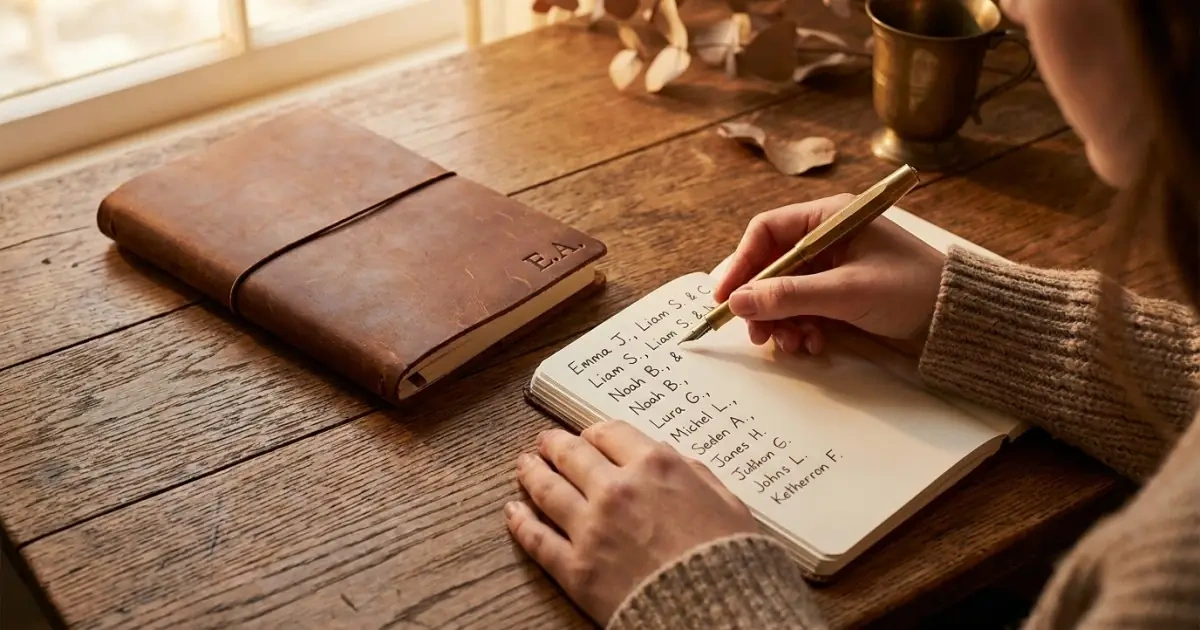
A name can sound right until you see the initials.
The first name may feel beautiful. The middle name may carry family meaning. The surname may flow well when you say the whole name aloud. Then you write the letters together and notice something you did not hear before: an unwanted word, a strange monogram, an awkward school-login format, or a full name that sounds more like a phrase than a person.
This is a small check.
It can save a lot of future annoyance.
Parents often spend months comparing first names and middle names, then forget to test how the full legal name behaves in shortened forms. A child’s name appears on school labels, medical forms, certificates, backpacks, sports rosters, digital portals, email addresses, jewelry, stationery, and official records. The name will not always appear in its prettiest full version.
That does not mean initials should take over the decision. Most initials are barely noticed. Many monograms will never be used. Almost any name can be twisted into something if someone tries hard enough.
The goal is not to eliminate every possible joke.
The goal is to catch the obvious, repeated, easy-to-notice combinations before the name becomes official.
Because initials and monograms affect the style of the whole name, not just the technical details, it helps to compare first and middle options through Baby Names by Style. A full name can feel polished, formal, playful, too branded, too matchy, or unexpectedly awkward depending on how the pieces work together.
For the broader naming path, Expert Baby Naming Guides for Choosing the Right Name can help you keep initials in proportion with meaning, sound, surname fit, spelling, popularity, and long-term confidence.
Initials are not the heart of the naming decision.
They are the final safety check.

Initials Matter Most When They Are Obvious, Repeated, or Likely to Be Used
Initials do not need to be perfect.
A slightly clunky set of letters is usually not a problem. A monogram you do not love may not matter if your family never uses monograms. A full set of initials that appears only on occasional documents may be less important than the first name and surname your child uses every day.
Some combinations still deserve attention.
A set of initials that spells an obvious unwanted word, creates a widely recognized abbreviation you dislike, or forms a digital login that looks awkward is worth pausing over. The same is true when the first name and surname create a pun, phrase, rhyme, or sound collision that people are likely to notice.
A good initials check looks at several forms:
- First-last initials.
- First-middle-last initials.
- Monogram order.
- First initial plus surname.
- First name plus last initial.
- Full name written out.
- Sibling initials.
- Likely school, email, and username formats.
The point is not perfect lettering.
The point is no obvious regret.
This matters because initials are often one of the last details parents notice. By the time they see a problem, they may already be emotionally attached to the name. A calm check early in the process makes the decision easier and less reactive.
If you are close to finalizing the full name, use this guide alongside How to Test a Baby Name Before Finalizing It and How to Avoid Baby Name Regret. When the concern is mainly how the first name meets the surname, start with How to Match a First Name With Your Surname.
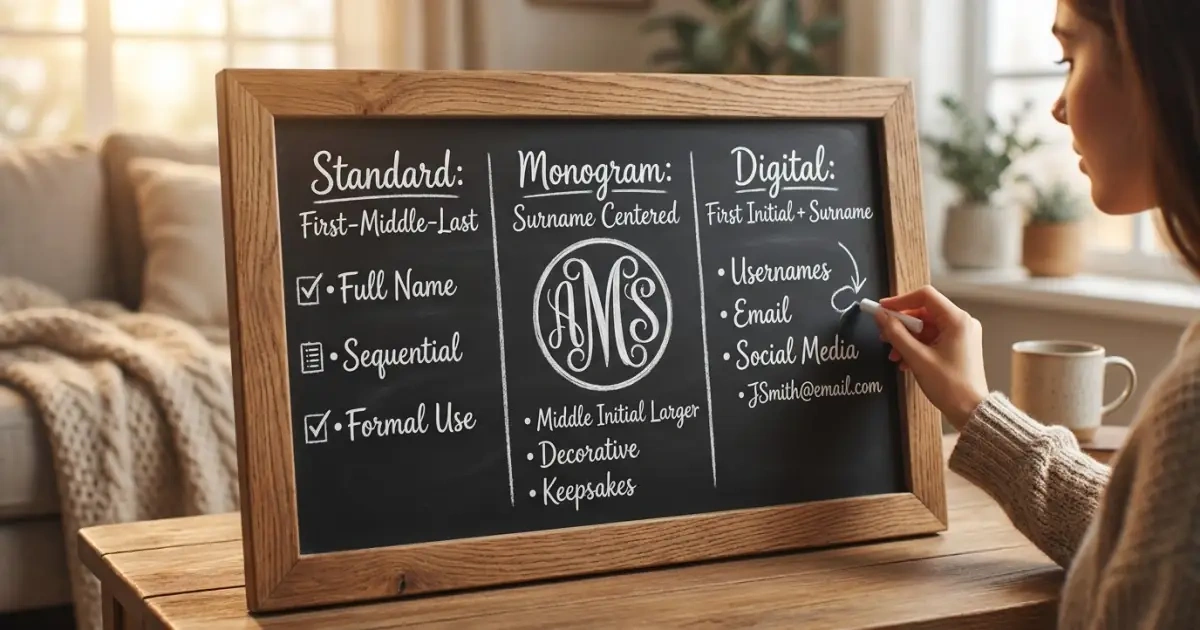
Standard Initials, First-Last Initials, Monograms, and Digital Formats Do Different Jobs
A useful initials check should cover more than one abbreviation format.
Different settings use different versions of a name. Each version can create a different issue.
| Format to Check | Usual Order | Where It Appears | What Can Go Wrong |
| Standard initials | First-middle-last | Forms, labels, records, certificates | May spell an unwanted word or abbreviation |
| First-last initials | First-last | Classrooms, sports teams, school labels | May duplicate a sibling, parent, or classmate |
| Monogram order | Often first-last-middle, with surname centered | Keepsakes, jewelry, bags, blankets, stationery | May create a different visual sequence than expected |
| Digital format | Varies by system | Email, school portals, workplace accounts | May create awkward strings or hard-to-read usernames |
| First name plus last initial | First name + surname initial | Classrooms, friend groups, activity rosters | May become the child’s practical school label |
These formats should not carry equal weight.
Prioritize the versions your child is likely to use most. First name plus surname, first initial plus surname, and first name plus last initial usually matter more than decorative monograms unless your family uses monograms often.
Standard Initials Are the First Acronym Check
Standard initials usually follow first-middle-last order.
If the full name is Amelia Rose Surname, the standard initials would be A.R.S. This is the order most people think of first because it matches the legal-name sequence.
Check:
- Do the initials spell a recognizable word?
- Do they create an abbreviation you dislike?
- Do they look fine on forms, labels, and school records?
- Would you feel comfortable seeing them printed on documents?
- Does changing the middle name solve the issue without disturbing the first name?
Most standard initials will not matter much in daily life. But when they form something very noticeable, reconsider the combination before you become too attached.
Middle names often create the easiest fix. If the first name and surname are right, changing the middle initial can remove an awkward acronym without losing the name’s core identity.
For a wider look at how first, middle, and surname pieces work together, read How Middle Names Work When You Are Building a Full Name.

First-Last Initials Are Often More Visible Than Full Initials
First-last initials are easy to overlook because parents focus on the full legal name.
In daily life, they may be more visible.
Children may be labeled by first name plus last initial in classrooms. Sports rosters, cubbies, school accounts, and casual notes may use only the first and last initials. Shared first names make last initials even more common.
Check:
- Does the first-last pairing create anything awkward?
- Does it duplicate a sibling or parent?
- Will the child likely be known by first name plus last initial?
- Does the pairing feel clean and easy to use?
- Could a popular first name plus a common last initial create classroom overlap?
A familiar first name with a common surname initial is not automatically a problem. Ava M. or Jack S. may be perfectly fine. The check simply helps you decide whether the practical school version still feels acceptable.
When popular first names are part of the concern, the Baby Names by Popularity hub gives useful context. For classroom dynamics, read How Popularity Affects Classroom Identity and Nickname Duplication.
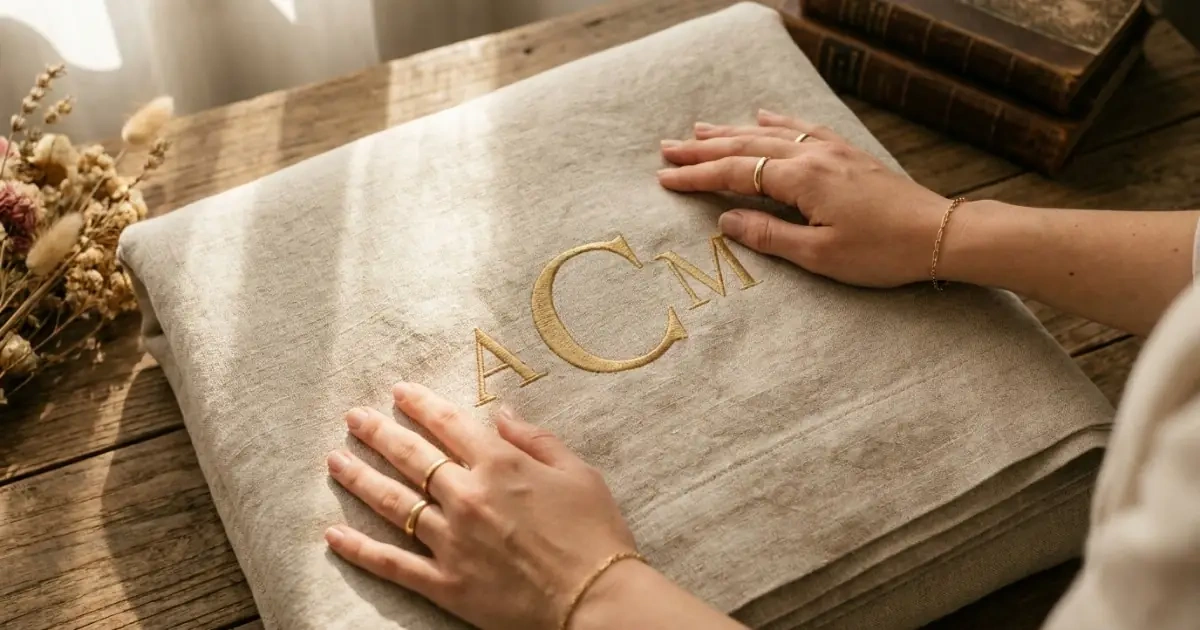
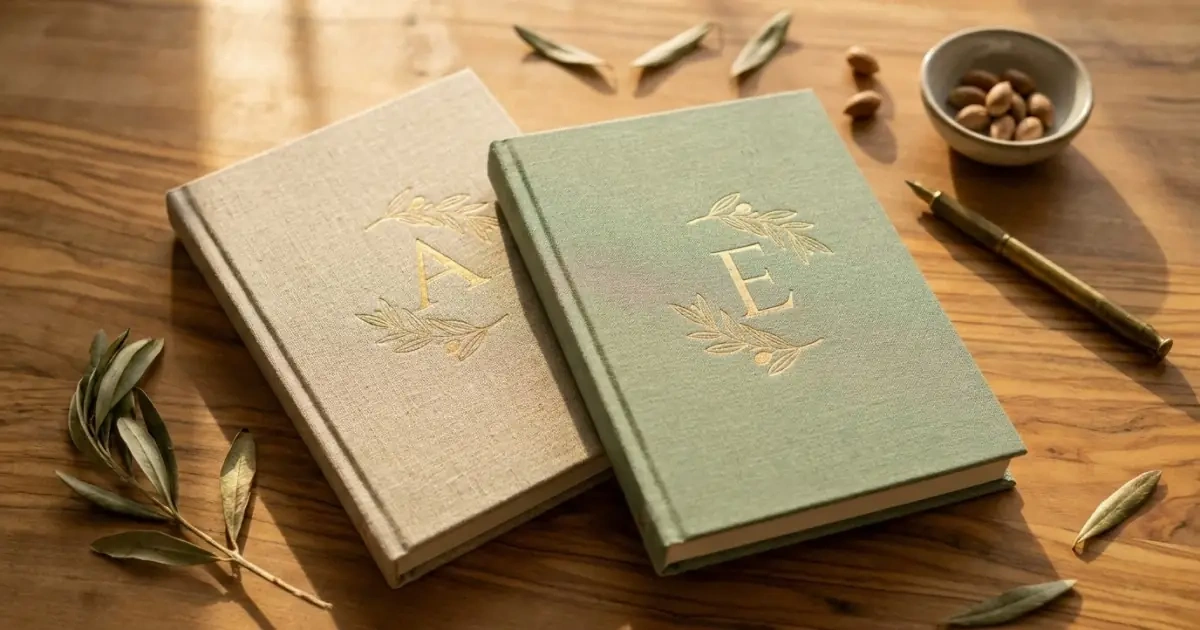
Monograms Need Their Own Order Check
Initials and monograms are related, but they are not always the same.
Standard initials usually follow first-middle-last order. Many traditional monograms place the surname initial in the center, often larger than the other letters. That can create a different visual sequence from the one parents first check.
This matters only if monograms matter to you.
Some families use monograms on blankets, bags, jewelry, stationery, ornaments, keepsakes, luggage, or wedding items. Other families never use them. A decorative format should not dominate the naming decision unless it will genuinely appear in your life.
If monograms matter, check them deliberately.
Write:
- Standard initials in first-middle-last order.
- Monogram order with the surname initial centered.
- All caps.
- Lowercase or script-style versions.
- First-last initials only.
- First initial plus surname.
Then ask:
- Does any version form a word you dislike?
- Does the centered surname initial look fine?
- Do the letters feel balanced visually?
- Would you be comfortable seeing the monogram on a keepsake?
- Does your family use monograms often enough for this to matter?
A monogram issue is usually easier to live with than an everyday first-surname problem. But for families who monogram often, it belongs in the final check.
For full-name rhythm beyond letters, read How to Build a First-Middle-Surname Combination That Flows.
Digital Initials Are Easy to Forget and Harder to Control Later
Your baby will grow into a person with digital records.
School portals, workplace email systems, medical systems, sports registrations, and online accounts often shorten names into practical formats. One common pattern is first initial plus surname. Another is first name dot surname. Some systems use first-middle initials plus surname, or initials plus a number.
That format can create surprises.
A first name may be lovely. A surname may be ordinary. But when the names become one string, the result can look awkward, be difficult to read, or resemble another word.
Test likely formats in your target ecosystem:
- First initial + surname.
- First name + last initial.
- First name dot surname.
- First-middle initials + surname.
- Initials plus birth year.
- First initial + middle initial + surname.
You cannot predict every future system.
You can catch the obvious ones.
This is also where spelling matters. A name that is already often misspelled may become more frustrating in email or login formats. For that angle, read How to Avoid Spelling Regret. For the broader digital layer, use How to Choose a Name That Works Online and Offline.

Middle Names Can Fix Rhythm and Break Initials at the Same Time
Middle names are often chosen to solve one problem.
They can improve rhythm. They can honor family. They can carry heritage. They can balance a modern first name with a classic anchor. They can make a short first-surname combination feel more complete.
But the middle name also creates the middle initial.
That means a middle name can make the full name sound better while making the initials worse.
This is one of the easiest problems to fix because the middle name is usually more flexible than the first name or surname. If you love the first name and the surname is fixed, try changing the middle name before giving up on the whole combination.
James is often used because it is strong, familiar, and rhythmically useful. But the J initial may create an initials issue depending on the surname. Rose and Grace can add elegance and flow, but their R and G initials still need to be tested. Alexander as a middle name can add weight and dignity, though it may overload a long full name while introducing an A initial that changes the acronym.
Before you settle on the middle name, check:
- Does it improve the sound of the full legal name?
- Does it create awkward standard initials?
- Does it create a monogram you dislike?
- Does it make the full name too long?
- Does it add another spelling or pronunciation challenge?
- Is the honor or meaning strong enough to outweigh minor initials concerns?
For a fuller process, read How to Choose a Middle Name and How Middle Names Work When You Are Building a Full Name. If rhythm and initials are competing, How to Build a First-Middle-Surname Combination That Flows gives the full-name view.

Full-Name Layers Can Transform the Same Initials Risk
Initials rarely tell the whole story by themselves.
The same first name can feel completely different once the middle name, surname, sound pattern, and style layer are added. That is why initials should be checked inside the full-name system, not as isolated letters.
A shared first name entirely transforms depending on its structural layers: where Emma Celeste Chen introduces an airy, international polish, Emma Rose Miller grounds itself in traditional warmth. The same contrast appears when moving from the adventurous, lyrical rhythm of Noah Rafael Brooks to the crisp, classic execution of Noah James Carter. A popular first name never operates in a vacuum; the middle name, surname, initials, and sound flow decide whether the full identity feels generic, crowded, elegant, grounded, or distinctly personal.
This matters when you are tempted to reject a name because the first name is familiar, or keep a name because the initials look neat. Neither clue is enough on its own.
Check the whole system:
- First-name sound.
- Middle-name meaning.
- Surname flow.
- Standard initials.
- Monogram order.
- Digital formats.
- Sibling initials.
- The full name in adult use.
A name with average initials may still work beautifully. A name with tidy initials may still feel wrong if the full combination sounds awkward, branded, or too phrase-like.

Awkward Combinations Are Not Only About Initials
Initials are only one kind of awkward combination.
A full name can have harmless initials and still sound strange when spoken. It can sound smooth but create a phrase when the first name and surname are read together. A complete check looks at visual, spoken, digital, and family patterns.
Awkward combinations can include:
- First name plus surname sounding like a phrase.
- Middle name changing the meaning or rhythm of the full name.
- Initials spelling a word.
- Monogram order creating an unwanted sequence.
- A name sounding too close to a celebrity, brand, or fictional character.
- Repeated sounds becoming hard to say.
- Strong rhyme.
- Tongue-twister effect.
- Two word names creating a descriptive phrase.
- Sibling initials or names becoming confusingly similar.
Rose with a nature or object surname may sound more descriptive than intended. Grace with certain surnames can become phrase-like. Miles may run into an S-heavy surname. Lily or Ivy with a botanical surname may feel charming to some families and overly themed to others.
This check belongs near the end of the naming process. You need the full name in front of you before the issue becomes visible.
For the broader surname-flow layer, read How to Match a First Name With Your Surname.
Phrase-Like Full Names Need a Different Test Than Initials
Initials are visual.
Phrase-like combinations are semantic and spoken.
A full name can have harmless initials and still sound like a sentence fragment, description, brand name, or object. This happens most often when the first name is also a word and the surname is also a word.
Names most likely to create phrase issues include:
- Virtue names.
- Nature names.
- Color names.
- Flower names.
- Occupational names.
- Surnames that are also nouns, adjectives, or verbs.
Grace, Rose, Violet, Hazel, Lily, and Ivy can all be beautiful. The concern is not the names themselves. The concern is what happens when they meet a surname that also carries strong word meaning.
Use a phrase test:
- Say first name plus surname as if it were a phrase.
- Ask whether it sounds descriptive.
- Add the middle name and see whether it breaks or strengthens the phrase.
- Ask another person to read the full name without context.
- Listen for a pause, smile, or “wait, say that again.”
Do not reject a name just because it belongs to a word category. Many word names are elegant and highly usable. Just make sure the full name still sounds like a person, not a label.
If you are working with floral or nature names, read How to Choose Nature and Flower Names Without Feeling Too Themed. For meaning-led choices beyond nature, Baby Names by Theme can help you compare the emotional weight of word and virtue names more carefully.

Sound Collisions and Tongue-Twisters Can Be as Awkward as Bad Initials
A name can pass the initials check and still be hard to say.
This usually happens because of sound collisions. The first name may end with the same sound the surname begins with. Several similar consonants may cluster together. The rhythm may create a tongue-twister when spoken quickly.
Watch for:
- Repeated S sounds.
- Repeated R sounds.
- A first name ending with the same sound the surname begins with.
- Too many L sounds.
- Repeated vowel sounds.
- Alliteration that becomes cartoonish.
- Full-name rhythm that feels rushed or stiff.
Miles before an S surname may become hissy. Luca before a vowel-starting surname may run together. Eleanor before an R surname may blur depending on accent. Clara with a C or K surname can be elegant or clunky depending on the actual sounds. Roman with an R surname may feel strong but can roll together.
Test sound collisions by saying the full name in different settings:
- Slowly.
- Naturally.
- Quickly.
- Across the room.
- In a formal announcement.
- As a child introducing themselves.
When the full name only works if you slow down carefully, test it again before committing.
For deeper sound work, read How to Use Syllable Flow to Choose a Better Name and How to Say a Baby Name Out Loud and Hear Its Real Flow.

Popular Names and Common Initials Can Create Duplication
Popularity affects initials more than parents expect.
In classrooms, teams, and groups, children with the same first name are often distinguished by last initial. If a name is very popular and the surname initial is common, the child may still share a practical label with someone else.
This is not a crisis. Many children grow up perfectly fine as Ava M. or Jack S. But when distinctiveness matters to you, check the initials level as well as the first-name level.
Names such as Ava, Amelia, Emma, and Olivia are easy to use but may be common in some settings. On the boys’ side, Henry, James, Jack, and Oliver can raise similar questions depending on year, region, and school group.
A familiar name can still be the right choice.
Just be honest about whether the full name feels distinct enough for your goals.
The Baby Names by Popularity hub can help you think through recognition and repetition. For classroom dynamics, read How Popularity Affects Classroom Identity and Nickname Duplication and How to Read Baby Name Popularity Data.
Sibling Initials and Family Patterns Deserve a Quick Check
Parents often compare sibling name style.
Sibling initials are easier to forget.
This matters because siblings share a surname. If their first names also share an initial, their first-last initials may match. That can be sweet, confusing, or both.
Same initials are not automatically bad. Some families enjoy a shared pattern. Others prefer each child to have clearer separation.
Check whether siblings have:
- The same first initial.
- The same first-last initials.
- The same full initials.
- Reversed initials.
- Overly matchy monograms.
- Confusing school labels.
- A pattern you may feel pressured to continue.
Lily and Leo may sound bright together, but they share an L initial with the same surname. Milo and Maya create an M pattern. Henry and Hazel can feel coordinated, though they may start an H pattern you may or may not want to continue.
Twins deserve extra care because their names will often be written and spoken together. Matching initials may feel cute at first but can become confusing in forms, school systems, labels, and mail.
For sibling balance, read How to Choose Sibling Names That Fit Without Matching Too Hard and How to Name Twins Without Being Too Matchy.
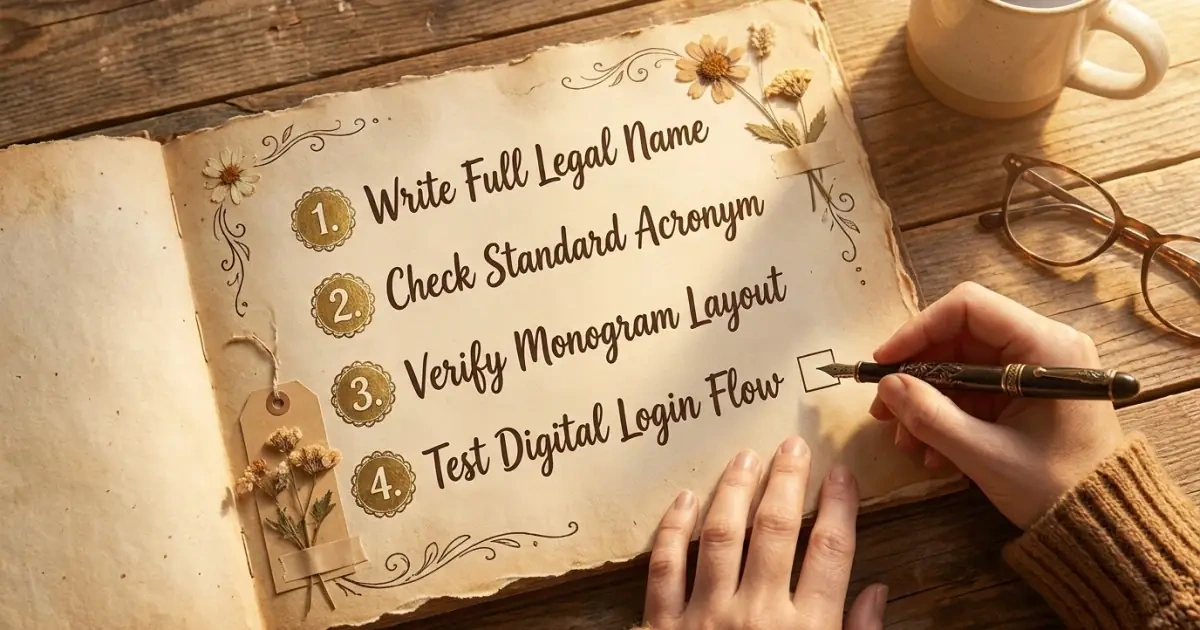
A Complete Initials and Combination Check Before Finalizing
A good initials check is quick, but it should be complete.
Use this sequence once you have a serious full-name option.
- Write the full legal name.
- Write the first name plus surname.
- Write the standard initials.
- Write the monogram version.
- Write first initial plus surname.
- Write likely email and login versions.
- Say the full name aloud.
- Say first name plus surname only.
- Ask someone else to read it.
- Check sibling and family initials.
- Check obvious phrases, rhymes, and sound collisions.
- Let the combination sit for a few days.
You can also use this table.
| Format to Check | Why It Matters | Example Use |
| First + surname | Everyday identity | School, introductions |
| First middle surname | Legal and formal identity | Passport, certificates |
| Standard initials | Records and labels | Forms, school, bags |
| Monogram | Decorative use | Keepsakes, jewelry |
| First initial + surname | Digital use | Email, school login |
| Sibling initials | Family clarity | Labels, mail, school |
This process prevents a common problem: checking the version you like most and ignoring the version your child will actually use most.
For the broader final-name process, read How to Test a Baby Name Before Finalizing It and How to Build a First-Middle-Surname Combination That Flows.

Initials and Combination Red Flags Worth Taking Seriously
Most initials issues are minor.
A few deserve real attention.
Pause when:
- Standard initials spell an obvious unwanted word.
- Monogram order creates a word you dislike.
- First initial plus surname creates an awkward email or login.
- First name plus surname sounds like a joke, object, phrase, or brand.
- The middle name creates a bad acronym.
- The full name rhymes too strongly.
- The name is very close to a celebrity or fictional character.
- Sibling initials are confusingly identical.
- You keep avoiding one format when testing.
- You repeatedly tell yourself, “No one will notice.”
That last one is worth listening to. When you keep reassuring yourself that no one will notice, someone probably will.
At the same time, do not panic over obscure references. The most important issues are obvious, repeated, and easy to notice.
A strong first name can still fail in one format. A beautiful middle name can still create the wrong acronym. A surname you barely think about can change the full name into a phrase. These are not reasons to become fearful. They are reasons to slow down for one practical pass before the name becomes permanent.

Awkward Initials Are Not Always a Dealbreaker
Awkward-ish initials do not automatically make a name unusable.
Some issues are too small to control the whole decision. A monogram sequence may look odd, but your family may never monogram anything. Full initials may be slightly clunky while first name plus surname is beautiful. A middle initial may create an abbreviation that only appears on formal paperwork.
An initials issue may be acceptable when:
- It does not spell an obvious word.
- It is rarely used.
- Monograms are not important to your family.
- First name plus surname works beautifully.
- Meaning or family connection is strong.
- The issue is obscure or unlikely to be noticed.
- The middle name can be omitted in daily life.
This is where proportion matters.
Do not let a minor initials concern make you abandon a name with deep meaning, strong flow, and real family love. At the same time, do not ignore an obvious issue just because changing the middle name feels inconvenient.
When you are choosing between a name with cleaner initials and a name with stronger meaning, read How to Decide Between Two Baby Names and How to Know When a Name Feels Right.

Practical Questions About Baby Name Initials and Monograms
Do baby name initials really matter?
They matter when they create something obvious, repeated, or likely to be used in school, email, labels, or monograms. They do not need to be perfect. They just should not create a problem you can easily avoid.
What order should I use for a monogram?
Standard initials usually go first-middle-last. Many traditional monograms place the surname initial in the center, often larger than the others. Check both formats when monograms matter to you.
Should I change the middle name if the initials are awkward?
Often, yes. If the first name and surname work well, the middle name is usually the easiest piece to adjust. A middle name with strong family or heritage meaning deserves a more careful tradeoff.
What if the initials are only awkward in one format?
Prioritize the format your child will use most. First name plus surname and first initial plus surname are usually more important than decorative monograms unless your family uses monograms often.
Should siblings have different initials?
They do not have to, but different initials can reduce confusion in school, mail, labels, and digital systems. If siblings share initials, make sure it feels intentional rather than accidental.

Where to Go Next Before You Commit to the Full Name
Initials are the final layer of a larger full-name check.
Do not check them in isolation. A name with neat initials can still be awkward aloud. A name with imperfect initials can still be the right choice when the full name is meaningful, clear, and usable.
Let your exact concern shape your next move. If your hesitation is purely structural, return to How to Match a First Name With Your Surname to audit the flow, or rely on Baby Names by Style and Baby Names by Theme if the combination risks becoming a literal phrase.
Finally, refine the hidden friction points — whether re-architecting the middle initial through How Middle Names Work When You Are Building a Full Name or running a final pressure-test with How to Test a Baby Name Before Finalizing It.
A strong name needs no perfect lettering. It simply requires no avoidable traps hiding in the version your child will actually live with.