
How to Choose Spiritual and Sacred Baby Names

Choosing a spiritual baby name can feel different from choosing a name for sound, style, or popularity alone.
You may not be looking for the newest name, the rarest name, or the one that gets the strongest reaction. You may be looking for a name that feels like a blessing. A name that carries faith, peace, light, grace, devotion, wisdom, or gratitude. A name that connects your child to family tradition, sacred history, cultural identity, or a value you hope will always surround them.
That can be deeply meaningful.
It can also become a lot to place on one name.
Grace may feel gentle and familiar. Gabriel carries sacred tradition with a clear, wearable sound. Bodhi feels calm, reflective, and spiritually aware. Messiah may feel powerful to some parents and too title-like to others.
That tension is the real work of choosing spiritual baby names. The meaning may matter deeply, but the child still has to live with the name in ordinary life.
This guide is not a ranking of the “best” spiritual names. A name is not automatically better because it sounds more holy, unusual, dramatic, ancient, or rare. The stronger choice is the one where meaning, origin, sound, and everyday usability work together.
The Names by Theme hub is the best place to begin when spiritual meaning is your main direction and you want to compare blessing, peace, light, wisdom, love, joy, grace, faith, and sacred history. For the broader editorial path through naming decisions, Expert Baby Naming Guides for Choosing the Right Name can help you move from meaningful inspiration toward a name your family can use with confidence.
A sacred name works best when it feels sincere, grounded, and livable.
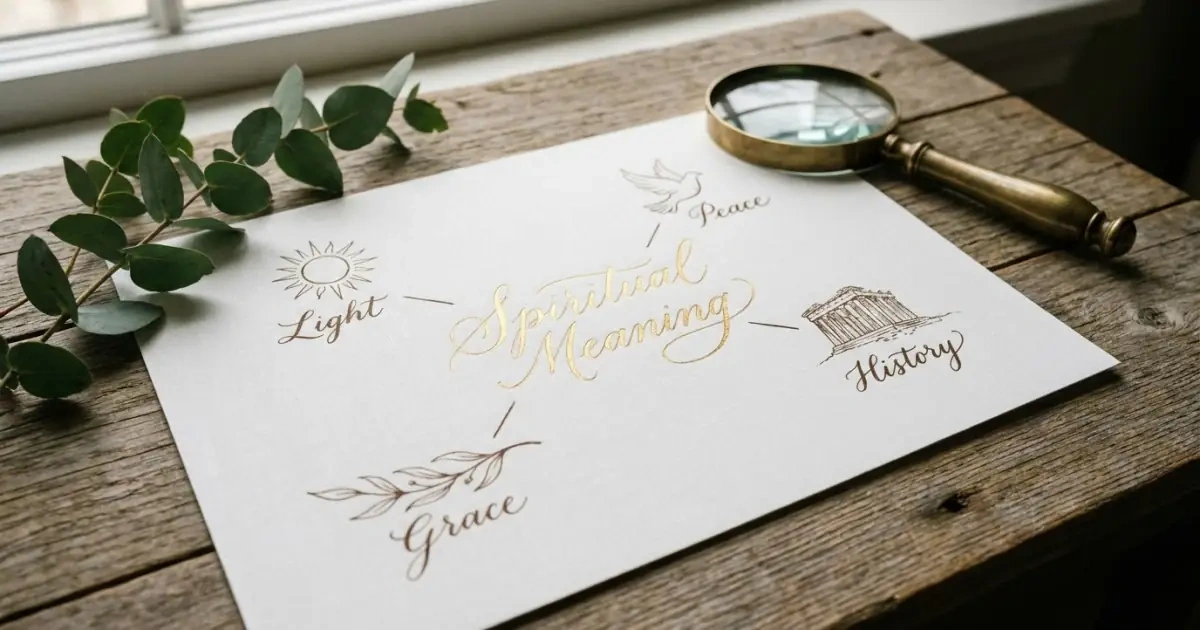
Spiritual Baby Names Start With the Kind of Meaning You Want to Carry
Many parents say they want a spiritual name, but they do not always mean the same thing.
One family may picture a biblical name with generations of use. Another may want a name that means light, peace, blessing, wisdom, hope, or grace. Another may want something sacred but subtle: a name that feels soulful without announcing a specific religious identity every time it is spoken.
Those are different naming goals.
A spiritual baby name may come from several sources:
- A religious text or faith tradition.
- A saint, prophet, angel, virtue, or sacred place.
- A meaning tied to blessing, light, peace, hope, wisdom, mercy, or gift.
- A nature image with spiritual symbolism.
- A family name with devotional, cultural, or ancestral weight.
- A name used in a naming ceremony, prayer, or blessing tradition.
The first step is not collecting every beautiful sacred-sounding name. The first step is naming the kind of meaning you want the child’s name to hold.
Miriam and Noor can both feel spiritual, but they solve different naming problems. Miriam feels ancient, biblical, and grounded in history; Noor feels luminous, spare, and light-filled. Theodora gives spiritual meaning a grand, classical, gift-like frame, while Hope speaks its value directly.
A family choosing Miriam may be choosing continuity. A family choosing Noor may be choosing radiance and simplicity. Theodora may appeal to parents who want formal elegance and divine-gift meaning. Hope may fit when the value itself matters more than subtlety.
Write one sentence before you build the shortlist:
“We want a name that feels spiritual because…”
Your answer may be:
- Because we want to honor our faith tradition.
- Because we want the name to feel like a blessing.
- Because we want a peaceful, grounded name.
- Because we want sacred history without something too formal.
- Because we want to connect the baby to family heritage.
- Because we like names that feel meaningful without being too literal.
That sentence protects the shortlist from becoming a crowded collection of spiritual impressions. When your main priority is meaning itself, How to Choose a Baby Name by Meaning can help you build that first layer before you compare sound, style, and surname fit.

Spiritual, Sacred, Religious, and Virtue Names Create Different Impressions
These words often overlap, but they do not create the same naming effect.
A name can feel spiritual without being tied to one formal religion. Another can feel sacred because of scripture, liturgy, family tradition, or a holy figure. Virtue names bring the value into the open. Blessing names carry gratitude, often with a softer public signal.
Understanding those differences helps you choose the right level of visibility.
| Naming Direction | How It Usually Feels | Examples |
| Spiritual names | Reflective, soulful, meaning-led | Bodhi, Sage, Eden, Selah, Serenity |
| Sacred or religious names | Rooted in faith, scripture, holy figures, or tradition | Mary, Joseph, Elijah, Gabriel, Fatima, Miriam, Raphael, Esther |
| Virtue names | Clear, direct, value-forward | Grace, Faith, Hope, Mercy, Justice, Verity, True |
| Blessing names | Grateful, gift-like, thankful | Asher, Benedict, Beatrice, Theodore, Theodora, Jonathan, Matthew |
Spiritual names often appeal to parents who want depth without a strict denominational signal. Bodhi may suggest awakening, Sage may suggest wisdom and nature, while Eden and Selah offer a reflective atmosphere with different levels of religious visibility.
Sacred names tend to feel more rooted. Mary, Joseph, Elijah, Gabriel, Fatima, Miriam, Raphael, and Esther carry long usage, recognizable histories, and cultural memory. That rootedness can be exactly what a family wants. It can also create assumptions about faith or heritage that need to be welcomed, not ignored.
Virtue names do not hide their message. Grace, Faith, Hope, Mercy, Justice, Verity, and True put the value at the front of the name. The clarity can be beautiful, especially when the value feels central to the family story. It also needs restraint. A child named Mercy should not have to be merciful all the time. A child named Justice should not become a symbol before becoming themselves.
Blessing names often work well because their meanings can be deep while their daily use remains familiar. Theodore can be Theo. Beatrice can become Bea. Benedict can soften into Ben. The sacred layer is present, but the child is not required to explain it every day.
When you like direct meaning but want to avoid heaviness, compare the tone with How to Choose Names That Mean Peace or How to Choose Names That Mean Blessing before deciding how literal the name should be.

Meaning Should Open the Door, Not Make the Whole Decision
Meaning can make a name feel chosen rather than accidental.
Still, a beautiful meaning does not automatically make a name livable.
A name may have a moving definition and still be difficult to use. It may look wonderful in a baby-name list but sound awkward with your surname. It may carry a sacred association you love, but come with a nickname you dislike. It may express your values while feeling too heavy for a child’s daily identity.
A spiritual name needs to pass four layers.
| Layer | What to Test |
| Meaning | What does the name actually mean, and how reliable is that meaning? |
| Sound | Does the name feel natural when spoken in ordinary life? |
| Use | Can it work on forms, in introductions, at school, at work, and across age stages? |
| Story | Can you explain the name with warmth and restraint? |
Some names have several meanings depending on language, origin, or interpretation. Others are symbolic rather than literal. Lucia has a light-related feel and a long history of use. Sophia connects directly to wisdom. Salome carries peace-related resonance. Imani evokes faith with direct clarity.
Do not rely only on a pretty summary. Make sure the meaning you love is one you can explain honestly.
Sound is the part you will live with every day. Seraphina has an ornate, angelic rhythm; Eli is brief, warm, and biblical without formality. Raphael feels artistic and sacred, while Pax is spare and direct. These names may all appeal to spiritually minded parents, but they create very different daily rhythms.
For sound-focused testing, use How to Say a Baby Name Out Loud and Hear Its Real Flow. When pronunciation changes across languages or communities, How to Choose a Name That Works in Two Languages and How to Choose Names That Work Across Different Accents can make the test more realistic.
The story matters too. A spiritual name should feel like a gift, not a burden. Try finishing this sentence: “We chose your name because…”
A grounded answer might be:
- “We chose Grace because we wanted a name that felt gentle, generous, and steady.”
- “We chose Miriam because it connects family history with a name we both love saying.”
- “We chose Bodhi because we love its sense of awakening, and we wanted to choose it with respect for its spiritual background.”
A heavier answer sounds more like pressure: “We chose this name because we believe you are destined to transform the world.”
The child may become extraordinary in their own way. The name should still give them room to be ordinary, private, playful, imperfect, and fully themselves.

Decide How Visible You Want the Faith Connection to Be
One of the most useful decisions is how obvious the spiritual connection should be.
Some parents want a name that clearly signals faith. Others want meaning to remain private. Some prefer a sacred middle name paired with a more flexible first name.
There is no single correct level. There is only the level that fits your family honestly.
| Visibility Level | How It Works | Examples |
| Direct faith | Recognizable within a religious or scriptural tradition | Mary, Joseph, Muhammad, Fatima, Moses, Esther, Isaac, Elijah, Gabriel |
| Soft spiritual | Reflective and sacred-feeling without always naming a formal category | Eden, Selah, Shiloh, Noa, Mira, Amara, Solomon |
| Value-led | Meaning placed clearly at the front | Hope, Grace, Mercy, Peace, True, Verity |
| Symbolic | Spiritual through image, nature, light, peace, or wonder | Dove, Olive, River, Lucia, Stella, Aurora |
Direct faith names are rooted. They do not feel invented for effect. They have been carried by real people, families, communities, and traditions over time. The tradeoff is visibility. A name like Elijah, Fatima, Moses, or Gabriel may lead people to assume something about your family’s faith, background, or values.
Soft spiritual names often suit parents who want meaning without making the name feel like a public statement. Eden, Selah, Shiloh, Noa, Mira, Amara, and Solomon can feel reflective, peaceful, or sacred while still working as everyday names.
Symbolic names work differently. Dove, Olive, River, Lucia, Stella, and Aurora may suggest peace, light, renewal, nature, or wonder without coming from a formal religious list. When your shortlist leans strongly toward nature imagery, How to Choose Nature and Flower Names Without Feeling Too Themed can help keep the choice grounded.
The question is not which category is most spiritual. The question is which level of visibility your child can carry comfortably.

Sacred Names Need Cultural Respect, Not Just Aesthetic Appeal
Sacred names are not just sounds.
They often belong to languages, rituals, communities, scriptures, places, and histories. That does not mean you can only choose a name from your own background. Many names have traveled widely across cultures. It does mean sacred names deserve more care than names chosen only because they sound beautiful.
Before using a sacred name, ask:
- What tradition does this name come from?
- Is it commonly used as a personal name?
- Is it tied to a holy figure, title, place, or concept?
- Would people from that tradition recognize the use as respectful?
- Do we understand the pronunciation well enough to use it confidently?
- Are we choosing the name for meaning, family, faith, or only because it sounds beautiful?
Lourdes may carry Catholic place-name significance. Santiago can feel cultural, religious, and geographic at once. Kali is striking, but it should not be treated as a random edgy sound without awareness of its Hindu associations. Messiah has enormous religious weight and can sound more like a title than an everyday name.
Respect does not require fear. It requires attention.
A good sign is that you can explain the name without sounding like you borrowed something you do not understand. A less grounded sign is an explanation that stops at “we just liked the vibe.”
This matters because a child may one day ask about their name. Other people may ask too. When the name comes from a sacred tradition, the answer should feel thoughtful, not improvised.

Origin Gives a Spiritual Name Its Grounding
Origin can turn a spiritual name from a vague feeling into a grounded choice.
A name’s language, history, and cultural path can explain why it feels the way it does. This is especially useful when your shortlist includes names from several traditions. Use Names by Origin when language roots, religious background, or cultural context are part of the decision.
| Origin Path | What It May Offer | Examples |
| Hebrew and biblical names | Sacred history, family continuity, familiar use | Elijah, Naomi, Hannah, Gabriel, Miriam |
| Greek and Christian tradition names | Wisdom, peace, resurrection, divine gift, liturgical depth | Sophia, Irene, Anastasia, Theodore, Theodora |
| Arabic and Islamic tradition names | Faith, trust, light, devotion, scriptural familiarity | Amina, Noor, Imani, Yusuf |
| Sanskrit, Hindu, and Buddhist influence | Awakening, bliss, divine association, spiritual practice | Bodhi, Ananda, Devi, Tara |
| Latin, saintly, and virtue-rooted names | Church history, brightness, blessing, classic structure | Benedict, Clara, Lucia, Beatrice, Felix |
Hebrew and biblical names often carry strong spiritual familiarity in English-speaking contexts. Elijah feels prophetic and energetic; Naomi is gentle and enduring. Hannah feels classic and warm, while Gabriel has angelic strength. Miriam feels ancient, feminine, and grounded. Families comparing this lane can continue with How to Choose Biblical Names With Modern Style or How to Choose Hebrew Names With Modern Appeal.
Greek-rooted and Christian tradition names often bring together meaning, philosophy, and sacred history. Sophia connects to wisdom, Irene carries peace, Anastasia has resurrection associations, and Theodore or Theodora carries the idea of divine gift while still offering friendly nicknames. For related style decisions, see How to Choose Greek Names With Contemporary Style.
Arabic and Islamic names can carry beauty, faith, light, and devotion. Amina feels gentle and trustworthy. Noor is luminous and compact. Imani directly evokes faith. Yusuf has scriptural familiarity across traditions. For families with Arabic, Muslim, or interfaith connections, origin may be central rather than decorative.
Sanskrit, Hindu, and Buddhist-influenced names such as Bodhi, Ananda, Devi, and Tara can feel spiritually rich, but they should be chosen with awareness of the traditions they come from. Beauty alone is not enough when the name has living religious or cultural significance.
Latin-rooted names often feel classic, church-connected, or virtue-adjacent. Benedict feels formal and blessing-oriented, Clara feels bright and saintly, Lucia carries light, Beatrice feels literary and blessing-like, and Felix suggests joy or good fortune. When this lane appeals, How to Choose Latin Names With Timeless Strength can help separate classical depth from overformality.
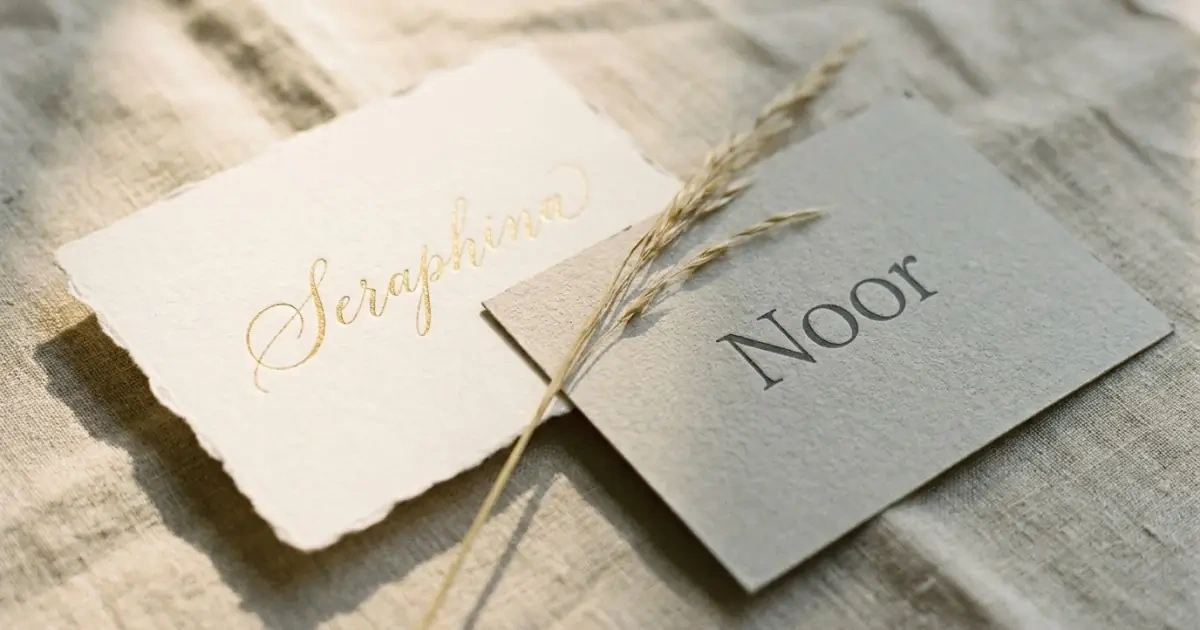
Style Balance Keeps Sacred Meaning Wearable
A name can have the right meaning and still not have the right style for your family.
That is why spiritual baby names should also be evaluated through style. Use Names by Style when you know the meaning you want but need the name to feel classic, soft, vintage, minimalist, elegant, modern, or grand.
| Spiritual Style | What It Feels Like | Examples |
| Gentle spiritual names | Warm, calm, approachable | Grace, Noa, Mira, Eden, Dove |
| Grand sacred names | Formal, memorable, ceremonial | Seraphina, Emmanuel, Anastasia, Benedict, Raphael |
| Minimalist spiritual names | Short, clear, restrained | Noor, Pax, Sage, Kai, Sol |
| Vintage sacred names | Established, historic, quietly rooted | Agnes, Esther, Ruth, Miriam, Felix, Benedict |
| Modern spiritual names | Visible, stylish, often word-like | Zion, Bodhi, Halo, True, Saint |
Gentle spiritual names often work well when parents want meaning without pressure. Grace, Noa, Mira, Eden, and Dove feel intimate rather than imposing. When this style appeals, How to Choose Soft and Gentle Baby Names That Still Carry Well can keep softness from becoming fragility.
Grand sacred names have presence. Seraphina, Emmanuel, Anastasia, Benedict, and Raphael sound full, historic, and memorable. The risk is formality. A grand name may need an everyday nickname, especially in a casual household. Seraphina may become Sera, Benedict may become Ben, Raphael may become Rafi or Rafa, and Emmanuel may become Manny, Manu, or Em. For this tension, How to Choose Grand Classic Baby Names Without Feeling Overformal is useful.
Minimalist spiritual names are short and clean. Noor, Pax, Sage, Kai, and Sol can carry meaning without ornament. The tradeoff is that short names sometimes need a stronger story, surname, or middle name to feel complete. How to Choose Minimalist Baby Names can help if this stripped-back direction appeals.
Vintage sacred names often feel established rather than trendy. Agnes, Esther, Ruth, Miriam, Felix, and Benedict can appeal when parents want history and substance. The main test is whether the name feels warmly vintage to you or simply too old-fashioned for daily use. How to Choose Vintage Baby Names That Still Feel Fresh helps make that distinction.
Modern spiritual names such as Zion, Bodhi, Halo, True, and Saint can feel bold and current. They may be exactly right for families who want distinctiveness. They also need more testing because they can date quickly or invite stronger reactions.

Watch for Sacred Names That Sound More Like Titles Than Personal Names
Some sacred or spiritual choices have so much symbolic weight that they may sound more like titles than names.
That does not automatically make them unusable. It does mean they need careful thought.
Names and word-names in this lane may include:
- Messiah.
- Saint.
- King.
- Queen.
- Savior.
- Prophet.
- Angel.
- Bishop.
- Psalm.
Some of these names are used by real families. Some may feel meaningful, cultural, or stylish in certain communities. They still create a different social effect from names like Elijah, Grace, Lucia, or Miriam.
The concern is expectation.
A title-like name can sound as though parents are announcing something about the child’s importance, destiny, purity, authority, or spiritual status. That may not be what you intend, but it can still be what others hear.
Before choosing this kind of name, ask:
- Does this sound like a person’s name or a role?
- Would we feel comfortable hearing it in a classroom roll call?
- Would it sound natural in a future job interview?
- Does it pair with our surname without becoming too dramatic?
- Are we giving the child room to be ordinary, playful, imperfect, and private?
Saint James may sound polished to some ears, but it also has strong title energy. Ezra Benedict keeps sacred meaning while sounding more like a traditional full name. Grace Seraphina feels spiritually layered but still name-like. Seraphina Heavenly Grace may feel overbuilt.
Sacred meaning is often strongest when it has room to breathe.

Test the Name Story Before You Commit
A spiritual name should have a story you can tell simply.
This does not mean you need a dramatic explanation. The best naming stories are often modest.
Try the story test:
“We chose this name because…”
Then say the explanation out loud.
If the sentence feels warm, clear, and gentle, the name is probably grounded. When the sentence feels grandiose, defensive, or complicated, the name may need more thought.
Consider the difference:
- “We chose Grace because we wanted a name that felt gentle, generous, and steady.”
- “We chose Miriam because it connects to family, faith, and a name we both love saying.”
- “We chose Noor because we loved its meaning of light and its simple, luminous sound.”
- “We chose Bodhi because we love the idea of awakening, and we wanted to choose a name with spiritual calm.”
Now compare:
- “We chose this name because we believe our child is meant to transform the world.”
That may be sincere, but it places a lot on a baby.
A child’s name can express love, gratitude, faith, and hope. It does not need to predict the child’s destiny. When you are unsure whether the meaning feels grounded or merely exciting, How to Know When a Name Feels Right can help separate calm confidence from temporary intensity.

Sound, Surname, Initials, and Nicknames Should Be Checked Before Meaning Wins
Meaning can make parents fall in love with a name. Practical testing helps them avoid regret.
Before finalizing any spiritual or sacred baby name, test the full name in real life.
| Test | What to Do | What It Reveals |
| Full-name test | Say first + middle + surname in normal, formal, hurried, and affectionate tones | Rhythm, weight, and everyday fit |
| Initials check | Write initials with and without the middle name | Awkward monograms, email-style initials, accidental words |
| Nickname check | List likely short forms | Daily usability and unwanted forms |
| Playground test | Imagine calling the name in a busy ordinary setting | Whether the name can leave the ceremonial context |
| Future-introduction test | Picture the name at 5, 15, 35, and 70 | Long-term range |
Raphael James Carter has a classic, artistic, sacred rhythm. Noor Elizabeth Chen feels luminous with a more traditional middle. Seraphina Rose Lee is romantic and graceful, though quite ornate. The surname may change the name more than you expect, which is why How to Match a First Name With Your Surname and How to Build a First-Middle-Surname Combination That Flows matter.
Initials are not glamorous, but they are practical. A beautiful sacred name can still create an awkward set of initials. Check monograms, forms, email-style combinations, and school labels. How to Check Initials, Monograms, and Awkward Combinations gives that small but important test more structure.
Many sacred names have natural short forms. Gabriel may become Gabe. Gabriella may become Gabby or Briella. Benedict may become Ben. Seraphina may become Sera. Raphael may become Rafi. Theodore may become Theo or Teddy. Theodora may become Thea, Dora, or Teddy. You do not have to use a nickname, but other people might. How to Check Nickname Potential Before You Choose can help you spot unwanted daily forms before the name becomes official.
The future-introduction test matters most for names with visible sacred weight. Picture your child saying, “Hi, I’m ___” at different ages and in different settings. The name should leave room for a shy person, a bold person, a scientist, an artist, a teacher, a parent, a private adult. For this angle, use How to Choose a Name That Ages Well.
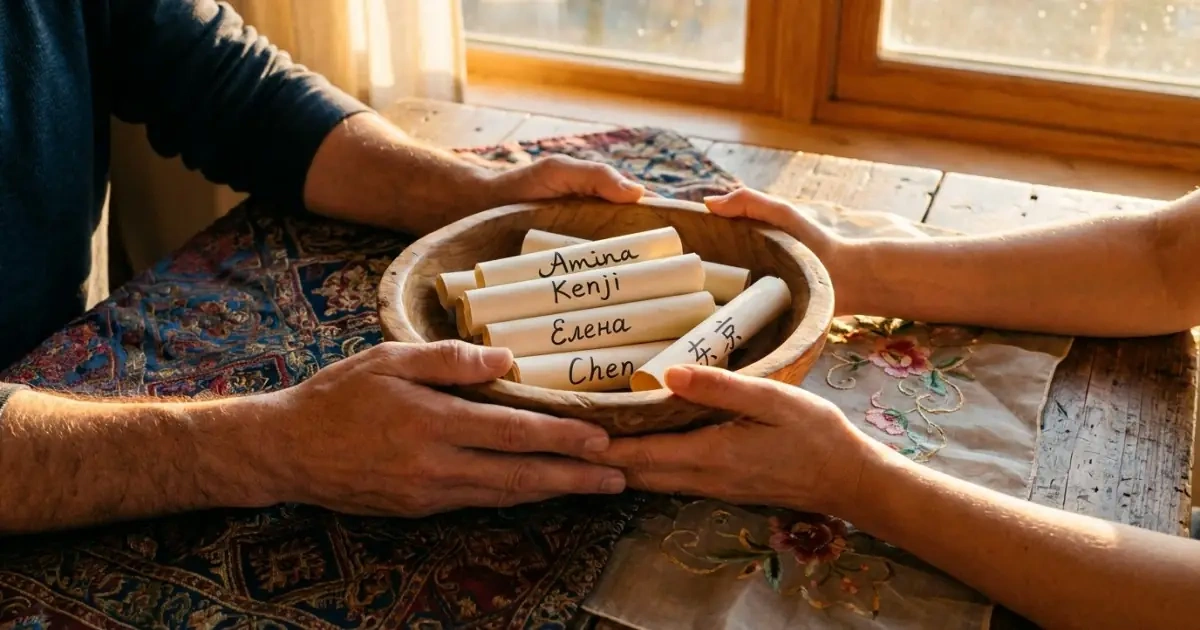
Interfaith and Mixed-Heritage Families Need a Name That Can Hold More Than One Loyalty
Spiritual naming can become especially tender in interfaith or mixed-heritage families.
One side may want a name that clearly reflects faith. Another may want something more neutral. A grandparent may expect a saint’s name. Another relative may hope for a name from a different language, culture, or family tree. One parent may want a name that signals belonging. The other may worry that it will feel too narrow.
This is not just a naming disagreement. It can become a conversation about identity, family loyalty, and what you want the child to inherit.
A useful compromise is to separate the jobs of the first and middle name. The first name can be the everyday name: easy to say, loved by both parents, flexible across communities. The middle name can carry a more specific sacred, ancestral, or ceremonial meaning.
| Combination | What It Balances |
| Maya Grace | Flexible first name with direct virtue warmth |
| Leo Emmanuel | Compact first name with a deeply sacred middle |
| Nora Selah | Gentle first name with reflective spiritual depth |
| Ezra Benedict | Biblical energy with blessing-oriented structure |
| Clara Lourdes | Bright first name with sacred place-name meaning |
Another path is choosing a name that travels across traditions. Mary, Maria, Mariam, and Miriam show how related names can move across languages and communities. Noah and Noa may feel familiar in different settings. Sophia offers wisdom with broad international use. Ari and Ariel can feel Hebrew-rooted while also fitting modern style.
The goal is not to erase difference. The goal is to choose a name the child can carry without feeling pulled apart by it.
When this issue sits at the center of the decision, How to Honor Heritage Without Forcing Tradition and How to Use Family Heritage as a Starting Point for Baby Names can help you work through the family layer more carefully.

First Name or Middle Name: Where Should the Sacred Meaning Live?
Not every meaningful name has to be the first name.
Sometimes the middle spot is exactly where a sacred name can do its best work.
A first name is used constantly. It appears in introductions, classroom lists, messages, sports rosters, social profiles, and everyday conversation. A middle name can be more private, ceremonial, ancestral, or expressive.
Choose the sacred name as a first name when:
- You love saying it every day.
- It works naturally with your surname.
- It is not too heavy for daily identity.
- Both parents feel comfortable with its visibility.
- The most likely nicknames feel acceptable.
- The name fits your real life, not only your ideals.
Choose the sacred name as a middle name when:
- It honors a saint, prophet, ancestor, sacred place, or family tradition.
- It has strong religious weight.
- Pronunciation may be challenging in your community.
- One parent loves the meaning while the other finds it too much as a first name.
- You want the name’s story to be present but not constantly public.
Clara Lourdes keeps the first name bright and wearable while placing the sacred place-name in the middle. Maya Grace uses a flexible first name with a direct virtue middle. Leo Emmanuel gives a compact first name a deeply sacred middle. Nora Selah feels gentle, reflective, and balanced.
Middle names are not lesser names. They are often the best place for meaning that is important but too intense for daily use.
For more help with this layer, see How to Choose a Middle Name and How Middle Names Work When You Are Building a Full Name.

Spiritual Names Can Be Quiet, Not Just Dramatic
A spiritual baby name does not need to sound rare, grand, or obviously religious.
Some of the most enduring sacred names are quiet.
Anna, Ruth, Simon, Clara, and Eli all have spiritual or historical resonance without demanding attention. They can belong to many kinds of people. They do not need a dramatic explanation to work.
Quiet names are especially useful when the surname is long, the middle name carries deep meaning, or the family style is understated.
Dramatic spiritual names can be beautiful too. Seraphina, Anastasia, Emmanuel, and Raphael have grandeur for a reason. They sound full, historic, and memorable.
The decision is not quiet versus dramatic as a rule. The decision is which one your family can use naturally.
When you love the meaning of grand names but hesitate to say them aloud, look for quieter names with similar depth. When you love the boldness and feel comfortable using it every day, a grander sacred name may be right.
A strong shortlist can include both. Parents often need to see the contrast before they know what feels trustworthy. Classic vs Modern Baby Names: How to Decide can help when your list is split between older sacred names and newer spiritual choices.

Mistakes That Make Spiritual Baby Names Harder to Live With
Spiritual names become difficult when the meaning takes over the whole decision.
The name itself still has to function. A sacred definition cannot fix awkward sound, uncertain pronunciation, poor surname flow, unwanted nicknames, or a style mismatch.
| Mistake | Why It Weakens the Name | Better Move |
| Choosing the meaning but ignoring the name | A beautiful definition does not guarantee daily fit | Say, write, and test the name in real contexts |
| Treating a sacred tradition as an aesthetic | The name may feel borrowed without understanding | Learn the pronunciation, use, and significance |
| Picking a title-like name without tone testing | The name may sound like a role or status claim | Test classroom, professional, and surname use |
| Choosing a virtue name that feels too heavy | The value may become an expectation | Check whether the name feels like a gift, not a job |
| Forgetting surname and initials | Sacred meaning cannot rescue an awkward full name | Test rhythm, initials, and repeated sounds |
| Overloading the full name with symbols | More meaning can become less usable | Let one strong element carry the story |
| Assuming everyone will understand the meaning | Private meaning may remain private | Be comfortable with subtlety |
| Altering spelling without care | Creative spelling may weaken origin and pronunciation | Preserve established forms when origin matters |
| Letting family pressure override daily usability | The child will be the one using the name | Consider a middle-name honor instead |
Spiritual meaning does not become stronger by stacking more symbols. Grace Seraphina may feel balanced. Seraphina Heavenly Grace may feel overbuilt. Eden Hope may feel simple. Eden Blessing Dove may feel too themed.
Spelling deserves care too. Creative spelling can make a name feel personal, but it can also disconnect a sacred name from its history. When origin matters, think carefully before changing the form. How to Avoid Spelling Regret is especially useful for sacred names with established spellings.
Family and faith traditions matter, but the child will carry the name. When a sacred family name feels too difficult as a first name, the middle spot may solve the problem. When a relative expects a specific naming tradition, look for an honor that both parents can genuinely support. How to Choose a Name With Your Partner can help when spiritual meaning and family pressure become tangled.

A Practical Framework for Choosing a Sacred Name With Confidence
When your shortlist gets emotional, use a framework.
This five-step process can help you move from inspiration to decision.
Step 1: Name the spiritual direction
Choose the main meaning category before choosing the name.
You may be looking for:
- Faith.
- Blessing.
- Peace.
- Light.
- Wisdom.
- Mercy.
- Hope.
- Joy.
- Sacred history.
- A saint or prophet connection.
- A family or ancestral name.
- Nature as spiritual symbol.
A blessing direction may lead toward Asher, Benedict, Beatrice, Theodore, or Matthew. A light direction may point to Lucia, Noor, Clara, or Aurora. A peace direction may bring Pax, Salome, Irene, or Shiloh into focus.
For adjacent meaning paths, compare How to Choose Names That Mean Light, How to Choose Names That Mean Wisdom, and How to Choose Names That Mean Joy without letting the shortlist become a link-driven maze.
Step 2: Choose the visibility level
Decide whether the name should be direct, subtle, symbolic, or middle-name-only.
Direct names are clear: Mary, Gabriel, Fatima, Elijah.
Subtle names have depth without immediate explanation: Noa, Mira, Eden, Solomon.
Symbolic names use image and feeling: Dove, Olive, River, Lucia.
Middle-name-only choices hold meaning more privately: Lourdes, Emmanuel, Benedict, Selah.
Step 3: Check origin and respect
Look up where the name comes from and how it is used.
Do not stop at a one-word meaning. Check cultural context, pronunciation, spelling, and whether the name has sacred significance beyond ordinary use. This is especially important for names from living religious traditions outside your own.
Step 4: Test daily use
Use the name for a few days in realistic ways.
Write it on a note. Say it with your surname. Imagine introducing the child. Try the nickname. Check initials. Notice whether the name still feels good when it is not surrounded by baby-name excitement.
A name that survives ordinary use is stronger than a name that only shines in a list. How to Test a Baby Name Before Finalizing It can help you run this step more thoroughly.
Step 5: Tell the name story in one sentence
Your final test is the story.
“We chose this name because…”
A good answer feels warm, honest, and restrained. The name should carry meaning in a healthy way, not hand a child a destiny.
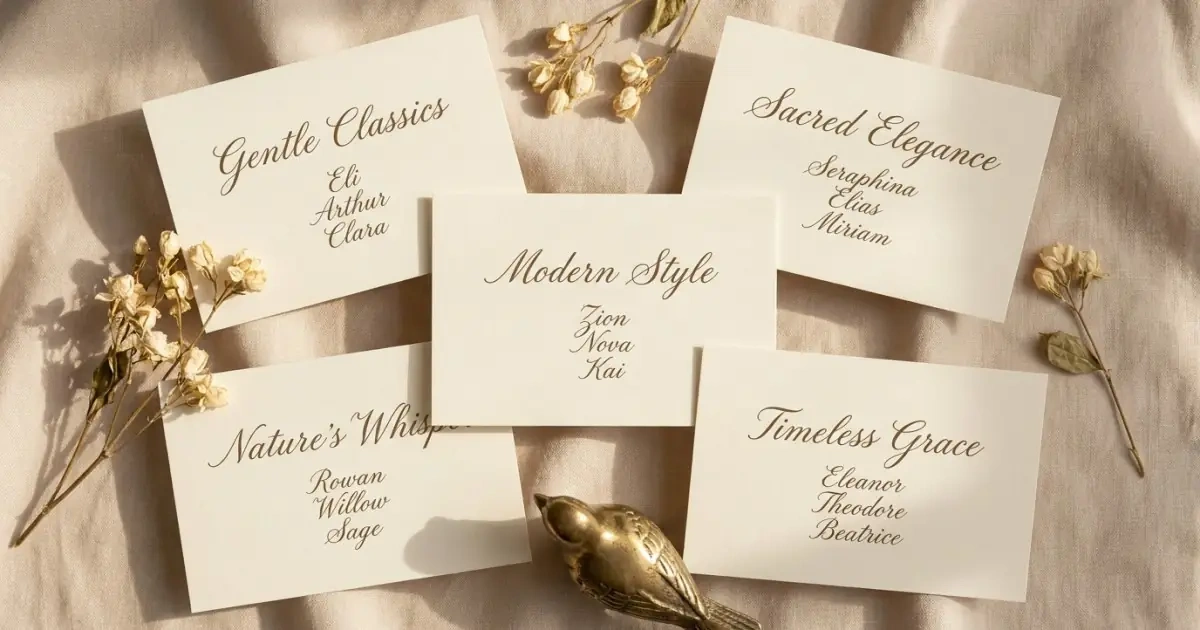
Spiritual Baby Name Examples by Decision Type
Examples are most useful when they show how different names solve different problems.
Use these groups as decision models, not fixed lists.
| Parent Goal | Names That May Fit | Why This Direction Works |
| Faith without heaviness | Grace, Eli, Anna, Simon, Noa | Spiritual grounding with an easy everyday sound |
| Sacred sound with elegance | Seraphina, Raphael, Anastasia, Emmanuel, Theodora | Rich meaning with strong style identity |
| Peace, light, or blessing | Pax, Noor, Lucia, Asher, Beatrice, Benedict | Meaningful themes with different levels of visibility |
| Modern spiritual style | Bodhi, Zion, Selah, Sage, Eden | Contemporary sound with sacred or reflective associations |
| Heritage and sacred history | Miriam, Yusuf, Fatima, Elijah, Esther, Gabriel | Rooted names with cultural and religious memory |
Grace offers direct yet familiar comfort, while Eli brings brief, biblical warmth. Quiet classics like Anna and Simon provide traditional steadiness without grandeur, and Noa gives the spiritual lane a more modern, cross-cultural softness. Together, these names suit parents who want faith to feel present without making the name sound ceremonial.
For sacred elegance, Seraphina and Anastasia bring a more ornate rhythm, while Raphael and Emmanuel carry visible spiritual depth with international weight. Theodora softens that grandeur through vintage charm and accessible nicknames like Thea or Teddy. These choices work best when your family is comfortable with a name that has presence before it has simplicity.
Pax delivers compact, peace-oriented clarity, contrasting with the luminous elegance of Noor and Lucia. For names steeped in joy or blessing, Asher feels bright and unburdened, while Beatrice and Benedict anchor gratitude in vintage, literary substance. Benedict is the weightiest of that group, but Ben keeps it highly approachable.
Modern spiritual choices need context as much as style. Bodhi can feel calm and spiritually aware when chosen with respect for its background; Zion brings sacred place-name force in a short, strong shape. Selah is more lyrical and reflective, Sage blends wisdom with nature, and Eden offers a peaceful, lightly sacred quality without becoming formal.
For heritage and sacred history, Miriam feels ancient and deeply rooted, while Yusuf has scriptural depth and cross-cultural familiarity. Fatima carries strong religious and cultural associations. Elijah feels energetic and prophetic, Esther brings vintage resilience, and Gabriel gives angelic meaning a familiar, wearable sound.

Questions Parents Ask Before Choosing a Spiritual or Sacred Name
Is it okay to choose a spiritual name if we are not very religious?
Yes, when the name reflects values, meaning, family history, or sincere admiration. The key is understanding the name’s origin and avoiding sacred traditions as decoration. Names such as Grace, Hope, Sage, and Eden can feel spiritual without requiring a strongly religious household.
Are virtue names too much for a child?
Not always. Grace, Hope, and Faith are familiar enough that many people hear them as names first and virtues second. Less common or stronger virtue names need more tone testing because they can feel like expectations.
Should a very sacred name be a middle name instead?
Often, yes. When the name has deep ceremonial, religious, or family importance but feels heavy in daily use, the middle spot can preserve the meaning while giving the child a more flexible everyday first name.
How do we avoid choosing a sacred name disrespectfully?
Research the name’s origin, pronunciation, religious role, and common usage. Check whether it functions as an ordinary given name or more like a sacred title. Choose with understanding, not just admiration.
Can sibling names share a spiritual theme?
Yes, but avoid making the set feel overly matched. Grace and Hope are sweet but very direct as a pair. Grace and Miriam share spiritual depth more subtly. Elijah and Gabriel are both strong biblical names, while Elijah and Asher feel a little more varied. For a broader sibling check, use How to Choose Sibling Names That Fit Without Matching Too Hard.

Where to Go Next When Your Shortlist Has a Spiritual Direction
Let your exact friction point dictate your final move. If your shortlist feels overwhelmed by an entire spectrum of virtues, the architectural frameworks in Names by Theme and Names by Origin will help separate genuine spiritual connection from mere aesthetic appeal.
Should you find yourself torn between a widely beloved classic and a rarer sacred choice, let Names by Popularity and Names by Style clarify your true comfort level with visibility. Finally, before you commit, push your contenders through How to Avoid Baby Name Regret to ensure the heavy weight of a sacred meaning never outranks its daily, spoken fit. A spiritual baby name works best when it feels sincere, grounded, and livable. The meaning should matter. The origin should be respected. The sound should feel natural in your home. Most of all, the child should have room to grow into the name without feeling trapped by it.