
How to Choose a Name With Your Partner Without Turning It Into a Fight

Choosing a baby name with your partner sounds simple until the first real disagreement lands.
From a distance, the process looks almost charming. You each make a list, compare favorites, laugh at a few impossible options, and eventually find the name that feels right. That is the tidy version. Real couples usually meet something more revealing.
A name is a mirror for competing fears. What feels grounded and rich in heritage to you might strike your partner as stiff or pressured. A name that carries distinctive warmth for one person may look, to the other, like a lifetime of spelling corrections, raised eyebrows, and administrative effort.
That is why the disagreement can feel larger than naming. A baby name is the first word both parents give the child together. Nobody wants to feel ignored inside that decision.
The real work is not simply finding a name. It is choosing a way to choose.
When your shared taste still feels scattered, start by browsing baby names by style and noticing which broad directions attract both of you: classic, modern, soft, strong, vintage, minimalist, elegant, familiar, or rare. Once the conflict is clearly about agreement rather than inspiration, this guide will help you build a decision both people can stand inside.

Baby Name Disagreements Are Usually About Values, Not Taste Alone
A baby name is never only a word.
It touches memory, social identity, culture, family expectation, pronunciation, future adulthood, and the kind of life parents imagine for their child. A calm conversation can tighten quickly because couples often believe they are debating names when they are actually negotiating values.
A partner drawn to Arthur may be reaching for history, seriousness, and long-term steadiness. Milo carries a different promise: warmth, ease, and a lighter modern rhythm. Grace offers virtue and familiarity; Maeve brings compact strength with a sharper edge.
None of these choices is automatically more responsible. They protect different things.
That distinction softens the conversation. Instead of treating every rejection as stubbornness, look for the value underneath it. Your partner may be protecting the child from correction, from trendiness, from family pressure, from blandness, or from a name that simply does not sound like your household.
A naming argument becomes more workable once both people can say what they are trying not to lose.
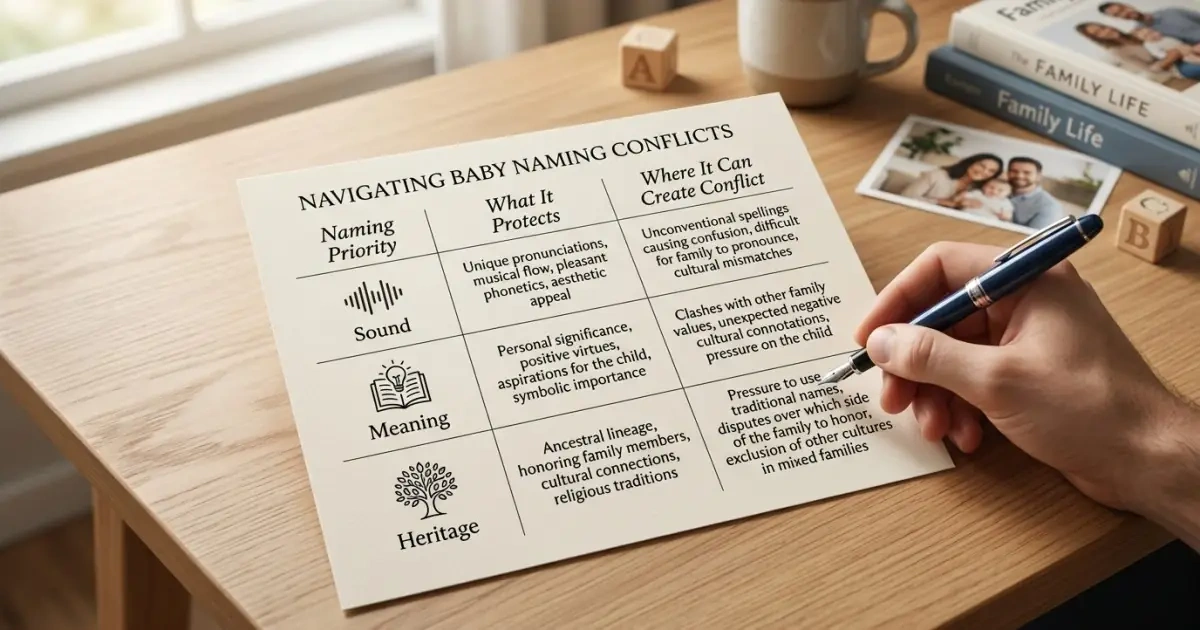
Define the Naming Priorities Before Trading Favorites
Favorite-name lists can wait.
A couple first needs to know what the decision is meant to protect: meaning, sound, heritage, ease, surname rhythm, popularity comfort, nickname control, family continuity, or adult range.
The most useful first step is separate reflection before shared debate. Each partner should write down the qualities that matter most, then compare the overlap and the friction.
| Naming Priority | What It Protects | Where It Can Create Conflict |
| Sound and rhythm | A name that feels natural to say every day | One partner may love a name that sounds awkward with the surname |
| Meaning | Emotional, spiritual, symbolic, or family weight | A meaningful name may feel heavy, dated, or impractical to the other parent |
| Heritage or origin | Cultural continuity and family identity | Authenticity may bring spelling or pronunciation friction |
| Ease of use | Daily simplicity in school, forms, travel, and introductions | The easier name may feel too plain or emotionally thin |
| Popularity comfort | A familiar or distinctive social position | One parent may fear overuse while the other fears unnecessary difficulty |
| Nickname control | Short forms that feel acceptable | A formal name may invite nicknames one parent dislikes |
| Adult range | A name that can grow beyond babyhood | A sweet baby name may feel fragile later, while a formal name may feel stiff now |
The harder half is naming what each person wants to avoid.
A partner may be reacting against names that feel too common, too theatrical, too formal, too trendy, too tied to one family branch, too difficult to spell, too childlike, or too far from the family’s real culture. Those aversions matter because regret often begins with the thing someone tried to ignore.
This is also the moment to move across the main browse layers with purpose. Heritage disagreements belong near baby names by origin. Meaning-led conversations become clearer inside baby names by theme. Social ease, rarity, and trend discomfort should be checked through baby names by popularity.
The goal is not to collect more names. It is to see the real shape of the disagreement.
Replace Rapid-Fire Name Pitching With a Sharper First Conversation
Many couples begin with a rapid-fire list.
“What about Clara?”
“No.”
“Eden?”
“Not really.”
“August?”
“Too much.”
After ten minutes, both people are tired and nobody has learned anything useful.
A better first conversation deals with taste patterns before individual names. Talk about the kinds of names each of you tends to trust. Discuss sounds that feel warm, polished, harsh, soft, too cute, too grand, or too trendy. Name the family and cultural signals you want the child’s name to carry. Be honest about names that look impressive online but would feel wrong in your daily life.
Timing matters. Do not start a serious naming conversation when someone is distracted, hungry, overstimulated, half asleep, or walking through the door after work. Naming takes emotional bandwidth. Give it a real moment.
Instant reactions also need caution. A name can land poorly on first hearing and become stronger after the ear adjusts. Another can sparkle immediately, then thin out once repeated. Serious candidates deserve more than a reflex.
Say the names aloud. A name sitting in a phone note is unfinished evidence. Clara may feel elegant in writing and cooler in speech. Eden can shift depending on surname, accent, and middle name. August carries broad, literary weight that may thrill one partner and feel too stylized to the other.
When the conversation stays vague, How to Compare Baby Names Objectively gives the discussion more structure without flattening the emotional side of the choice.
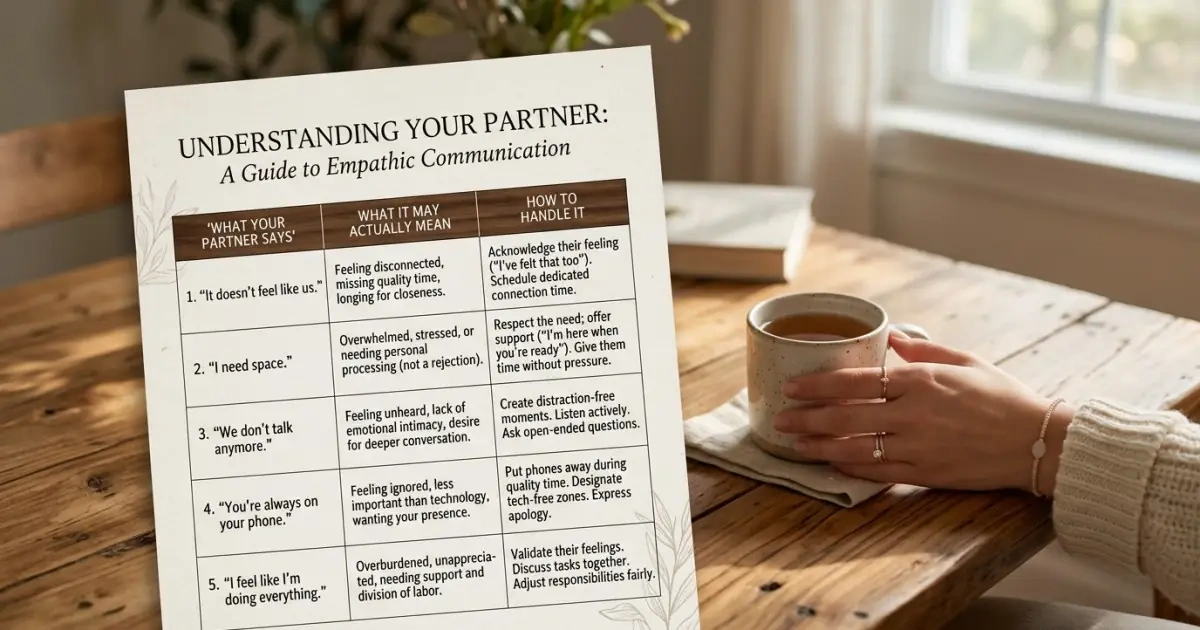
Translate Rejections Before You Treat Them as Final
A no often contains more information than it first reveals.
“Too much work” may point to spelling, pronunciation, surname clash, nickname risk, or the sense that the name will need constant explanation. “It reminds me of someone” can range from a passing association to a truly unusable memory. “It doesn’t feel like us” usually means the style is wrong, even when the person cannot articulate why.
Do not force every objection into the same category.
| What Your Partner Says | What It May Actually Mean | How to Handle It |
| “It’s not my favorite.” | Mild resistance, not a true veto | Let the name sit, test it aloud, and revisit later |
| “It feels like too much work.” | Spelling, pronunciation, or daily-use friction | Identify the exact burden before deciding whether it matters |
| “It reminds me of someone.” | Association risk | Ask whether the association is mild, irritating, or impossible to separate |
| “It doesn’t feel like us.” | Style mismatch | Compare the name to your real household, not only its aesthetic appeal |
| “My family will hate it.” | Outside pressure | Separate family reaction from parental judgment |
| “I cannot hear myself using it.” | Strong emotional resistance | Treat this seriously; daily use requires both parents’ voices |
Fairness concerns need special attention. A name can feel wrong because it gives too much weight to one family branch, one cultural tradition, one parent’s long-held fantasy, or one person’s taste. The argument may sound like a style disagreement, but ownership is sitting underneath it.
A baby name is a deeply repetitive word. A name that cannot be spoken with ease, warmth, or conviction by both parents should not be forced into the final slot.
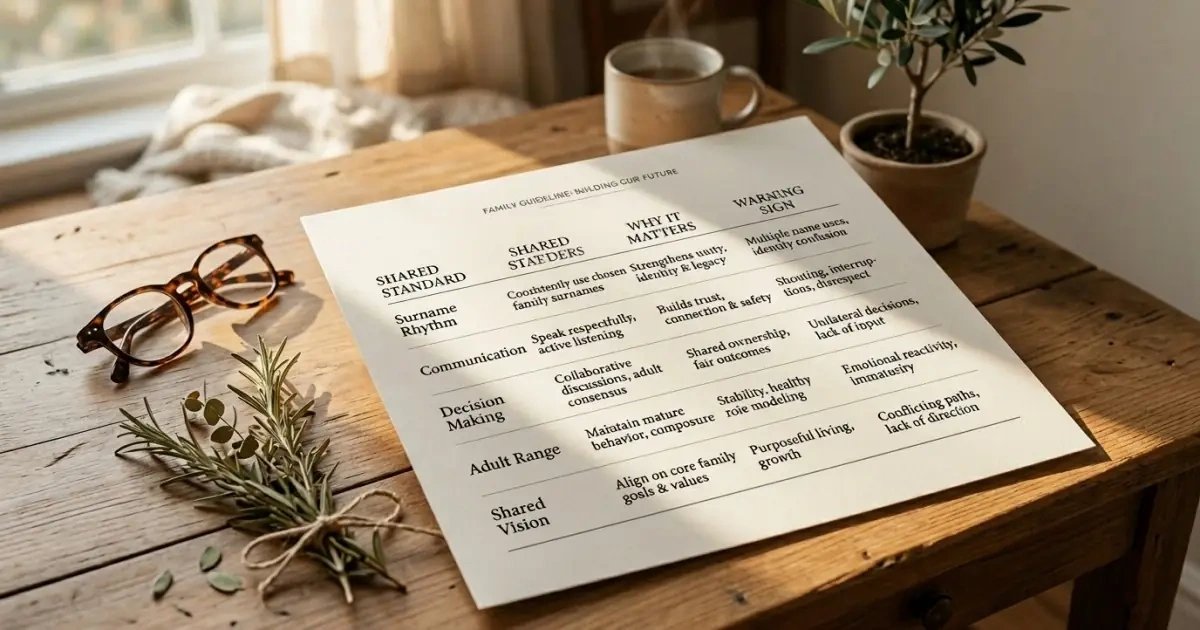
Build a Shared Naming Framework Before the Shared Shortlist
A shared framework keeps the process from turning into a contest.
It does not need to be complicated. Choose five to seven standards that every serious name must survive. The framework should be practical enough to use and strict enough to prevent endless circling.
| Shared Standard | Why It Matters | Warning Sign |
| Surname rhythm | The full name has to work in real speech | You keep trying to make the combination sound better than it does |
| Shared fairness | Both parents need some ownership | The name clearly belongs to one person’s fantasy or family line |
| Manageable spelling | Daily correction can become exhausting | You already feel defensive explaining the spelling |
| Pronunciation clarity | The name must survive real accents and relatives | People in your own circle hesitate or misread it |
| Association comfort | Old memories can crowd the name | One partner cannot detach the name from someone else |
| Nickname safety | Other people will shorten names | The obvious nickname bothers one of you |
| Adult range | The name has to grow | It sounds charming on a baby but thin on an adult |
These standards create a common language. Instead of arguing from different angles each time, both partners test names against the same reality.
The framework also separates preference from resistance. A mild “not my favorite” should not outweigh a true “I cannot use this.” Deep attachment from one parent does not grant automatic approval either. A beloved name still has to work for the child, the family, and the other parent.
That balance is the point. A framework protects the decision from stubbornness on one side and quiet surrender on the other.
Where Classic, Modern, Heritage, and Ease Collide
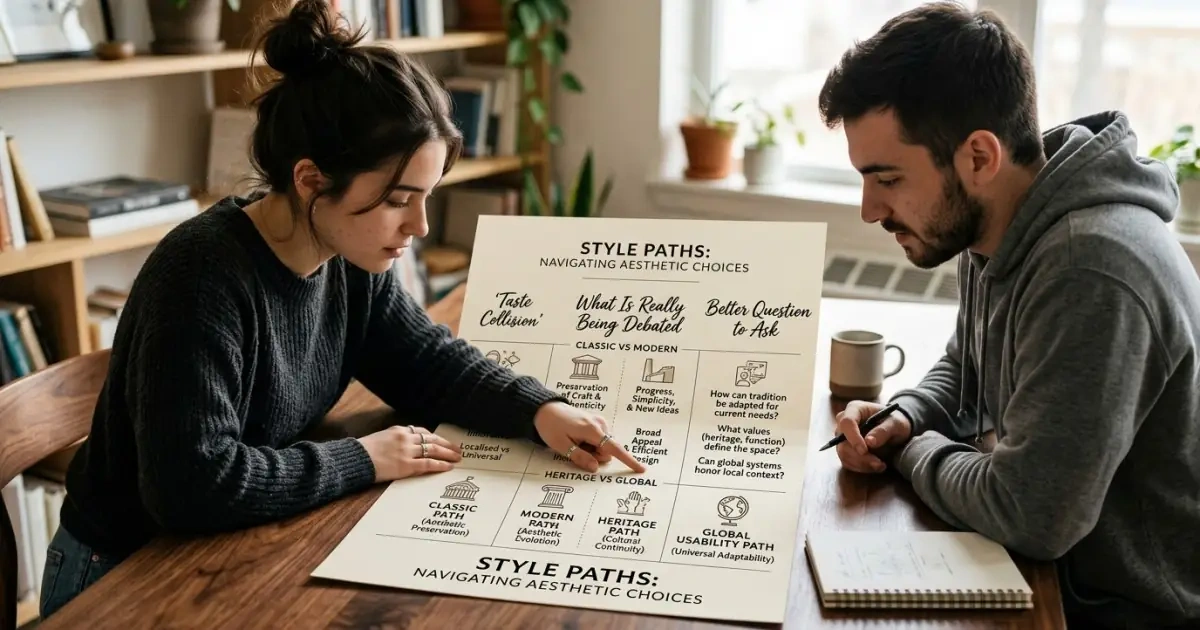
Couples rarely disagree at random. Their conflicts usually form patterns.
A classic-leaning parent may keep returning to Henry, Elizabeth, or Arthur because those names feel proven and socially durable. A partner drawn to Luca, Soren, or Juniper may want more freshness, texture, or individuality.
Meaning can create another collision. Felix carries an appealing sense of happiness and good fortune, while a name with smoother surname flow may feel easier to use but less emotionally charged. Heritage works the same way. An authentic spelling may carry family history beautifully and still create daily pronunciation friction.
The pattern matters more than any single fight.
| Taste Collision | What Is Really Being Debated | Better Question to Ask |
| Classic versus modern | Proven stability against freshness | How much current energy can the name have without dating too fast? |
| Meaning versus ease | Symbolic depth against daily simplicity | Which burden would bother us more: weaker meaning or repeated friction? |
| Heritage versus global usability | Cultural truth against broad pronunciation comfort | How much correction feels worth the identity the name carries? |
| Familiar versus distinctive | Social ease against memorability | Do we fear duplication more than explanation? |
| Family honor versus independence | Continuity against the child’s separate identity | Can we honor the person without giving the child the full emotional weight? |
A couple arguing over one exact name often feels stuck. A couple that recognizes a broader divide between heritage and ease has a real decision in front of them. Another pair may discover that both prefer warm, familiar names but disagree on how popular is too popular.
Style and theme browsing can be useful here because categories reveal overlap faster than disconnected suggestions. The broader Expert Baby Naming Guides for Choosing the Right Name page can also help couples move from random searching into a more organized guide path.
A Collaborative Shortlist Process That Reduces Power Struggles
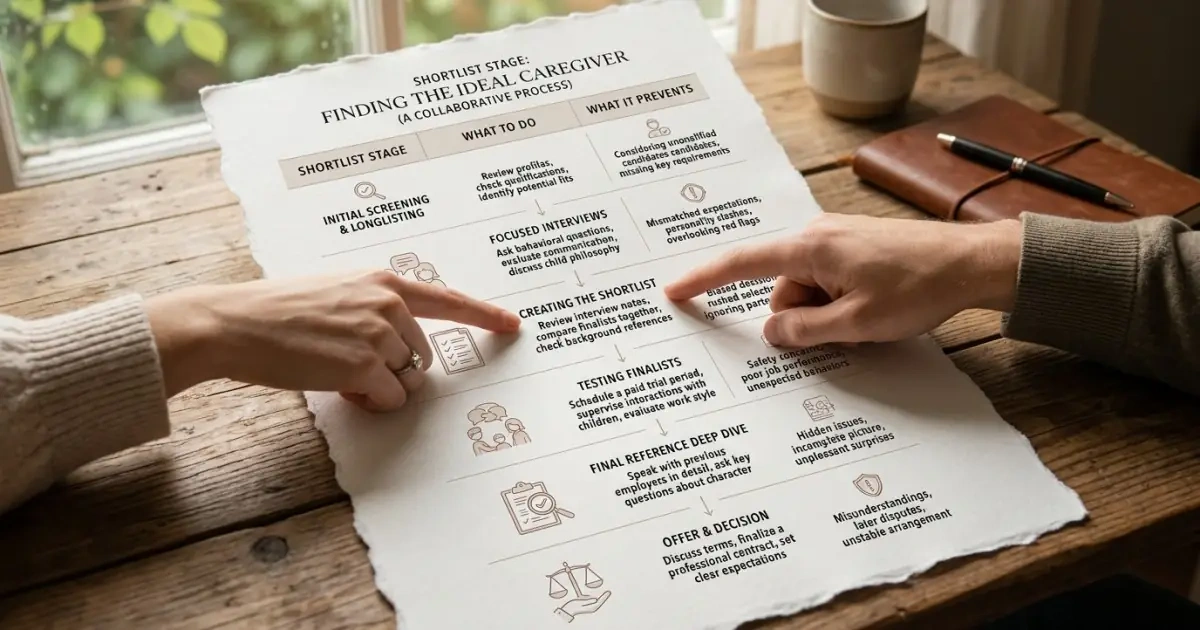
The shortlist should not feel like a scoreboard.
Start with private lists. Each person writes names they could genuinely imagine using, not names included to make a point. Private work reduces the instinct to react too quickly to the other person.
Next, merge the lists and remove true hard no’s. A name that one parent genuinely cannot use should not be kept alive as a pressure tactic. Respecting resistance early prevents resentment later.
Then group the survivors by direction. This grouping often reveals hidden overlap. Perhaps both lists contain names with warm vowel sounds. Maybe both parents like familiar names with a slightly distinctive edge. A shared pattern is more useful than a single accidental match.
| Shortlist Stage | What to Do | What It Prevents |
| Private longlists | Each partner writes real candidates alone | Early rejection based on performance or defensiveness |
| Merge the lists | Put all serious names in one place | The sense that one person controls the process |
| Remove hard no’s | Eliminate true nonstarters without debate | Pressure, resentment, and repeated re-litigation |
| Group by direction | Sort names by classic, modern, heritage, rare, soft, strong, or meaning-led | Comparing names that solve different problems |
| Create a shared shortlist | Keep only names both people could actually use | Polite placeholders and campaign names |
| Test the finalists | Say, write, and use the names in real-life contexts | Choosing from fantasy rather than daily performance |
The final shortlist should contain only real contenders. Not names one person is still campaigning for. Not names kept from guilt. Not names included as emotional placeholders.
When the list is still too large, How to Build a Baby Name Shortlist gives you a cleaner narrowing process. Once the final choice comes down to two serious options, move into How to Decide Between Two Baby Names.
When a Name Matters Deeply to One Partner
Some names enter the conversation with history attached.
A beloved grandparent. A cultural thread. A name someone has loved since childhood. A private memory. A word that feels like continuity, repair, or belonging.
Treat those names seriously.
Seriousness, though, is not automatic victory. A name with emotional weight still has to function in the child’s real life. It must work with the surname, feel speakable, leave room for the other parent, and avoid turning the baby into a memorial object.
Family-honor names often need the most delicate handling. The exact name may be meaningful but stylistically difficult. It may belong strongly to one side of the family while the other side disappears. It may carry grief or expectation too heavily for a first name.
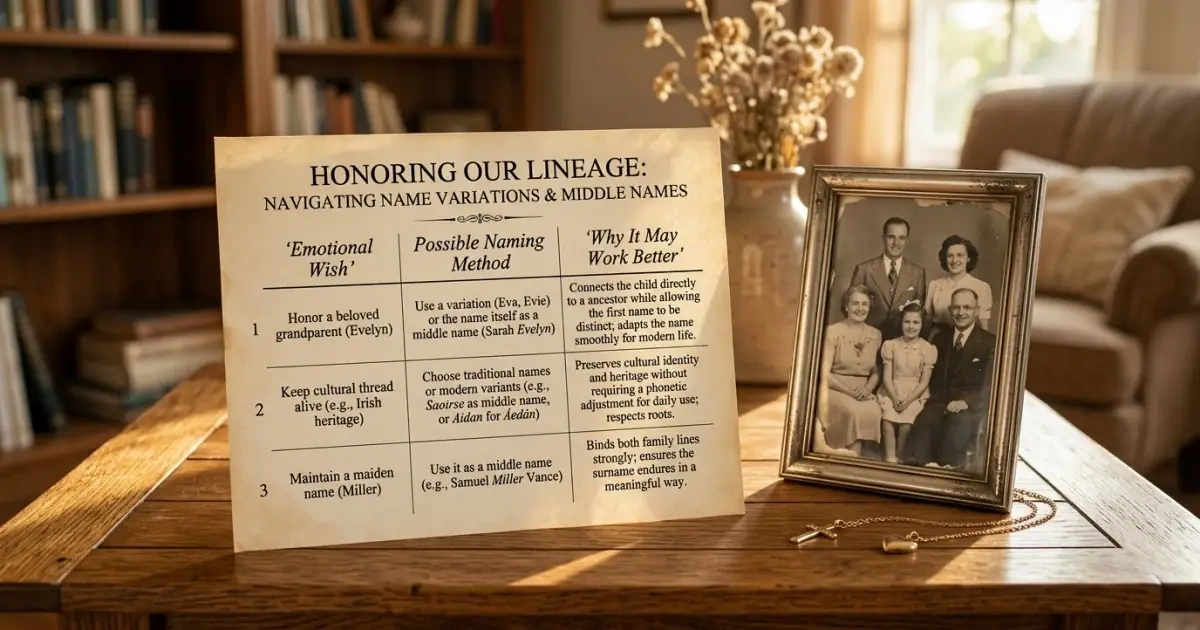
Separate the wish from the method.
| Emotional Wish | Possible Naming Method | Why It May Work Better |
| Honor a relative directly | Use the name as a middle name | Preserves memory without making the first name feel inherited |
| Keep a cultural thread | Choose an origin-related name with easier daily use | Holds identity while reducing friction |
| Preserve a beloved sound | Use a related name or variation | Keeps the emotional texture without copying the exact name |
| Carry a meaning forward | Choose another name with the same meaning | Honors the value rather than the original form |
| Balance both families | Use one side in the first name and the other in the middle | Prevents one branch from dominating the whole name |
For example, a family attached to a relative named Margaret might consider Maeve for a related sound mood rather than direct repetition, or use Margaret in the middle slot if the full daily name feels too weighty. The right solution depends on rhythm, fairness, and emotional honesty.
When the middle slot becomes part of the solution, How to Choose a Middle Name and How Middle Names Work When You Are Building a Full Name can help you keep the full name balanced rather than merely symbolic.
Ground Rules That Keep Naming Talks From Turning Sour
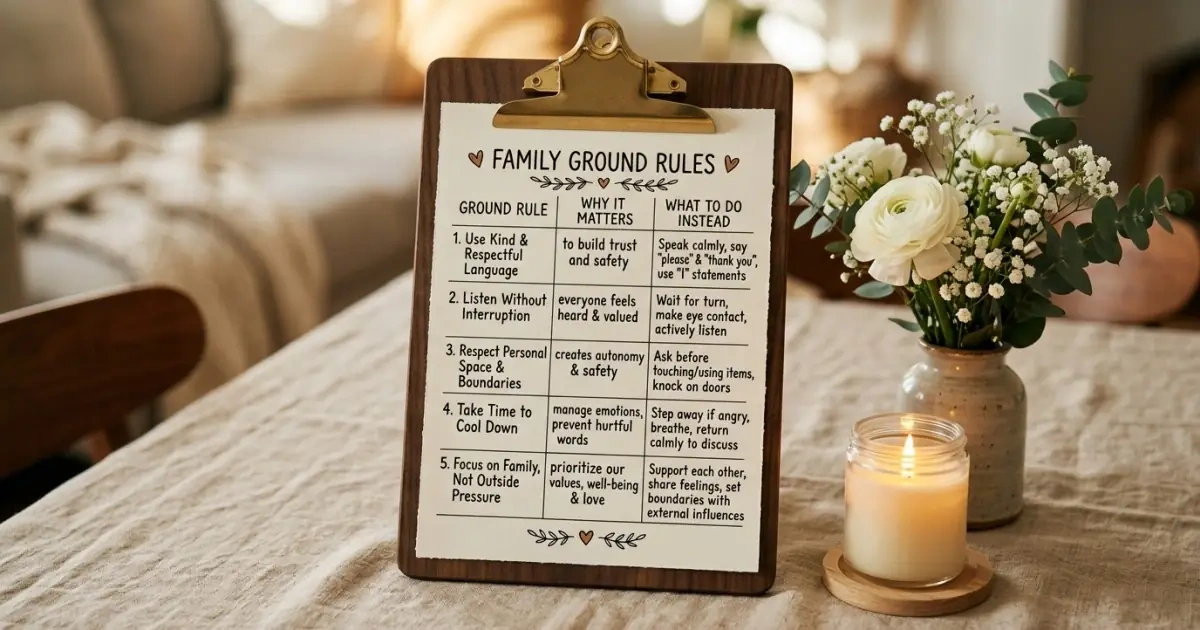
A few simple rules can protect the relationship while the name is still uncertain.
| Ground Rule | Why It Matters | What to Do Instead |
| Do not mock each other’s taste | Names sit close to identity, and sarcasm hardens the room | Explain the concern without ridiculing the style |
| Stop pushing after a true hard no | Repeated pressure turns the name into a power struggle | Ask what value the rejected name represented |
| Keep family pressure out of the decision | Relatives are not the parents choosing the daily name | Treat outside opinions as context, not authority |
| Do not revive fairly vetoed names without a reason | Constant re-litigation makes the process feel unsafe | Return only if something material has changed |
| Avoid serious negotiation in the birth room | Exhaustion and urgency are poor decision conditions | Build a shortlist before the final weeks |
These rules are not about making naming formal. They are about keeping goodwill intact. The name should not come with the memory that one person had to defend themselves into silence.
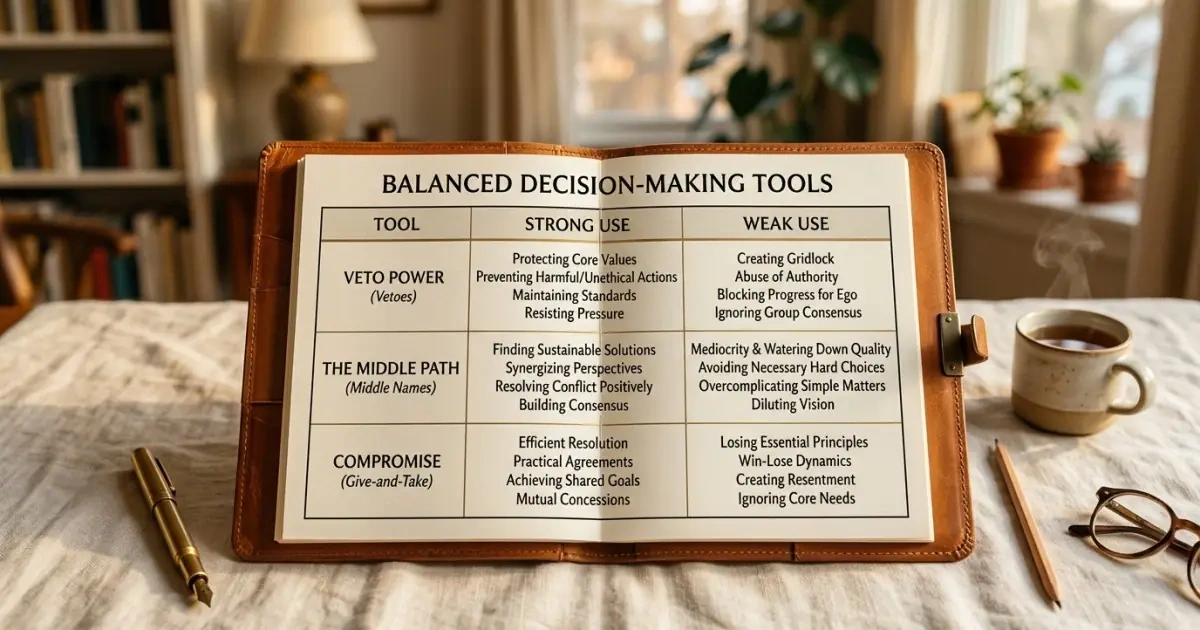
Vetoes, Middle Names, and Compromise Without a Weak Final Name
Vetoes are useful when they protect both people from a name they truly cannot use.
They become damaging when every mild dislike becomes a veto. A couple needs room for names to grow. The veto should be reserved for genuine nonstarters: strong negative associations, serious pronunciation concerns, deep style resistance, or a name that feels emotionally impossible.
Compromise also needs care.
A strong compromise still creates a name with shape. Perhaps the first name gives daily ease while the middle name holds heritage. Perhaps the overall style direction comes from one partner, while the final choice comes from shared testing. The full result should sound intentional, not patched together.
Weak compromise produces a name nobody loves enough to protect. It survives because the argument ran out of energy.
| Tool | Strong Use | Weak Use |
| Veto | Protects a parent from a true nonstarter | Eliminates every name that is not instantly loved |
| Middle name | Holds memory, heritage, or balance with good rhythm | Becomes a consolation prize for an unresolved fight |
| Compromise | Produces a name both parents can say with conviction | Creates a bland option neither person really wants |
| Family input | Answers a specific concern, such as pronunciation | Turns relatives into unofficial voters |
| Final shortlist | Contains names both people could use warmly | Stores names kept only from guilt or fatigue |
Look for shared relief rather than mathematical fairness. A name that makes both parents exhale is stronger than a name that merely divides the concessions evenly.

Protect Shared Favorites From Family Noise
Outside opinions become most dangerous when a couple is close to agreement.
Before birth, people treat names as abstract objects. They project celebrities, school memories, class assumptions, pet names, old grudges, and generational taste onto them. After the baby arrives, the name usually becomes attached to a real person, and many of those reactions lose force.
That is why privacy can be wise.
You do not owe extended family a live vote. Friends do not need access to the shortlist. Feedback should serve the decision, not destabilize it.
Ask only useful questions. “Is this hard to pronounce?” gives actionable information. “Do you like it?” invites personal bias that may have nothing to do with your family.
This matters even more when relatives expect a family name, a cultural tradition, or a naming pattern to continue. Their disappointment may be real, but the final responsibility belongs to the parents.
When outside comments have already shaken your confidence, How to Avoid Baby Name Regret can help separate useful hesitation from borrowed doubt.
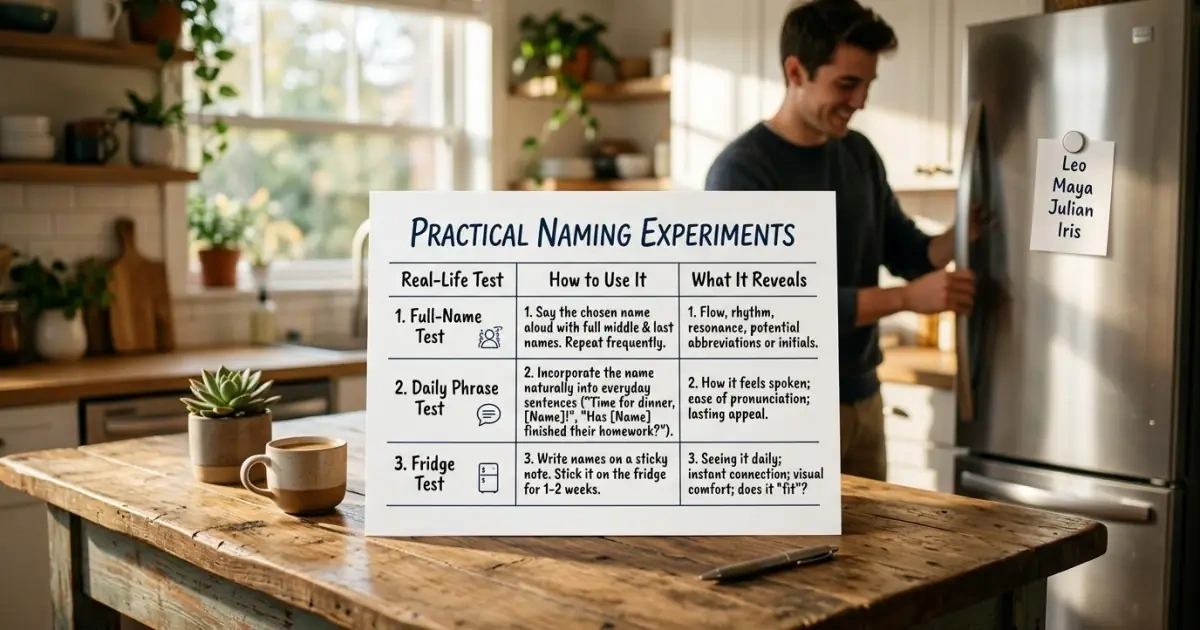
Test Shared Front-Runners in Real Life
A genuine shortlist needs use, not more abstract discussion.
Say each name with the surname. Use normal speech, not a ceremonial voice. Listen for rhythm, weight, and friction.
Some names become convincing only when spoken. Others lose their polish once they have to function as real personal words.
| Real-Life Test | How to Use It | What It Reveals |
| Full-name test | Say the first, middle, and surname in a normal voice | Rhythm, heaviness, awkward transitions, and surname fit |
| Daily phrase test | Use phrases such as “This is ___,” “Time for bed, ___,” and “We named the baby ___” | Whether the name feels livable rather than decorative |
| Initials check | Write the full initials and monogram-style combinations | Preventable awkward spellings or distracting letter patterns |
| Nickname test | List the obvious short forms and family pet names | Shortcuts you may love, tolerate, or strongly dislike |
| Adult-range test | Imagine the name on a school list, application, introduction, and professional setting | Whether the name can grow without losing credibility |
| Fridge test | Put the shortlist somewhere visible for a few days | Which names deepen, fade, or start needing too much defense |
Check initials and awkward combinations before attachment hardens. Preventable issues are easier to solve now. When the full-name form raises concern, How to Check Initials, Monograms, and Awkward Combinations belongs in the process.
Nickname testing matters too. Even parents committed to the full name cannot control every future shortcut. Know the obvious possibilities before choosing.
Finally, let the shortlist sit. Names behave differently when they live quietly in your environment rather than flashing across a screen.
At this stage, How to Test a Baby Name Before Finalizing It is the strongest next step.

When Agreement Still Feels Out of Reach
Endless new research rarely solves a partner deadlock.
Diagnosis helps more.
Return to the criteria and identify the actual conflict. Taste may be the visible issue, but fairness, timing, family pressure, or fear of regret may be driving the stalemate.
| Sticking Point | What May Be Underneath | Productive Next Move |
| Heritage versus ease | One parent fears cultural loss; the other fears daily friction | Test related names, alternate spellings, or middle-name placement |
| Distinction versus simplicity | One parent fears blandness; the other fears performance | Compare names by real-life use rather than visual novelty |
| Family honor versus independence | One side wants continuity; the other wants space for the child | Separate the person being honored from the exact name form |
| Meaning versus surname flow | Emotional depth conflicts with spoken rhythm | Say the full name repeatedly before protecting the meaning at all costs |
| Familiar warmth versus trend concern | A comfortable name may feel too visible or current | Check popularity comfort before dismissing the name |
| Emotional attachment versus shared usability | One parent loves the story; the other cannot live with the daily name | Consider the middle slot, variations, or a meaning-based alternative |
Waiting until after birth can be reasonable when both people remain emotionally open and the shortlist is healthy. It becomes avoidance when the same argument repeats without clearer thinking.
When perfectionism keeps the conversation alive long after the options are good enough, When to Stop Searching for the Perfect Baby Name may be more useful than another list.
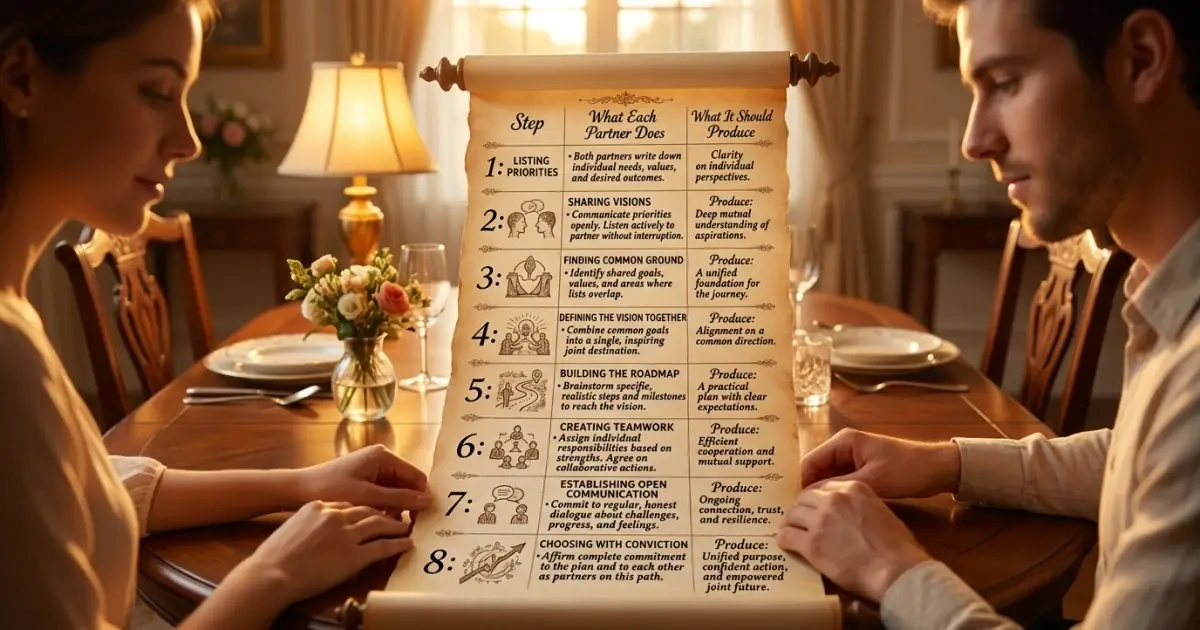
A Couple-Friendly Baby Name Decision Process
Use this process when the conversation needs structure.
| Step | What Each Partner Does | What It Should Produce |
| 1. List priorities separately | Write down the qualities that matter most and the problems to avoid | A clearer view of values before names enter the room |
| 2. Share only usable candidates | Bring real names, not joke names or names offered to provoke | A serious pool of possibilities |
| 3. Remove true hard no’s | Respect names one parent genuinely cannot use | Trust that neither person will be forced |
| 4. Group names by direction | Sort by classic, modern, heritage, rare, familiar, meaning-led, or minimalist | A visible pattern of overlap and conflict |
| 5. Compare survivors consistently | Use meaning, sound, surname flow, nicknames, pronunciation, family fit, and adult range | A fairer comparison |
| 6. Test names aloud and on paper | Use full-name combinations, daily phrases, initials, nicknames, and future settings | Evidence from real life rather than fantasy |
| 7. Protect the shortlist | Invite outside opinions only for specific questions | Less noise at the final stage |
| 8. Choose with conviction | Keep the name both people can say warmly and repeatedly | Shared ownership |
A shared name does not require equal enthusiasm at every second. It does require enough ownership that neither parent feels erased.

Questions Couples Ask When Baby Name Agreement Feels Stuck
What should I do if my partner rejects every baby name I suggest?
Pause the name-pitching. Constant rejection usually means the couple lacks shared criteria, not that every name is bad. Talk first about style, sound, meaning, heritage, ease, and what each person wants to avoid.
Should both parents have equal say in the baby’s name?
The decision should feel shared, even when the emotional paths are different. A baby name becomes part of daily family life; neither parent should feel steamrolled into saying it for years.
What if one of us wants a family name and the other does not?
Treat the emotional reason with respect, then test the method. The exact family name may not be the only option. A middle name, variation, initial, or meaning-based alternative can honor the connection with less daily weight.
Is using one partner’s favorite as the middle name a real compromise?
It can be, provided the full name works and the middle name still serves the child. It should not become a consolation prize for a first-name argument that never truly resolved.
When should we stop asking relatives for opinions?
Stop when feedback creates more confusion than clarity. Family reactions are strongest before a baby is attached to the name. Parents need enough privacy to make a decision they can own.
What if we still disagree close to the birth?
Keep the shortlist narrow, clarify the strongest objections, and avoid forcing a final answer under panic. Meeting the baby can help, but only when both parents have already done the deeper work of understanding the trade-offs.

Where to Go Next When Agreement Is Closer Than It Feels
A partner disagreement often feels like a lack of names. Usually, it is a lack of structure.
A larger joint list belongs with How to Build a Baby Name Shortlist. A final pair belongs with How to Decide Between Two Baby Names. When instinct keeps talking louder than evidence, How to Compare Baby Names Objectively can give the conversation a calmer frame.
Regret anxiety needs a different tool: How to Avoid Baby Name Regret. When the name already feels close but doubt keeps reopening the search, How to Know When a Name Feels Right is the better next read.
Choosing a baby name with your partner should not become a quiet contest where one person wins and the other learns to live with it.
The strongest shared name works in real life, carries enough feeling, respects both parents’ instincts, and enters the family without resentment attached. That is the standard worth holding.