
John Name Meaning: History, Emotion, and Enduring Style

John is one of the rare names that became ordinary by carrying extraordinary weight for too long. Most names become familiar because they rise, spread, and settle into domestic use. John did something more consequential. It moved through religion, monarchy, literature, migration, law, and family memory until it stopped feeling like a choice from one moment and began to sound like part of the language itself. That is why writing about John is difficult if one treats it only as a classic. It is more than that. John is one of the central vessels through which grace entered everyday naming culture. Its meaning, “God is gracious,” is not ornamental. It is theological, relational, and civilizational at once. The name does not merely signify blessing. It teaches the idea of blessing in a form so plain that generations forgot how profound it was.
That plainness is the secret. John does not sound like a ceremonial name, even though history has loaded it with saints, apostles, preachers, kings, writers, and fathers. It sounds spare, usable, almost stark. The one-syllable form is part of its power. Nothing is hidden behind flourish. The name lands, stands, and stays. Official data still places John high in modern American use, but the larger story is older than any single year’s ranking. John has endured because it joined an immense meaning to an unusually modest sound. It is grace spoken without decoration. That is why it remains one of the most durable male names in the English-speaking world.
John's U.S. popularity rank over time, 1880–2024
Popularity statistics are based on official data from the Social Security Administration baby name records.
John: A Timeless and Universal Heritage Classic
John functions as a name with one unmistakable center of gravity, sustained by its standing as a perennially popular choice for boys for over a century. This “legacy classic” often reflects a naming-culture preference for choices that provide a sense of reliability and quiet, honest strength.
While historical traces exist for girls, the modern era gives the name a much clearer masculine focus. Meaning “God is gracious,” its single-syllable punch provides a sense of permanent and ancient resonance that has stood the test of time.
What John Says Before the Biography Begins
| Key Facts | Information | Quick Insight |
|---|---|---|
| Name | John | Its extreme familiarity is part of its meaning now; the name feels foundational rather than merely common. |
| Gender Usage | Male | John remains overwhelmingly masculine in social reading, which keeps its historical identity intact. |
| Origin | Hebrew | The name’s root places it in one of the oldest and most influential biblical naming traditions. |
| Meaning | God is gracious | This is not a vague pleasant meaning but a direct statement of divine favor, mercy, and gift. |
| Pronunciation | JON | The blunt simplicity of the sound helps explain why the name became so socially durable. |
| IPA | US: /dʒɑːn/ · UK: /dʒɒn/ | The vowel shifts slightly by accent, but the identity of the name remains unmistakable. |
| Syllable Count | 1 | Its one-syllable structure gives John unusual firmness and memorability. |
| U.S. standing (2024) | No. 11539 for girls and No. 21 for boys | John is no longer the uncontested default it once was, yet it remains impressively strong after generations of heavy use. |

John Turns Grace into Everyday Speech
The most important thing about John is that its meaning is immense while its sound is plain. “God is gracious” is one of the great theological ideas compressed into personal naming. It suggests mercy freely given, blessing not earned, and a life understood as received rather than merely constructed. Many names with sacred meanings sound marked, solemn, or liturgical. John does not. It carries sacred content in ordinary form. That is why it traveled so far. It could move from scripture into farmhouses, into royal courts, into schoolrooms, into immigration records, into novels, and into the most intimate corners of family life without ever sounding out of place.
This also changes the emotional feel of the name. John is not sentimental. Its meaning is gracious, but its sound is disciplined. That combination gives the name moral steadiness. It implies kindness without softness, favor without excess, and faith without display. A boy named John inherits a name that sounds concise and durable, but underneath that concision lies a vision of life shaped by gift. This is one reason the name has remained emotionally useful even after centuries of repetition. Grace is not a dated idea. It is one of the few meanings that can survive historical change because it answers a permanent human need: the desire to believe that goodness can meet us before achievement does.
In that sense, John is more radical than it appears. It makes mercy sound normal. It brings one of religion’s deepest claims into a name that can be spoken in a factory, in a cathedral, in a courtroom, or at a kitchen table with equal ease. Few names have managed that balance of depth and plainness so successfully.
How John Moved from Hebrew Blessing to Christian Bedrock
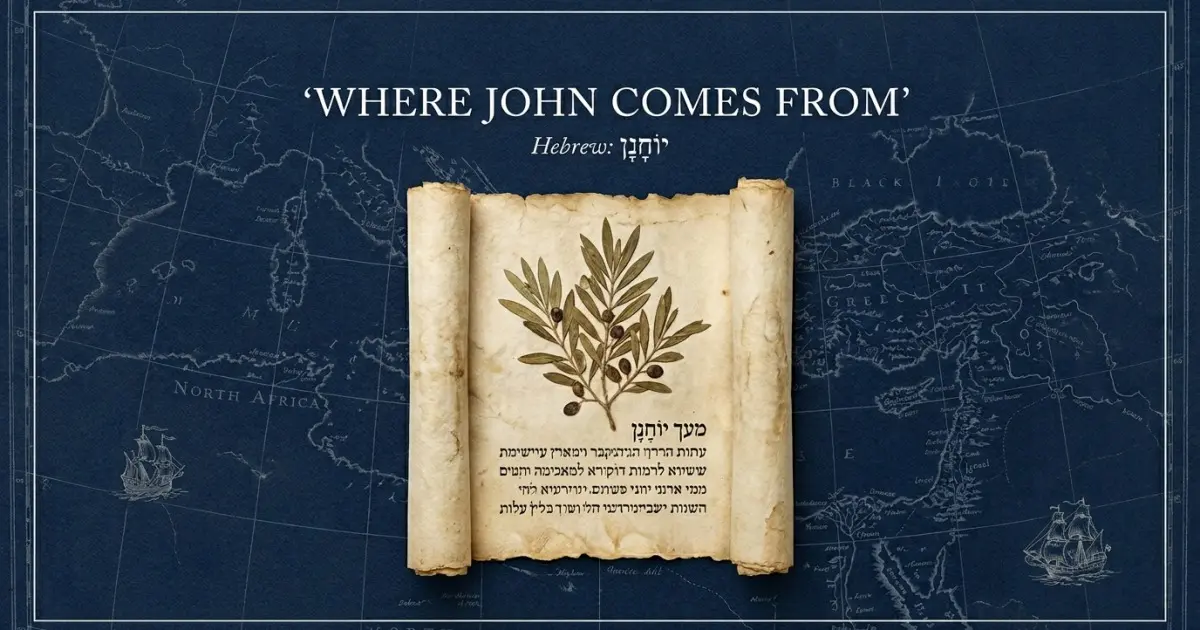
Historically, John came into English through a long chain of transmission from Hebrew into Greek and Latin and then into the vernacular languages of Europe. That path matters because it explains why the name became so deeply embedded in Christian civilization. The older Hebrew source gave the name its gracious meaning, but early Christianity gave it scale. Naming histories consistently stress the same point: John was of exceptional importance to early Christianity. It was borne by John the Baptist and John the Apostle, then by many saints, and later by no fewer than twenty-three popes. Once a name acquires that density of spiritual and institutional repetition, it no longer belongs to one era. It becomes a framework.
That framework made John astonishingly adaptable. It could be translated, reshaped, and localized without losing its core identity. Across Europe, John produced a vast family of equivalents and descendants. This is one of the clearest signs of a foundational name. It does not remain locked in a single linguistic form. It becomes generative. In different languages it kept the same core message of grace while changing shape to suit local speech, which is why so many cultures built their own masculine naming systems partly around John and its relatives.
The effect of this history is still audible today. Even when modern parents do not choose John for explicitly religious reasons, they are still choosing a name built by centuries of scriptural, liturgical, and social repetition. John sounds simple because history sanded it down through constant use. But that simplicity is not emptiness. It is concentration. The name has been refined, not reduced. If this origin is what attracts you most, browse baby names in this origin group.
John Became the Baseline Against Which Other Male Names Were Heard
Once John took hold in English-speaking culture, it did more than remain popular. It became normative. Historical popularity lists bear this out with unusual clarity. Decade tables in modern naming references place John among the leading boys’ names again and again across the early and mid-twentieth century, often at or near the very top. That long run matters because it means John was not simply fashionable. It was, for generations, the name against which other male names were measured. To be named John was not to stand out. It was to stand inside the center of masculine naming culture. To explore more names that sit in this same category, see more masculine name ideas.
This created a paradox that still shapes the name today. John came to signify individuality less through rarity than through reliability. A rare name can feel special because it is uncommon. John felt special because it was trusted. It sounded stable, legitimate, and adult before a child bearing it had done anything at all. That is a form of inherited authority, and it is not trivial. Families often choose names not only for beauty, but for the kind of social forecast they provide. John has long forecast seriousness, continuity, and broad acceptance.
Official Social Security Administration (SSA) data now places John at No. 21 for boys in 2024, which tells a fascinating modern story. The name is no longer the uncontested center it once was, but neither has it collapsed into nostalgia. It remains remarkably strong after a century of saturation. That endurance suggests that John has crossed an important threshold. It is no longer merely popular. It is structural. Even when parents do not choose it, they usually know exactly what kind of name it is.
Why John Sounds So Firm with Only One Syllable
Phonetically, John is almost severe in its economy. One syllable, one opening affricate, one open vowel, one nasal close. There is no extra music in it, no trailing softness, no ornamental second beat. That austerity is part of its dignity. The initial j gives the name immediate presence. The vowel opens it just enough to keep it from sounding cramped. The final n closes the line with quiet firmness. In American pronunciation the vowel is broader; in British pronunciation it is slightly darker. But in either case the effect is the same: the name lands cleanly and holds.
This matters because sound and meaning often reinforce one another in subtle ways. A name meaning “God is gracious” could easily have sounded flowing or tender. John sounds instead like grace made dependable. It does not sentimentalize its own meaning. It states it, then stops. That can make the name feel more masculine in the traditional English sense: not because it is hard, but because it is controlled.
It is also one of the most stable names in ordinary speech. John is easy to hear across a room, easy to spell, and almost impossible to mispronounce within English. That practicality helped its historical spread. Names that survive centuries usually do more than signify well. They function well. John has always functioned exceptionally well.
John Still Reads as Plain, Moral, and Strongly Human
Socially, John now occupies an unusual and powerful position. It is not flashy, not newly rediscovered, not niche, not ironic, and not dependent on trend cycles. That makes it harder to market, perhaps, but easier to trust. In a naming culture that often swings between novelty and revival, John offers something quieter: permanence without performance. It sounds like a real person before it sounds like a style statement.
That is one reason the name still works. Modern parents who choose John are often not choosing spectacle. They are choosing restraint, legibility, and moral texture. John suggests seriousness, but not stiffness; familiarity, but not triviality. It is a name with almost no protective styling around it. There is nowhere for it to hide. If you choose John, you are choosing directness.
This directness gives the name a surprisingly contemporary strength. In an era when many names advertise uniqueness through spelling or sound, John can feel distinctive by refusing advertisement altogether. It is not anonymous, even though many men have borne it. It is elemental. And elemental names often outlast more decorative ones because they remain legible under pressure.

The Three Paths John Opens After Meaning
John with middle names
Because John is so compact and historically dense, middle names do important balancing work. They can modernize the full combination, add softness, or preserve family continuity without overloading the first name. John is one of those names that becomes highly adaptable once the middle slot is used well. If you want the full pairing logic behind that contrast, see middle names for John.
John with nicknames
The nickname world around John is historically rich, but the full name is already so efficient that any shortened form becomes a true social signal rather than a practical necessity. That makes the nickname culture around John more relational than structural. To see how those different moods shorten in real life, explore nicknames for John.
John in pronunciation
Its pronunciation looks effortless because it is. Yet even here John is instructive: the name’s remarkable staying power owes much to how easy it is to say, hear, and carry across regions and generations. The sound is part of the legacy. For the detailed stress pattern, accent notes, and IPA, see how to pronounce John.
Why John Still Sounds Like John
The deepest achievement of John may be that it has survived its own success. Many names used too widely begin to sound emptied out by familiarity. John has not. It has become plainer, perhaps, but not thinner. That is because the name was never built only on style. It was built on grace, scripture, continuity, and a one-syllable form sturdy enough to bear historical overuse without breaking. The name has been translated, honored, inherited, shortened, expanded, modernized, and made ordinary. Yet it still returns to the same core claim: life is gift before it is performance.
That is what gives John its literary and moral resonance. It is a name that seems almost too familiar to examine, and then, once examined, turns out to contain half the history of Western naming inside it. It belongs equally to prophets and neighbors, saints and fathers, kings and carpenters. Its sound is brief, but its biography is vast. In the end, John remains powerful not because it tries to distinguish itself from the crowd, but because it helped create the crowd’s idea of what a trustworthy male name could be. John is grace reduced to one syllable and made durable enough for centuries. That is why John still sounds less like fashion than foundation.