
How to Build a First-Middle-Surname Combination That Flows

A beautiful first name still has to survive the full name.
Many parents fall in love with the first name first. Then they find a middle name that sounds lovely beside it. On a shortlist, the pairing can feel finished.
The surname changes everything.
A name that felt clean can become too long. A gentle name may start to blur. A strong name may turn harsh. A polished first-and-middle pairing may become awkward once the actual surname arrives with its own rhythm, consonants, cultural frame, and visual weight.
That does not make the names wrong.
It means a baby name is never only a first name.
Your child will carry several versions of the name. First name + surname will appear in classrooms, appointments, introductions, forms, and future professional settings. First + middle + surname will live on birth records, certificates, passports, family announcements, and formal documents. Nicknames, initials, monograms, and middle initials may become part of the name’s practical life too.
Full-name flow is about use.
A strong full name can be spoken naturally, written clearly, and carried without constant friction.
The middle name is often the adjustment tool. It can add rhythm, create a pause, bring meaning, soften a sharp transition, or make a short first name feel fuller. It cannot fix every first-surname problem. When the daily name feels wrong, a beautiful middle may only make the formal version prettier while leaving the everyday version unresolved.
You are not creating a performance name.
You are building a name your child can actually use.
When you are still comparing the overall feeling of possible names, begin with Baby Names by Style. Style helps you decide whether the full name should feel classic, modern, soft, strong, vintage, bright, grounded, or rare before rhythm takes over the conversation. For the wider naming process, Expert Baby Naming Guides for Choosing the Right Name can help you keep full-name flow in proportion with meaning, origin, popularity, pronunciation, nicknames, initials, and long-term usability.
This guide focuses on the full structure: first, middle, and surname together. For the broader role of the middle slot, read How Middle Names Work When You Are Building a Full Name.

Full-Name Flow Means Natural Speech, Not Fancy Sound
Full-name flow is easy to misunderstand.
A name does not need to sound poetic, grand, or perfectly symmetrical. Some strong full names are short and plain. Others are long and lyrical. What matters is whether the name can be said, written, and used without the parts fighting each other.
A flowing name has movement, balance, and clarity.
It works at normal speed. You should not have to slow down dramatically every time you say it. You should not need to separate each part carefully to prevent blur. Your mouth should not keep catching on repeated consonants, awkward vowels, or overbuilt transitions.
Test the full name in ordinary sentences:
- “This is ___.”
- “Please welcome ___.”
- “The full legal name is ___.”
- “Can you spell ___ for me?”
- “___, it’s time to go.”
A full name may sound different across those settings. That is normal. The stronger test is whether it remains usable in all of them.
A name that looks balanced on a page can still feel awkward in speech. For a focused read-aloud method, use How to Say a Baby Name Out Loud and Hear Its Real Flow.
A Flowing Full Name Has Hierarchy
A strong full name usually gives each part a role.
The first name carries daily identity. The middle name supports sound, meaning, heritage, or style balance. The surname gives the family, legal, and cultural frame.
Crowding begins when all three parts compete.
A long first name, an ornate middle, and a heavy surname may each be attractive alone. Together, they can feel overbuilt. A bold word name paired with another bold word middle may start to sound like a phrase rather than a child’s name. A surname with strong cultural identity may need the middle to balance it, not shout over it.
The best full names usually let one part lead.
Ava Claire Stone is simple, clean, and easy to carry. Isabella Evangeline Montgomery has more romance and weight. Neither direction wins by default. The full name has to fit the child’s likely daily life, not only the slow, ceremonial way parents may say it before birth.
A full name should not need a stage to sound good.

Start With First Name + Surname Before Adding the Middle
Before choosing the middle, test the first name with the surname.
This is the version your child is most likely to use. A middle name may appear on official forms, but first + surname is the daily structure. Teachers, classmates, doctors, future colleagues, and many documents will use it.
When first + surname has a serious problem, the middle name may only hide it in the formal version.
Test the daily structure first:
- First + surname. The public everyday version.
- Nickname + surname. The version friends and family may actually use.
- First initial + surname. A possible school, work, or email form.
- First name inside a sentence with the surname. The closest test to real speech.
A first name that looks perfect in a list may change beside the actual surname. The surname can add a hard ending, a repeated sound, a long rhythm, a cultural frame, or an unwanted phrase.
For the surname-specific process, use How to Match a First Name With Your Surname.

First and Surname Can Clash Before the Middle Arrives
The first name and surname can create problems before the middle name is even considered.
Watch for:
- Vowel blur. One name ends in a vowel and the next begins with one.
- Repeated consonants. The same sound appears too heavily.
- Accidental rhyme. The pair becomes too playful or sing-song.
- Tongue-twister pressure. The name forces the mouth to reset.
- Unclear boundary. The listener cannot hear where one name ends and the next begins.
- Unwanted phrase or joke. The combination creates a meaning you did not intend.
- Similar endings. The full name sounds overly patterned.
- Too much of one sound. A repeated R, L, S, or long vowel dominates the name.
Mia Anderson may blur at the vowel transition. Leo Owen can run together. Grace Chase may rhyme too strongly. Rory Richards overloads the R sound.
These combinations are not impossible. Some families may still like them. They simply need to be heard clearly before the middle name enters the decision.
A middle name can polish the formal version. It does not erase the sound of first + surname.

The Middle Name Should Improve the Full Name, Not Distract From a Weak Daily Name
A middle name can create a beautiful legal name.
The sharper test is whether it improves the whole structure or distracts from a problem.
A slightly abrupt first + surname pair may benefit from a middle that adds formal balance. A mild vowel blur may still be acceptable when the full name sounds polished and the daily version does not bother you. A first + surname pairing that feels wrong every time you say it deserves more caution.
Ask yourself:
- Would we still choose the first name if the middle name disappeared from daily use?
When the answer is yes, the middle is supporting a strong foundation. When the answer is no, the first name needs another look.
For a broader pre-final check, use How to Test a Baby Name Before Finalizing It.

The Middle Name Is the Most Flexible Rhythm Tool
The middle name can change the entire shape of the full name.
It can make a compact name feel complete. It can give a long first name a clean landing. It can add softness, strength, tradition, meaning, or space. It can also make the full name heavier than it needs to be.
Use the middle name with discipline.
A middle name can add several kinds of rhythm:
- Pause. It creates breathing room between first name and surname.
- Movement. It shifts the name from short to long, long to short, soft to strong, or strong to soft.
- Weight. It gives a light first name more formal presence.
- Relief. It prevents a long first name and long surname from pressing together.
- Shape. It makes the legal name feel complete rather than abrupt.
Jack Thomas Lee has more shape than Jack Lee. Mae Josephine Brooks gives a very brief first-surname pair more substance. Leo Alexander Gray feels fuller and more formal than Leo Gray.
The middle name is not decoration here.
It is rhythm.

Movement Keeps a Full Name From Feeling Flat
A full name often feels strongest when the rhythm moves.
That movement may come from syllable contrast, stress, consonants, vowels, or style. A short first name can grow into a longer middle, then land on a steady surname. A long first name can settle through a short middle before the surname arrives.
Syllable variation creates essential movement: Ava Josephine Carter expands from a brief start into a fuller middle before landing on a steady surname, while Elizabeth Mae Stone uses one short middle syllable to keep a formal first name from becoming heavy. Nora Vivienne Brooks adds elegance to a warm two-syllable name, and Sebastian Jude Wells relies on a brief, sturdy hinge to anchor a longer first name.
That is the value of movement: the name does not march.
It breathes.
When this is the main problem you are trying to solve, How to Choose Middle Names That Soften or Strengthen a First Name can help you choose the right kind of middle.

The Middle Can Also Overload the Full Name
The middle name can make a full name feel complete.
It can also make it crowded.
Long first + long middle + long surname becomes especially risky when every part is ornate, formal, or heavy. Isabella Evangeline Montgomery and Sebastian Alexander Rutherford may sound impressive, but they are substantial names. They need a daily version that feels easier.
This does not make long full names bad. Some families love a formal legal name with presence. The real test is whether the full name still works in ordinary life.
Check:
- First + surname. Is the daily version usable?
- Nickname + surname. Does the casual version feel natural?
- Full legal name. Can it be said without slowing down dramatically?
- Documents. Does the full name feel manageable on forms?
- Family use. Will relatives say it, or avoid it?
A middle name should make the full name complete.
It should not make the name harder to carry.
For the middle-name decision itself, read How to Choose a Middle Name. When a second middle is on the table, use One Middle Name vs Two: How to Decide.

Syllable Patterns Can Help, but They Are Not Laws
Syllables are useful.
They are not rules.
A name does not automatically flow because it follows a formula. Sound, stress, repeated endings, surname length, and style all matter. Still, certain patterns often give the ear useful contrast.
Use these as starting points:
- Short first + longer middle + medium surname. The middle gives the legal name more substance.
- Long first + short middle + surname. The brief middle keeps the first name from overpowering the combination.
- Medium first + short middle + long surname. The middle creates a clean pause before the heavier final piece.
- Same-length names with varied sounds. This can work when stress, vowels, and endings differ enough.
- Short daily name + fuller formal name. This keeps daily use easy while giving the legal name more weight.
The ear wants contrast. That contrast can come from syllable count, stress, vowel shape, consonants, or style.
For a deeper rhythm framework, use How to Use Syllable Flow to Choose a Better Name.
Short First Names Often Pair Well With Longer Middles
Short first names can feel clear and friendly in daily use.
The middle name can give the legal version more presence.
Ava Josephine Carter, Leo Alexander Brooks, and Mia Catherine Ellis all use a fuller middle to give a compact first name more formal weight. The first name stays easy. The middle adds shape.
This pattern works especially well when the surname is simple or medium length.
The caution is vowel flow. Short names such as Ava, Leo, and Mia often end in vowels. When the middle and surname also begin or end with vowels, the full name can blur.
A longer middle helps only when the sound remains clear.
Long First Names Often Need Shorter Middles
Long first names often carry enough style and rhythm on their own.
The middle name should help them land.
Elizabeth Mae Stone, Sebastian Jude Wells, Theodore James Brooks, and Evangeline Rose Carter all use short middles to keep formal first names controlled.
The middle does not compete. It gives the name a hinge.
This pattern is especially useful when the surname has multiple syllables or a strong sound. A long first name, long middle, and long surname may still be beautiful, but the full name needs enough breath to remain usable.
Medium First Names Can Use the Middle as a Clean Hinge
A medium-length first name often works well with a short middle before a longer surname.
Nora Claire Montgomery, Mila Rose Anderson, and Clara June Sullivan use the middle as a hinge. The short middle creates a pause before the surname takes over.
This structure is especially helpful when the surname is three or more syllables, hyphenated, visually long, or culturally specific.
The middle name does not need to be elaborate.
It needs to create clean movement.
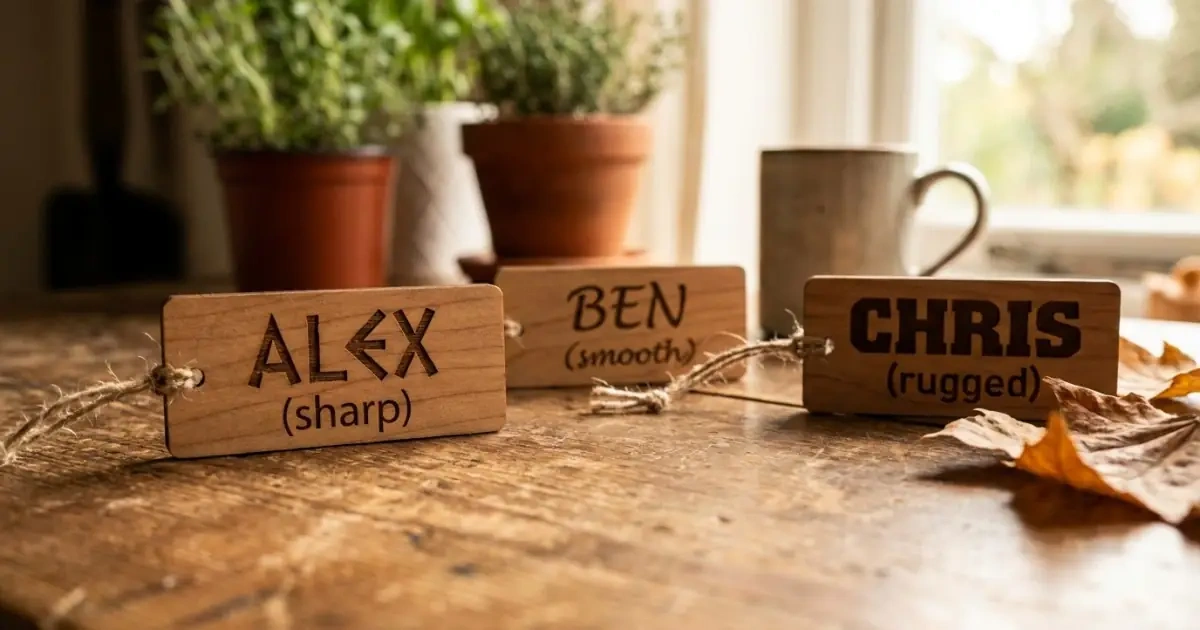
Same-Length Combinations Work When the Sounds Vary
Same-length names are not automatically a problem.
A two-syllable first, two-syllable middle, and two-syllable surname can work when the stress, vowels, and endings vary. Trouble begins when the names share the same rhythm and similar sounds.
Lily Clara Parker may feel too even for some families because the rhythm is steady and the sounds stay light. Nora Elise Carter has more variation in stress and texture.
The problem is not the syllable count.
The problem is sameness.
When every part of the name has the same length, same softness, same ending, or same vowel shape, the full name may start to sound patterned rather than natural.
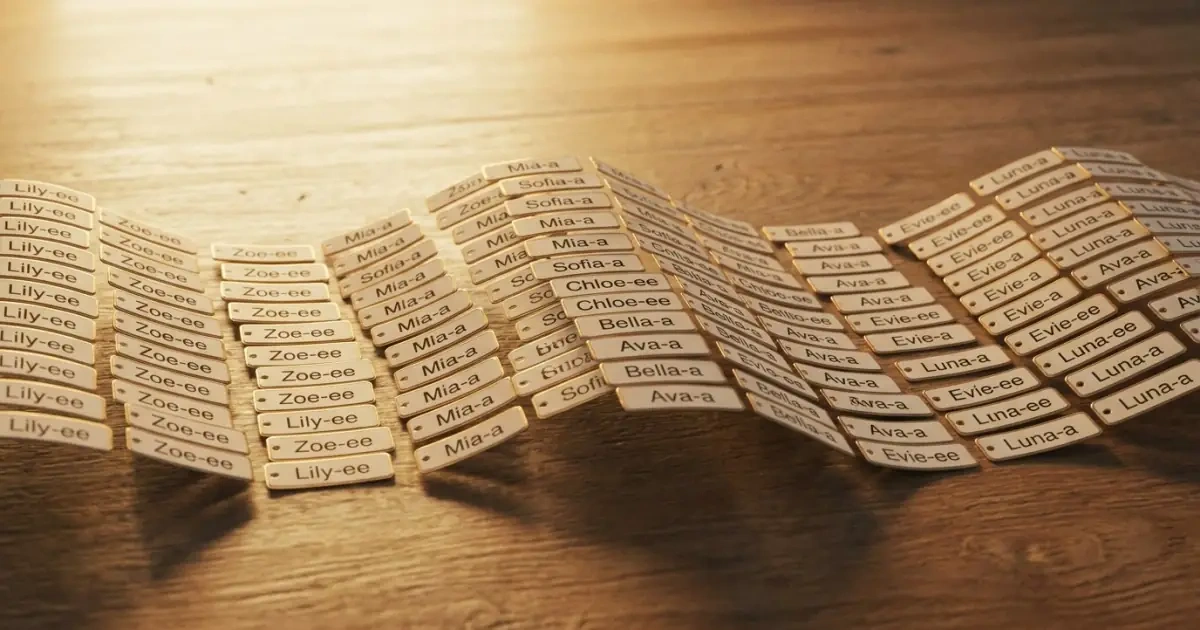
Repeated Endings Can Make the Full Name Sing-Song
Repeated endings can make a full name feel overly designed.
A little echo can be charming. Too much echo makes the name sound less mature.
Watch especially for repeated endings such as:
- -a. Soft and open, but easy to over-stack.
- -ee / -ie. Light and sweet, but quickly sing-song.
- -son. Strong, though heavy when repeated.
- -er. Casual and modern, but noticeable in clusters.
- -ley. Friendly, but often too patterned when repeated.
- -ella. Romantic, but ornate when doubled.
Lily Rosalie Lee stacks light “lee” sounds until the combination feels overly sweet. Mia Amelia Garcia can blur through its repeated soft vowels. Isabella Arabella doubles the romantic rhythm so strongly that one name begins to swallow the other. Nora Cora Sullivan may feel too mirrored for parents who want a cleaner line.
The individual names may be lovely.
The full name still needs contrast.
Vowel Run-Together Can Blur Name Boundaries
Vowel-heavy names can become unclear when one name ends in a vowel and the next begins with one.
Examples worth testing aloud include:
These combinations may still work. They simply need honest read-aloud testing. When vowels run together, listeners may not hear where one name ends and the next begins.
A consonant-starting middle can help. A shorter middle can also help. Sometimes the first name or surname choice needs adjustment.
Do not judge vowel-heavy combinations only on the page.
The page hides blur.
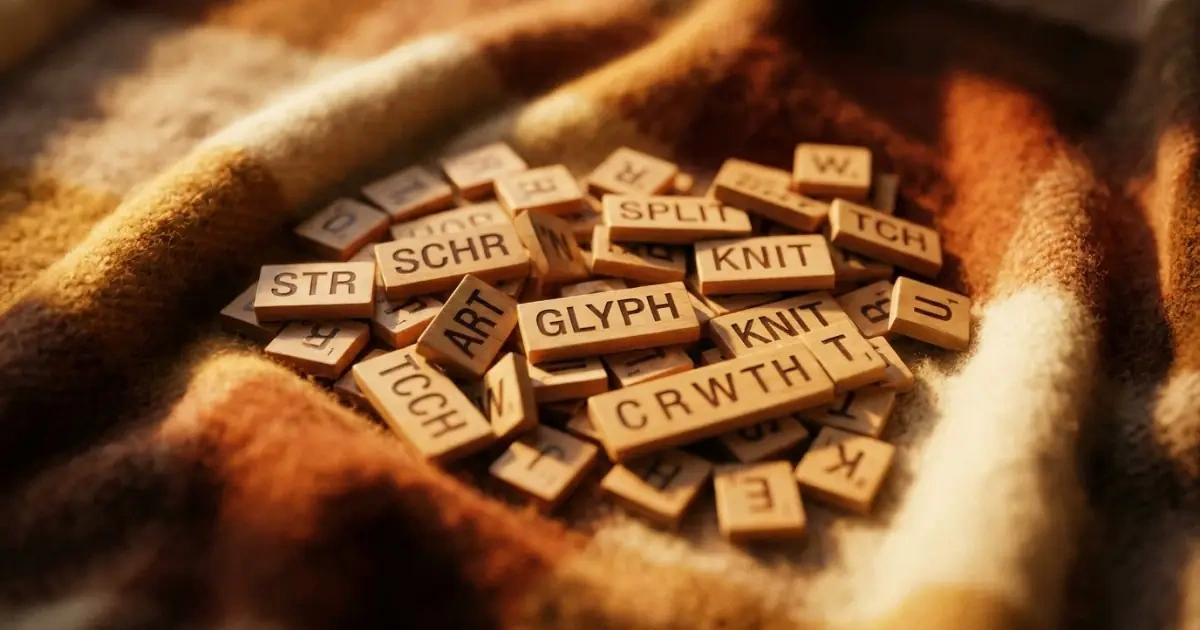
Heavy Consonant Clusters Can Create Stumbling Points
Consonant clusters can give a name strength.
Too many packed together can make the full name hard to say.
Test combinations such as:
The issue is not strength. It is density.
When the full name makes you slow down or reset your mouth, try a softer middle, a clearer middle, or a different order. Names with clusters may also shift across accents. When your family includes different accent patterns, read How to Choose Names That Work Across Different Accents.
Repeated Strong Sounds Can Overload the Full Name
Repeated strong sounds can create a tongue-twister effect.
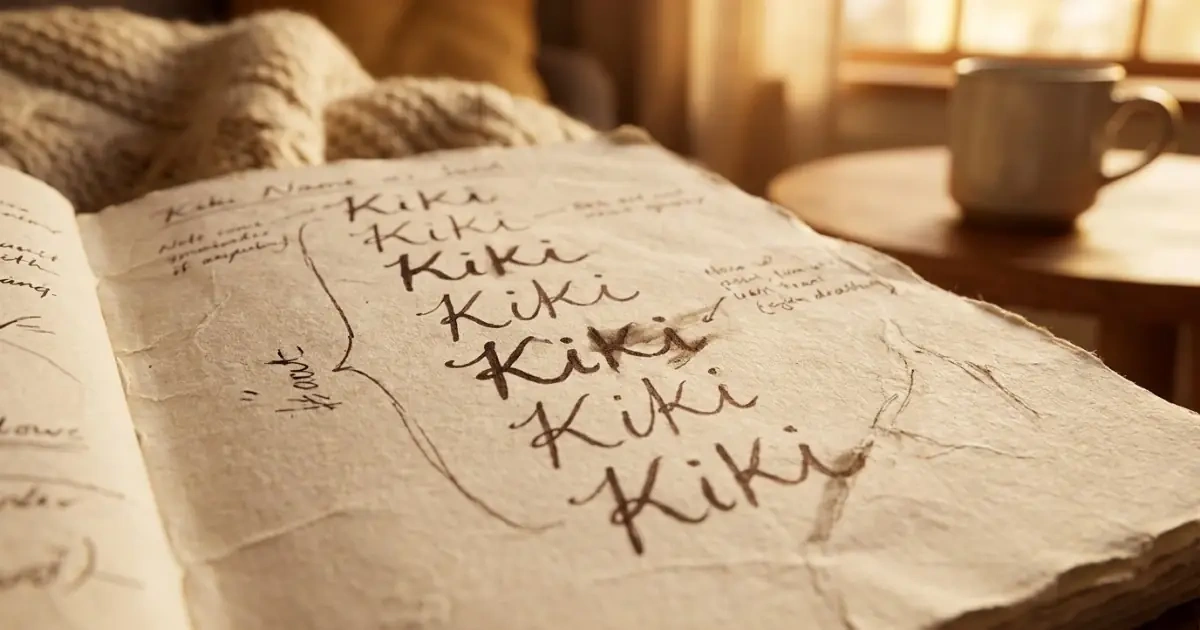
Rory River Richards is full of R energy. Lila Lily Lawrence leans heavily into L sounds. Silas Sebastian Stone stacks S sounds until the name feels sharper than it may look.
None of these names is automatically wrong.
The decision depends on how much repetition you want in the complete name.
A repeated sound can create identity. It can also become the only thing people hear.
Style Balance Matters as Much as Sound
Flow is not only sound.
A full name can be easy to say and still feel unresolved when the styles pull in different directions. Intentional contrast can be excellent. Random contrast can make the name feel accidental.
The middle name can ground, refresh, soften, strengthen, or sharpen the first name.
The question is whether the contrast has a purpose.
Classic Middles Can Ground Bold First Names
A classic middle can stabilize a modern, unusual, surname-style, or word-like first name.
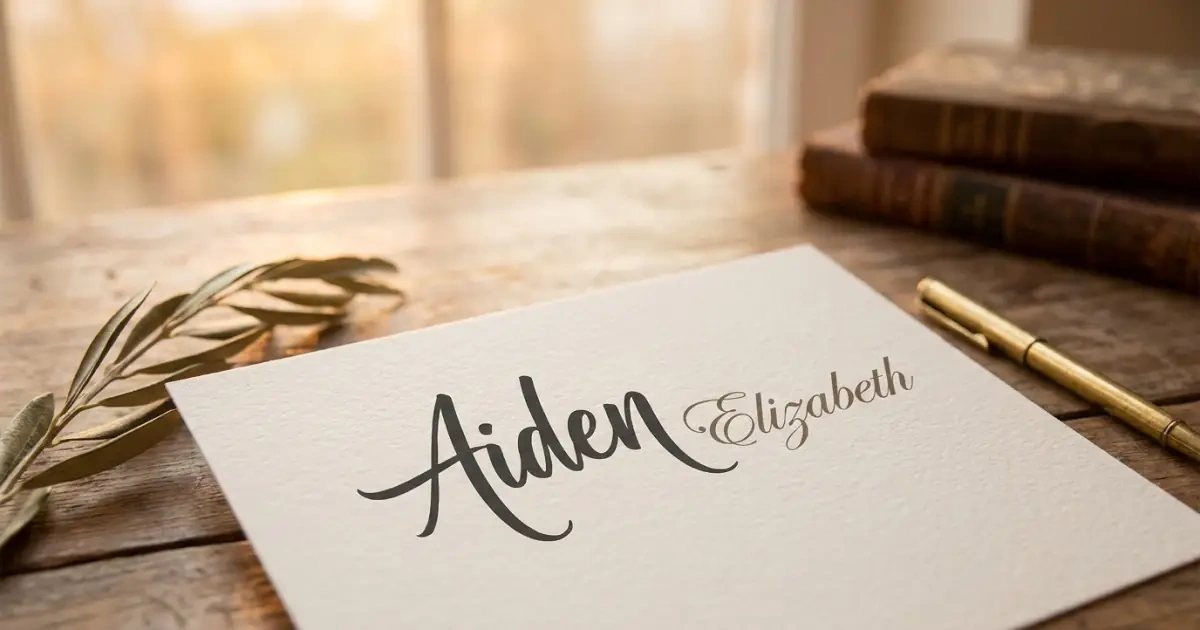
Nova Catherine Brooks gains structure from the middle. Arlo James Sullivan feels relaxed but grounded. Zara Elizabeth Stone pairs energy with classic weight. Atlas Benjamin Carter gives a bold first name a more traditional legal frame.
This is a useful strategy when parents love a bolder first name but want the full version to feel more balanced.
A classic middle still needs a reason. It may be rhythm, family, tradition, or style balance. Chosen only because it “sounds like a middle,” it becomes filler.
For a sharper classic-name filter, read Underused Classic Baby Names: How to Spot Them.
Modern and Nature Middles Can Refresh Classic First Names
The contrast can work in the other direction.
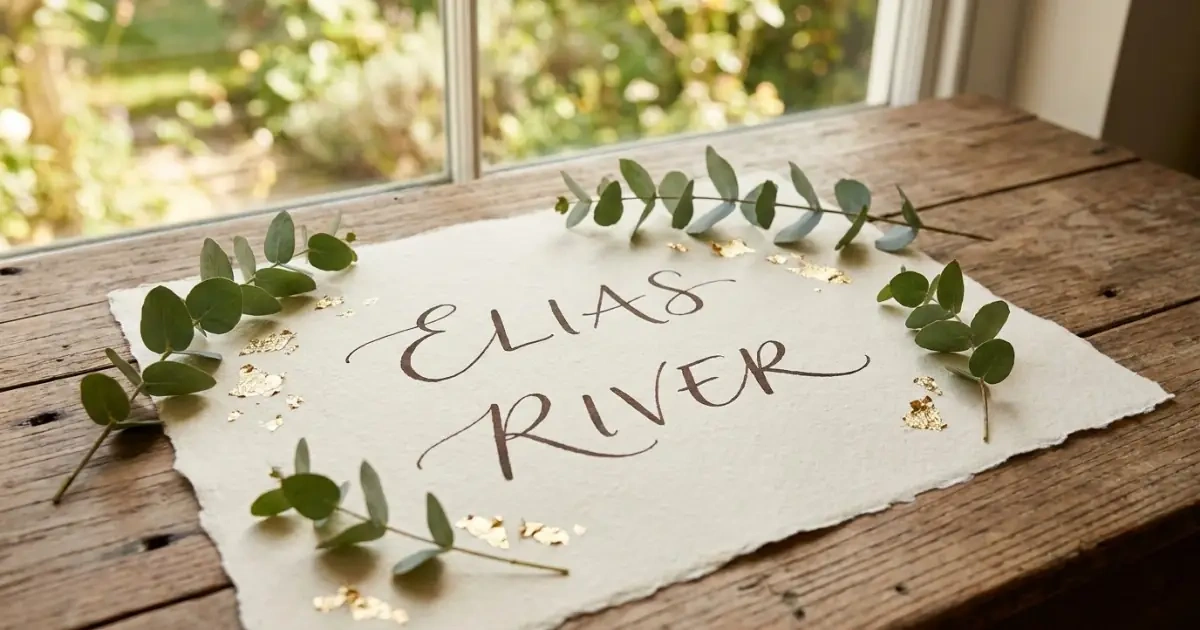
A classic first name may feel more personal with a fresher middle. Elizabeth Wren Carter, Thomas River Brooks, Anna Marlowe Stone, and Joseph Atlas each use the middle to add individuality without weakening the first name’s durability.
The first name provides structure. The middle adds energy.
This contrast needs restraint. A modern middle should refresh the name, not make the full name feel like two separate naming philosophies forced together.
When you are comparing classic and modern directions, use Classic vs Modern Baby Names: How to Decide.
Soft Middles Can Warm Strong First Names
Strong first names can benefit from softer middles.
Victor Elise Brooks, August June Sullivan, Maxwell Rose Carter, and Everett Belle Stone show how a gentler middle can make a tailored first name feel warmer and more approachable.
This can help with surname-style names, sharp consonants, or heavy surnames.
Strength does not always need softening. Some families want a full name with a firm line all the way through. When the combination feels too severe, the middle is the natural place to adjust.
Strong Middles Can Give Light First Names Structure
A light, sweet, or compact first name may need a stronger middle to feel complete.
Lily Margaret Stone, Eva Beatrice Brooks, Mia Josephine Carter, and Nora Vivienne Gray keep the first name easy while giving the full name more history, formality, or substance.
The strongest version usually has contrast without collision.
The first name stays usable. The middle adds spine.
For this specific strategy, return to How to Choose Middle Names That Soften or Strengthen a First Name.

Meaning, Heritage, and Family Names Still Need Flow
A full name should not be judged by sound alone.
Meaning, heritage, and family ties matter. A name that is slightly harder to say may still be worth choosing because it carries something important. The goal is not to erase meaning for smoothness. The goal is to make meaning usable.
A meaningful middle may be emotionally exact but rhythmically difficult. Try variants, related meanings, a different order, or a surrounding name that gives it better support.
A long virtue, nature, or spiritual name may feel heavy after a long first name. After a short first name, it may give the full name exactly the depth it needs.
When meaning leads the decision, use Baby Names by Theme and How to Choose a Baby Name by Meaning. For nature-heavy combinations, How to Choose Nature and Flower Names Without Feeling Too Themed can help you avoid over-stacking imagery.

Heritage Names May Need a Clearer Frame Around Them
Heritage names carry more than sound.
They may carry language, family memory, faith, migration, belonging, or the parent whose surname is not being passed down. That meaning deserves respect. It also deserves placement that helps the child use the name confidently.
A culturally specific first name may benefit from a simple middle. A mainstream first name may leave room for a heritage middle. A surname may already carry one parent’s heritage strongly, while the middle balances the other side.
A middle name can respond to that cultural frame in several ways:
- Reinforce the surname’s origin. This creates cohesion and a stronger cultural line.
- Balance with the other parent’s heritage. Both sides of the family can feel represented without overloading the first name.
- Add a cross-cultural bridge. A familiar middle can make the full name more portable.
- Preserve a family name from another side. This is especially useful when one surname is not passed down.
- Support bilingual use. The middle may give the child a name that works in another language or accent setting.
A middle name may carry:
- A heritage language.
- A family surname.
- An ancestor’s name.
- A culturally specific spelling.
- A place connected to family history.
- A name from the parent whose surname is not passed down.
- A meaning that reflects family values.
- A spiritual or sacred reference.
This is representation, not just rhythm.
For heritage-focused naming, use Baby Names by Origin, How to Use Middle Names to Carry Heritage and Meaning, and How to Choose Bilingual-Friendly Baby Names. When the name needs to work across two languages, How to Choose a Name That Works in Two Languages is the next practical check.

Family Names Should Be Tested, Not Forced
Family names can be meaningful.
They still need to fit the full name.
An honor name may be emotionally right but too long, too heavy, too dated, or too difficult with the surname. That does not mean the honor should be abandoned. You can consider a variant, initial, related meaning, family surname, nickname, or cultural form.
Options include:
- The exact name. Direct, clear, and emotionally transparent.
- A related variant. Useful when the original name feels too heavy or mismatched with the first name.
- The same initial. A subtler connection that leaves more naming freedom.
- The same meaning. Strong when the emotional value matters more than the exact sound.
- A surname. Often effective for honoring lineage or preserving a maternal or ancestral line.
- A place name. Personal when the place is genuinely tied to family history.
- A translation or cultural form. Useful across languages or traditions.
- A nickname. Warm, intimate, and sometimes more honest than the formal name.
- A symbolic connection. Birth month, shared flower, patron, virtue, or meaningful image.
Good honor names feel like gifts.
Not obligations.
For more help, read How to Name a Baby After a Relative Well and How to Use Family Names Without Making the Choice Feel Forced.
Nickname + Surname Is Part of Full-Name Flow
The formal full name is only one version.
Nicknames, initials, and middle initials may become part of everyday use. A first-middle-surname combination can sound polished while the nickname + surname tells a different story.
Elizabeth Mae Stone may flow formally, but Liz Stone has a sharper, shorter feel. Alexander Jude Wells may become Alex Wells. Sebastian Jude Wells may become Seb Wells or Bash Wells, depending on family habit.
Test the likely short forms before deciding.
Ask:
- Do we like the nickname with the surname?
- Does the nickname create rhyme, blur, or awkward initials?
- Will family naturally shorten the first name?
- Can we live with the most obvious nickname?
- Would the nickname still work for an adult?
When you like the formal name but dislike the likely nickname + surname, decide whether you are willing to correct nickname drift.
Use How to Check Nickname Potential Before You Choose before finalizing a name with obvious short forms.
Middle Initials Can Change the Public Version
A middle initial may become part of the child’s public name.
This is common when the first name is popular, when the child shares a name with a parent, or when professional identity later needs distinction. First + middle initial + surname may appear on school records, email accounts, publications, or work documents.
Say and write that version too.
A middle initial can add polish and clarity. It can also create an awkward rhythm or unwanted association.
Check:
- First-middle-last initials.
- First-middle-middle-last initials, when using two middles.
- First initial + surname.
- First name + middle initial + surname.
- Monogram order.
- Email-style formats.
Avoid obvious words, jokes, or abbreviations you would not want attached to your child. You do not need to hunt for every unlikely problem. Clear ones are worth catching.
For a fuller initials process, use How to Check Initials, Monograms, and Awkward Combinations.

One Middle Name Usually Creates a Cleaner Flow Line
One middle name is usually easier to balance.
It gives the full name one central bridge between first and surname. It creates fewer initials. It is simpler on forms. It often works better when the first name or surname already has presence.
A single strong middle is usually better than two weak ones.
When one middle gives the full name rhythm, meaning, and clarity, do not add a second only because the name feels more impressive that way.
Two Middles Can Work When Each One Has a Job
Two middles can work beautifully when each name contributes something different.
One may carry family while the other carries heritage. One may add rhythm while the other adds meaning. One may represent one side of the family while the other represents another. In some families, two middles are part of naming tradition.
The key is purpose.
Each name must earn its place.
When you are considering two middles, test every version:
- First + Middle 1 + Surname.
- First + Middle 2 + Surname.
- First + Middle 1 + Middle 2 + Surname.
- First + Surname.
- Nickname + Surname.
The two-middle version should sound better, feel more meaningful, or solve a real family need. When it only feels longer, reconsider.
For a deeper one-vs-two decision, use One Middle Name vs Two: How to Decide.

Read the Full Name Aloud Like Real People Will Say It
The most useful full-name test is simple: say it aloud in real ways.
Do not only read the name slowly as if announcing it. Use normal speech, different settings, and different emotional tones.
Start with normal speed. Then say it slightly faster, as if giving information at an appointment or calling the name from another room. A name that only works when spoken slowly and carefully may be fragile.
Use sentences that pressure the name in different ways:
- “This is ___.”
- “Please welcome ___.”
- “The full legal name is ___.”
- “___, it’s time to go.”
- “Can you spell ___ for me?”
Then test different registers:
- Warm family introduction.
- Formal announcement.
- School roster name.
- Professional introduction.
- Parent calling across the room.
- Doctor’s office name.
The name does not need to sound identical in every setting. It should feel usable in all of them.
Recording the name can be surprisingly useful. Parents often hear names differently on playback. Record first + surname, full name, nickname + surname, and the initials version. Listen without looking at the written name.
Sound problems become easier to hear when the page is not helping you.
Paperwork and Document Flow Matter Too
A full name needs to work on paper.
Some combinations sound good but become difficult in forms, records, email formats, or official documents. This matters more when the full name is long, includes two middles, uses hyphens, includes diacritics, or has a complex surname.
Write the legal version exactly as you plan to use it.
Check:
- Birth certificate.
- Passport-style form.
- School form.
- Medical form.
- Graduation program.
- Email-style format.
- Monogram.
Look at length, spacing, initials, and readability. A name that sounds fine may feel visually crowded. A name that looks beautiful may be harder to say.
Long names can be wonderful when they have a clear daily form: first + surname, nickname + surname, or first + middle initial + surname. Without that daily escape hatch, the legal version may ask too much of the child.
Diacritics, Hyphens, and Surname Order Affect Flow
Some names work beautifully aloud but become more complicated in systems.
This can happen with accent marks, hyphens, apostrophes, multiple surnames, surname-first traditions, or two middle names. Bilingual and multicultural families need both a spoken test and a document test.
Check:
- Legal spelling. Will the official system preserve the name as intended?
- Travel documents. Will the passport match the family’s preferred version?
- School systems. Will the name be shortened, reordered, or simplified?
- Family pronunciation. Can relatives say the full name naturally enough?
- Surname order. Does the name still work when surname-first order is used?
- Everyday version. Which parts of the name will people actually say?
For accent and cross-language concerns, read How to Choose Names That Work Across Different Accents, How to Choose a Name That Works in Two Languages, and How to Choose a Name That Travels Well Internationally.

Mistakes That Make First-Middle-Surname Flow Worse
Most full-name flow mistakes come from testing the parts separately.
A first name may be excellent. A middle name may be meaningful. The surname may be fixed. The full name still needs to work as one name.
Choosing the middle before testing the surname
First + middle may sound lovely.
The surname changes the entire rhythm.
Do not finalize the middle name until first + surname and first + middle + surname have both been tested. The surname may call for a shorter middle, a stronger middle, a softer middle, or less complexity.
Overusing names with the same ending
Repeated endings create an echo.
Watch repeated -a, -ee, -ie, -son, -er, -ley, and -ella endings. A little repetition may be sweet. Too much makes the name feel sing-song or designed.
Letting meaning override usability completely
Meaning matters.
The child still has to carry the full name.
When a meaningful name creates constant stumbling, confusing initials, or an uncomfortably long legal version, consider a variant, middle placement, different order, or related meaning.
The goal is not to remove meaning.
The goal is to make meaning usable.
Adding more names to fix a sound problem
A middle name can help.
It can also make the name longer without solving the real issue.
When first + surname is the problem, solve that directly. The middle may improve the formal version, but it will not change the daily form.
Testing only the formal version
The full legal name matters, but it is not the only version.
Test first + surname, nickname + surname, initials, monogram, and document formats. A name that works only in the full formal version may still create daily friction.

A Practical Framework for Building a Flowing Full Name
Use this framework once you have one or more serious first names and a surname to test.
The goal is not a perfect formula.
The goal is a name that sounds natural, feels balanced, and works in real life.
Step 1: Test first + surname
Start with the daily name.
Ask:
- Does it blur?
- Does it rhyme?
- Is it easy at normal speed?
- Does it create an awkward phrase?
- Does it feel too short or too heavy?
- Does the likely nickname + surname work?
When first + surname has a serious problem, solve that before choosing the middle.
Step 2: Decide what the middle needs to do
Name the middle’s job.
It may need to:
- Add pause.
- Add weight.
- Soften the first name.
- Strengthen the first name.
- Carry meaning.
- Carry heritage.
- Honor family.
- Improve initials.
- Create formal balance.
- Make the legal name feel complete.
Knowing the job helps you compare middle names fairly.
Step 3: Try three middle-name types
Test three types of middle names:
- Simple rhythm middle. Useful when sound is the main problem.
- Meaningful or family middle. Useful when the name needs emotional or cultural depth.
- Style-contrast middle. Useful when the first name needs warmth, weight, freshness, or structure.
A simple rhythm middle may sound best. A family middle may matter most. A style-contrast middle may make the full name feel more alive.
Testing all three prevents you from comparing random names with different jobs.
Step 4: Compare full-name versions
Use a table to make the tradeoffs visible.
| Version | Flow | Style Balance | Meaning | Initials | Daily Usability |
| First + Middle A + Surname | |||||
| First + Middle B + Surname | |||||
| First + Middle A + Middle B + Surname |
One version may have the best flow. Another may carry the strongest meaning. Another may create cleaner initials.
The strongest choice usually has the best overall balance, not the single most impressive feature.
Step 5: Choose the version that sounds natural, not just impressive
A flowing full name does not need to be elaborate.
It should work in speech, forms, family use, and future introductions. The best version often feels easy to carry, not just beautiful to announce.
Choose the full name that feels complete without feeling crowded.

Common Questions About First-Middle-Surname Flow
Does the middle name have to be shorter than the first name?
No. Contrast helps, but syllable count is not a strict rule. Sound, stress, surname length, repeated endings, and style balance matter more than whether the middle is shorter.
Can a middle name fix a bad first-surname pairing?
It can improve the formal full name, but it cannot fix the daily first + surname form. When first + surname feels wrong, solve that before relying on the middle.
Is a long full name a problem?
Not always. Long names can be strong when they have a usable daily form and work on documents. The issue is not length alone; the issue is whether the name feels crowded or hard to manage.
Should style match across all three names?
Not necessarily. Intentional contrast often creates better balance. A classic middle can ground a bold first name, while a modern middle can refresh a traditional first name.
What if the full name sounds too plain?
Try a more meaningful, distinctive, or style-contrasting middle. Avoid adding complexity only for drama. The name should feel more complete, not more crowded.

Where to Go Next When Refining Full-Name Flow
A flowing full name does not have to sound elaborate.
It should feel natural in real use: first + surname, full legal name, nickname, initials, and documents. The best combination is not the one that looks most impressive in a list. It is the one your child can carry with clarity, meaning, and ease.
Let your exact concern shape your next move. If aesthetic tone dictates the middle slot, return to Baby Names by Style, whereas Baby Names by Origin and Baby Names by Theme offer steadier frames for heritage or symbolism, with Baby Names by Popularity keeping familiar and distinctive choices in perspective.
Finally, refine the overarching architecture: clarify the slot’s purpose with How to Choose a Middle Name, understand its mechanical role through How Middle Names Work When You Are Building a Full Name, and run the final auditory check with How to Say a Baby Name Out Loud and Hear Its Real Flow.
A full name works best when every part has a reason. The first name carries daily identity. The middle supports sound, meaning, or balance. The surname belongs to the whole rather than sitting at the end like an afterthought.
When those pieces work together, the name stops feeling like a list. It becomes one complete identity.