
How to Choose a Baby Name by Origin

For many parents, choosing a baby name by origin feels more serious than ordinary browsing.
They are not only looking for a name that sounds attractive. They want roots: language, faith, family memory, migration, history, or a cultural thread that should not disappear. A name chosen this way can feel less random. It gives the decision a reason before style has a chance to take over.
That instinct is strong. It is also incomplete.
Origin can make a name feel grounded, but it cannot decide everything by itself. A name may come from the right language and still feel wrong with your surname. A family form may honor the right person while creating pronunciation friction you do not want to carry. A traditional spelling can hold visible heritage; a familiar variant may serve the child’s daily life with less strain.
This is where parents often get stuck. They begin with a clear wish an Irish name, a Hebrew name, an Arabic name, a name from a grandparent’s culture and assume the hardest part is done. In practice, choosing the origin usually opens the deeper questions.
Are you preserving heritage, reconnecting with something partly lost, honoring faith, combining two cultures, or responding to the sound and style of a naming tradition? Do you want the original spelling, a familiar form, or a related variant? How much pronunciation friction feels worthwhile? Does the name still work when it leaves the origin category and enters school, family life, paperwork, adulthood, and everyday speech?
Origin is a strong beginning. It should not become the only argument.
Use baby names by origin to explore the wider landscape first. This guide is for the next stage: choosing inside an origin lane with enough honesty to find a name that is rooted, usable, and truly right for your family.

Origin Gives a Baby Name Roots, but Roots Still Need Real Life
A name with cultural or linguistic roots can carry a kind of weight that pure aesthetics often cannot.
It may connect a child to grandparents, a homeland, a faith tradition, a language, a migration story, or a family identity that parents want to keep visible. Even when parents are not naming directly from their own background, origin can make the search feel less decorative. The name has a place to come from.
That matters.
Parents often turn toward origin after generic lists begin to feel thin. At first, they may browse by sound, popularity, or style. Later, when the decision becomes emotionally serious, a different question appears: what kind of roots should this name carry?
Still, rooted does not automatically mean right.
Cultural history cannot repair every practical weakness. A name with impeccable roots can still feel awkward in your daily speech. A less traditional form may feel more livable in the place your child will grow up. A spelling can be beautiful in its original language and exhausting in your actual environment. A globally familiar version may travel easily but feel too softened for the heritage work you hoped the name would do.
| What Origin Can Give a Name | What Origin Cannot Decide Alone |
| Cultural depth | Whether the name works with your surname |
| Family connection | Whether both parents enjoy saying it |
| Language history | Whether pronunciation friction feels worth carrying |
| Religious or symbolic meaning | Whether the name has the right style for your family |
| A clearer search lane | Whether the chosen form fits your child’s real life |
| A stronger reason for the name | Whether the name still feels good without explanation |
The strongest origin-based names do both jobs. They carry roots and live well.
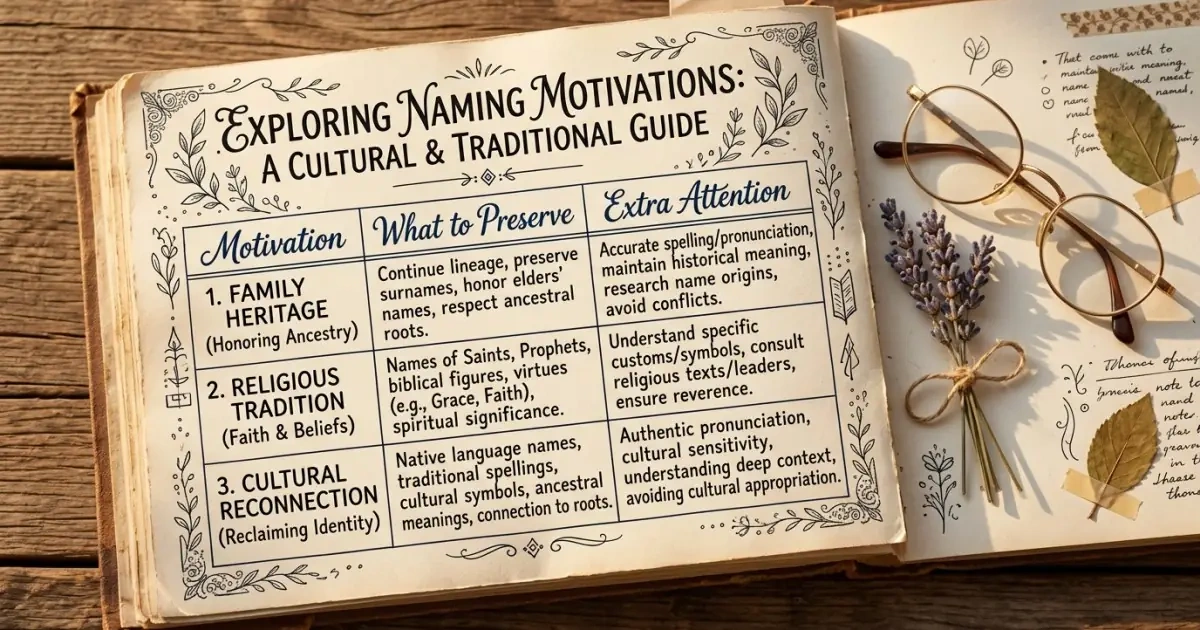
“Choosing by Origin” Can Mean Several Different Decisions
The phrase sounds simple. The reality is more layered.
Choosing a baby name by origin may mean searching within a language tradition, a cultural heritage, a religious stream, a regional identity, or a family’s ancestral background. It may also mean choosing a name whose history feels meaningful even when the parents do not share that origin directly.
Those motivations should not be treated as identical.
| Motivation | What Parents Are Usually Trying to Preserve | What Deserves Extra Attention |
| Family heritage | A visible connection to ancestry, grandparents, migration, or family memory | Original forms, family pronunciation, surname fit, emotional weight |
| Religious tradition | A name tied to faith, scripture, saints, prophets, or spiritual meaning | Meaning, community use, respect, pronunciation |
| Cultural reconnection | A link to a language or culture softened across generations | Authentic use, spelling, family comfort, symbolism |
| Cross-cultural naming | A name that can live in more than one family world | Pronunciation across languages, neutrality, shared ownership |
| Aesthetic attraction | A sound or style associated with a particular origin | Daily usability, respectful context, genuine attachment |
| Honor naming | A tribute to a person or family line | Whether the exact name or a related form works best |
A parent choosing an Arabic name because it belongs to family faith and everyday life will weigh the decision differently from a parent drawn to Arabic names for elegance and sound. A family choosing an Irish name to recover ancestry may evaluate Niamh differently from a family that simply loves the spare sound of Neve.
Clarity early in the process prevents confusion later. Origin should not be a vague glow around the name. It should be a real reason with real consequences.

Name the Reason Origin Matters Before You Build the Shortlist
Before comparing individual names, slow the process down.
Why does this origin matter?
A vague answer will make every later decision harder. You may overvalue tradition when daily fit matters more. You may choose an adapted form and later feel that you diluted the very thing you meant to protect. You may reject a beautiful name because it is not “authentic enough,” without asking whether that level of authenticity was ever your actual goal.
| Reason Origin Matters | A Good Shortlist Should Include |
| “We want to honor our family’s roots.” | Names that are recognizable within that family story, not only names from the same broad region |
| “We want to recover a language connection.” | Names with real linguistic use and pronunciation you are prepared to protect |
| “We want a faith-connected name.” | Names whose spiritual meaning and community use feel appropriate |
| “We are blending two cultures.” | Names that can be spoken, understood, or accepted across both sides |
| “We love the style of this origin.” | Names that also work in your actual family voice and environment |
| “We want to honor a specific person.” | Exact names, variants, initials, middle-name options, and related meanings |
This is not about policing your motivation. Aesthetic attraction is real. Heritage obligation is real. Spiritual meaning is real. Family memory is real. The danger comes from pretending one motivation is another.
When the origin is carrying identity, you may accept more pronunciation work. When it is mostly offering a style you love, social ease may deserve more weight. A tribute to a grandparent may justify a harder form; a name chosen mainly because it looks elegant may need to pass daily-use tests more strictly.
The “why” decides which trade-offs are worth carrying.
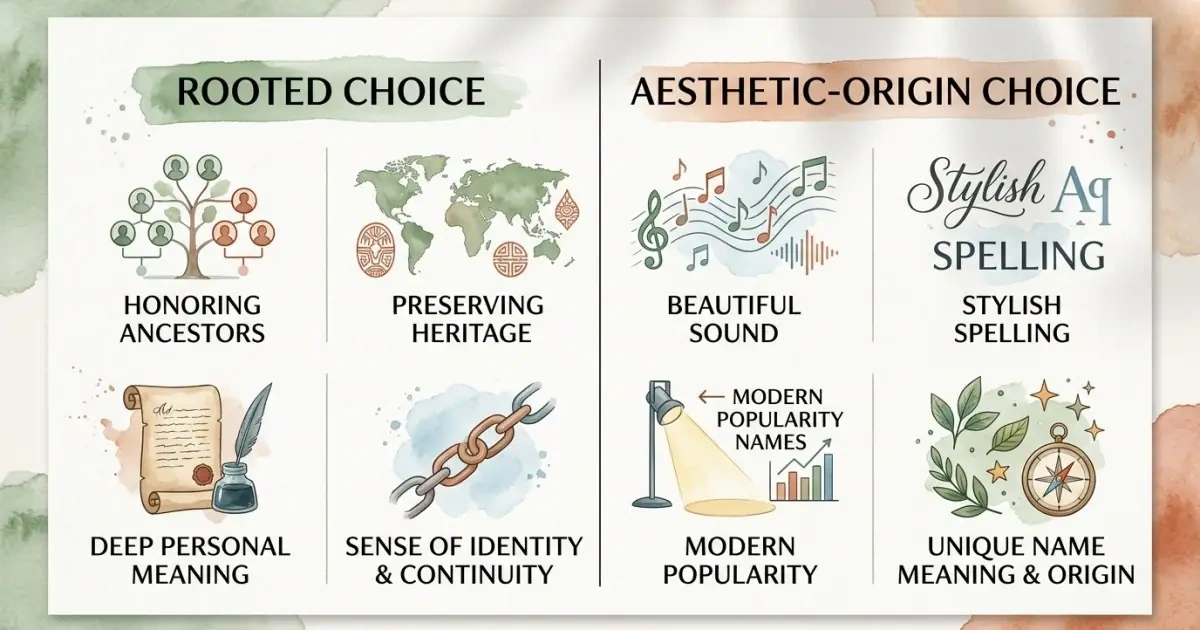
Roots and Aesthetic Appeal Should Not Be Confused
A name can be culturally rooted. A name can be aesthetically appealing. Sometimes it is both.
Those are still different kinds of attachment.
A rooted choice usually connects to family language, faith, ancestry, lived culture, or a personal history parents can name. An aesthetic choice may be sincere, but the attraction often comes from sound, visual shape, atmosphere, or the feeling a culture’s names seem to carry from the outside.
Neither motivation automatically makes the name good or bad.
They do, however, change the ethics and the trade-offs.
| Rooted Choice | Aesthetic-Origin Choice |
| Carries a direct family, faith, language, or heritage reason | Begins with sound, image, style, or atmosphere |
| May justify preserving a harder spelling or pronunciation | Usually needs stronger usability and context checks |
| Often tolerates more correction because the roots matter | Should avoid treating culture as decoration |
| May involve family expectations or inherited forms | Needs honest respect for meaning and use |
| Feels personal beyond taste | Must still become more than a surface preference |
A parent with a real Irish family connection may choose Saoirse and accept pronunciation teaching as part of the name’s value. Another family may love Irish names for their poetic feel but prefer Nia or a more familiar form because daily ease matters more than preserving a specific spelling tradition.
Both choices can be thoughtful. The mistake is using the language of deep roots when the attraction is mainly surface, or dismissing a rooted form too quickly because outsiders may need help with it.
When that tension is central, How to Choose Names With Strong Cultural Roots Respectfully belongs beside this guide.
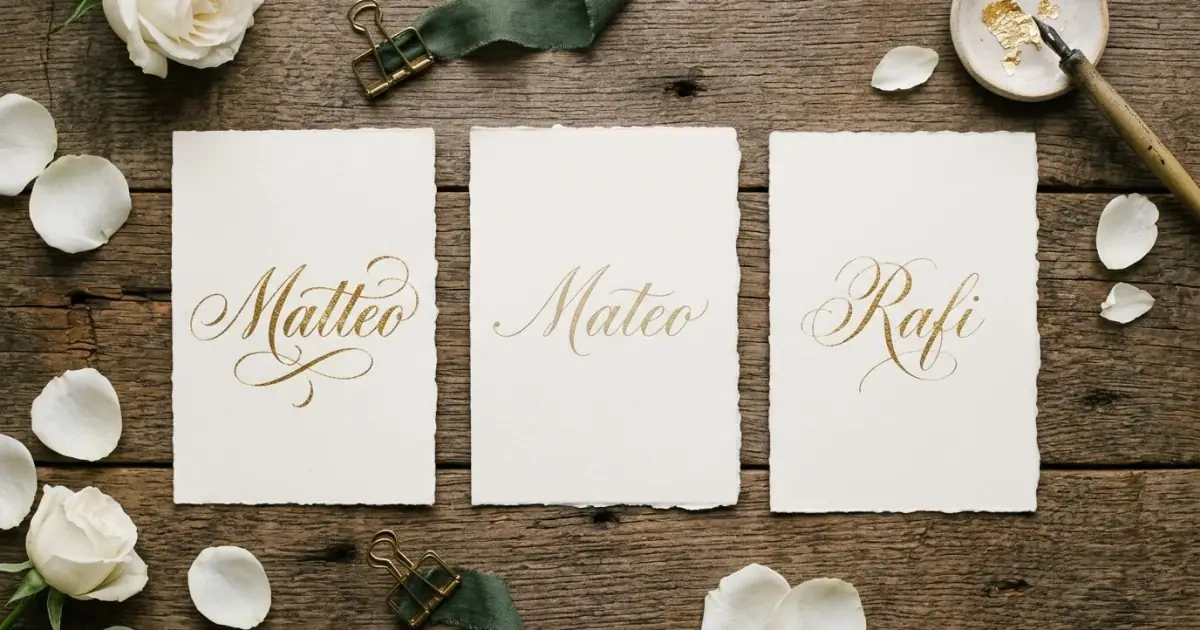
Origin Should Work as a Filter, Not a Verdict
Two names from the same origin can lead to completely different lives.
That is why origin should narrow the field, not end the conversation.
Consider Rafael and Raphael. The names sit close together, but their spelling, cultural signal, and likely pronunciation environment may differ. Matteo and Mateo create another kind of choice: one form may feel more Italian, another more Spanish or broadly familiar, depending on the family and setting. Rafi changes the whole rhythm again, moving the name toward intimacy and ease.
The origin lane remains related. The daily experience shifts.
| Same Origin Lane, Different Daily Result | What Changes |
| Original spelling vs familiar spelling | Visibility of roots, ease of first reading, correction burden |
| Formal form vs short form | Gravity, warmth, adulthood range, nickname control |
| Traditional form vs modern variant | Heritage strength, style signal, social ease |
| Rare form vs widely recognized form | Distinctiveness, explanation load, accessibility |
| Family pronunciation vs public pronunciation | Emotional authenticity, daily consistency |
A name’s origin can tell you where it comes from. It cannot tell you whether that exact form fits your surname, your community, your partner’s voice, your child’s likely environment, or your own tolerance for correction.
That wider standard belongs in What Makes a Good Baby Name? and How to Test a Baby Name Before Finalizing It. Origin builds the field. Testing decides whether a finalist can live there.

Set an Origin Boundary That Is Neither Foggy nor Rigid
Origin-based naming gets messy when the boundary is poorly drawn.
A category that is too broad creates shapeless browsing: “European,” “heritage,” “biblical,” “international,” or “old-world” can contain too many unrelated names to compare intelligently.
A boundary that is too rigid can create a different problem. Parents may lock themselves into one spelling, one branch, one family rule, or one traditional form before they know whether that precision actually serves the child.
The better boundary is specific enough to guide the search and flexible enough to let good names breathe.
| Boundary Type | Usually Too Broad | More Useful Version |
| Regional | “European names” | Italian names that work easily in English |
| Religious | “Biblical names” | Hebrew-rooted names with warm modern use |
| Heritage | “Irish names” | Irish names with pronunciation friction we are willing to carry |
| Multicultural | “Names that work everywhere” | Names usable in both family languages without losing identity |
| Style-origin mix | “French-sounding names” | French names that feel quiet, not ornate |
| Family honor | “Grandmother’s culture” | Names from her language or family line that both parents can say with confidence |
A strong boundary might be “Arabic names that travel well across accents,” “Hebrew names with meaning and modern flow,” “Irish names we are prepared to teach,” or “bilingual-friendly names that do not feel flattened.”
The goal is not philosophical purity. It is a working field small enough to compare honestly.

Four Questions That Keep Origin-Based Naming Honest
When the decision starts getting blurry, return to four questions.
| Question | Why It Matters |
| Does this name genuinely belong to the origin I care about? | Prevents vague aesthetic labeling from replacing real context |
| Do I understand its meaning and use? | Protects against choosing a name with misunderstood weight |
| Can my family say and live with it naturally? | Keeps the decision grounded in daily speech |
| Would I still like the name without the origin label? | Reveals whether the name itself has enough strength |
That last question can be uncomfortable. It is also clarifying.
A name should not depend entirely on the prestige, romance, or emotional glow of its origin. The label may explain why the name entered the list, but the name itself still has to earn its place.
Ezra may appeal because of Hebrew roots, spiritual weight, and clean sound. Naomi offers warmth and history with broad usability. Leila can draw parents through Arabic and Persian associations, lyrical sound, and cross-cultural familiarity. The origin matters, but sound, family fit, and daily use still decide whether the name belongs.
Honest questions make instinct sharper.

Meaning Carries More Weight When Origin Leads the Search
Names chosen by origin often bring stronger meaning fields.
They may carry mythological, religious, historical, linguistic, or symbolic depth. That is part of their appeal. Parents who begin with origin are often looking for more than a pleasing sound; they want the name to carry a story worth keeping.
Meaning becomes strongest when it deepens a name that already works.
It becomes unstable when it is asked to rescue a name that does not.
| Meaning Is Strengthening the Name When… | Meaning Is Overworking When… |
| You enjoy saying the name even without explaining it | You keep defending the name through its story |
| The meaning connects to your real family values | The definition sounds impressive but distant |
| Both parents feel attached to the name itself | One parent feels obligated by heritage or faith |
| The name survives surname and pronunciation tests | The practical problems keep resurfacing |
| Related names cannot carry the meaning as well | A nearby variant would preserve the value with less friction |
A family drawn to strength, light, peace, blessing, or joy within one origin may discover several names with similar emotional logic. That opens space. The exact form is not always the only way to carry the value.
For example, parents seeking a name connected to light might compare Lucia, Lucy, and Lucian for sound, formality, language feel, and surname fit. A family drawn to peace might weigh Solomon against a shorter or more modern-feeling name in the same symbolic field.
Meaning should give the name depth. It should not trap you inside a form that never becomes livable.
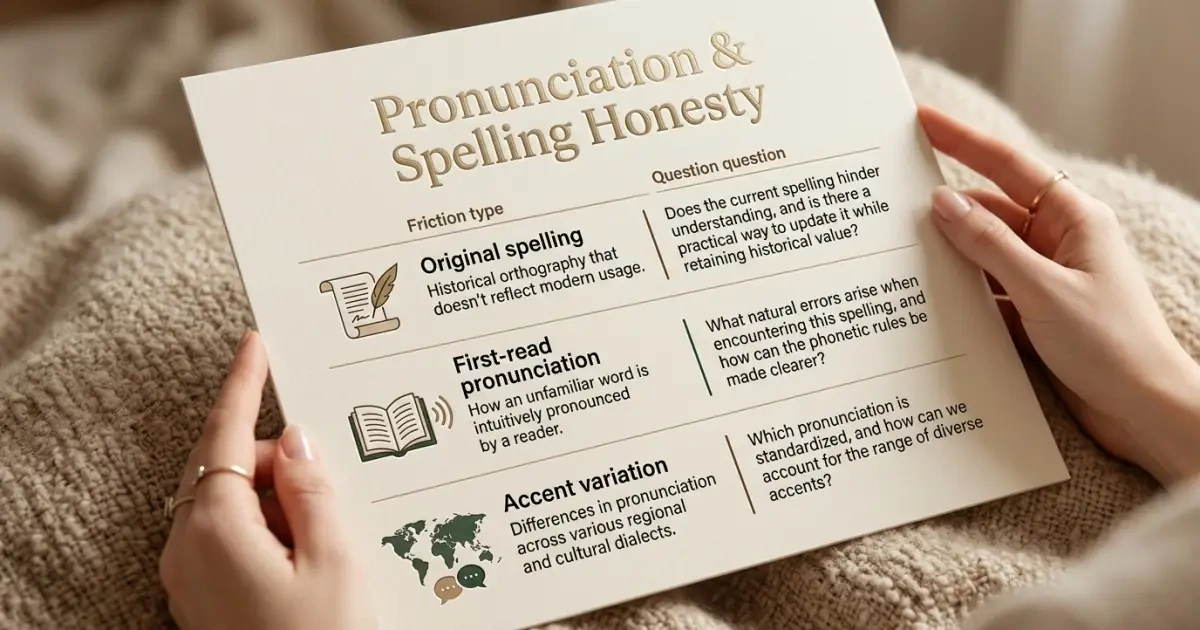
Pronunciation, Spelling, and Accent Deserve Early Honesty
Origin-based names often bring beautiful spelling traditions.
They can also bring real friction.
Some families are happy to carry that friction because the name matters enough. Others will quietly resent it. Neither response should be disguised as virtue or weakness. The honest question is whether the daily correction is worth the cultural, emotional, or aesthetic value of the name.
| Friction Type | What to Ask Before Committing |
| Original spelling | Is this spelling central to what we love, or mainly decorative? |
| First-read pronunciation | Are we comfortable teaching the name repeatedly? |
| Accent variation | Does the name still sound good in the accents around us? |
| Transliteration | Which form feels most honest and usable in our environment? |
| Diacritics or marks | Will official forms support them, and do we care if they are dropped? |
| Family pronunciation | Can both sides say the name in a way that feels respectful? |
Niamh is not the same decision as Neve. Aoife is not the same decision as Eva, even when families are drawn to overlapping sound or heritage themes. The original forms carry visible roots and real pronunciation responsibility. That responsibility may be welcome, especially when the name belongs deeply to the family. It may also be more than a particular household wants to manage.
Cross-accent names need the same honesty. A name can be graceful in one language rhythm and clumsy in another, or surprisingly strong across several.
When pronunciation and spelling are the main tensions, continue with How to Choose Names That Work Across Different Accents, How to Choose Bilingual-Friendly Baby Names, How to Choose a Name That Works in Two Languages, and How to Keep a Cultural Spelling Without Creating Constant Friction.
The point is not to avoid every correction. It is to choose the correction knowingly.

Style Still Matters Inside an Origin Lane
Not every name from the same origin feels alike.
This is where origin-based naming becomes more precise. Parents may say they want a French name, a Greek name, a Hebrew name, an Irish name, or an Arabic name, but the actual attraction may live in a specific style inside that origin.
French names often carry an ornate or romantic polish, whereas Greek choices lean toward mythic, scholarly, or clean classical lines. Hebrew and Irish origins bring their own distinct gravity: one grounded in warm biblical familiarity, the other often offering spare poetic strength, lively sound, or highly traditional forms.
Origin gives the roots. Style decides how the name behaves today.
| Origin Lane | Style Differences Parents May Be Choosing Between |
| Irish | Traditional spelling, modern familiarity, poetic sound, compact strength |
| Hebrew | Biblical gravity, warm familiarity, spiritual meaning, modern simplicity |
| Arabic | Lyrical elegance, religious depth, cross-cultural familiarity, strong consonant structure |
| Greek | Mythic drama, classical history, clean modern forms, philosophical weight |
| Italian | Warmth, rhythm, romance, family visibility |
| Sanskrit | Spiritual meaning, philosophical depth, pronunciation responsibility |
A family may love one Irish name and reject another with equal roots because the style is wrong. That is not disrespecting the origin. It is recognizing fit.
Use baby names by style when the origin lane is clear but the feeling of the names is not. When heritage, sound, and aesthetic taste start competing, How to Balance Meaning, Sound, and Style in a Baby Name gives the decision a better frame.

Popularity Can Change How an Origin-Based Name Feels
Some names from a specific origin become widely familiar. Others remain culturally specific.
Neither status is automatically better.
A globally familiar name may move through daily life with less friction. Teachers, doctors, friends, and relatives may recognize it quickly. Familiarity can also make the name feel less visibly tied to the heritage you wanted to honor.
A rarer form may feel more intimate, rooted, and distinctive. It may also require more explanation.
| Popularity Position | Possible Strength | Possible Concern |
| Widely familiar origin name | Easy to pronounce, socially smooth, broadly accepted | May feel diluted or less specific |
| Rare but authentic form | Stronger visible roots, personal distinction | Higher correction and explanation load |
| Rising international name | Modern, stylish, cross-border appeal | Trend energy may blur the heritage reason |
| Traditional family name | Deep rootedness and emotional weight | May feel heavy or less adaptable |
| Adapted variant | Better daily usability | May feel less satisfying if original form mattered most |
A name like Liam has Irish roots but broad global familiarity. For some families, that makes it perfect: rooted enough, easy enough, warm enough. For others, its popularity may make it feel too detached from the heritage work they hoped the name would do.
Compare that with a less common Irish form, or with a name like Cian, which may feel more distinctive while still being relatively compact.
Popularity should inform the decision, not decide it. Use baby names by popularity when the issue is visibility rather than origin itself. When the question is really about global usability, How to Choose a Name That Travels Well Internationally may be the sharper next guide.
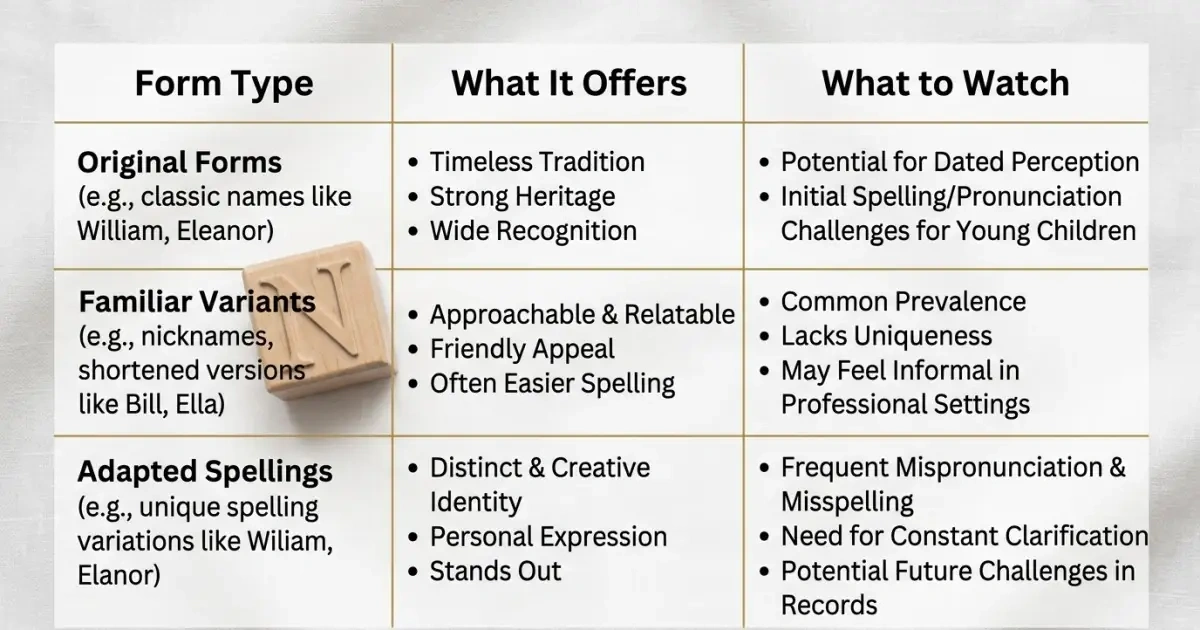
Original Form, Adapted Form, or Related Variant
This is one of the most practical decisions in origin-based naming.
The original form may carry the clearest roots. A familiar variant may fit the child’s environment better. An adapted spelling may solve one problem while creating another. A related name may preserve the meaning, sound, or honor without forcing an exact form that never felt right.
| Form Type | What It Offers | What to Watch |
| Original form | Strong visible roots, linguistic integrity, cultural specificity | Pronunciation and spelling friction |
| Familiar variant | Easier daily use, broader recognition | Possible loss of heritage texture |
| Adapted spelling | Lower first-read confusion | Risk of feeling invented or less satisfying |
| Related variant | Similar meaning or family connection with better fit | May feel too far from the original purpose |
| Middle-name placement | Preserves heritage without daily pressure | The origin may become less publicly visible |
Niamh, Neve, and Nia are not interchangeable. They may sit near one another in sound or association, but each carries a different balance of roots, readability, and style. Rafael, Raphael, and Rafi do the same in another lane. Matteo and Mateo ask parents to choose which language signal and daily experience feels more honest.
The best answer is rarely ideological. It is practical and emotional at once.
Choose the form that preserves what matters most while making the name livable enough to trust.

When Heritage and Everyday Use Pull Against Each Other
This is often the hardest part of choosing by origin.
A traditional form may matter deeply and still feel difficult where your child will grow up. A name may honor one side of the family but leave the other parent uneasy. The original pronunciation may be cherished at home and constantly altered outside it.
Pretending that tension does not exist rarely helps.
| Tension | Possible Bridge |
| Original spelling feels important but difficult | Keep the spelling and prepare to teach it confidently |
| Pronunciation is hard in the wider environment | Choose a form that works across accents or languages |
| Family honor matters but the name feels heavy | Move the honor to the middle name |
| One culture feels more visible than the other | Pair first and middle names across both sides |
| Exact form feels forced | Use a variant, initial, related meaning, or namesake-adjacent option |
| Daily use keeps resisting the rooted choice | Rebalance toward livability without abandoning the origin lane |
A middle name can carry heritage with dignity. A variant may preserve the emotional core better than the exact form. The more traditional name may still be right when the roots matter enough and the family is ready to protect the pronunciation.
The strongest decision does not deny the tension. It solves it without pretending the child will live only inside the parents’ intentions.

Family Pressure Should Guide the Search, Not Own the Name
Origin-based naming often brings relatives into the room.
A grandparent may expect a traditional form. One side of the family may assume the child should carry its language visibly. A relative may insist on the “proper” spelling. A family honor name may arrive with emotional weight before parents have decided whether they actually want to use it.
Tradition can be meaningful and still negotiable.
| Family Pressure | What to Clarify |
| “This is the correct family name.” | Are we honoring a person, a lineage, or a rule? |
| “The spelling must stay traditional.” | Is the spelling central to the meaning, or mainly expected? |
| “The name should come from our side.” | How will both parents feel ownership? |
| “Everyone will be disappointed.” | Is the disappointment fair pressure or temporary reaction? |
| “A middle name is not enough.” | Does daily first-name use genuinely fit the child’s life? |
Family history can guide a naming decision beautifully. It should not turn the child’s name into a referendum.
When the tension is cultural respect, How to Choose Names With Strong Cultural Roots Respectfully can help. When family names are becoming forced, use How to Use Family Names Without Making the Choice Feel Forced. When two language systems are the deeper issue, How to Choose a Name That Works in Two Languages is the cleaner route.
Your child can belong to a heritage without the name becoming a burden chosen by committee.

Origin-Based Names Still Need Practical Tests
A name chosen by origin still has to function.
This sounds obvious until the meaning becomes emotionally powerful. Parents can become so committed to roots that they postpone the ordinary checks. Those checks matter even more when the name carries cultural, linguistic, or pronunciation complexity.
| Test | What to Do | What It Reveals |
| Full-name test | Say first, middle if chosen, and surname together | Whether the full identity works |
| Out-loud test | Use the name in warm, casual, public, and quick speech | Whether the name lives naturally in your voice |
| Pronunciation test | Let a few trusted people encounter it fresh | How much correction is likely |
| Spelling test | Imagine school forms, email addresses, medical offices, and introductions | Whether the burden feels worth it |
| Nickname test | List the likely short forms and social versions | Whether the name’s informal life works |
| Sibling or family-context test | Say the name beside siblings or likely future sibling styles | Whether it belongs in the household |
| Adulthood test | Imagine the name in adult introductions and professional contexts | Whether it has long-term range |
A name that cannot survive these tests may still be meaningful. Meaning alone does not make it a strong first name.
For a broader naming framework, use How to Choose a Baby Name. When you already have several names inside one origin lane, How to Compare Baby Names Objectively can stop the strongest story from automatically winning over the strongest name.

A Practical Framework for Choosing a Baby Name by Origin
Use this process when origin matters but the decision still feels crowded.
| Step | What to Do | Why It Matters |
| 1. Choose the origin that genuinely matters most | Name the cultural, linguistic, faith, or family reason | Prevents vague browsing |
| 2. Define the kind of connection you want | Heritage, reconnection, honor, cross-cultural ease, or style | Sets the right trade-offs |
| 3. Build a narrow shortlist inside that lane | Keep only names you could actually use | Makes comparison possible |
| 4. Research meaning, use, pronunciation, and variants | Understand what the name truly carries | Avoids surface-level choices |
| 5. Compare original forms with familiar forms | Look at roots and livability together | Prevents ideology from replacing fit |
| 6. Test sound, surname, nicknames, and spelling | Move the names into real life | Exposes friction before commitment |
| 7. Choose the name that feels rooted and usable | Let the final name be stronger than the label | Creates trust beyond the origin category |
The goal is not to prove that the name is culturally impressive.
The goal is to choose a name whose roots still feel alive after practical testing.
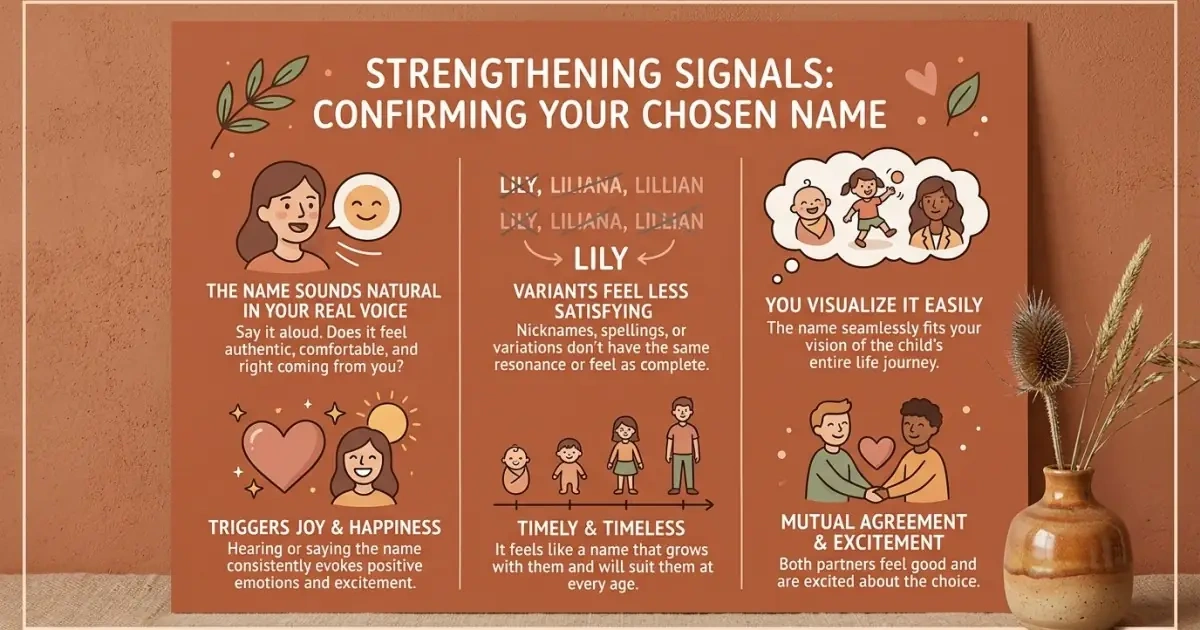
Signs an Origin-Based Name Is Getting Stronger
A rooted name usually strengthens quietly.
It keeps its meaning after the practical tests. The spelling burden feels chosen rather than resented. Both parents can say it naturally. Nearby variants do not feel clearly better. The name itself attracts you, not only the category it belongs to.
| Strengthening Signal | What It Suggests |
| The name still feels meaningful after surname testing | Roots and daily structure are cooperating |
| Pronunciation correction feels acceptable | The family is ready to protect the name |
| The name sounds natural in your real voice | It is becoming livable, not only admirable |
| Variants feel less satisfying | The chosen form may be carrying the right weight |
| Both parents can explain the trade-off calmly | The decision is honest |
| The origin matters, but the name also works without a speech | The name has strength beyond its label |
This is often the turning point. Parents stop admiring a cultural lane and begin recognizing a specific name inside it.

Signs You May Be Forcing the Origin More Than the Name
Origin can become too powerful when parents defend the category more than they enjoy the name.
That does not mean the name is wrong. It means the reasoning needs a cleaner balance.
| Warning Sign | What May Be Happening |
| You love the origin but not saying the name | The category is stronger than the lived form |
| You keep defending pronunciation friction you privately resent | Authenticity may be outrunning usability |
| The family story is moving, but the name feels heavy | The tribute may belong in the middle-name position |
| You would not choose the name from another origin | The label may be doing too much work |
| One parent feels obligated rather than attached | Heritage pressure has replaced shared ownership |
| The name needs constant explanation to feel convincing | The argument may be stronger than the name |
A rooted name should not require endless defense.
The best choices usually become easier to trust after explanation, not dependent on explanation.

Rooted and Usable Is Stronger Than Purely Correct
The strongest origin-based names usually do two things at once.
They carry roots.
They live well.
That balance is why they last. They do not force parents to choose between depth and daily use as if those must be enemies. They preserve enough cultural, family, linguistic, or spiritual meaning to matter while still fitting the child’s actual environment.
Sometimes the most traditional form wins. Sometimes the variant does. Sometimes the middle name carries the deeper heritage work while the first name moves more easily through daily life. A strong decision is not always the purest one on paper.
It is the one the family can carry without resentment, apology, or constant repair.
| Rooted and Usable Name | Purely Label-Driven Name |
| Carries a reason and works in speech | Depends mostly on origin prestige |
| Has chosen trade-offs | Minimizes friction until it becomes regret |
| Fits the family’s real environment | Performs an idea of heritage |
| Survives surname and pronunciation tests | Avoids practical testing |
| Feels personal beyond explanation | Needs explanation to feel strong |
Choosing by origin works best when the origin remains a meaningful beginning, not a rigid verdict.

Questions Parents Ask About Choosing a Baby Name by Origin
Should you choose a baby name based only on your own heritage?
Not always. Many families choose names from faith traditions, shared cultural histories, or origins they admire. The important part is understanding the name’s real meaning, use, and context rather than treating origin as decoration.
Can you choose a name from another origin respectfully?
Yes, but the choice should be informed. Learn how the name is used, what it means, whether it carries sacred or specific cultural weight, and whether your attraction goes deeper than surface style.
How do you know whether to keep the original spelling?
Ask whether the original spelling is central to what you love. Then decide whether your family is genuinely willing to carry the pronunciation and spelling work it may create.
What if you love an origin but not the most traditional names from it?
That is common. Look for related variants, modern forms, names from the same language family, or names that carry the same meaning field with better daily fit.
Can an origin-based name still be a good choice if people may mispronounce it?
Yes. Mispronunciation is not an automatic reason to reject a name. The better question is whether the correction burden feels meaningful, manageable, and worth protecting.
What if one parent wants a heritage name and the other wants something easier?
Separate the goal from the exact form. You may be able to honor the origin through a variant, middle name, related meaning, bilingual-friendly name, or spelling that balances roots with daily use.

Where to Go Next When Origin Is Only the Beginning
Let your specific friction point guide the next step. A conflict between roots, sound, and aesthetics deserves the framework in How to Balance Meaning, Sound, and Style in a Baby Name, especially when the most meaningful name is not the easiest one to say. A shortlist crowded with strong origin options needs the stricter lens of How to Compare Baby Names Objectively, so the richest backstory does not automatically outrank the name that works best in daily life.
Pronunciation and spelling deserve careful, practical attention. If accent, language, or correction burden is the main hurdle, use How to Choose Names That Work Across Different Accents, How to Choose a Name That Works in Two Languages, How to Adapt a Traditional Name for Modern Everyday Use, or How to Keep a Cultural Spelling Without Creating Constant Friction before choosing a form you may need to explain for years.
For the broader decision path across the whole naming process, Expert Baby Naming Guides for Choosing the Right Name can help you move from origin research into the guide that matches the real problem in front of you.
Choosing a baby name by origin works best when origin stays what it was always meant to be: a meaningful beginning. Not a decorative label. Not a rigid rule. A beginning that leads toward a name with roots, clarity, and a real life beyond the category itself.