
How to Choose a Baby Name by Meaning

Choosing a baby name by meaning can feel different from choosing by sound, style, or popularity.
It is more intimate.
For many parents, a name is not only something pleasant to say. It is a wish, a memory, a value, a blessing, a family story, or a quiet way of naming what mattered when the child arrived. A parent may be drawn to strength after a difficult season. Another may want peace, light, love, joy, wisdom, grace, renewal, protection, or hope. Some families search by meaning because they want heritage to matter. Others are trying to honor someone without using that person’s exact name.
Meaning can make a name feel intentional instead of random.
It can also make parents overlook problems they would notice immediately in any other name.
A beautiful definition may distract from awkward surname flow. A powerful symbol can make a name feel more usable than it really is. A spiritual or cultural meaning may feel moving on a list, then become heavy in daily life if the pronunciation, spelling, nickname, or style does not fit the family.
That is the tension.
A meaningful name still has to work as a name.
Start with the Names by Theme hub when you want to explore meanings such as strength, peace, love, light, blessing, joy, wisdom, grace, nature, and hope. For a wider decision path through naming questions, Expert Baby Naming Guides for Choosing the Right Name can help you move from emotional instinct to a clearer framework. This guide focuses on one specific challenge: how to choose a baby name by meaning without letting symbolism outrank sound, style, surname fit, cultural context, and long-term usability.
The strongest meaning-led choices are rarely the names with the most impressive definitions.
They are the names where the meaning deepens a choice that already sounds, feels, and functions well.

Meaning Matters Because Naming Is Emotional Before It Is Practical
Parents are not choosing a product label.
They are choosing a word that may be spoken thousands of times, written on forms, used in family stories, whispered in affection, called across rooms, shortened by friends, and carried by a real person through many stages of life. It makes sense to want that word to hold something more than a pleasant sound.
A symbolic name can express gratitude, faith, resilience, peace after difficulty, family memory, cultural connection, hope for the future, or a value both parents share. The meaning may be obvious to everyone or private to the family. Both approaches can work.
Grace says its meaning plainly. Theodore may appeal through gift or blessing associations while offering friendly everyday forms like Theo or Teddy. Lucia speaks to parents drawn to light imagery. Ethan can feel steady and strength-led without sounding overly dramatic.
| Meaning-Led Appeal | What Parents May Be Trying to Hold |
| Strength | Resilience, courage, protection, endurance |
| Peace | Calm, healing, rest, reconciliation |
| Light | Hope, clarity, joy, spiritual brightness |
| Love | Tenderness, gratitude, family connection |
| Grace | Faith, beauty, mercy, ease |
| Wisdom | Guidance, depth, maturity |
| Nature | Rootedness, season, place, renewal |
| Blessing | Gift, arrival, answered hope |
A name does not have to announce its meaning to feel meaningful. Some parents want the symbolism to be direct. Others prefer a quiet layer that only the family fully understands.
The risk begins when the symbol becomes heavier than the child.
Meaning should deepen the choice. It should not become a script.

Meaning Is One Layer, Not the Whole Name
A meaning-led name must still sound effortless when spoken aloud and anchor naturally to your surname. Rather than existing as a symbolic exception, it needs to belong to your overall style, offering spelling and pronunciation your family can comfortably live with from childhood through adulthood.
| Practical Layer | Why It Still Matters |
| Sound | The name will be spoken far more often than explained |
| Spelling | Daily corrections can weaken affection |
| Pronunciation | Meaning does not remove friction |
| Surname flow | The full name must carry the symbol well |
| Nicknames | Daily use may change the tone |
| Style fit | The name should belong to your taste |
| Age range | Symbolism needs adulthood credibility |
| Cultural context | Meaning depends on origin and use |
A beautiful meaning cannot fully rescue a name you dislike saying. A powerful definition may not matter if the full name feels awkward. A culturally rich name can still create tension if no one in the family can pronounce it comfortably.
A useful test is simple: would you still like the name if you did not know what it meant?
When the answer is yes, the meaning strengthens an already usable name. When the answer is no, the symbolism may be doing too much work.
The best meaningful names work in both directions. They feel good before explanation, then become more satisfying once the reason behind them is known.
Literal Meaning and Personal Meaning Are Different Kinds of Truth
Parents often begin with literal definitions.
That makes sense. Definitions are searchable. They give structure to an emotional process. A name may be tied to etymology, a word meaning, a virtue, a religious tradition, a nature image, mythology, or history.
Personal meaning works differently.
It may come from a family story, a place, a season, a loved one, a cultural memory, a book, a song, a work of art, a spiritual experience, or a shared parental value. Sometimes personal meaning carries more truth than the cleanest dictionary definition.
Hope has an obvious word meaning. Sophia carries wisdom associations. Noah may matter through biblical tradition, peace or rest associations, family history, or personal faith. Aurora can feel meaningful through dawn imagery even when parents are drawn more to the symbol than to a literal definition.
| Literal Meaning | Personal Meaning |
| Etymology | Family story |
| Word meaning | Place or season |
| Virtue meaning | Loved one |
| Religious meaning | Cultural memory |
| Nature meaning | Book, song, or art connection |
| Historical meaning | Shared parental value |
A name connected to the city where parents met, a grandmother’s favorite flower, a saint from family tradition, or a word from a heritage language may feel more meaningful than the “best” definition on a baby-name list.
That can be completely valid.
The real test is whether the meaning belongs naturally to your family. When heritage or family story becomes the strongest layer, How to Honor Heritage Without Forcing Tradition can help keep the choice grounded rather than performative.
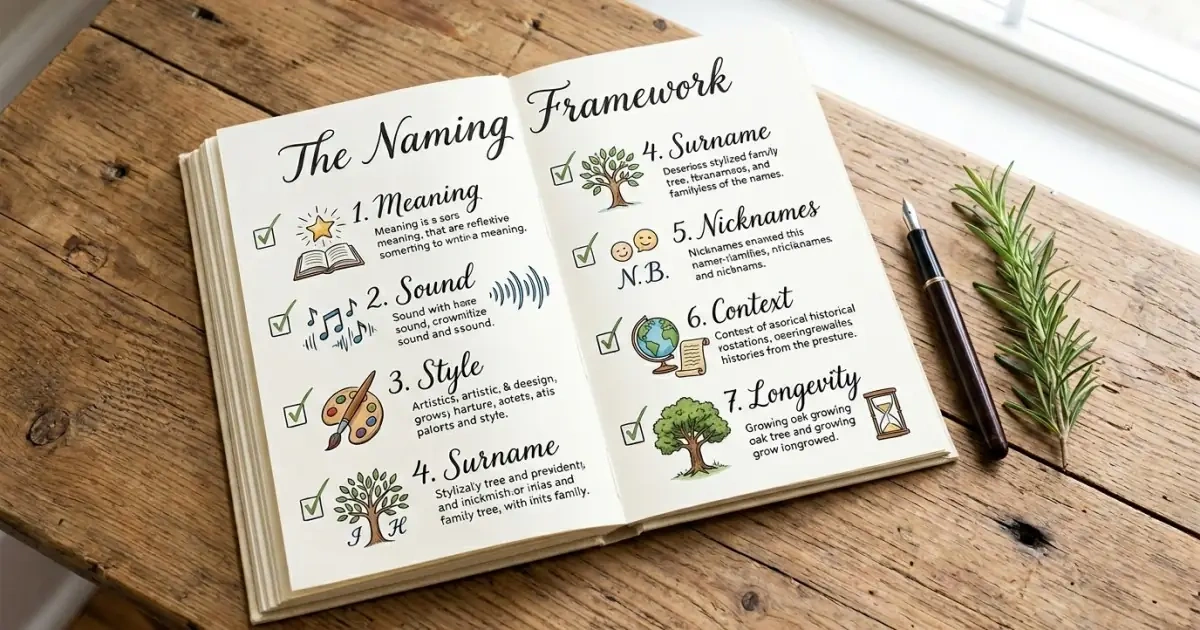
A Practical Framework for Choosing a Baby Name by Meaning
A theme-led shortlist can become overwhelming because every option seems emotionally valuable.
A framework keeps the process from turning into a contest of beautiful definitions.
| Meaning-Led Check | What to Ask |
| Meaning | What value, image, or story does the name carry? |
| Sound | Do we genuinely like saying it? |
| Style | Does it fit our naming taste? |
| Surname | Does the full name flow naturally? |
| Nicknames | Are likely short forms acceptable? |
| Context | Is the meaning culturally, religiously, or linguistically appropriate for us? |
| Longevity | Can the name grow with the child? |
Be specific about the emotional reason. Does the name represent strength, peace, blessing, faith, light, joy, love, wisdom, nature, family, survival, or renewal? A clear meaning category makes comparison easier.
Then move beyond the category.
A name connected to strength may be classic, modern, bold, soft, international, vintage, or minimalist. A name connected to light may be lyrical, simple, rare, dramatic, or familiar. The meaning may start the search, but style determines how the name feels.
When meaning, sound, and style are all competing, How to Balance Meaning, Sound, and Style in a Baby Name is the closest companion guide. For the age-range check, use How to Choose a Name That Ages Well before a symbolic favorite becomes final.

Positive Meanings Should Feel Like Blessings, Not Assignments
Many parents begin with a value they want the name to carry.
That can be a strong starting point. The danger is choosing a meaning so forcefully that the name starts to feel like a task the child is expected to perform.
Strength should not require the child to be fearless. Peace should not demand quietness. Grace should not require gentleness. Wisdom should not make the name feel overly serious. A meaning works best when it feels like a blessing placed around the child, not a role placed on top of them.
| Meaning Category | Strong Version | Risky Version |
| Strength | Resilience and grounding | Pressure to be tough |
| Peace | Calm and healing | Fragility or passivity |
| Love | Warmth and gratitude | Sentimentality |
| Light | Hope and clarity | Overly delicate imagery |
| Wisdom | Depth and guidance | Too much seriousness |
| Joy | Brightness and energy | Too playful for adulthood |
| Grace | Ease and spiritual beauty | Prettiness without structure |
The best meaning-led names leave room for the child to be complicated. A name can express hope without limiting personality. It can honor strength without sounding severe. It can hold love without becoming sugary.
A meaningful baby name should offer a center.
Not a cage.

Strength Names Need Confidence Without Weight
Names connected to strength, courage, bravery, victory, resilience, protection, or endurance often appeal after difficult seasons.
That emotional logic is powerful. Parents may want the name to mark survival, gratitude, or hope for inner steadiness. Yet strength meanings can easily become heavy-handed when the sound, surname, or imagery becomes too forceful.
Ethan feels steady and familiar. Matilda combines vintage charm with strength associations. Leo feels bright and courageous through lion imagery. Victor is direct and assertive, which can be excellent in the right full name and too intense in another.
| Strength-Led Question | Why It Matters |
| Does the name sound resilient or severe? | Strength should not become pressure |
| Does the surname intensify it? | Full-name impact can change the tone |
| Is there warmth in daily use? | The name should still feel human |
| Does the child have nickname flexibility? | Strong names often need softness |
| Would we love it without the meaning? | Prevents symbolism from carrying everything |
A strength-led name does not need to sound hard to be strong.
When this is the main theme, How to Choose Names That Mean Strength can help you compare options within the meaning category. If the overall style feels too intense, How to Choose Strong Baby Names Without Sounding Heavy-Handed gives the necessary restraint.
Peace, Calm, and Grace Names Still Need Structure
Peace-led names can feel tender, spiritual, and quietly strong.
They may matter after a difficult period, a family reconciliation, a long wait, or a season when parents want the name to hold calm rather than force. This category can be beautiful, but it needs structure. A peaceful meaning paired with a very soft sound and a light surname may feel too delicate.
Irene has peace associations and classic structure. Serena feels calm and graceful. Noah can carry biblical, rest, or peace-adjacent meaning depending on interpretation and family context. Grace is direct, simple, and adult-ready.
| Calm Meaning Risk | Better Check |
| Too soft overall | Add surname or middle-name structure |
| Too passive for your taste | Compare stronger calm names |
| Too delicate in sound | Test callability and adult use |
| Too word-like with surname | Check phrase effect |
| Too sweet through nickname | Test daily forms |
Peace can be strong.
Grace can be clear.
Calm can carry.
If peace is the meaning that draws you most, How to Choose Names That Mean Peace can take that theme deeper. For names that feel gentle but may need more support, How to Choose Soft and Gentle Baby Names That Still Carry Well is the practical companion.

Love, Blessing, and Gift Names Should Avoid Sentimentality
Names connected to love, grace, gift, blessing, gratitude, and tenderness often carry deep emotional force.
They may reflect faith, family healing, a long-awaited arrival, or the feeling that the child is a gift. The danger is not the emotion. The danger is letting the name become so sentimental that it loses structure.
Grace is direct and usable. Theodore may appeal through gift or blessing associations while offering Theo and Teddy as everyday forms. Amara can feel lyrical and meaningful, though its interpretation may vary by origin. Hope can be powerful when the family truly wants a visible virtue name.
| Love or Blessing Check | What to Notice |
| Does the name feel warm or sugary? | Emotion needs control |
| Does the full name stay balanced? | Sentiment can become too much |
| Is the meaning private or public? | Both can work, but they feel different |
| Does the nickname change the tone? | Daily use may soften or hide the symbol |
| Can the name work on an adult? | Gratitude still needs age range |
A loving meaning should feel warm, not limiting.
When love is your core theme, How to Choose Names That Mean Love can help you compare direct and subtle choices without flattening them into one emotional category.

Light Names Need Clarity Without Becoming Too Image-Driven
Light names can suggest hope, clarity, dawn, joy, guidance, spiritual brightness, or a new beginning.
They often feel beautiful because the imagery is immediate. A child’s name connected to light can hold optimism without sounding loud. Still, this category can become highly aesthetic if the image does more work than the name itself.
Clara feels clear and classic. Lucia is lyrical and light-connected. Phoebe feels bright and mythological. Aurora carries dawn imagery with a more dramatic sound.
| Light-Name Strength | Light-Name Risk |
| Hopeful | Overly delicate |
| Clear | Too image-dependent |
| Bright | Too decorative |
| Spiritual | Too explanatory |
| Lyrical | Too much with the surname |
Light-related choices often need surname testing. Aurora may need a simpler surname because its rhythm and imagery are already strong. Clara can feel more restrained. Lucia may be perfect for one family and too lyrical for another.
When this theme is central, How to Choose Names That Mean Light gives the category a more focused path.
Wisdom, Life, and Joy Names Need Style Discipline
Wisdom, life, truth, joy, happiness, and renewal names can feel optimistic without becoming decorative.
The category is broad, so style discipline matters. A name connected to joy may feel vintage, modern, spiritual, bright, or quiet depending on the actual choice. A name linked to wisdom may feel classical and serious, or warm and familiar.
Sophia carries wisdom associations. Zoe is short, energetic, and life-connected. Felix can suggest happiness or good fortune. Nadia often appeals through hope associations and a soft but substantial sound.
| Meaning Direction | Possible Style Risk |
| Wisdom | Too serious or too popular for your comfort |
| Life | Too brief without surname support |
| Joy | Too playful if sound is very bright |
| Hope | Too sentimental if the full name lacks structure |
| Truth | Too literal if phrased like a concept |
The definition is only the starting point.
A joyful meaning may be right, but the name still needs your preferred style. A wisdom name may be meaningful, but you still have to like saying it in ordinary family life.
Sound Still Matters When the Meaning Is Beautiful
It is easy to forgive a name’s sound when the meaning feels perfect.
That is where regret can begin.
A meaning-led name should still feel good aloud. You should like saying it in normal family life, not only reading it in a symbolic list. The name will be spoken far more often than its meaning will be explained.
Try it in ordinary sentences:
- “This is ___.”
- “Can you pass this to ___?”
- “___, are you ready?”
- “I’m calling about ___.”
- “Congratulations to ___.”
Clara works for many families because meaning, sound, and clarity support one another. Victor has direct strength, but parents should like its assertive sound. A serenity-related option may hold the perfect meaning and still fail if the rhythm collapses with the surname.
Ask whether you love the name, or mainly love what it represents.
When you mainly love the idea, keep searching. Most meaning categories have more than one path. The name that fits your ear may still be inside the same theme.
For sound testing, How to Use Syllable Flow to Choose a Better Name and How to Say a Baby Name Out Loud and Hear Its Real Flow can move the choice from symbolism into real speech.
Style Fit Keeps a Meaningful Name From Feeling Random
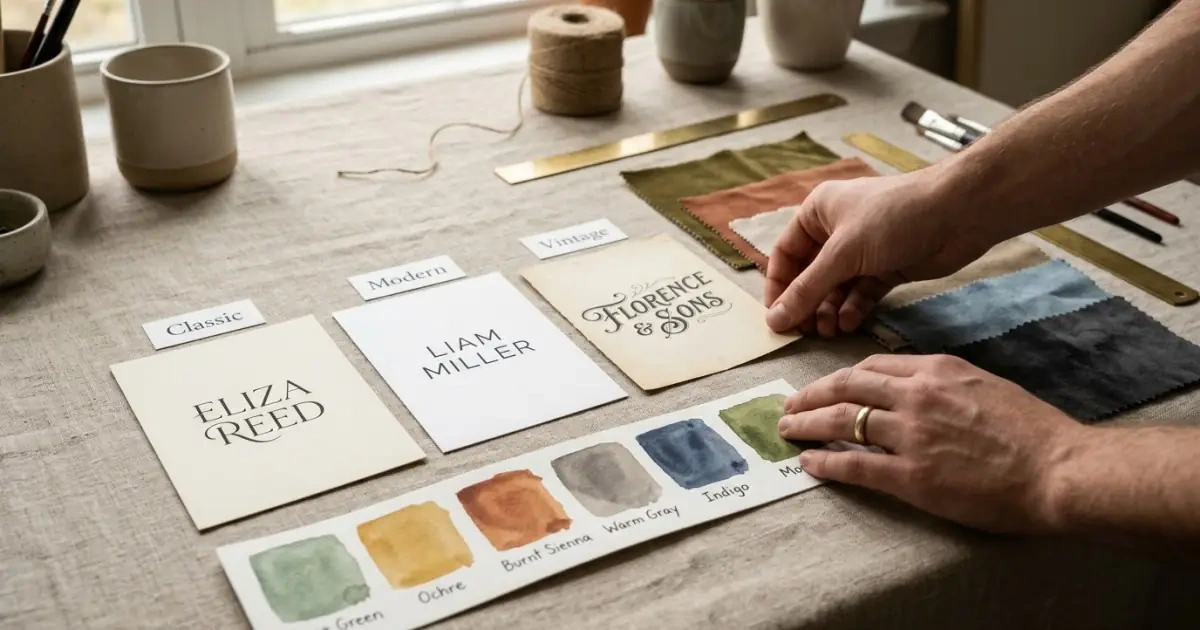
Two names can share a similar meaning and feel nothing alike.
That is why style matters.
Grace feels virtue-classic and simple. Amara may feel modern, lyrical, and multicultural depending on family context. Matilda reads vintage-classic and strong. Leo is short, bright, and energetic. Theodore feels grand classic with nickname flexibility.
| Same Meaning Area | Possible Style Difference |
| Strength | Ethan, Matilda, Leo, Victor |
| Peace | Irene, Serena, Noah |
| Light | Clara, Lucia, Phoebe, Aurora |
| Love or blessing | Grace, Amara, Theodore, Hope |
| Joy or life | Felix, Zoe, Nadia |
A name can represent the right value and still feel wrong for your family’s taste. That does not make the meaning less important. It means you need another option inside the same theme.
Ask whether the name fits your style, or only your values.
If the meaning-led shortlist feels scattered, the Names by Style hub can help sort the aesthetic side. Use How to Choose a Baby Name by Style when the list contains meaningful names that do not sound as though they belong to the same family.
Surname Fit Can Strengthen or Distort the Meaning
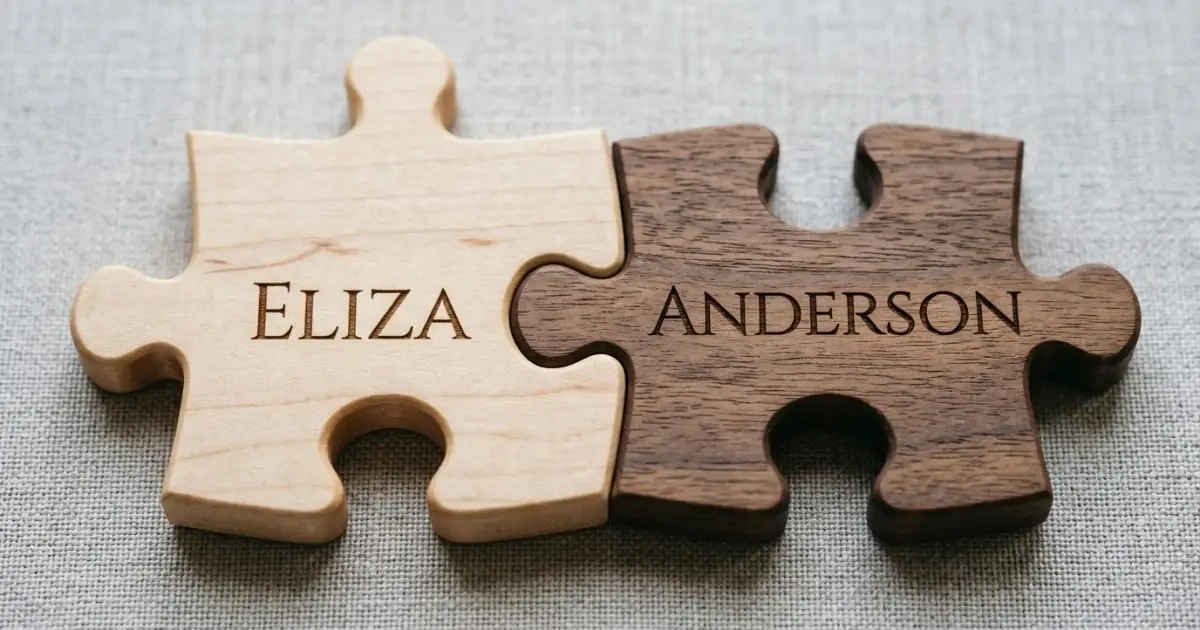
A meaningful first name still needs full-name flow.
This is especially important with word names, virtue names, and names with strong imagery. The surname can make the meaning feel elegant, phrase-like, too literal, too heavy, or beautifully balanced.
Grace can feel elegant, but with some word surnames it may become phrase-like. Aurora may need a simpler surname because it already carries strong image and rhythm. Victor may sound powerful or too forceful depending on the last name. Mira may need clarity if the surname is also short and soft.
| Full-Name Issue | What It Can Do to Meaning |
| Virtue name + word surname | May sound phrase-like |
| Strength name + hard surname | Can become too intense |
| Light name + ornate surname | May feel overdecorated |
| Soft symbolic name + soft surname | Can become too delicate |
| Balanced surname | Gives the meaning room |
| Strong middle name | Can support a gentle symbol |
Test first name + surname, first + middle + surname, nickname + surname, initials, adult introduction, and casual family use. The full name may support the meaning, soften it, intensify it, or change it in a way you do not want.
For a fuller process, use How to Match a First Name With Your Surname and How to Build a First-Middle-Surname Combination That Flows. Before finalizing, How to Check Initials, Monograms, and Awkward Combinations is worth the extra pass.

Origin and Cultural Context Matter More With Meaning-Led Names
Meanings shift by language, origin, and interpretation.
Some names have multiple possible meanings. Some online definitions simplify complex histories. Religious, heritage, mythological, virtue, and word names may carry context beyond the short definition that first attracted you.
Parents do not need to become scholars before choosing a name.
They do need enough confidence to use the name honestly.
| Context Check | Why It Matters |
| Origin | The meaning may depend on language or tradition |
| Pronunciation | Family use should feel confident |
| Cultural fit | The name should feel natural, not borrowed for effect |
| Religious context | Associations may be stronger than expected |
| Multiple meanings | You should know which one you are choosing |
| Cross-language use | Meaning or sound may shift |
Names such as Amara, Mira, and Nadia may appeal partly because they feel cross-cultural or multi-origin. That can be beautiful, but it also requires care. Parents should know which meaning, origin, and pronunciation they are choosing rather than relying on a vague “beautiful meaning” label.
Use the Names by Origin hub when language roots matter. If the name needs to move between languages, How to Choose a Name That Works in Two Languages adds a practical check.
Meaning should be accurate enough to trust and personal enough to belong.

Popular Meaningful Names Can Still Be Personal
Popularity does not erase meaning.
Many meaningful names become popular because their sound and symbolism are widely appealing. Sophia may be common in many places, but wisdom can still matter deeply to a family. Noah may be familiar, yet still meaningful through biblical, peace, rest, or family associations. Theodore may be widely loved, but gift or blessing imagery can remain personal. Grace may be common in some circles and still powerful through faith, gratitude, or virtue.
| What Makes a Popular Meaning Personal | Why It Helps |
| Family story | The name belongs to your history |
| Middle name pairing | The full name becomes more specific |
| Surname flow | Familiarity gains shape |
| Nickname choice | Daily use feels personal |
| Cultural connection | Meaning has context |
| Timing or reason | The choice carries private truth |
Ask whether you would still choose the name if another child nearby had it.
When the answer is yes, popularity may not weaken the meaning. When the answer is no, the name may be relying on distinctiveness more than you thought.
Use Names by Popularity when visibility starts affecting confidence. If this becomes the main tension, Popular vs Rare Baby Names: How to Decide and When a Popular Name Is Still the Right Choice can separate meaningful fit from ranking anxiety.

Rare Meaningful Names Need Usability Checks
Rare names can make a meaning feel distinctive and personal.
They can also tempt parents to overlook friction. A rare meaning-led name needs extra testing around pronunciation, spelling, cultural context, and full-name flow. The more symbolic the name feels, the more honest the practical test needs to be.
| Rare Meaning-Led Check | What It Reveals |
| Can people say it after hearing it once? | Daily friction |
| Does the spelling make sense? | Correction burden |
| Does the child have to explain it constantly? | Symbolic pressure |
| Does it feel meaningful or burdensome? | Long-term comfort |
| Would the middle name slot work better? | Alternative placement |
| Does it fit the surname? | Full-name usability |
A rare name should not have to struggle every day just to carry a beautiful meaning.
If the symbol is powerful but the first-name role feels too demanding, consider the middle name. That can preserve the meaning without making daily life revolve around explanation.
For a deeper rarity check, How to Choose Rare Baby Names That Still Work in Daily Life can help decide whether the name feels distinctive or difficult.
Nicknames Can Change, Hide, or Humanize the Meaning
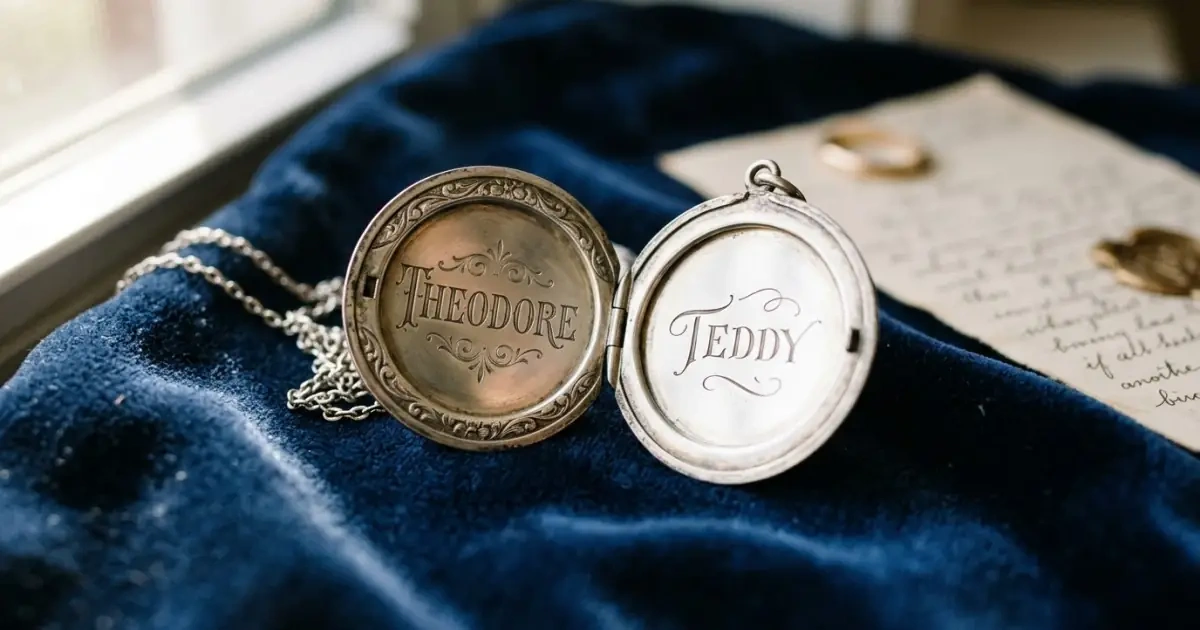
A name may have a beautiful full meaning while the daily nickname carries a different mood.
That is not automatically a problem. It may even make the name more wearable. But parents should notice the shift before choosing.
Theodore may carry gift or blessing associations, while Theo or Teddy shapes daily life. Matilda may feel strong in meaning, while Tilly or Mattie softens the impression. Sophia carries wisdom, though Sophie feels warmer and more familiar. Victor is direct; Vic changes the tone.
| Nickname Question | Why It Matters |
| Will we use the full name or nickname most? | Shows the real daily name |
| Does the nickname keep the meaning visible? | Meaning may become quieter |
| Does the nickname make the name more wearable? | Practical warmth matters |
| Are likely nicknames acceptable? | Other people may shorten it |
| Does the short form change the style? | Daily use may shift the whole choice |
Sometimes a nickname is what makes a meaningful name usable. Other times, it pulls daily life away from the symbolism parents loved.
How to Check Nickname Potential Before You Choose can map this before the legal name becomes official.

Meaning-Led Girl Names Should Offer More Than a Beautiful Symbol
Meaning-led girl names often cluster around beauty, grace, love, light, flowers, peace, and joy.
Those can be rich directions. The name still needs to offer more than prettiness. It should have strength, clarity, adulthood fit, and personality range.
Grace is direct and adult-ready. Clara has clear or light associations with classic sound. Lucia carries light imagery and lyrical style. Serena feels calm but needs surname and style fit. Nadia has hope associations and a soft but substantial sound. Sophia carries wisdom, though popularity comfort matters. Zoe is short, energetic, and life-connected.
| Meaning-Led Girl Name Check | What to Ask |
| Does it feel like a full identity? | Not only an image |
| Does it work beyond childhood? | Age range |
| Does it carry more than prettiness? | Structure and depth |
| Does the meaning feel like a blessing? | Avoids role pressure |
| Does it leave room for different personalities? | Range |
A meaningful girl name should feel like a full identity, not only a beautiful wish.
When the shortlist leans gentle, How to Choose Soft and Gentle Baby Names That Still Carry Well can test whether the name has enough support. If it leans refined, What Makes a Name Feel Elegant? can help separate elegance from decoration.

Meaning-Led Boy Names Should Not Depend Only on Strength
Meaning-led boy names often cluster around strength, bravery, victory, leadership, protection, and gift imagery.
Those meanings can be powerful. They can also become narrow if strength is treated as the only valuable direction. Boy names can meaningfully express peace, joy, wisdom, gentleness, blessing, light, hope, or love.
Ethan feels steady and strong. Leo carries lion imagery and courage. Victor has direct victory meaning, but its assertive sound needs testing. Theodore offers gift or blessing associations plus nickname flexibility. Felix can suggest happiness or good fortune. Noah may carry peace, rest, biblical, or family associations depending on interpretation.
| Meaning-Led Boy Name Check | What to Ask |
| Does the meaning give range? | Avoids one-note strength |
| Does the surname intensify it? | Prevents heaviness |
| Are we choosing strength from love or pressure? | Clarifies the motive |
| Would a gentler meaning feel truer? | Expands the search |
| Does the nickname improve the tone? | Adds flexibility |
A meaningful boy name should give the child range, not just a virtue to perform.
When strength is central, How to Choose Strong Baby Names Without Sounding Heavy-Handed is the natural check. If warmth is the truer direction, How to Choose Soft and Gentle Baby Names That Still Carry Well offers the opposite lens.

Middle Names Can Carry the Strongest Symbolism
Meaning does not have to sit in the first-name position to matter.
Sometimes the most meaningful option is not the easiest daily name. It may be rare, long, culturally specific, hard to pronounce in your community, emotionally intense, or simply not your favorite sound. In that case, the middle name slot can be ideal.
| Middle Name Role | Why It Works |
| Family history | Honors without daily pressure |
| Spiritual meaning | Keeps symbolism close |
| Virtue meaning | Adds depth without turning phrase-like |
| Place memory | Preserves a private story |
| Heritage connection | Carries belonging |
| Rare symbolic name | Avoids first-name friction |
| Tribute | Honors someone loved |
A usable first name with a meaning-led middle can be stronger than a first name chosen mainly for symbolism. A family first name with a symbolic middle can also work beautifully. A theme-led first name may need a simpler middle to keep the full name balanced.
Use How to Choose a Middle Name when you are deciding where the meaning belongs. For full-name structure, How to Build a First-Middle-Surname Combination That Flows can prevent a meaningful combination from becoming too heavy or uneven.
The middle name should not be treated as less meaningful.
It may be the place where symbolism can be strongest without adding daily friction.

Sibling Names Should Share Values, Not Forced Themes
Sibling names do not need matching meanings.
Too many repeated themes can make the set feel overly symbolic, as if the children were named to complete a message rather than carry individual names.
Grace and Hope may feel beautiful together or too theme-heavy depending on family style. Leo and Victor may feel strong as a set but potentially forceful. Clara and Lucia may share light imagery, though choosing them only for that reason can feel overly coordinated. Noah and Irene may share calm associations without sounding obviously matched.
| Sibling Meaning Check | What to Notice |
| Do the meanings complement or repeat? | Prevents over-theming |
| Does one child carry a heavier symbol? | Keeps balance fair |
| Does the set sound natural aloud? | Names are spoken more than decoded |
| Does each child have a distinct identity? | Avoids theme-first naming |
| Is the theme helping or controlling? | Protects individuality |
Shared values may matter more than repeated meaning categories.
For a broader sibling-name process, How to Choose Sibling Names That Fit Without Matching Too Hard can keep the set warm without making it staged.

Mistakes That Make Meaning-Led Names Harder to Use
Meaning-led names usually become difficult when symbolism takes over the whole decision.
The name itself still has to be loved. The origin still needs context. The full name still needs flow. A beautiful definition should not hide weak sound, spelling friction, or excessive symbolic pressure.
| Mistake | Why It Weakens the Choice | Cleaner Move |
| Choosing the meaning instead of the name | The name may not feel good daily | Keep searching within the theme |
| Trusting simplified meanings too quickly | The definition may be incomplete | Check origin and context |
| Ignoring sound | Daily use depends on speech | Say the name in ordinary sentences |
| Making the child carry a value too heavily | Meaning becomes pressure | Treat symbolism as blessing |
| Forgetting surname flow | The full name may feel awkward or phrase-like | Test first, middle, and surname |
| Ignoring nicknames | Daily use may hide or change meaning | Map likely short forms |
| Choosing rare only for meaning | Usability may suffer | Consider the middle-name slot |
| Over-theming siblings | The set may feel staged | Share values, not labels |
A meaningful name should not need constant explanation to feel valid.
It should live well even when no one asks what it means.

Practical Tests Before Choosing a Name by Meaning
Before finalizing a meaning-led baby name, test it beyond the definition.
The goal is not to drain the emotion from the choice. It is to make sure the emotion can survive real use.
| Test | What to Do | What It Reveals |
| Meaning-without-the-meaning test | Ask whether you would still like the name without the definition | Sound and style appeal |
| Daily sentence test | Use the name in ordinary family sentences | Natural speech |
| Full-name flow test | Say first + middle + surname and nickname + surname | Rhythm and balance |
| Origin confidence test | Check whether the meaning is reliable and appropriate | Trust |
| Nickname reality test | List likely short forms | Daily-life tone |
| Adulthood test | Imagine adult introductions and documents | Long-term usability |
| Symbolic weight test | Ask whether the meaning feels like blessing, value, or burden | Emotional pressure |
A name may keep its power after testing. Another may reveal that you loved the idea more than the sound. That discovery is useful; it keeps symbolism from becoming regret.
For the final stage, How to Test a Baby Name Before Finalizing It can move the choice from emotional pull to real confidence. If two theme-led names remain close, How to Decide Between Two Baby Names can compare them in daily use rather than abstract symbolism.
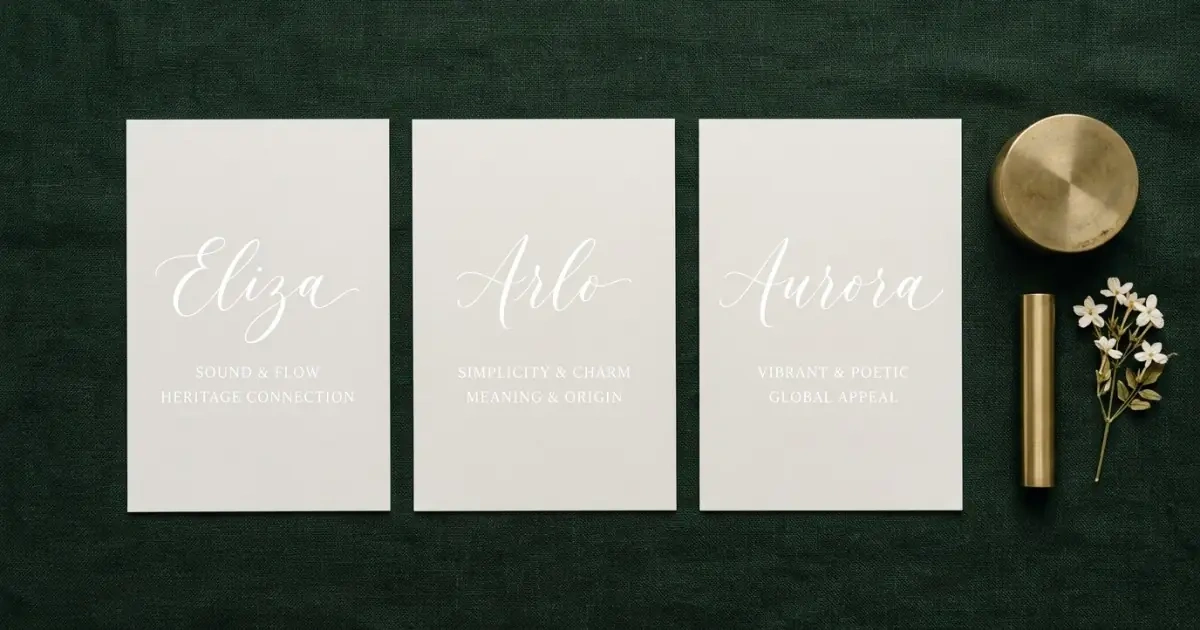
A Shortlist Method for Choosing a Baby Name by Meaning
Start with the meaning category, but do not stop there.
A theme can organize the search. It cannot choose the name by itself.
| Meaning Category | Possible Directions |
| Strength or courage | Ethan, Matilda, Leo, Victor |
| Peace or calm | Irene, Serena, Noah |
| Love or grace | Grace, Amara, Hope |
| Light or hope | Clara, Lucia, Phoebe, Aurora |
| Joy or blessing | Felix, Theodore, Nadia |
| Wisdom or truth | Sophia |
| Life or renewal | Zoe |
| Nature or place | Names tied to season, landscape, flower, tree, or water |
| Faith or heritage | Names rooted in religion, origin, or family tradition |
Collect names across styles rather than one narrow lane. A meaning category can include classic, modern, soft, strong, rare, international, vintage, and minimalist options.
Then remove names where you only love the meaning. Keep names with at least two practical anchors: sound you love, surname flow, spelling ease, nickname comfort, style fit, cultural connection, adult usability, or sibling harmony.
Finally, decide whether the meaning belongs in the first or middle name.
The best meaning-led name is not always the one with the most impressive definition.
It is the one where meaning and daily life work together.

Questions Parents Ask About Choosing a Baby Name by Meaning
Should meaning be the most important part of a baby name?
It can be very important, but it should not be the only factor. Sound, surname fit, spelling, nicknames, style, origin, and age range still matter.
What if I love a meaning but not the name?
Keep looking within the same theme, or use the meaning in the middle-name slot. The name itself should still feel good to say and use.
Can a name be meaningful without a beautiful literal definition?
Yes. Personal meaning, family story, heritage, place, faith, emotional association, or timing can matter as much as a literal definition.
How do I know whether a name meaning is reliable?
Check origin and context, especially for names with multiple language roots, simplified online definitions, religious associations, or cultural use beyond your own background.
Are virtue names too obvious?
Some are direct, but that can be part of their appeal. Test whether the virtue feels natural with your surname, family style, and daily speech.
Can a powerful meaning work better as a middle name?
Yes. Middle names are often ideal for meanings that are rare, intense, culturally specific, or emotionally important but less practical as everyday first names.

Where to Go Next When Meaning Matters Most
Let your exact friction point dictate the final move. If your meaning-led shortlist feels emotionally powerful but stylistically scattered, the structural frameworks in Names by Theme and How to Balance Meaning, Sound, and Style in a Baby Name can anchor the search. For choices shaped by language, faith, or family background, Names by Origin gives the meaning a clearer context than another definition list.
Once your contenders feel real, push them through How to Test a Baby Name Before Finalizing It to make sure symbolism does not outrank daily, spoken fit.
A meaningful baby name should feel like a gift, not a burden.
The strongest choices carry symbolism while still sounding natural, fitting the family, and giving the child room to grow.