
How to Use Family Heritage as a Starting Point for Baby Names
A blank baby-name search can feel strangely weightless.
You open a list, scan hundreds of names, save a few, lose interest in most, and wonder why nothing feels anchored. Some names are beautiful. Others sound stylish, classic, strong, soft, rare, or modern. Yet without a real direction, even good names can begin to feel interchangeable.
Family heritage gives the search a floor.
Instead of starting from pure preference, you begin with memory: relatives who shaped the family, languages that carried stories, surnames that nearly disappeared, faith traditions, migration routes, maiden names, repeated initials, old middle names, and meanings that keep resurfacing across generations. The goal is not to let the family tree choose the name for you. Used well, heritage gives you better material.
That distinction matters.
Family heritage should open the search before it narrows it. It can point you toward baby names by origin, specific cultural lanes, family-rooted meanings, and names with more substance than a trend list can usually offer. It should not trap you inside the first obvious inherited name or turn naming into a test of loyalty.
A heritage-based search works best when it creates a shortlist with roots and room: names connected enough to matter, but flexible enough to live in your child’s actual future.
For the broader cultural framework, start with How to Choose a Baby Name by Origin. When family roots already matter and you want to use them as the first step toward a stronger shortlist, this guide is the right place to begin.
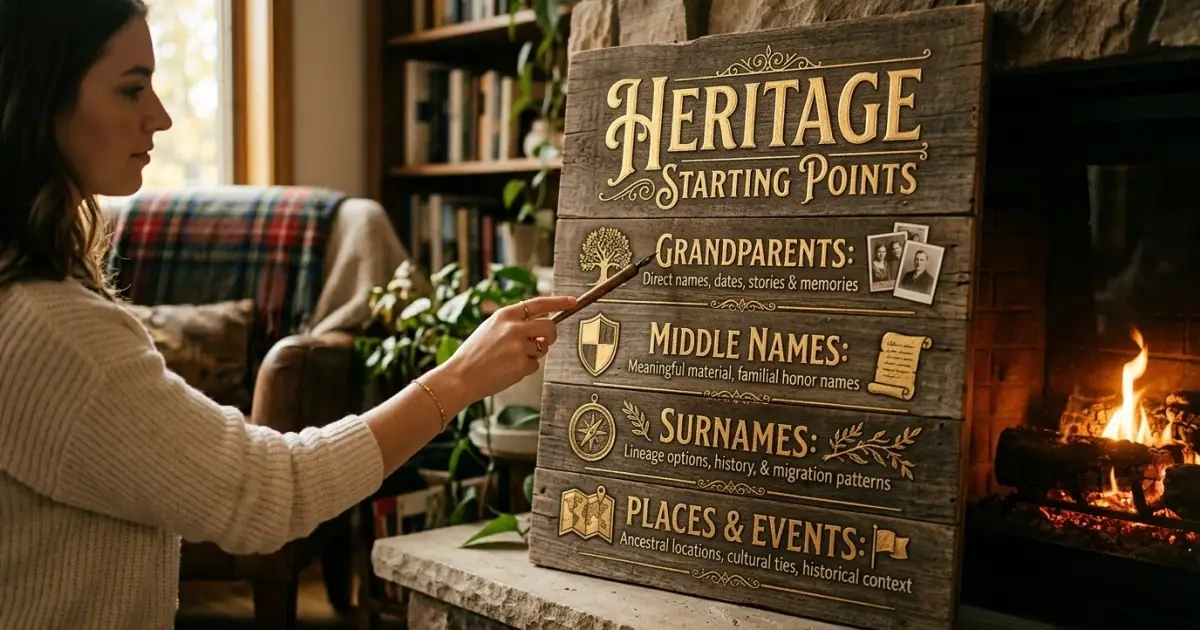
Family Heritage Gives the Search a Real Starting Point
Many parents do not need more random inspiration. They need a more personal way in.
Heritage can do that. The search may begin with a beloved grandmother, a lost surname, a faith tradition, a place name, a language, or a repeated pattern hiding across generations. Even when none of those names becomes the final choice, the process begins to feel less abstract. You are no longer asking only, “What sounds nice?” You are also asking, “What belongs to our story?”
That shift can change the quality of the shortlist.
A name drawn from heritage does not have to sound old-fashioned or heavy. It may become a fresh variant, a middle-name anchor, a surname-to-first-name bridge, or a name that shares a meaning with someone important. The final choice may be modern, spare, gentle, classic, or unexpected. Its strength comes from having a real thread behind it.
| Heritage Starting Point | What It Can Reveal |
| Grandparents and great-grandparents | Direct names, variants, initials, and family stories |
| Middle names | Meaningful material with less daily-use pressure |
| Surnames and maiden names | Lineage that may feel fresher as a first or middle name |
| Faith traditions | Names connected to belief, ritual, or spiritual meaning |
| Migration stories | Places, languages, and names that mark where the family moved from |
| Repeated meanings | Themes such as grace, peace, light, strength, devotion, or home |
| Cultural origin lanes | A clearer route into names tied to family background |
Family heritage is useful because it gives the process direction. It becomes less useful when it tries to decide too soon.
A Starting Point Should Guide the Search, Not Control It
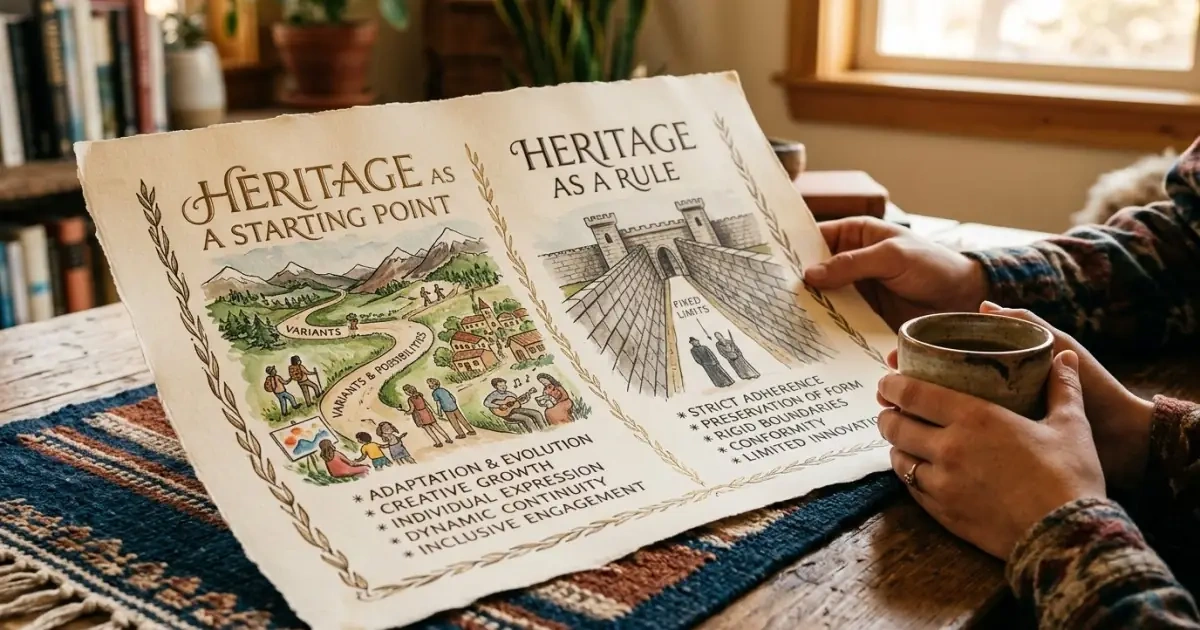
Heritage can act as a starting point or a rule. Those paths lead to very different decisions.
A starting point tells you where to look first. It makes you curious about old names, forgotten branches, surnames, values, and family patterns. The search gains a center without pretending the answer is already fixed.
A rule moves too quickly. It takes one inherited name and treats it as the only respectable option before anyone has tested whether that name still works with the surname, the parents’ style, the child’s likely environment, or ordinary speech.
That is where many family-rooted searches become tense.
| Heritage as a Starting Point | Heritage as a Rule |
| Opens several connected options | Narrows the process to one expected name |
| Encourages variants and related forms | Treats change as disrespect |
| Uses family history as material | Uses family history as pressure |
| Makes the shortlist more personal | Makes the shortlist feel predetermined |
| Leaves room for testing | Protects the inherited name from scrutiny |
While a direct namesake or family tradition may carry deep love, it can still prove too awkward for daily use — just as a powerful surname does not automatically translate into a flawless first name.
When the pressure side of heritage starts outweighing the helpful side, keep How to Honor Heritage Without Forcing Tradition close. The goal is not to reject heritage. It is to stop treating the most obvious form as the only honorable one.

Look for Family Patterns Before You Choose a Tribute
The obvious tribute is rarely the only useful material in the family tree.
Patterns often lead to better names.
A family may repeat meanings across generations without repeating exact names. Light, grace, strength, peace, faith, devotion, beauty, and home can appear in different forms. Another family may show a rhythm: formal first names softened by warm nicknames, maiden names used in the middle, Biblical choices on one side, Irish names on another, or a steady preference for names that sound compact and strong.
Those patterns give parents more range than a single inherited name.
| Pattern to Look For | What It Can Become |
| Repeated meanings | A wider shortlist through baby names by theme |
| Repeated initials | Subtle tribute without copying the exact name |
| Repeated origins | A stronger route into heritage-based names |
| Formal names with family nicknames | Full-name and everyday-name options |
| Surnames used as middles | Fresh first-name or middle-name material |
| Quietly repeated sounds | Names that feel family-connected without being literal |
| Recurring faith names | Spiritual continuity with more than one possible form |
An Elizabeth lineage offers multiple answers through Elizabeth, Eliza, Elise, and Beth-like forms. A James thread might shift naturally into a middle-name placement, a same-initial tribute, or a gentler everyday form. A Giovanni connection could lead to Gio, an Italian-origin cousin name, or a full-name structure that keeps the lineage clear without forcing a direct copy.
A direct inheritance can feel loaded very quickly. A pattern gives the decision room to breathe.
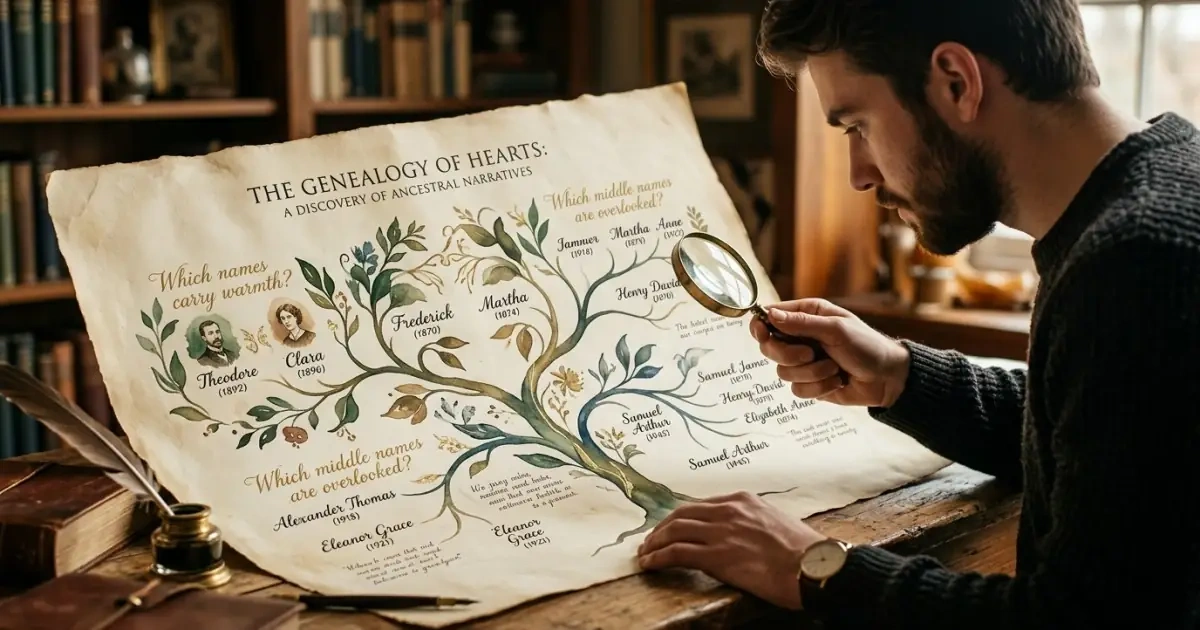
Read the Family Tree as Clues, Not Commands
A family tree becomes much more useful when you stop reading it as a list of obligations.
The strongest names are often hidden in the second layer: middle names, maiden names, branches no one talks about much, repeated meanings, names that belonged to people with quieter roles in the family story. Looking only at the most obvious names can make the search feel narrow before it has become intelligent.
Use the tree like an editor, not a clerk.
| Question to Ask | Why It Helps |
| Which names still carry warmth when spoken aloud? | Emotion matters more than historical importance alone |
| Which names are meaningful but too heavy in their exact form? | Variants or middle-name solutions may be stronger |
| Which middle names have been overlooked? | The best heritage material is not always in first-name position |
| Which surnames or maiden names could work today? | They can preserve lineage without direct duplication |
| Which meanings repeat across generations? | The family may be offering a theme rather than one name |
| Which branch feels underrepresented? | A name can restore balance as well as memory |
| Which names would we actually enjoy using? | Heritage should not erase daily fit |
This approach turns the family tree into source material. It does not ask the tree to deliver a final verdict.

Separate the Family Story From the Exact Name
Often, what parents want to honor is not one exact arrangement of letters.
It is the story attached to it.
A grandmother’s kindness. A grandfather’s courage. A migration line. A language that mattered. A faith practice. A family value. A person who made others feel safe. Once the story becomes clear, the naming options usually improve.
The exact form may still be right. But it is not automatically the only form.
| Family Story | Possible Naming Paths |
| A beloved relative | Exact name, variant, nickname, middle name, initial, or related meaning |
| A language line | A name from that language, an original spelling, or a more usable variant |
| A faith tradition | A scriptural, saint, virtue, or meaning-connected name |
| A migration story | Place-inspired name, surname, origin-based name, or middle-name tribute |
| A repeated family value | A name connected to strength, peace, grace, wisdom, joy, or home |
| A maternal line | Maiden name, grandmother’s name, middle name, or same-origin choice |
Parents often make weaker decisions when story and form are fused too early. They assume that loving the history means loving the exact name. Not always.
A story can survive adaptation. In many cases, adaptation is what keeps the story usable.

Turn Heritage Material Into a Real Shortlist
A family-history search only becomes useful when it produces contenders.
Start by gathering widely, then cut sharply.
Write down direct names first: grandparents, great-grandparents, meaningful aunts and uncles, siblings, cousins, and relatives whose presence still matters. Add middle names, surnames, maiden names, family places, faith names, repeated initials, and recurring meanings.
Then translate the material.
A Teresa line may become Tess, Tessa, Therese, Teresa in the middle, or another T-name chosen for the same emotional reason. A Kathleen connection may lead toward Kate, Kit, Lena, or Kathleen as a middle. A Rafael tribute may remain Rafael, soften into Rafi, shift toward Raphael, or move into the middle-name slot.
| Stage | What to Include | What to Remove |
| Gather | Names, surnames, middles, origins, places, meanings, initials | Nothing yet |
| Translate | Variants, nicknames, related names, middle-name ideas | Forms that clearly do not fit |
| Test | Names you could genuinely use | Names kept only out of guilt |
| Shortlist | Three to seven serious heritage-rooted options | Interesting but unusable material |
| Compare | First-name, middle-name, and variant solutions | Duplicates doing the same job |
Do not try to preserve every family connection in one child’s name. A good shortlist needs focus, not a full archive.
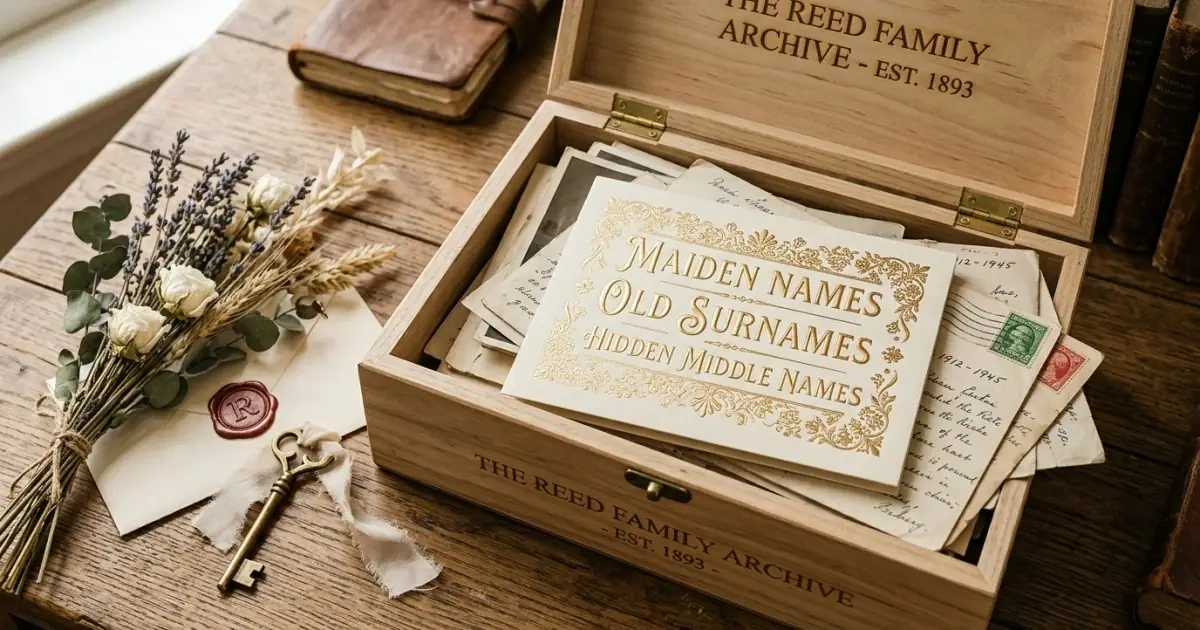
Surnames, Maiden Names, and Hidden Middle Names Are Often the Best Material
Inherited first names usually get attention first.
They are only part of the archive.
Surnames and maiden names can carry heritage in a fresher way, especially when direct first-name repetition feels too heavy. A maternal surname may preserve a line that would otherwise disappear. An old family surname can become a distinctive first or middle name. A place-linked surname may carry migration history more elegantly than a direct tribute.
Middle names deserve the same respect. They often contain meaningful names that were never overused in daily life, which makes them easier to revive without feeling like a copy.
| Heritage Source | Why It Can Work Well |
| Maiden names | Preserve maternal lines that often vanish |
| Old surnames | Carry lineage while sounding more individual |
| Hidden middle names | Offer meaning without the weight of direct first-name repetition |
| Place-linked names | Connect to migration or family geography |
| Initials | Provide subtle continuity when exact names are wrong |
| Occupational or family surnames | May carry history with modern first-name potential |
Of course, surname names still need style and usability checks. Some feel strong and modern. Others look better in a family tree than in daily life.
Use them as starting material, then make them prove themselves.
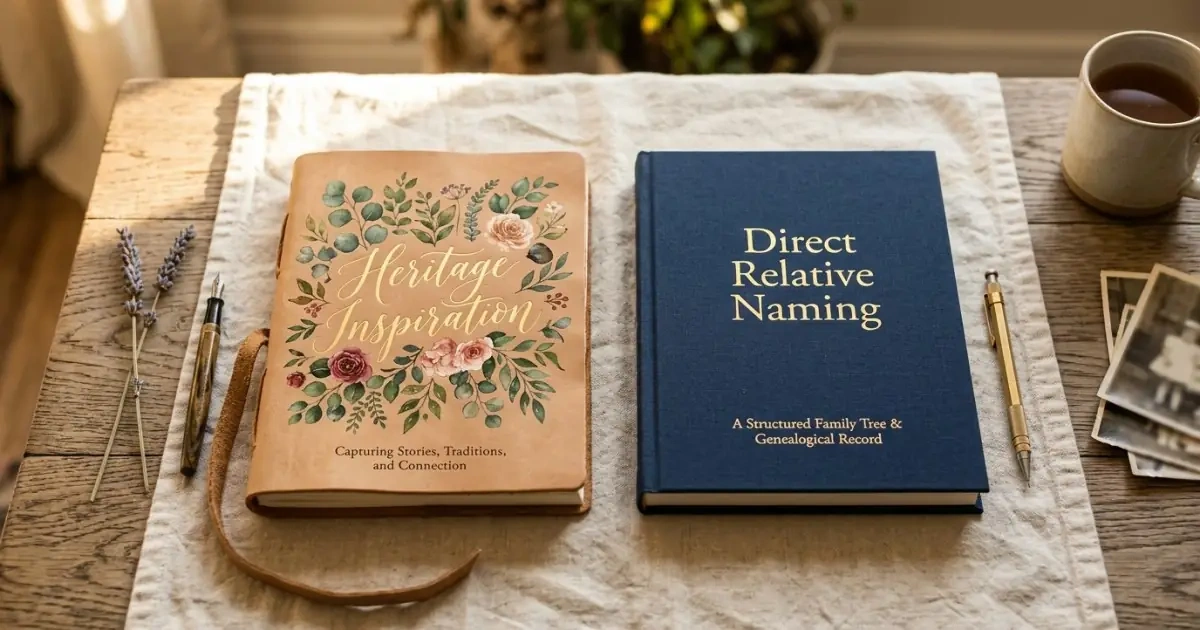
Heritage Inspiration Is Not the Same as Direct Relative Naming
Family heritage can inspire a name without creating a direct namesake.
That distinction lowers the pressure.
A family-rooted shortlist might begin with a relative and end with a related name, a shared meaning, a surname, a middle-name solution, or a name from the same cultural lane. The roots remain real even when no one in the family has carried the exact final name.
Direct relative naming is more specific. It asks how to honor one person well without flattening the child into a duplicate.
| Heritage Inspiration | Direct Relative Naming |
| Opens a family-rooted direction | Focuses on one person |
| Can use patterns, meanings, origins, surnames, or initials | Usually carries clearer emotional expectations |
| Allows a name no one has had before | Often raises questions of exactness and comparison |
| Builds a broader shortlist | Narrows the tribute quickly |
| Feels exploratory | Feels more ceremonial |
Both routes can be beautiful. They simply need different tools.
When tribute naming becomes the central task, How to Name a Baby After a Relative Well will be more useful than continued family-tree mining.
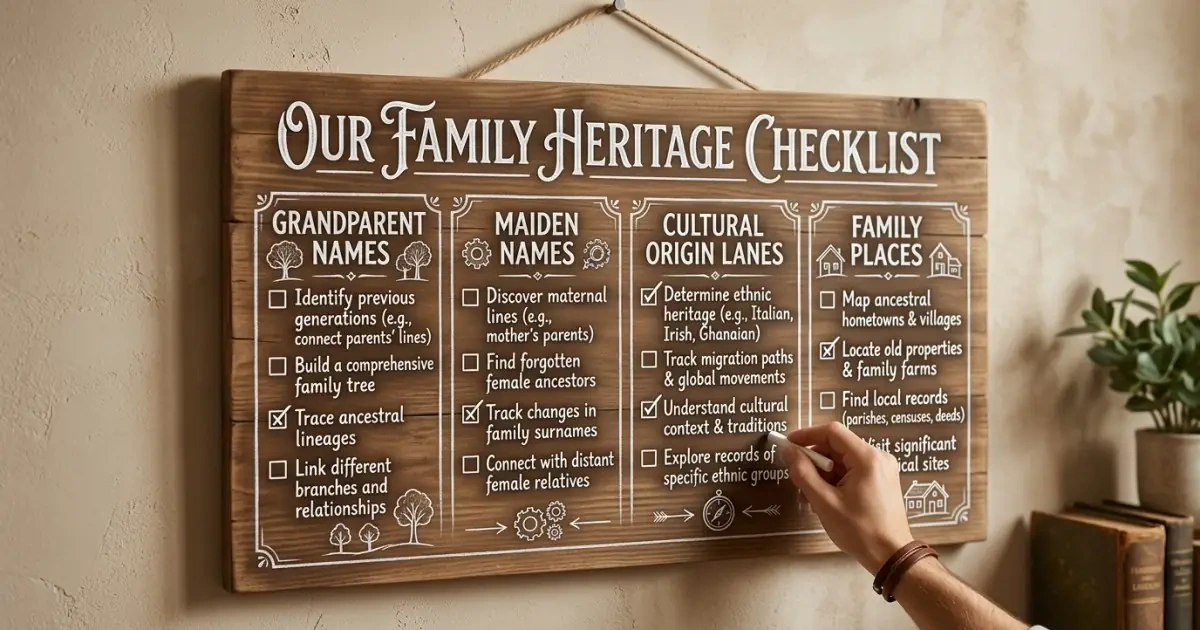
The Most Useful Forms of Family Heritage for Baby Naming
Some kinds of family material produce better name options than others.
Direct first names are obvious, but they can become emotionally crowded. Middle names, surnames, origin lanes, meanings, places, and repeated style patterns often create more usable range.
| Family Material | Why It Helps | Example Use |
| Grandparent names | Strong emotional connection | Exact name, variant, middle name |
| Great-grandparent names | Older material with less immediate pressure | Revival name, same-origin option |
| Middle names | Rooted but less overexposed | Middle-name reuse or first-name adaptation |
| Maiden names | Preserves quieter family lines | Surname-style first or middle name |
| Repeated meanings | Keeps the value rather than the exact sound | Names connected to peace, light, grace, strength |
| Cultural origin lanes | Gives the search a meaningful field | Irish, Hebrew, Arabic, Greek, Italian, Biblical, or other roots |
| Family places | Connects name to geography and migration | Place-inspired first or middle name |
A family full of Hebrew names, Irish surnames, Biblical middles, or Italian forms is not only offering individual names. It is giving you a search lane. That lane may matter more than any single inherited option.

Family Heritage Still Needs Real-Life Filters
Heritage can start the process well. It cannot finish it alone.
The name still has to work with your surname. It needs nicknames you can accept, initials that do not create problems, a sound you enjoy in real speech, and enough range for adult life. It also has to feel strong when the family story is not being explained.
That last test matters.
When a name only works with a long emotional introduction, the name itself may not be strong enough.
| Real-Life Filter | What to Check |
| Surname fit | Say the full name aloud in ordinary speech |
| Nickname potential | List the short forms family and friends are likely to use |
| Initials and monograms | Check awkward combinations before committing |
| Sound | Use the name in warm, tired, public, and casual tones |
| Style | Ask whether it feels like your family now, not only your family history |
| Adulthood fit | Picture the name in school, friendship, work, and formal introductions |
| Story independence | Notice whether the name still works without the full backstory |
Specific friction deserves a specific guide. Use How to Match a First Name With Your Surname for flow, How to Check Nickname Potential Before You Choose for social shortcuts, How to Check Initials, Monograms, and Awkward Combinations for preventable combinations, and How to Choose a Name That Ages Well for long-term range.
A family name still has to become the child’s name.
Go One Layer Deeper Than the Obvious Generation
Grandparent names are often the first place parents look.
That makes sense. They are emotionally close and easy to remember. They can also dominate the search too quickly.
Great-grandparent lines, collateral branches, maiden-name lines, old middle names, and quieter relatives may contain stronger material. They can open the search without creating as much family politics. A name from a less obvious branch can feel rooted and fresh at the same time.
| Family Layer | Why It May Be Useful |
| Grandparents | Strong emotional connection, but sometimes heavy pressure |
| Great-grandparents | Older names with revival potential |
| Maiden-name lines | Preserves lineage often lost through marriage |
| Middle-name records | Deep material with less daily-use baggage |
| Collateral branches | Aunts, uncles, cousins, and less expected relatives |
| Family places | Migration and geography as naming material |
| Repeated themes | Meaning continuity beyond exact names |
The first answer is not always the best answer. A quieter branch of the tree may offer a name that carries roots without carrying everyone’s expectations.

When One Side of the Family Has Stronger Naming Material
This happens often.
One side may have richer records, stronger names, clearer stories, or more vivid relatives. The other side may feel thinner, more fragmented, less documented, or harder to translate into usable names.
Heritage does not need to be equal in a mechanical way. Still, imbalance should be noticed, especially when both parents care about representation.
| Family Imbalance | Possible Solution |
| One side has stronger first-name material | Use that side for the first name and the other for the middle |
| One surname already carries one heritage | Let the given names honor the other side |
| One side has clearer stories | Use meaning or initials from the quieter side |
| One culture has names that travel better | Balance visibility with middle-name structure |
| One family applies more pressure | Separate urgency from fairness |
| One side feels absent | Make representation an explicit criterion before choosing |
Families often feel more respected when the logic is visible.
The final name may not display both sides equally, but the decision should not feel accidental. Structure can create fairness even when the name itself leans toward one branch.
Multicultural Family Heritage Needs a Wider Lens
In multicultural families, you may be starting from more than one family tree at once.
That makes the process richer and more complicated. Parents may be balancing two naming systems, two sets of relatives, two pronunciation worlds, and two different ideas about what heritage should look like in a child’s name.
The strongest option is not always the oldest or most literal form from either side.
Sometimes the best starting point is the overlap: a name that travels between languages, a shared meaning, a middle-name pairing, or a structure where one heritage line appears in the surname while another appears in the given name.
| Multicultural Question | What to Consider |
| Can both sides pronounce the name with respect? | Cross-language usability |
| Does the surname already represent one heritage? | Balance across the full name |
| Will one side feel erased? | Visibility and fairness |
| Does the name flatten both cultures too much? | Whether ease is becoming blandness |
| Could meaning bridge the two sides? | Theme-based continuity |
| Would first and middle names work better as a pair? | Full-name architecture |
For bilingual or multicultural naming, use How to Choose a Name That Works in Two Languages and Best Baby Name Strategies for Multicultural Families. When heritage, sound, and everyday tone begin competing, How to Balance Meaning, Sound, and Style in a Baby Name can keep the roots visible without letting heritage overrun usability.

Know When Heritage Is Helping and When It Is Taking Over
Family heritage should make the naming process clearer.
It becomes a problem when it makes the parents smaller.
| Heritage Is Helping When… | Heritage Is Taking Over When… |
| The shortlist feels more personal | The shortlist collapses into one name no one fully loves |
| You understand why the names matter | You feel guilty considering alternatives |
| New options feel connected to real family stories | The family story matters more than the child’s daily life |
| The process has direction | Older generations define the field alone |
| The names still pass practical checks | The inherited name is protected from testing |
| Parents feel more grounded | Parents feel cornered |
Emotion is not the enemy. Family-rooted naming should carry emotion.
Structure is what keeps that emotion from becoming pressure.
Once heritage material has become real contenders, move from family-tree mining into How to Compare Baby Names Objectively and How to Test a Baby Name Before Finalizing It. At that stage, more ancestry research may only delay the choice.
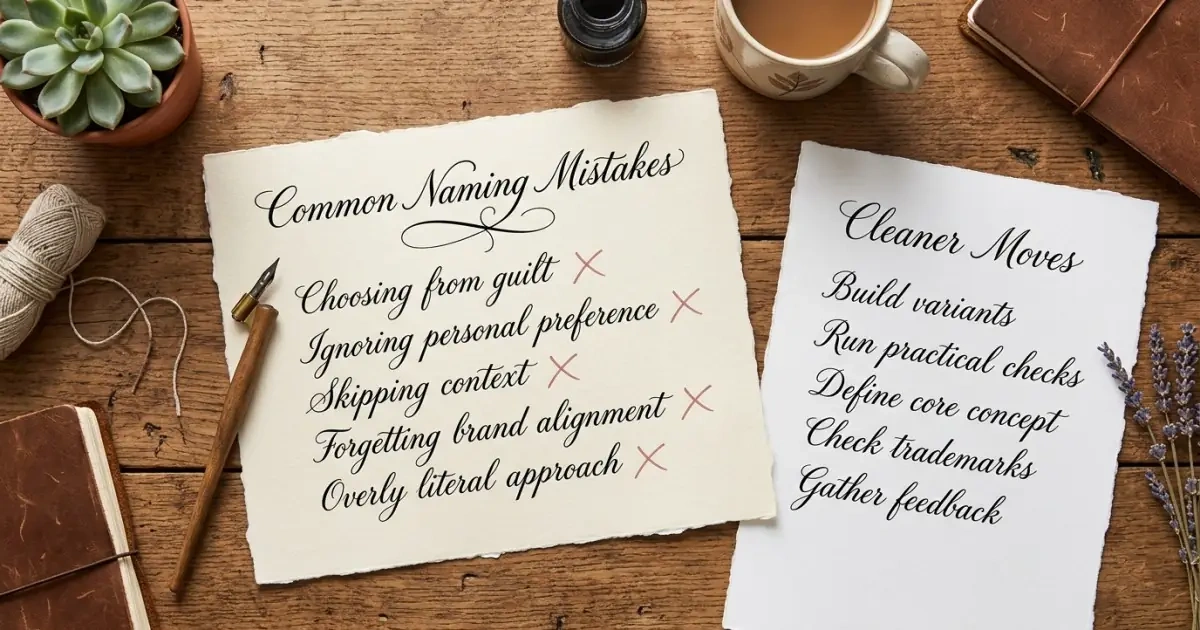
Mistakes That Weaken a Family-Heritage Shortlist
Most mistakes in heritage naming come from love, not carelessness.
Parents want to honor people. They want the name to matter. They want the child to carry something real. That emotional pressure can still distort the decision.
| Mistake | Why It Weakens the Choice | Cleaner Move |
| Treating one inherited name as the only respectable option | The shortlist becomes a duty, not a choice | Build variants and middle-name possibilities |
| Ignoring whether you actually like the name | The story starts replacing the name | Separate attachment to the person from attachment to the form |
| Romanticizing family history | The name is protected from real-life testing | Say it, write it, shorten it, and use it with the surname |
| Forgetting initials, nicknames, and flow | Preventable friction appears later | Run practical checks early |
| Letting relatives define the shortlist | The parents lose ownership | Gather family input, then reclaim the decision |
| Stopping at the obvious generation | Better material stays hidden | Look at maiden lines, middles, and great-grandparent branches |
| Choosing from guilt | The name may carry resentment | Ask what the child can live with, not only what the family expects |
A family-rooted name should feel connected. It should not require parents to silence their own judgment.

Middle Names Often Save a Heritage-Based Search
Some family names are richer than they are livable.
That is exactly where middle names become useful.
A strong heritage middle can preserve meaning without carrying all the daily weight. It can hold a grandparent, language line, faith tradition, surname, or cultural memory in the full name while allowing the first name to feel lighter, clearer, or more natural.
This often creates a better name overall.
| Middle-Name Heritage Works Well When… | Why It Helps |
| The exact family name feels too formal | The name keeps dignity without daily heaviness |
| One parent respects the tribute but does not love it as a first name | The full name carries both compromise and meaning |
| The surname needs a smoother first name | The heritage name can anchor the middle |
| Two family lines need representation | First and middle names can share the work |
| The tribute is emotionally important but stylistically difficult | Meaning stays without forcing fit |
| The first-name search needs freedom | Heritage remains present without controlling everything |
Middle names are not a lesser form of honor. Very often, they are the smartest form.
When your shortlist starts moving this way, use How to Use Middle Names to Carry Heritage and Meaning. A name can be deeply rooted without requiring the first name to do all the symbolic labor.
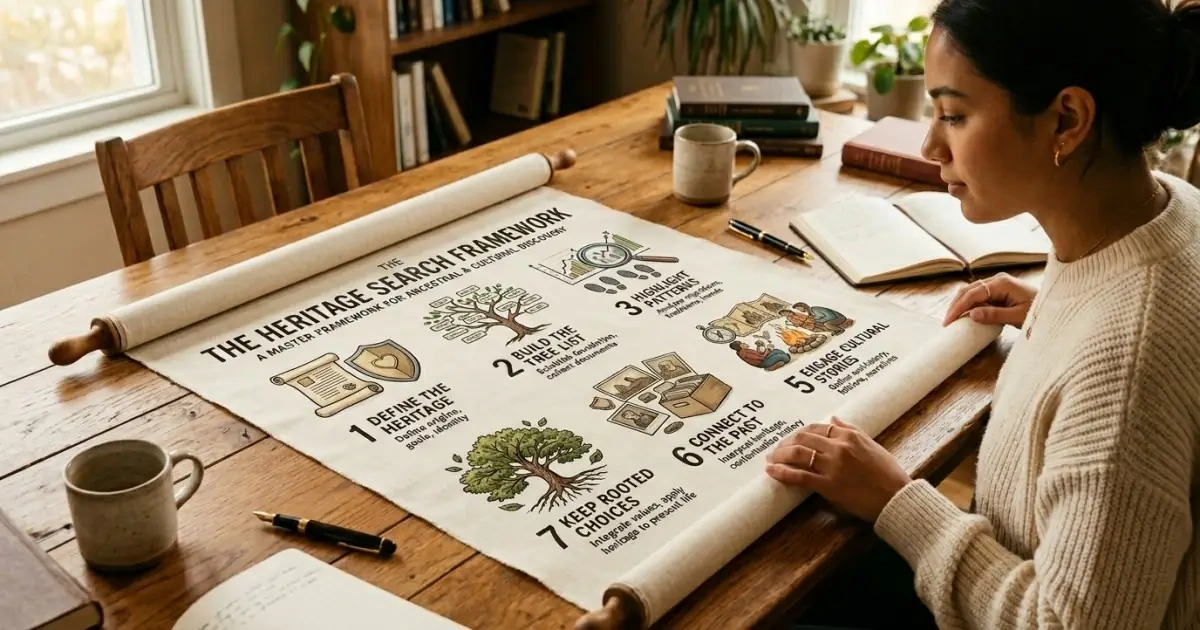
A Seven-Step Framework for Using Family Heritage as a Starting Point
Use this process when you want the search to begin with roots without becoming trapped by them.
| Step | What to Do | Why It Matters |
| 1. Define the heritage you want to carry | Decide whether the source is a person, language, faith, surname, maternal line, place, or meaning pattern | Prevents vague family obligation |
| 2. Build a family-tree list, not a final list | Gather first names, middle names, surnames, maiden names, origins, places, and themes | Keeps the search open without becoming random |
| 3. Highlight patterns and usable forms | Look for repeated meanings, initials, origins, and variants | Reveals better material than one obvious tribute |
| 4. Translate material into contenders | Create direct forms, variants, surname bridges, and middle-name options | Turns history into usable names |
| 5. Compare first-name, middle-name, and variant structures | Test whether the heritage belongs in daily use or full-name support | Avoids forcing the first name |
| 6. Run practical checks | Use surname, nicknames, initials, sound, and adulthood tests | Makes the name livable |
| 7. Keep the name that feels rooted and chosen | Choose the option that carries meaning without cornering the family | Protects both heritage and freedom |
The best heritage process has movement.
It begins in memory and ends in a name that can actually live.

Signs Family Heritage Is Helping the Process
Heritage is doing its job when the search feels more grounded without becoming smaller in the wrong way.
The names make more sense. The shortlist feels more personal. You understand why certain options matter. New ideas feel connected to real family material rather than pulled from nowhere.
| Helpful Signal | What It Means |
| The shortlist feels more personal | Heritage is adding depth |
| You can explain the direction without sounding defensive | The reasoning is clear |
| Variants feel respectful, not evasive | The story has room to adapt |
| Middle-name options bring relief | The full-name structure is working |
| Both parents feel involved | Heritage is not being used as one person’s weapon |
| Practical tests are still welcome | The name is not being protected from reality |
Heritage should make the process clearer.
It should not make everyone afraid to question the name.

Signs Family Heritage Has Become a Trap
Heritage has crossed the line when it stops opening the process and starts closing it too early.
The emotional clue is usually guilt.
You feel guilty considering alternatives. The shortlist keeps collapsing into a name you do not love. Relatives’ preferences feel louder than your own. The family story starts mattering more than the child’s daily life. A name that fails every practical test stays on the list because removing it feels disloyal.
| Trap Signal | What to Rebalance |
| You feel guilty about every non-family option | Heritage has become obligation |
| One inherited name dominates despite weak fit | The exact form is being overprotected |
| The story is stronger than the name | Separate meaning from form |
| Older generations control the shortlist | Return ownership to the parents |
| The child’s future feels secondary | Recenter daily life and adulthood fit |
| Alternatives feel like betrayal | Revisit what the heritage value actually is |
The answer is not to abandon family heritage.
Return it to its proper role: source material, not command.

Rooted and Chosen Is Stronger Than Copied
The strongest family-heritage names rarely feel copied.
They feel connected.
They carry history without sounding borrowed. They give the child continuity without turning them into a replica. They begin in memory but end as a name the parents can actually say, write, shorten, explain, and love.
| Copied Name | Rooted and Chosen Name |
| Repeats the past literally | Carries the past forward |
| May create comparison pressure | Gives the child their own shape |
| Depends on obligation | Feels chosen by the parents |
| Can ignore daily usability | Survives ordinary life |
| Treats history as fixed | Lets heritage remain alive |
Family heritage works so well as a starting point because it gives the search roots.
The final name still has to earn its place.
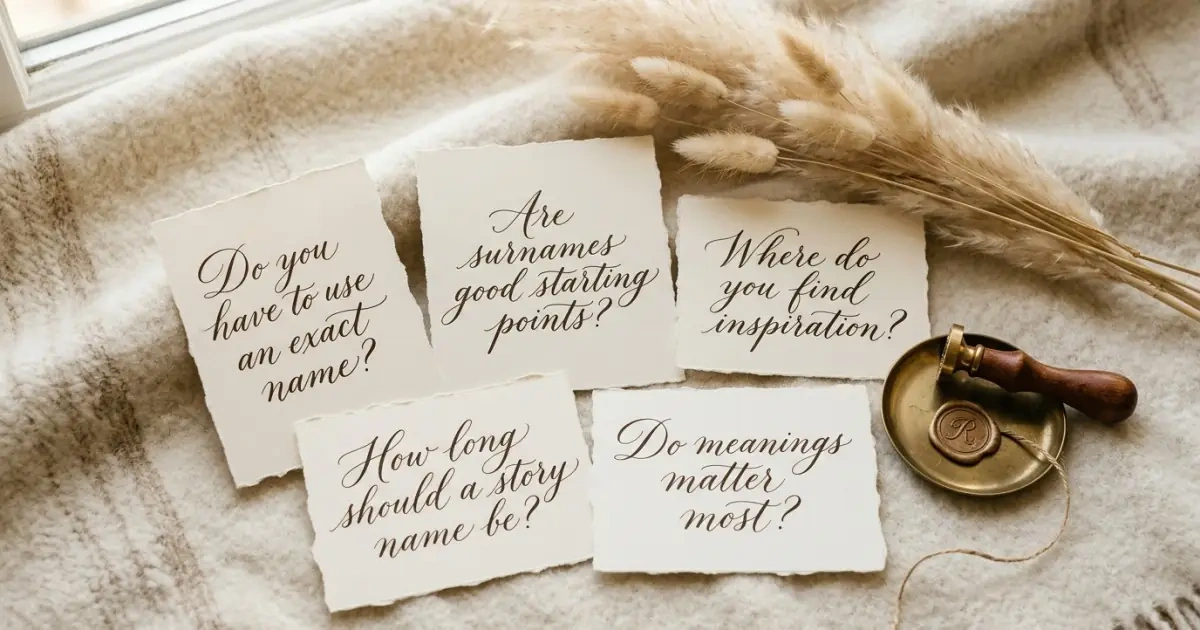
Questions Parents Ask About Starting With Family Heritage
Do you have to use an exact family name?
No. Family heritage can guide the search through patterns, meanings, surnames, variants, initials, origin lanes, and middle-name structures. Exact repetition is only one option.
What if family heritage gives us ideas but no names we actually like?
That is still useful. The heritage material may be clarifying your direction rather than handing you the final answer. Look for meanings, initials, origins, surnames, or variants connected to the story.
Are surnames and maiden names good starting points for first names?
Often, yes. They can preserve family history in a fresher way than direct first-name repetition, especially when the surname has a clean sound and works with the child’s full name.
What if one side of the family has stronger naming material?
Notice the imbalance rather than ignoring it. One side may shape the first name while the other contributes the middle, meaning, initial, surname, or full-name structure.
Can a middle name carry the heritage while the first name stays freer?
Absolutely. Middle names often carry the deepest family meaning more gracefully than first names, especially when the inherited form is important but heavy.
How do you know whether a family-rooted name is too forced?
A forced name usually needs constant defense. It may feel meaningful in theory but weak in speech, awkward with the surname, unwanted by one parent, or more loyal to the past than usable for the child.

Where to Go Next After a Family-Heritage Search
Let the shape of the pressure decide the final move. Broad cultural roots are best clarified through How to Choose a Baby Name by Origin, while How to Honor Heritage Without Forcing Tradition is the better companion once family memory starts feeling more like obligation than inspiration.
Heavy inherited forms often need structure rather than force. How to Use Family Names Without Making the Choice Feel Forced and How to Use Middle Names to Carry Heritage and Meaning can help you anchor the heritage in the right position instead of asking the first name to do all the symbolic work.
For complex family dynamics — direct namesakes, bilingual households, multicultural balance, or a shortlist where story keeps overpowering daily fit — specialized guides such as How to Name a Baby After a Relative Well, How to Choose a Name That Works in Two Languages, and Best Baby Name Strategies for Multicultural Families offer better structure than a forced compromise. Once your contenders are real, push them through How to Compare Baby Names Objectively and How to Test a Baby Name Before Finalizing It before the family story overpowers practical fit.
For the broader editorial path through naming decisions, Expert Baby Naming Guides for Choosing the Right Name can help you move from family-rooted inspiration into the guide that matches the exact problem in front of you.
Family heritage works best when it opens the process before it narrows it. It should not trap you in the first obvious inherited answer. It should help you build a shortlist with real roots, real meaning, and a much better chance of leading to a name your child can actually live with.