
How to Decide Between Two Baby Names Without Second-Guessing Yourself

Getting down to two baby names should feel like relief.
In one sense, it is. The endless browsing has slowed. The swollen shortlist has been cut. Names that once looked interesting for an afternoon have fallen away.
Then the decision tightens.
Both finalists now have a legitimate claim. A surname may favor one; emotional meaning may pull you toward the other. Calm practicality can sit beside a name with more spark, and suddenly the choice feels less like preference than loss management.
That is why the final stage can feel heavier than the longlist ever did. These names are no longer casual possibilities. Either one could become the name your child carries into school forms, family stories, introductions, signatures, friendships, and adulthood.
More inspiration will not solve this stage. Another public vote from relatives will probably make it noisier. You need to understand what these two names are actually competing on.
When your broader taste still feels unsettled, step back into baby names by style and notice whether your instincts lean classic, modern, soft, strong, vintage, minimalist, elegant, or rare. Once you are genuinely down to two names, though, the work changes. This guide is about making the final choice with clarity instead of circling the same arguments until both names start to blur.

Two Final Baby Names Create a Sharper Kind of Pressure
The last stage of naming is rarely about names alone.
By this point, each finalist usually represents a different kind of future. Clara offers polish, clarity, and restraint. Maeve brings compact strength, texture, and quiet distinction. Theo feels warm and modern-classic; Elias carries more length, heritage, and lyrical weight.
The visible decision may look simple: Clara or Maeve, Theo or Elias. Underneath, the real conflict may involve ease against depth, familiarity against character, family fit against private instinct, or long-term simplicity against emotional pull.
That is why two names can feel harder than twenty possibilities.
A longlist contains plenty of weak names, and cutting them creates momentum. The final pair is different. Both names are good enough to hurt a little. Choosing either one means surrendering a version of the story you had started to imagine.
Abandon the search for a flawless victor. At this final stage, the goal is deciding which trade-off you can live with most peacefully.

Find the Real Trade-Off Before You Compare the Names
A final naming decision becomes easier once the hidden contrast is visible.
Many parents keep asking which name they like more. That question worked earlier in the process; now it is too blunt. You already like both names. The useful work is finding what each finalist protects.
The final choice may involve:
- classic stability against modern energy
- stronger meaning against smoother sound
- heritage depth against everyday ease
- familiar appeal against quiet distinction
- nickname flexibility against formal simplicity
- family expectation against parental independence
- one parent’s favorite against the name both parents can truly own
This is where the site’s browse layers can clarify the choice without sending you back into random searching. Baby names by origin can reveal whether a finalist is winning because of language, culture, or family continuity. Baby names by theme becomes useful when meaning carries emotional weight. Popularity anxiety belongs with baby names by popularity, especially when the tension involves social ease, rarity, or trend timing.
Do this before scoring the names.
A name like Naomi is difficult to compare with Isla until you admit what each one is doing. Naomi brings biblical depth, warmth, and fuller rhythm. Isla gives lightness, trend fluency, and a cleaner sound. Neither wins by category alone. They answer different instincts.
Once the real trade-off is named, the choice stops feeling like a mysterious emotional deadlock.

Put Both Names Through the Same Practical Grid
Names become slippery when they stay in your head.
You remember the strongest feature of each finalist and compare from mood rather than structure. A side-by-side grid keeps the emotion honest. It does not make naming cold; it stops the weaker argument from hiding behind a stronger feeling.
Use the same categories for both names:
| Category | What to Compare |
| Meaning | The emotional or symbolic weight the name carries |
| Sound | How the name feels after repeated use |
| Surname flow | Whether the full name moves cleanly |
| Spelling | The likely correction burden |
| Pronunciation | The mistakes people are likely to make |
| Nicknames | The short forms and casual versions the name invites |
| Popularity | How visible, rare, current, or familiar the name feels |
| Family fit | Sibling balance, heritage, and household style |
| Adult range | The name’s ability to travel beyond babyhood |
| Partner response | Enthusiasm, resistance, and emotional ownership |
Do not treat every row as equal.
For some families, meaning outranks popularity by a mile. A difficult surname may make rhythm and pronunciation non-negotiable. A name with a slightly weaker story can still win when it performs beautifully in daily life.
The grid should expose the decision, not make it for you.
When you want a deeper scoring method, use How to Compare Baby Names Objectively after your shortlist has already narrowed to serious contenders.

The Name That Still Feels Good in Your Mouth
Your child’s name will live in your mouth for years.
That sounds obvious until you test it properly. Some names look refined on a page but stiffen in ordinary speech. Others seem modest in writing and then settle beautifully in the voice.
Say both names aloud in normal ways: beside the surname, across a room, in a warm sentence, in a quick practical phrase, and in the tired voice real parenthood will eventually produce.
Listen for ease.
A name that only sounds good when carefully pronounced may become work. A name that survives casual speech has already passed a serious test.
This is where short, clean names often gain strength. Leo has immediate vocal ease. Julian gives more movement and softness, with extra syllables to carry. Rose is spare and grounded; Eleanor offers a fuller shape and more nickname doors.
Sound should not dominate the entire decision. Still, many parents underrate it. You will say this name when you are proud, rushed, affectionate, distracted, irritated, and half-awake. A name that works only in its polished version may not be as strong as it first looked.
Full-Name Fit With the Surname
A first name does not live alone.
The surname changes rhythm, weight, tone, and sometimes the entire style of the name. A graceful first name can become clumsy with the wrong last name. A plain name can sharpen when paired well.
Say each full name aloud without performing it. Use the real surname, not the imaginary version you wish it behaved like.
Listen closely to the mechanics: colliding endings, accidental rhymes, awkward repeated sounds, sing-song rhythm, distracting initials, or a light first name that disappears beside a heavy family surname. These are small things until they become daily things.
A brisk surname can absorb a longer first name. A heavier family name often needs the first name to carry less ornament and more structure. The reverse may also work: a short first name can feel too clipped beside a clipped surname, then become perfect next to something longer and more melodic.
Full-name fit is not about prettiness. It is about durability.
When surname rhythm keeps bothering you, move next to How to Match a First Name With Your Surname. This is too important to leave as a vague discomfort.

Associations That Keep Interrupting the Choice
Every name arrives with echoes.
A kind teacher, a difficult classmate, a public figure, a fictional character, an ex-partner, a family conflict, a childhood memory: any of these can attach themselves to a name before your child ever wears it. The reaction does not need to be rational to matter.
A blank name is almost impossible to find. More importantly, blankness is not the goal.
The goal is enough room for your child to become the primary association. When an old image keeps crowding the name, pay attention. A final contender should not require constant mental editing.
Be especially careful with names tied to famous full-name combinations. A first name and surname that recreate a celebrity, fictional character, controversial figure, or running joke can make the full name feel borrowed before your child ever uses it.
Family names need a more careful reading. A name may honor someone important and still feel too emotionally loaded for the first-name slot. In that case, a middle name, related variation, or shared initial may preserve the tribute without handing your child the full weight of the namesake.
Spelling and Pronunciation Friction
A name does not have to be effortless to be worth using.
Many culturally rich, heritage-rooted, and international names deserve the small corrections they require. Ease should not automatically outrank identity. Still, friction belongs in the decision.
Compare the likely burden of each finalist: misspellings, misreadings, repeated pronunciation checks, or hesitation in settings where your child will hear the correction often. Then decide whether the value of the name justifies the effort.
That calculation is personal.
Saoirse may be absolutely worth the pronunciation teaching for a family who loves its Irish identity and sound. Nora carries far less friction, but it also sends a different cultural and stylistic signal.
The risk begins when parents choose a harder name while secretly wishing it behaved like an easier one.
A little correction can be fine. Quiet resentment over that correction usually is not.

Nickname Architecture You Can Live With
Nicknames are not fully under parental control.
You may plan to use the full name. Other people may shorten it. Siblings may reshape it. Friends may find the fastest version. Some nicknames feel charming; others create immediate resistance.
Take both finalists and list the likely shortcuts, pet forms, initials, rhymes, and playground versions.
A name like Theodore opens several doors: Theo, Teddy, Ted, and perhaps family-specific forms. That flexibility can be a gift. It can also bother parents who want a cleaner, less negotiable name.
A compact name such as Finn gives fewer obvious nickname paths. That directness can feel refreshing, though it may lack the formal-to-casual range some families prefer.
The formal name cannot be judged separately from the names it invites.
When nickname anxiety keeps returning, How to Check Nickname Potential Before You Choose is worth reading before the final choice hardens.

Life-Stage Range From Babyhood to Adulthood
A baby name has to grow.
That does not mean every name should sound formal, corporate, or severe. It means the name needs enough range for a toddler, a teenager, an adult, and an older person. The best final choice often works in more rooms than the more dazzling alternative.
Test the name against ordinary future scenes: a school list, a sports practice, an application, a serious introduction, a friend saying it casually, and your child eventually using it for themselves.
Some names glow brightest in infancy. Others feel slightly grown-up at first, then reveal their strength over time. Arthur may feel weighty on a newborn but steady across a life. Milo brings warmth and bounce, with a lighter social touch.
Do not assume the more formal name has the better adult fit. Many short names age well because their lines are clean. The risk sits with names that depend too heavily on cuteness, novelty, or a narrow style moment.

The Name You Would Miss More
This question often cuts through weeks of overthinking.
Imagine the decision is already made. One name stays. The other is gone.
Pay attention to the loss. Which name do you instinctively want to rescue? Which disappearance makes you feel defensive, disappointed, or strangely restless?
That reaction is not the whole decision, but it reveals attachment. Parents often discover that the so-called rational option is not the one they would truly grieve losing. The opposite can happen too: the exciting name becomes easier to release once the steadier name is imagined as final.
Do not confuse drama with depth. The name you would miss more may be quieter than expected.
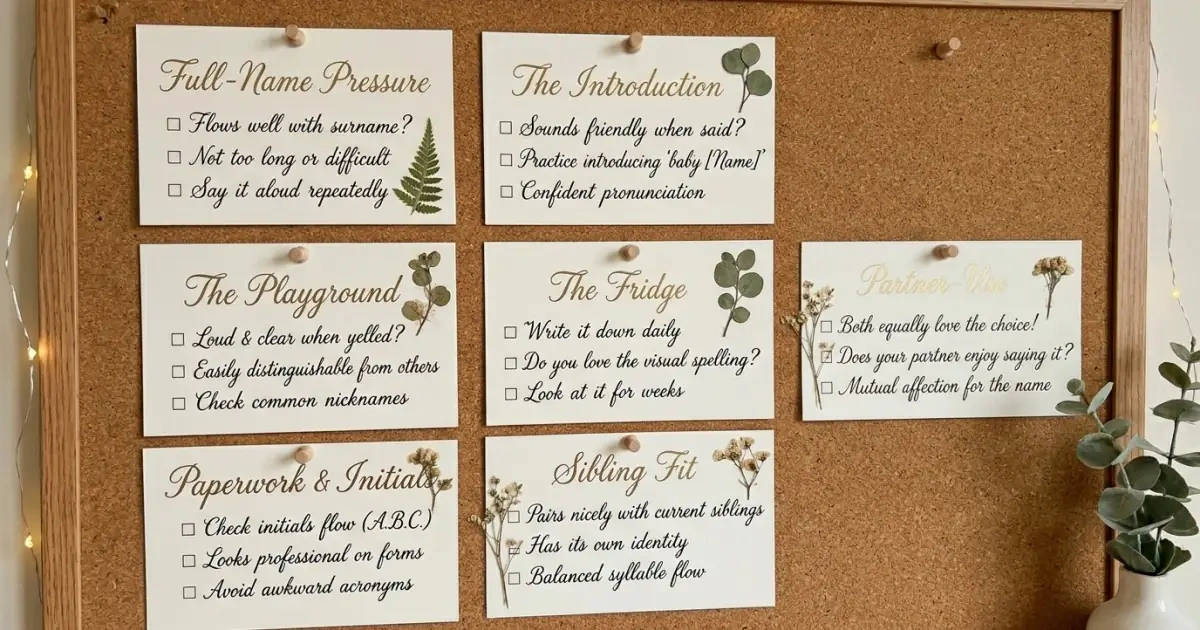
Real-Life Tests for Choosing Between Two Baby Names
Names behave differently in real use than they do on a list.
The final decision usually gets clearer once the names leave the page and enter ordinary life.
The full-name pressure test
Use each full name in situations that resemble actual life: calling from another room, writing a label, saying goodbye at school, introducing your child to another adult, or reading the name from a form.
Avoid ceremonial pronunciation. You need to hear the name in its daily voice.
A name that keeps sounding settled under these conditions deserves attention.
The introduction test
Try both versions:
“This is ___.”
“Hi, I’m ___.”
Some names look appealing but lose conviction as personal introductions. Others feel more alive the moment they are attached to a person.
This test is especially useful when one finalist feels decorative. A name can be stylish and still fail to feel inhabited.
The playground test
Could you call the name loudly in public without feeling self-conscious?
This is not a cute gimmick. It catches names that become fussy, flimsy, theatrical, or awkward once they have to project across real space.
Daily use is where names strengthen or fray.
The fridge test
Write both names somewhere visible and leave them there for a few days.
Do not stare at them like a puzzle. Let them sit in the background of your life.
The thrilling name may flatten. The steadier one may gain force. Occasionally the bolder name keeps its energy and the safe name starts to look dull. Either result is useful.
The paperwork and initials test
Write the full combinations exactly as they might appear on documents. Check initials, monograms, email-style formats, school labels, and any awkward word formed by the first, middle, and surname initials.
Small problems become more annoying after the birth, not less.
For this layer of testing, pair How to Check Initials, Monograms, and Awkward Combinations with How to Test a Baby Name Before Finalizing It. Initials and real-use testing catch different kinds of regret.
The sibling fit test
Say the finalist beside any existing children’s names.
The names do not need to match. Matching too hard can make a sibling set feel staged. What you want is family logic: names that sound chosen by the same parents, with enough individuality for each child.
“Nicely distinct” and “style collision” usually become obvious when spoken aloud.
The partner-use test
Listen to how your partner says each name when they are not performing neutrality.
The voice gives things away. A name your partner uses naturally may have more shared life in it than the one they only discuss abstractly. A finalist that always sounds negotiated may need more scrutiny.

When Each Parent Is Defending a Different Name
Two-name deadlock often comes from competing fears rather than raw taste.
A parent defending simplicity may really be trying to protect the child from spelling burden, social friction, or a name that feels too performative. The parent drawn toward the richer option may be protecting heritage, distinction, or a meaning that feels too important to lose. Trend risk, plainness, family pressure, pronunciation burden, and cultural identity can all hide underneath a simple “I just like this one more.”
Arguing name by name quickly becomes a contest.
A better conversation starts with what each parent is afraid of giving up. Name the value underneath the preference: ease, roots, warmth, individuality, tradition, flexibility, or long-term range. Then separate mild discomfort from true resistance. A parent who is merely less excited does not occupy the same position as a parent who genuinely cannot imagine using the name every day.
Use vetoes carefully. A veto should not eliminate every name that fails to thrill you. It should be reserved for names you truly cannot use.
A graceful compromise sometimes exists: one finalist takes the first-name role, while the other becomes a middle name candidate. That only works when the rhythm is strong and both parents feel the choice preserves something real. The middle slot should not become a trophy case for the losing argument.
Partner dynamics deserve their own process, and How to Choose a Name With Your Partner is the natural next step when the disagreement has become the main obstacle.

Final-Stage Habits That Keep Two Good Names Frozen
Some hesitation is normal. Certain habits make the final stage harder than it needs to be.
Too many outside opinions can wreck a nearly finished decision. Family and friends bring private associations, class signals, generational taste, and memories you cannot predict. A name that feels distinctive in your household may strike a relative as strange simply because it falls outside their familiar era.
Ask for feedback only when the question is specific. “Is this hard to pronounce?” is useful. “Which name do you like?” often creates noise.
Another trap is trying to remove all regret before choosing. That standard is impossible when both names are strong. Choosing one good name may leave a small ache around the other. The ache means the other name had value, not that the decision is wrong.
A single impressive feature can also distort judgment. Strong meaning, a beautiful nickname, or an excellent history may dominate the conversation even when the full name performs less well in daily life. No single feature should carry the entire decision.
The most damaging habit is reopening the whole search. Once you are down to two serious names, adding ten more usually gives anxiety new material. The issue is rarely a shortage of names at this stage. It is a reluctance to choose.
When the search starts feeding doubt instead of clarity, When to Stop Searching for the Perfect Baby Name can help you shut the door at the right moment.

Signs One Baby Name Is Quietly Pulling Ahead
The winning name does not always arrive with drama.
It may show itself through small patterns. You say it more naturally. It needs less defending. It survives the surname test with fewer caveats. Your partner uses it without sounding like they are presenting an argument. The possible nicknames bother you less. Letting it go creates a sharper sense of loss.
Another sign is even simpler: the name starts to feel less like a concept and more like your child.
Do not force revelation. Watch for consistency.
A name that keeps holding together from different angles is often stronger than the name that produces one rush of excitement and then demands constant reassurance.

Re-Rank the Priorities When Both Names Still Feel Right
After testing, both names may still feel viable.
That does not always mean you need more time. It usually means your priorities need a firmer order.
Choose the three factors that matter most in this specific decision. Not ten. Three.
The strongest three might be meaning, surname flow, and heritage. For another family, sound, adult fit, and nickname comfort may carry the choice. A third family may care most about pronunciation ease, distinctiveness, and partner agreement.
Now compare only through those priorities.
Late-stage overthinking often invents new criteria because parents are desperate to break the tie. Resist that. Do not suddenly let a minor spelling preference outrank the value that mattered from the beginning.
Also be honest about your real naming self. The more unusual, intricate, or dramatic name may be right. But choosing it to impress an imagined version of yourself rarely ends well. The steadier name is not automatically a compromise. Sometimes it is the name that fits your actual life.
The name you can live with gladly matters more than the name that looks most interesting in a discussion.

A 48-Hour Framework for Deciding Between Two Baby Names
A tight decision window can help when the debate has become stale.
| Time | What to Do | What to Notice |
| Hour 1 | Write both full names in the same format | Which combination looks complete? |
| Hour 6 | Use both names aloud in ordinary sentences | Which one feels natural in your voice? |
| Day 1 | Check initials, nicknames, surname flow, and sibling fit | Which name needs fewer caveats? |
| Day 1 evening | Discuss reactions privately with your partner | What is each person protecting? |
| Day 2 morning | Identify the main objection to each name | Which objection is easier to live with? |
| Day 2 evening | Choose the name you feel relieved to keep | Which decision calms the room? |
Relief is underrated.
The winning name is not always the one you can argue into first place. It is often the one whose survival makes your body soften a little. That reaction deserves to be heard.
When the Less Exciting Name Is the Better Built Choice
Some names create a stronger first impression than they can sustain.
They are stylish, rare, dramatic, or emotionally loaded. They make the list feel more exciting. They give you something to talk about.
Then daily life starts asking harder things of them: surname fit, ease of speech, nickname safety, age range, explanation burden, and the quiet question of whether your child should have to carry your desire for originality every day.
The steadier finalist may feel less electric at first. It may also be better built.
Ease is not surrender. Sometimes ease is structural strength: clean sound, durable rhythm, low correction burden, and enough flexibility for different ages and settings.
This does not mean the bolder name should lose. A rare or vivid name can be the right choice when the meaning, identity, and sound justify the weight. The danger is choosing intensity and mistaking it for depth.
A name should not have to dazzle in order to deserve confidence.

Letting Go of the Other Good Name Without Reopening the Search
A final decision includes a small act of loss.
When both names were genuine contenders, the unchosen name may suddenly look more beautiful. That is normal. The mind often romanticizes the road not taken.
Do not treat that reaction as proof that you chose badly.
Letting go of a good name means only that it was not the best fit when sound, meaning, surname, family context, partner agreement, and real life were weighed together. The name may still matter. It can become a middle name, a future sibling possibility, or simply one of those names you loved but did not use.
That does not weaken the chosen name.
Naming is emotional because names carry imagined lives. The final choice becomes easier once you stop trying to erase your affection for the other option. You are not declaring it unworthy. You are deciding which name gets to become real.

Questions Parents Ask When Choosing Between Two Baby Names
How do you choose between two baby names you both love?
Compare them through the same practical criteria: meaning, sound, surname fit, spelling, pronunciation, nicknames, popularity, adult range, and partner response. The stronger choice usually appears when both names face the same tests.
What should decide the tie when meaning and sound point in different directions?
How do you choose between two baby names you both love?
Compare them through the same practical criteria: meaning, sound, surname fit, spelling, pronunciation, nicknames, popularity, adult range, and partner response. The stronger choice usually appears when both names face the same tests.
Should popularity break the final tie?
Only when popularity is already one of your serious concerns. A name that feels too common, too rare, or too trend-sensitive for your comfort can lose ground. Popularity should not control the decision merely because you are nervous.
What if one parent is much more attached to a finalist?
Attachment has to be weighed alongside resistance. A strong yes from one parent does not erase a strong no from the other. Look for the name both parents can use with warmth, not the name that wins through pressure.
Can the losing name become the middle name?
Often, yes. It works best when the full-name rhythm is strong and the middle name still serves the child, not just the adults’ unfinished debate.
How long should you wait before deciding?
A little time can clarify. Too much time can blur the decision. After both names have been tested in daily speech, full-name form, initials, nicknames, and partner conversation, more waiting usually helps less than a clean priority ranking.

The Next Step After You Choose Between Two Baby Names
Once you choose, stop reopening the whole search unless a real problem appears.
Let the chosen name settle. Say it with the surname. Check the middle name. Confirm the initials. Notice the likely nicknames one last time. Give the name a few days to become more real than the debate.
From there, How to Test a Baby Name Before Finalizing It is the most practical next read. When you need emotional reassurance rather than more mechanics, How to Know When a Name Feels Right will serve you better. When the same two-name debate keeps reopening because no answer feels safe enough, return to When to Stop Searching for the Perfect Baby Name.
The final choice rarely becomes clear because one name defeats the other in every category. It becomes clear because one name keeps holding together when meaning, sound, practicality, emotion, and real life all have their say.
That is usually the name you can trust.