
How to Choose a Baby Name by Popularity Without Regret

Popularity can make baby naming feel strangely tense.
A name you love may suddenly feel risky once you learn it ranks high. A name you thought was unusual may be rising faster than you expected. A name that looks rare on a chart may sound familiar because several spellings share the same pronunciation. A classic may feel reassuring to one parent and too common to the other.
That is why baby name popularity is useful only when you know what it can and cannot tell you.
Popularity data can help you understand how often a name is being used. It can reveal rising trends, spelling clusters, local surprises, and possible classroom duplication. It cannot tell you whether Olivia feels too common in your family, whether Theodore has enough nickname flexibility for you, whether Maeve still feels distinctive enough, or whether Atlas will still feel wearable in twenty years.
A popular name is not automatically boring. A rare name is not automatically special. The best name is not always the least-used option.
The real decision is the level of familiarity you want your child’s name to have.
The Names by Popularity hub is the best starting point when usage level is shaping your shortlist. For the broader editorial path through baby-name decisions, Expert Baby Naming Guides for Choosing the Right Name can help you keep popularity in proportion with meaning, style, sound, surname fit, and long-term usability.
Popularity should reduce surprise.
It should not take over the name.

Popularity Should Inform the Name, Not Control It
Popularity is context. It is not a verdict.
A ranking can tell you how many babies received a specific spelling of a name in a specific place and year. That information is helpful, especially when you want to avoid choosing a name that is far more common than you expected. But a ranking cannot decide whether the name belongs to your child.
A popular name may still be the right choice when you love its sound, meaning, history, and ease. A rare name may still be wrong when it creates constant spelling problems, pronunciation confusion, or a level of attention your family does not actually want.
Consider how different popularity can feel depending on the name itself. Olivia is widely used, but it also has softness, elegance, literary history, and international ease. Theodore may be rising or popular in many places, yet it offers a strong classic full form with warm everyday options like Theo and Teddy. Maeve feels sleek and distinctive, though it is now familiar to many parents who follow naming trends. Atlas has mythic strength and bold style, but that same rising energy may not fit every family’s comfort level. John is familiar to almost everyone, yet it may feel less like a current baby name than its long history suggests.
The ranking is only one piece.
You still need to ask whether the name:
- Sounds right with your surname.
- Fits your family’s style.
- Has nicknames you can live with.
- Feels meaningful beyond its current ranking.
- Can age well from childhood into adulthood.
- Carries the level of attention you actually want.
Use the data to avoid surprises, not to eliminate every name with a tradeoff.
A popular name may be shared. A rare name may need explaining. A rising name may become more common. A fading name may feel dated to some ears and charming to others. The goal is not to find a name with no downside. The goal is to understand which downside your family can live with.
For the wider naming foundation, How to Choose a Baby Name can help you keep popularity in balance with meaning, sound, surname fit, and family preference.

Baby Name Popularity Measures Usage, Not Real-Life Fit
Baby name popularity sounds simple until you look closely.
Most charts show how many babies received a specific spelling of a name in a specific year. That is useful, but it is not the whole story. Parents often become anxious because they treat a rank as if it explains everything.
It does not.
| Popularity Layer | What It Tells You | What It Cannot Tell You |
| National rank | Broad usage in a country | How common the name feels in your actual community |
| Raw number | Scale behind the rank | Whether the name fits your family |
| Spelling-specific rank | Usage of one spelling | How common the sound feels |
| Local familiarity | What you hear around you | Whether the national trend is truly relevant |
| Style popularity | Whether a name belongs to a wider wave | Whether the individual name still feels right |
National rank gives you the big picture. Your child, however, will live in a neighborhood, school, family network, region, language community, and social circle. Liam may feel very familiar in one area and simply normal in another. Isla may feel fresh in one circle and already common in another. Mateo may be especially familiar in communities where Spanish or Latinate names are widely used.
Raw numbers matter because rank can mislead. The gap between the top name and the tenth name may be much larger than the gap between names ranked much lower. Rank tells you order. Raw usage tells you scale.
Spelling variants create another trap. Sophia and Sofia may be counted separately. Jackson, Jaxon, and Jaxson may each have their own ranking. Lily, Lilly, and Lillie can look less dominant individually than they feel as a sound group. Parents sometimes choose a spelling because it appears less popular, then realize the child still shares the sound with many others.
Local circles matter too. Clara may not be extremely popular nationally, but it can feel common if several families around you have chosen it. Noah may feel everywhere in one community and less striking in another. Hazel and Theodore may cluster in neighborhoods where vintage revival style is strong.
Familiarity is not the same as popularity. Alice may feel familiar because it is classic and literary. Simon is widely recognizable even when it is not a top local choice. Margot can feel stylish and known without feeling mainstream.
A familiar name can be easy to use without being everywhere. For many parents, that is the sweet spot.
When the data itself feels confusing, How to Read Baby Name Popularity Data can help you understand rankings, raw counts, spelling variants, and trend lines more clearly.

The Familiarity Spectrum Is More Useful Than Popular Versus Rare
Many parents ask whether a name is “too popular.”
A sharper question is how familiar you want the name to feel.
Popularity is not a simple choice between common and rare. It is a spectrum. Once you know where your comfort sits, your shortlist becomes easier to judge.
| Familiarity Level | What It Offers | Main Tradeoff | Examples |
| Mainstream favorites | Ease, recognition, polish | Possible duplication | Emma, Noah, Olivia, Liam |
| Familiar but not everywhere | Balance of recognition and individuality | May rise | Alice, Simon, Clara, August, Felix, Margot |
| Underused classics | History and quiet distinctiveness | May feel dated to some ears | Walter, Louisa, Edmund, Beatrice, Helen, Philip |
| Rare but wearable | Distinction with structure | More explanation | Opal, Caspian, Elowen, Linus, Marlowe, Ione |
| Bold unusual | Strong individuality | High attention and more testing | Zephyr, Solstice, Prairie, Zenith, Fable, Peregrine |
Mainstream favorites tend to be easy to pronounce, easy to spell, and easy for other people to accept. They work best when you value recognition more than uniqueness.
Familiar-but-not-everywhere names are appealing because they feel usable without being constant. Alice, Simon, Clara, August, Felix, and Margot usually do not need heavy explanation, yet they can still feel personal.
Underused classics appeal to parents who like depth, tradition, and quieter distinctiveness. Walter, Louisa, Edmund, Beatrice, Helen, and Philip have structure and history, but each one needs a freshness check. Some people will hear revival charm. Others may hear an older generation.
Rare but wearable names are uncommon without being impossible. Opal is short and vintage; Caspian feels adventurous but pronounceable; Elowen is soft and nature-adjacent; Linus is unusual but simple in sound. Ione is elegant and rare, though pronunciation may need confirming.
Bold unusual names require the most confidence. Zephyr, Solstice, Prairie, Zenith, Fable, and Peregrine can be beautiful when the family style, surname, and nickname options support them. They should not be chosen only because they are unlikely to be duplicated.
Use Names by Style alongside Popular vs Rare Baby Names: How to Decide when the shortlist crosses several familiarity levels. For underused classics specifically, Underused Classic Baby Names: How to Spot Them can help separate quiet strength from names that still feel stuck.

Popular Names Are Often Popular for Good Reasons
Some parents feel disappointed when a name they love turns out to be popular.
That reaction makes sense. You may have imagined the name as personal, special, or quietly distinctive. Seeing it high on a chart can make it feel less yours.
Still, popularity often happens for understandable reasons.
Popular names tend to have qualities many parents genuinely value: attractive sound, easy spelling, age range, nickname flexibility, cross-cultural use, or a style that feels current without being strange. Emma is simple, literary, and international. Noah is gentle, biblical, and modern-friendly. Sophia carries wisdom, beauty, and broad recognition. Henry is classic, warm, and royal. Mia is short, clear, and widely usable.
Those names are not empty because many families like them.
The real question is whether popularity changes how the name feels in your daily life.
Ask yourself:
- Would we still love the name if another child nearby had it?
- Does the name have enough personal meaning for us?
- Does the surname combination make it feel more individual?
- Do the nicknames or full-name options give us flexibility?
- Would we regret giving up this name only because other people love it too?
A popular name can still be the right choice when you keep returning to it, when it fits the surname, when it feels natural in your home, and when the meaning or history matters beyond its rank.
For that decision point, When a Popular Name Is Still the Right Choice can help you separate real concern from ranking anxiety. If the name feels mainstream but not personal enough yet, How to Choose Mainstream Baby Names Without Feeling Generic offers a more precise filter.

Rare Names Need Usability, Not Just Low Usage
Rare names can feel exciting because they promise individuality.
Rarity alone does not make a name strong.
Some rare names are underused gems: clear, attractive, and ready to be worn. Others are rare because they are difficult to spell, difficult to pronounce, tied to a narrow trend, or not yet familiar enough to feel comfortable in ordinary life.
Elowen feels rare but soft, nature-like, and increasingly familiar among name enthusiasts. Caspian has literary and geographic energy; bold, but still pronounceable. Aurelia is elegant and rare, though more ornate. Zephyr is striking and airy, but unusual enough to require confidence. Calliope is beautiful and mythological, yet pronunciation may need correction.
A rare name should be rare and usable, not rare at the cost of the child’s daily comfort.
Use this check before falling in love with low usage:
| Rare-Name Check | What to Notice |
| Pronunciation after one hearing | Can people learn it without repeated correction? |
| Spelling logic | Does the written form make sense? |
| Name quality | Does it sound like a person, not only a word or idea? |
| Surname fit | Does the full name feel natural? |
| Explanation burden | Would frequent questions feel manageable? |
| Nickname support | Is there a simple form if the child wants one? |
| Adulthood range | Can it work beyond the novelty of babyhood? |
A rare name can be wonderful when it has enough structure to support the child. It becomes harder when distinctiveness depends on constant correction.
For more help, use How to Choose Rare Baby Names That Still Work in Daily Life and When an Unusual Name Is Worth It.

Trend Direction Matters More Than a Single Ranking
A name’s current rank is useful, but its direction often matters more.
Two names can sit near each other on a popularity list while behaving very differently. One may be stable. Another may be rising quickly. A third may be past its peak. Another may be returning after decades of quiet use.
Trend direction helps you understand what kind of popularity you are choosing.
| Trend Pattern | What It Often Means | Examples to Think About |
| Timeless and steady | Long usage, broad recognition, less dependence on a single moment | Elizabeth, James, Anna, Thomas |
| Rising | Fresh now, possibly more common later | Theodore, Isla, Atlas, Maeve |
| Peaking | Strongly current, potentially generation-marked | Names with rapid growth and heavy visibility |
| Fading | May feel dated or ready for revival | Names tied to a past generation |
| Returning | Old enough to feel fresh again | Walter, Louisa, Helen, Beatrice |
Timeless names tend to move slowly. Elizabeth, James, Anna, and Thomas may rise or fall, but they rarely feel trapped in a narrow moment. Their advantage is endurance. Their tradeoff is familiarity. For this angle, What Makes a Name Feel Timeless? is a useful companion.
Rising names often feel fresh because they are gaining energy. Theodore, Isla, Atlas, and Maeve may appeal because they feel stylish, revived, mythic, or crisp. A rising name is not a bad choice. It simply asks whether you would still love it if it became more common.
Peaking names are harder to identify in real time. You can still look for clues: rapid growth, strong social-media presence, celebrity use, sudden local visibility, or heavy clustering with other names in the same style.
Fading names may feel dated or ready for revival depending on sound, generation distance, and current taste. Helen may feel quietly classic to one family and old-fashioned to another. Walter may read as clunky-cool or too dusty. Louisa may feel graceful and underused.
Trend data gives context. Style judgment still matters.
For deeper checks, use How to Tell If a Name Feels Too Trendy, How to Spot Rising Baby Names Before They Peak, and How to Avoid Choosing a Name That Dates Too Fast.
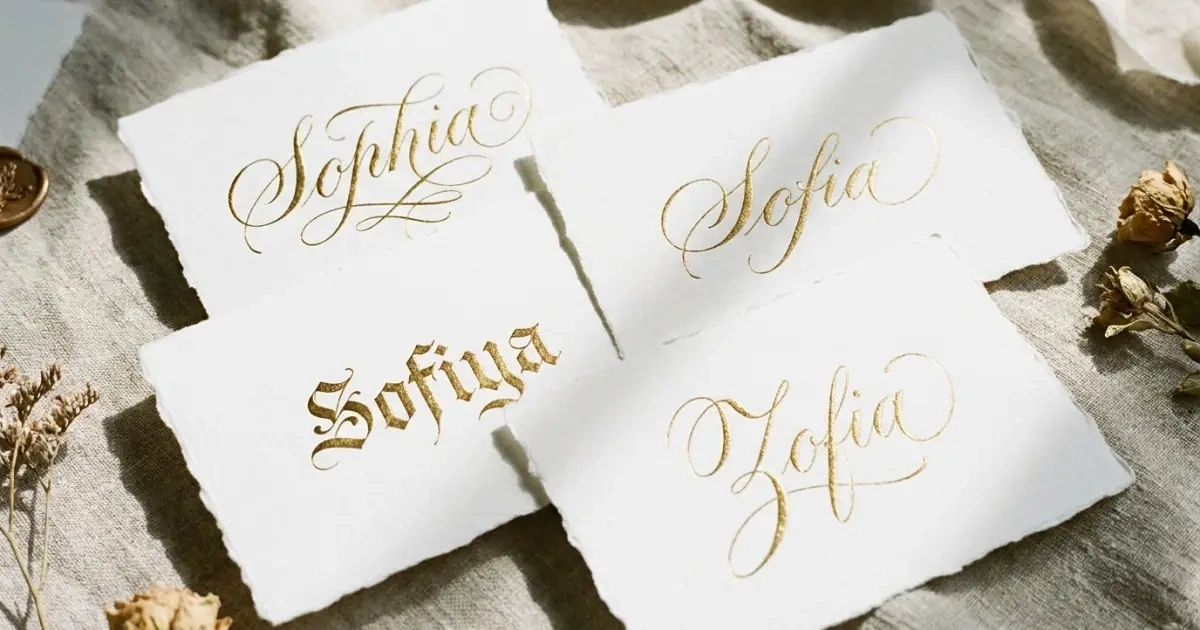
Spelling Variants Can Make a Name Feel More Common Than It Looks
One of the easiest ways to misread popularity is to look at only one spelling.
A spelling may rank lower while the sound is actually very familiar.
| Sound Family | Why It Can Mislead |
| Sophia and Sofia | Separate spellings can feel like one name in conversation |
| Jackson, Jaxon, and Jaxson | Different spellings may still share classroom sound |
| Lily, Lilly, and Lillie | The sound can feel more common than one spelling suggests |
| Aiden, Aidan, and Ayden | Variants split the chart but not the ear |
| Elena, Elaina, and Alayna | Related sounds may cluster socially |
Teachers, classmates, and friends often experience names by sound first. If several Sophias and Sofias are in the same school, the spelling matters on paper, but the sound still repeats in the room. If Jackson, Jaxon, and Jaxson appear in the same age group, each child technically has a different spelling, but they share the name experience in many social settings.
That does not make spelling variants bad. It means you should count the sound family mentally.
Ask:
- Are there common alternate spellings?
- Will people hear the name as more popular than the ranking suggests?
- Are there multiple spellings in our likely community?
- Will our child often need to clarify the spelling?
- Is our spelling traditional, cultural, intuitive, or mainly decorative?
Spelling can be meaningful when it reflects language, heritage, or family tradition. Choosing a variant only to appear rarer can backfire when the sound is still everywhere.
If spelling is part of the decision, How to Avoid Spelling Regret is worth reading before finalizing the name.

Popularity Feels Different Across Name Styles
Two names can have similar usage and feel completely different because they belong to different style worlds.
That is why popularity should never be separated from style.
A classic popular name ages differently from a trendy surname name. A vintage rising name feels different from a modern word name. A royal classic may remain dignified even when widely used, while a newly fashionable sound may date faster.
| Style Type | Popularity Often Feels Like | Examples |
| Classic popular | Stable, familiar, enduring | Henry, Elizabeth, James |
| Soft modern popular | Light, melodic, current | Luna, Isla, Aria |
| Surname-style popular | Strong, polished, modern | Carter, Parker, Jackson, Marlow, Marlowe |
| Vintage rising | Old name with new energy | Theodore, Eleanor, Hazel |
| Word-name popular | Meaning-led, image-rich, modern | River, Sage, Willow |
| Royal classic | Familiar, polished, public-facing | Charlotte, George, Louis |
Classic popular names such as Henry, Elizabeth, and James can feel familiar without feeling flimsy because their history is long. Soft modern names such as Luna, Isla, and Aria may feel more style-driven, so parents should ask whether they love the sound beyond its current appeal.
Surname-style names can be strong and polished, though they may become recognizable as part of a broader trend when many similar names cluster together. Vintage rising names carry history plus revival energy. Word names like River, Sage, and Willow may reflect a cultural taste for nature, calm, and meaning. Royal classics such as Charlotte, George, and Louis may feel classic, regal, media-influenced, or newly visible depending on where you live.
A name’s popularity is filtered through its style. Two equally ranked names can age very differently.
Use Classic vs Modern Baby Names: How to Decide when the shortlist is split by era. For revival names, How to Choose Vintage Baby Names That Still Feel Fresh gives a sharper test. When surname energy is central, How to Choose Surname-Style Baby Names can help separate polished from trend-heavy.

Origin Can Make a Popular Name Feel Personal
A popular name does not have to feel generic when it has personal roots.
Origin is one of the strongest ways to make a familiar name feel connected to your family story. A name may be common nationally but meaningful because it reflects heritage, language, faith tradition, family history, or cross-cultural life.
Sophia and Sofia are familiar across many languages. Mateo carries Spanish and Latinate warmth. Luca feels international, soft, and stylish. Maya has multiple cultural and meaning layers. Amelia is classic and widely usable. Noah and Noa may differ by gender, usage, region, and cultural context.
When a name connects to heritage, popularity may matter less.
A family may choose Mateo not because it is trendy, but because it travels well between Spanish and English. Another may choose Sophia because its meaning and international familiarity feel right. Maya may reflect multiple parts of a family’s cultural world.
This is where popularity data should not flatten the decision. A popular name with personal roots can feel more meaningful than a rare name chosen only to be different.
Use Names by Origin when language or heritage changes the popularity question. How to Choose a Baby Name by Origin can help you decide how much origin should shape the choice. For cross-language naming, How to Choose a Name That Works in Two Languages and How to Choose a Name That Travels Well Internationally are stronger than popularity data alone.
Classroom Duplication Is Only One Popularity Problem
Many parents worry about the “three Olivias in one class” problem.
That can happen. But classroom duplication is only one way popularity shows up.
| Duplication Type | How It Appears |
| Same-name duplication | Several children share the exact name |
| Sound-alike duplication | Different names repeat the same rhythm or ending |
| Style duplication | Names feel part of the same trend wave |
| Nickname duplication | Different formal names collapse into the same short form |
| Initial duplication | Children need initials or extra labels to distinguish them |
Same-name duplication is the obvious version. Your child may become Olivia M., Olivia R., or Olivia S. Some children do not mind. Others dislike needing an initial.
Sound-alike duplication can make a name feel more common than its rank suggests. Aiden, Jayden, Kayden, and Brayden are different names, but they share a strong pattern. Ellie, Ella, Eliana, Eleanor, and Elizabeth can overlap through openings or nicknames.
Style duplication is subtler. Isla, Aria, Luna, and Mila all feel soft, vowel-rich, and modern. River, Sage, Willow, and Rowan share nature-style energy. Jackson, Carter, Parker, and Hudson belong to a surname-style wave. A child may not share a name, yet their name can still feel part of a large style group.
Nickname duplication may matter more than the formal name. Ellie may come from Eleanor, Elizabeth, Eliana, Gabrielle, or simply Ellie. Theo may come from Theodore or Theodora. Max may come from Maxwell, Maximilian, Maximus, or just Max. If you choose a long name mainly for a nickname, check whether the nickname is more popular than the formal name.
For a deeper look at this issue, use How Popularity Affects Classroom Identity and Nickname Duplication. When nickname overlap is central, How to Check Nickname Potential Before You Choose can help you test the daily form, not only the birth-certificate name.

Popularity Matters Differently for First Names and Middle Names
Popularity usually matters more for the first name than the middle name.
The first name is used every day. It appears in introductions, school lists, messages, labels, and social situations. The middle name often carries family meaning, rhythm, balance, or tradition with less daily exposure.
That gives you room to use popularity strategically.
| Strategy | How It Works | Examples |
| Popular first + meaningful middle | Uses ease upfront and individuality in the full name | Theodore James, Emma Juniper, Sophia Claire |
| Rare first + familiar middle | Grounds a distinctive first name | Opal Elizabeth, Caspian Henry, Mila Catherine |
| Familiar first + distinctive middle | Personalizes a mainstream choice | Emma Juniper, Noah Felix, Olivia Maeve, Liam Atlas, Henry Caspian |
| Family middle + current first | Keeps tradition without controlling daily use | Amelia Ruth, Luca Thomas, Maya Helen |
A popular first name can be right when you genuinely love it, it works with your surname, it has personal meaning, and possible duplication does not bother you too much. Theodore James may be popular in style, but it is strong, classic, and flexible. Emma Juniper uses a popular first name with a more distinctive middle. Sophia Claire feels familiar, elegant, and clear.
A familiar middle can balance a rare or bold first name. Opal Elizabeth feels distinctive but grounded. Caspian Henry pairs an adventurous first with a classic middle. Mila Catherine blends a soft modern first with a traditional middle.
The reverse also works. A popular first name can feel more personal with a meaningful or unexpected middle. Emma Juniper, Noah Felix, Olivia Maeve, Liam Atlas, and Henry Caspian all shift the full name away from complete familiarity.
The middle name does not need daily use to change the feeling of the full name.
For more on this layer, see How to Choose a Middle Name, How Middle Names Work When You Are Building a Full Name, and How to Build a First-Middle-Surname Combination That Flows.

Sibling Names Do Not Need Matching Rankings, But They Need Equal Care
Sibling names do not need to match in popularity.
They should feel equally considered.
If one child has a highly common name and another has a very rare one, the contrast may be fine if it reflects your evolving taste. It may also make one name feel safer and the other more adventurous.
| Sibling Pairing | Popularity and Style Effect |
| Henry and Alice | Classic and familiar together |
| Theodore and Eleanor | Shared vintage revival energy |
| Olivia and Juniper | Familiar first choice beside a nature-style name |
| Liam and Zephyr | Strong contrast in usage and style |
| Maeve and Iris | Distinctive but accessible |
| Charlotte and Beatrice | Classic, polished, and regal |
The question is not whether the names rank similarly. The question is whether they sound like they belong to the same family story.
Consider:
- Is one name much harder to spell or say?
- Is one name extremely common while the other is highly unusual?
- Do the names share a general style, even if their rankings differ?
- Do nicknames balance the set?
- Would either child’s name feel like the “plain” one or the “difficult” one?
A sibling set can hold contrast when the contrast feels chosen. It feels weaker when one name seems carefully selected and the other seems like a reaction.
For sibling decisions, use How to Choose Sibling Names That Fit Without Matching Too Hard. When naming two children at once, How to Name Twins Without Being Too Matchy can help popularity and style stay balanced.

The Best Popularity Test Is Imagining the Name at a Different Rank
This is one of the most useful popularity tests.
Imagine the name’s popularity changing.
Would you still choose it if it became Top 10? Would you still choose it if it stayed rare? Would you still choose it if people called it trendy? Would you still choose it if no one noticed its meaning? Would you still choose it if another child nearby had it?
Your answers reveal what you actually love about the name.
If you only like Isla because it feels rare, popularity may eventually disappoint you. If you like Isla because of its sound, softness, and style, the ranking may matter less.
If Theodore appeals because of Theo, Teddy, and its classic weight, rising popularity may be acceptable. If you like Theodore because you believe it is still underused, you should check that assumption carefully.
If Atlas attracts you because it feels distinctive and bold, ask whether you would still love it if it continued rising. A yes means the name may be strong enough for your family. A no may mean you are attached to its current status more than the name itself.
The same test works for rare names. Would you still choose Zephyr if it never became easier for people? Would you still choose Opal if it became the next vintage favorite? Would you still choose Caspian if people sometimes asked whether it was a place name, a literary name, or a fantasy name?
Popularity can change. Your reason for loving the name needs to be stronger than its current rank.
For a broader name-testing process, How to Test a Baby Name Before Finalizing It and How to Know When a Name Feels Right can help you separate stable confidence from temporary ranking emotion.

Mistakes That Make Popularity Data More Stressful Than Useful
Popularity data should make the decision clearer, not more anxious.
These mistakes often make parents doubt names unnecessarily.
| Mistake | Why It Causes Confusion | Better Move |
| Looking only at rank | Rank does not show scale or concentration | Check raw usage when possible |
| Ignoring spelling variants | One spelling may understate the sound family | Count variants mentally |
| Treating the Top 100 as automatically too common | Families have different comfort levels | Define your own tolerance |
| Assuming rare means easy to own | Low usage does not guarantee usability | Test sound, spelling, and explanation burden |
| Forgetting local popularity | National data may not match your world | Notice repeated patterns nearby |
| Ignoring style trends | A rare name can belong to a common style wave | Look at the wider sound and image |
| Overreacting to one duplicate | One example does not prove a name is everywhere | Distinguish coincidence from pattern |
| Choosing only because a name is rare | Rarity is not a personality | Make sure the name works beyond low usage |
| Rejecting a loved name only because it is popular | Ranking anxiety can create regret | Decide whether duplication is tolerable |
| Forgetting nickname duplication | The short form may be more common than the full name | Test everyday forms |
A Top 100 name is not automatically everywhere. Some parents are comfortable with Top 100 but not Top 10. Others do not mind Top 10 when the name is meaningful. Borrowing someone else’s rule usually makes the decision worse.
Rare names deserve the same scrutiny. Distinctiveness should not depend on confusion. A rare name should sound good, feel meaningful, work with the surname, and give the child a name they can use comfortably.
Do not give up a name you truly love simply because it ranks high. If you would regret not using it, and you can accept possible duplication, popularity may be a reasonable tradeoff.

A Practical Framework for Choosing by Popularity
When popularity starts to feel overwhelming, use a step-by-step process.
Step 1: Place the name on the familiarity spectrum
Decide whether the name feels mainstream, familiar but not everywhere, underused classic, rare but accessible, or bold unusual.
Do not test Olivia the way you would test Zephyr. Do not test Edmund as if it were Liam. Different popularity levels create different strengths and risks.
Step 2: Check current rank and trend direction
Look at where the name is now and where it seems to be going.
Stable, rising, fading, returning, and newly visible names all create different expectations. Trend direction often matters more than a single year.
Step 3: Combine spelling variants mentally
Look at the sound, not only the spelling.
Sophia and Sofia may need to be considered together. Jackson, Jaxon, and Jaxson may create one larger sound group. Lily, Lilly, and Lillie may feel more common together than apart.
Step 4: Compare style popularity
Ask why the name is popular.
Is it classic, vintage, surname-style, nature-inspired, soft and vowel-heavy, celebrity-driven, royal, biblical, or international? The reason for the popularity helps predict how the name may age.
Step 5: Test your personal tolerance
Ask whether duplication would truly bother you.
Some parents do not mind a shared name. Some strongly do. Be honest. There is no moral advantage to choosing rare or popular. There is only fit.
Step 6: Balance popularity with the full name
A popular name may become more personal with a distinctive middle. A rare name may become more grounded with a classic middle. A sibling set may need style balance more than matching rankings.
Step 7: Choose from informed confidence, not fear
Data should reduce regret, not make every name feel dangerous.
Once you understand the popularity tradeoff, return to the name itself. Say it. Write it. Imagine it in daily life. Compare it with your surname. Think about your child using it as an adult.
Then choose the name you can stand behind.
For final decision support, use How to Avoid Baby Name Regret, How to Decide Between Two Baby Names, and How to Compare Baby Names Objectively.

Baby Name Examples by Popularity Decision Type
Examples are most helpful when they show different decision paths.
Use these groups to understand what kind of popularity balance you prefer, not as fixed lists of better and worse names.
| Popularity Goal | Names That May Fit | What This Direction Offers |
| Popular but still substantial | Olivia, Noah, Henry, Sophia, James, Charlotte | Ease, history, beauty, flexibility |
| Familiar but not everywhere | Clara, Simon, August, Alice, Felix, Margot | Recognition without constant duplication |
| Underused classic | Edmund, Louisa, Walter, Beatrice, Helen, Philip | Quiet depth and traditional structure |
| Rare but wearable | Opal, Caspian, Elowen, Linus, Marlowe, Ione | Distinctiveness with sound logic |
| Bold unusual | Zephyr, Solstice, Prairie, Zenith, Fable, Peregrine | Strong individuality and expressive style |
For parents who want popular names with substance, Olivia and Sophia offer elegance with broad international ease, while Noah, Henry, and James keep the category grounded in long, flexible use. Charlotte adds royal polish without losing warmth, especially when Charlie or Lottie feels natural in the family.
Names like Clara, Simon, and August offer a bright, classic warmth, while Alice and Felix carry history without the heavy burden of antiquity. Margot completes that familiar-but-not-everywhere lane with a polished, stylish sound that rarely feels difficult.
When venturing into underused classics, sharper judgment matters. Edmund and Louisa provide quiet literary depth and graceful structure, contrasting with the sturdy vintage appeal of Walter or the warm, approachable elegance of Beatrice. Helen and Philip sit closer to traditional restraint, which can feel beautifully clear to one family and too old-fashioned to another.
Rare but wearable names need clear sound more than novelty. Opal is short and vintage; Caspian feels adventurous but pronounceable. Elowen has softness and nature-adjacent appeal, while Linus stays unusual without becoming complicated. Marlowe brings surname style and literary polish. Ione is elegant, though pronunciation should be settled before the name becomes final.
Bold unusual names bring the most visibility. Zephyr is airy and striking. Solstice and Prairie carry strong image. Zenith feels modern and ambitious. Fable is literary and whimsical. Peregrine has history and adventure, but its length makes nickname thinking important.
The right group depends on the kind of attention you want the name to receive.

Questions Parents Ask About Baby Name Popularity
Is a Top 10 baby name too popular?
Not automatically. A Top 10 name may still be right if you love the sound, meaning, surname fit, and nickname options. The real question is whether you can accept possible duplication.
Is a name outside the Top 100 rare?
Not necessarily. A name outside the Top 100 can still feel familiar, especially if it has many spelling variants, a common nickname, or strong local popularity.
Should I avoid a name if I know another child with it?
It depends on the closeness of the connection. One child with the name does not prove the name is everywhere. Repeated appearances across family, neighborhood, school, and friend groups matter more.
Are rare names harder for children?
Not always. Rare but intuitive names can be easy to use. The harder names are usually the ones that create frequent pronunciation, spelling, or explanation issues.
What is the best popularity level for a baby name?
There is no universal best level. Many families like familiar-but-not-everywhere names because they balance recognition and individuality, while others genuinely prefer mainstream ease or bold distinctiveness.
Should popularity matter more than meaning?
No. Popularity should give context, not replace meaning. A familiar name with personal roots can be stronger than a rare name chosen only for low usage.

Where to Go Next When Popularity Is Part of Your Decision
Let your exact friction point dictate your final move. If your shortlist is clouded by ranking anxiety, step sideways rather than deeper into the data; let the architectural frameworks in Names by Style or Names by Origin reveal the true substance beneath the trend.
Finally, before you commit, push your contenders through How to Avoid Baby Name Regret to ensure the name’s popularity profile authentically matches your family’s comfort, not just a momentary chart panic.
Popularity is not a verdict on a baby name. It is a context tool. The best choice is not automatically the rarest name or the most familiar one. It is the name whose level of popularity matches your family’s style, tolerance, and long-term hopes for your child.