
How to Choose Rare Baby Names That Still Work in Daily Life

Rare baby names can feel magnetic.
They offer the thrill of discovery. They are less likely to be shared by several children in the same class. They can carry heritage, mythology, literature, nature, place, spirituality, or a family story in a way that feels more specific than a familiar Top 100 choice. For parents who do not want a name that sounds automatic, rare names can feel full of possibility.
But a rare name also asks more of daily life.
It may need to be pronounced. It may need to be spelled. It may invite questions. It may sound more like a statement than a name if it is too concept-heavy. A name that looks electric on a baby-name list can feel different on a school form, in a doctor’s office, on an email signature, or in the mouth of a shy child who does not want every introduction to begin with correction.
That does not make rare names a mistake.
It means they need a sharper test.
A rare baby name works in daily life when it feels distinctive without becoming burdensome: clear enough to learn, meaningful enough to explain, flexible enough to grow, and grounded enough to belong to a real person rather than only an interesting idea.
Names like Opal, Caspian, Elowen, Ione, Peregrine, and Zephyr show how different rare names can be. Some are short and clear. Some are lyrical and rooted. Some are bold enough to need extra care. Some can work beautifully as first names; others may be stronger in the middle.
The Names by Popularity hub is the natural starting point when you are comparing rare, familiar, rising, and popular names. For the broader editorial path through naming decisions, Expert Baby Naming Guides for Choosing the Right Name can help you keep rarity in proportion with meaning, sound, origin, surname fit, and long-term confidence.
A rare name does not need to become ordinary to work.
It needs enough structure for real life.

Rare Baby Names Work Best When They Are Distinctive, Not Difficult
A rare name does not need to be obvious to everyone at first glance.
It should, however, be learnable.
That difference matters. A distinctive name stands out while still giving people enough clues to use it. A difficult name creates repeated friction with pronunciation, spelling, explanation, or social comfort.
Rare names are often appealing because they offer something a more common name cannot:
- Fewer same-name classmates.
- A stronger sense of discovery.
- A clearer story.
- A specific cultural or family connection.
- A nature, literary, mythological, or place-based image.
- A meaning that feels more personal.
- A sound outside the most familiar naming patterns.
Those are real advantages.
A rare name can help a child feel named with care. It can honor a heritage that is not represented by the most common names around you. It can preserve a beloved place, book, ancestor, language, or value. It can also be simply beautiful in a way that familiar names are not.
The risk begins when rarity becomes the whole point.
A name is not stronger just because fewer people use it. It still has to work when someone calls it across a playground, reads it from a class list, types it into a form, introduces themselves at work, or signs it at the bottom of an email.
Opal works for many families because it is rare-ish, short, vintage, and easy to say. Caspian feels uncommon and adventurous, but its rhythm is name-like. Elowen may be rare in many places, yet its soft sound makes it approachable. Ione is compact and elegant, though pronunciation may need support. Peregrine has history and meaning, but its length makes nickname testing important. Zephyr is striking and airy, with a boldness that needs daily-use testing.
The goal is not the rarest possible name.
The goal is useful distinctiveness.
For a broader decision about when unusualness is worth the tradeoff, read When an Unusual Name Is Worth It. If you are still comparing rare names with easier familiar choices, How to Choose Familiar Baby Names With Personality gives the middle ground a more practical shape.

A Rare Name Becomes More Usable When It Has Structure
A rare name becomes easier to live with when it has structure.
Structure does not mean everyone already knows the name. It means the name gives people something to work with: a clear sound, a logical spelling, a real origin, a name-like rhythm, or a nickname that can soften the edges.
A rare name is more usable when it has:
- Clear or teachable pronunciation.
- Spelling with logic.
- Real origin, meaning, or source.
- A sound that feels name-like.
- Good surname compatibility.
- Nickname options or a compact shape.
- Adulthood flexibility.
- Low performance pressure.
- Family confidence.
Different rare names carry different kinds of usability.
Linus and Opal are simple rare names: not everywhere, but not hard to process. Ione is brief and elegant, though its pronunciation needs a clearer introduction. Cian, Marwa, and Lowenna may be unfamiliar to some people, but they have cultural, linguistic, or historical grounding. Zephyr, Solstice, Peregrine, and Fable are more immediately bold; they are memorable, but they make a stronger first impression and need more real-life testing.
Other names are rare but familiar-adjacent. Aurelia and Calliope feel uncommon, yet they connect to recognizable sounds, stories, and naming patterns. Caspian has the shape of a substantial first name, even when people have not met many Caspians.
This is why rare names should not all be judged the same way.
A rare heritage name needs one kind of care. A rare word name needs another. A rare mythological name needs another. A rare nature name needs another again.
Use the name’s structure to understand what kind of support it needs. When you want to sort rare names by tone rather than by difficulty, the Names by Style hub can help you see whether the name is vintage, mythic, nature-led, literary, minimalist, bold, or elegant.

Rare, Unusual, Unique, Difficult, and Distinctive Are Different Choices
Parents often use rare, unusual, unique, and difficult as if they mean the same thing.
They do not.
A rare name has low usage. It is not often heard in everyday life. Ione, Lowenna, and Peregrine may fall into this category for many families.
An unusual name is noticeable because it sits outside mainstream expectation. Zephyr, Fable, and Prairie may feel unusual even to people who enjoy distinctive names.
Unique is often used casually to mean “not common,” but true uniqueness is hard to guarantee and not always desirable. A child does not need a name no one else has ever used. They need a name that fits them and works in real life.
Difficult describes friction. A difficult name may create repeated problems with pronunciation, spelling, social use, or forms. A name can be rare without being difficult. It can also be familiar but difficult if spelling, pronunciation, or context creates confusion.
Distinctive is the useful goal. A distinctive name stands out but remains usable.
Felix and Iris may not be extremely rare in every place, but they show how a name can feel specific without creating much friction. Opal and Caspian can feel distinctive for the same reason: they have recognizable shapes and clear images.
The goal is not maximum rarity.
The goal is a name that feels special without asking too much of the child every day.
When rare is competing with familiar or mainstream, Popular vs Rare Baby Names: How to Decide and How to Choose Mainstream Baby Names Without Feeling Generic can keep rarity from becoming the only measure of quality.

The Reason You Want a Rare Name Changes the Tradeoff
Before testing a rare name, name why rarity appeals to you.
That reason affects how much friction you can accept.
You may want a rare name because you want to avoid classroom duplication. You may love a name from your heritage, religion, or family language. You may be drawn to literary, mythological, nature, word, or place names. You may want a meaning that feels unusually specific. You may simply dislike the sound of many current mainstream names.
All of those can be strong reasons.
The risk appears when the main reason is only this: almost no one else uses it.
A name chosen mostly for discovery can become emotionally fragile. When the name starts rising, appears in more birth announcements, or becomes visible in name communities, the very thing you loved may feel less secure.
Ask:
- Do we love the name itself or the feeling of discovery?
- Would we still love it if more people used it?
- Does rarity support the name, or is rarity the whole appeal?
- Would a familiar-but-less-used name solve the same problem?
- Does the name have meaning, origin, sound, or story beyond being uncommon?
Atlas can still work when you love its mythic strength. It becomes more fragile when you mostly love that it feels undiscovered. Elowen may remain right when its sound and Cornish roots matter. If the appeal is mostly that it surprises people, the name needs more testing.
For rising-name concerns, use How to Spot Rising Baby Names Before They Peak. When you suspect a familiar name with personality might solve the same problem with less friction, return to How to Choose Familiar Baby Names With Personality before forcing yourself deeper into rarity.

Pronunciation Is the First Daily-Life Test for a Rare Name
Pronunciation is where rare names meet ordinary life.
A rare name does not have to be instantly obvious, but it should be teachable. After hearing it once or twice, people close to the child should be able to say it with respect and consistency.
Ask:
- Can people make a reasonable first guess?
- After hearing it once, can they repeat it?
- Are there multiple plausible pronunciations?
- Will we feel comfortable correcting people?
- Can a child correct it without feeling embarrassed?
- Does pronunciation differ by accent or language?
- Will teachers, relatives, doctors, and friends have a path to learning it?
Some rare names are straightforward. Opal is short and familiar in sound. Caspian is uncommon, but many people can read it reasonably. Zephyr is unusual, but learnable once heard.
Other names require more support. Elowen is soft and name-like, though some people may pause the first time. Ione is elegant and compact, but many will need help with the pronunciation. Irish names such as Saoirse and Aoife are culturally rooted and beautiful, but in many English-speaking settings they carry a higher pronunciation teaching curve.
That teaching curve is not automatically a reason to reject the name.
For a heritage name, pronunciation effort may be worth it. For a name chosen mainly for style, the same level of effort may feel less justified.
Try this before committing:
- Say the name to someone once without showing the spelling.
- Ask them to repeat it.
- Then show the spelling and ask how they would have guessed it.
- Notice whether correction feels simple, awkward, or constant.
When the gap between sound and spelling is large, the name may still be usable. You simply need to accept the correction burden honestly.
For more detailed pronunciation checks, use How to Evaluate Pronunciation Ease and How to Choose Names That Work Across Different Accents.

Spelling Should Add Meaning, Not Just Extra Work
Rare names already attract attention.
The spelling should not create extra friction unless there is a strong reason for it.
Some spellings are traditional or cultural. Aoife, Saoirse, and Cian may be challenging for some readers, but the spelling is not decorative. It belongs to the name’s language and history. If that heritage matters to your family, preserving the spelling may be worth the teaching required.
Some rare names have intuitive spelling. Opal, Caspian, Iris, Linus, and Wren are not hard to spell once heard. These names ask less from daily life.
Decorative spellings need more caution. Changing the look of a familiar sound mainly to create rarity may not give the child a rare experience. It may only give them a lifetime of correction.
Ask:
- Does the spelling reflect origin or just style?
- Does it help pronunciation or obscure it?
- Will the child spell it constantly?
- Would a standard spelling age better?
- Is the spelling worth defending?
- Does the spelling make the name more meaningful or only more complicated?
A spelling burden can be worth carrying when it protects culture, language, family history, or meaning. It is harder to justify when it exists only to make a name look rare.
For spelling decisions, read How to Avoid Spelling Regret. When the spelling is cultural rather than decorative, How to Keep a Cultural Spelling Without Creating Constant Friction gives that choice the right lens.

Roots Make Rare Names Easier to Explain and Trust
Rare names are more wearable when they come from somewhere.
That source does not have to be ancient or formal, but it should feel real. A name with roots gives parents and children an answer when someone asks, “Where did that come from?” It also helps the name feel like more than novelty.
Rare names can be rooted in:
- Origin or heritage.
- Literature or mythology.
- Nature or place.
- Family history or historical usage.
- Virtue, meaning, or faith.
- Cultural practice or language tradition.
Names like Caspian and Peregrine draw their strength from a deep well of literary texture, travel, and historical pilgrimage. For parents seeking mythological or ancient elegance, Calliope offers musicality alongside approachable nicknames, while Aurelia glows with Latin-rooted grandeur. Meanwhile, vintage gemstone choices like Opal, or culturally specific names like the Cornish Elowen and Lowenna, provide a sense of grounded rarity that feels tied to earth, language, and heritage.
A rooted rare name is easier to explain simply.
Possible explanations include:
- “We chose it because it is Cornish.”
- “We chose it because it is connected to a place we love.”
- “We chose it because of its meaning.”
- “We chose it because it is a family name.”
- “We chose it because it comes from mythology, and we also love the nickname.”
That explanation does not need to be long. It just needs to be honest.
Ask:
- Can we explain the name simply?
- Does its source matter to us?
- Is it respectful to use?
- Does it have enough history to feel name-like?
- Would the child be comfortable explaining it?
- Are we choosing the source because it is meaningful, or because it sounds impressive?
When origin or culture is central, browse Names by Origin. When meaning, nature, virtue, or story is central, explore Names by Theme and How to Choose a Baby Name by Meaning.

Rare Heritage Names Deserve a Different Kind of Usability Test
A name may be rare in one context and completely normal in another.
That is especially important for heritage names.
A name should not be judged only by mainstream convenience if it belongs to a family language, culture, religion, or community. Correction burden may be part of carrying a name across cultures. That does not automatically make the name too hard.
Cian may be uncommon outside Ireland, but it is rooted in Irish naming. Aoife and Saoirse can be challenging for unfamiliar readers, yet they have strong cultural value. Marwa may be familiar in Arabic-speaking contexts and rare elsewhere. Lowenna and Elowen are Cornish-rooted. Mateo and Luca may feel mainstream in some places and heritage-rich in others.
The question is not simply whether everyone will know it.
Use a heritage-specific test:
- Is the name rare because it belongs to another language or culture?
- Are we using it respectfully and accurately?
- Does family or community support the pronunciation?
- Is the correction burden worth the heritage value?
- Does the spelling matter culturally?
- Will the child have people around them who understand the name?
A heritage name may ask more from outsiders while offering more to the child.
That tradeoff deserves respect.
For culture and language decisions, read How to Choose a Baby Name by Origin, How to Choose Names With Strong Cultural Roots Respectfully, and How to Choose a Name That Works in Two Languages.

Sound Shape Can Make a Rare Name Feel More Wearable
Some rare names work because they are built in a familiar shape.
Even if people have not heard the name often, the rhythm, sounds, or ending may feel name-like. This makes the name easier to accept and remember.
A rare name often feels more wearable when it is:
- Short and clear.
- Balanced in vowels and consonants.
- Easy to say after one correction.
- Not overloaded with unfamiliar sounds.
- Rhythmically smooth with the surname.
- Nicknameable if it is long.
- Connected to a familiar ending or name pattern.
Opal is short, clear, and familiar in shape. Ione is compact but pronunciation-specific. Caspian is uncommon, but its rhythm feels substantial and name-like. Elowen is rare in many places, yet soft and aligned with current sound preferences. Aurelia is long, but flowing. Linus is uncommon but simple. Calliope is long and mythological, so nickname testing matters. Peregrine is rare and meaningful, but Perry or Pip can make it more livable.
Sound shape is why two equally rare names can feel very different.
One may feel like a name people simply have not met yet. Another may feel like a concept, phrase, or character label.
Ask:
- Does the name have a rhythm people can hold onto?
- Does it feel name-like when said aloud?
- Does it work with the surname’s length and sound?
- Is there a natural nickname if the full name feels heavy?
- Does the name sound rare in a pleasing way or rare in a confusing way?
For rhythm and structure checks, use How to Use Syllable Flow to Choose a Better Name.

Nicknames Can Make Rare Names More Livable
Nicknames can give rare names flexibility.
They let a child move between formal, casual, playful, and professional settings. They can also soften a name that might otherwise feel too grand, long, or unusual for daily use.
Caspian can become Cas. Peregrine can become Perry or Pip. Aurelia can become Aura, Ria, or Lia. Calliope can become Callie or Poppy. Octavia can become Tavi or Via. Elowen can become Ellie or Wen. Zephyr can become Zeph. Beatrix can become Bea or Trixie.
A nickname can help when it:
- Gives the child a simpler daily option.
- Reduces pronunciation pressure.
- Makes a bold name feel warmer.
- Gives family members an easier form.
- Allows the child to choose formality later.
A nickname does not solve everything.
When you only like the nickname, you may not love the rare full name enough. When the nickname is much more common than the full name, daily life may not feel rare at all. When the nickname changes the style too much, the name may feel split between two identities.
Ask:
- Do we love the full name and the nickname?
- Is the nickname intuitive?
- Does the nickname reduce friction?
- Does the nickname change the style too much?
- Would the child have a professional full-name option?
- Would we be happy if the child chose another short form?
A rare name with a good nickname system can be very wearable. A rare name that depends entirely on a nickname may be better reconsidered.
For this layer, use How to Check Nickname Potential Before You Choose and How Popularity Affects Classroom Identity and Nickname Duplication.

Surname Fit Matters More When the First Name Is Rare
Rare first names draw attention.
That makes surname fit even more important.
A familiar first name can sometimes smooth over a clunky surname pairing because people already know the name. A rare first name gives listeners fewer expectations, so rhythm, imagery, and accidental phrases become more noticeable.
Check:
- Syllable rhythm.
- Repeated sounds.
- Word-name plus word-surname risk.
- Place-name plus place-like surname risk.
- Fantasy or character effect.
- Initials.
- Full-name seriousness.
- Cultural mix.
- Middle-name support.
Opal Stone may feel too literal. Caspian Brooks doubles the water imagery. Fable Wright can sound phrase-like. Zephyr James works better because James grounds the bold first name. Elowen Hart feels soft and lyrical. Peregrine Fox may be charming to some families and highly storybook to others.
There is no universal rule here.
Some families love vivid full-name imagery. Others want the surname to ground the rare first name. The key is to notice the effect before choosing.
Test the full name in ordinary settings:
- “This is Zephyr James.”
- “Opal Stone, please come to the front desk.”
- “Caspian Brooks, first day of school.”
- “Elowen Hart, application submitted.”
- “Peregrine Fox, nice to meet you.”
When the full name sounds more like a fictional character than a real person, decide whether that is delightful or too much.
For full-name testing, read How to Match a First Name With Your Surname, How to Check Initials, Monograms, and Awkward Combinations, and How to Build a First-Middle-Surname Combination That Flows.
Middle Name Placement Can Make or Break a Rare Name
A rare name does not always need to carry the first-name position.
Sometimes the middle spot is the wiser place for beauty, history, boldness, or symbolism.
A grounded middle can stabilize a rare first name. Henry, Alice, Emma, Noah, and Sophia all show how familiar names can support more adventurous pairings.
| Full-Name Strategy | Examples | Why It Works |
| Rare first + grounded middle | Opal Elizabeth, Caspian James, Elowen Grace, Zephyr Thomas, Aurelia Jane | A stable middle gives the rare first more weight |
| Familiar first + rare middle | Clara Solstice, Henry Atlas, Alice Peregrine, Emma Zephyr, Noah Caspian, Sophia Elowen | The everyday name stays easy while the rare name carries story |
| Rare long name + usable short form | Peregrine Henry, Calliope Mae, Lowenna Claire | The middle steadies the rhythm, while nicknames can support daily use |
| Compact first + grand rare middle | Leo Aurelius, Maya Opal, Anna Solstice | The full name gains texture without overwhelming everyday use |
The middle name does not have to be extremely common. It only has to do a grounding job.
A rare name may be better as a middle when:
- Pronunciation is hard.
- Spelling is heavy.
- The name is very word-like.
- One parent is unsure.
- The surname makes it too much.
- Family loves the story but not the daily friction.
- The name feels more like a meaningful symbol than an everyday call name.
A rare middle can still matter deeply. It can carry family meaning, place memory, nature imagery, faith, literary texture, or a private layer of identity without asking the child to explain it constantly.
For middle-name strategy, see How to Choose a Middle Name and How to Choose Middle Names That Soften or Strengthen a First Name. For the role of the middle position itself, use How Middle Names Work When You Are Building a Full Name and One Middle Name vs Two: How to Decide.

Rare Names Should Leave Room for Different Personalities
Some rare names create a strong image.
That image may be exactly why you love them. The stronger the image, the more carefully you need to check whether the name leaves room for the child.
Zephyr feels airy and bold. Fable feels literary and whimsical. Solstice feels seasonal and celestial. Atlas feels strong and mythic. Zenith feels aspirational. Prairie feels wide, natural, and image-rich.
These names are memorable.
They can also carry performance pressure.
Ask:
- Could this name suit a shy child?
- Could it suit a practical adult?
- Does it require creativity, boldness, spirituality, or adventure?
- Would we still love it if the child did not match the image?
- Is there a quieter nickname?
- Does the name sound like a person or mainly like an idea?
A rare name should not depend on the child becoming a certain kind of person.
The name can have imagery. The child should not have to perform the imagery.
If you are drawn to bold or aspirational names, How to Choose Aspirational Baby Names Without Sounding Performative can help separate depth from projection.
Ordinary-Life Tests Reveal Whether a Rare Name Is Wearable
A rare name may look beautiful on a shortlist and behave differently in everyday life.
The best way to find out is to use it in ordinary situations before you commit.
| Real-Life Test | What It Reveals |
| Playground test | Whether the name feels natural when called aloud |
| Doctor’s office test | Whether pronunciation correction feels simple or exhausting |
| Email signature test | Whether the name works outside childhood |
| Coffee order test | Whether quick spelling and pronunciation friction feels manageable |
| Grandparent test | Whether close family can learn and respect the name |
| Fridge test | Whether the name still feels good after the novelty fades |
| Initials check | Whether the full written form creates awkward combinations |
| Nickname check | Whether the likely short form is one you actually like |
| Cross-language check | Whether the name works across languages, accents, or countries your child may inhabit |
These tests are not gimmicks. They show whether the name lives well outside your imagination.
Run the name through the settings your child will actually enter:
- School forms.
- Medical offices.
- Family introductions.
- Playground callouts.
- Professional emails.
- Travel or cross-language settings.
- Sibling names said together.
- First-middle-surname combinations.
A rare name that survives ordinary use becomes easier to trust.
For a complete testing process, use How to Test a Baby Name Before Finalizing It, How to Choose a Name That Ages Well, and How to Choose a Name That Sounds Professional Later in Life.

Rare-Feeling Names May Already Be Rising in Name-Aware Circles
Some names feel rare because you have not met a child with the name yet.
They may already be visible among name-aware parents.
Rare-feeling names often rise first in naming communities, social media discussions, stylish birth announcements, and “names we almost used” lists. By the time they feel familiar in your local playground, they may have been gaining momentum for years.
Maeve, Elowen, Caspian, Atlas, Ophelia, and Wren may still be uncommon in many places, but they are not hidden in name-conscious circles.
Ask:
- Is it rare in data or just rare in our family?
- Are name communities already using it?
- Is it part of a style wave?
- Would we still love it if it became Top 100?
- Do spelling variants or similar sounds hide popularity?
- Are we attached to the name, or to being early?
A rare name becoming more familiar is not always a problem.
It can even confirm that the name is usable. But if rarity is the main thing you love, rising visibility may change the choice.
For early trend signals, read How to Spot Rising Baby Names Before They Peak and How to Tell If a Name Feels Too Trendy.

Family Comfort Matters More With Rare Names
You do not need everyone to approve of a rare name.
But the people closest to your child should be able to use it with respect.
Family comfort matters more with rare names because the child may need support. If relatives mock the name, refuse to learn it, or constantly replace it with something else, the burden shifts onto the child.
Ask:
- Can both parents say it confidently?
- Are grandparents willing to learn it?
- Will siblings be able to say it?
- Is one parent secretly embarrassed?
- Can family support the child when others ask about it?
- Is a nickname needed for home use?
- Do we feel calm correcting people?
Family hesitation is not always a veto. Sometimes relatives need time. Sometimes a name becomes normal once the baby arrives.
But if one parent feels uncomfortable using the name in public, or if close family cannot say it without making it a joke, pause.
A rare name needs champions.
It does not need universal applause, but it does need the parents to stand behind it without defensiveness.
For partner and family dynamics, read How to Choose a Name With Your Partner and How to Choose a Name When Grandparents Have Strong Opinions.

Sibling Names Can Make a Rare Name More or Less Usable
A rare name changes when you place it beside sibling names.
It may feel balanced, lyrical, and intentional. It may also make one child’s name feel much harder, bolder, or more experimental than the others.
Opal and Felix feel distinctive but wearable together. Caspian and Elowen feel rare, lyrical, and cohesive. Iris and Lowenna feel soft and gently botanical without being identical. Henry and Zephyr create a strong style contrast. Emma and Peregrine create an even sharper mainstream-plus-rare contrast. Atlas and Orion lean heavily mythic. Prairie and Clover make the nature theme very obvious.
None of these pairings is automatically wrong.
The question is whether the rare name feels fairly placed within the family set.
Ask:
- Does one child get a much harder name?
- Does one name feel like the experiment?
- Do the names share style even if popularity differs?
- Is the sibling set too themed?
- Are nicknames balancing the set?
- Would each child’s name feel equally considered?
A rare name can work beautifully with siblings when the style logic is clear. It can feel unfair when one child receives an easy familiar name and another receives a name that requires constant explanation, unless that contrast is intentional and meaningful.
For sibling balance, use How to Choose Sibling Names That Fit Without Matching Too Hard and How to Balance Different Style Levels Between Siblings.

Signs a Rare Name Still Works in Daily Life
A rare name may still be very usable when several signs point in the same direction.
Keep it in serious contention when:
- The pronunciation is clear or teachable.
- The spelling has logic.
- The name has a source, meaning, or origin.
- It works with the surname.
- Nickname options exist, or the name is compact enough not to need them.
- Both parents can say it confidently.
- It can age into adulthood.
- It does not require a specific personality.
- Close family can learn it.
- You would still love it if it became more familiar.
- It feels distinctive, not burdensome.
These signs suggest the name has enough support for daily life.
A rare name does not need to be effortless. It does need to be livable.

Signs a Rare Name May Be Too Difficult
A rare name needs more caution when several forms of friction appear together.
Pause when:
- You feel defensive every time you explain it.
- Most people misread it repeatedly.
- Spelling and pronunciation both create friction.
- The surname makes it sound like a phrase, joke, or fantasy character.
- One parent is uncomfortable.
- It feels like a concept more than a name.
- The nickname is the only wearable part.
- It feels cute for a baby but hard for an adult.
- It depends on shock value.
- It creates major sibling imbalance.
These signs do not mean the name is impossible. They mean the name may ask more from the child than you intend.
When a rare name starts to feel heavy, consider whether it belongs in the middle spot, whether a nickname can genuinely help, or whether a familiar name with personality would solve the same desire more comfortably.
For regret prevention, read How to Avoid Baby Name Regret.

Mistakes That Make Rare Baby Names Harder to Live With
Rare names can be wonderful, but they are easy to romanticize.
The strongest rare-name choices come from honest testing, not just excitement.
| Mistake | Why It Weakens the Choice | Better Move |
| Choosing rarity as the main value | Low usage alone cannot carry a name | Look for sound, meaning, origin, story, or full-name fit |
| Ignoring pronunciation burden | Constant correction can become daily work | Decide whether the reason for the name is strong enough |
| Adding creative spelling to an already rare name | Extra spelling complexity rarely helps | Preserve logic, culture, or clarity |
| Choosing a word name without surname testing | Word names can create accidental phrases or heavy imagery | Test the full name aloud |
| Assuming a nickname solves everything | A nickname helps only when the full name is still loved | Check both the full name and short form |
| Ignoring family usability | Close family should be able to say and respect the name | Make sure the name has real support at home |
| Treating heritage names like style accessories | Cultural names deserve accuracy and respect | Understand the name before using it |
| Forgetting adulthood | A rare name should work beyond babyhood | Use future-introduction tests |
| Missing rising visibility | Rare-feeling names can climb fast | Check trends and name-aware circles |
| Creating sibling imbalance | One child should not feel like the naming experiment | Test the whole sibling set |
| Using the first-name spot when the middle would work better | Some rare names are more powerful with less daily pressure | Consider placement before abandoning the name |
A rare name should not be chosen because it shocks people. It should be chosen because the whole name holds up.
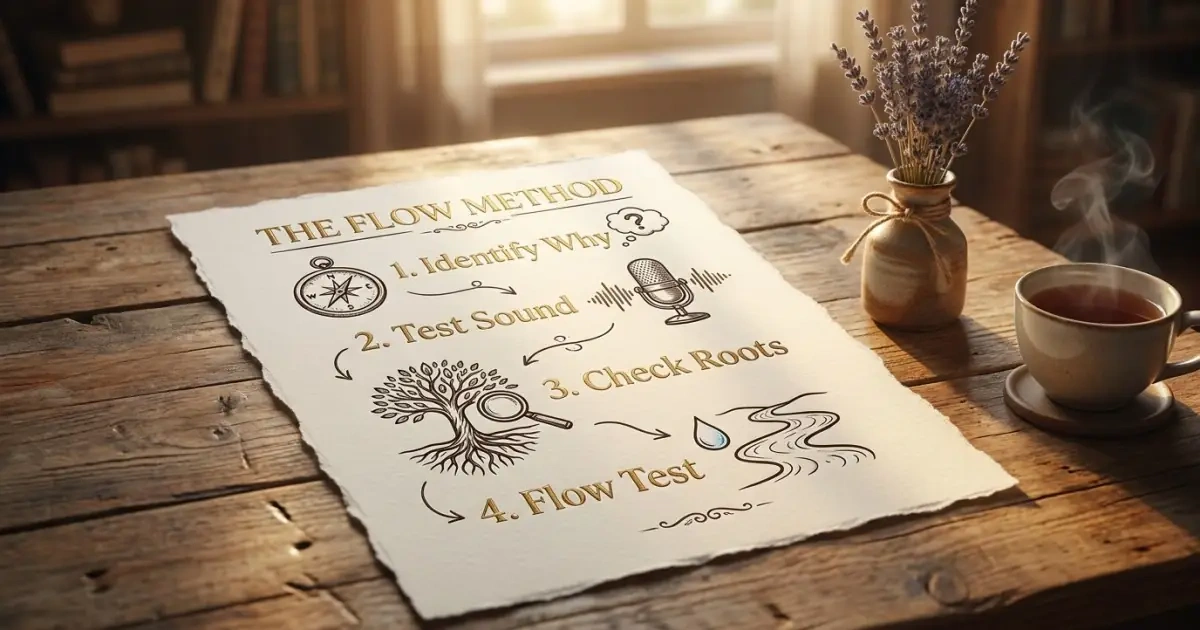
A Practical Framework for Choosing Rare Baby Names That Work
Use this framework when you love a rare name but want to know whether it can live well outside a name list.
Step 1: Identify why the name is rare and why you love it
Start by separating the name’s source from the thrill of discovery.
Look for:
- Origin.
- Meaning.
- Sound.
- Story.
- Family use.
- Style.
- Heritage.
- The feeling of discovery.
A rare name with meaning is easier to trust than a rare name chosen only because it is uncommon.
Step 2: Test pronunciation and spelling separately
A name can have difficult pronunciation or difficult spelling. Both together create a heavier daily burden.
Check:
- Which part people will struggle with.
- Whether the pronunciation is teachable.
- Whether the spelling has logic.
- Whether correction will feel occasional or constant.
- Whether the name’s meaning or heritage justifies the effort.
Do not combine the issues too quickly. A name with one manageable challenge may be perfectly usable.
Step 3: Check source and substance
Look for roots before you rely on rarity.
Substance may come from:
- Origin.
- History.
- Culture.
- Literature.
- Mythology.
- Nature.
- Place.
- Meaning.
A rare name with roots is easier to explain and easier to stand behind.
Step 4: Test full-name flow
Say the name in every form your child may actually use.
Test:
- First + surname.
- First + middle + surname.
- Nickname + surname.
- Initials.
- Formal introduction.
- Quick classroom callout.
- Email signature.
Then check:
- Rhythm.
- Repeated sounds.
- Awkward transitions.
- Phrase risk.
- Character-like effects.
- Whether the middle name grounds or intensifies the rare first name.
A rare first name needs the whole combination to cooperate.
Step 5: Check nickname flexibility
A nickname can make a rare name easier to live with, but it should not be the only reason the name works.
Ask:
- Can the child soften, shorten, or simplify the name if needed?
- Do we love the nickname as well as the full name?
- Is the nickname intuitive?
- Does the nickname preserve the name’s style or change it completely?
- Would the full name still feel strong without the nickname?
The best nickname systems give flexibility rather than hiding discomfort.
Step 6: Test ordinary situations
Move the name out of your imagination.
Try it in:
- School settings.
- Doctor’s office calls.
- Playground use.
- Coffee-order spelling.
- Family introductions.
- Professional email signatures.
- Cross-language or accent contexts.
- Sibling-name sets.
The name should survive real life, not just look beautiful in writing.
Step 7: Compare first-name and middle-name placement
Ask whether the rare name becomes stronger in the middle.
Test:
- The rare name as the first name.
- The rare name as the middle name.
- A familiar first with the rare name behind it.
- A rare first with a grounded middle.
- Whether daily use feels exciting or exhausting.
Sometimes the middle spot lets a name keep its magic without creating daily friction.
Step 8: Check sibling balance and adulthood
Imagine the name beside siblings and across life stages.
Check:
- Whether one child receives a much harder name.
- Whether the set feels balanced or experimental.
- Whether the name works at 5, 15, 35, and 75.
- Whether the name suits different personalities.
- Whether the child has formal and informal options.
A rare name should feel fair, flexible, and usable beyond childhood.
Step 9: Choose when the name feels distinctive but not burdensome
The right rare name may still require occasional explanation.
Look for:
- A sound people can learn.
- A spelling worth keeping.
- A source you can explain.
- A surname pairing that works.
- A nickname path you accept.
- Family confidence.
- A feeling of calm, not defensiveness.
The final test is not whether the name is easy for everyone immediately. It is whether the name feels livable after the novelty fades.
For final confidence, use How to Test a Baby Name Before Finalizing It and How to Know When a Name Feels Right.

Rare Baby Name Examples by Decision Type
Examples are most useful when they show why a rare name works and where it may need support.
Use these as decision models, not automatic recommendations.
| Decision Type | Examples | What to Test |
| Rare but easy to say | Opal, Linus, Iris, Felix, Ione, Wren | Whether the name is distinctive without creating much friction |
| Rare with strong origin or heritage | Cian, Aoife, Saoirse, Marwa, Lowenna, Elowen | Whether cultural value supports pronunciation or spelling work |
| Rare with literary, mythic, or place texture | Caspian, Calliope, Aurelia, Peregrine, Ione, Ophelia | Whether the reference enriches the name without overpowering daily use |
| Rare nature or word names needing balance | Zephyr, Solstice, Prairie, Fable, Clover, Wren | Whether the image feels name-like enough for real life |
| Rare names that may work better in the middle | Peregrine, Solstice, Zenith, Zephyr, Fable, Aurelius | Whether the story is strong but daily use feels heavy |
Opal, Linus, Iris, Felix, Ione, and Wren show the easier side of rarity. Their strength lies in compact structure, recognizable sounds, or quick teachability. Ione still needs pronunciation support, but the name’s brevity keeps the correction from becoming too heavy.
Heritage-rooted names deserve a different reading. Cian, Aoife, Saoirse, Marwa, Lowenna, and Elowen may be unfamiliar in some settings, but they are not random. Their success depends on accuracy, family connection, pronunciation confidence, and whether the cultural value is strong enough to carry the learning curve.
Caspian, Calliope, Aurelia, Peregrine, Ione, and Ophelia gain power from story, place, mythology, or history. They tend to work best when the reference adds depth without taking over the child’s identity.
Nature and word names need the closest surname test. Zephyr, Solstice, Prairie, Fable, Clover, and Wren can be beautiful, but the image arrives quickly. A word-name rare choice needs to sound like a person, not only a concept.
Some names are more effective in the middle. Peregrine, Solstice, Zenith, Zephyr, Fable, and Aurelius can add adventure, season, aspiration, air, story, or grandeur behind a steadier first name. That placement can preserve the magic while reducing daily pressure.

Questions Parents Ask About Rare Baby Names
Is it selfish to choose a rare baby name?
No. A rare name is not selfish when you are thinking seriously about the child’s daily experience. The name should have support: pronunciation, spelling, surname fit, family confidence, and long-term flexibility.
How rare is too rare?
A name may be too rare when it creates repeated friction without enough meaning, source, or family commitment to carry that friction. Low usage is not the issue by itself. Daily burden is.
Should a rare name be easy to pronounce?
It does not have to be instantly obvious, but it should usually be teachable. When pronunciation is difficult, the reason for choosing the name should be strong enough to make correction worthwhile.
Is it better to use a rare name as a middle name?
Sometimes. When the name is meaningful but heavy, word-like, hard to pronounce, or too bold with the surname, the middle spot can preserve its beauty while reducing daily friction.
Can a rare name become popular later?
Yes. Rare-feeling names can rise quickly when they fit a style wave, appear in name communities, gain celebrity or character visibility, or share sounds with trending names.

Where to Go Next If You Love Rare Names
You do not have to choose between hiding your taste and giving your child a difficult name.
Let your exact concern shape your next step. If your hesitation stems purely from usage statistics, the frameworks within Names by Popularity will help separate a fleeting novelty from a grounded choice. Should you need to define the name’s aesthetic or emotional core, rely on Names by Style and Names by Theme; whereas choices driven by culture or language find a steadfast foundation in Names by Origin.
Finally, before committing, pair these insights with How to Avoid Baby Name Regret to ensure your rare choice remains a source of distinction, not a daily burden.
A rare name does not need to become ordinary to work. It simply needs enough support for real life: a sound people can learn, a spelling worth keeping, a reason you can explain, a full name that flows, and enough flexibility for the child to grow into it in their own way.