
How to Compare Baby Names Objectively
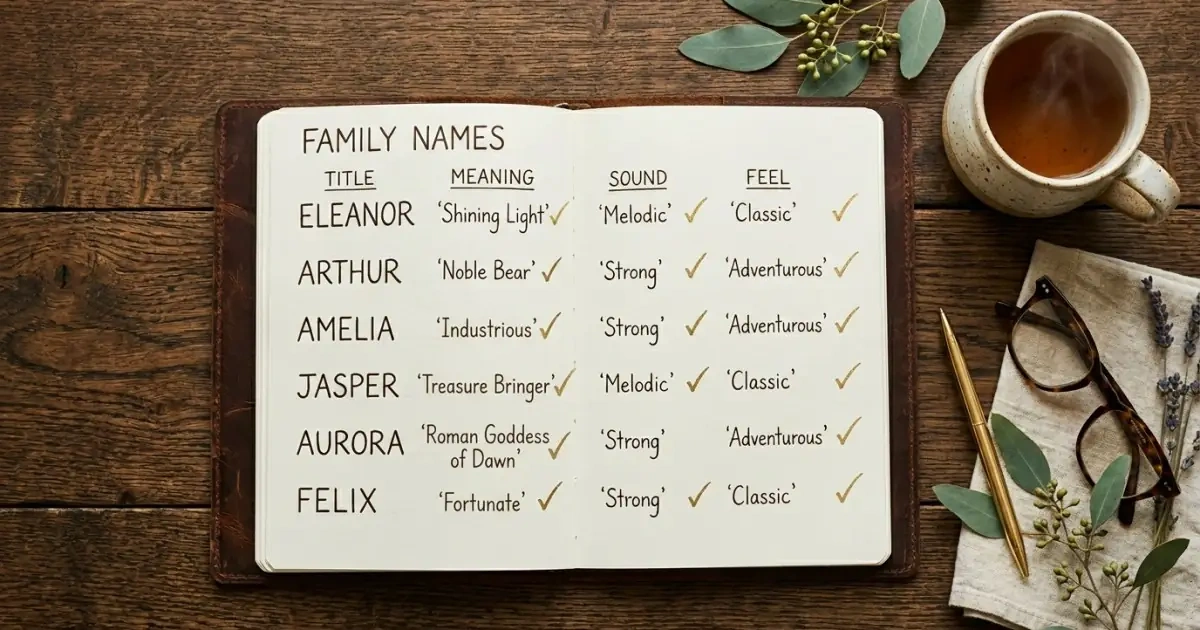
Many parents think the hard part is finding enough baby names they like.
That is usually only the opening problem.
The real strain begins after the shortlist looks good. A name with strong meaning sits beside one that flows more cleanly with the surname. A stylish favorite keeps pulling attention, while a quieter option begins to look sturdier every time it is tested. The decision stops feeling like taste and starts feeling like shifting evidence.
This is where naming gets messy.
Meaning seems decisive early in the week. Then sound takes over. A popularity worry appears late and changes the mood. Your partner says a name feels more like the family you are building, and the whole comparison resets.
The problem is not bad options. It is inconsistent comparison.
When each name is judged by its most flattering feature, every contender survives for a different reason. That does not create clarity. It creates fatigue.
Objective comparison does not mean turning the baby-name decision into a cold spreadsheet. It means giving every serious option the same fair test. Once the standards stop moving, strengths and weaknesses become much easier to see.
When your overall taste still needs shape, browse baby names by style before comparing individual names too aggressively. A comparison framework works best after the list has already narrowed to names you could genuinely use.

Most Baby Name Comparisons Are Actually Reactions
Parents often believe they are comparing names when they are really reacting to them.
Depth protects the meaningful option. Visual polish protects the stylish one. A beautiful sound can distract from practical flaws. A single offhand comment from a relative can unfairly damage a name that had been holding up well.
The standards move, so the decision cannot settle.
Memory makes the problem worse. When names live only in your head, each one tends to return in its best lighting. Memory flattens complexity: Clara becomes polish, Theodore becomes formal weight, while Maeve and Leo keep coasting on compact strength or spoken ease.
None of those impressions is false. They are simply incomplete.
A shortlist becomes sticky when every name is allowed to compete on its best day.
| Common Comparison Habit | Why It Feels Convincing | What It Hides |
| Praising each name for its strongest feature | Every contender seems to have a valid reason to stay | Weaknesses never receive equal attention |
| Comparing names from memory | The emotional impression feels more natural than a table | Mood replaces full performance |
| Letting one comment change the ranking | Outside reactions can feel like useful data | Personal baggage may replace your own judgment |
| Treating excitement as strength | The name feels alive and persuasive | First impact may not survive repetition |
| Reopening the criteria midstream | It can feel like thoroughness | The rules keep changing, so the list never resolves |
The first step toward objectivity is not finding better names. It is forcing the current names to meet the same standards.

“Objective” in Baby Naming Means Consistent, Not Emotionless
Objective comparison sounds harsher than it should.
In naming, it means consistency. Every serious contender is evaluated by the same criteria instead of being judged by whatever quality makes it look strongest in the moment.
That still leaves room for feeling. In fact, it gives feeling a cleaner structure.
You may personally prefer Elias over Nora. Wren might appeal because it looks spare and modern, while Solomon carries more gravity. Objective comparison does not erase those reactions. It asks them to sit beside the practical evidence.
A beloved name might fail the surname test, just as a highly stylish option can become exhausting to spell and defend, while a purely sensible choice may never gather enough emotional life.
| Objective Comparison Does | Objective Comparison Does Not |
| Uses the same standards for each serious name | Removes emotion from the decision |
| Makes trade-offs visible | Turns the highest score into an automatic choice |
| Separates preference from daily function | Pretends every family needs the same criteria |
| Exposes repeated friction points | Punishes names for being distinctive |
| Helps parents talk more clearly | Replaces the final act of judgment |
The useful question is not which name feels best today.
The sharper question is which name keeps holding up under the standards that actually matter to your family.
Choose the Criteria Before You Score the Names
A fair comparison begins before any scoring happens.
First, decide what belongs in the comparison. Not every family needs the same matrix. A complicated surname can make flow unusually important. A bilingual household may need pronunciation near the top. Parents considering an honor name should separate emotional value from daily usability before the tribute becomes the whole argument.
The framework should match the decision you are actually making.
| Comparison Category | What It Measures | When It Deserves Extra Weight |
| Meaning | Emotional, symbolic, cultural, spiritual, or family depth | The name carries heritage, honor, faith, memory, or a value you want preserved |
| Sound | How the name works in real speech | You are sensitive to rhythm, mouth feel, or repeated use |
| Style | Whether the name feels like your family | You keep rejecting good names because they feel aesthetically wrong |
| Surname flow | The full-name rhythm | Your last name is long, short, heavy, unusual, or rhythmically difficult |
| Nickname risk | Likely short forms and casual versions | The obvious nickname bothers you or the formal name has many branches |
| Spelling and pronunciation | Correction burden | The name is rare, international, creatively spelled, or culturally specific |
| Popularity comfort | Familiarity, rarity, trend timing, and social visibility | Duplication, trendiness, or obscurity affects your confidence |
| Long-term fit | Range from babyhood to adulthood | A name feels charming now but may not stretch well |
| Partner enthusiasm | Shared ownership | One parent is warmer than the other, or the name belongs too strongly to one person’s taste |
| Sibling or family fit | How the name sits inside the household | Existing children’s names create a style context |
Do not include categories just because they seem responsible. Too many criteria can make the comparison look sophisticated while making it less useful.
When the standards themselves feel unclear, step back into What Makes a Good Baby Name? before ranking finalists. A broader framework prevents the matrix from becoming a prettier version of confusion.

Rank the Criteria Before the Names Start Competing
After choosing the categories, decide how much each one matters.
This is where many parents create false clarity. They build a neat comparison table, then give every category equal weight even though the decision does not feel equal at all.
Meaning may matter deeply to you. Popularity may barely matter. A difficult surname can make flow non-negotiable. A cross-language family may care far more about pronunciation than nickname range. A parent with strong aesthetic instincts may know that style mismatch will linger.
Treat those differences honestly.
| Priority Type | What It Means | How to Use It |
| Must-have | The name cannot survive without this | A low score here should carry real consequences |
| High priority | Strongly affects confidence | Weight it more heavily than minor preferences |
| Nice-to-have | Improves the name but does not decide it alone | Use it to break ties, not override essentials |
| Low priority | Worth noting, but not central | Do not let it dominate late-stage anxiety |
| Deal-breaker | A flaw one parent truly cannot live with | Remove the name rather than scoring around it |
Couples should rank the criteria separately before discussing names. That small step often reveals the real disagreement. What looks like Arthur versus August may actually be stability versus style energy, family tradition versus independence, or daily ease versus emotional weight.
When the ranking itself becomes the fight, move into How to Choose a Name With Your Partner. The name is rarely the only issue once the criteria are pulling in different directions.
Put the Names Side by Side Where the Trade-Offs Cannot Hide
A visible comparison changes the decision.
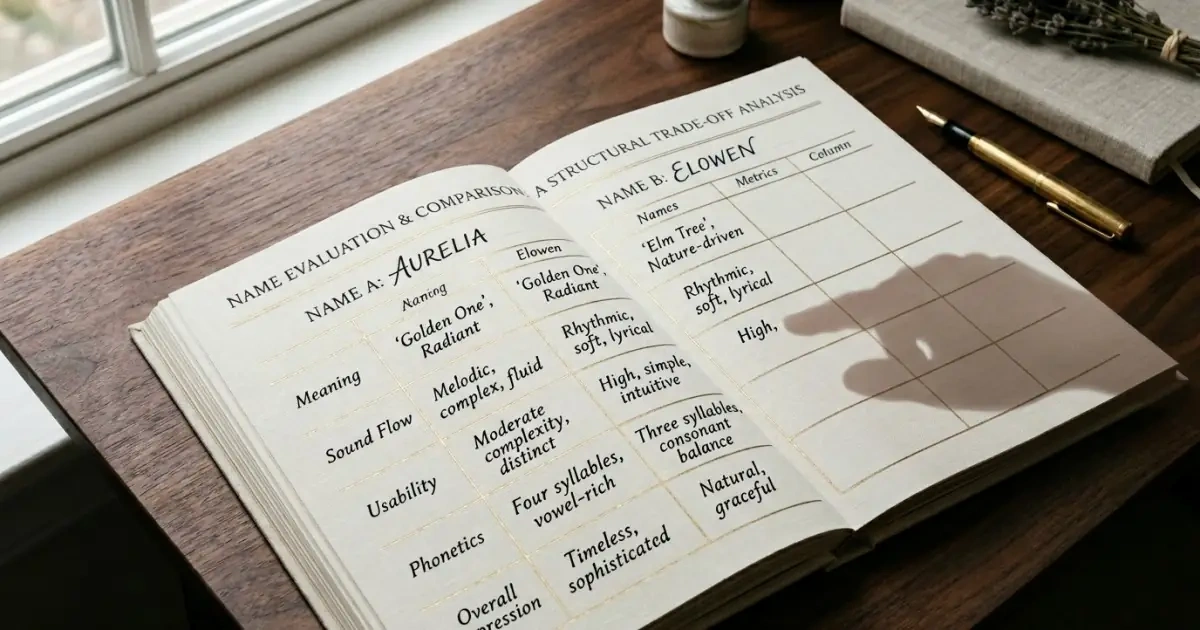
When names stay in memory, each one keeps its best lighting. Side by side, the trade-offs become harder to avoid. The stylish name may show weak usability. The safe name may look stronger once its steady performance becomes visible. The emotional favorite may reveal a surname problem that had been easy to minimize.
A simple table is enough. The goal is not administrative neatness. It is honesty.
| Name | Meaning | Sound | Style | Surname Flow | Nicknames | Popularity Comfort | Long-Term Fit | Notes |
| Name A | Strong | Moderate | Strong | Weak | Acceptable | Comfortable | Strong | Meaning is carrying most of the appeal |
| Name B | Moderate | Strong | Moderate | Strong | Limited | Comfortable | Strong | Less dramatic, but performs well |
| Name C | Light | Strong | Very strong | Moderate | Risky | Trend-sensitive | Moderate | Style may be outrunning usability |
| Name D | Strong | Strong | Moderate | Strong | Acceptable | Slightly popular | Strong | Integrated, though not the flashiest |
Numbers can help, but notes are usually more useful than the numbers alone. A score of 3 for sound means little unless you know why: surname clash, repeated endings, stiffness in speech, or a tone that feels wrong for the family.
When the list is still too long for a matrix to feel useful, return to How to Build a Baby Name Shortlist. Objective comparison works best when the names are already serious contenders, not casual maybes.
The Categories That Reveal the Most in a Baby Name Matrix
A good matrix does not need many columns. It needs the right ones.
Meaning, sound, style, surname flow, nicknames, spelling, popularity, adult fit, and partner response tend to expose the most useful information. Each category should do a distinct job.
| Category | Strong Score Looks Like | Weak Score Looks Like | Consultant Note |
| Meaning | The name carries a real emotional or symbolic reason | The definition is attractive but not personal | Meaning should deepen the choice, not rescue it |
| Sound | The name works in warm, quick, public, and full-name speech | It needs careful pronunciation to sound good | Real speech matters more than list beauty |
| Style | The name fits your family’s actual taste | It feels admired but not owned | Style is fit, not vanity |
| Surname flow | The full name lands cleanly | The rhythm feels heavy, sing-song, clipped, or tangled | The surname is part of the name’s real life |
| Nickname risk | Likely short forms are acceptable | The default nickname creates resistance | Other people will shorten names before asking permission |
| Spelling and pronunciation | Friction feels low or worth carrying | Correction already feels tiring | Difficulty can be worth it, but should be chosen knowingly |
| Popularity comfort | The visibility level suits your family | The name feels too common, too rare, or too moment-bound | Popularity is context, not a verdict |
| Adult fit | The name can grow beyond babyhood | It depends on cuteness, novelty, or one narrow style moment | A child uses the name longest as an adult |
| Partner response | Both parents can say it with warmth | One person approves but cannot inhabit it | A good score on paper cannot fix weak ownership |
When meaning dominates the comparison, spend time with baby names by theme, baby names by origin, and How to Balance Meaning, Sound, and Style in a Baby Name. When style keeps changing the emotional read, baby names by style can sharpen the aesthetic lane.
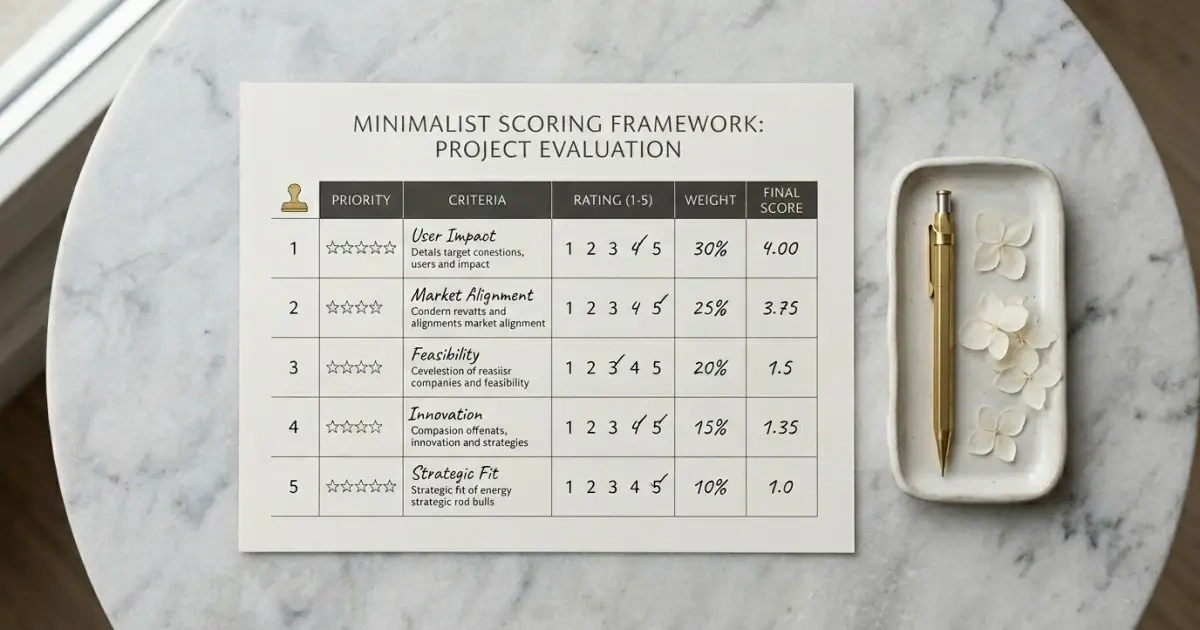
A Simple Scoring System That Does Not Flatten the Decision
A scoring system should clarify the trade-offs, not pretend the choice is mathematical.
Use a small scale. Five points is enough.
| Score | What It Means |
| 1 | Serious weakness or likely deal-breaker |
| 2 | Noticeable concern that would need a strong reason to accept |
| 3 | Workable, but not especially strong |
| 4 | Strong and comfortable |
| 5 | Excellent fit for your priorities |
Then weight the categories that matter most.
A family with a difficult surname might double surname flow. A family choosing across languages might double pronunciation ease. Parents using an honor name may weight meaning heavily, but that does not mean meaning gets to excuse every other problem.
| Category | Base Score | Weight | Weighted Score | Note |
| Meaning | 5 | 2 | 10 | Central family reason |
| Sound | 3 | 2 | 6 | Slightly heavy with surname |
| Style | 4 | 1 | 4 | Fits family taste well |
| Nicknames | 3 | 1 | 3 | Default short form is acceptable, not loved |
| Popularity comfort | 4 | 1 | 4 | Familiar but not too visible locally |
The weighted score is not the final answer. It shows where the name is strong because it truly fits your priorities, and where a weaker issue may be hiding.
A name with a lower total can still win when the lower-scoring categories do not matter much to your family. The matrix should make that reasoning visible rather than vague.

What the Numbers Can Show That Vibes Alone Cannot
A scoring framework reveals patterns emotion often blurs.
It can show that the “boring” name is not boring at all; it is simply stable. It may perform well across the categories that matter and create very little friction.
It can also expose names that are coasting on one impressive feature. Rosalie may draw attention through sound and romantic style, while Nora scores higher on simplicity, surname fit, and daily ease. Between Felix and Jonah, one family may prefer compact brightness, another warmer steadiness; the matrix shows which quality is actually doing the work.
The matrix does not decide which quality you should value. It shows what each name is doing.
| Pattern the Scores Reveal | What It Usually Means |
| High across most categories, rarely highest | Quietly strong finalist |
| Very high in one category, uneven elsewhere | One-feature contender |
| Strong scores but weak emotional notes | Sensible name without enough connection |
| Moderate scores with excellent partner response | May be stronger in lived family use than on paper |
| Good style score, low usability score | Aesthetic appeal may be masking friction |
| Excellent meaning, weak sound | The meaning may need another form |
This is why objective comparison often makes a shortlist feel calmer. It replaces the fog of “I don’t know why this name keeps staying” with a visible pattern.
When the highest-scoring name also begins to feel emotionally clear, How to Know When a Name Feels Right becomes the next useful lens.

What a Matrix Cannot Decide for You
A matrix is a tool, not a substitute for judgment.
It cannot create emotional connection where none exists. It cannot make a partner truly comfortable with a name they only tolerate. It cannot predict the child’s future relationship with the name. Tidy numbers cannot turn a fragile favorite into a durable one.
Some categories resist exact measurement. Style, meaning, family fit, and emotional relevance often need notes more than rigid scores.
A tie on paper is also still a real tie.
That is not failure. It means the matrix has done its job by showing that two names are genuinely close. At that point, testing matters more than further scoring.
| Matrix Limit | What to Do Instead |
| The scores are close | Move into real-life testing |
| The high scorer feels emotionally cold | Examine whether practicality is replacing connection |
| A lower scorer keeps pulling you back | Identify which category the matrix may be undervaluing |
| Partner notes disagree sharply | Re-rank criteria together before choosing |
| A name scores well but needs defense | Look for the weakness being minimized |
| You keep changing scores by mood | Pause and define the category more clearly |
Use the matrix to make the shape of the decision visible. Do not ask it to feel on your behalf.
When a name looks strong on paper but still needs reality pressure, How to Test a Baby Name Before Finalizing It will tell you more than another round of scoring.

Keep Meaning, Sound, Style, and Usability Separate Until the End
Parents often collapse everything into one vague impression: “I like it.”
That makes comparison harder.
Meaning, sound, style, and usability should be considered separately first. A name with excellent meaning but weaker sound should not look identical to a name with excellent style and weak usability. Those are different problems, and they require different fixes.
| Name Pattern | What Is Strong | What Needs Testing |
| Meaning-led | Symbolism, family story, faith, heritage, or emotional depth | Sound, surname flow, and partner use |
| Sound-led | Spoken beauty, rhythm, mouth feel, or full-name flow | Meaning and long-term substance |
| Style-led | Aesthetic fit, visual appeal, social signal | Usability, trend timing, and adult range |
| Usability-led | Spelling, pronunciation, nickname control, surname ease | Emotional connection |
| Integrated | Good enough across several categories | Whether the name still feels alive after testing |
The strongest names rarely maximize every category. They integrate the important ones well enough that no single feature has to save the rest. That tension sits at the heart of How to Balance Meaning, Sound, and Style in a Baby Name. Read it when the matrix shows several decent names but none that feels fully whole.

Mistakes That Make Objective Comparison Less Objective
A comparison system can look fair while quietly distorting the decision.
The most common problem is scoring before priorities are ranked. Equal numbers do not create fairness when the family does not care equally about each category.
Outside opinions can also sneak into the matrix. “My mother likes it” or “a friend thought it sounded odd” may be useful context, but those reactions should not become invisible scoring categories unless they reveal a real issue.
Too many names can break the process. Comparing fifteen names creates clutter, not insight. A matrix should be used on serious contenders, not every name that survived a week of browsing.
| Mistake | How It Shows Up | Cleaner Move |
| Equal weighting by default | Low-priority issues distort the result | Rank must-haves before scoring |
| Too many contenders | The table becomes noise | Shortlist first |
| Outside approval enters quietly | Scores reflect other people’s taste | Use feedback only for specific information |
| Repeated friction gets minimized | A name keeps scoring well despite the same concern | Give recurring problems real weight |
| Partner resistance is treated as minor | A high score hides weak shared ownership | Make partner response a serious category |
| The matrix becomes a verdict | The top score gets chosen without lived testing | Let the matrix lead into use |
When the list itself is still messy, What Makes a Good Baby Name? and How to Build a Baby Name Shortlist belong before objective scoring.

Comparing Names With a Partner Without Turning It Into a Trial
Objective comparison can help couples because it moves the conversation away from persuasion.
Instead of arguing that a favorite is better, each person can explain what the name is doing well. One option may protect heritage; another may carry better surname flow. A third may feel closer to the family’s style, while another creates fewer pronunciation risks.
That framing lowers the temperature.
It also separates mild preference from real resistance. A partner who slightly prefers Iris should not automatically overrule a partner who genuinely cannot use Juniper. The strength of the reaction matters.
| Couple Dynamic | What the Matrix Can Reveal | What to Watch |
| Different favorites | Which category each name is winning | The real conflict may be priority ranking |
| One strong no | Whether the objection is practical, emotional, or stylistic | A serious no should not be averaged away |
| Family-honor pressure | Whether meaning is overpowering daily fit | Honor does not automatically belong in the first-name slot |
| Style disagreement | Whether both parents are choosing from different aesthetic lanes | Category language can reduce defensiveness |
| One parent feels unheard | Whether the process is favoring one person’s criteria | Shared ownership matters as much as score |
The most useful goal is not to let the system crown a winner. A better outcome is identifying the name with the strongest overall fit and the least meaningful resistance.
When partner dynamics become the main obstacle, keep How to Choose a Name With Your Partner close. The matrix can clarify, but it cannot repair a process that feels unfair.

When Two Names Score Almost the Same
Close scores are common.
They usually mean the matrix has narrowed the field correctly. Two names may be strong for different reasons, or one may perform slightly better while the other carries more emotional pull.
Do not keep adding categories just to force a winner. That often creates fake precision.
Return to the weighted priorities. Check whether the categories reflect what you actually care about. Then move from scoring into lived use.
| Tie-Breaker | How to Use It | What It Reveals |
| Highest-priority category | Compare the names only on the must-have factors | Which name protects what matters most |
| Surname test | Say both full names in ordinary speech | Which one behaves better outside the table |
| Partner voice | Listen to both parents use each name casually | Which name has shared life |
| Loss test | Imagine choosing one and losing the other | Which name you would miss more |
| Fridge test | Let both names sit visibly for several days | Which name deepens under repetition |
| Real-life introduction | Say “This is ___” and “Hi, I’m ___” | Which name feels more inhabited |
This is where How to Decide Between Two Baby Names becomes the right next step. When the safer-looking name and the emotionally stronger name are not the same contender, How to Avoid Baby Name Regret can help separate real warning signs from normal decision anxiety.
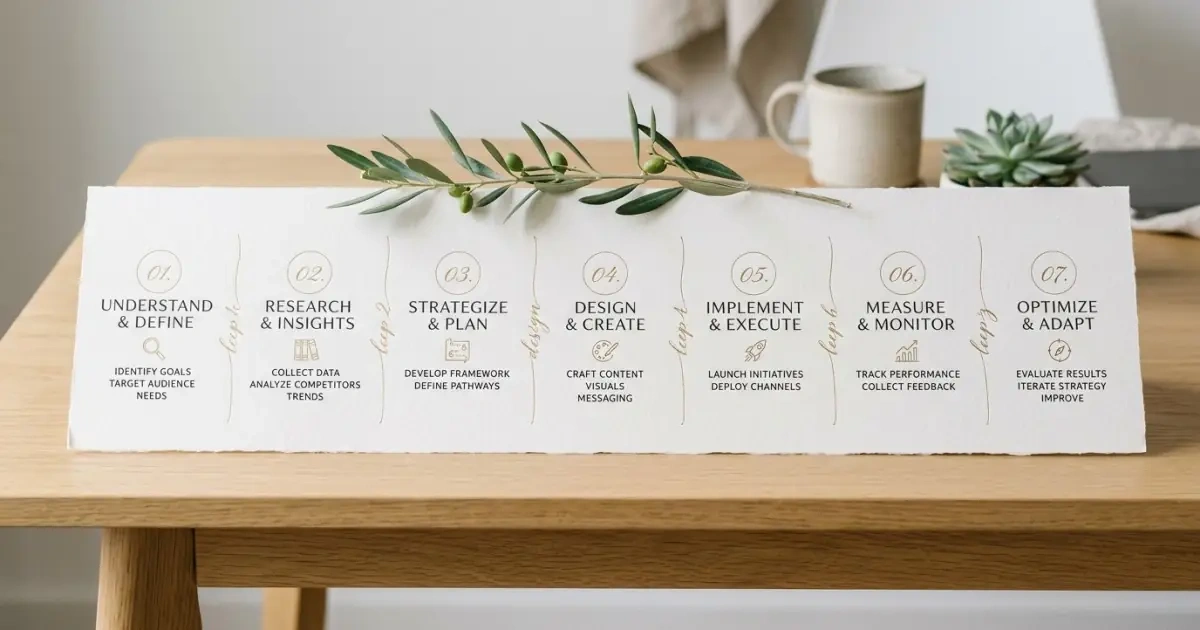
A Seven-Step Framework for Comparing Baby Names Objectively
Use this process when the shortlist is serious but the comparison keeps slipping.
| Step | What to Do | What It Prevents |
| 1. Keep only real contenders | Compare names you could genuinely use | Wasting energy on fantasy options |
| 2. Choose the categories | Meaning, sound, style, surname flow, nicknames, pronunciation, popularity, adult fit, partner response | Letting each name choose its own best category |
| 3. Rank the criteria | Mark must-haves, high priorities, nice-to-haves, and deal-breakers | False equality between major and minor concerns |
| 4. Score consistently | Use the same scale for every name | Mood-based comparison |
| 5. Add notes | Explain the reason behind each score | Empty numbers |
| 6. Test the strongest names | Say them aloud, write them, use the surname, check nicknames and initials | Paper winners that fail in life |
| 7. Choose the name that holds under both methods | Trust the name that stays strong in scoring and use | Endless reopening of the search |
This framework should make the decision clearer, not heavier. When it starts creating more noise, simplify the categories.
A good comparison process should feel like a lens, not a cage.

When Objective Comparison Makes the Right Name Easier to See
A strong comparison framework does not make naming cold.
It makes the decision legible.
The rules stop changing. Names can no longer survive only because their best feature happens to be most visible that day. Practical weaknesses appear earlier. Quietly strong names get a fairer hearing.
That can bring relief.
Consider Eden, Soren, and Luca in the same matrix. Eden may reveal a blend of modern softness and familiarity; Soren may offer restraint and distinction while still needing a pronunciation and surname check; Luca may feel warm and widely usable, even when another contender carries more symbolic depth. The point is not to flatten those differences. It is to see them without changing the rules midstream.
Objective comparison gives emotion a clearer room to speak in.
It does not tell you what to feel. It shows what has been true beneath the noise.

Questions Parents Ask About Comparing Baby Names Objectively
Can you really compare baby names objectively?
Yes, provided objective means consistent rather than emotionless. A fair comparison uses the same standards for every serious name while still leaving room for emotional connection.
What categories matter most when comparing baby names?
Most families should consider meaning, sound, style, surname flow, nickname risk, spelling, pronunciation, popularity comfort, long-term fit, and partner response. The final framework should reflect your actual priorities, not a generic checklist.
Should meaning matter more than sound?
Only when meaning truly matters more in your decision. A name with strong meaning still has to be spoken, written, shortened, and carried through daily life. The ranking should come from your family’s values.
What should I do when two names score almost the same?
Treat that as useful narrowing, not failure. Recheck the weighted priorities, then move into real-life testing: full-name use, introductions, partner voice, nicknames, and a few days of repetition.
Can a lower-scoring name still be the right choice?
Sometimes. But you should be able to explain why the lower-scoring areas matter less in your situation. A lower score chosen knowingly is different from a favorite protected from evidence.
How many names should I compare at once?
Three to five serious contenders is usually enough. More than that often means the shortlist is not ready for objective comparison yet.

Where to Go Next When the Comparison Starts Producing Clarity
A matrix should point you forward, not keep you trapped inside analysis.
When the list is still too wide, move back to How to Build a Baby Name Shortlist and cut the names that are interesting but not truly usable. A final pair belongs with How to Decide Between Two Baby Names, where the decision becomes less about broad ranking and more about the specific trade-off between two possible futures.
Names that score well still need to leave the table. Pressure-test them through How to Test a Baby Name Before Finalizing It. Once a name has survived sound, surname, nicknames, initials, and repetition, How to Know When a Name Feels Right can help you read the emotional signal more accurately.
Fear of choosing badly needs a different tool. Read How to Avoid Baby Name Regret before reopening the whole search, and use When to Stop Searching for the Perfect Baby Name when new browsing has stopped producing better judgment.
For the wider editorial path through the naming process, Expert Baby Naming Guides for Choosing the Right Name can help you choose the guide that matches the exact problem in front of you.
Most naming confusion does not come from a lack of good names. It comes from changing the rules halfway through the decision. Once every serious name faces the same test, the strongest options become easier to see and the next step becomes less about searching harder and more about trusting what the comparison has already shown.