
How to Choose Surname-Style Baby Names

Surname-style baby names have a way of looking finished before they have been tested. They sit neatly on a list. They sound crisp beside a middle name. They often bring the tailored confidence parents want when softer, sweeter, or more traditional names start to feel too expected.
That instant polish is also the trap.
A last name used as a first name has to do more than look stylish. It has to sound natural in the kitchen, on a school form, in a family text thread, and in an adult introduction years from now. It needs enough warmth to belong to a child and enough structure to age well.
Surname style lives inside the wider Names by Style landscape, near modern, preppy, strong, minimalist, elegant, and gender-flexible names. Parents comparing several style directions may want to start with How to Choose a Baby Name by Style, then return here once surname energy starts to feel like the strongest lane.
The best surname-style choice does not feel like a borrowed last name placed in the first-name slot for effect. It feels chosen, spoken, and lived in.
Why Last Names as First Names Feel Polished-and Why That Polish Needs Testing
Surname-style names appeal because they solve several common naming tensions at once.
They can feel adult-ready without sounding old-fashioned. Many avoid the sweetness of more decorative girl names and the heavy familiarity of classic boy names. A surname name can carry a professional edge, a literary mood, an outdoorsy texture, a family story, or a gender-flexible ease, depending on the name.
That range explains why parents are drawn to them. It also explains why they are easy to overchoose.
Carter feels practical and occupational. Quinn is compact, bright, and flexible. Everett has weight without becoming severe. Collins is clearly surname-forward, with a polished edge that feels deliberate rather than ornamental.
The danger appears when the name has nothing behind it except surface. A surname-style baby name can go flat when it lacks family meaning, origin awareness, warmth, or a full-name rhythm that sounds like a person rather than an institution.
A polished name still has to breathe.
The Difference Between a Surname-Style Name and a Name That Is Merely Modern
Not every modern name is a surname-style name. This category usually carries some trace of lineage, occupation, place, family-tree structure, or tailored social formality.
A name may sit in the surname-style family because it:
- Began as a family surname.
- Comes from an occupation.
- Carries a place, landscape, or regional association.
- Has patronymic roots, including “son of” patterns.
- Suggests clan, heritage, or lineage.
- Sounds tailored, preppy, or polished.
- Feels less dependent on nicknames than many traditional first names.
- Moves across genders in some regions or generations.
Parker carries occupational energy. Hudson blends patronymic structure with a place-name feel. Brooks reads as surname-style while borrowing a little nature imagery. Bennett has the polish of a surname but softens quickly through Ben.
That last point matters. Surname style works best when it has a second dimension: a family reason, a flexible nickname, a meaningful origin, a memorable sound, or a rhythm that makes the full name feel settled. Without that second layer, the name may impress at first and weaken later.
Parents who want a broader decision standard can use What Makes a Good Baby Name? to test whether the name is carrying real value or only a fashionable outline.
Family Surnames Make Strong First Names Only When They Carry Easily
A family surname can be one of the most moving ways to name a child. It can preserve a grandmother’s maiden name, honor a side of the family tree that might otherwise disappear, or make tradition feel fresher than repeating a familiar first name.
Meaning, though, does not automatically create wearability.
Some family surnames move beautifully into the first-name position. Others are better left in the middle, where they can carry honor without asking the child to explain, spell, or soften the name every day.
Before a family surname becomes the first name, test it against real pressure:
- Does it sound natural when spoken as a first name?
- Is the honor freely chosen, or is it family pressure dressed as tradition?
- Will pronunciation become a daily correction?
- Does using one side’s surname create imbalance with the other side?
- Does it pair cleanly with the actual last name?
- Would the middle spot preserve the meaning with less friction?
A family surname should feel like inheritance, not assignment.
When heritage is the center of the search, move carefully through How to Use Family Heritage as a Starting Point for Baby Names and How to Honor Heritage Without Forcing Tradition. Those decisions are rarely just about sound. They carry memory, fairness, expectation, and sometimes grief.
A surname that feels meaningful but heavy often belongs in the middle. The choice is not weaker there. It may be cleaner. How to Choose a Middle Name can help you keep the tribute without overloading the child’s everyday introduction.

A Surname Name Without Family Ties Still Needs a Clear Reason
You can use a surname-style name without a family connection. Many last names have become established enough as first names that they no longer feel like a stranger’s surname lifted from a mailbox.
Avery is widely familiar as a first name. Ellis has a gentler, quieter surname feel. Hayes is brief and tailored, while Lennox brings a stronger, more distinctive sound.
Still, a name needs an honest reason to be on your child’s birth certificate. Sound can be a reason. So can origin, meaning, place association, sibling fit, surname rhythm, or long-standing first-name use. “We liked the way it looked” rarely gives parents enough confidence once the decision becomes real.
Obscure surnames need extra care, especially when they belong strongly to a specific community, language, public figure, or cultural history. A name can sound stylish to an outsider and carry a much more specific signal to people who know its background.
Origin research belongs in Names by Origin. When the surname is not yours, make sure you can explain the choice plainly, without making the name sound like a costume.
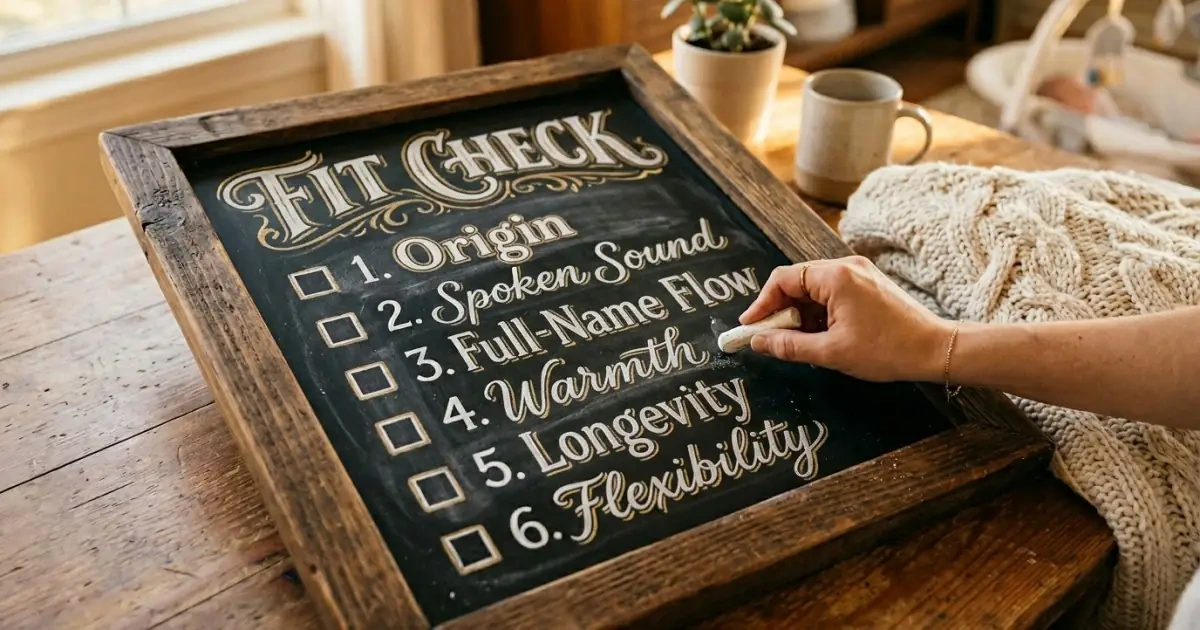
The Six-Part Fit Check for Surname-Style Baby Names
Surname-style names can pass the eye test too quickly. Slow the decision down with six checks before a name reaches the final list.
Origin
Know the name’s source, even in broad terms. Is it occupational, patronymic, place-based, family-linked, or already established through first-name use? A name does not need a dramatic backstory, but it should not be a blank object.
Spoken Sound
Some surnames look sharp and go stiff when spoken. Put the name into ordinary sentences: a parent calling from another room, a teacher reading attendance, a grandparent saying it with affection. Formal full-name rhythm is only one version of daily life.
Full-Name Flow
The actual surname decides more than most parents expect. With surname-style names, you are often placing one last-name-shaped sound before another. That can be crisp; it can also be too much.
Warmth
A tailored name needs a human entry point. Warmth may come from a nickname, a softer middle name, family meaning, a friendly vowel sound, or the simple fact that the name is familiar as a first name.
Longevity
Some surname baby names have years of first-name use behind them. Others belong strongly to a current fashion cycle. A name can be modern and still age well, but the lines need to be clean.
Flexibility
The name does not have to offer a nickname, but it should offer some room to grow. Middle-name balance, sibling compatibility, sound variation, and adult usability all count.
For a broader naming filter, How to Balance Meaning, Sound, and Style in a Baby Name gives you a useful way to compare surname choices with softer, stronger, classic, rare, or minimalist options.
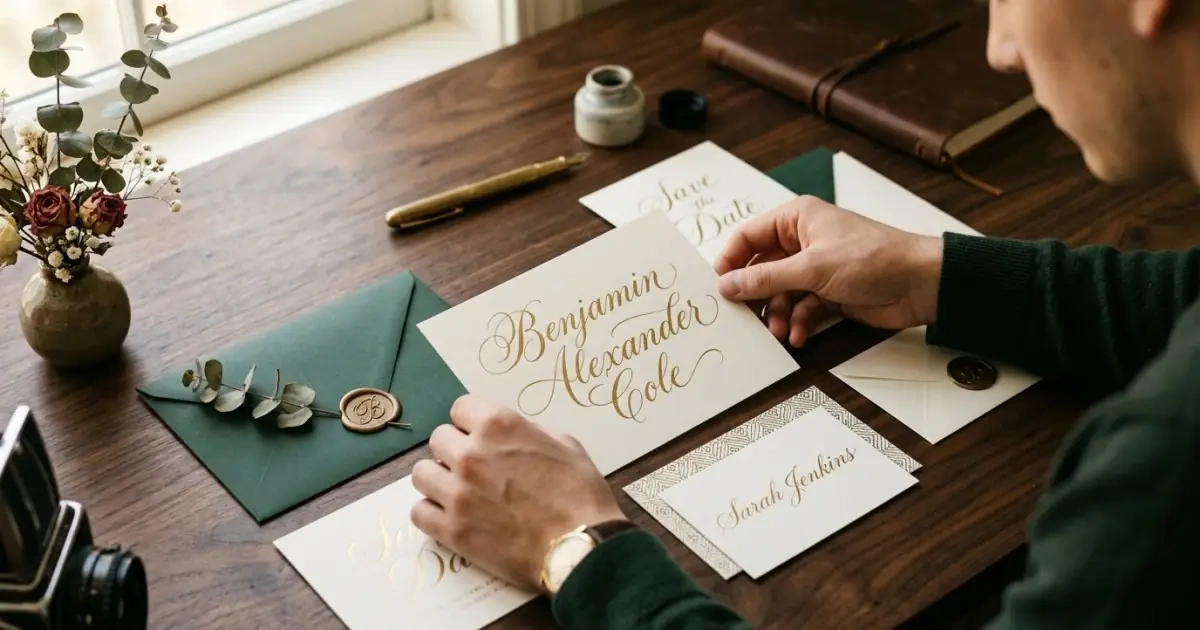
Full-Name Flow Is the Make-or-Break Test for Last Names as First Names
Every first name should be tested with the surname. Last names as first names need stricter testing because the full combination can turn formal fast.
The danger is not only awkward sound. It is category confusion. Some combinations sound like a law firm. Others sound like a prep school, a hotel, a clothing label, or a building on campus.
Run the name through these versions:
- First name + surname.
- First name + middle name + surname.
- Nickname + surname.
- Initials.
- Formal document version.
- Spoken family version.
- Adult introduction: “Hi, I’m ___.”
Brooks beside a one-syllable surname can sound clean, though too much clipping may make the name abrupt. Sullivan usually needs space around it because the name already carries length and weight. Hayes may land with elegant economy or feel overly brisk. Bennett often softens a surname-heavy combination because it is also heard comfortably as a given name.
The final question is practical: does the full name sound like a child, teenager, and adult you can imagine addressing with ease?
For deeper full-name work, use How to Match a First Name With Your Surname and How to Build a First-Middle-Surname Combination That Flows. Initials deserve their own pass through How to Check Initials, Monograms, and Awkward Combinations, especially with compact surname names that can produce punchy letter combinations.

Warmth Is What Keeps Surname Baby Names From Feeling Like Stationery
Surname-style names often lean formal. That is part of their appeal. Left unchecked, the same quality can make the name feel distant.
The strongest choices usually contain warmth somewhere: in the sound, the family story, the middle name, the nickname, or the way the name is already used in daily life.
Bennett has polish, but Ben and Benny make it approachable. Everett feels substantial; Ev or Rhett gives the name a more personal register. Finley brings a lighter rhythm than many surname-forward choices. Quinn stays compact without becoming severe.
A full name made of crisp parts can start to sound designed rather than lived in. One warm element usually fixes that: a softer middle, a family connection, a nickname the family actually likes, or a surname with a more open sound.
Parents drawn to this balancing act may find How to Choose Soft and Gentle Baby Names That Still Carry Well useful, especially when the shortlist feels polished but emotionally cool.
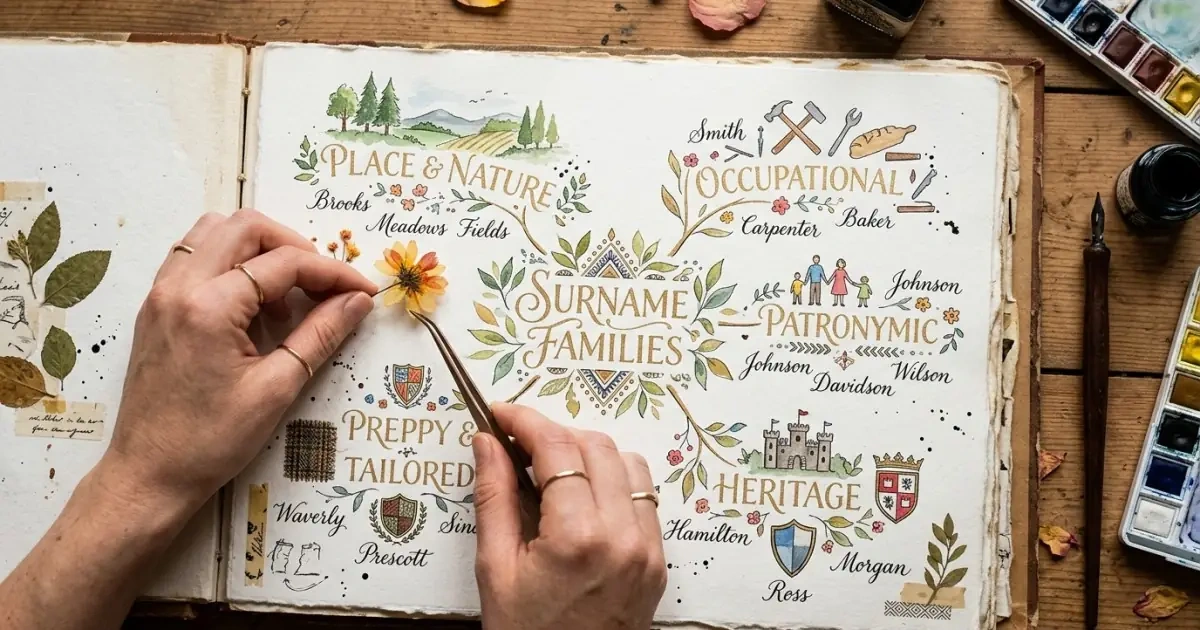
The Main Surname-Style Families Parents Usually Mean
“Surname-style” is not one look. It covers several smaller families, and each one carries a different risk.
Occupational Surname Names
Occupational surnames tend to sound practical, active, and easy to understand. Carter and Parker work because their sounds are clear, their spellings are familiar, and their energy is direct.
The tradeoff is trend sensitivity. Occupational endings can cluster quickly. Make sure you love the name itself, not only the clipped efficiency of the category.
Patronymic and “Son” Surname Names
Patronymic names often come from family-line patterns, especially “son of” structures. Hudson, Grayson, and Emerson feel substantial, familiar, and strongly surname-forward.
These names can lose distinctiveness when many children around them share similar endings. Trend clustering is subtle at first. How to Tell If a Name Feels Too Trendy helps separate a name with lasting shape from one carried mainly by the current sound wave.
Place, Landscape, and Nature-Adjacent Surnames
Some surname names bring a sense of place. Brooks suggests water and landscape while still sounding tailored. Hayes feels spare and place-like. Lennox has more force. Rowan sits near the crossover point between surname style and nature naming.
This subtype can soften the formality of surname style. It also needs careful full-name testing because some combinations start to sound like neighborhoods, hotels, parks, or brands. When nature imagery is part of the attraction, How to Choose Nature and Flower Names Without Feeling Too Themed gives the search more restraint.
Preppy and Tailored Surname Names
Some parents are drawn to surname names for their crisp, prep-school polish. That can work beautifully when the name has warmth elsewhere. Without it, the style starts to perform status rather than identity.
Names like Brooks, Collins, Hayes, and Reid can feel refined, but refinement is not the same as depth. Listen for the difference. A name that sounds like stationery may need a warmer middle name or a stronger personal reason.
Heritage Surname Names
Heritage surname names carry a different emotional charge. Mackenzie and Kennedy show how surname roots can move into first-name use while carrying regional, cultural, or public associations.
This lane asks for care. Heritage can make a name richer; it can also make the choice more complicated if the name belongs more strongly to family symbolism than to the child’s daily life.
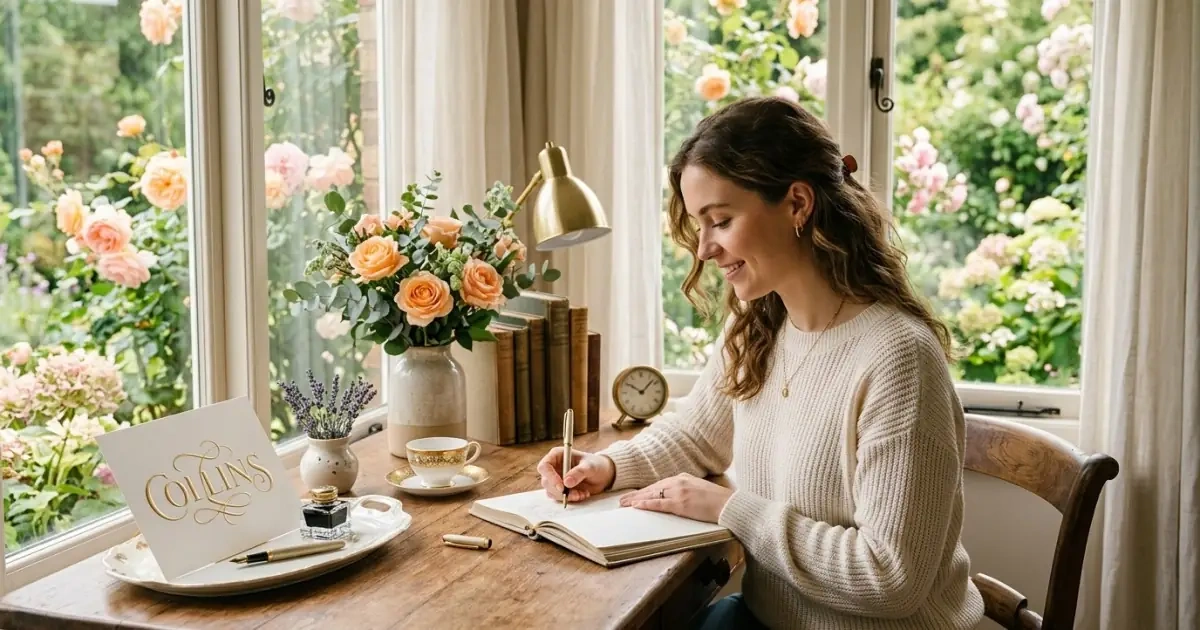
Surname-Style Names for Girls Need More Than Tailored Confidence
Surname names for girls often appeal to parents who want something crisp, capable, and less frilly. That instinct can produce strong choices. It can also reveal a hidden assumption: that a girl’s name becomes more serious when it sounds less traditionally feminine.
A surname-style girl name should feel like a full identity, not a correction.
Avery has soft surname energy and broad first-name use. Collins feels tailored and more distinctly surname-forward. Emerson blends literary and patronymic signals. Kennedy arrives with strong public associations, while Quinn keeps the sound lean and flexible. Mackenzie has recognizable surname roots, though its trend history may affect how it feels to some parents.
Before choosing this style for a daughter, check the emotional reason behind the choice:
- Does the name feel personal in family use?
- Are you choosing tailored confidence or avoiding femininity on principle?
- Does local gender usage match your expectations?
- Will the actual surname make the full name warmer or more formal?
- Does the middle name add meaning, softness, tradition, or structure?
Parents attracted to “strong” girl names can use How to Choose Strong Baby Names Without Sounding Heavy-Handed to keep confidence from turning rigid. When a favorite is already widely used, How to Choose Mainstream Baby Names Without Feeling Generic can help preserve a personal reason for the choice.

Surname-Style Names for Boys Need an Escape From Boardroom Energy
Surname-style names for boys can feel ready for adulthood from the beginning. That is useful. It becomes a problem when the child disappears behind the polish.
Beckett has literary sharpness and a crisp ending. Bennett is tailored but warmer because Ben is sitting inside it. Carter is mainstream, occupational, and direct. Everett feels more substantial, almost classic-leaning. Hayes is brief and controlled. Sullivan brings length, warmth, and nickname room.
The check is simple but revealing: does the name still sound natural before the child has a résumé?
Look for an escape hatch. A nickname may do it. So may a softer middle name, an affectionate family story, or a surname with a gentler sound. Adult readiness matters, but a name chosen only for professional polish can feel strangely impersonal at home.
For parents making that calculation directly, How to Choose a Name That Sounds Professional Later in Life can help test future use without draining the name of warmth.
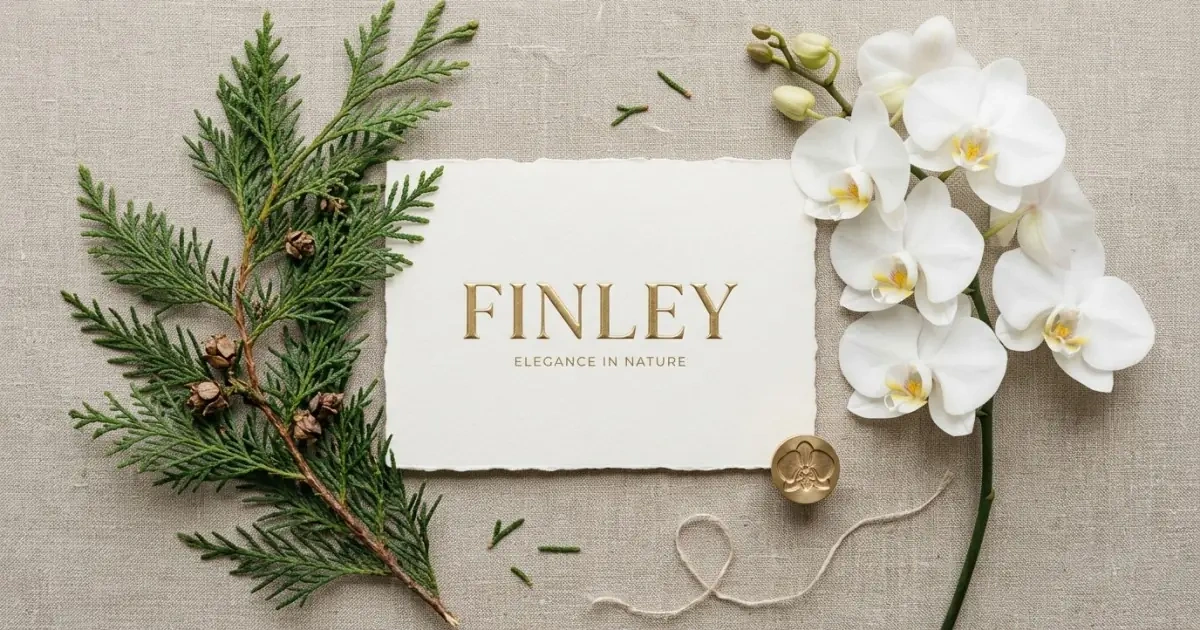
Gender-Flexible Surname Names Depend on Local Usage, Not Theory
Many last-name names move across genders. That flexibility can feel modern, practical, and appealing, but usage is not evenly distributed everywhere.
Avery, Ellis, Emerson, Finley, Quinn, and Parker each carry different gender signals depending on region, generation, and local naming culture.
Decide how much ambiguity you actually want. Some families love a name that does not announce gender immediately. Others prefer a first name that will usually be read clearly, using the middle name for balance instead.
Useful questions:
- Do you like the name across genders, or mainly for one child?
- Would occasional assumptions bother you?
- Does the middle name clarify or soften the full combination?
- Does the surname push the name in a more formal or more casual direction?
- Are the gender signals different in another language your family uses?
When the name also needs cross-language use, How to Choose a Name That Works in Two Languages becomes relevant. Gender signals, pronunciation, and spelling can shift once a name leaves one language environment.
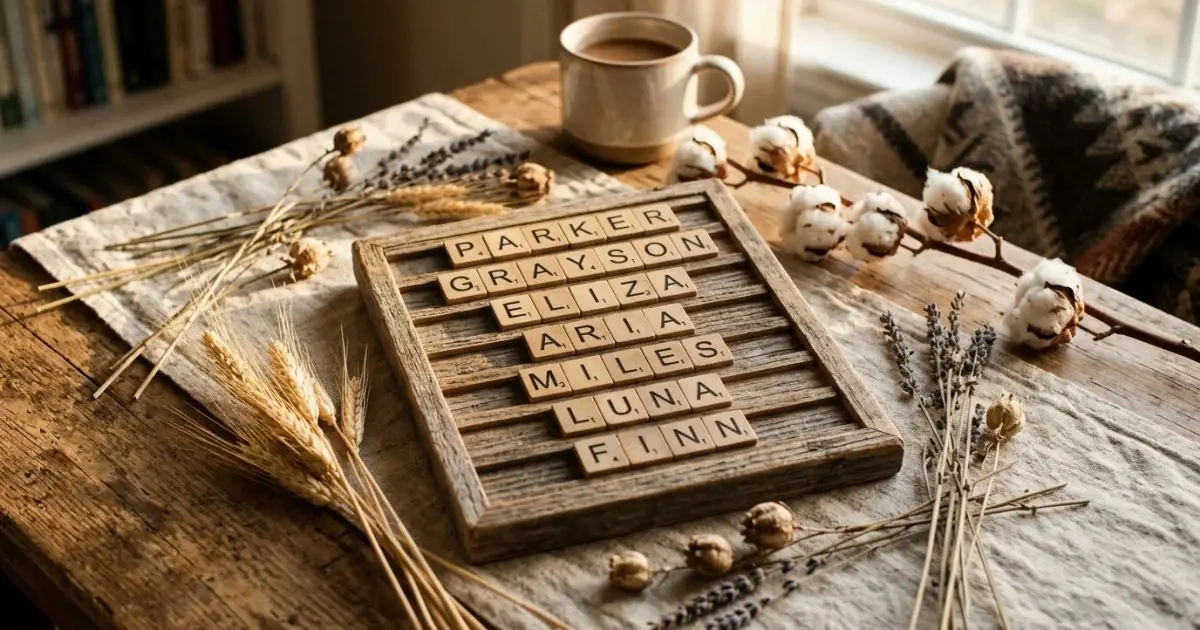
Popularity Changes the Risk Profile of Surname-Style Names
Surname names often rise quickly because they sound clean, modern, and easy to wear. Popularity can make parents nervous, but it is not automatically a flaw.
A familiar surname-style name may be easier to pronounce, spell, and use across age groups. It may be popular for durable reasons: clean sound, balanced rhythm, nickname potential, or compatibility with many surnames.
Carter, Hudson, Grayson, Avery, and Parker may feel comfortably familiar in one region and much more saturated in another.
Use Names by Popularity to understand whether a favorite is mainstream, rising, rare, or already past its freshest point. Parents uneasy about visibility should compare the emotional tradeoff in When a Popular Name Is Still the Right Choice and Popular vs Rare Baby Names: How to Decide.
Rare surname names need the opposite test. Distinctiveness can feel wonderful when it comes from a family tree, a meaningful place, or a cultural link you understand. Without that context, rarity can look random.
Before choosing a rare surname-style name, check whether people can say it after hearing it once, whether it looks usable as a first name, and whether the story behind it is strong enough to survive repeated explanations. How to Choose Rare Baby Names That Still Work in Daily Life is useful when the name feels special but the daily friction is not yet clear.
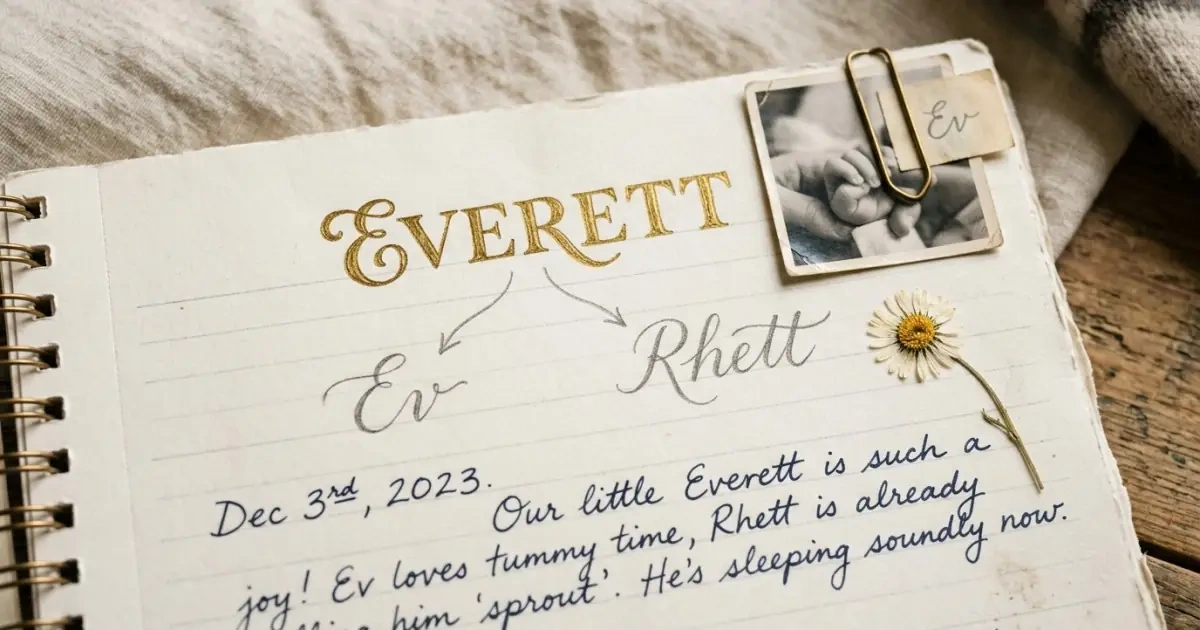
Nicknames and Middle Names Decide How Livable the Style Feels
Surname-style names can be formal by nature. Nicknames and middle names are often the tools that make them usable in ordinary family life.
Some names come with obvious nickname routes:
- Bennett can become Ben or Benny.
- Sullivan opens into Sully or Van.
- Everett offers Ev or Rhett.
- Beckett shortens naturally to Beck.
- Mackenzie can move toward Mack or Kenzie.
Others usually stay in full: Brooks, Hayes, Quinn, and Reid are short enough that nicknames may feel unnecessary.
Do not choose a full surname name only to reach a nickname if the full form feels wrong. The official name still has to carry the child through school records, introductions, applications, and adulthood. How to Check Nickname Potential Before You Choose can help you see which nicknames are likely to happen naturally and which ones require too much steering.
Middle names do quieter work. A tailored first name may need a classic, soft, family, or meaning-led middle. A family surname that feels too heavy as a first can become excellent in the middle slot. The middle name is not just a place to store leftovers; used well, it corrects rhythm and emotional temperature.
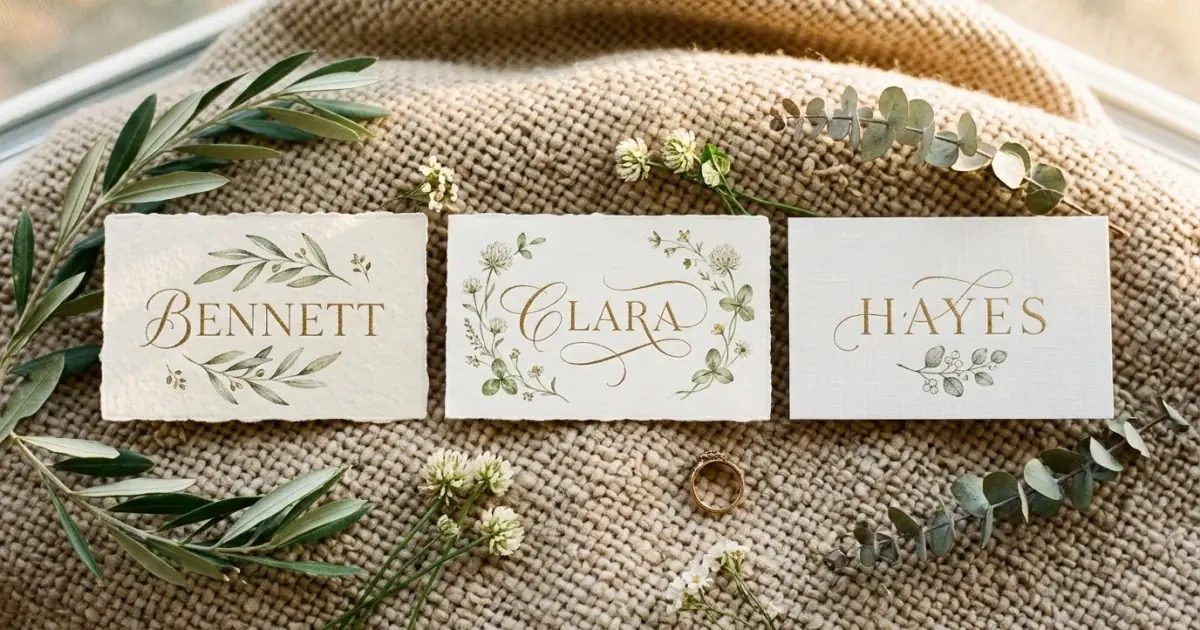
Sibling Sets Should Share Polish, Not a Surname Theme
Sibling names do not all need to be surname-style names. In many families, a full set of last-name-first choices starts to feel too designed.
Shared polish matters more than matching format. Bennett can sit beside a classic, Ellis beside a soft modern name, Avery beside a vintage revival, and Hayes beside something quiet and spare. The names need to sound like they came from the same family taste, not from the same naming template.
Watch for overmatching:
- Repeated surname endings.
- Too many -son or -er names in one set.
- Siblings whose names all sound like law partners.
- One child with a deeply meaningful family surname and another with a surname chosen only for style.
- A family surname that makes the whole set overly formal.
Possible sibling groupings can still help clarify taste. Bennett, Collins, and Hayes share polished surname energy. Everett, Quinn, and Ellis feel warmer. Carter, Avery, and Parker lean more mainstream. Sullivan, Beckett, and Lennox carry greater weight.
For a fuller sibling framework, How to Choose Sibling Names That Fit Without Matching Too Hard helps you build cohesion without turning the family into a theme set.
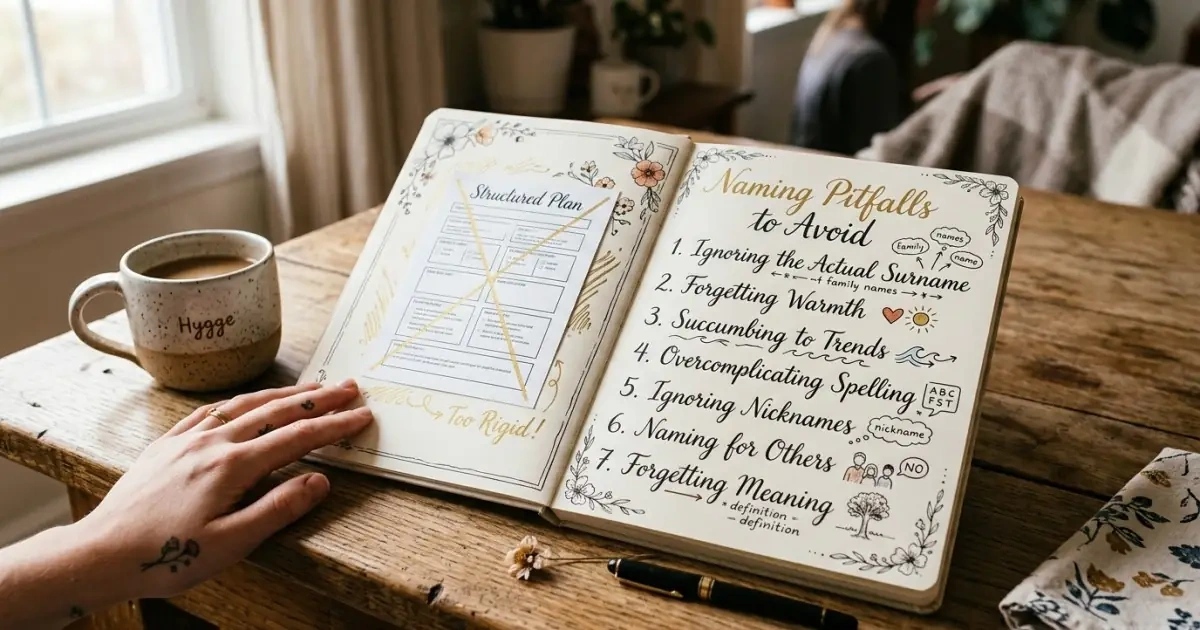
Mistakes That Make Surname-Style Baby Names Feel Trendy, Stiff, or Borrowed
Surname-style names usually weaken when the style outruns the substance. The warning signs are easy to miss because these names often look polished on the page.
Choosing the Name Only Because It Sounds Polished
Surface polish fades fast. Look for a stronger anchor: sound, meaning, family connection, origin, nickname warmth, or full-name flow.
Ignoring the Actual Surname
Two surname-like names can work beautifully together. They can also sound like a firm, academy, label, or office building. Test the full name aloud before you fall too hard for the first name.
Treating Every Family Surname as First-Name Ready
A family surname may be meaningful and still difficult to carry daily. The middle position can honor the story with less weight.
Choosing an Obscure Surname With No Context
A rare surname without family, cultural, place, or meaning context can feel borrowed. The more unusual the name, the more it needs a grounded reason.
Forgetting Warmth
Buttoned-up names need a human point of entry. A nickname, softer middle, affectionate sound, or family story can keep the name from feeling cold.
Following a Trend Ending Too Closely
Endings such as -son, -er, -ley, and -ett can cluster by region and era. Parents worried about trend fatigue should use How to Avoid Choosing a Name That Dates Too Fast before committing.
Overstyling the Sibling Set
A family full of surname names can sound intentional in the wrong way. Let each child’s name keep a distinct identity.
Missing Public or Cultural Associations
Some surnames carry strong political, celebrity, literary, historical, or regional associations. Those associations do not always disqualify the name, but parents should know what comes attached.

Practical Tests Before You Finalize a Surname-Style Name
A surname-style baby name has to leave the list and enter real use. Paper is kind to these names. Daily life is more honest.
Use these tests before finalizing.
The First-Name Reality Test
Put the name into family conversation, not only a formal full-name stack. A first name should sound natural when spoken quickly, affectionately, and repeatedly.
The Full-Surname Test
Say first name + actual surname several ways. Add the middle name. Try the initials. A combination that sounds like a company, school, brand, or law firm needs rebalancing.
The Warmth Test
Imagine bedtime, school pickup, birthday cards, a sibling saying the name, and a grandparent using it naturally. Surname polish should not erase tenderness.
The Adult Introduction Test
Use simple adult lines: “Hi, I’m ___.” “Please contact ___.” “This is ___.” The name should feel mature without becoming stiff.
The Heritage Test
For family surnames, check the emotional contract. The name should honor someone without making the child responsible for carrying an entire family story.
The Popularity Test
Look at whether the name is rising, common, rare, or quietly familiar where you live. A name’s chart position matters less than the kind of visibility it creates.
The Sibling Set Test
Say the sibling names together. Listen for repeated endings, over-styling, uneven meaning, or one name that feels far more formal than the others.
When you are close to a final choice but still uneasy, How to Test a Baby Name Before Finalizing It gives the name a more deliberate last pass.
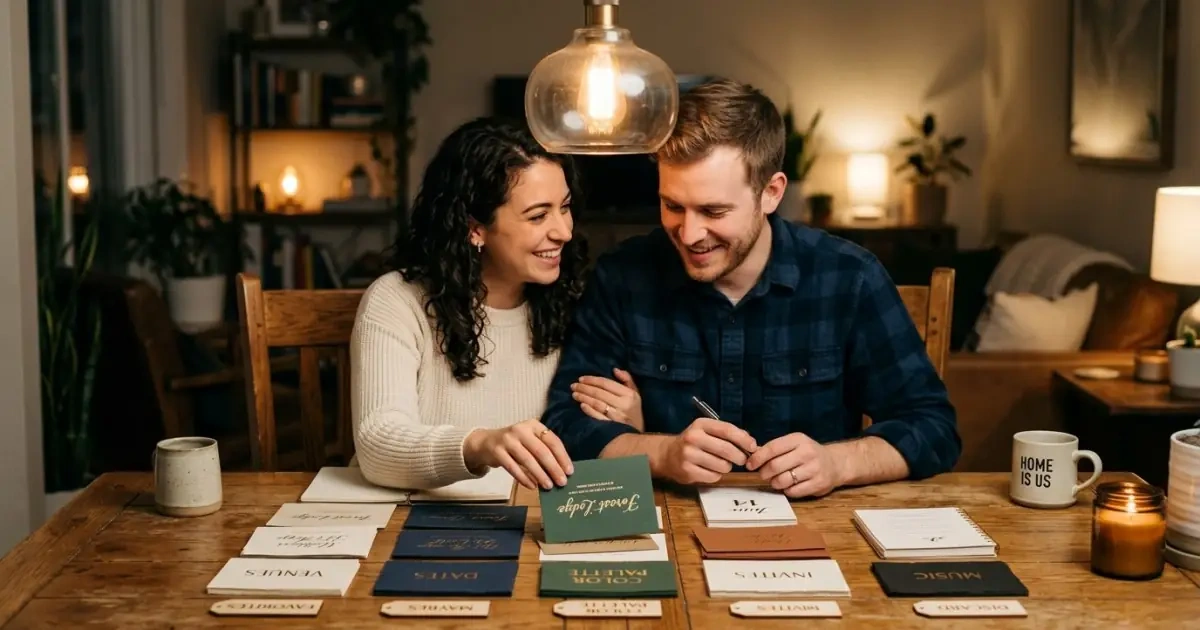
A Shortlist Method That Separates Stylish Surnames From Names You Can Trust
A scattered surname-style list usually becomes clearer once you sort by reason rather than sound.
Start with categories:
- Family surname.
- Occupational surname.
- Patronymic surname.
- Place or landscape surname.
- Polished or preppy surname.
- Gender-flexible surname.
- Rare surname discovery.
Then begin cutting.
Remove names that fail the actual surname test. A stylish first name cannot rescue a full combination that sounds awkward, institutional, or overly stiff.
Cut names that feel random once family and origin context are stripped away. A surname-style name does not need to come from your family, but it should have a reason you can stand behind.
Keep names with at least one warmth anchor: family story, friendly sound, nickname option, familiar first-name use, meaningful middle name, soft sibling fit, or an origin you understand.
A workable shortlist might divide this way:
- Familiar surname style: Carter, Parker, Hudson.
- Polished surname style: Brooks, Hayes, Bennett.
- Soft surname style: Avery, Ellis, Quinn.
- Substantial surname style: Everett, Sullivan, Beckett.
- Heritage surname style: Mackenzie, Kennedy, Reid.
The strongest surname-style name is rarely the one that sounds most impressive in isolation. It is the one that feels least forced when attached to your real child, real surname, and real family story.
When two finalists remain, How to Decide Between Two Baby Names can help you compare them without turning the decision into endless taste debate.

Questions Parents Usually Have About Surname-Style Baby Names
Can I use a surname as a first name if it is not from my family?
Yes, especially when the name is already established as a first name or has another clear reason behind it: sound, meaning, origin, place connection, or full-name fit. More obscure surnames need more context.
Are surname-style names too trendy?
Some are trend-sensitive, especially names with highly current endings or sounds. Others have enough first-name history to feel stable. Popularity data helps, but full-name flow and personal meaning matter just as much.
Do surname-style names work for girls?
They can. The name should feel like a full identity, not merely a way to avoid something feminine. Check warmth, local gender usage, middle-name balance, and family fit.
Do surname-style names work for boys?
Yes, though the risk is different. Many surname names for boys sound polished and adult-ready, so parents need to make sure the name does not become too corporate or emotionally distant.
Should a family surname go in the first or middle spot?
Use it as a first name when it sounds natural, works with the actual surname, and feels fair within the family story. Use the middle if the meaning is strong but daily use would be heavy.

Where Surname-Style Naming Should Lead Your Search Next
Let your exact friction point dictate the final move. When the problem is balancing tailored polish against warmth, the structural frameworks in Names by Style will serve you better than another loose list. Choices driven by family history, maiden names, regional identity, or occupational roots need the context of Names by Origin, especially when the surname carries a meaning you do not want to flatten into style.
Visibility creates a different kind of doubt. A sleek surname name may feel “too trendy” simply because it belongs to a rising sound family, while another may be popular because it has genuine daily ease. Names by Popularity helps separate those concerns before you cut a name for the wrong reason.
When the choice starts to widen beyond surname style, return to the full guide layer through Expert Baby Naming Guides for Choosing the Right Name. A surname-style baby name should feel polished, but never impersonal. The right choice has a reason, a rhythm, and enough warmth to sound like someone you already love – not just a name that looked good on a list.