
Isla Name Meaning: Its Origin, Energy, and Lasting Charm
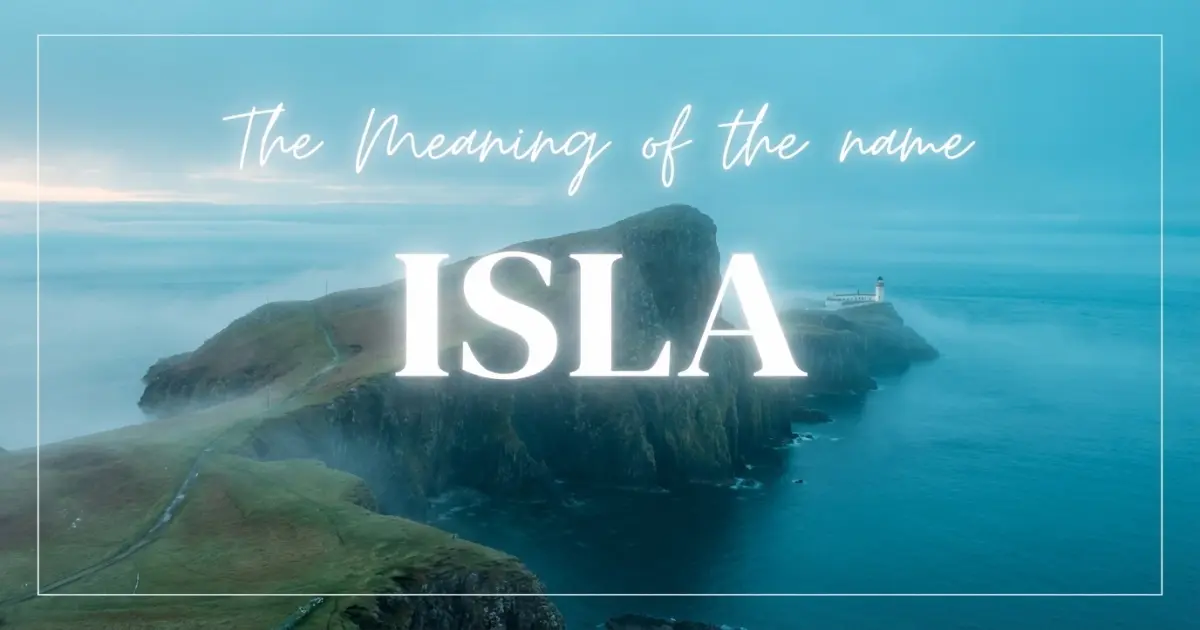
Isla is a name built on a beautiful contradiction. It means island, which suggests separation, shoreline, weather, distance, and a piece of earth held apart by water. Yet in sound, Isla does not feel remote at all. It feels intimate. It is light, open, and immediately warm in the mouth. That tension is the key to the whole name. Isla carries the image of a self-contained place, but it does so in one of the softest and most inviting sound patterns in modern English. The result is a name that feels calm without feeling cold, independent without feeling shut away.
That is why Isla has become so persuasive to modern parents. It offers a kind of quiet boundary in an era when many names either announce themselves too loudly or dissolve into trend. An island is not only isolated; it is defined. It has edges. It knows where it begins and where it ends. There is something deeply appealing in that image when turned into a child’s name. Official Social Security Administration (SSA) data shows Isla ranked No. 35 for girls in the United States in 2024, after reaching No. 33 in 2023. That kind of high, steady use suggests more than momentary fashion. Parents seem to hear in Isla the same paradox they want for a daughter: softness with shape, beauty with self-possession, openness with an unmistakable center.
Isla's U.S. popularity rank over time, 1886–2024
Popularity statistics are based on official data from the Social Security Administration baby name records.
Isla: A Modern Scottish Ascendant with Nature Appeal
Isla reads as a name with one unmistakable center of gravity, with the girls’ side of the chart carrying nearly all of its recent momentum and public visibility. Its rapid rise in the modern era suggests a strong fit with the current taste for vowel-heavy, two-syllable names that feel “beautiful and fresh” without becoming difficult to use .
The secondary track for boys remains extremely light and scattered, suggesting that the name’s primary lane is reinforced by its distinct Scottish identity and evocative “island” meaning. This provides a texture of “distinctive appeal” that helps it stand out while still following a broader style trend.
Isla sounds airy, but its facts are more grounded than they first appear
| Key Facts | Information | Quick Insight |
|---|---|---|
| Name | Isla | The form is short and elegant, but the image underneath it is geographic and substantial rather than ornamental. |
| Primary gender usage | Female | Modern usage reads strongly feminine, though the name’s deeper power comes from place, shape, and atmosphere rather than prettiness alone. |
| Origin | Scottish | Its Scottish grounding gives the name a real landscape behind it, not just a fashionable sound. |
| Meaning | Island | This is one of the most evocative meanings in current use, suggesting self-containment, beauty, and a natural edge against the world. |
| Pronunciation | EYE-luh | The soft two-syllable form makes the name feel more intimate than many place-based names. |
| IPA | /ˈaɪlə/ | The long opening vowel gives Isla brightness, while the relaxed ending keeps it from sounding sharp or brittle. |
| Syllable count | 2 | Two syllables make Isla easy to say and highly portable, one reason it feels both polished and everyday. |
| U.S. girls’ rank (2024) | No. 35 | Official data places Isla in the upper tier of current girls’ names, but not yet in the most overworked zone. |
| Recent popularity pattern | Peak US girls’ rank of No. 33 in 2023 | The name is not fading so much as settling, which often helps a once-rising name feel more enduring. |
| Long-view presence | 52,217 recorded US female uses since 1886 | Isla may feel contemporary, but official records show it has a longer runway than many people assume. |
Isla is what happens when geography becomes temperament
Some names are built on virtues, some on flowers, some on saints, some on family inheritance. Isla belongs to a more atmospheric category. It comes from place, and that matters. Place names often bring with them a set of emotional assumptions before anyone even starts defining them. A mountain name suggests height. A river name suggests movement. An island name suggests contour, solitude, and a life shaped by surrounding forces. In Isla, those qualities become remarkably personal. To explore the wider naming world around Isla, visit browse Scottish baby names.
An island is not only land apart from land. It is land made legible by water. Its boundaries are visible. Its identity is inseparable from its edges. That image gives Isla a subtle emotional architecture that many modern parents seem to find deeply attractive. The name suggests someone with a clear interior life, someone not swallowed by the crowd, someone capable of standing apart without becoming inaccessible. Unlike names that imply dominance or spectacle, Isla’s strength is quieter. It lies in definition, not display.
That helps explain why the meaning does not feel merely scenic. “Island” could have remained postcard language, all coastline and sentiment. But Isla usually lands as something more grounded. It evokes self-possession. It implies a world of one’s own. In social terms, that can read as calm confidence: a girl who does not have to announce herself loudly because her presence already feels distinct.
There is also something psychologically modern in that image. Parents today often want names that feel gentle but not vague, distinctive but not eccentric, feminine but not fragile. Isla fits that brief with unusual precision. The image of an island offers separation without loneliness, beauty without excess ornament, and independence without aggression. Few meanings achieve that balance so cleanly.
How Isla came in from Islay and kept the landscape attached
Isla’s Scottish identity is central to understanding why the name feels so real. Modern naming references frequently connect it to Islay, the island off the west coast of Scotland, and that link gives the name more than a generic nature gloss. It gives it a specific coastline, a weather system, a map. Some references simplify the meaning to “island,” while others point more directly to “from Islay.” In practice, those two frames work together. Isla is both a name of islandness and a name with a Scottish island behind it.
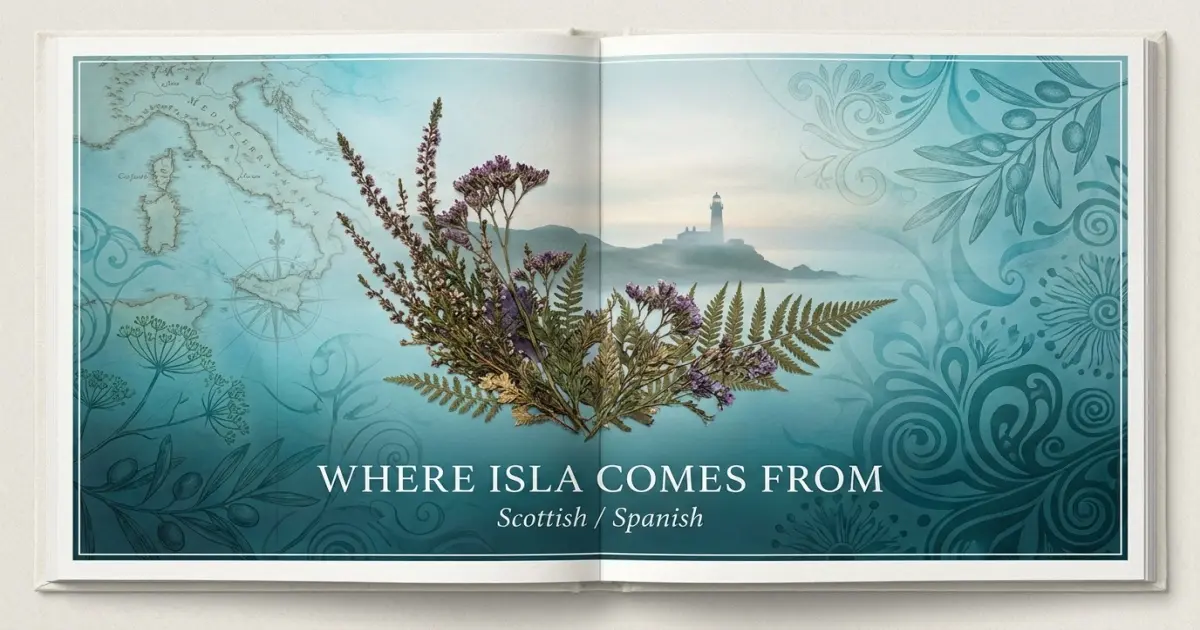
Why the Islay connection matters
Place-rooted names often gain authority from specificity. A vague nature image can be pretty, but a real place gives a name texture. Islay is not an invented fantasy shore. It is an actual island in the Hebrides, with all the atmosphere that implies: Atlantic weather, distance, ruggedness, Scottish identity, and a landscape old enough to feel inherited. Even when parents are not consciously imagining that geography, it contributes to the name’s seriousness. Isla may sound light, but it comes with stone and salt behind it.
This also helps separate Isla from other modern two-syllable girls’ names that rise mainly on sound. Isla certainly benefits from sound, but it is not sound alone. It has topography. That gives it a kind of rootedness that many short fashionable names never achieve.
Why Isla feels newer than it really is
Many people hear Isla as a recent arrival, partly because its popularity surge is comparatively modern and partly because its visual form feels sleek. But official records show the name has been present in the United States since the nineteenth century, even if in much smaller numbers. That longer runway matters. It means Isla is not merely a novelty of recent taste. It is an older name that became newly audible.
One naming guide even describes it as a form first coined in twentieth-century Scotland from Islay, which captures part of the modern story: the name as used today feels relatively fresh in its present form, even though the landscape behind it is much older. That tension between old place and modern style is part of its appeal. Isla feels contemporary, but not manufactured.
Why Isla sounds lighter than most place names
One of the most striking things about Isla is how little weight it seems to carry, despite being a place-based name with a strong geographic core. That effect is largely phonetic. Say it aloud: EYE-luh. The name opens on a long, bright vowel and then relaxes into a soft ending. Nothing in it is crowded or overworked. The sound pattern is simple, but very carefully balanced.
The opening of Isla gives it clarity
The first syllable, EYE, is why the name feels so visible. It is one of the clearest, most open openings available in English. It catches light immediately. That does not make the name loud, but it does make it memorable. Even in a crowded classroom or fast conversation, the beginning of Isla tends to register cleanly.
That clarity matters because place names can sometimes feel heavy or overly scenic. Isla avoids that problem through brightness. It begins not with a cluster or a dark vowel, but with openness. This helps turn an image of land surrounded by water into something emotionally breathable.
The ending keeps Isla intimate
The second syllable, -luh, does equally important work. It softens the name, humanizes it, and keeps it from sounding stark. Without that ending, the opening could feel too exposed or too sharp. Together, the two syllables create a neat emotional arc: brightness first, gentleness second. That is why Isla can sound refined and affectionate at once.
This also helps explain why the meaning does not become lonely. If the same image were carried by a harsher sound, “island” might suggest isolation. In Isla, the phonetics soften the image into something more like peaceful separateness or chosen stillness.
Isla in modern naming culture: visible, but not yet worn thin
Official SSA data tells an important story about where Isla now sits. At No. 35 for girls in the United States in 2024, after a recent peak of No. 33 in 2023, the name is clearly mainstream. Parents choosing Isla are not making an obscure or highly niche decision. Yet the name does not feel exhausted in the way some chart-dominating choices can. That difference matters. A name can be popular and still retain atmosphere if it has enough shape underneath the trend.
Isla’s current success is also part of a wider naming movement. Modern parents have shown a strong appetite for short, vowel-bright girls’ names with natural or geographic associations. Isla sits near names like Ava, Mila, Ivy, Ella, and Iona in broad stylistic territory, but it retains a different feel from each of them. Ava is more glamorous and minimal. Mila is softer and more cosmopolitan. Ivy is greener and sharper. Iona is more overtly sacred and place-specific. Isla, by contrast, feels coastal and quiet.
This is where its meaning helps again. The name does not depend only on phonetic prettiness. It carries a scene. That scene helps protect the name from becoming flat even at higher popularity levels. A child named Isla does not feel named after a sound alone. She feels named after an image with weather in it.
The long-view numbers strengthen that impression. More than 52,000 recorded female uses in American records since 1886 show that Isla is not as sudden as it may seem. What changed is not the existence of the name, but the cultural ear for it. It arrived at exactly the right moment for parents who wanted softness, clarity, and a natural image without floral excess. If you want a wider view beyond Isla, browse baby names for girls.
If Isla is already on your shortlist, the next choices become more revealing
Middle names for Isla often decide whether the full name feels more windswept, more classic, or more polished
Because Isla is so short and airy, the middle name becomes a powerful balancing tool. A sharper middle can add structure, while a longer one can deepen the lyrical effect and widen the full-name rhythm. If you want the full pairing logic behind that contrast, see middle names for Isla.
Nicknames for Isla tend to reveal whether a family wants to preserve the name’s clarity or soften it further
Isla does not need much shortening, but affectionate forms still emerge. Those options often show whether the family loves the name for its brightness, its intimacy, or its quiet elegance. To see how those different moods shorten in real life, explore nicknames for Isla.
Isla’s pronunciation explains why the name feels easier and warmer than its spelling first suggests
The silent s gives Isla one of its most interesting modern traits: visual distinctiveness paired with an unexpectedly smooth spoken form. That gap between eye and ear is part of the name’s charm. If you want the full sound pattern behind that rhythm, read how to pronounce Isla.
Why Isla still feels like a horizon
Isla endures because it turns a landscape into a temperament. It offers the image of an island without translating that image into distance or chill. Instead, it becomes calm, edge, self-definition, and a kind of luminous privacy. The Scottish grounding gives it authenticity. The sound gives it ease. The popularity gives it familiarity. None of those qualities cancel the others out. They strengthen one another.
That is why Isla can feel both modern and ancient, delicate and self-contained, fashionable and quietly rooted. It is one of the few contemporary favorites whose meaning genuinely enriches the atmosphere of the name. An island is not only a beautiful place. It is a place with contour, weather, and a life of its own. For parents who want a girls’ name that sounds gentle but carries real shape beneath the softness, Isla remains one of the most persuasive choices in the language. Isla does not drift. Isla holds its ground.
Name History FAQ for Isla
Does Isla’s meaning make the name feel too remote or solitary?
Usually not. The image of an island tends to read as self-contained and peaceful rather than lonely. The softness of Isla’s sound also keeps the meaning from feeling cold or distant.
Is Isla too popular to feel distinctive now?
Official data shows Isla is very visible, but it still retains strong atmosphere because the name is tied to a vivid image and a specific Scottish landscape. It remains recognizable without feeling empty.
How is Isla different from names like Ava, Ivy, or Iona?
Isla tends to feel more coastal and self-contained. Ava leans more glamorous, Ivy feels greener and sharper, and Iona can sound more explicitly place-rooted or sacred. Isla occupies a quieter, mistier middle ground.
Does Isla age well from childhood into adulthood?
Yes. Its two-syllable clarity makes it easy for childhood, while its strong image and Scottish grounding give it enough maturity to remain convincing in adult life.