
How to Choose Royal and Regal Baby Names With Balance

Royal baby names have a particular kind of pull.
They can sound historic without feeling dusty, elegant without being invented, and strong without trying too hard. Arthur can feel legendary and literary while still friendly on a child. Elizabeth carries queenly weight, yet its nicknames make it flexible. Louis feels stylish and royal, while Victoria brings obvious power and formality.
That appeal is real.
So is the risk.
A royal name can feel distinguished, or it can feel like a costume. It can sound polished, or it can turn stiff. It can carry history, or it can make a child feel boxed into grandeur before they have had the chance to become themselves.
That is why choosing a royal baby name is not simply about finding something elegant. It is about balance.
The best regal baby names feel grounded, wearable, and human. They have dignity without sounding theatrical. They have history without feeling trapped in the past. They feel special, but not so formal that no one can imagine calling them across a playground, writing them on a lunchbox, or hearing them in an ordinary family kitchen.
The Names by Theme hub is a useful starting point when royal style overlaps with nobility, strength, leadership, history, honor, or symbolism. For the broader editorial path through baby-name decisions, Expert Baby Naming Guides for Choosing the Right Name can help you move from admiration toward a name your family can actually use.
A regal name should not need a crown to work.
A Regal Baby Name Should Feel Distinguished, Not Decorative
A royal name should not feel like an accessory.
Many parents are drawn to regal names because they suggest dignity, inheritance, refinement, strength, and timelessness. These names often feel as if they have already lived many lives. They appear in history books, family trees, literature, royal houses, formal records, and old portraits. They rarely feel flimsy.
That is part of their appeal.
But “royal” does not simply mean “fancy.” A name can be long, ornate, or dramatic without feeling truly regal. A genuinely regal name usually has some combination of age, structure, meaning, usage history, sound confidence, and daily range.
Arthur has legend, strength, and history, yet it still feels usable on a child. Alice feels royal and literary without losing simplicity. Beatrice carries vintage polish and royal-adjacent grace without sounding as formal as Elizabeth or Victoria. Henry has royal history, but it also feels warm, familiar, and easy to say.
A decorative royal name, by contrast, may rely too heavily on image.
That can happen when parents choose a name mainly because it sounds like a palace, title, fantasy character, luxury brand, or royal announcement. Reign, Royal, Duke, and similar choices can be bold and memorable, but they ask different questions from Arthur, Alice, Eleanor, or Catherine.
Use the simplest test first:
Does the name still feel like a person when you remove the fantasy?
When the answer is yes, the name may have lasting strength. When the answer is no, the image may be doing more work than the name. For parents drawn to powerful symbolism, How to Balance Meaning, Sound, and Style in a Baby Name keeps the choice grounded before the royal mood takes over.

Royal Names Gain Power From History, Sound, Meaning, and Use
Regal names do not all come from the same source.
Some are royal because monarchs used them. Some feel noble because of their meanings. Some sound elevated because of structure. Others become regal through literature, saints, rulers, aristocratic families, or long, steady use.
Understanding why a name feels royal helps you choose more carefully.
| Source of Regal Feeling | What It Adds | Examples |
| Royal history | Cultural memory, tradition, public recognition | George, Henry, Edward, Eleanor, Matilda, Victoria, Charles |
| Formal sound | Presence, polish, ceremony | Alexandra, Isadora, Leopold, Frederick, Anastasia |
| Noble meaning | Dignity without direct crown imagery | Adelaide, Albert, Aubrey, Rex, Regina |
| Long usage | Endurance, name-first credibility | William, Charlotte, Margot, Alice, Beatrice |
History gives a name weight because it has already survived changes in fashion. George, Henry, Edward, Eleanor, Matilda, Victoria, and Charles can belong to children and adults, private people and public figures, quiet personalities and commanding ones. That endurance is reassuring.
Sound can create a regal impression before the history is even known. Alexandra, Isadora, Leopold, Frederick, and Anastasia have presence because of their length, rhythm, consonants, and classic endings. Presence is useful only when the name can move comfortably through daily life. Frederick may be beautiful if Freddie feels natural at home. Alexandra becomes more flexible when Alex, Lexi, Sasha, or Xandra are welcome options.
Meaning can add nobility without obvious royal reference. Adelaide, Albert, Aubrey, Rex, and Regina carry noble or kingly associations in different ways. This route can work well when you like royal style but do not want your child’s name too closely tied to a specific monarchy or public figure.
Usage history matters more than fantasy energy. William may not shock anyone, but it has range. Charlotte may be familiar, but its elegance is reinforced by real use. Margot carries polish without needing to sound ceremonial.
Regal names usually age best when they feel like names first and royal images second. For that lasting-quality lens, What Makes a Name Feel Timeless? is a useful companion.
Four Regal Style Routes Create Very Different Names
Before comparing individual names, decide what kind of royal style you actually like.
A parent who loves Henry may not love Maximilian. A parent who loves Beatrice may not love Reign. A parent drawn to Elizabeth may not want Royal. These names all touch the regal category, but they create different lives on paper and aloud.
| Regal Style Route | What It Feels Like | Examples |
| Classic royal | Familiar, established, low-risk, historic | George, Henry, William, Charles, Elizabeth, Mary, Catherine, Victoria |
| Soft regal | Elegant but approachable | Alice, Beatrice, Clara, Helena, Louise, Eleanor |
| Grand aristocratic | Formal, memorable, full-presence | Alexandra, Anastasia, Frederick, Leopold, Maximilian, Theodora, Octavia |
| Modern noble | Bold, statement-like, contemporary | August, Kingston, Reign, Royal, Legend, Duke, Noble |
Classic royal names work well for parents who want something recognizable, enduring, and easy to defend. Their tradeoff is familiarity. A highly recognizable royal name may not satisfy parents who want surprise.
Soft regal names often suit families who like elegance but dislike stiffness. Alice, Beatrice, Clara, Helena, Louise, and Eleanor carry refinement without feeling crown-heavy. When this lane appeals, compare What Makes a Name Feel Elegant? with How to Choose Soft and Gentle Baby Names That Still Carry Well.
Grand aristocratic names are often beautiful in full, but they need daily forms that do not feel forced. Alexandra Rose feels softened. Frederick Leo has warmth. Theodora Jane is easier to carry than Theodora Alexandrina. For this problem, How to Choose Grand Classic Baby Names Without Feeling Overformal gives the balance more structure.
Modern noble names are not trying to be quiet classics. Their appeal is impact. August can feel noble without being title-like. Kingston has surname and place-name energy. Reign and Royal announce the theme directly. Legend and Noble carry expectation in different ways. When this category attracts you, test it with When an Unusual Name Is Worth It and How to Choose Strong Baby Names Without Sounding Heavy-Handed.
Decide Whether You Want Royal History, Regal Feeling, or Title Energy
A name can be royal in different ways.
Some names have direct royal history. Some only feel regal. Some are titles or status words. These groups need different kinds of testing.
| Royal Path | Advantage | Main Risk |
| Royal history | Established, credible, familiar | Association with specific public figures |
| Regal feeling | Elegant and flexible | Less obvious if you want clear royal reference |
| Title energy | Bold and memorable | Can feel performative or pressure-heavy |
Names with royal history feel established. George, Charlotte, Louis, Arthur, Elizabeth, Diana, and Henry do not have to work hard to sound traditional. The risk is association. Some people may immediately think of a monarch, princess, royal child, or media story. That may not bother you, but it should not surprise you.
Names with a regal feeling are more flexible. Adelaide, Leonora, Evangeline, Felix, Aurelia, and Cassian may not be the most obvious royal choices, but they carry polish, nobility, or elevated style. This can be the smarter route when you want distinction without direct comparison to famous royals.
Title names need the most caution. King, Queen, Duke, Prince, Princess, Royal, Reign, Majesty, Baron, Earl, and similar choices do not merely suggest status. They name it.
Royal history usually ages more easily than title energy. Regal feeling usually gives more flexibility than a direct title. Title names are not automatically wrong, but they require sharper testing.
The Names by Style hub is useful when your attraction is more about elegance than monarchy. The Names by Popularity hub matters when a classic royal name feels timeless but may be more visible than you expected.

Popularity Can Change How a Royal Name Feels
Many royal names feel timeless, but timeless names can still rise and fall.
Royal media can change how a name feels, too. A royal birth, period drama, celebrity use, or revival trend may make a name feel newly visible even when it has centuries of history.
That is not automatically a problem.
The problem is choosing a name because it feels rare, then discovering later that everyone else heard the same charm at the same time.
Before choosing a royal or regal name, check:
- Current popularity in your country or region.
- Whether the name is rising or falling.
- Whether it is familiar in your local community.
- Whether media attention has made it feel newly visible.
- Whether you would still love it if another child nearby shared it.
Charlotte is elegant, royal, and highly familiar. That may feel reassuring to some parents and too popular to others. George is classic and warm, but it may feel more visible where royal naming trends have influence. Louis is stylish and royal, though pronunciation can vary by country and family preference. Arthur feels vintage, literary, and regal, with a refreshed quality that may appeal to parents who want history without choosing William or Henry.
| Popularity Question | Why It Matters |
| Is the name widely used? | Familiarity can be reassuring or frustrating |
| Is it rising quickly? | A “fresh classic” may become common fast |
| Is it tied to a public figure? | Association may affect how others hear it |
| Does it feel common locally? | National data may not match your community |
| Would duplication bother you? | Classroom reality matters more than rankings alone |
Use How to Choose a Baby Name by Popularity when visibility is part of your decision. Popular vs Rare Baby Names: How to Decide can help when your shortlist includes both Charlotte and Octavia, or Henry and Cassian. For trend timing, How to Tell If a Name Feels Too Trendy and How to Spot Rising Baby Names Before They Peak are the stronger checks.
The goal is not to avoid every popular royal name.
It is to avoid being surprised by its visibility.
Title Names Need More Caution Than Historic Royal Names
Title names can be bold, memorable, and modern.
They can also be harder to live with than they first appear.
Duke may feel short and strong. Reign may feel stylish and dramatic. Royal may feel direct and confident. King, Queen, Prince, Princess, Majesty, or Savior can create a status message before the child has said anything at all.
That message may not be what you intend.
A title name can make people hear authority, luxury, performance, parental aspiration, or a public claim about the child’s importance. Some families love that boldness. Others realize during testing that the name feels more like a statement than an identity.
Before choosing a title-style royal name, ask:
- Does this sound like a child’s name or a role?
- Would it feel natural in a classroom?
- Would it age well professionally?
- Does it say more about parental style than the child’s identity?
- Does the surname make it sound like a phrase?
- Would we still love it if the child grows up quiet, private, or understated?
Arthur James feels historic and wearable. King Arthur James immediately becomes a reference and a title statement. Beatrice Claire feels elegant and human. Princess-style naming energy may feel image-driven if copied too directly. August Henry feels noble and warm. Royal Reign Kingston may feel strongly themed, depending on surname and family style.
A good royal name does not have to announce royalty.
Often, the less obvious choice feels more refined.

Warmth Keeps Regal Names From Turning Cold
Royal names can become cold when every part of the name is formal.
That is why warmth matters.
Elizabeth has grandeur, but Lizzie, Libby, Ellie, Beth, and Eliza give it range. Alexander feels classical and strong, while Alex, Xander, and Sasha make it easier to wear. Frederick becomes Freddie. Beatrice becomes Bea. Theodora becomes Thea or Teddy. Victoria may become Tori, Vicky, or Vita, depending on family preference.
Nicknames are not required, but they can make a regal name more livable.
| Formal Name | Warmer Everyday Options |
| Elizabeth | Eliza, Ellie, Beth, Libby, Lizzie |
| Alexandra | Alex, Lexi, Sasha, Xandra |
| Frederick | Freddie, Fred |
| Beatrice | Bea |
| Theodora | Thea, Dora, Teddy |
| Victoria | Tori, Vicky, Vita |
| William | Will, Liam, Bill, Billy |
A nickname-friendly regal name gives the child range. It lets the full name keep dignity while daily use stays human. If nickname fit is central, use How to Check Nickname Potential Before You Choose.
Middle names can also soften formality. Alexandra Rose feels more balanced than Alexandra Victoria Catherine. Frederick Leo is warmer than Frederick Maximilian. Theodora Jane feels more usable than Theodora Alexandrina.
Another strategy reverses the weight: use the regal name in the middle. Leo Frederick, Clara Victoria, Maya Elizabeth, Alice Marguerite, and Henry August let the formal element sit inside the full name without making the everyday name too stiff.
A full name can become overbuilt when every piece is grand. For more help with full-name architecture, see How Middle Names Work When You Are Building a Full Name.

Origin Can Make a Regal Name Feel More Personal
Royal names do not have to come only from British monarchy.
When parents look only at the most familiar English royal names, the shortlist can narrow quickly: George, Henry, William, Charles, Elizabeth, Victoria, Charlotte, Edward. Those are strong names, but they are not the whole regal category.
Origin can make a regal name feel more personal and less generic. Use Names by Origin when heritage, language, or cultural style should shape the name rather than general royal imagery.
| Origin Route | Regal Style It Can Offer | Examples |
| English and British royal classics | Familiar, sturdy, instantly recognizable | George, Henry, William, Edward, Elizabeth, Victoria, Charlotte |
| French elegance | Lighter refinement, courtly polish | Louis, Philippe, Henri, Marguerite, Louise, Amelie |
| Greek and classical grandeur | Empire, philosophy, formal beauty | Alexander, Alexandra, Helena, Irene, Theodora, Constantine |
| Latin and Roman nobility | Stately, ancient, polished | August, Augustus, Aurelia, Octavia, Felix, Valentina, Maximus |
| Germanic strength | Sturdy, noble, traditional | Frederick, Adelaide, Albert, Matilda, Conrad |
| Scandinavian royal feel | Crisp, strong, less expected | Ingrid, Harald, Magnus, Astrid, Frederik |
French-influenced names can feel regal in a lighter, more elegant way. Louis, Philippe, Henri, Marguerite, Louise, and Amelie bring refinement without always sounding heavy. Pronunciation matters, especially with names like Louis. How to Choose French Names Without Over-Stylizing Them can keep this style elegant rather than affected.
Greek and classical names often feel regal because they combine history, philosophy, empire, and formal beauty. Alexander, Alexandra, Helena, Irene, Theodora, and Constantine can feel elevated without defaulting to English royal classics. For that lane, use How to Choose Greek Names With Contemporary Style.
Latin and Roman-inspired names feel polished and strong. August is especially useful because it feels noble but still modern and concise. Octavia and Aurelia are more ornate. Felix feels bright and historic without sounding overly royal. How to Choose Latin Names With Timeless Strength can help if ancient dignity is the appeal.
The broader point is simple: royal style becomes richer when you ask which origin actually fits your family.

A Regal Name Should Match Your Real Family Style
A name can be beautiful and still not sound like your family.
That is not a failure of the name. It is a fit issue.
Some families naturally use formal names. They love full names, inherited middles, family trees, tradition, old books, polished rhythm, and historic sound. Victoria, Frederick, Catherine, or Maximilian may feel completely natural in that setting.
Other families are casual, outdoorsy, modern, playful, minimalist, or nickname-heavy. In those homes, the same names may feel stiff unless they have warmer daily forms.
Try the home test.
Imagine the name in ordinary family sentences:
- “Arthur, can you grab your shoes?”
- “Bea, dinner is ready.”
- “Victoria, your teacher emailed.”
- “Maximilian, where is your backpack?”
- “Alice, come sit with us.”
Some names become easier when you hear them at home. Others begin to sound as though they belong to a different family.
William can fit many family styles because Will, Liam, Bill, and Billy create different levels of formality. Eleanor balances history and warmth through Ellie, Nora, or Nell. Octavia has distinction, but it may feel dramatic in a very casual household. Alice feels royal and ordinary at the same time, which is part of its strength.
A regal name should not make your family feel as though you are acting.
When you cannot tell whether a name genuinely fits or only impresses you, How to Know When a Name Feels Right can separate admiration from real-life comfort.

Noble Names Carry Dignity Without Demanding a Certain Personality
A royal name works best when it carries dignity without pressure.
The difference can be subtle.
A noble name feels steady. A heavy name feels demanding. A noble name gives the child room. A heavy name seems to require elegance, power, refinement, or formality before the child has chosen any of those qualities.
| A Balanced Regal Name Usually Has | A Too-Heavy Regal Name May Have |
| Natural daily sound | Title energy before identity |
| Nickname options or easy speech | No warmth or casual form |
| Clean surname flow | A full name that sounds like an announcement |
| Adult range | A theatrical or character-like effect |
| Room for different personalities | Pressure to seem powerful or refined |
| Affection as well as dignity | Image stronger than the person |
Arthur, Eleanor, Henry, Alice, and Beatrice often pass this test for many families because they have history but do not feel impossible to use.
Compare the differences in full-name energy. Arthur James feels grounded; King Arthur James creates an immediate reference and title issue. Victoria Mae is formal but softened; Victoria Elizabeth Alexandra may feel ceremonial unless your family truly loves that style. Beatrice Claire is elegant and approachable; Beatrice with two highly formal middle names and a long surname may become heavy. August Henry feels noble and warm; Royal Reign Kingston feels much more statement-driven.
Balance does not mean choosing a plain name.
It means giving the name enough humanity to be lived in.
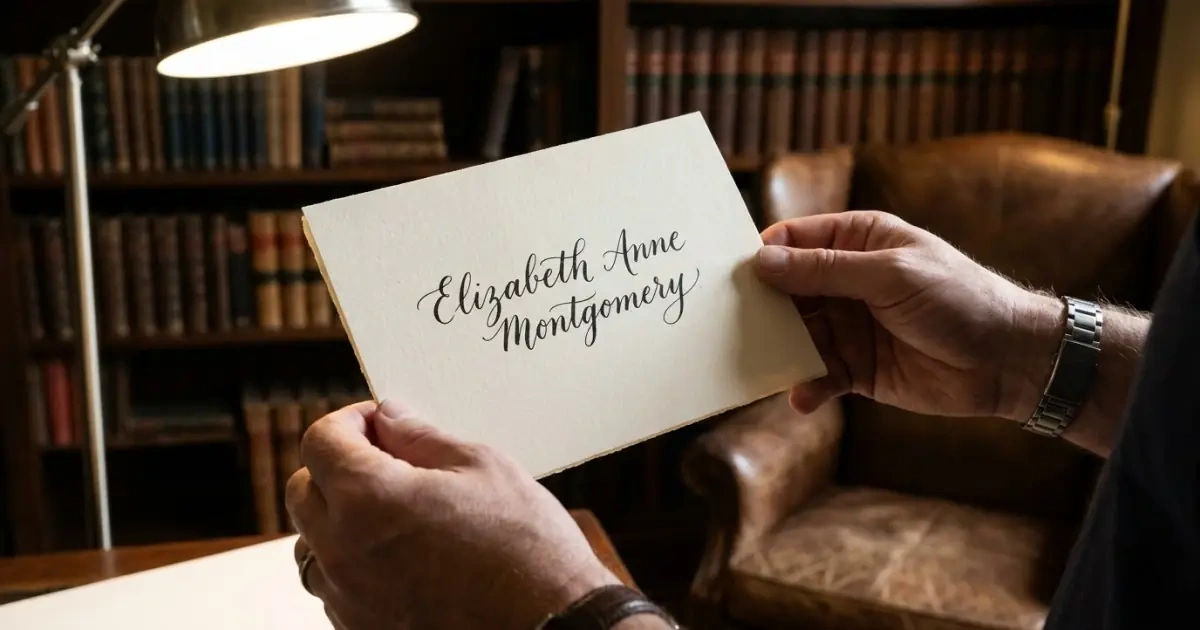
Full-Name Testing Matters More With Regal Names
Regal names often have more syllables, stronger associations, and more formal rhythm.
That makes full-name testing essential.
| Test | What to Do | What It Reveals |
| Full-name test | Say first + middle + surname in a normal voice | Rhythm, length, and heaviness |
| Royal announcement test | Imagine the name in a formal announcement | Whether it sounds dignified or parody-like |
| Playground test | Call the name casually and quickly | Daily speech comfort |
| Future-introduction test | Picture the child as an adult saying the name | Professional and long-term fit |
| Initials test | Write initials with all middle-name versions | Monogram and form issues |
| Sibling test | Say the names together | Shared style and formality level |
Say the full name aloud: first, middle, surname. Then say it again in a normal voice, not a ceremonial one.
Arthur James Bennett has a different effect from Arthur Maximilian Worthington. Eleanor Rose Chen has a different feel from Eleanor Victoria Catherine Montgomery. The surname may make the first name feel more formal, more relaxed, more theatrical, or more grounded.
For full-name structure, use How to Match a First Name With Your Surname and How to Build a First-Middle-Surname Combination That Flows.
The royal announcement test is especially useful for grand names. Alexandra Victoria Catherine may become Alexandra Rose. Frederick Alexander Louis may become Frederick Leo. Theodora Elizabeth Marguerite may become Theodora Mae. Small changes can preserve dignity while reducing performance.
The playground test checks whether the name can be used without ceremony. Frederick may become Freddie before you expect it. Elizabeth may become Ellie at school even if you planned the full form. Maximilian may become Max almost immediately. If a name becomes awkward only when spoken aloud, How to Say a Baby Name Out Loud and Hear Its Real Flow can help you hear the issue more clearly.
The future-introduction test matters for names with image or status energy. “Hi, I’m Victoria” lands differently from “Hi, I’m Duke” or “Hi, I’m Reign.” You are not only naming a baby; you are choosing the name a future adult may use in rooms you cannot imagine yet. For this angle, use How to Choose a Name That Sounds Professional Later in Life.
Royal-style names often invite middles, sometimes more than one. That makes initials important. Write first + surname, first + middle + surname, first + two middles + surname, and monogram order if your family uses it. How to Check Initials, Monograms, and Awkward Combinations gives that practical layer more structure.
Sibling names do not need to match, but they should feel as if they belong in the same family story. For a fuller sibling strategy, use How to Choose Sibling Names That Fit Without Matching Too Hard.

The Regal Element Does Not Always Need to Be the First Name
Not every royal name has to be the everyday name.
Sometimes a regal middle name gives you exactly the amount of history, honor, or polish you want without making daily use too formal.
A regal first name works best when:
- You love saying it every day.
- The surname supports it.
- The nickname options feel good.
- It does not sound too title-like.
- The name feels natural in your home.
- It can grow from childhood into adulthood.
A regal middle name works best when:
- The name honors family, ancestry, royalty, or tradition.
- The first name needs warmth or simplicity.
- The regal name feels too grand for daily use.
- You love the history but not the daily formality.
- One parent likes the name more than the other.
- The full combination feels stronger than the first name alone.
Arthur, Henry, Alice, Eleanor, and Beatrice often work well as first names because they combine history with daily usability. Grander names can also succeed in the first-name spot when your family genuinely enjoys that style.
The middle spot may be the cleaner solution when you want tradition without daily heaviness. Leo Frederick, Clara Victoria, Maya Elizabeth, Alice Marguerite, Henry August, Arthur James, and Beatrice Louise all let the regal element sit inside the full name rather than dominate every introduction.
Middle names are often where tradition can live comfortably. They can carry grandeur without requiring the child to perform grandeur every day.
For this layer, How to Choose a Middle Name and One Middle Name vs Two: How to Decide can help you decide how much formality the full name can hold.

Regal Sibling Sets Need Style Control
Royal and regal names can make sibling naming feel easier at first.
Once you choose one classic name, another classic name seems natural. That can work beautifully. It can also create two problems: imbalance and over-matching.
Imbalance happens when one child has a grand royal name and another has a very casual, modern, playful, or light name. Over-matching happens when every child gets a crown-heavy name and the set starts to feel themed instead of personal.
Arthur and Eleanor feel balanced because both are historic, warm, and regal. Henry and Alice feel soft, classic, and friendly. Victoria and Beatrice are formal but coherent. Charlotte and Daisy can be charming, though Daisy is much more informal. Maximilian and Jack can work if the family likes contrast, but the style gap is clear. Kingston and Reign feel highly coordinated and very theme-forward. Louis and Margot carry elegance without being too obvious.
| Sibling Set Question | Why It Matters |
| Do the names share a formality level? | Prevents one name from feeling heavier |
| Are all names chosen for royal imagery? | Avoids theme-set energy |
| Do the names work aloud together? | Checks rhythm and family sound |
| Does each child have individual identity? | Keeps the set from feeling staged |
| Is the contrast intentional? | Makes mixed styles feel chosen, not accidental |
A sibling set does not need a rigid rule. It needs a shared level of formality, warmth, or style.
If the first child has a grand name like Alexandra, a sibling named Catherine, Theodore, Eleanor, or Frederick may feel more aligned than a sibling named Jaxon, River, or Sunny. That does not make the mixed set wrong. It means the contrast should be chosen intentionally.

Mistakes That Make Royal Baby Names Feel Overdone
Royal baby names usually go wrong when parents chase the image harder than the name.
A beautiful association cannot rescue awkward sound, stiff rhythm, a heavy full name, or a title-like first impression.
| Mistake | Why It Weakens the Name | Better Move |
| Choosing a famous royal name only because it is famous | Association replaces personal fit | Test sound, surname, and home use |
| Stacking too many royal names together | The full name becomes ceremonial | Let one formal element lead |
| Using a title name without adulthood testing | The name may sound like a status claim | Use classroom and professional tests |
| Ignoring popularity spikes | A “rare classic” may be rising fast | Check trend timing |
| Choosing grandeur over family fit | The name may sound like a costume | Use the home test |
| Forgetting nickname reality | Daily forms may appear quickly | Map likely short forms |
| Over-theming siblings | The family set can feel like a concept | Share style, not crowns |
| Assuming old automatically means timeless | Some old names still feel stuck | Test freshness and current sound |
If you like Charlotte, ask whether you love the sound, style, and full-name fit, not only the royal connection. If George appeals, make sure it feels warm in your family, not merely historically important.
One royal element can feel elegant. Three or four can feel ceremonial. Elizabeth Rose may feel balanced; Elizabeth Victoria Alexandra Catherine may feel too loaded. Arthur James feels grounded; Arthur Leopold Frederick is far more formal.
Old does not automatically mean timeless, either. Some vintage royal names feel ready for revival. Others still feel stuck. For that distinction, use How to Choose Vintage Baby Names That Still Feel Fresh and Underused Classic Baby Names: How to Spot Them.
The biggest warning sign is simple: the name only works when you imagine velvet, crowns, castles, or formal portraits. A real child needs a name that can survive breakfast, school, mess, laughter, mistakes, friendship, and adulthood.

A Practical Framework for Choosing a Regal Name With Balance
When your shortlist is full of beautiful names and you cannot decide, stop trying to feel your way through every option.
Use a framework.
Step 1: Choose the regal direction
Decide which version of regal style you want:
- Classic royal names like Henry, Elizabeth, George, and Catherine.
- Soft regal names like Alice, Beatrice, Eleanor, and Clara.
- Grand aristocratic names like Alexandra, Frederick, Theodora, and Maximilian.
- Modern title or status names like Duke, Reign, Royal, and Noble.
- Noble meanings rather than direct royal associations.
This decision will immediately make the shortlist clearer.
Step 2: Decide how obvious the royal connection should be
Charlotte and Victoria are visibly royal. Adelaide and Helena feel regal but less expected. Alice and Henry sit comfortably in the middle.
Direct royal names are easier to recognize. Subtle regal names are often easier to personalize.
Step 3: Check popularity and trend timing
A name can be timeless and popular. A name can be rare but about to rise. A name can feel classic because adults know it, while children are beginning to hear it more often.
Do not guess if popularity matters to you.
Step 4: Test daily warmth
Use the name at home. Say the nickname. Say the full name. Imagine a teacher using it. Picture your child correcting pronunciation. Write it in a text message.
A regal name should not only work on formal paper. It should work in ordinary life.
Step 5: Test the full name
Check surname flow, initials, sibling names, and the rhythm of the whole combination.
A short surname may support a long first name. A long surname may need a simpler first or middle. A highly formal surname may make a regal first name feel even grander.
Step 6: Tell the story simply
Finish this sentence:
“We chose this name because…”
A balanced story might sound like:
- “We chose Arthur because it felt strong, historic, and warm.”
- “We chose Beatrice because it feels elegant but not too formal.”
- “We chose Victoria as a middle name to honor family and history.”
When the story sounds like love, meaning, and fit, the name is probably grounded. When it sounds like image management, keep looking.
For a broader decision process, see How to Build a Baby Name Shortlist, How to Decide Between Two Baby Names, and How to Compare Baby Names Objectively.

Royal and Regal Baby Name Examples by Decision Type
Examples are most useful when they show the decision behind the name.
Use these groups to understand what kind of royal style you prefer, not as a fixed list of “best” choices.
| Parent Goal | Names That May Fit | Why This Direction Works |
| Classic royal names that age well | George, Henry, William, Elizabeth, Catherine, Edward, Charles | Long usage, easy recognition, adult range |
| Regal names with softness | Alice, Beatrice, Eleanor, Louise, Clara, Helena, Margot, Adelaide | Elegance without too much stiffness |
| Grand names with nickname options | Alexandra, Anastasia, Frederick, Theodora, Maximilian, Leopold, Victoria, Arabella | Formal beauty with everyday escape routes |
| Noble meanings rather than royal associations | Albert, Adelaide, Alice, Aubrey, Rex, Regina, Brian, Nolan | Dignity without direct monarchy reference |
| Modern regal energy | August, Kingston, Reign, Royal, Duke, Legend, Noble | Impact, confidence, and statement style |
For parents seeking enduring classics, George offers sturdy tradition, while Henry and William introduce warmth and unusual flexibility. Elizabeth, Catherine, Edward, and Charles keep the royal signal visible, though their best versions usually rely on human scale: a nickname, a simple middle, or a surname that does not turn the full name into ceremony.
When refinement matters more than grandeur, soft regal choices like Alice and Beatrice bring literary simplicity and vintage elegance. Eleanor, Louise, Clara, Helena, Margot, and Adelaide sit in the same polished atmosphere, but they avoid the full crown-heavy presence of Elizabeth or Victoria. That makes them especially useful for families who want dignity without stiffness.
Grand names need range. Alexandra may become Alex, Lexi, Sasha, or Xandra; Anastasia has Ana, Stasia, and Annie; Frederick relaxes into Freddie. Theodora, Maximilian, Leopold, Victoria, and Arabella can all work beautifully when the full name is balanced, but each one carries enough style weight that surname and nickname testing should happen early.
Noble-meaning names offer a quieter path. Albert and Adelaide carry older dignity, Aubrey has polished unisex history, and Alice keeps noble roots inside a simple form. Rex and Regina say kingly or queenly meaning more directly, while Brian and Nolan give parents less obvious ways to choose dignity without obvious crown imagery.
Modern regal names belong to families comfortable with visibility. August feels noble and current without sounding like a title. Kingston uses surname and place-name energy. Reign and Royal announce the theme outright. Duke is short and forceful, Legend carries expectation, and Noble states the value plainly. This lane can be striking, but it needs the most honest adulthood testing.

Questions Parents Ask About Royal and Regal Baby Names
Are royal baby names too formal?
Not necessarily. Names like Alice, Henry, Arthur, Beatrice, and Eleanor can feel royal and friendly at the same time. Formality becomes a problem when the full name has no warmth, no natural nickname options, or no place in your family’s daily life.
Is it okay to use a title name like King or Duke?
It can be, but title names need more testing than historic royal names. Ask whether the name sounds like a personal name, whether it creates pressure, whether it pairs well with your surname, and whether it still feels comfortable in adulthood.
How do we make a grand name feel more wearable?
Use a nickname you genuinely like, pair the grand first name with a simpler middle, or place the regal name in the middle spot. Alexandra Rose, Frederick Leo, and Theodora Jane usually feel easier to wear than combinations where every name is highly formal.
Should a royal name be a middle name?
Yes, when the name carries honor, history, family meaning, or grandeur but feels too formal for daily use. Clara Victoria, Leo Frederick, Maya Elizabeth, and Henry August all keep the regal element without making the first name too heavy.
Will royal baby names become too popular?
Some royal names become more visible after media attention, royal births, period dramas, or wider vintage trends. If popularity matters, check current usage before assuming a classic name is rare. A popular royal name can still be right, but it should not surprise you later.

Where to Go Next When You Like Regal Names
Let your exact friction point dictate your final move. If your shortlist is overflowing with crowns and titles, the architectural frameworks in Names by Theme and Names by Style will help separate true regal substance from mere decorative grandeur. For choices steeped in specific cultural histories, Names by Origin provides a much steadier foundation than general royal imagery.
Finally, before you commit, push your contenders through How to Avoid Baby Name Regret to ensure the elegance of the aesthetic never outranks its daily, spoken fit.
A royal or regal baby name works best when it feels distinguished without becoming theatrical, historic without feeling stuck in the past, and polished without losing everyday warmth. The right name does not need to make your child sound like royalty. It only needs to give them strength, grace, and enough room to become fully themselves.