
How to Choose Strong Baby Names Without Sounding Heavy-Handed
Choosing a strong baby name sounds simple at first.
You want confidence. Backbone. A name with enough substance to avoid feeling flimsy, overly cute, or trapped in one brief season of childhood.
Then the shortlist starts to complicate itself.
Some names feel quietly grounded. Others are bold in a way that begins to feel theatrical. A meaning tied to courage, victory, protection, or leadership may look powerful on paper, then sound heavier than expected with your surname. A name can seem impressive in a database and still feel strangely difficult to imagine on a real child — someone who will introduce themselves, make friends, fill out forms, use nicknames, and eventually decide how much attention they want their name to draw.
That is the real challenge.
You are not choosing a motivational label. You are choosing something a person can carry.
Strength is one naming style among many, and it makes the most sense when compared beside softer, classic, elegant, modern, vintage, surname-style, and minimalist directions. The baby names by style hub gives that wider map, while How to Choose a Baby Name by Style offers the broader style-first process. This guide stays focused on a narrower decision: how to choose a strong name that feels confident, usable, warm, and balanced without sounding as if it is trying too hard.
The right strong name should feel steady enough to trust, flexible enough to grow with, and natural enough for your child to make their own.
Strong Baby Names Are Harder Because Strength Has Many Voices
Many parents begin with one clean sentence: “I want a strong name.”
That sentence hides a lot.
Strength may mean courage to one family and calm resilience to another. Some parents imagine polish, professionalism, or classic authority. Others want something heroic, spiritual, protective, royal, athletic, surname-like, heritage-based, or meaning-led. A parent might be drawn to forceful sound; another hears strength in composure.
That is why names can all feel strong while creating completely different impressions.
Leo feels bright, direct, and energetic. Alexander has scale and history, with nickname routes that make it far more flexible than its full form suggests. Valentina can feel romantic and powerful at the same time. Magnus carries unmistakable grandeur, which may thrill one family and overwhelm another.
| Kind of Strength | What It Often Feels Like |
| Quiet strength | Calm, clear, resilient |
| Classic strength | Established, time-tested, credible |
| Bold strength | High-impact, distinctive, memorable |
| Spiritual strength | Rooted, meaningful, values-led |
| Surname-style strength | Polished, structured, current |
| Elegant strength | Composed, graceful, adult-ready |
| Heritage-based strength | Connected, inherited, culturally grounded |
| Meaning-led strength | Built around courage, victory, protection, or resilience |
The mistake is treating strength as a single sound.
A name does not need to announce power at full volume to be strong. Often, the names that age best feel strong because the confidence is built in, not because it has been overstated.

Strong Is Not the Same as Heavy-Handed
A strong name gives the impression of confidence without forcing one exact identity.
It may feel grounded, clear, memorable, and adult-ready. It can carry meaning, history, and presence while still leaving room for personality.
A heavy-handed name behaves differently. It arrives with pressure already attached. It can sound as if the child is expected to be fierce, heroic, royal, rebellious, extraordinary, or endlessly impressive before anyone knows who they are.
| Balanced Strength | Heavy-Handed Pressure |
| Confident | Demanding |
| Grounded | Theatrical |
| Memorable | Statement-like |
| Warm enough to use daily | Built mainly for impact |
| Flexible across personalities | Locked to one image |
| Strong with the surname | Competes with the surname |
Arthur has legendary associations, yet its familiarity and warmth keep it livable. Victoria carries victory, history, and grandeur, but nicknames can soften the full name into something more personal. Roman feels bold and stylish, though its compact strength needs careful surname testing because the full combination can become very striking.
This is not an argument against bold names.
Bold names can be excellent. The test is whether the boldness feels integrated, or whether it becomes the entire point of the name.
A strong name gives a child room to become themselves. A heavy-handed name can feel as though expectations arrived before the person did.

A Strong Name Should Work Beyond One Personality Type
The strongest baby names do not require a child to become one version of strength.
Before committing, imagine the name on a child who is quiet, funny, artistic, sensitive, bookish, athletic, shy, outgoing, practical, unconventional, ambitious, gentle, or many of those things at different stages. A good strong name should have enough range to hold more than one temperament.
| Strong Name With Range | Narrow Strong Name |
| Leaves room for softness | Requires toughness |
| Works in ordinary sentences | Works mainly in dramatic ones |
| Can be affectionate | Resists warmth |
| Feels personal | Feels like a role |
| Holds up across life stages | Belongs to one image |
This is where many powerful-sounding names weaken. They may feel impressive in a reveal announcement, but less natural when imagined in a classroom, text message, doctor’s office, family kitchen, or adult introduction.
A name that only works in a dramatic moment is not ready for a whole life.

Use a Four-Part Strength Check Before Falling for Impact
Strong names need more than instinct.
A simple framework can show why one name feels grounded and another feels forced. You do not need to turn naming into a spreadsheet, but you do need to test more than the first impression.
Use four checks: meaning, sound, usability, and flexibility.
| Strength Check | What to Ask |
| Meaning | Does the strength feel inspiring rather than demanding? |
| Sound | Does the name sound confident before the meaning is explained? |
| Usability | Can the name function in daily life without constant friction? |
| Flexibility | Can the name grow with different ages, moods, and personalities? |
A name may score high on meaning and low on surname flow. Another may have no dramatic definition at all, yet sound wonderful aloud, fit siblings naturally, and offer flexible nicknames. The second name may be the stronger real-life choice.
The best strong name is rarely the one that sounds most powerful in isolation.
It is the one that remains usable after the excitement of discovery settles.

Strong Meanings Should Bless the Name, Not Carry It Alone
Meaning matters. For many parents, it matters deeply.
A name connected to strength, courage, protection, wisdom, blessing, victory, or light can feel like a gift. It may express something parents hope their child carries into the world. The baby names by theme hub is the natural place to compare names by idea when meaning leads the search.
Meaning becomes risky when it is asked to do all the heavy lifting. A definition might look powerful on paper, yet leave the name feeling entirely awkward beside your surname — or worse, it may represent a virtue you deeply admire while failing to sound like a name you actually want to speak aloud every day.
Ethan shows strength that feels familiar and steady rather than theatrical. Bridget has traditional weight and a sturdy sound, yet it remains human and usable. Audrey feels composed, proving that strength does not need to sound hard-edged. Valentina carries boldness, but its rhythm gives the name warmth.
| Meaning-Led Strength | What to Watch |
| Courage | Does it feel like a blessing or a command? |
| Victory | Does the name sound triumphant or overly grand? |
| Protection | Does the name feel warm enough? |
| Leadership | Does it leave room for gentleness? |
| Strength | Does the sound hold up without explanation? |
A useful test: would you still choose the name if its meaning were ordinary?
When the answer is yes, meaning is adding depth to a name you already love. When the answer is no, the definition may be carrying more weight than the name can bear.
Parents specifically drawn to strength meanings may want How to Choose Names That Mean Strength. For a broader meaning-first process, How to Choose a Baby Name by Meaning can keep the search from becoming a definition hunt.

Sound Creates Strength Before Anyone Explains the Meaning
People react to sound quickly.
That is why a name can feel strong even without an obvious power meaning. Clean consonants, clear rhythm, compact shape, open vowels, and stable stress can all create confidence before the name’s origin or definition enters the conversation.
| Sound Feature | How It Can Create Strength |
| Firm consonants | Adds clarity and structure |
| Short shape | Creates directness |
| Strong opening sound | Gives the name presence |
| Softer ending | Prevents harshness |
| Steady rhythm | Makes the name easier to carry |
| Callability | Helps the name work in real family life |
Maxwell has a strong opening and polished surname-style energy. Leo is short, bright, and easy to say with confidence. Clara feels clear and composed rather than forceful. Nora proves that gentleness can still feel resilient.
This is why strong names should be spoken, not only saved.
A name that looks powerful may sound clunky. A name that appears simple may become unexpectedly confident once paired with the surname.
Try it in three registers:
- affectionate: “Good morning, ___.”
- ordinary: “This is ___.”
- urgent: “___, come here, please.”
The name does not need to sound perfect in every sentence. It does need to feel plausible outside a dramatic announcement.
When rhythm keeps disrupting your shortlist, bring in How to Use Syllable Flow to Choose a Better Name or How to Say a Baby Name Out Loud and Hear Its Real Flow before deciding by written appearance alone.
Softness Often Makes Strong Names More Wearable
A name built entirely from impact can become tiring.
Softness does not weaken strength. It often makes strength easier to live with.
Alexander has scale and history, but Alex, Xander, or Sasha can bring the name into ordinary family use. Matilda feels spirited and substantial, while Tillie, Mattie, or Tilda soften the full form. Gabriel has spiritual and historical weight, but Gabe feels warm and approachable. Victoria is grand in full, with nickname routes that let the child choose a different level of formality.
| Where Softness Can Come From | Why It Matters |
| Vowel endings | Reduces severity |
| Familiar nicknames | Adds daily warmth |
| Gentle rhythm | Makes strength more livable |
| Family use | Humanizes the name |
| Long history | Gives authority without loudness |
| Middle-name balance | Calms a powerful first name |
Audrey and Clara do not need severe sounds to feel strong. Their confidence is quieter: clear, composed, adult-ready. A name with both strength and softness often ages better because it offers more than one way to be worn.
For the neighboring style lane, How to Choose Soft and Gentle Baby Names That Still Carry Well gives warmth and resilience a deeper frame.

Bold Names Work When They Survive Ordinary Sentences
Bold names can be exciting.
They can carry myth, history, adventure, royalty, rarity, or distinctive sound. Some families genuinely want a name with presence. That instinct is valid. The important distinction is whether the boldness feels natural or performative.
| Strong Boldness | Performative Boldness |
| The name still feels like a person | The name feels like a role |
| The surname supports it | The full name becomes theatrical |
| The family has real connection to it | It seems chosen for reaction |
| It works in casual speech | It needs a dramatic setting |
| It allows nicknames or softness | It has no release valve |
Arthur shows how a legendary name can remain usable because it is familiar, historic, and warm. Griffin feels mythic and energetic, while its surname-style shape keeps it accessible. Roman is bold but streamlined. Magnus is grand and concentrated, so it needs especially careful testing with the surname and family style.
Use ordinary phrases before trusting a bold name:
- “Can you add ___ to the class list?”
- “This is my child, ___.”
- “___ has a dentist appointment.”
- “Hi, I’m ___.”
- “Please welcome ___.”
A confident name does not have to be quiet. It does have to be livable.
When your taste leans toward impact, How to Choose Royal and Regal Baby Names With Balance can help separate presence from performance.

Popular Strong Names Can Still Feel Distinctive
Popularity does not cancel strength.
A familiar name can feel steady precisely because people know how to say it, spell it, and recognize it. Familiarity can reduce the burden on the child, especially when the name already carries long-term use across different ages.
Leo may be widely used in many places, but its clean sound and friendly confidence can still feel stylish. Ethan feels steady and familiar rather than flashy. Alexander remains durable because it has history, flexibility, and nickname range.
| Familiar Strong Names Can Offer | Why Parents May Value It |
| Broad recognition | Less explanation |
| Easy pronunciation | Lower daily friction |
| Spelling clarity | Less correction |
| Long-term wearability | More confidence across ages |
| Social ease | The name is already believed |
| Established style | Less experimental pressure |
Use the baby names by popularity hub when visibility starts changing your instincts. Popular vs Rare Baby Names: How to Decide and When a Popular Name Is Still the Right Choice are the right lenses when the name still feels good, but the ranking makes you hesitate.
A popular strong name may be exactly right when ease, recognition, and stability are part of the appeal.
Distinctive does not always mean rare.

Rare Strong Names Need More Practical Proof
Rare strong names can be compelling.
They feel memorable, characterful, and less likely to disappear into a classroom full of similar choices. For some families, rarity is part of the strength.
It also raises the testing standard.
A rare name with simple sounds may be easy to carry. A rare name with complex spelling, intense imagery, or unclear pronunciation may ask too much from the child.
| Rare-Name Check | Why It Matters |
| Pronunciation after one hearing | Shows daily friction |
| Spelling guessability | Reveals correction burden |
| Surname balance | Prevents full-name competition |
| Image control | Shows whether assumptions may attach |
| Nickname access | Gives the child flexibility |
| Paperwork clarity | Tests ordinary use |
Griffin feels distinctive but accessible because many people recognize its shape. Magnus is more concentrated and grand, which can be wonderful in the right family and too statement-like in another. Everett brings surname-style strength with polish, giving it presence without the same level of drama.
Rare does not mean unusable. It means context matters more.
Try correcting the pronunciation politely for the tenth time. Write the name beside the surname. Imagine the child deciding whether the attention feels worth it. When the name still feels meaningful after those checks, rarity may be part of its strength.
For this side of the decision, use How to Choose Rare Baby Names That Still Work in Daily Life and When an Unusual Name Is Worth It.
Surname Fit Decides Whether Strength Feels Balanced
A strong first name does not exist alone.
The surname changes everything.
A name that feels excellent in isolation may become too long, too harsh, too grand, too rhyming, or strangely plain once the last name appears. A simpler first name may become beautiful because the surname gives it rhythm and weight.
| Surname Situation | What to Watch |
| Short surname | Can often carry a longer strong first name |
| Long or hyphenated surname | May need a cleaner first name |
| Hard-consonant surname | Often benefits from vowel softness |
| Dramatic surname | May not need a dramatic first name |
| Very soft surname | May need more structure |
| Rhythmic surname | Can make the full name memorable |
A grand first name may work better with a simple middle. A short strong name may pair beautifully with a longer surname. A bold surname may need calm rather than competition.
Use the full-name test:
- first name + surname
- first name + middle name + surname
- nickname + surname
- initials
- quick spoken version
- formal written version
The first name should not fight the surname. It should make the whole name clearer.
When this layer keeps changing your reaction, How to Match a First Name With Your Surname is the sharper test. Before a favorite moves into the final spot, run How to Check Initials, Monograms, and Awkward Combinations as well.
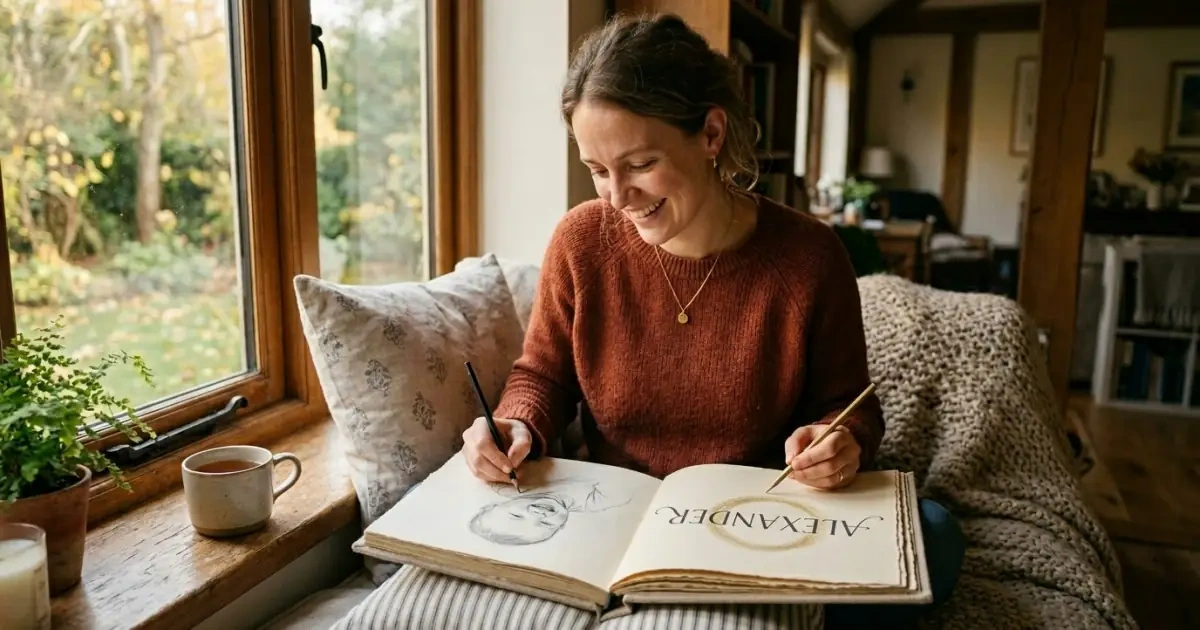
Nicknames Keep Strong Names Human
Nicknames can make a strong name more flexible.
A grand name becomes warmer. A formal name becomes more playful. A bold name becomes easier for a small child to wear. Later, the child may choose the full name, a nickname, initials, or another variation.
This does not mean every strong name needs a nickname. Some short names already feel complete. But obvious nickname routes deserve honest attention.
| Full Name | Possible Everyday Shift |
| Alexander | Alex, Xander, Sasha |
| Matilda | Mattie, Tilly, Tilda |
| Victoria | Tori, Vicky, Vita |
| Gabriel | Gabe |
| Maxwell | Max |
Alexander can feel formal, while Alex is easygoing and Xander sounds more modern. Victoria has grandeur in full and warmth through Tori or Vita. Maxwell carries polish; Max is direct and friendly.
The warning is simple: do not choose a full name you do not like just to reach a nickname.
When you only love Max, Maxwell may not be necessary. When you only love Tilly, Matilda still needs to feel right in official settings. When you love the grand full name but dislike every obvious short form, think carefully; other people may shorten the name even if you do not.
Nicknames should add flexibility, not rescue a name that feels too heavy.
Use How to Check Nickname Potential Before You Choose when the everyday form may decide the name.

Strong Girl Names Do Not Need to Choose Between Power and Grace
Strong girl names do not need to sound harsh to feel capable.
Power can live with beauty, warmth, elegance, softness, history, romance, or simplicity. A girl’s name does not need to borrow masculine sound to feel strong. It also does not need to become delicate in order to be graceful.
Matilda feels spirited and substantial, with nickname options that make the strength approachable. Audrey is elegant and composed, with quiet confidence rather than force. Valentina feels romantic and bold. Bridget carries traditional and cultural weight while staying down-to-earth. Victoria is grand and historic, but its nicknames create flexibility. Clara feels clear, calm, and quietly strong.
| Strong Girl Name Quality | Why It Matters |
| Confidence with warmth | Avoids severity |
| Beauty with structure | Keeps the name from feeling fragile |
| History with freshness | Adds depth without dustiness |
| Meaning with usability | Prevents symbolism from taking over |
| Power with approachability | Leaves room for personality |
The best choices in this lane give a child room to be capable, tender, serious, funny, ambitious, gentle, and fully herself.
Strength should widen the name.
Not narrow it.

Strong Boy Names Do Not Need Aggression to Feel Confident
Boy names often carry pressure.
Parents may feel pulled toward names that sound capable, adult-ready, and strong. That can be a good instinct. Strength, however, does not require aggression.
A strong boy name can be gentle, thoughtful, artistic, spiritual, warm, or classic. A name that leaves room for tenderness may age better than one built only on impact.
Ethan feels steady and familiar. Arthur is noble and classic without becoming cold. Leo is bright and direct, but still friendly. Gabriel has meaningful depth and an approachable nickname. Everett brings surname-style strength with polish. Roman feels bold but clean. Maxwell offers a strong full form and a direct, energetic short form.
| Strong Boy Name Standard | What It Protects |
| Confidence without aggression | The child has emotional range |
| Structure without harshness | The name ages more naturally |
| Adulthood fit | The name does not stay in childhood |
| Warmth | The name can be used affectionately |
| Flexibility | The child can grow into different versions of himself |
A boy name that only feels right when imagined as tough, commanding, or impressive may be too narrow.
Confidence is more flexible than aggression.
For long-term wearability, How to Choose a Name That Sounds Professional Later in Life and How to Choose a Name That Ages Well can test whether strength still works beyond first impression.

Sibling Names Need Shared Weight, Not a Heroic Theme
A strong name also has to sit beside sibling names.
Sibling names do not need to match. Close matching often feels forced. Still, they usually benefit from a shared level of formality, weight, warmth, and style.
A dramatic strong name may overpower very simple sibling names. A minimalist name may feel underpowered beside grand, historic ones. The issue is not whether the names share letters or meanings. It is whether they sound as though they come from the same family.
| Sibling Direction | Example Style Logic |
| Classic strength | Arthur, Clara, Alexander |
| Warm strength | Leo, Nora, Gabriel |
| Grand strength | Victoria, Roman, Matilda |
| Surname-style strength | Everett, Maxwell, Griffin |
Those sets do not rhyme. They do not all mean strength. They simply share a believable level of presence.
Be careful with meaning themes. A sibling set full of names meaning warrior, victory, ruler, or power can start to feel branded rather than lived-in. Subtle harmony usually feels stronger than a visible concept.
For the full sibling-name framework, use How to Choose Sibling Names That Fit Without Matching Too Hard.

Cultural and Historical Strength Needs Real Connection
Some names feel strong because they carry cultural, historical, religious, or family weight.
That kind of strength can be deeply meaningful. A name may connect your child to heritage, honor a relative, reflect a language, carry a faith story, or belong to a tradition that matters in your family. In that case, strength is not only style. It is belonging.
Bridget can carry Irish and saintly associations depending on family context. Gabriel has biblical and cross-cultural familiarity. Arthur has legendary associations that may appeal to families who love classic, story-rich names.
| Cultural Strength Check | Why It Matters |
| Pronunciation | The family should be able to say it confidently |
| Origin | The background should be understood |
| Surname fit | The full name still needs balance |
| Personal connection | The name should feel inherited, not borrowed for effect |
| Local usability | The child will live with the name in a real environment |
| Association awareness | History and meaning should be handled with care |
The baby names by origin hub gives the broader route when heritage becomes a major part of the search. When the emotional pressure of tradition starts to feel complicated, How to Honor Heritage Without Forcing Tradition can keep cultural strength from turning performative.
A culturally meaningful name should feel like inheritance.
Not costume.

Mistakes That Make Strong Names Feel Overdone
Strong names usually become heavy-handed through imbalance.
One part of the name takes over: the meaning, the image, the sound, the rarity, the surname combination, or the statement the name seems to make. The result may still be memorable, but it no longer feels easy to live with.
| Mistake | Why It Weakens the Name | Cleaner Move |
| Choosing the meaning before loving the name | Definition may outrank daily use | Test sound and surname fit |
| Confusing loudness with strength | Impact can become exhausting | Look for steadier confidence |
| Ignoring the surname | The full name may become theatrical | Use the full-name test |
| Forgetting nickname reality | Daily use may change the tone | Test obvious short forms |
| Choosing for the announcement | The name may not survive ordinary life | Use adult and family speech |
| Over-coordinating siblings | The set may feel branded | Aim for shared weight, not theme |
| Letting early reactions dominate | Surprise may distort judgment | Test privately before sharing widely |
The strongest choice is rarely the name that impresses everyone immediately.
It is the name that still feels good after honest testing.

Real-Life Tests for Strong Names Before Finalizing
A name can pass the emotional test and still need practical proof.
Before finalizing a strong name, move it into real settings. The goal is not to drain the feeling out of the choice. The goal is to protect it.
| Test | What to Do | What It Reveals |
| Full-name strength test | Write first, middle, surname, nickname, and initials | Balance and friction |
| Future introduction test | Say “Hi, I’m ___” and “This is my child, ___” | Adult and social usability |
| Playground-to-boardroom test | Imagine baby, teenager, adult, formal document, family nickname | Age range |
| Nickname reality test | List every obvious nickname | Daily tone |
| Sibling table test | Write all sibling names together | Style harmony |
| Two-week fridge test | Keep the name visible and notice your reaction | Durability after repetition |
Some names grow warmer. Some become tiring. Some feel natural only after the intensity of the search fades.
A strong name should survive ordinary repetition. Fireworks are optional. Steady confidence is not.
For a final testing process, use How to Test a Baby Name Before Finalizing It. When the choice comes down to two serious contenders, How to Decide Between Two Baby Names gives that final comparison a cleaner shape.

A Shortlist Method for Sorting Different Kinds of Strength
When several strong names compete, sort them by intensity instead of comparing them randomly.
This makes the decision less chaotic. You may discover that you do not want “strong” in general. You want one particular kind of strength.
| Strength Lane | What It Feels Like | Example Names |
| Quiet strength | Calm, clear, resilient | Clara, Nora, Ethan, Gabriel |
| Classic strength | Established, substantial, time-tested | Arthur, Alexander, Audrey, Bridget |
| Bold strength | Immediate impact, grandeur, style, rarity | Roman, Magnus, Victoria, Griffin |
Once the lane becomes visible, narrow the list by practical filters.
Remove names that fight the surname. Cut names with unavoidable nicknames you truly dislike. Be honest about names that require more explanation than you want to give. Watch for options that only work in one life stage. Keep the names that still feel good in ordinary sentences.
The right choice may not be the most powerful-sounding option.
It is the one you can imagine loving quietly after the search is over.
When meaning, sound, and style keep pulling in different directions, How to Balance Meaning, Sound, and Style in a Baby Name gives the final comparison more discipline.

Questions Parents Ask About Strong Baby Names
What makes a baby name sound strong?
A strong impression can come from clear consonants, steady rhythm, confident meaning, historical associations, compact shape, surname balance, or simple familiarity. The sound still needs to be tested with your surname and accent.
Can a soft name still be strong?
Yes. Clara, Nora, Gabriel, and Audrey show how softness and strength can work together. Calm, resilient, adult-ready names do not need to sound severe.
Are names that mean strength always a good idea?
They can be, but meaning should not be the only reason for choosing a name. The name still needs sound, surname fit, warmth, and long-term usability.
How do I know when a strong name is too much?
Use ordinary sentences. Test the name with the surname, likely nicknames, and several life stages. A name that feels more like a statement than a person may be too heavy-handed.
Should strong names be rare or familiar?
Either can work. Familiar names are often easier to carry, while rare names can feel distinctive. The stronger choice depends on pronunciation, surname flow, family style, and how much attention you want the name to draw.
Can a strong name work better as a middle name?
Yes. A middle name can carry grandeur, honor, meaning, or boldness without asking the first-name role to carry all of that pressure every day.

Where to Go Next When You Want a Strong Name
Let your exact friction point dictate the final move. When the struggle leans toward endurance rather than sheer impact, the architectural fixes in What Makes a Name Feel Timeless? and How to Choose Grand Classic Baby Names Without Feeling Overformal can prevent dignity from hardening into stiffness. For choices heavily driven by meaning or visibility, specialized hubs like baby names by theme and baby names by popularity provide essential reality checks.
Once your contenders survive, push them through How to Test a Baby Name Before Finalizing It to ensure the promise of strength never outranks daily fit. For the wider editorial path through naming decisions, Expert Baby Naming Guides for Choosing the Right Name is the calmer doorway once a strong-name shortlist starts branching into meaning, origin, popularity, surname fit, nicknames, sibling balance, or final testing.
A strong baby name does not need to dominate the room.
The best ones often feel confident in a quieter way: clear, usable, meaningful, warm, and ready to grow. Choose the name that gives your child strength without trapping them inside one narrow idea of what strength should look like.