
How to Choose Biblical Names With Modern Style

Biblical names rarely arrive empty.
They come with story already attached: families, prophets, kings, mothers, journeys, reversals, mercy, courage, grief, blessing, exile, faith, doubt, and return. Even when parents are not especially religious, a biblical name can feel familiar in a deeper way than a trend name does. It has been spoken before. It has survived generations. It carries roots without needing to be invented.
That power is exactly what makes the choice complicated.
A biblical name may feel grounded in theory and too solemn in daily speech. A name with a beautiful sacred association can sound heavier than the family wants to say every morning. A lighter form may feel warm and current, then suddenly seem too thin beside the original story. Parents often find themselves caught between wanting depth and not wanting their child’s name to feel like a statement every time it is spoken.
The best biblical names with modern style do not erase their scriptural center. They carry enough story, familiarity, and moral weight to feel rooted, while remaining light enough for ordinary life.
This is not a list of the “best biblical names.” It is not a Hebrew-only guide, a sermon about serious names, or a style list using Scripture as decoration. It is a framework for choosing biblical names that feel grounded, current, and genuinely wearable.
Start with baby names by origin when you are still exploring the wider naming landscape. Use How to Choose a Baby Name by Origin if biblical names are one origin lane among several. When the question reaches beyond biblical names into broader sacred naming, How to Choose Spiritual and Sacred Baby Names gives that decision more room. For style, symbolism, and visibility, keep baby names by style, baby names by theme, and baby names by popularity close as you compare.

Biblical Names Appeal Because They Feel Remembered
Biblical names often feel familiar without feeling newly manufactured.
That familiarity can come from faith, family, literature, culture, school lessons, worship, or repeated use across generations. A parent may not know every detail of a biblical figure’s story and still sense that the name has been carried before. That gives the name weight before style even enters the conversation.
| What Biblical Names Often Offer | Why Parents Notice It |
| Story | The name arrives with a narrative field |
| Recognition | Many people already know how to place the name |
| Spiritual depth | The name may connect to faith, tradition, or sacred memory |
| Moral texture | Associations can suggest courage, devotion, wisdom, mercy, or resilience |
| Family continuity | Biblical names often appear across generations |
| Long use | The name can feel older than fashion without sounding invented |
Noah feels familiar to many families because it is both ancient and highly current. Leah has scriptural roots without sounding heavy. Eli is compact and warm, while Miriam carries deeper historical texture.
That range is part of the appeal.
A biblical name can feel faithful, literary, cultural, familial, or simply steady. The decision becomes clearer once parents know which kind of familiarity they actually want.

Modern Biblical Style Comes From Form, Not From Erasing Scripture
A biblical name does not become modern by losing its biblical center.
Modern style usually comes from the form: sound, length, rhythm, nickname behavior, social familiarity, and how naturally the name sits in present-day speech. A name may be ancient in origin but current in use. Another may be equally scriptural but feel more formal because its length, stress pattern, or story association remains highly visible.
| Modern Style Can Come From | How It Changes the Name |
| Short structure | The name feels easier in daily speech |
| Warm sound | Sacred depth feels less severe |
| Familiar public use | The name feels alive rather than preserved |
| Natural nickname path | Formal and casual use can coexist |
| Softer rhythm | The name feels less church-heavy |
| Balanced spelling | The form feels readable and grounded |
Noah, Leah, and Eli show how scriptural names can feel current without losing their roots. Caleb brings biblical familiarity with a strong but approachable sound. Miriam may feel older, yet it can still work beautifully for families who like its sober warmth.
Modern style should not flatten the name into neutrality.
It should make the depth easier to live with.
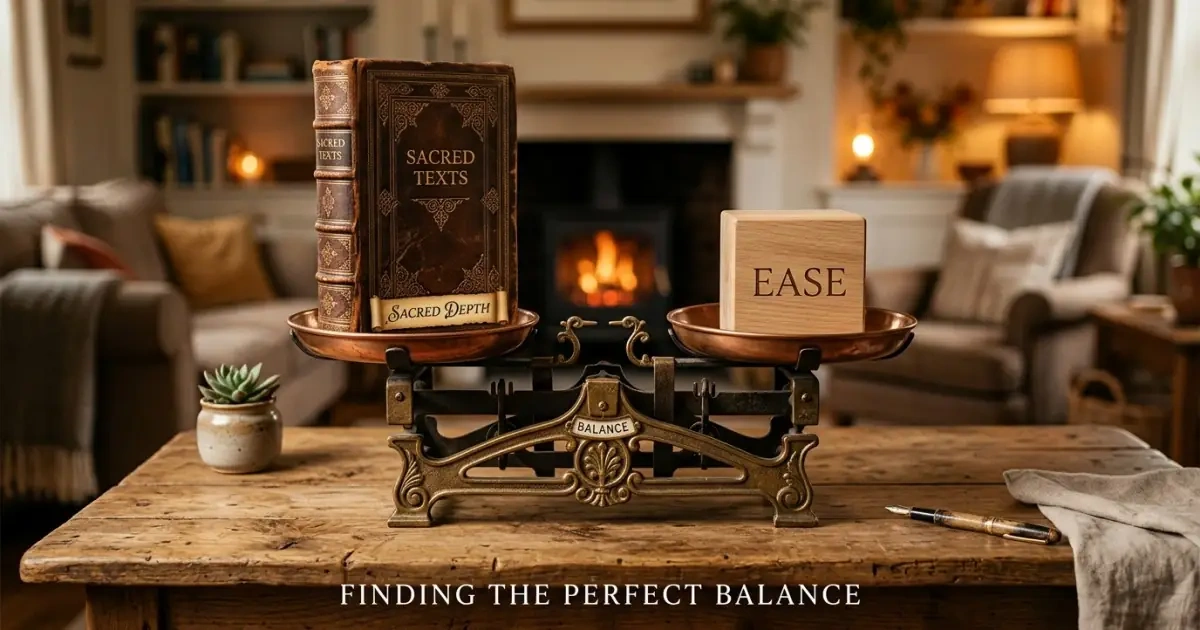
The Core Choice Is Sacred Depth Without Daily Heaviness
Parents drawn to biblical names often want meaning.
They may also want the name to feel natural at the breakfast table, on a school form, in a text message, and in an adult introduction. Sacred familiarity can anchor a name, but too much visible gravity may make it feel formal, old-world, or more like a statement than a person.
| Naming Pull | What It Protects | What It Can Risk |
| Clear scriptural identity | Faith, story, sacred recognition | A name that feels overly solemn |
| Lighter modern form | Warmth, ease, flexibility | Less visible biblical center |
| Familiar biblical classic | Trust and recognition | Overuse or style fatigue |
| Rare biblical form | Distinction and stronger texture | More explanation and weight |
| Bridge form | Usability without full detachment | Possible compromise feeling |
The strongest biblical names usually keep enough depth while reducing unnecessary burden.
Not dilution.
Not heaviness for its own sake.
A biblical name with modern style should feel like a name the child can live in, not a lesson the child has to carry.
When meaning, sound, and style start pulling in different directions, How to Balance Meaning, Sound, and Style in a Baby Name is the right place to sharpen the decision.

Biblical Names Belong to Several Style Lanes
“Biblical name” is not one style.
That phrase can mean compact, prophetic, gentle, apostolic, old-world, literary, familiar, rare, solemn, warm, or quietly timeless. A parent can love Nathan and reject Nehemiah without contradiction. They may admire Jedidiah while knowing it asks for more daily weight than they want.
| Biblical Style Lane | What It Often Feels Like |
| Compact and current | Eli, Noah, Leah-like ease |
| Warm and familiar | Caleb, Nathan-like social comfort |
| Softly timeless | Miriam-like depth |
| Prophetic or weighty | Jeremiah, Nehemiah-like presence |
| Strongly scriptural | Moses, Zechariah-like visibility |
| Bridge-friendly | Names with lighter variants or nicknames |
| Rare and serious | Distinctive, but higher-maintenance |
Jeremiah carries more atmosphere than Nathan. Moses feels immediately scriptural in many environments. Zechariah has a rich sound, but it asks for more comfort with length and biblical visibility than Eli or Leah.
The question is not whether you want a biblical name.
The sharper question is which biblical style lane feels honest in your family’s real life.

Meaning Should Deepen the Name, Not Defend It
Biblical names often come with strong meaning, story, or moral atmosphere.
That can be a gift. A name may suggest courage, faithfulness, mercy, wisdom, devotion, healing, endurance, or divine care. Parents may feel that the name gives the child a meaningful beginning rather than a decorative label.
Meaning becomes risky when it starts defending a name that does not work in daily speech.
A spiritually rich name still has to sound like a real person. It has to fit the surname, move through conversation, accept nicknames, and feel believable across childhood and adulthood. A beautiful story cannot rescue a name the family does not actually enjoy saying.
| Meaning Can Add | Meaning Cannot Replace |
| Spiritual depth | Natural sound |
| Family or faith connection | Surname flow |
| Moral symbolism | Everyday warmth |
| A reason for choosing | Nickname comfort |
| Long-term resonance | The child’s own identity |
| Emotional gravity | Style fit |
Ask a hard question before committing: if the story faded into the background for a moment, would the form still hold?
A yes is powerful.
A no does not make the name wrong, but it tells you the association may be doing more work than the name itself.

Familiarity Can Make a Biblical Name Timeless or Tired
Familiarity is complicated with biblical names.
It can make a name feel trustworthy. It can also make the name feel dated, overused, or tied to a narrower religious style than parents expected. The same name may feel fresh in one family and stale in another because the surrounding context changes everything.
| Familiarity Pattern | What It Can Do |
| Continuously used biblical classic | Feels steady and recognizable |
| Current popular biblical name | Feels modern, but may lose distinction |
| Older church-associated name | May feel reverent or dated |
| Rare biblical name | Feels richer, but heavier |
| Family familiar name | Carries private warmth |
| Cultural familiar name | Feels known beyond religious practice |
Noah often feels modern because it is widely used now. Leah stays light partly because its form is simple and familiar. Miriam may feel serious in one household and beautifully grounded in another. Jeremiah can read as timeless, old-world, literary, or deeply scriptural depending on the family and community.
Use baby names by popularity when familiarity starts changing your instincts. Popularity should reveal the trade-off, not make the choice for you.

Some Biblical Names Feel Modern Because Their Shape Is Already Light
Certain biblical names move easily into modern life because the form is not heavy.
Short names often feel current because they are easy to say and remember. Softer endings can make a scriptural name more approachable. Clear rhythm reduces friction. Familiar cultural use helps the name feel alive rather than preserved.
| Modern-Friendly Feature | Why It Helps |
| Short length | The name feels direct and wearable |
| Clear stress | Daily repetition stays easy |
| Soft sound | Sacred depth feels warmer |
| Familiar use | The name feels socially alive |
| Nickname flexibility | Formal and casual versions can coexist |
| Simple spelling | Less administrative drag |
Eli, Noah, Leah, and Caleb often feel easier in modern family life than Zechariah, Jedidiah, or Nehemiah. The heavier names may be meaningful and beautiful, but their structure asks for more confidence.
That does not make them worse.
It simply changes the amount of weight the child and family will carry.

Bridge Forms Can Keep the Scriptural Center Livable
Bridge forms are one reason biblical names survive across generations.
A bridge may be a nickname, a shorter form, a familiar variant, or a related name that carries the scriptural field without the full formality. It can lower daily weight while preserving enough center.
| Biblical Name Field | What the Bridge Changes |
| Jeremiah / Jeremy-like forms | Full prophetic weight versus lighter social use |
| Nathan / Nate / Nathaniel-like field | Direct warmth versus fuller structure |
| Elijah / Eli / Elias | Different balances of biblical identity and modern ease |
| Miriam / Mira-like softness | Rooted depth versus lighter rhythm |
| Zechariah / Zach-like access | Formal scriptural length versus everyday mobility |
| Jedidiah / Jed-like access | Rare biblical texture versus casual directness |
A bridge form is not automatically weaker.
Sometimes it is the structure that lets the biblical center remain alive without making daily use feel heavy. Eli may stand alone, or it may function as a lighter access point to a longer biblical field. Elias can feel biblical, international, and softer than Elijah in some families.
When the decision becomes more about adaptation than Scripture itself, How to Adapt a Traditional Name for Modern Everyday Use can keep the choice from becoming a false contest between “serious” and “thin.”

Pronunciation Matters Most When Several Forms Are Alive
Many biblical names are familiar enough to avoid major pronunciation problems.
Still, familiarity can hide variation. A fuller biblical form may behave differently from the common short form. A name may shift across accents, languages, or religious communities. The family may love the scriptural version in theory but hear a simplified public version most of the time.
| Pronunciation Question | Why It Matters |
| Does the full form stay stable? | Long biblical names may invite shortening |
| Does the common local version bother you? | Public speech may become the child’s daily reality |
| Can relatives say it naturally? | Family use matters most |
| Does the short form change the tone? | Nicknames may alter the style completely |
| Does the name work across accents? | Scriptural familiarity does not guarantee stability |
| Can the child correct it easily? | A clear correction burden is easier to carry |
The goal is not perfect pronunciation in every mouth.
Listen for whether the name still feels like itself.
When pronunciation becomes a live issue, How to Evaluate Pronunciation Ease, How to Choose Names That Work Across Different Accents, and How to Choose a Name That Works in Two Languages give you a cleaner test than guessing from the written form.

Spelling and Form Can Make a Biblical Name Heavier or More Wearable
Form matters.
A fuller biblical version may preserve the strongest scriptural atmosphere. A common modern form may reduce friction. A variant can shift the name from solemn to warm, from formal to flexible, or from rare to familiar.
| Form Choice | What It Protects | What It May Cost |
| Full biblical form | Strong scriptural presence | More weight and formality |
| Familiar modern form | Ease and social use | Less visible biblical texture |
| Nickname-led form | Warmth and flexibility | The full story may recede |
| Rare traditional form | Distinction and depth | More explanation |
| Bridge variant | Balance | Possible compromise feeling |
The useful question is not whether the name is “biblical enough.” It is which form the family can actually use with confidence.
If spelling, form, or public readability keeps complicating the shortlist, How to Keep a Cultural Spelling Without Creating Constant Friction belongs beside the decision.

Biblical Names Can Feel Modern in More Than One Way
Modern biblical style is not a single mood.
A name can feel calm and grounded. It can feel soft and current. It can feel familiar and socially easy. It can feel strong without sounding preachy. It can carry Scripture clearly while still fitting contemporary speech.
| Modern Biblical Style | What It Feels Like |
| Calm and grounded | Meaningful without drama |
| Soft and current | Scriptural roots with light sound |
| Familiar and easy | Recognizable, low-friction |
| Strong but not preachy | Moral weight without performance |
| Rare but wearable | Distinctive, yet usable |
| Story-rich | More visible scriptural atmosphere |
| Bridge-friendly | Flexible across formal and casual use |
Some families want the biblical layer clearly visible. Others prefer a name that feels quietly rooted rather than overtly religious. The story may matter deeply, but it does not always need to stand at the front of the name every day.
Once that preference is named, the shortlist gets cleaner.

Sacred Association Should Not Outrank the Lived Name
This is one of the most revealing tests in biblical naming.
A name can feel honorable and still not fit your child. Admiring the story is not the same as wanting the daily sound. A parent may love the moral force of a name, the courage of a figure, or the spiritual meaning behind it, while the name itself never quite settles in the family’s voice.
Strip away the association for a moment.
Would you still want to say the name every day? Does it work with your surname? Does it sound believable in your home, not only in your imagination? Does the name become warmer through repetition, or does it feel more rigid?
| Story-Led Attraction | Whole-Name Fit |
| “The story is powerful.” | “We love saying it.” |
| “The meaning is beautiful.” | “The sound fits our family.” |
| “It feels spiritually serious.” | “It still feels warm.” |
| “It honors faith.” | “It leaves room for the child.” |
| “It feels worthy.” | “It feels usable.” |
A child does not carry meaning alone.
A child carries a whole name.

When a Biblical Name Feels Too Heavy or Church-Coded
Do not reject a heavy biblical name immediately.
Name the weight first.
Is the problem length? Old-world tone? Church-coded atmosphere? A sermon-like sound? A story association that feels too large? A surname pairing that makes the whole name feel stiff? Once the heaviness has a shape, the solution becomes clearer.
| What Feels Too Heavy | Possible Move |
| Long form | Try a nickname or bridge form |
| Overtly church-coded tone | Compare softer biblical names |
| Sermon-like atmosphere | Say the name in casual family speech |
| Old-world sound | Test whether it feels better on an adult |
| Heavy surname pairing | Move the full form to the middle |
| Symbolic pressure | Ask whether the child has room inside the name |
A lighter related form may preserve more than expected. The full form might work beautifully as a middle name. Another biblical name may carry the same grounded quality in a warmer shape.
The goal is not to remove the biblical center.
It is to lower the unnecessary weight that keeps the name from sounding natural.

When the Easier Form Feels Too Thin
The opposite problem is just as real.
Parents move toward a lighter or more current form and immediately feel the loss. The name becomes easier, but the fuller rhythm disappears. The scriptural seriousness fades. The connection to a larger story feels weaker than expected.
That reaction matters.
| What Feels Lost | Stronger Response |
| Scriptural center | Return to the full form or a stronger bridge |
| Fuller rhythm | Test related biblical names nearby |
| Story weight | Use the rooted form in the middle |
| Distinction | Avoid flattening only for convenience |
| Family faith connection | Keep the formal name and use a lighter nickname |
| Emotional gravity | Compare names with similar meaning but better daily use |
Modern style should not empty out the spiritual center.
It should make that center more livable.
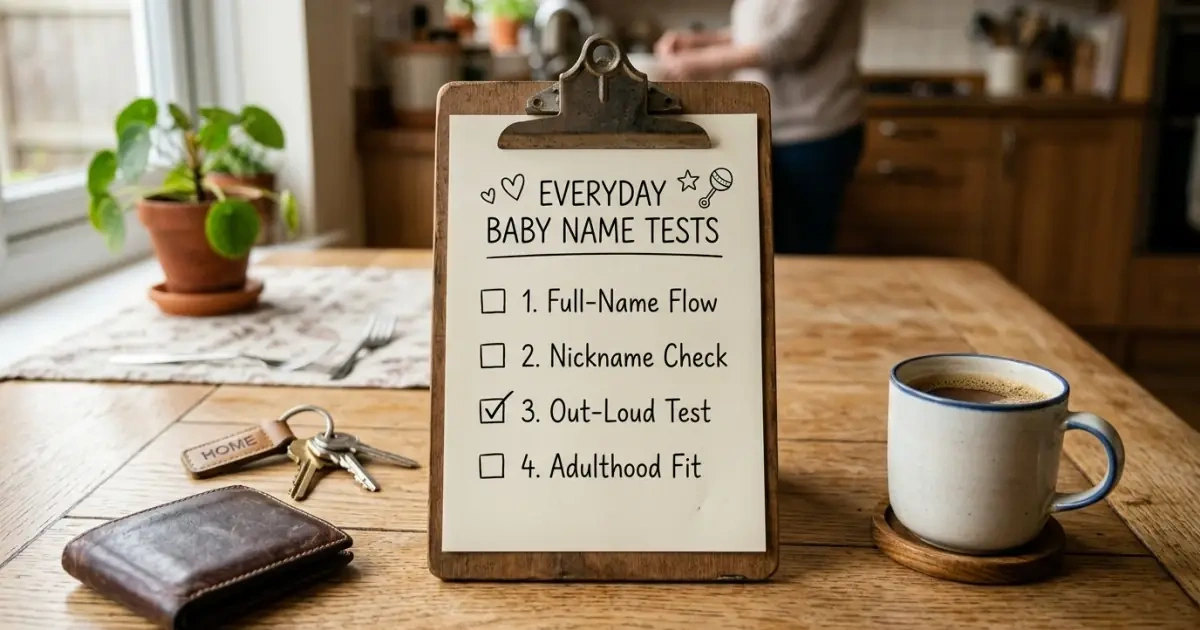
Biblical Names Still Need Everyday Tests
Scriptural depth matters. It is not enough.
A biblical name must still sit well beside the surname, allow nicknames the family can accept, and survive initials, monograms, paperwork, school rosters, and adult introductions. Even a name with profound meaning should feel natural in ordinary rooms, not only convincing in a moment of reflection.
| Everyday Test | What It Reveals |
| Full-name test | Whether the biblical name balances with the surname |
| Nickname test | Whether casual use supports or weakens the center |
| Initials check | Prevents awkward combinations |
| Out-loud test | Whether the name feels human in family speech |
| Paperwork test | Any spelling or formality drag |
| Adulthood test | Long-term range |
| Backstory-free test | Whether the name works without explanation |
This is where meaningful names often change position. A noble name may become rigid once paired with the surname, while a lighter bridge can reveal more warmth than expected. Even a name that feels spiritually rich must still sound believable on a toddler, teenager, colleague, and adult.
For specific friction, use How to Match a First Name With Your Surname, How to Check Nickname Potential Before You Choose, How to Check Initials, Monograms, and Awkward Combinations, or How to Choose a Name That Ages Well.

Mistakes That Weaken Biblical Name Choices
Most mistakes with biblical names come from overvaluing one good feature.
A powerful story can distract parents from an awkward sound, just as sacred familiarity may hide a name that now feels dated or rigid. The heaviest form is not automatically the most meaningful, and the easiest form may quietly remove the very center that made the name worth considering.
| Mistake | Why It Weakens the Choice | Cleaner Move |
| Choosing only by meaning or story | The lived name may not work | Test sound and daily use |
| Assuming biblical means timeless | The style may feel dated | Check current wearability |
| Picking the heaviest form | Seriousness may become burden | Compare bridge forms |
| Simplifying too quickly | The scriptural center may fade | Test the rooted form first |
| Ignoring pronunciation shifts | Public use may change the tone | Hear it in real voices |
| Forgetting nicknames | The short form may become the daily name | Pressure-test casual use |
| Skipping surname fit | A noble name can become rigid | Use the full-name test |
Biblical names often feel emotionally important.
That importance is exactly why they need more testing, not less.

A Practical Framework for Choosing Biblical Names With Modern Style
Use this process when your biblical shortlist feels caught between sacred depth and daily wearability.
| Step | What to Do | Why It Matters |
| 1. Define the biblical connection | Faith, family tradition, scriptural familiarity, moral symbolism, sound, or groundedness | Clarifies what must be preserved |
| 2. Build across forms | Include rooted forms, lighter forms, bridge forms, and nicknames | Avoids false extremes |
| 3. Test story, meaning, and style together | Do not let a beautiful backstory replace daily evidence | Keeps the choice human |
| 4. Check pronunciation, spelling, and public use | Use the environment where your child will be known | Reveals friction early |
| 5. Test surname, nickname, initials, and adulthood fit | Treat the name as a full life name | Protects usability |
| 6. Notice where the name feels grounded or heavy | Diagnose the imbalance clearly | Points toward variants or structure |
| 7. Keep the name that feels alive, wearable, and meaningful | Choose depth you can actually live with | Builds confidence |
Once the contenders are real, How to Compare Baby Names Objectively and How to Test a Baby Name Before Finalizing It can move the choice from reverence into proof.

Signs a Biblical Name Choice Is Getting Stronger
A strong biblical name gains confidence through use.
The scriptural depth still matters, but the sound now carries weight too. The name feels current without being emptied out. Both parents can imagine saying it naturally. The nickname layer works. Childhood and adulthood both feel plausible.
| Strengthening Signal | What It Suggests |
| The name improves through repetition | It may be livable, not only meaningful |
| The story deepens rather than defends the name | The form has strength |
| Modern style feels natural | The name is not being forced current |
| Nicknames preserve the center | Daily use has room |
| Surname flow works | The full name is stable |
| Both parents use it with ease | The choice has family ownership |
A biblical name is not stronger because it sounds more solemn.
It is stronger when it becomes easier to imagine using often.

Signs the Name May Be Better Admired Than Used
Some biblical names are discoveries rather than final choices.
They may reveal your love of faith, story, moral meaning, family tradition, or grounded sound. That discovery still matters. It does not mean the name belongs on the birth certificate.
| Warning Sign | What It May Mean |
| You explain the story more than enjoy the form | Association may be carrying the choice |
| One parent hesitates aloud | The name has not become natural |
| The full form feels too much but the lighter form feels thin | The name family may not have the right balance |
| The name sounds stronger in theory | Daily speech may be weaker |
| Nicknames feel wrong | Informal life is unresolved |
| The choice works more as a statement | The child may have too little room inside it |
A biblical name can be meaningful and still not be your child’s name.
That is not failure. It is discernment.

Grounded, Clear, and Calm Is the Strongest Standard
The best biblical names with modern style do something subtle.
They keep enough Scripture without becoming heavy-handed. They feel modern without becoming generic. They move through daily life without losing their center.
That balance is the point.
| Strong Modern Biblical Name | Weak Compromise |
| Keeps story and humanity | Relies only on sacred association |
| Feels natural in daily speech | Sounds solemn every time |
| Looks current without feeling thin | Modern form erases the center |
| Has manageable nicknames | Creates casual forms no one wants |
| Works as a child and adult name | Lives mainly as a statement |
The strongest biblical names are not necessarily the most religious-sounding, the rarest, or the most solemn.
They remain alive under real use.
A biblical name should still feel human when spoken casually. When it does, the balance is usually right.

Questions Parents Ask About Biblical Names With Modern Style
Does a biblical name need to sound overtly religious to feel authentic?
No. Biblical roots can come through story, history, family tradition, and familiarity. A name does not need to sound church-heavy to feel meaningful.
What if a biblical name has strong meaning but feels too heavy?
That usually means the root is working, but the form needs testing. A bridge form, lighter related name, nickname, or middle-name placement may carry the depth more naturally.
Should you choose the fuller biblical form or the modern bridge form?
Choose the version your family can genuinely use. The strongest choice usually keeps enough scriptural center without creating more weight than you want to carry.
Can a biblical name still feel stylish without becoming generic?
Yes. Many strong biblical names feel current because their form is usable, not because the story has disappeared.
Is the more rooted form better than the more wearable one?
Not automatically. The better choice preserves what matters most while still working in your actual environment.
Can a biblical name work better as a middle name?
Yes. A middle name can carry faith, family continuity, or sacred meaning without asking the first name to carry all the symbolic weight.

Where to Go Next When a Biblical Shortlist Feels Close
Let the exact friction point guide your final move. When the struggle leans toward meaning versus daily wearability, the architectural fixes in How to Balance Meaning, Sound, and Style in a Baby Name will serve you better than another list of options. For more complex dynamics involving strict spellings, cultural reverence, or modern adaptation, How to Keep a Cultural Spelling Without Creating Constant Friction and How to Choose Names With Strong Cultural Roots Respectfully provide the clearest structure.
Once your contenders survive those checks, push them through How to Compare Baby Names Objectively before allowing a beautiful backstory to outrank everyday fit. For the broader editorial path through naming decisions, Expert Baby Naming Guides for Choosing the Right Name can carry you from biblical-name admiration into the specific problem your shortlist is really asking you to solve.
Biblical names feel modern in the strongest way when they keep their spiritual center without asking the family to carry more heaviness, formality, or symbolic pressure than they actually want. That is what makes the name not only meaningful, but fully livable.