
Olive Name Meaning: History, Emotion, and Enduring Style
Olive is not the kind of nature name that arrives covered in petals. It does not belong to the brief life of a blossom, nor to the bright softness of a garden picked for display. It belongs to a tree: older, slower, harder to kill, and far more bound to climate, labor, memory, and civilization. That distinction matters. When parents choose Olive, they are not choosing a fragile botanical image. They are choosing a name built from endurance. The olive tree survives heat, poor soil, pruning, drought, and centuries of human use. It feeds, it shades, it yields oil, and it has long stood as one of the most recognizable symbols of peace in the Mediterranean imagination. Olive is therefore a gentle-sounding name with unusually strong roots.
That is the central thread that makes Olive worth more than a passing glance. The name feels modest, almost domestic, and that modesty can hide how much history it carries. Under its plainspoken surface sits an image of longevity, cultivated peace, and usefulness rather than ornament. Olive does not suggest decorative beauty first. It suggests a living thing that has mattered to households, religions, economies, and empires for a very long time. This is why the name often feels calmer than trendier nature names. It is not just pretty. It is provision, survival, and peace made visible in a tree.
Olive's U.S. popularity rank over time, 1880–2024
Popularity statistics are based on official data from the Social Security Administration baby name records.
Olive: A Peaceful Nature Classic with Revival Energy
Olive reads as a name with a broader past and a clearer present, reflecting older style cycles that now offer the name renewed force. Its current momentum likely suggests revival energy, as parents rediscover names that feel classic without becoming heavy .
While historical traces exist in the boys’ lane, the modern era defines it as a primarily feminine staple. Associated with the olive tree and peace, its simple two-syllable structure remains both durable and accessible.
What Olive tells you before the deeper roots appear
| Key Facts | Information | Quick Insight |
|---|---|---|
| Name | Olive | The form is spare and direct, which helps the name feel timeless rather than embellished. |
| Primary gender usage | Female | Its present-day identity is feminine, but the image behind it is sturdier and less decorative than many floral girls’ names. |
| Primary origin | Latin | The Latin root connects Olive to an ancient vocabulary of cultivation, agriculture, and Mediterranean life. |
| Primary meaning | olive tree | This is a name of rootedness and usefulness, not fleeting beauty. |
| Pronunciation | OL-iv | The short, clear rhythm gives the name a grounded confidence that matches its meaning. |
| IPA | US: /ˈɑːlɪv/ · UK: /ˈɒlɪv/ | The slight vowel difference changes the color of the sound, but not the identity of the name. |
| Syllable count | 2 | Two syllables make Olive feel compact and practical, part of its enduring charm. |
| U.S. girls’ rank (2024) | No. 171 | Official data places Olive in a strong middle range: familiar enough to feel established, distinctive enough to feel chosen. |
Olive is a tree name before it is a style choice
The most important thing to understand about Olive is that the tree comes first. That sounds obvious, but many modern nature names have drifted far from their original object. They become mood words, aesthetic signals, or shorthand for a lifestyle. Olive resists that drift because the olive tree itself is too culturally dense to disappear. It is food, fuel, agriculture, landscape, trade, and symbol all at once. Naming references consistently describe Olive as deriving from the Mediterranean fruit and tree, and several project sources also note the long-standing association of the olive branch with peace. That symbolic layer is now inseparable from the name’s emotional life.
Yet peace is only part of the story. Olive does not symbolize peace in the abstract, as if it were a soft cloud or an empty dove. It symbolizes peace through a cultivated tree: something planted, tended, harvested, and preserved. That makes the name more serious than many parents first notice. It suggests peace with labor behind it, nourishment behind it, and continuity behind it. Olive therefore feels less like a decorative image and more like a durable human arrangement with the natural world.
This is also why the name has an unusual kind of gravity for such a small word. Flower names often imply bloom, color, delicacy, or fragrance. Tree names do something different. They imply persistence, time, and structure. Olive belongs to that second category. It may sound soft, but it is not fragile. It belongs to wood and root, not to petals cut for a vase.
Why Olive sounds plain but carries civilization underneath
One of Olive’s most attractive qualities is that it does not sound grand. It sounds almost modest. The short first syllable takes the stress, the ending closes quickly, and the whole line feels tidy rather than musical. That plainness is part of the name’s sophistication. Olive does not need ornament because its image is already full. The same project references that tie the olive tree to peace also place it inside religious and literary language as a sign of flourishing, trust, and beauty. That background gives the name unusual symbolic reach without forcing the name itself to become elaborate.
This is where Olive differs from many names associated with peace or nature. It is not airy. It is concrete. An olive tree is something that bears fruit, produces oil, survives season after season, and becomes more compelling with age. When that image becomes a name, it creates an impression of calm competence rather than fantasy. Olive sounds like a person who can be gentle without being weak, thoughtful without being distant, and quietly stylish without looking as though she is trying to be.
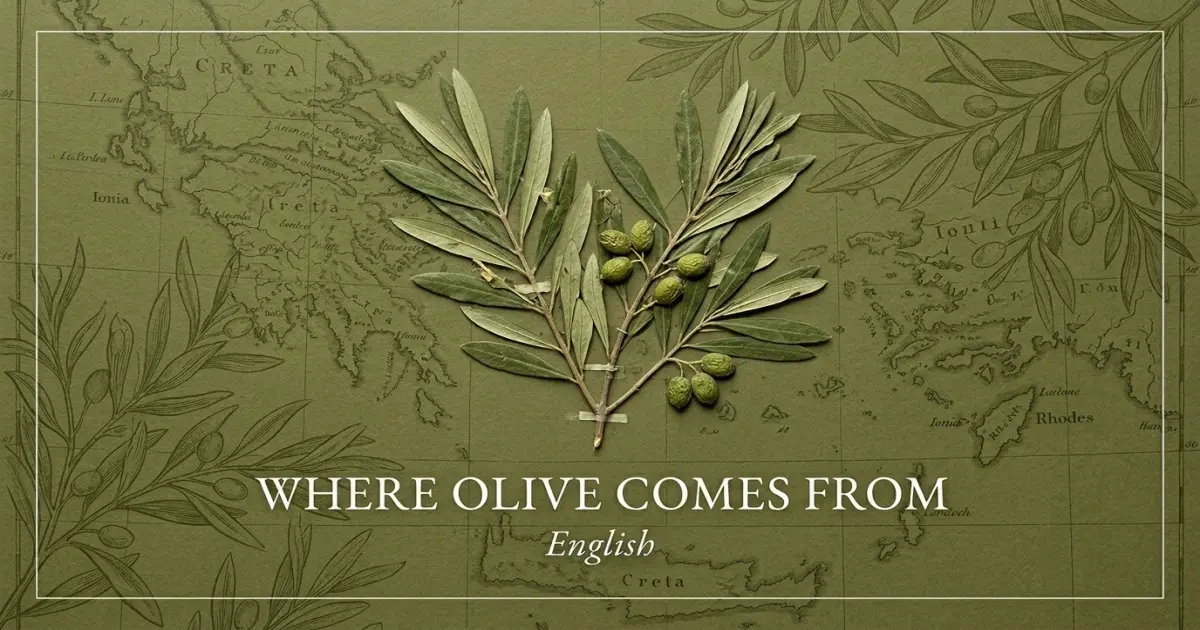
Its Latin origin strengthens this reading. Latin-rooted names often carry an old civilizational texture even when they sound modern in English. Olive benefits from that quietly. The name feels contemporary because it is short and clean, but it also feels old in the best sense: tested, legible, and unlikely to collapse under closer attention. It is a name that has survived because the thing it names has survived. For more names connected to this tradition, see names with Latin roots.
Olive moved from provision and symbol into modern naming taste
Names often enter fashion when their older meanings become newly attractive in a different social mood. Olive seems to have benefited from exactly that kind of shift. In an era when many parents are drawn to concise vintage revivals and names taken from the natural world, Olive offers something especially compelling: it is botanical without being whimsical, vintage without feeling dusty, and familiar without feeling oversaturated. Official Social Security Administration (SSA) data showing Olive at No. 171 for girls in the United States in 2024 supports that impression. This is not a fringe revival anymore. It is a name firmly present in public life, yet still distinct enough to feel deliberate.
Part of that appeal lies in contrast. Compared with longer, softer botanical names, Olive feels straighter and more intelligent. Compared with older classics, it feels fresher. Compared with overtly rustic nature names, it feels more cultivated. That balance gives it a very modern kind of authority. The name can feel literary, domestic, quietly fashionable, and historically grounded all at once.
It also wears adulthood unusually well. Some revived nature names sound charming in infancy but difficult to imagine on a judge, architect, surgeon, or novelist. Olive rarely has that problem. Its brevity helps. Its seriousness helps more. The name has enough reserve in it to age well. That is one reason it has moved beyond novelty and into genuine staying power.
Olive is peace, but not the weak kind
There is a particular mistake people make with names associated with peace: they assume those names must feel passive. Olive does not. The image behind it is far too robust for that. The olive branch may symbolize peace, but the tree itself symbolizes endurance. It grows in difficult conditions. It feeds households. It takes time. It becomes more powerful when one sees the branch and the tree together. The branch gives the social symbol. The tree gives the name its backbone.
This is what makes Olive especially strong for parents who want a gentle name that does not drift into sweetness alone. The name can certainly feel warm and feminine, but its power comes from usefulness and rootedness, not softness for its own sake. That is a different emotional register from many fashionable girls’ names. Olive suggests a person who steadies rather than dazzles, who nourishes rather than performs. If this is the kind of name you are drawn to, you can explore more in classic and modern girl names.
It is also why the name often feels quietly moral without sounding preachy. Peace, in the olive tradition, is not merely the absence of conflict. It is a cultivated condition. The name therefore carries an image of harmony that has been made, maintained, and embodied through something living. That makes it more believable, and ultimately more moving, than a name built on sentiment alone.
Where Olive sits among style neighbors today
Modern parents often encounter Olive alongside other concise vintage names, other botanical names, or names related to Olivia and Oliver. But Olive has a different texture from all of them. It is plainer than Olivia, more rooted than many floral choices, and less overtly stylish than some other revived antique names. That is exactly why it works. It occupies the narrow space where restraint becomes charm.
Naming books in the project also show Olive’s broader semantic family through related names like Olivia, Oliver, Olivier, Liv, and Livia, all of which keep some connection to the olive tree image. That family resemblance matters because it places Olive within a recognizable naming network without reducing it to a derivative form. Olive stands very well on its own. If anything, the simplicity of the form makes it feel more essential, not less.
Socially, this gives the name unusual range. Olive can feel artistic without pretension, traditional without stiffness, and modern without trend-chasing. It sounds thoughtful. It looks neat. It carries a symbol people already know, but it does so through a name that still feels lightly worn rather than overhandled.
Three roads that open naturally out of Olive
Middle names that either steady Olive or let it glow
Because Olive is already short and symbolically rich, the middle name decides whether the full combination feels more tailored, more luminous, or more vintage. The best pairings tend to work by contrast rather than repetition. If you want the full pairing logic behind that contrast, see Olive middle names.
Nicknames that make Olive more intimate without forcing them
Olive does not need a nickname to function well, but it can still support affectionate shorter forms. Those forms usually arise from closeness rather than necessity, which gives them a different emotional feel. To see how those different moods shorten in real life, explore Olive nicknames.
Pronunciation that stays simple while color shifts by accent
The spoken form of Olive is easy, but the American and British vowels subtly change the tone. That small difference helps explain why the name can sound either a bit warmer or a bit darker depending on who says it. For the detailed stress pattern, accent notes, and IPA, see Olive pronunciation guide.
Why Olive still feels alive, not merely symbolic
In the end, Olive remains compelling because it never turns entirely into metaphor. It keeps the tree intact. That matters. The name is peaceful, but not abstractly so. It is ancient, but not remote. It is botanical, but not decorative. It is simple, but not empty. Everything that makes it appealing now was already present in the object itself: endurance, fruitfulness, usefulness, shade, oil, branch, and peace.
That is why Olive feels more substantial than many names of similar length. It holds a whole landscape inside a very small sound. It suggests not a fleeting blossom but a long-lived tree, not peace as mood but peace as cultivation, not beauty that fades but beauty that feeds. Many names are charming. Olive is something rarer: calm with roots. That is why Olive continues to feel both old and fresh at once. It is not merely a lovely image borrowed for a child. It is a living symbol that has already survived centuries.