
How to Choose Names That Mean Love

Names that mean love can feel intensely personal.
They suggest warmth, tenderness, devotion, gratitude, grace, blessing, or the simple truth that a child is cherished. For many parents, that kind of meaning is not only pretty. It feels emotionally accurate.
A love-related name may appeal after a long wait, fertility challenges, adoption, loss, a blended family, a faith story, or a season when the child’s arrival felt like love made visible. It may also appeal because parents want a name that sounds gentle, affectionate, grateful, or full of family meaning.
That warmth is the appeal.
It is also the risk.
A name connected to love can become too sentimental, too sweet, too romantic, too soft, or too dependent on symbolism. The meaning may be beautiful while the name itself feels awkward beside the surname, difficult to pronounce, too delicate for adulthood, or too emotionally obvious for the family’s style.
A love name still has to work as a name.
The Names by Theme hub is the natural starting point when love is your main emotional direction and you want to compare it with grace, blessing, joy, hope, peace, faith, and family. For the broader editorial path through naming decisions, Expert Baby Naming Guides for Choosing the Right Name can help you move from a moving idea toward a name that can live well in ordinary use.
The best names that mean love feel warm without becoming sentimental, symbolic without becoming burdensome, and meaningful without losing everyday usability.
Love Names Appeal Because Parents Are Naming Belonging
Love is one of the most natural meanings parents look for in a baby name.
A child’s name may feel like the first lasting gift parents give. It makes sense that many families want that gift to carry affection, devotion, gratitude, or the sense of being cherished. A love-related choice can feel like a quiet message: you were wanted, you are treasured, you belong.
That emotional pull can come from many places. Some parents want the name to reflect the bond they already feel with the baby. Others are honoring a family story, a loved one, a spiritual belief, or a season of healing. Names connected to grace or blessing may appeal because the child’s arrival feels like a gift. Softer names may simply match the warmth parents want in family life.
Love can appear as belovedness, compassion, grace, devotion, loyalty, family closeness, spiritual care, tenderness, or gratitude. Those are not identical feelings, and they do not lead to the same names.
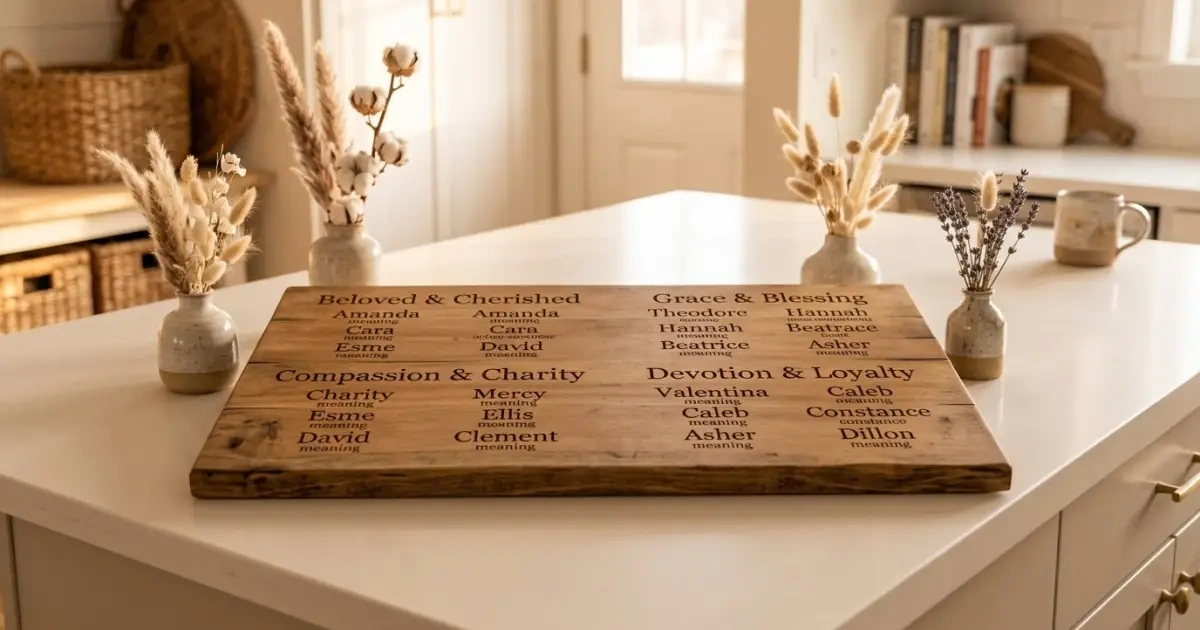
While Amy offers simple, beloved-linked familiarity, David anchors that same meaning in classic tradition. Grace carries virtue, faith, and gift-like warmth, contrasting with the tender, meaning-forward lyricism of Carys. Though they share a central theme, their moods remain entirely distinct.
That variety matters.
A name connected to love does not have to be soft, romantic, or delicate. It can be classic, spiritual, elegant, international, vintage, minimal, or quietly strong. The danger comes from choosing sweetness alone. A name may mean love and still feel fragile, decorative, phrase-like, or too emotionally exposed for daily life.
For parents still noticing how meaning changes the emotional feel of a name, Why Name Meaning Changes How a Name Feels offers a useful companion lens.
Love Should Feel Warm, Not Sugary
Love is a broad meaning.
It does not always mean romance. It does not always mean sweetness. A name can express affection through devotion, compassion, loyalty, grace, family belonging, spiritual care, or the feeling of being cherished.
That is why parents should define the kind of love they want before choosing a name.
| Kind of Love | Naming Direction It May Suggest |
| Beloved or cherished | Warm, personal, emotionally direct names |
| Compassion or charity | Virtue names with moral clarity |
| Grace or blessing | Faith-led, gift-like, or gratitude-based names |
| Devotion or loyalty | Steady names with commitment beneath them |
| Family love | Names rooted in tribute or memory |
| Spiritual love | Religious, virtue, or blessing-related names |
| Romantic love | Warmer, more dramatic, or Valentine-linked names |
| Tenderness | Soft names with gentle sound |
Amanda feels beloved-linked and familiar. Charity is virtue-led and compassion-focused. Theodore is more gift or blessing-adjacent than literal love, yet it can feel deeply affectionate to parents. Valentina brings romance, strength, and warmth together.
These are not interchangeable choices.
A family seeking tenderness may not want strong romantic associations. Parents drawn to spiritual gratitude may prefer a blessing-related name over a beloved name. A classic, grounded family may find David more usable than a name with a visible emotional message.
A warm name can still be dignified. A tender name can still be adult-ready. A love-related name can carry feeling without sounding like a Valentine card.

Direct Love Names and Subtle Love Names Do Different Work
Some love names announce their meaning. Others keep it private.
Direct choices may include names meaning beloved, names tied to compassion or charity, or names strongly associated with romance. They can feel clear, emotional, and powerful because the meaning is easy to understand.
Subtle love names work through a quieter route. They may suggest grace, blessing, sweetness, being cherished, or family memory without making the meaning the name’s whole identity.
Amanda and Amy are beloved-linked and familiar. Carys feels direct and meaning-forward. Charity is virtue-based and compassion-led. David carries beloved meaning while feeling classic and grounded. Valentina is romantic, warm, and substantial.
| Direct Love Names | Subtle Love Associations |
| More visible symbolism | More private emotional layer |
| Stronger meaning signal | Often easier daily use |
| Clear warmth | More flexibility |
| Higher risk of sentimentality | Lower risk of feeling like a message |
| Needs phrase and surname testing | Still needs meaning confidence |
Direct names can be beautiful when parents want the meaning to be visible. They may feel honest, affectionate, and emotionally clear. Still, obvious love symbolism needs balance. With the wrong surname, nickname, or sibling set, the name can become too sentimental.
Subtle names may be easier to wear because the emotional layer is present without becoming the child’s whole identity. A child named David does not need to explain beloved meaning every day. Mabel can feel sweet and vintage while still functioning as a name first.
The decision is not direct versus subtle as a rule.
It is how public you want the emotional meaning to be.
A Love Name Needs Warmth, Dignity, and Usability
A love-related shortlist can become emotional quickly.
That is understandable. These names often carry tenderness, gratitude, and family story. A framework keeps the choice from becoming only about feeling.
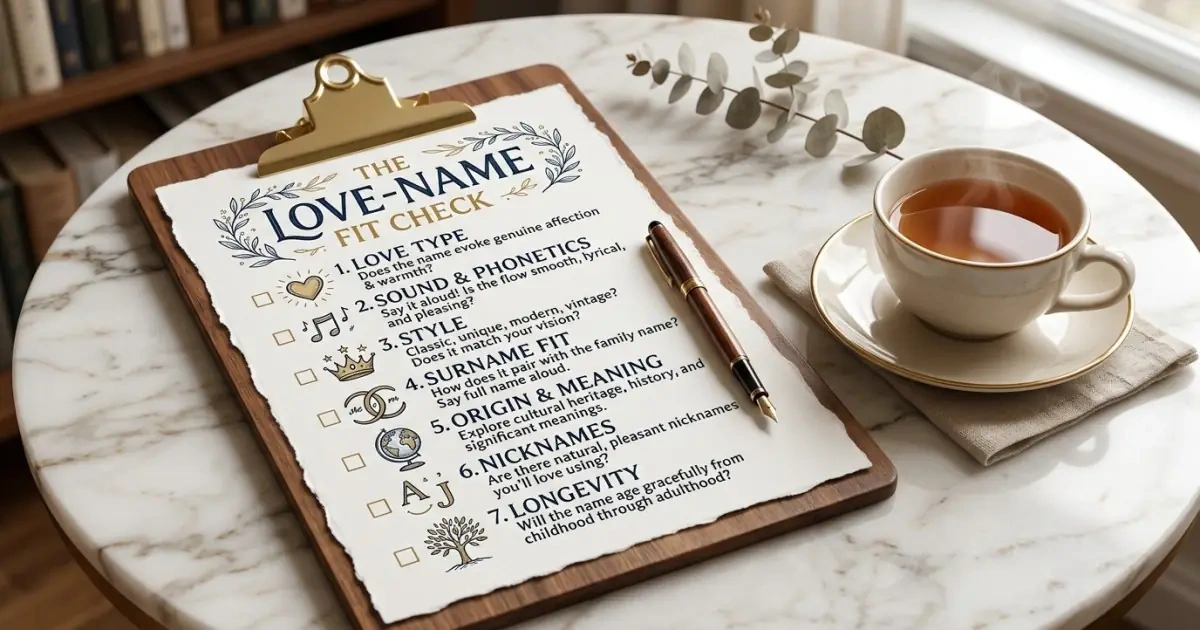
Use this love-name fit check before moving a favorite into the final list.
| Love-Name Layer | What to Ask |
| Love type | Does the name suggest belovedness, compassion, grace, blessing, devotion, romance, family love, or spiritual love? |
| Sound | Does it feel warm, graceful, sweet, romantic, soft, grounded, or too sentimental? |
| Style | Is it classic, vintage, modern, spiritual, romantic, international, soft, or elegant? |
| Surname fit | Does the full name sound balanced rather than phrase-like? |
| Origin | Is the love meaning accurate and natural for your use? |
| Nicknames | Do short forms preserve, soften, or change the emotional tone? |
| Longevity | Can the name work from childhood through adulthood? |
The best love name is not always the sweetest one. It is the one where warmth, dignity, and usability work together.
For the broader meaning-first process, How to Choose a Baby Name by Meaning keeps symbolism practical. When meaning, sound, and style begin competing, How to Balance Meaning, Sound, and Style in a Baby Name brings the decision back to the whole name. For long-range wearability, How to Choose a Name That Ages Well can test whether the warmth still holds beyond babyhood.

Sound Decides Whether Love Feels Warm or Too Sentimental
Sound can make a love name feel gentle, graceful, romantic, grounded, or overly sweet.
Soft vowels, flowing sounds, and gentle endings often create warmth. That can be beautiful. Too much softness, especially with a very soft surname or delicate middle name, may make the full name feel fragile. Stronger consonants, classic use, or a grounded surname can help a tender name carry.
Amy gives beloved meaning a simple, friendly shape, while Carys turns tenderness into something more lyrical and distinctive. David keeps the same emotional territory grounded through classic use, and Valentina adds romance and strength in a longer, more dramatic form. Charity is clear and virtue-led, which makes full-name testing especially important.
| Sound Quality | Effect on a Love Name |
| Soft vowels | Add tenderness and warmth |
| Flowing rhythm | Can make the name feel romantic |
| Familiar structure | Keeps emotion grounded |
| Crisp consonants | Give sweetness more shape |
| Very soft full name | May become fragile |
| Word-name sound | Needs surname testing |
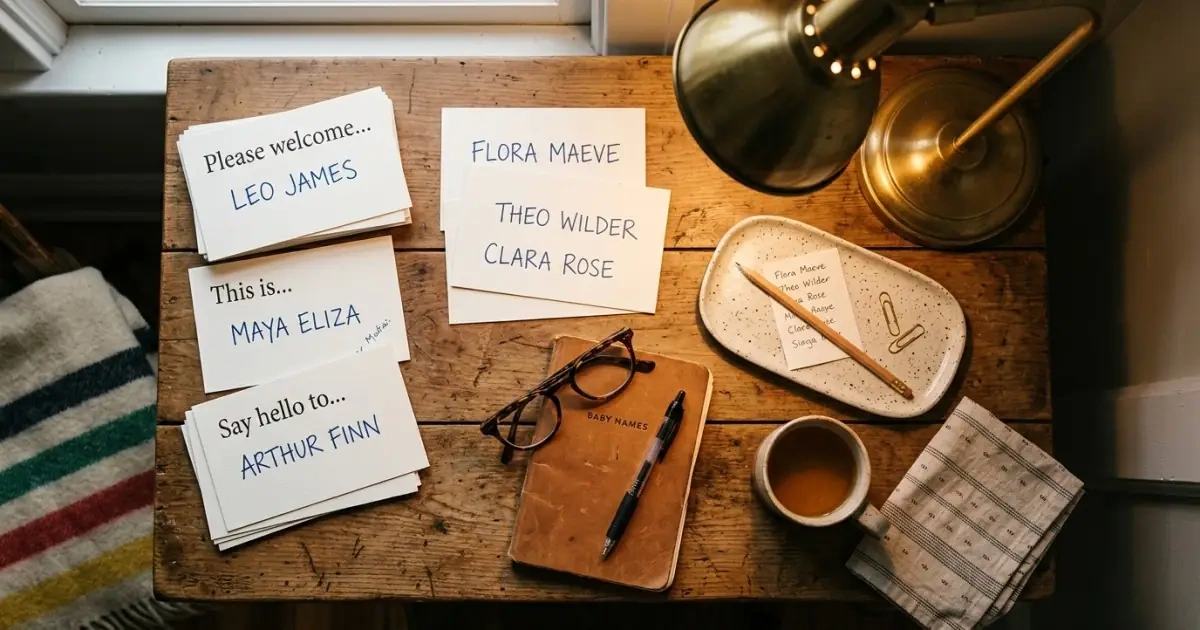
Try the name in ordinary sentences:
- “This is ___.”
- “___, are you ready?”
- “I’m calling about ___.”
- “Congratulations to ___.”
- “Please welcome ___.”
A name that means love should still sound natural once it leaves the emotional context. A favorite that only works while you are thinking about the meaning needs more testing.
For spoken rhythm, use How to Use Syllable Flow to Choose a Better Name and How to Say a Baby Name Out Loud and Hear Its Real Flow.

Style Fit Keeps Love From Becoming a Theme
Love names live in many style families.
That is why a meaning-first shortlist can feel scattered. The names may all connect to love, warmth, or belovedness while belonging to entirely different style worlds.
| Love-Name Style | Possible Names |
| Classic beloved | David, Amy, Amanda |
| Soft love | Esme, Carys, Mila |
| Virtue love | Grace, Charity |
| Romantic love | Valentine, Valentina |
| Spiritual blessing | Theodore, Theodora, Grace |
| International warmth | Priya, Amara, Naomi |
| Vintage sweetness | Mabel |
A love meaning should support your style, not pull the name into a sentimental direction you do not actually want.
Classic and grounded parents may find David easier than Carys. A family drawn to romantic elegance may feel more at home with Valentina than Amy. Spiritual or gratitude-led parents may find Grace, Theodore, or Theodora closer to the emotional truth than a literal beloved name.
The Names by Style hub can help when the list is emotionally coherent but stylistically scattered. How to Choose a Baby Name by Style gives a broader structure when you need to decide whether you want classic warmth, soft tenderness, romantic elegance, spiritual meaning, or something more understated.

Surname Fit Matters With Word, Virtue, and Romantic Love Names
Love names can be word-like, virtue-led, or emotionally direct.
That makes surname fit essential.
A name that feels beautiful alone may become too literal with the surname. A virtue name can sound phrase-like. A romantic name may feel ornate beside a dramatic surname. A soft name may need a surname with more rhythm or structure.
Charity and Grace need phrase testing with word surnames. Valentine or Valentina may need a simpler surname or middle. David and Amy often feel easier because they are classic and familiar. Carys may need pronunciation and surname-rhythm testing.
| Full-Name Risk | What to Listen For |
| Virtue first + word surname | Phrase effect |
| Romantic first + ornate surname | Too much decoration |
| Soft first + soft surname | Fragility |
| Rare love name + complex surname | Too much explanation |
| Classic first + emotional meaning | Often more balanced |
| Grounded middle name | Can steady tenderness |
Test first + surname, first + middle + surname, nickname + surname, initials, adult introduction, and casual family use.
The full name should sound like a person.
Not an emotion, phrase, or title.
For full-name testing, use How to Match a First Name With Your Surname and How to Build a First-Middle-Surname Combination That Flows. When initials create another concern, How to Check Initials, Monograms, and Awkward Combinations is worth checking before finalizing.

Origin and Cultural Context Shape the Love You Are Choosing
Love meanings often come through language, religion, virtue traditions, and cultural context.
Some names mean beloved directly. Others suggest grace, gift, blessing, sweetness, pleasantness, devotion, compassion, or affection. Several names have more than one possible meaning across languages. A quick definition may not show the full background.
David has beloved meaning and broad biblical and classic use. Carys has Welsh love-related roots and needs pronunciation confidence. Priya may feel warm and beloved-related, with cultural context. Amara and Mila can carry multiple origin interpretations. Theodore and Theodora are more gift or blessing-adjacent than literal love.
| Origin Check | Why It Matters |
| Which origin are you using? | The meaning may depend on it |
| Is the love meaning reliable? | Symbolism needs trust |
| Can your family pronounce it naturally? | Daily confidence matters |
| Does it work in the languages you use? | Sound and association may shift |
| Is the name culturally natural for your family? | Avoids borrowed-for-effect feeling |
| Does the meaning suggest beloved, compassion, grace, or blessing? | Clarifies the emotional direction |
This is not about making the decision intimidating. It is about making sure the meaning you love is actually the meaning you are choosing.
Use Names by Origin when language roots matter. When the name needs to work in more than one language, How to Choose a Name That Works in Two Languages can test pronunciation, spelling, and cultural fit before the meaning becomes the deciding factor.

Classic Love Names Feel Warm Without Needing to Announce It
Classic love names often work because they have more than meaning supporting them.
They may carry beloved, grace, or gift associations while still functioning naturally as names. Established use, familiar sound, adult usability, and cultural recognition give the warmth somewhere stable to sit.
| Classic Love Name | Why It Carries |
| David | Beloved, classic, grounded |
| Amy | Beloved-linked, simple, friendly |
| Amanda | Beloved-linked, familiar, romantic but usable |
| Grace | Virtue, faith, gift-like warmth |
| Mabel | Vintage sweetness with lovable meaning |
A classic love name may be the best fit when parents want emotional meaning without turning the name into a message.
That matters.
Love does not have to be announced every time the name is spoken. Sometimes the most wearable love-related choices function clearly first and reveal their warmth later.
When lasting style matters, What Makes a Name Feel Timeless? and How to Choose a Name That Ages Well can test long-term range beyond the emotional layer.

Romantic Love Names Need Adult-Use Testing
Some love names feel romantic because of sound, association, Valentine imagery, or cultural use.
That can be beautiful, especially when parents want warmth and drama. The same quality can also push a name into overly styled territory if the full name lacks restraint.
Valentine has a direct romantic association and a distinctive sound. Valentina feels warm, elegant, romantic, and strong. Amara can feel lyrical and love-adjacent depending on origin. Carys is tender and meaning-forward.
| Romantic Love Name Check | What to Notice |
| Daily speech | Does the name still feel natural outside a poetic context? |
| Adult use | Can it carry in formal introductions? |
| Surname rhythm | Does the full name become too ornate? |
| Association strength | Is the romantic layer too public? |
| Nicknames | Do everyday forms ground the name? |
A romantic name often needs balance. That balance may come from a simpler middle, a grounded surname, a familiar nickname, or a family story that makes the name personal rather than decorative.
A name can be romantic and still be usable.
It just cannot rely on atmosphere alone.

Soft Love Names Need Enough Structure to Carry
Many love-related names feel gentle, lyrical, and warm.
That softness can be lovely. It can also become fragile.
A soft love name should have enough structure to carry through childhood, adolescence, and adulthood. The support may come from classic use, clear spelling, surname rhythm, or nickname options.
Esme has loved or esteemed associations with a soft, stylish sound. Mila feels warm and international. Naomi carries pleasantness and warmth, even though it is not a literal love name. Amara is lyrical and multi-origin. Carys is tender, distinctive, and pronunciation-sensitive.
| Soft Love Name Support | Why It Helps |
| Clear spelling | Keeps tenderness practical |
| Familiar rhythm | Makes the name easier to wear |
| Surname structure | Prevents softness from dissolving |
| Adult introduction | Tests long-term strength |
| Nickname comfort | Gives daily flexibility |
| Origin confidence | Keeps meaning grounded |
A tender name does not need to become harder.
It simply needs enough presence to work in adult introductions, formal documents, and everyday speech. When softness is central to your style, How to Choose Soft and Gentle Baby Names That Still Carry Well can keep warmth from becoming weakness.

Love Names for Girls Should Offer More Than Sweetness
Love names for girls often cluster around beauty, tenderness, romance, and softness.
Those can be beautiful directions. They can also become too narrow if the name only asks the child to be sweet, lovable, gentle, or emotionally open.
A love-related girl name should offer identity, adulthood fit, clarity, and style range.
Amy gives beloved meaning a simple, friendly form; Amanda feels more explicit but still familiar. Carys brings a tender Welsh-rooted distinctiveness, while Grace remains virtue-led and adult-ready. Valentina adds romance and strength, Mabel leans vintage and lovable, and Priya carries warmth through cultural rootedness.
| Love Name for Girls | What It Should Protect |
| Identity | The name should feel like a person, not only a wish |
| Range | Love should not become one-note sweetness |
| Age fit | The name needs to work beyond childhood |
| Surname balance | The full name should not become too soft |
| Emotional warmth | The meaning should feel generous, not limiting |
| Personal style | The choice should belong to your family’s taste |
A girl does not have to be gentle, affectionate, pretty, or emotionally open because her name means love.
The meaning should feel like a gift, not a role.
When love and elegance are competing, What Makes a Name Feel Elegant? can separate refinement from sentimentality. If the list leans soft, How to Choose Soft and Gentle Baby Names That Still Carry Well is the stronger practical check.

Love Names for Boys and Gender-Neutral Choices Need Grounding
Love meanings are often marketed toward girls, but belovedness, compassion, grace, blessing, and devotion can work across genders when the name itself feels grounded.
Boy or gender-neutral love names may need extra clarity because the category is less expected. The name should not feel overly sentimental or unclear in daily use.
David is the clearest example: beloved in meaning, classic in use, grounded in sound. Valentine is distinctive and romantic, but it needs confidence. Theodore is gift or blessing-adjacent, warm, and classic. Amara or Mila may be used differently by gender and culture depending on context. Grace may be used as a virtue name in some contexts, though gender expectations vary by family and region.
| Love Name Check for Boys or Gender-Neutral Use | Why It Matters |
| Clear daily sound | Keeps tenderness from feeling vague |
| Surname grounding | Gives warmth structure |
| Adult usability | Prevents the name from feeling too soft |
| Nickname flexibility | Makes emotional names more wearable |
| Cultural context | Clarifies how the name will be received |
| Romantic association | Needs honest testing |
A love-related boy or gender-neutral name should feel grounded, clear, and usable, not only tender or symbolic.
When you want warmth with more firmness, How to Choose Strong Baby Names Without Sounding Heavy-Handed can offer a useful balancing lens.

Popular and Rare Love Names Create Different Tradeoffs
Popularity changes how a love name feels.
A familiar love-related name may be easier to wear because people already know it. A rare one may feel more distinctive and personal, but it may need more explanation.
| Familiar Love Names Need | Rare Love Names Need |
| Popularity comfort | Pronunciation confidence |
| Personal reason | Spelling clarity |
| Full-name distinction | Origin confidence |
| Love beyond symbolism | Usability checks |
| Meaning that still feels yours | Low explanation burden |
A popular name can still carry personal warmth. A rare name can still be usable. The decision comes down to the tradeoff your family can live with.
Would you still choose a familiar love name if another child nearby had it? Does a rare love name feel clear after one hearing? Does the meaning stay personal when the name is common, or manageable when the name is unusual?
The Names by Popularity hub can ground the usage question. For familiar love names, When a Popular Name Is Still the Right Choice helps separate real discomfort from ranking anxiety. For distinctive choices, How to Choose Rare Baby Names That Still Work in Daily Life is the sharper test. When both directions remain tempting, Popular vs Rare Baby Names: How to Decide gives the broader comparison.

Nicknames Can Make Love Names More Wearable
Nicknames can soften formal love names, warm classic names, or make romantic names more usable.
A nickname may preserve the meaning, soften it, or move daily use away from the emotional layer. None of those outcomes is automatically wrong. The shift simply needs to be intentional.
A formal name like Valentina easily softens into Val or Leni, just as Theodora relaxes into Thea or Teddy. Theodore gains everyday warmth through Theo, while vintage revivals like Mabel and Miriam find approachable ease in short forms such as Mae or Mira. Amanda can stay familiar through Mandy, though that shift gives the name a different, more casual temperature.
| Full Name | Possible Everyday Forms |
| Amanda | Mandy, Manda |
| Valentina | Val, Tina, Leni |
| Theodora | Thea, Dora, Teddy |
| Theodore | Theo, Teddy |
| Mabel | Mae, Belle |
| Miriam | Mimi, Mira |
A nickname can be the bridge between warm symbolism and daily life. It may also move the name away from the emotional quality parents loved.
Do not choose a full name only for a nickname if the full form feels too sentimental, too formal, or not truly loved. The child may use either version later.
For a deeper nickname check, use How to Check Nickname Potential Before You Choose.
Middle Names Are Often the Best Place for Tender or Romantic Meaning
Love symbolism can matter deeply even when it does not sit in the first-name position.
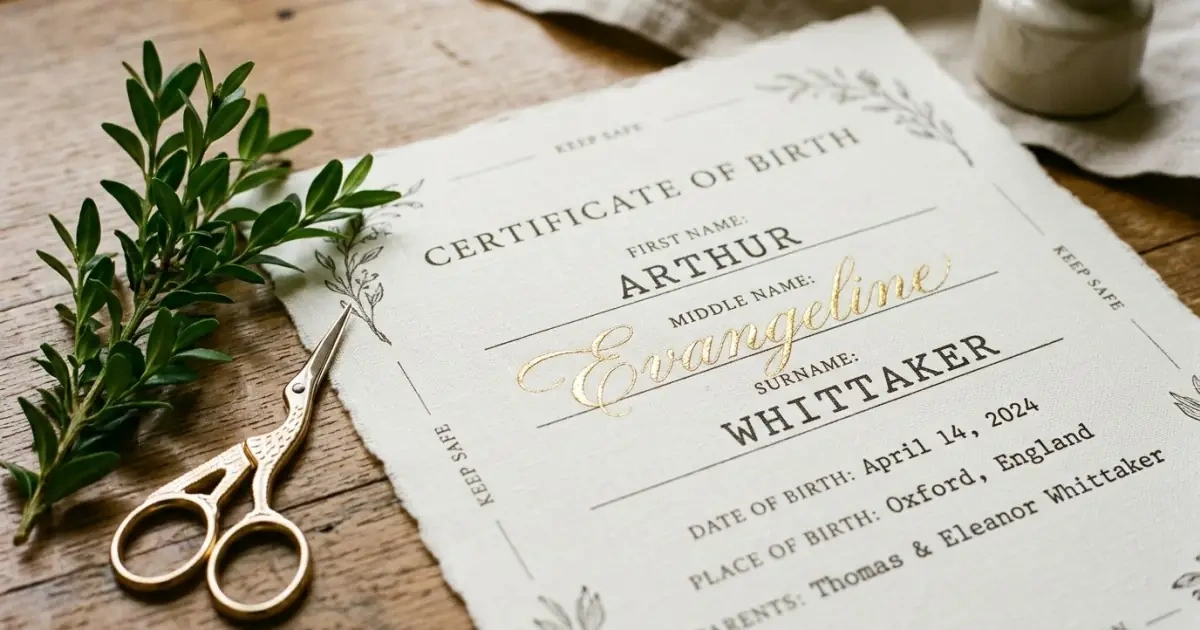
Sometimes the most meaningful love-related name is too sweet, romantic, rare, pronunciation-sensitive, or emotionally vivid for everyday use. In that case, the middle name slot can carry love, gratitude, blessing, or family warmth without making every introduction depend on the symbolism.
| Middle-Name Strategy | Why It Works |
| Classic first + tender love middle | Keeps daily use grounded |
| Strong first + warm love middle | Adds softness and meaning |
| Family first + symbolic love middle | Connects history and affection |
| Love first + simple middle | Prevents sentimentality from taking over |
| Rare love name in the middle | Preserves meaning with less friction |
A familiar first name can balance Carys, Valentine, Charity, or Amara in the middle. A romantic first name may need a simpler middle. A family name can feel warmer with a love-related middle attached.
The middle spot is not weaker. It may be the cleanest place for symbolism that feels too vivid in daily use.
For a fuller middle-name process, How to Choose a Middle Name can help you decide where the meaning belongs. When the love-related name is long, rare, or emotionally rich, How to Build a First-Middle-Surname Combination That Flows keeps the full name balanced.

Sibling Names Should Share Warmth, Not Matching Love Themes
Sibling names do not all need love meanings.
Too many love, virtue, blessing, or romantic names together can feel overly symbolic. Shared warmth, style, or family connection often matters more than repeated meaning.
Amy and David may feel classic and beloved-linked without becoming too thematic. Grace and Charity can feel virtue-heavy together. Valentina and Theodore are warm and substantial, but the full set needs rhythm testing. Carys and Amara may feel tender and lyrical together, perhaps too soft depending on surname and sibling style.
| Sibling Check | What to Notice |
| Shared feeling | Warmth may matter more than repeated love |
| Symbolic balance | One child should not carry a heavier emotional message |
| Sound fit | The names should work aloud together |
| Theme pressure | The set should not feel staged |
| Individual identity | Each child needs a distinct name atmosphere |
A shared feeling is usually stronger than a repeated theme. Sibling names can connect through warmth, rhythm, origin, or style without all carrying the same emotional message.
For a broader sibling-name process, How to Choose Sibling Names That Fit Without Matching Too Hard helps preserve harmony without turning the family set into a statement.

Mistakes That Make Names That Mean Love Harder to Use
Love names become harder to use when the emotion takes over the practical decision.
The name itself still needs to function. A beautiful feeling cannot fix awkward sound, uncertain pronunciation, poor surname flow, or a style mismatch.
| Mistake | Why It Weakens the Name | Better Move |
| Choosing the sweetest meaning instead of the most usable name | Emotion can overpower daily life | Test sound and full-name flow |
| Assuming love names must sound soft | Love can be classic, grounded, spiritual, elegant, or strong | Compare wider style lanes |
| Ignoring surname phrase risk | Word-like names can become literal | Say the complete name aloud |
| Skipping adulthood testing | Romantic or tender names may feel too styled | Use adult introductions |
| Trusting simplified meanings too quickly | Love meanings vary by origin | Check background |
| Ignoring pronunciation | Origin-specific names need confidence | Test family use |
| Over-theming siblings | Repeated love imagery can feel forced | Share warmth, not labels |
| Forgetting nicknames | Daily forms may change the emotional tone | Map likely short forms |
A name that means love should not need the emotion to do all the work.
It must still carry when the meaning is not being explained.
Practical Tests Before Choosing a Name That Means Love
Before finalizing a love-related name, test it outside the beautiful emotion.
The goal is not to weaken the meaning. It is to see whether the warmth survives ordinary life.
| Test | What to Do | What It Reveals |
| Love type test | Name the exact love: beloved, cherished, compassion, grace, blessing, devotion, romance, family love, or spiritual love | Whether the meaning is clear |
| Sweetness test | Say the name aloud in ordinary sentences | Warm, graceful, romantic, grounded, or too soft |
| Full-name flow test | Say first + middle + surname and nickname + surname | Rhythm and balance |
| Word/phrase test | Check whether the name becomes too literal with the surname | Sentimentality risk |
| Origin confidence test | Confirm meaning and cultural context | Reliability |
| Adulthood test | Imagine adult introductions and formal documents | Long-term use |
| Nickname test | List likely short forms | Whether daily use keeps or softens the love |
| Symbolic pressure test | Ask whether the meaning feels like warmth or a role | Emotional burden |
A love name may feel calmer after testing. Another may reveal that you love the emotion more than the actual name.
That distinction is useful.
For a complete final check, How to Test a Baby Name Before Finalizing It can move the choice from symbolic attraction to real confidence. If two love-related names remain close, How to Decide Between Two Baby Names can compare daily usability rather than sweetness alone.

A Shortlist Method for Choosing Names That Mean Love
Start by choosing the kind of love you mean.
A beloved name, a compassion name, a blessing name, and a romantic name may all belong to the love family, but they create very different lives on paper and aloud.
| Love Category | Possible Style Directions |
| Beloved or cherished | David, Amy, Amanda |
| Compassion or charity | Charity, virtue-led names |
| Grace or blessing | Grace, Theodore, Theodora |
| Family love | Names tied to tribute or memory |
| Spiritual love | Grace, Theodore, Theodora |
| Romantic love | Valentine, Valentina |
| Tenderness or warmth | Esme, Carys, Mila, Amara |
| Gift or gratitude | Theodore, Theodora, Grace |
Next, remove names where you only love the emotion. Keep names with at least two practical anchors: sound you love, surname flow, spelling ease, pronunciation confidence, nickname comfort, origin confidence, adult usability, or sibling harmony.
Finally, decide whether the love name belongs as a first or middle.
The best love name is not always the sweetest one.
It is the one that feels warm, dignified, and usable when the symbolism becomes part of everyday life.

Questions Parents Ask About Names That Mean Love
Are names that mean love too sentimental?
Not necessarily. Some love names are soft, but others feel classic, grounded, spiritual, elegant, or strong. The meaning does not have to create a sugary sound.
Should the love meaning be obvious?
Only when that fits your family style. Subtle beloved, blessing, or grace associations can feel more wearable for parents who want private symbolism rather than a public message.
Can love names work for boys?
Yes. Belovedness, blessing, compassion, and devotion can work across genders when the name feels grounded and usable. David and Theodore are strong examples of warmth with structure.
Are romantic names like Valentine too much?
They can be, depending on surname, style, and family comfort. Test adult use, nickname options, and whether the romantic association feels personal rather than decorative.
What if I love the meaning but not the name?
Keep looking within the same theme, soften the choice with a middle name, or move the love-related name to the middle spot. The first name still needs to be one you enjoy saying.
Are love names the same as blessing or grace names?
They overlap, but they are not identical. Love names may focus on belovedness or affection, while blessing and grace names often carry gratitude, faith, or gift-like meaning.

Where to Go Next When Love Names Appeal to You
Let your exact friction point dictate your final move. If your shortlist feels crowded with affection, grace, blessing, devotion, and romantic warmth, the structural frameworks in Names by Theme will help separate true love names from adjacent ideas such as joy, hope, peace, family, or faith. For choices shaped by language, religion, or cultural roots, Names by Origin gives the meaning a stronger foundation than a quick definition.
Once your contenders are fully formed, push them through How to Test a Baby Name Before Finalizing It to ensure the promise of love never outranks daily, spoken fit. A name that means love should feel warm without becoming sentimental, symbolic without becoming burdensome, and meaningful without losing everyday usability.