
Zoe Name Meaning: Meaning, Legacy, and Style
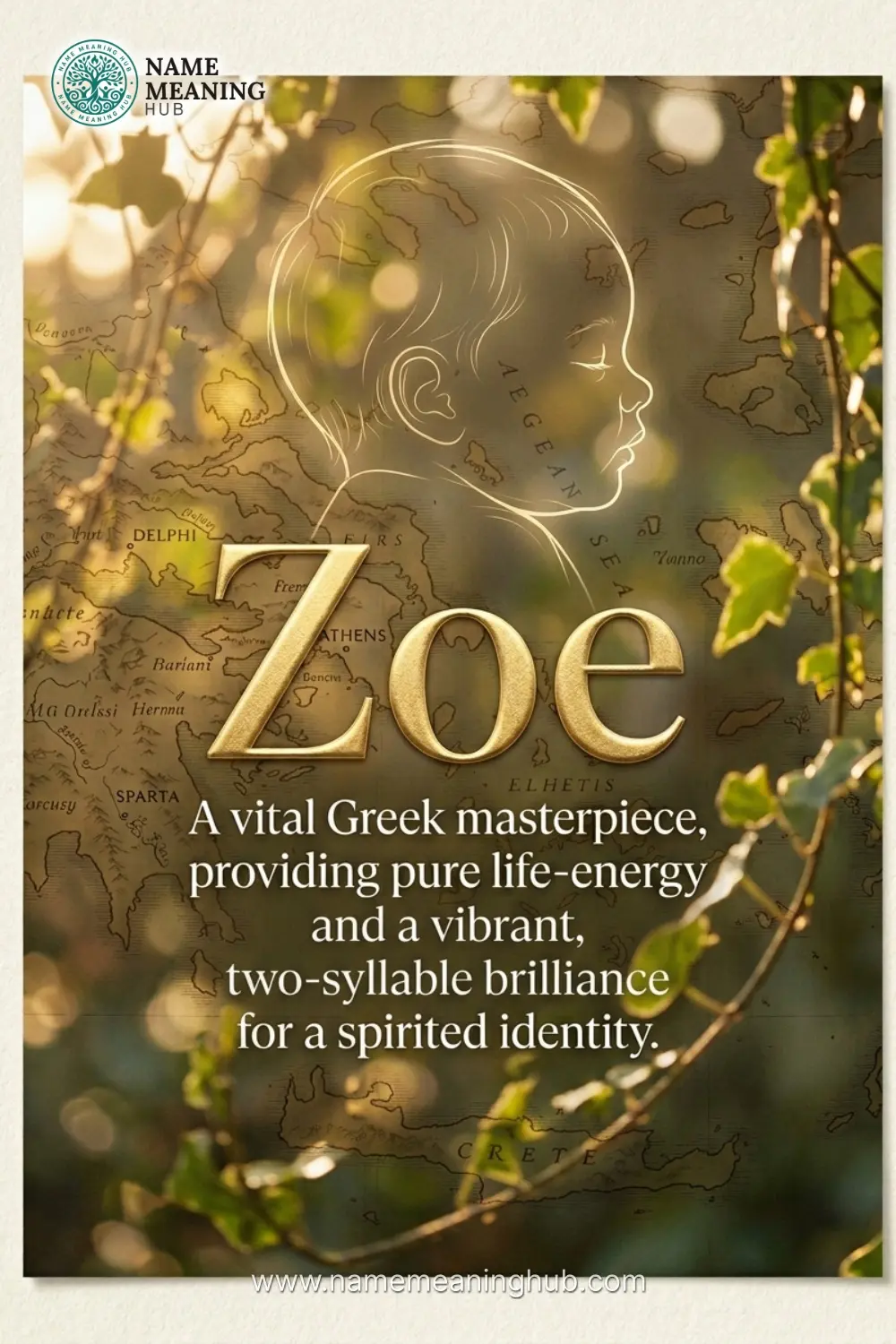
Zoe is one of those names that seems to contain movement even before anyone explains it. It is brief, bright, and almost impossible to say without a little lift in the voice. That energy is not accidental. Zoe means life, and very little in naming is more elemental than that. Some names point to beauty, luck, victory, or grace. Zoe points to the thing underneath all of them: aliveness itself. It does not begin with ornament. It begins with pulse.
That is why the name feels so much larger than its four letters suggest. A name meaning life can easily become vague if the sound is weak or if the symbolism is too abstract. Zoe avoids both problems. The Greek root gives it historical depth, and the modern sound gives it immediacy. Official Social Security Administration (SSA) data shows Zoe ranked No. 29 for girls in the United States in 2024, which means it is no longer a hidden choice. But popularity alone does not explain its staying power. Zoe works because it says something direct and permanent in a form that still feels agile, modern, and human. It does not merely sound lively. It names life outright.
Zoe's U.S. popularity rank over time, 1880–2024
Popularity statistics are based on official data from the Social Security Administration baby name records.
Zoe: A Vibrant and Melodic Modern Classic
Zoe reads as a name with one unmistakable center of gravity, where the girls’ side of the chart provides its overwhelming visibility. Reaching a new peak in 2024, its momentum likely reflects a naming culture preference for “short and sweet” names that symbolize energy and vitality .
The scattered visibility in the boys’ lane appears more like niche preference than a broad shift. Meaning “life,” its simple two-syllable structure and soft vowel ending travel exceptionally well.
What Zoe carries in two bright syllables
| Key Facts | Information | Quick Insight |
|---|---|---|
| Name | Zoe | The name is visually minimal, but its meaning is among the most expansive any name can carry. |
| Primary Gender Usage | Female | Zoe reads clearly feminine in current use, though its core meaning is elemental rather than decorative. |
| Origin | Greek | The Greek origin matters because the name comes directly from an old word for life rather than from a later poetic metaphor. |
| Core Meaning | Life | This is a meaning of force and presence: Zoe suggests not just existence, but vitality that can be felt immediately. |
| Pronunciation | ZOH-ee | The sound opens and brightens at once, which helps the meaning feel active rather than abstract. |
| Syllable Count | 2 | Two syllables keep Zoe light on the tongue, which is one reason it feels vivid instead of solemn. |
| U.S. girls’ rank (2024) | No. 29 | Zoe is widely recognized and still energetic, showing that a short classic can stay fresh even at high visibility. |
| U.S. boys’ rank (2024) | No. 4304 | There is slight male use in the record, but the name remains overwhelmingly feminine in contemporary public life. |
| Style Position | Minimal, luminous, life-centered classic | Zoe works because it feels modern in size and ancient in meaning at the same time. |
Zoe does not mean survival. It means pulse.
The strongest thing about Zoe is that its meaning is not passive. Life in this name does not feel like a static condition. It feels like motion. That difference matters. A name meaning life can, in weaker hands, drift into something generic or merely pleasant. Zoe avoids that because the word itself is so immediate. It suggests not only existence, but vitality, responsiveness, energy, and the unmistakable fact of being here.
This is one reason the name feels much more forceful than its size suggests. Many short girls’ names lean on sweetness, prettiness, or softness alone. Zoe carries none of those things as its main burden. Its center is animation. The child imagined through the name is not only charming. She is alive in a way other people notice. That can mean brightness, curiosity, social spark, intellectual quickness, or the sheer feeling of inhabiting the world with both feet on the ground and the face turned toward it.
There is also a deep simplicity in the meaning that helps explain the name’s lasting appeal. Life is not a trend concept. It is foundational. Parents may come to Zoe from different tastes—minimalist, literary, spiritual, modern, Greek-rooted, or simply sound-based—but they arrive at a name carrying one of the oldest and broadest hopes possible. To choose Zoe is to choose growth over stillness, presence over emptiness, continuation over dimness. That is a very large promise contained in a very short form.
The name also avoids sentimentality because life is not always soft. It includes motion, effort, risk, pleasure, change, and renewal. Zoe therefore feels stronger than names built on more fragile imagery. It is bright, yes, but not delicate. Its core idea can bear complexity. That is part of why it ages so well.
How Zoe moved from Greek word to enduring girl name
Project naming references describe Zoe with rare consistency. One attached source defines it simply as the Greek name meaning “life.” Another calls it “life, full of life” and places it in Greek, Italian, and English usage. A third notes that Zoe was extremely popular during the classical period of Rome. Read together, those entries reveal something important: Zoe is not a modern invention that happens to sound current. It is an old name whose original meaning has remained legible for a very long time. To view more names linked to this cultural tradition, explore more Greek names.
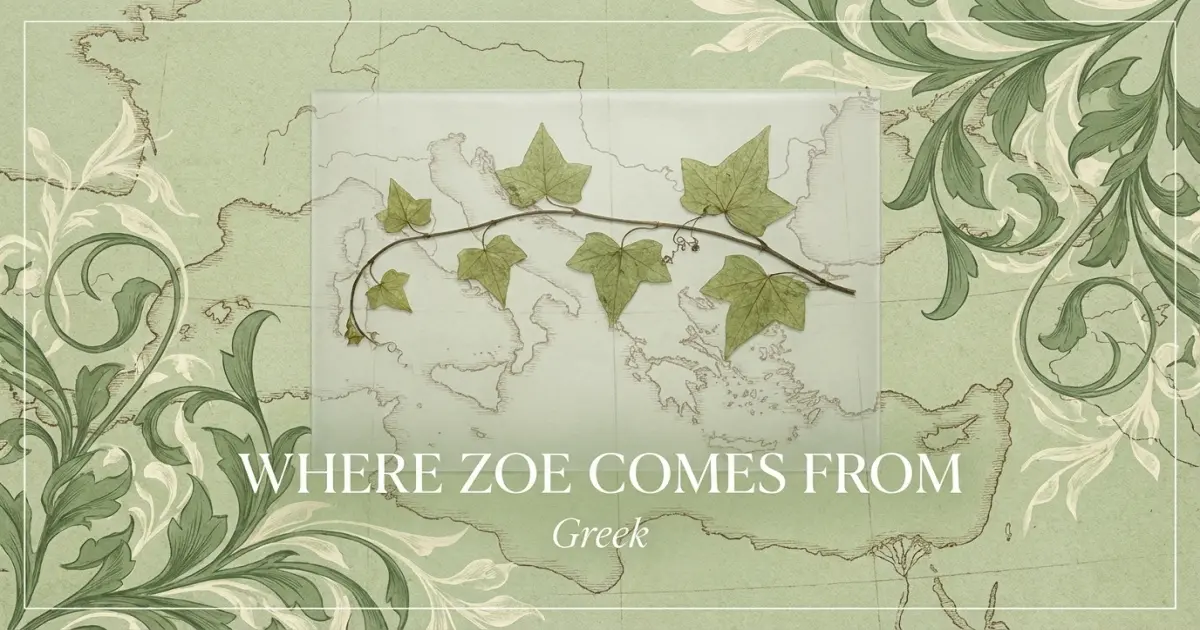
That historical continuity matters. Some names require explanation because their root meaning has become obscure or their original context has disappeared. Zoe has no such problem. The name stays very close to its source. Even after moving through different languages and periods, it still means what it meant at the start. That clarity is part of its power. The form is ancient, but the meaning still arrives intact.
It also helps explain why the name feels so internationally portable. The project materials explicitly place Zoe in Greek, Italian, and English use, and related forms such as Zoey, Zoya, and Zoia appear alongside it in the books. That means Zoe belongs to a wider life-name family rather than to one narrow national tradition. It can move between cultures without losing its center. In modern naming, where parents often want names that travel well while keeping their identity, that is a major advantage.
Historically, the name’s early prominence in the classical world adds another layer of strength. A name already visible in Roman times is not surviving on novelty. It has already been tested by centuries of speech, religion, literature, migration, and ordinary family use. Zoe feels light, but it has old roots. That contrast is one of the reasons it remains so persuasive now.
Why Zoe sounds lighter than most life-names
Phonetically, Zoe is almost a model of efficient design. ZOH-ee begins with a voiced consonant that gives the name brightness immediately, then moves into an open vowel before lifting into a second syllable that feels quick and clear. The result is light without being flimsy. It is one of the rare names that sounds both airy and definite.
This matters because names meaning life can sometimes become heavy with significance. Zoe does not. The sound saves it from solemnity. It carries the meaning in a form that feels almost effortless, and that effortlessness is one of the name’s great practical strengths. Parents can choose a deeply meaningful name without giving their child something cumbersome, ornate, or socially difficult.
The spelling helps too. Four letters, immediate pronunciation, virtually no confusion. Zoe looks modern even though it is ancient. That is a rare visual achievement. It means the name can feel clean and current on paper while still carrying the full weight of an old Greek inheritance. In everyday life, that balance matters. The name is memorable, but not burdensome. Distinctive, but not fussy.
The sound also contributes to the name’s emotional impression. Zoe feels bright, but it does not sparkle in a superficial way. The opening Z gives it quickness and edge. The vowels keep it open and warm. That combination helps the name sound lively rather than ornamental. It feels like movement, which suits the meaning perfectly.
Zoe on the modern chart: visible, vivid, still durable
Official SSA data places Zoe at No. 29 for girls in 2024. That is a high ranking, and it tells an important story. Zoe is no longer a hidden or niche name. It belongs solidly to modern public use. Yet unlike some highly popular names, it does not feel swollen by trend. The meaning is too old, and the form is too clean, for that. Even at high visibility, Zoe keeps its outline.
The small boys’ ranking shows a trace of wider use, but not enough to change the name’s public identity. In contemporary American life, Zoe is overwhelmingly read as female. That clarity helps the name maintain social stability. It can be lively and compact without creating confusion about how it is generally received. For more options with a similar overall profile, see familiar and rare girl names.
Its chart position also reveals something broader about current naming taste. Parents are drawn to names that are short, meaningful, historically grounded, and emotionally bright. Zoe sits precisely at that intersection. It is not elaborate, and it does not need elaborate stories to justify itself. The old Greek meaning does the work. The name offers a directness that many modern parents find refreshing.
There is also a practical reason the name withstands popularity well. Because Zoe is so brief and semantically strong, repetition does not thin it out as quickly as it might with weaker names. A name built on the word life can survive heavy use better than one built only on fashion. That durability is one reason Zoe continues to feel vivid rather than exhausted.
Where Zoe stands among other names of life and light
Project naming references place Zoe in a wider “life” family alongside names such as Aisha, Vita, Vivian, Eve, and Zoya. That context is useful because it shows what is distinctive about Zoe. Aisha emphasizes being alive and thriving in a different linguistic and cultural register. Vita feels more formal and overtly Latin. Vivian carries the idea of life through a longer, softer structure. Eve is older and more primordial. Zoya and Zoia keep the same life-root with regional variation. Zoe remains the most compressed and immediate form in the group.
This is one reason the name feels so modern even while it is ancient. It is minimal without being bare. Compared with many light-based names—Lucia, Elena, Aurora, Stella, or Luna—Zoe is less pictorial and more elemental. Light names suggest atmosphere. Zoe suggests force. It does not describe what life looks like. It names life itself. That makes it feel cleaner, almost sharper, than many equally beautiful alternatives.
At the same time, Zoe is not severe. It still has enough warmth and openness to feel companionable. This combination—elemental meaning, clean sound, human warmth—is unusually difficult to achieve. It is one of the main reasons the name has remained so attractive across style shifts. Zoe belongs equally well to modern minimalism, classical naming, and cross-cultural family use.
What Zoe opens next
Zoe with middle names can sound either more grounded or more lyrical
Because Zoe is so brief and bright, middle names often do one of two jobs beside it: they either add more weight and steadiness, or they widen the name into something more flowing and melodic. The strongest combinations understand that Zoe already brings the central spark. If you want the full pairing logic behind that contrast, see middle names for Zoe.
Nicknames matter less because Zoe is already close to the core
One of the elegant things about Zoe is that it begins almost where many names end. It is already intimate, already memorable, already easy to say. Any nicknames that arise tend to come from affection rather than necessity, which is often the mark of a very well-shaped first name. To see how those different moods shorten in real life, explore Zoe nicknames.
Pronunciation is one of Zoe’s quietest strengths
The name’s pronunciation is intuitive in modern English and remains close enough to its older form to preserve identity. That gives Zoe a practical advantage many symbolic names do not have. It carries depth without creating friction. For the detailed stress pattern, accent notes, and IPA, see Zoe pronunciation guide.
Why Zoe still sounds like life arriving
The best way to understand Zoe is to resist the temptation to treat life as a vague abstraction. In this name, life feels immediate. It is not only breath. It is animation, curiosity, movement, and the visible fact of thriving. That is why the name remains so compelling. It does not merely sound cheerful. It sounds inhabited.
Its Greek root gives it clarity. Its long historical use gives it stability. Its sound gives it brightness. Its current popularity proves that modern parents still respond strongly to names with elemental meaning and practical elegance. None of those qualities works alone. Together they create a name that feels at once ancient and contemporary, serious and light, compact and astonishingly full.
That is why Zoe lasts. It asks almost nothing in terms of ornament, yet carries one of the largest meanings a name can hold. It sounds quick, but it is not shallow. It sounds modern, but it is not new. It sounds joyful, but its real force is deeper than mood. Zoe remains persuasive because it offers the simplest possible promise in one of the cleanest possible forms: life, spoken clearly and without waste.