
Mackenzie Name Meaning: Origin, Symbolism, and Quiet Charm

Mackenzie is one of those names that reveals a larger cultural story the moment you look closely at it. It began as lineage, not as mood. It came from a Scottish surname, a name that once told listeners where a person belonged and from whom they came. Yet in modern use it no longer feels bound to ancestry alone. It feels mobile, social, and vividly contemporary. That is the central tension that makes Mackenzie interesting: a name born in family structure that now reads as individual style. It carries inheritance in its bones, but freedom in its surface.
That doubleness explains its appeal. Mackenzie sounds current without being invented, energetic without being flimsy, and polished without becoming grand. It still holds the old surname logic of “son of Coinneach,” yet it also carries the more immediately personal idea of “fair one,” a softer, more visual meaning that helped it settle into first-name life. The result is a name that feels both anchored and agile. Mackenzie does not ask parents to choose between rootedness and freshness. It offers both at once, and that is why it has worn so well in modern naming culture.
Mackenzie's U.S. popularity rank over time, 1973–2024
Popularity statistics are based on official data from the Social Security Administration baby name records.
Mackenzie: A Spirited Surname with Shared Visibility
Mackenzie behaves as a name with shared visibility without full balance, maintaining a clear and historically stronger lead in the girls’ lane while showing meaningful continuity on the boys’ side. Its widespread appeal likely stems from a broader naming culture preference for spirited Scottish surnames that feel both modern and familiar .
Meaning “son of the fair one,” its rhythmic three-syllable sound helps it travel well across lanes while maintaining a professional yet approachable feel. The secondary track adds texture to its profile rather than creating a second identity.
What Mackenzie tells you before the story even starts
| Key Facts | Information | Quick Insight |
|---|---|---|
| Name | Mackenzie | The full form feels contemporary and familiar, but its structure still preserves the clarity of an old surname. |
| Primary gender usage | Unisex | Mackenzie remains technically open to all genders, though its present-day social image is much more strongly shaped by female usage. |
| Origin | Scottish | Its Scottish origin gives the name historical depth and helps explain why it carries both family-line meaning and modern surname style. |
| Core meaning | Son of Coinneach; fair one | This is a layered meaning: one part lineage, one part description, which is exactly why the name feels both rooted and visually bright. |
| Pronunciation | muh-KEN-zee | The stress falls cleanly in the middle, giving Mackenzie a friendly, fast-moving rhythm that helps the name feel young and usable. |
| IPA (US) | /məˈkɛnzi/ | The American pronunciation keeps the opening light and lets the bright final -zee carry the name forward. |
| IPA (UK) | /məˈkɛnzi/ | The British form is effectively the same, which makes Mackenzie unusually stable across English-speaking accents. |
| Syllable count | 3 | Three syllables give Mackenzie enough shape to feel complete while still making it quick and informal in everyday speech. |
| U.S. girls’ rank (2024) | No. 200 | Official data shows Mackenzie remains visible for girls without sitting at the center of overexposure. |
| U.S. boys’ rank (2024) | No. 1866 | The name still appears for boys, but the gap between the rankings shows how strongly modern usage has tilted toward girls. |
Mackenzie began as lineage before it became style
The “Mac” in Mackenzie is doing real historical work
One reason Mackenzie feels more substantial than many late-modern names is that it did not begin as a free-floating invention. It comes out of the Scottish surname tradition, and that matters. Names beginning with Mac or Mc were originally relational. They identified someone through descent, signaling “son of” in a way that placed the individual inside a visible family line. Mackenzie therefore started not as a personality statement but as a marker of belonging.
That old structure still shapes how the name feels now. Even for people who know nothing about Scottish surnames, Mackenzie carries a faint impression of inherited form. It sounds assembled rather than improvised. The opening Mac- gives it a surname backbone, and that backbone is part of what keeps the name from feeling too light. Many modern names aim for freshness but lose weight in the process. Mackenzie avoids that because it comes from an older naming grammar. It was somebody’s family before it became everybody’s option.
That ancestry also helps explain why the name is so socially legible. Surname-based first names often gain traction because they sound familiar even when they are not especially ancient in given-name use. People recognize the pattern. Mackenzie entered first-name territory with that advantage already built in. It sounded known before it was common.
Coinneach gives Mackenzie its human center
If the Mac gives Mackenzie structure, Coinneach gives it personality. The meaning in this line of names points toward fairness, comeliness, or brightness, which is why modern explanations often simplify Mackenzie to “fair one.” That shift matters. It turns what might have remained a purely genealogical surname into something with emotional and visual appeal as a first name. A lineage marker becomes a personal image.
This is one of the hidden reasons Mackenzie adapted so well to contemporary naming taste. People tend to respond strongly to meanings that feel both grounded and flattering. “Son of Coinneach” preserves the historic frame. “Fair one” translates that frame into something more immediate and intimate. The first belongs to the archive. The second belongs to the nursery. Mackenzie carries both, and that dual readability is part of its lasting usefulness.
It also helps that “fair one” is a flexible meaning. It can suggest beauty, brightness, openness, or a certain clear social charm. The name does not force a single image. It leaves enough space for parents to interpret fairness as appearance, temperament, or simple radiance. That kind of softness balances the harder structure of the surname form beautifully.

Mackenzie carries brightness inside a surname frame
Why the meaning feels gentler than the structure
The emotional success of Mackenzie depends on a contrast. Structurally, it is a surname name. Semantically, it leans bright. That combination is what keeps it interesting. Some names with strong surname energy can feel too stiff or too impersonal. Some names with soft meanings can feel too vaporous. Mackenzie avoids both extremes because its frame and its meaning do different kinds of work.

The frame says competence, order, and social polish. The meaning says fairness, brightness, and approachability. Together they create a name that feels modern in exactly the right way: tailored, but not cold; pretty, but not fragile. This is why Mackenzie became especially effective in a naming culture that increasingly liked girls’ names to sound capable in public life without surrendering charm.
There is another subtle strength here. Unlike many overtly delicate names, Mackenzie does not have to announce sweetness in order to feel attractive. Its appeal comes from balance rather than softness alone. It has edges, but friendly ones. It has movement, but not chaos. The name sounds as though it could belong equally well to a child, a student athlete, a young executive, or a woman in later adulthood who never needed to outgrow it.
The sound of Mackenzie helps the meaning travel
Phonetically, Mackenzie is one of those names that explains its own popularity once you say it aloud. The opening muh- is light and unobtrusive. The stress lands on KEN, which gives the name a solid center. Then the final -zee flashes outward with a brightness that feels youthful and contemporary. This is a very efficient sound pattern. It gives the name speed without making it feel abrupt.
The final z sound matters more than it first appears. It creates lift. It is one of the reasons Mackenzie often sounds younger and more energetic than older surname-based names. The name does not sit heavily in the mouth. It skips forward. Yet because the middle syllable is strong and clear, the name still holds shape. That balance between grounded center and bright ending is part of why Mackenzie feels both stylish and reliable.
It also helps that the American and British pronunciations are effectively the same. In practical terms, Mackenzie is a highly portable English-language name. It does not demand accent recalibration. Parents often underestimate how much this matters. A name that travels smoothly in speech tends to stay socially comfortable across settings, and Mackenzie does exactly that.
Mackenzie sounds modern because it moved from family line to first name
Mackenzie belongs to the surname-to-first-name era
Historically, Mackenzie is part of a much larger naming story: the movement of surnames into first-name use. Modern name guides repeatedly treat this kind of transfer as a recognizable naming pattern, and Mackenzie sits near the center of it. It belongs to the same broad social development that made family names, place names, and inherited surnames feel newly stylish as given names. That shift changed the sound of modern naming itself. Names began to feel brisker, cleaner, and less overtly ornamental.
Mackenzie thrived in that climate because it had all the right ingredients. It was recognizably surname-based, but not so heavy that it remained locked in adult formality. It had a pleasing sound and a friendly internal nickname in Kenzie. It felt contemporary without sounding invented. Most importantly, it could move into unisex territory naturally because surname names often do. When a name begins as a family label rather than a gender-coded personal one, it tends to travel more freely between boys and girls.
Unisex in theory, feminine in current practice
Official Social Security Administration (SSA) data shows that Mackenzie remains unisex, but the modern balance is not even. In the United States in 2024, the name ranked No. 200 for girls and No. 1866 for boys. That gap tells a clear story. Mackenzie still belongs to the unisex category historically and structurally, yet socially it now lives much more visibly as a girls’ name. This is an important distinction. A name can keep its unisex architecture while developing a dominant gender image in actual use. To continue browsing names with a similar gender identity, see modern unisex names.
That current positioning is part of what makes Mackenzie feel so distinctly late-modern. It began with masculine lineage syntax, opened into general surname-style use, and has settled in contemporary American culture as primarily feminine. Many names do not survive that transition gracefully. Mackenzie did, largely because its sound never became too hard and its meaning never stopped offering brightness alongside ancestry.
The result is a name that can still be described as unisex with accuracy, but which many listeners will experience first as female. That layered identity gives it more complexity than names that are straightforwardly one thing. Mackenzie is not simply unisex, and not simply feminine. It is a surname-derived name whose modern life has tilted decisively in one direction without erasing its original openness.
The public life of Mackenzie now
Mackenzie is recognizable without being overrun
One of the strongest things Mackenzie has going for it now is its exact level of familiarity. Official data shows the name remains comfortably visible for girls, but it no longer sits at the feverish center of fashion. That gives it an unusually useful social position. It is known, easy to spell for most people, and unlikely to require repeated explanation, yet it does not feel as though it belongs to every classroom at once.
This matters because names often become more attractive just after they leave their most crowded era. When a name is too hot, it risks flattening into background noise. When it drops too far, it may begin to feel disconnected from living social use. Mackenzie currently occupies a middle space that many parents actively want: familiar enough to feel secure, distinct enough to feel chosen.
What the name projects in contemporary life
Socially, Mackenzie tends to read as upbeat, polished, and highly adaptable. It has some of the executive neatness associated with surname names, but it also has a lightness that keeps it approachable. It can sound sporty, suburban, collegiate, and professional without strain. That flexibility is part of the reason the name stayed useful even after peak trend intensity softened.
Research suggests that people respond strongly to names that can be imagined across multiple ages and settings. Mackenzie does that well. On a child, it sounds bright and energetic. On a teenager, it sounds current and socially agile. On an adult, it can remain crisp, especially when shortened or paired with a strong surname. It is not a name that collapses once childhood ends. That durability matters more than trend graphs alone ever can.
It also helps that Mackenzie contains several style registers at once. Full Mackenzie sounds polished. Kenzie sounds youthful and light. Mack feels brisker and more surname-like. This built-in flexibility makes the formal name feel more sustainable because it never has to do all the social work by itself.
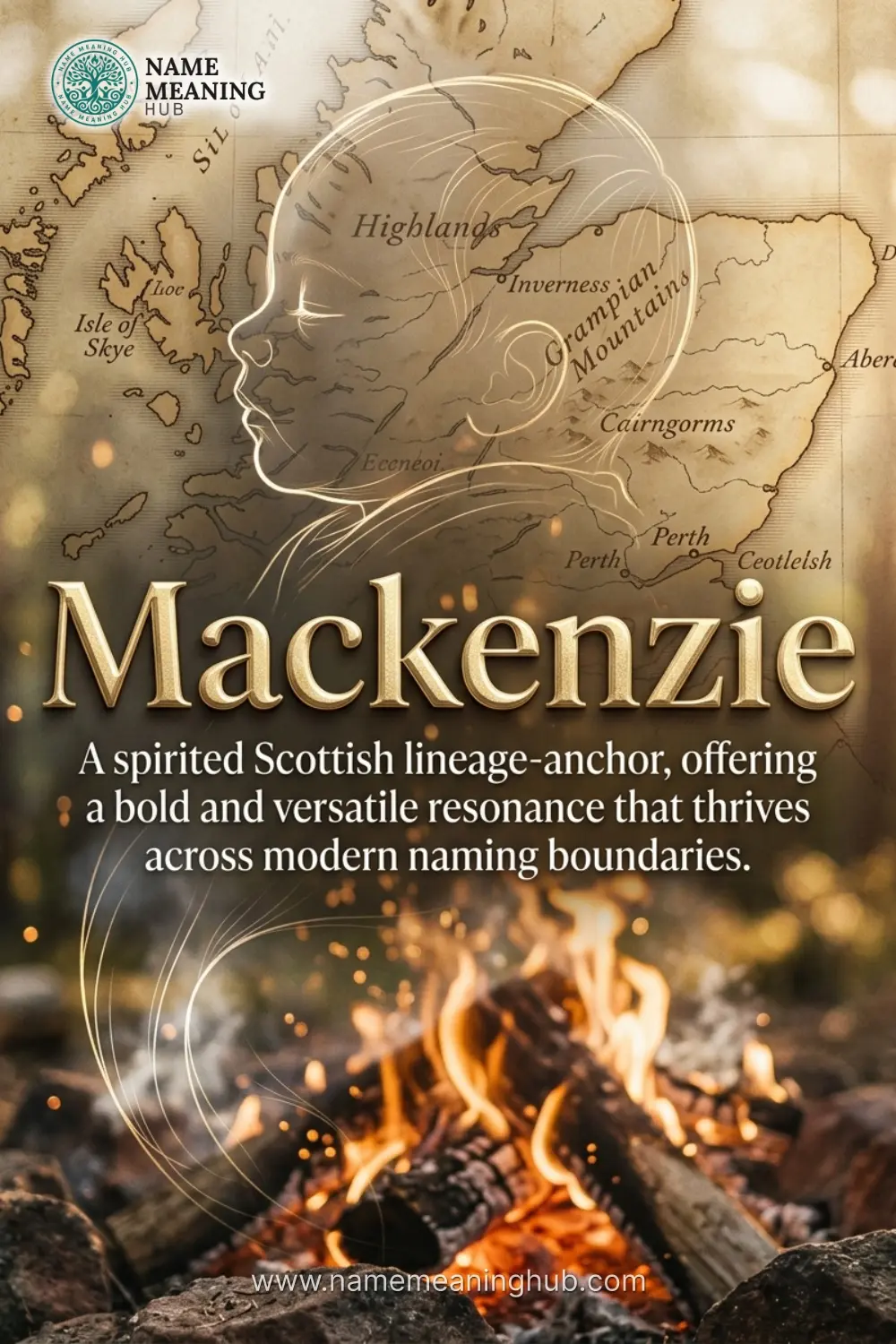
Where Mackenzie opens three more doors
Middle names that can either steady Mackenzie or soften it
Because Mackenzie already carries a bright modern rhythm, the best middle names usually do one of two things: they either ground the name with something short and classic, or they let it lean further into its light, contemporary energy. The full combination depends heavily on whether a family wants Mackenzie to sound brisk and polished or more lyrical and relaxed. If you want the full pairing logic behind that contrast, see Mackenzie middle names.
Nicknames that reveal different versions of Mackenzie
Mackenzie has an unusually useful nickname system for a modern surname-style name. Kenzie gives it sparkle and familiarity, while Mack keeps more of the surname frame intact. That range is one reason the full name remains wearable: it can shift tone depending on age, setting, and personality without losing coherence. To see how those different moods shorten in real life, explore Mackenzie nicknames.
Pronunciation that makes the name feel faster than it looks
Mackenzie’s pronunciation is one of its secret advantages. The stressed middle syllable keeps the name clear, and the bright final -zee gives it lift. Because the pronunciation is stable across major English accents, the name travels cleanly and stays socially easy to use. If you want the full sound pattern behind that rhythm, read Mackenzie pronunciation guide.
Why Mackenzie still feels like Mackenzie
In the end, Mackenzie lasts because it solves a modern naming problem with unusual grace. It gives parents lineage without stiffness, attractiveness without softness alone, and unisex history without present-day ambiguity about how the name is most often heard. Its Scottish surname origin gives it a real backbone. Its “fair one” layer gives it brightness. Its sound gives it energy. Its present-day ranking gives it room to breathe. If this origin is what attracts you most, browse names from Scottish tradition.
Most importantly, Mackenzie never had to choose between belonging and individuality. It began as a sign of descent and became a sign of personal style, yet it still carries traces of both lives at once. That is why the name feels more durable than many of its trend-era neighbors. It is not just fashionable. It is structurally persuasive. Mackenzie still sounds like a name with a past, but also like a person who can write a future in her own hand.