Arthur Name Meaning: Meaning, Heritage, and Gentle Strength
Some names inherit strength from sound. Arthur inherits it from story. Long before a child bearing the name ever enters a classroom, signs a form, or hears it called across a playground, Arthur already arrives carrying a double image: the bear and the king. One comes from meaning, the other from legend, and the reason the name has endured is that those two forces do not cancel each other out. They deepen each other. The bear gives Arthur physical gravity, steadiness, and instinctive power. The legendary associations give that power direction, restraint, and public purpose. Arthur is not simply a strong name. It is a name about strength made answerable to something larger than itself.
That is why Arthur continues to feel substantial even in a naming era crowded with short, sleek, high-speed choices. Official Social Security Administration (SSA) data shows Arthur ranked No. 105 for boys in the United States in 2024, which places it in a particularly revealing position: familiar, stable, and clearly established, but not so common that it loses its shape. Parents choosing Arthur are rarely choosing only an old-fashioned revival. They are choosing a name that sounds civilized without sounding soft, grounded without sounding plain, and dignified without becoming remote. A name meaning “bear” could have gone in a much rougher direction. Arthur turns that primal image into something ceremonial, literary, and deeply human.
Arthur's U.S. popularity rank over time, 1880–2024
Popularity statistics are based on official data from the Social Security Administration baby name records.
Arthur: A Noble Return to the Naming Center
Arthur reads as a name with one unmistakable center of gravity, sustained by a long historical identity on the boys’ side of the chart. Its current momentum may suggest a strong fit with the “vintage revival” trend, where parents look for names that feel noble and legendary yet usable.
While it appears rarely in the girls’ lane, the name remains firmly anchored in its traditional Celtic roots. Associated with the legendary King Arthur and meaning “bear,” it offers a sense of durability and permanence.
Where Arthur Carries the Weight of a Creature and a Crown
| Key Facts | Information | Quick Insight |
|---|---|---|
| Name | Arthur | Arthur feels formal enough to command respect, but familiar enough to remain warm and usable. |
| Primary Origin | Celtic | Its Celtic background gives the name mythic and historical depth without making it feel linguistically remote. |
| Primary Meaning | Bear | This is a meaning of rooted, instinctive strength, which gives Arthur a physical and symbolic center. |
| Pronunciation | AR-thur | The sound begins broadly and lands firmly, helping the name feel dignified without sounding stiff. |
| IPA | US: /ˈɑːrθər/ | UK: /ˈɑːθə/ | The accent difference changes texture, not identity, so the name remains stable across major English varieties. |
| Syllable Count | 2 | Two syllables keep Arthur compact enough for modern use, even though the name carries heavy historical associations. |
| Primary Usage | Male | Current use reads strongly male, reinforcing the name’s traditional social profile. |
| U.S. boys’ rank (2024) | No. 105 | This suggests a name that feels established and resurgent, but not overcrowded or overexposed. |
Arthur Turns the Bear Into a Human Virtue
The meaning “bear” is the first place Arthur takes hold. Animal meanings often give names a direct symbolic charge: lion for courage, wolf for ferocity, dove for peace. Bear works differently. It is not a symbol of speed or display. It is a symbol of grounded force. A bear suggests mass, patience, territorial steadiness, and a kind of strength that does not need to prove itself every minute. That is what makes Arthur so compelling. It does not inherit the flashy idea of power. It inherits the older idea of power as presence.
Why “bear” feels heavier than “strong”
Many names are glossed with virtues like bravery, courage, or strength, but those words can become abstract very quickly. “Bear” does not. It is concrete. It places the imagination in the world of body, weather, instinct, and endurance. A bear is not admired for elegance. It is admired because it is formidable without needing ornament. That concreteness gives Arthur unusual substance.
It also changes the emotional feel of the name. Arthur does not sound like a boy expected to dazzle. It sounds like a boy expected to hold. That difference matters. Parents often want names that suggest inner sturdiness rather than public performance, and Arthur delivers that almost perfectly.
Why Arthur civilizes the animal image
If the name stopped at “bear,” Arthur might feel too rough, too wild, or too purely physical. But the historical and literary life of the name transforms the image. Arthur becomes strength taught manners, instinct given a code, force placed in service of order. This is one of the deepest reasons the name remains attractive. It does not ask parents to choose between power and refinement. It offers both in one symbolic package.
That combination is rare. Some names feel noble but bloodless. Others feel strong but overly blunt. Arthur lives in the narrow middle ground where physical gravity and cultural dignity reinforce each other rather than compete.
Why Arthur feels sturdy rather than aggressive
The bear is an especially useful symbol because it does not automatically imply domination. It can imply guardianship, endurance, protectiveness, and contained threat rather than constant attack. That gives Arthur a more balanced masculine energy than some harder-edged traditional names. The name suggests capability, but not cruelty. Solidity, but not theatrical toughness. If you are building a shortlist around names like Arthur, browse more names for boys.
This is part of why Arthur feels emotionally modern even though it is historically old. It models a form of masculine strength that can coexist with thoughtfulness, loyalty, and public responsibility. The bear remains inside the name, but it has learned to sit at a round table.
How Arthur Became Larger Than One Origin Story
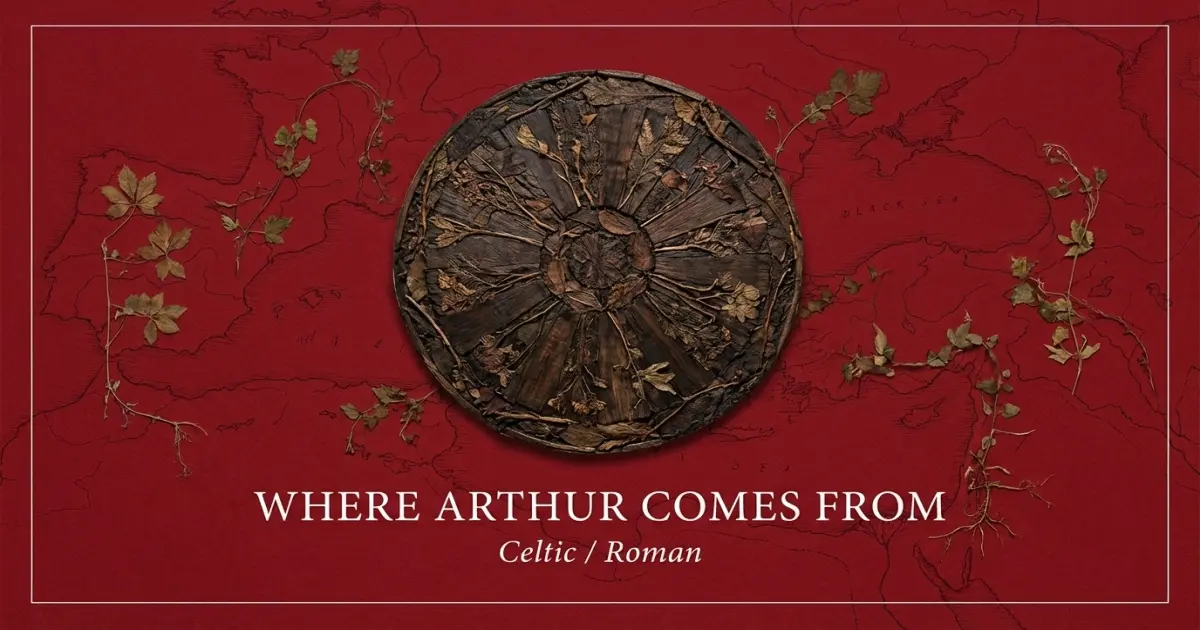
Arthur’s primary origin here is Celtic, and that is the most important anchor to preserve. But Arthur is also one of those names whose life has become so culturally large that it now feels bigger than any single etymological path. The attached naming books reflect this breadth. One reference emphasizes “bear” and related meanings of strength. Another notes the possibility of stone or rock-like associations. All of those readings move in the same general direction: solidity, endurance, and force held in form. To explore the wider naming world around Arthur, visit baby names from this cultural background.
Arthur as a Celtic name with mythic expansion
Many old names remain confined to one linguistic world. Arthur did not. It passed from a Celtic inheritance into a much wider literary and cultural imagination, where it became inseparable from the legendary king. That expansion matters because it changed the name’s emotional range. Arthur stopped being only a personal name and became a civilizational symbol: order, kingship, quest, failure, loyalty, betrayal, return.
Few names carry that much story without becoming unusable. Arthur does because its structure is still simple. It sounds like a real human name even while carrying a mythic charge. That is difficult to achieve, and it helps explain the name’s durability across centuries.
Why the Arthurian association still matters
Even people who know little precise medieval literature still hear something in Arthur that feels storied. The name evokes kingliness without requiring a crown in the room. That association is a tremendous asset. It means Arthur can feel noble without needing decorative elaboration, and historical without needing archaic spelling or formality of address.
It also gives Arthur a different kind of depth than a purely biblical or purely classical name might have. Arthurian legend is not only about authority. It is about tested authority. The name therefore carries not just prestige, but drama: a throne that must be earned, held, and justified.
Why Arthur never sounds trapped in the past
Some legendary names become too heavy for daily life. Arthur avoids that because its spoken form is so natural. Two syllables. A broad opening. A familiar ending. It can live on a child in a stroller and on an older man in a study without ever sounding like costume. The attached baby-name references treat Arthur as both traditional and deeply usable, and that balance is exactly right.
Arthur therefore achieves something rare: it remains historically immense while staying socially manageable. It is a story-rich name that still knows how to answer when called.
What People Hear in Arthur Now
In present-day use, Arthur occupies an especially interesting social position. It is no longer an obligatory grandfathers’ name, but it is not a fashionable lightweight either. At No. 105 in the United States in 2024, it sits in a strong middle zone: revived enough to feel alive, restrained enough to feel intentional, and familiar enough that it needs no explanation.
Arthur sounds traditional, but not stale
One of Arthur’s greatest strengths is that it feels traditional in the right way. It sounds rooted rather than dusty. That distinction matters. Some revived names carry so much old-age association that they sound borrowed from another life. Arthur sounds inherited, but not trapped. It feels like a name that has returned because it still has something useful to say.
This is partly due to its sound. Arthur begins broadly and authoritatively, then softens. The name has body. It does not flit or sparkle. Yet the ending prevents it from becoming overly hard. The result is a name that sounds serious without sounding inaccessible.
Style neighbors, and why Arthur is not simply one of them
Arthur often sits near names like Henry, Theodore, Oliver, Hugo, and August in modern taste, but it does something none of them quite do in the same way. Henry feels more social and historical in an administrative sense. Theodore feels more intellectual and expansive. Oliver feels friendlier and greener. Hugo is sharper and more compact. August feels more symbolic and seasonal. Arthur alone combines animal-root strength with legendary kingship and broad cross-generational familiarity.
That distinction helps explain why the name has regained respect without becoming ubiquitous. Arthur does not merely echo current revival taste. It offers a very specific cultural silhouette: sturdy, thoughtful, and faintly sovereign.
Why Arthur ages beautifully
Arthur is one of those rare names that can sound charming on a child and fully authoritative on an adult without seeming to change clothes. That life-span flexibility is not accidental. The name has enough softness in sound to remain warm in early childhood, and enough historical gravitas to deepen naturally in adult life.
Parents often underestimate how valuable this is. A name that ages well saves a child from having to outgrow it. Arthur does not need reinvention later. It is already built to widen as the person does.
Why Arthur’s Modern Revival Feels Earned
Arthur’s current ranking tells an important story. This is not a name clinging to life through nostalgia alone. Its return reflects a real shift in naming taste toward names that feel classic, textured, and morally legible. Parents are increasingly drawn to names that sound established but not generic, and Arthur fits that desire almost perfectly.
It also helps that Arthur’s meaning and associations point in the same general direction. Bear, strength, rock-like steadiness, kingship, quest, endurance: all of these ideas reinforce one another. The name does not scatter its symbolic energy. It concentrates it. That makes Arthur unusually coherent.
At No. 105, Arthur is also in a useful popularity band. It is not rare enough to feel obscure, and not common enough to feel flattened by repetition. That gives it social ease with a little room still left around it. Many parents actively want that balance.
In effect, Arthur’s revival feels earned because the name offers more than one reason to choose it. It is handsome. It is meaningful. It is literary. It is historical. It is usable. When a name answers that many different desires without feeling over-engineered, it usually lasts.
Three Future Paths Already Hidden Inside Arthur
Middle names that can make Arthur feel softer or more ceremonial
Because Arthur already carries so much historical weight, the middle name can dramatically alter its atmosphere. A brisk middle can keep it agile and modern, while a longer classic middle can make the full name feel especially noble and layered. If you want the full pairing logic behind that contrast, see Arthur middle names.
Nicknames that turn Arthur from formal to intimate
Arthur has one of the more versatile nickname worlds among traditional names. Short forms can make it playful, familial, or gently old-world without erasing the dignity of the full name. To see how those different moods shorten in real life, explore Arthur nicknames.
Pronunciation that shifts texture across accents
The American and British forms differ mostly in rhoticity, not identity. That gives Arthur a useful flexibility: firmer in some voices, softer in others, but still unmistakably itself. For the detailed stress pattern, accent notes, and IPA, see Arthur pronunciation guide.
Why Arthur Still Sounds Like Strength Given a Code
In the end, Arthur survives because it holds a rare synthesis. It begins in the world of the bear, of brute steadiness and animal force, but it does not stay there. Story, legend, and history refine that force into something public, answerable, and human. Arthur is therefore not merely strong. It is strength that has learned responsibility.
That is what makes the name feel so satisfying. It gives parents access to power without cruelty, to tradition without stiffness, and to grandeur without abstraction. The child named Arthur inherits not only a meaning, but a trajectory: from instinct to rule, from force to order, from creature to king.
That is the literary power of Arthur. It turns the wild into character without draining it of its heat. It makes dignity feel earned, not decorative. And because the best names often carry not just one image but a whole arc of becoming, Arthur continues to sound like exactly what it has always promised to be: steady, storied, and strong enough to answer for its strength.