
When to Stop Searching for the Perfect Baby Name

Some parents keep searching for baby names because the shortlist is still weak.
Many keep searching because the shortlist is already strong enough to make the decision feel real.
That is the uncomfortable stage. You have names you genuinely like. A favorite may carry meaning, flow well with the surname, or feel close to the family style you imagined. A quieter contender might look less dazzling than the newest discovery, yet somehow more durable every time you return to it.
Still, you keep opening lists.
Searching can feel responsible. It can also become a way to delay the emotional cost of choosing.
A baby name feels permanent before it feels lived-in. Before the child arrives, the name is still an idea, which makes it easy to inspect from every angle. You can imagine regret, trend fatigue, spelling problems, family reactions, and the possibility that another name slightly more meaningful, stylish, rare, classic, or “right” is hiding one page away.
Sometimes more searching is useful. It sharpens your taste, exposes a better direction, or reveals a practical issue you had not noticed.
At a certain point, though, another list stops creating clarity. It only keeps the decision open.
When your broader taste is still genuinely unclear, browse baby names by style and notice which lanes keep pulling you back. Once real contenders are already on the table, the task changes. You are no longer looking for more inspiration. You are trying to understand whether the search is helping the name or helping you avoid commitment.
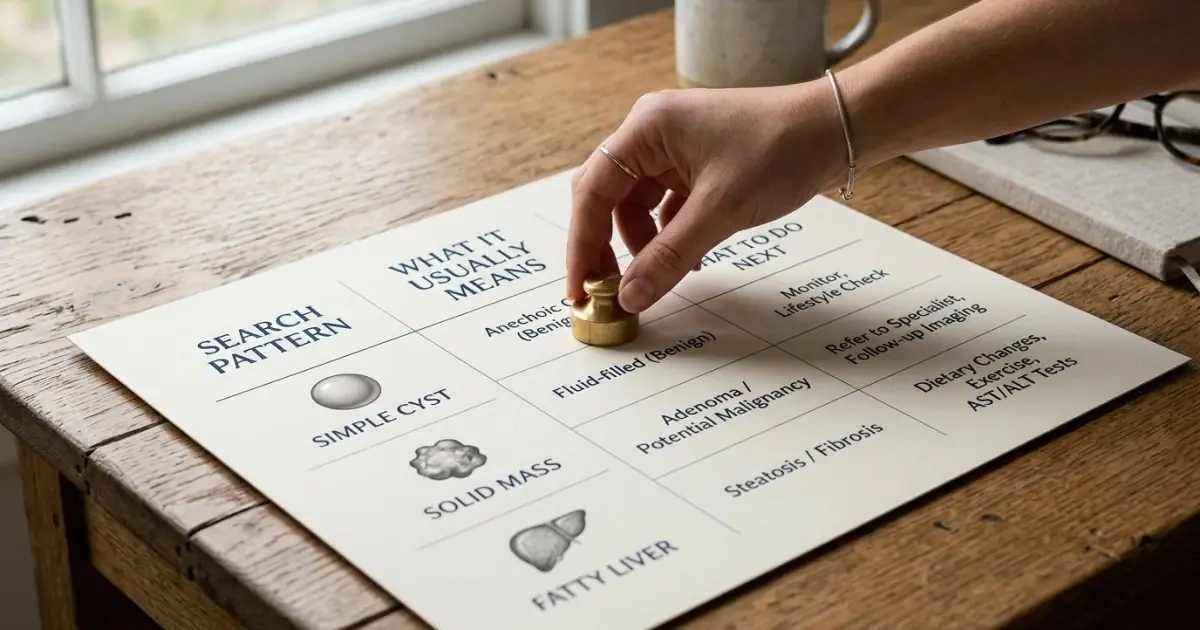
The Search Becomes the Problem When It Stops Improving the Shortlist
Useful searching has movement.
It forces clarity: you might discover a preference for tailored classics, realize surname flow matters more than meaning, or finally admit that popularity comfort is not a small issue for you. Good searching teaches something that changes the quality of the shortlist.
Anxiety searching moves differently.
New names appear, but the list does not get stronger. Criteria shift every few days. Previously rejected names return because choosing feels difficult, not because new evidence made them stronger. The process becomes a loop disguised as research.
| Search Pattern | What It Usually Means | What to Do Next |
| New names clearly outperform the current shortlist | The search is still productive | Keep exploring within that direction |
| New names are interesting but not stronger | Novelty is creating temporary energy | Pause new inputs and test the current shortlist |
| The shortlist keeps expanding but never narrowing | The process lacks decision rules | Use a comparison framework before adding more names |
| The same few names keep returning | The answer may already be inside the shortlist | Give those names room to prove themselves |
| Every name weakens once it becomes serious | Perfectionism may be driving the search | Stop browsing and diagnose the fear directly |
| Partner disagreement keeps inviting new options | The issue may be process, not inspiration | Clarify shared priorities before searching again |
A search is useful when it makes the decision sharper. Once it only makes the field larger, it has started working against you.

What Parents Usually Mean by “We Haven’t Found the Perfect Name Yet”
“Perfect” can mean several different things.
For some parents, the list truly is not ready. No name feels usable. Nothing works with the surname. Every option feels forced, flat, borrowed, or only half-loved.
For others, the right kind of name may already be present, but trust has not caught up. The name is strong. The decision still feels exposed.
Another group is no longer searching for a name at all. They are searching for a guarantee against regret, family criticism, trend shifts, or the possibility of later wishing they had looked longer.
Those are different problems.
| What “Perfect” May Mean | The Real Problem | Better Next Move |
| “Nothing feels emotionally alive.” | The shortlist is still weak | Keep searching with clearer style or meaning direction |
| “We like names, but none work with the surname.” | Flow is the unresolved issue | Read How to Match a First Name With Your Surname |
| “We have good names, but I do not trust them.” | Confidence is lagging behind evidence | Move into testing and comparison |
| “My partner and I keep disagreeing.” | Priorities are not aligned | Use How to Choose a Name With Your Partner |
| “I worry there is something better.” | Perfectionism or regret anxiety may be leading | Stop adding names and examine the fear |
| “The shortlist is huge.” | The search has outgrown the decision | Narrow before comparing |
The phrase “not perfect yet” should not automatically send you back to browsing. First, identify what kind of imperfection you are trying to solve.

Useful Searching and Anxiety Browsing Feel Different
The difference between useful searching and anxiety browsing is not always obvious in the moment.
Both can involve lists, notes, rankings, conversations, and late-night research. The emotional pattern is different.
Useful searching leaves you clearer. Anxiety browsing leaves you busier.
| Useful Searching | Anxiety Browsing |
| Reveals a stronger naming direction | Repeats the same uncertainty in new forms |
| Makes the shortlist smaller or better | Keeps the list open because stopping feels risky |
| Clarifies what matters most | Changes priorities every few days |
| Finds names that outperform current contenders | Produces names that are merely new |
| Leads naturally into testing or comparison | Avoids the harder work of choosing |
| Feels constructive, even when slow | Feels compulsive, flooded, or restless |
A parent considering Arthur, August, and Theodore may still be searching usefully when the real question is classic weight, nickname range, or surname rhythm. The same browsing becomes anxiety-driven once those names already meet the family’s standards and new options are added only to postpone choosing between them.
The useful signal is not how long you have searched. It is whether the search has improved the decision.

When More Baby Name Searching Is Still Worth It
Stopping too early can happen.
There are moments when more searching is not avoidance. It is necessary refinement. The key is to search with a target instead of widening the field blindly.
| Situation | Why More Searching Still Makes Sense | Search More Intelligently By… |
| No name feels genuinely usable | The shortlist is not ready | Returning to broad inspiration and style lanes |
| The surname keeps breaking strong names | The issue is structural | Focusing on rhythm, syllables, and endings |
| Pronunciation keeps creating friction | The environment has not been tested enough | Reading How to Evaluate Pronunciation Ease |
| Nicknames keep weakening your favorites | The social life of the name matters | Using How to Check Nickname Potential Before You Choose |
| You and your partner value different things | The search lacks a shared framework | Agreeing on criteria before gathering more names |
| The list is full of admired names, not usable names | Taste has not turned into choice | Cutting names you would not actually give your child |
| Your style direction is still vague | The search has not taught you enough yet | Browsing by style instead of random lists |
Useful searching has a specific job. It looks for a better solution to a known problem.
Random searching at the final stage usually does the opposite. It multiplies problems.
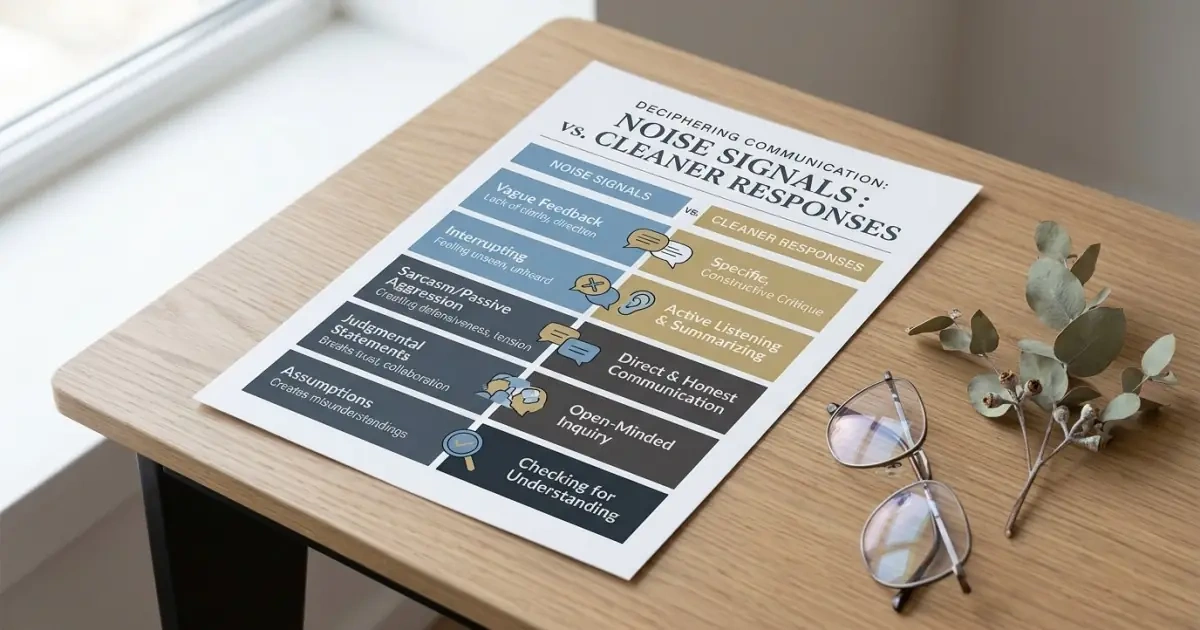
Signals That Another List Is Only Adding Noise
Endless searching often announces itself quietly.
You discover names, but none outperform the current shortlist. The newest name feels thrilling for a day, then fades. The criteria keep rotating: rarity, then timelessness, then meaning, then initials, then whether a stranger liked it.
The shortlist never becomes smaller. It only changes shape.
| Noise Signal | What It Means | Cleaner Response |
| New names feel fresh but not stronger | Novelty is being mistaken for progress | Pause new inputs for a set period |
| Old rejections keep returning | Discomfort with choosing is reopening closed doors | Revisit only names with new evidence |
| The criteria change constantly | The decision rules are unstable | Rank priorities before comparing names |
| You feel more flooded after every search | Input has exceeded usefulness | Move to testing |
| You cannot remember why names were cut | The process lacks structure | Keep a decision note for each serious contender |
| Forums and comments affect you too much | Outside voices are replacing your own judgment | Stop crowdsourcing taste |
Research tends to move forward. Circling repeats.
Once the pattern is circling, the responsible move is not more searching. It is containment.

Why More Names Can Feel Safer Than Choosing One
More names keep possibility alive.
That is the comfort. As long as you are searching, you do not have to release the fantasy that a flawless name exists somewhere just beyond the current list. Trade-offs can stay theoretical. No single name has to become real enough to disappoint you.
Searching also delays the practical tests that make names more vulnerable.
A name such as Eden may look soft and balanced in a note, but the surname test will show whether it has enough structure. Soren may carry restraint and distinction, then reveal pronunciation or family-use questions. Luca may feel warm and globally easy, while popularity comfort still needs an honest check.
Browsing protects names from reality. Testing asks them to perform.
That shift can feel brutal. It is also where real confidence starts.
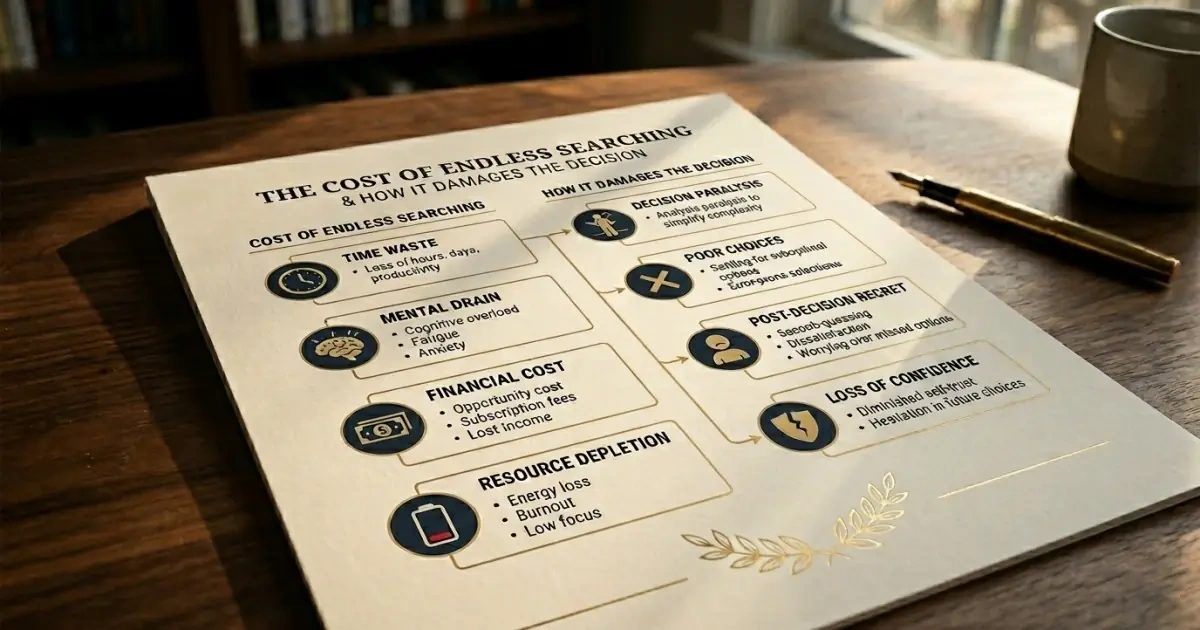
The Hidden Cost of Keeping Strong Names in Permanent Audition
Endless searching does not only waste time. It can weaken names that were already good.
A strong name needs repetition to deepen. It needs to be said, written, paired with the surname, and heard in your partner’s voice. When the list is constantly refreshed, no contender gets enough time to become familiar.
The latest name also gets an unfair advantage. Novelty can imitate clarity. A new discovery feels clean because it has not yet been tested.
| Cost of Endless Searching | How It Damages the Decision |
| Strong names never get to settle | Familiarity is mistaken for weakness |
| New names feel artificially exciting | Novelty competes unfairly with durability |
| Outside voices accumulate | Your own standards become harder to hear |
| Decision fatigue grows | Even excellent names begin to look dull |
| Partner conversations become scattered | The couple debates names instead of priorities |
| Testing is delayed | Real evidence arrives too late |
Clara may need time for its clean steadiness to feel personal. Maeve can prove its compact force through repetition. Leo may seem almost too simple until daily speech shows whether ease is exactly the point.
Do not punish a strong name for becoming familiar.
Familiarity is often the beginning of ownership.

A Strong Shortlist Matters More Than an Endless Search
A shortlist gives names room to compete honestly.
When the field is small, the comparison becomes clearer. Meaning, sound, style, surname flow, nickname risk, popularity comfort, and long-term fit can be weighed in the same frame. A name that depends on one dramatic feature becomes easier to spot. A quieter name that keeps working finally gets a fair hearing.
Testing also becomes meaningful only when the names are real contenders. Saying fifteen names aloud creates noise. Saying three finalists with the surname reveals something.
| Endless Search | Strong Shortlist |
| Keeps collecting possible names | Keeps only names you could genuinely use |
| Rewards novelty | Rewards durability |
| Makes comparison harder | Makes trade-offs visible |
| Delays practical testing | Moves names into real life |
| Feels open but unstable | Feels narrower but clearer |
When the list is still too wide, return to How to Build a Baby Name Shortlist. Once the finalists are serious, How to Compare Baby Names Objectively can show whether the field is improving or merely rotating.
Stopping the search is often what lets the right name become visible.
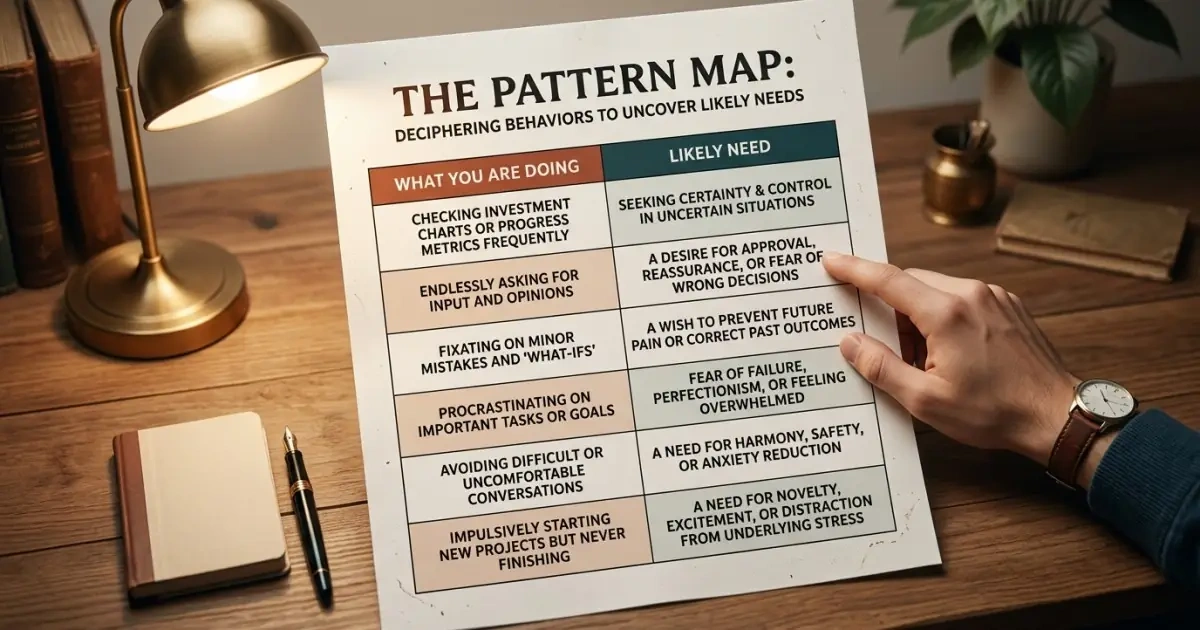
You May Be Searching for Reassurance, Not a Name
This is the question worth asking directly: are you still looking for a name, or are you looking for reassurance?
Information teaches something new. Reassurance only softens the discomfort of uncertainty for a little while.
| What You Are Doing | Likely Need |
| Finding names that clearly outperform the shortlist | More inspiration |
| Checking the same charts repeatedly | Reassurance |
| Searching after a favorite passes every practical test | Trust |
| Looking up names you already rejected | Relief from commitment pressure |
| Asking more people for opinions after feedback became confusing | Permission |
| Returning to one name despite endless browsing | Confidence in the existing front-runner |
Parents sometimes assume continued searching proves the right name has not appeared. Often it proves only that they are afraid to trust the strongest current option.
When one name keeps returning after every search, pay attention. That pattern belongs with How to Know When a Name Feels Right, not another round of browsing. When fear of later regret is driving the loop, move into How to Avoid Baby Name Regret before adding more names.

Popularity, Trendiness, and FOMO Can Keep the Search Open Too Long
Popularity anxiety has a special talent for reopening settled decisions.
A name feels strong until you discover it is rising. Another loses charm after you hear it twice in a week. A rare name starts looking more attractive simply because it has fewer social fingerprints. Suddenly the search expands again, not because the current name failed, but because no name seems capable of being fresh, meaningful, familiar, distinctive, timeless, and untouched all at once.
That standard is impossible.
| Popularity Fear | What to Ask Before Searching Again | Better Tool |
| “The name is too popular.” | Would duplication actually bother us in daily life? | baby names by popularity |
| “The name feels too trendy.” | Does the style still feel like ours without the current buzz? | How to Tell If a Name Feels Too Trendy |
| “There must be a rarer version.” | Are we improving fit or chasing scarcity? | Objective comparison |
| “It may date too fast.” | Is the concern based on sound, style, or actual trend pattern? | Long-term testing |
| “Another name might be fresher.” | Is freshness our priority, or just a temporary lure? | What Makes a Good Baby Name? |
Juniper may feel vivid and current because its nature style has cultural energy. Rose offers more restraint, familiarity, and durability. Neither is automatically safer. The stronger name is the one that matches your real comfort with style, visibility, and long-term use.
Popularity should inform the decision. It should not keep the search permanently open.

Stop Browsing When Testing Would Teach You More
At a certain point, another list teaches less than one real-life test.
Browsing gives possibility. Testing gives evidence.
| Test | What It Reveals | Why It Beats More Browsing |
| Out-loud test | Whether the name works in warm, tired, quick, and public speech | A beautiful list name may not be livable |
| Surname test | Whether the full name lands naturally | First names do not live alone |
| Nickname check | Likely short forms and social versions | Other people will shorten names before asking |
| Initials check | Awkward combinations or monogram issues | Preventable friction is easier to solve now |
| Adulthood test | Whether the name has range | The child will carry it longer as an adult |
| Fridge test | Whether the name deepens or fades after a few days | Repetition separates durability from first impact |
When your shortlist is already strong, How to Test a Baby Name Before Finalizing It should replace another round of browsing.
The name has earned the right to be tested in life, not only admired on a screen.

When You Love a Name but Keep Looking Anyway
A loved name plus endless searching usually means a fear has not been named.
Give the fear a shape. Vague unease can keep the search alive indefinitely. A specific concern can be tested.
| Fear Keeping the Search Alive | Test It Directly By… |
| “It may be too common.” | Checking popularity comfort instead of chasing rarity |
| “It may not work with the surname.” | Saying the full name in casual, formal, and quick speech |
| “It may be too trendy.” | Asking whether the name still feels right without current style energy |
| “The nickname may bother me.” | Listing the most likely short forms honestly |
| “It may not age well.” | Imagining the name across childhood, adolescence, and adulthood |
| “It is not meaningful enough.” | Deciding whether meaning is a must-have or a nice-to-have |
| “There may be something better.” | Pausing new names and comparing only current finalists |
Once the fear has been tested, watch what happens. A strong name usually becomes calmer under scrutiny. A fragile one needs more defense the longer it stays.
When the search keeps inventing new doubts after the real ones have been checked, stop feeding it. The issue is no longer name quality. It is the narrowing that every real decision requires.

Partner Dynamics Can Disguise Themselves as Endless Searching
Sometimes the search continues because the couple has not resolved the process.
A new list can postpone a harder conversation. One partner may still be waiting for a better compromise; another may be quietly grieving a favorite that is fading. In some couples, the deeper disagreement is not the name at all, but whether meaning, sound, family honor, style, or simplicity deserves the most weight.
Adding more names can keep that disagreement hidden.
| Search Behavior | Possible Partner Dynamic |
| New names keep entering after strong finalists appear | The couple is avoiding a final negotiation |
| One person keeps suggesting names from a rejected lane | Their priority may not feel respected |
| A family name keeps returning despite resistance | Honor and fairness have not been separated |
| Every compromise feels weak | The shared criteria may be wrong |
| The list expands after every disagreement | Searching is replacing decision-making |
Stopping the search can make the real conversation visible. That may feel uncomfortable, but it is often the point where progress begins.
When partner alignment is the hidden issue, How to Choose a Name With Your Partner belongs before more browsing. A name chosen through exhaustion rarely feels like a shared win.
Signs Your Shortlist Is Already Strong Enough
A shortlist does not need to contain a flawless name.
It needs to contain usable names with honest trade-offs.
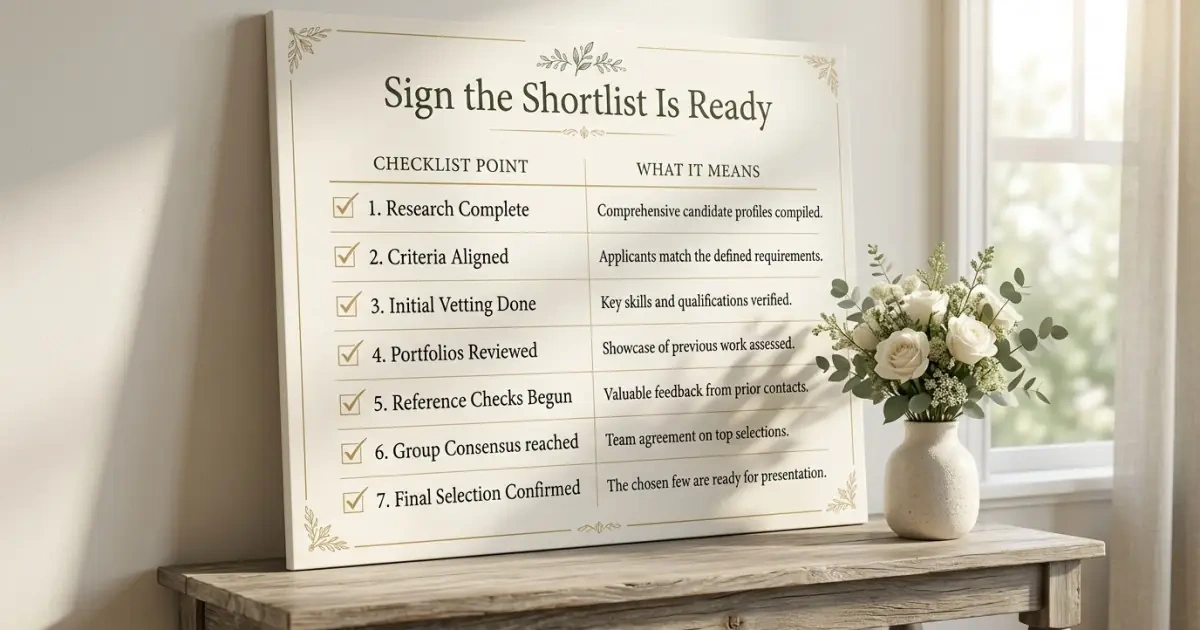
| Sign the Shortlist Is Ready | What It Means |
| You can genuinely imagine using several names | The list has moved beyond admiration |
| The field is small enough to compare fairly | The decision can now be structured |
| The names survive basic real-life tests | The shortlist is not purely theoretical |
| One or two names keep returning | A front-runner may be forming |
| New names are not clearly stronger | More searching is unlikely to improve the field |
| Remaining doubts are emotional, not informational | You may need confidence, not more input |
| Both parents can discuss the finalists seriously | The process has enough shared ground |
A new name should reopen the process only when it clearly outperforms the current finalists. Novelty alone is not enough.
That standard protects the shortlist from restless hope.
A Practical Framework for Stopping the Search at the Right Time
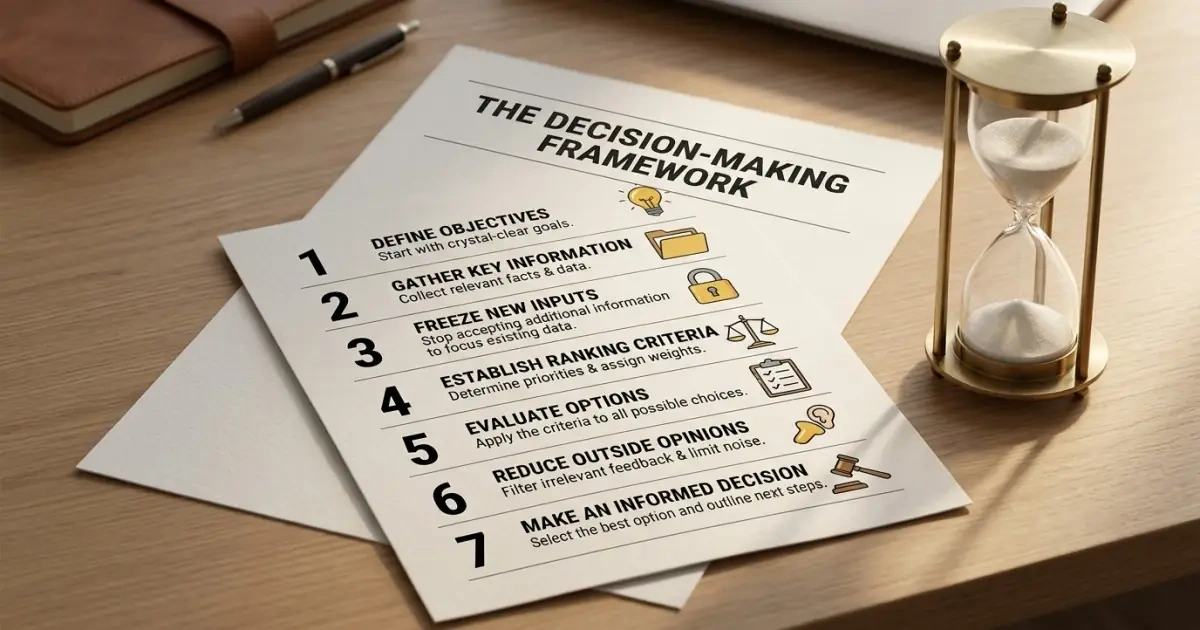
Use this process when you suspect the search is no longer helping.
| Step | What to Do | Why It Works |
| 1. Freeze new names for one week | Stop adding options temporarily | Removes novelty from the decision |
| 2. Keep only real contenders | Cut names you admire but would not use | Makes the comparison honest |
| 3. Rank your criteria | Meaning, sound, style, surname flow, nicknames, popularity, long-term fit | Prevents changing rules midstream |
| 4. Compare the finalists consistently | Use the same standards for every name | Shows which names are truly strong |
| 5. Test the top names in real life | Say, write, shorten, and live with them | Moves the decision out of theory |
| 6. Reduce outside opinions | Stop asking broad taste questions | Protects the shortlist from borrowed doubt |
| 7. Stop when the search stops improving the list | Choose the next action: test, compare, or decide | Prevents endless input from replacing judgment |
The stop point is not when every doubt disappears.
It is when more searching no longer improves the options.
Stopping the Search Is Not Settling
This is the emotional barrier.
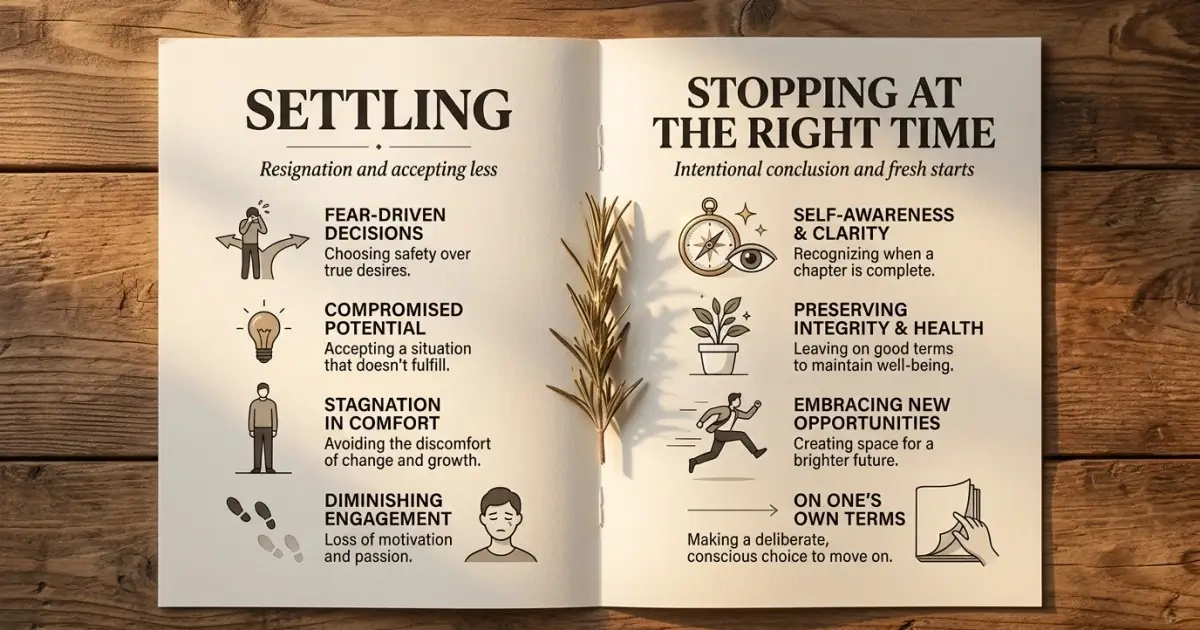
Stopping can feel like surrender because endless possibility is seductive. But settling and stopping are not the same act.
Settling means choosing a weak name because you are tired. Stopping means recognizing that the field is already strong enough and that the next stage is testing, comparison, or commitment.
| Settling | Stopping at the Right Time |
| Ignores real problems | Tests the real problems first |
| Chooses from fatigue | Chooses from a strong shortlist |
| Avoids honest comparison | Uses consistent standards |
| Leaves partner hesitation unresolved | Requires shared ownership |
| Feels like resignation | Feels narrower, but clearer |
Commitment always feels smaller than possibility. That does not mean the choice is weak.
A good name can be worth choosing while other good names still exist.

Questions Parents Ask When They Cannot Stop Searching
How do you know when to stop looking at baby names?
Stop when the search is no longer improving the shortlist. A useful search produces stronger names, clearer criteria, or better direction. A search that only adds more maybes is no longer helping.
Is it normal to keep searching after finding names you like?
Yes. Stopping often feels more emotionally risky than continuing. That does not mean the current names are weak; it may mean the decision is becoming real.
Should you keep looking until one name feels perfect?
Usually not. Most parents do not receive perfect certainty. A strong name should survive testing, comparison, and real use, but it does not need to erase every other good option.
What if a new name appears after we stop searching?
Treat it like evidence, not temptation. Compare it against the current finalists using the same criteria. Keep it only if it is genuinely stronger, not merely newer.
Can endless searching make the final decision worse?
Yes. Too many options create fatigue, invite outside noise, and prevent strong names from deepening through use. More names can make confidence harder, not easier.
What should you do when the shortlist is strong but confidence is weak?
Stop browsing and move into pressure testing. A strong shortlist needs use, comparison, and quiet repetition more than another list.

Where to Go Once the Search Has Done Its Job
Let your specific roadblock dictate the final move. A bloated list needs the discipline of How to Build a Baby Name Shortlist, while a tight pair demands the sharper contrast in How to Decide Between Two Baby Names. Strong finalists that still feel hard to weigh belong beside How to Compare Baby Names Objectively, where the same standards can be applied without letting each name win on its favorite feature.
Once a name looks good in theory, stop protecting it from real life. Push it through How to Test a Baby Name Before Finalizing It so sound, surname flow, nicknames, initials, and adulthood fit can speak clearly. When the strongest name may already be present but trust has not caught up, How to Know When a Name Feels Right will help you read the signal. Fear of choosing badly belongs with How to Avoid Baby Name Regret, not another round of random browsing.
For the wider editorial path through naming decisions, Expert Baby Naming Guides for Choosing the Right Name can help you move from broad uncertainty into the guide that matches the exact problem in front of you.
Most parents do not need more baby names forever.
They need permission to stop searching once the shortlist is already doing its job. The search for the perfect baby name stops being useful when it no longer improves the options, only delays the choice. That is the moment to close the extra tabs, protect the names that have earned a place, and let the strongest contenders prove themselves in comparison, testing, and real life.