
Griffin Name Meaning: Symbolism, Heritage, and Everyday Appeal

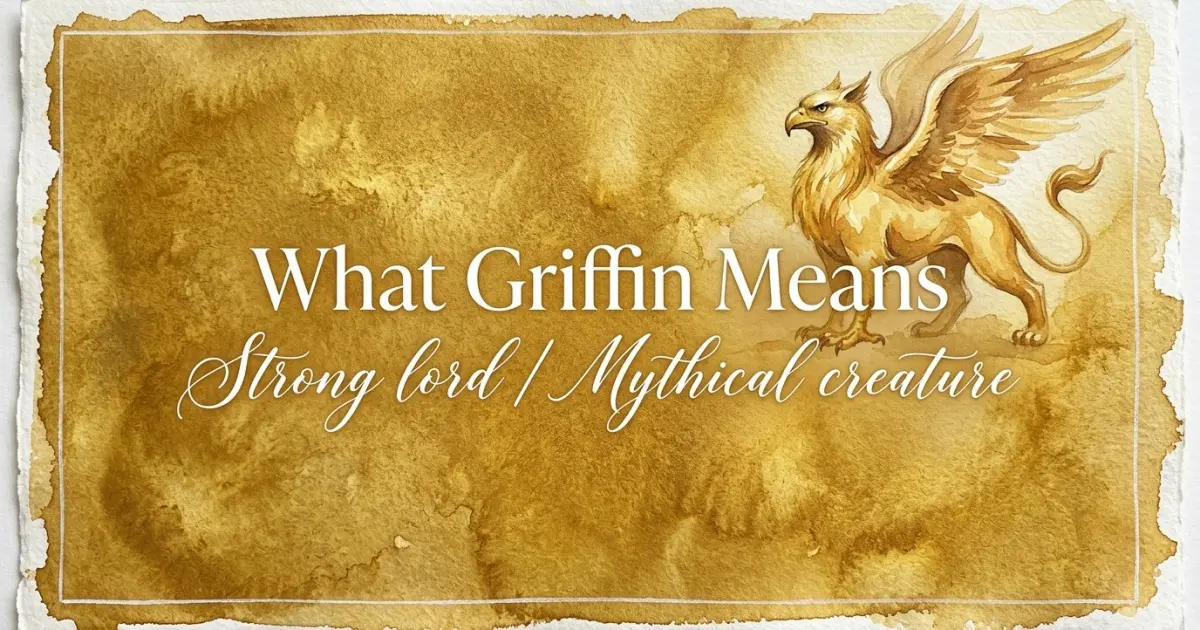
Griffin is one of those names that arrives with two stories already attached to it. One is inherited and historical: a Welsh name whose primary meaning is “strong lord,” carrying the language of rank, strength, and leadership. The other is cultural and immediate: modern ears often hear Griffin and think of the legendary creature, part eagle and part lion, a figure associated with power, watchfulness, and grandeur. What makes the name interesting is that these two stories do not fight each other. They reinforce one another. Griffin sounds noble in an older political sense and vivid in a modern imaginative one. That is why it can feel both grounded and larger than life at the same time.
That double effect helps explain the name’s staying power. Official Social Security Administration (SSA) data shows Griffin ranked No. 223 for boys in the United States in 2024, with only very light use for girls at No. 6223. So the name is clearly established, but not worn thin. It feels familiar enough to be trusted and distinctive enough to stay memorable. Parents often choose Griffin because it sounds strong without sounding blunt, literary without sounding ornate, and spirited without sounding unserious. The name does something modern families often want but not many names achieve: it offers authority with imagination still inside it.
Griffin's U.S. popularity rank over time, 1881–2024
Popularity statistics are based on official data from the Social Security Administration baby name records.
Griffin: A Bold and Mythical Shared Surname
Griffin behaves as a name with a fluid identity that still feels stable, reaching its record height for boys in 2024. This “mythical beast” choice travels exceptionally well due to its professional sound and its fit with a style family parents trust for being both spirited and established.
The chart indicates that while both sides are active, the boys’ lane remains its primary home base at #201. Its simple two-syllable rhythm carries a sense of distinctive and confident character that remains current.
What Griffin shows on the surface before the deeper story begins
Before history, literature, or cultural perception enter the conversation, Griffin already gives a surprisingly clear first impression. It is a two-syllable Welsh-rooted boys’ name with a leadership meaning, a crisp English pronunciation, and a chart position that suggests steady visibility without overexposure.
| Key Facts | Information | Quick Insight |
|---|---|---|
| Name | Griffin | The form feels sturdy and contemporary, but it carries enough folklore and history to sound richer than many current boys’ names. |
| Primary gender usage | Male | Public use keeps Griffin clearly masculine, yet the sound remains polished rather than aggressive. |
| Origin | Welsh | The Welsh root gives the name historical depth and a stronger sense of inheritance than its modern American use might first suggest. |
| Meaning | Strong lord | The meaning places Griffin in a vocabulary of strength and leadership, but the name’s lively sound prevents it from feeling heavy-handed. |
| Pronunciation | GRIF-in | The brisk two-beat rhythm makes the name easy to carry in everyday life despite its rich cultural associations. |
| U.S. IPA | /ˈɡrɪfɪn/ | The consonants give the name grip and confidence, while the ending softens it enough for warmth. |
| U.K. IPA | /ˈɡrɪfɪn/ | The shared U.S. and U.K. pronunciation keeps Griffin unusually stable across English-speaking settings. |
| Syllable count | 2 | Two syllables help Griffin sound complete and substantial without becoming formal or cumbersome. |
| U.S. boys’ rank (2024) | No. 223 | This is the kind of ranking that keeps a name visible and socially easy while still preserving some individuality. |
| U.S. girls’ rank (2024) | No. 6223 | The minimal crossover use does little to change the name’s center of gravity, which remains overwhelmingly masculine in public life. |
Griffin carries leadership, but not the stiff kind
“Strong lord” is not a shy meaning. It belongs to older structures of rank, command, and recognized authority. In another name, that kind of gloss could feel rigid or theatrical. Griffin escapes that problem because its sound and cultural atmosphere complicate the meaning in useful ways. It does not feel like a title someone is trying to live up to every minute. It feels like a character trait embedded in the name’s frame: steadiness, command, resilience, and a certain readiness to lead.
That distinction matters. Modern parents are often cautious about names that sound overtly dominating. They may want strength, but not arrogance; authority, but not coldness. Griffin often appeals because it gives the impression of capacity rather than control. It sounds like a child who can take up space, not one who is required to conquer the room.
Why “strong lord” feels more livable in Griffin than it might elsewhere
Part of the answer is rhythm. Griffin does not sound stately in a distant, ceremonial way. It sounds active. The first syllable lands firmly, and the second lightens the effect before the name becomes too hard. That means the meaning stays impressive without turning pompous. The name can carry leadership language while still sounding like the name of a real child, not a carved title on a medieval seal.
There is also a social difference between authority that is inherited and authority that is performed. Griffin sounds more like the first. It does not seem to be straining for force. It seems to possess enough of it already. That is why the name can sound confident rather than inflated.
Griffin feels strong, but it also feels watchful
Even if parents choose the name primarily for its Welsh meaning, many people will still hear Griffin through the cultural memory of the mythical griffin. That association quietly changes the texture of the name. It adds vigilance, loftiness, and imagination to the core idea of strength. As a result, Griffin feels less like a blunt power-name and more like a name shaped by guardianship and presence. That extra layer helps the “strong lord” meaning feel broader and more humane.

How Griffin moves between Welsh inheritance and modern imagination
Griffin is unusually successful because it belongs to two worlds at once. Its primary origin and meaning are Welsh, where related forms connect the name to lordship, strength, and leadership. Yet in modern English-speaking life, the name also carries the afterimage of the griffin creature from Greek mythology and later medieval imagination. A naming guide may list Griffin among mythological or magical name sets because that association is now so culturally strong. What matters is not choosing one of these stories and erasing the other. It is understanding how the two together make the name feel alive.
The Welsh root gives Griffin legitimacy and depth. The legendary creature gives it vividness. Together they create a name that sounds inherited without sounding dusty, and imaginative without sounding invented. That balance is one of Griffin’s great strengths.
Why the Welsh core keeps Griffin from becoming fantasy-only
Modern culture is full of names that sound fantastical but rest on very little history. Griffin is not one of them. Its Welsh foundation gives it the kind of seriousness that makes the name wearable beyond childhood. A boy named Griffin is not trapped inside a costume of myth. He carries a name with ancestral and linguistic roots strong enough to support adult life. If this origin is what attracts you most, browse related names by origin.
This matters because names associated with creatures or legends can sometimes become too stylized. Griffin avoids that trap precisely because its primary meaning is not mythical at all. It is social and hierarchical: strong lord. That gives the name a grounded backbone beneath the wings people imagine when they hear it.
Why the legendary creature still matters to how Griffin is heard
At the same time, it would be artificial to ignore the cultural resonance of the griffin creature entirely. Many listeners do hear the name through that lens, even if only unconsciously. That is part of the name’s public energy. Griffin sounds alert, proud, and elevated because the cultural imagination has been trained to hear it that way. This does not replace the Welsh meaning. It enriches the social perception of the name. It lets Griffin feel noble in both a human and a legendary register.
Why Griffin sounds modern even when its roots are old
Phonetically, Griffin is built in a way that feels entirely at home in contemporary naming culture. It opens with a consonant cluster that gives it immediate traction, moves through a short, clear first vowel, and ends with a softened second syllable that keeps the name from sounding severe. This is a very effective design. The name feels crisp, but not clipped. It sounds strong, but not over-armored.

That phonetic structure explains a great deal of Griffin’s current appeal. Many parents want boys’ names that sound sturdy, easy to say, and socially agile. Griffin does all of that. Yet unlike some short modern names, it also has atmosphere. It has narrative around it.
The first syllable gives Griffin its grip
Grif is the engine of the name. It is compact and forceful without being harsh. The opening consonant blend gives the name momentum, and the short vowel keeps it from becoming too drawn out or ornamental. This is the part of the name that makes Griffin sound capable and grounded.
It also helps explain why the name wears well in professional and academic settings. Griffin sounds articulate and substantial without needing extra grandeur.
The ending keeps Griffin social and human
The second syllable matters just as much because it softens what the first establishes. Without the -in ending, Griffin could sound much more severe. With it, the name becomes friendlier, more conversational, and more adaptable to childhood and family life. This is one reason Griffin ages well. It can sound adventurous on a little boy and fully credible on an adult because the sound contains both structure and ease.
Griffin in the American charts is visible, but not diluted
Popularity shapes how a name behaves in public life, and Griffin currently sits in a particularly useful position. At No. 223 for boys in 2024, it is familiar enough that most people will recognize it immediately. But it is not so common that it feels interchangeable. That is often the best place for a name with as much personality as Griffin. It can carry distinction without demanding explanation.
This ranking also helps the name avoid two opposite problems. It is not obscure enough to feel forced or niche, and it is not common enough to feel exhausted. That means Griffin retains some of its texture. People are likely to know it, but not to shrug it off as just another name from the same crowded row.
What No. 223 says about Griffin now
It says that the name has crossed well beyond boutique or fantasy-adjacent appeal and into stable mainstream use. Teachers know it. Families hear it without surprise. It belongs to current public life. Yet it still sounds chosen, not defaulted. That is a difficult balance to maintain, and Griffin is managing it well.
Why the girls’ rank barely shifts Griffin’s identity
The small girls’ ranking at No. 6223 does not meaningfully change the way Griffin is understood in everyday life. The name remains overwhelmingly male in public use. If anything, the tiny crossover presence only confirms how strong the main lane is. Griffin may have imagination inside it, but its social identity is still clearly masculine. You can also compare Griffin with other choices in more boy names and meanings.
What families are really hearing when they hear Griffin
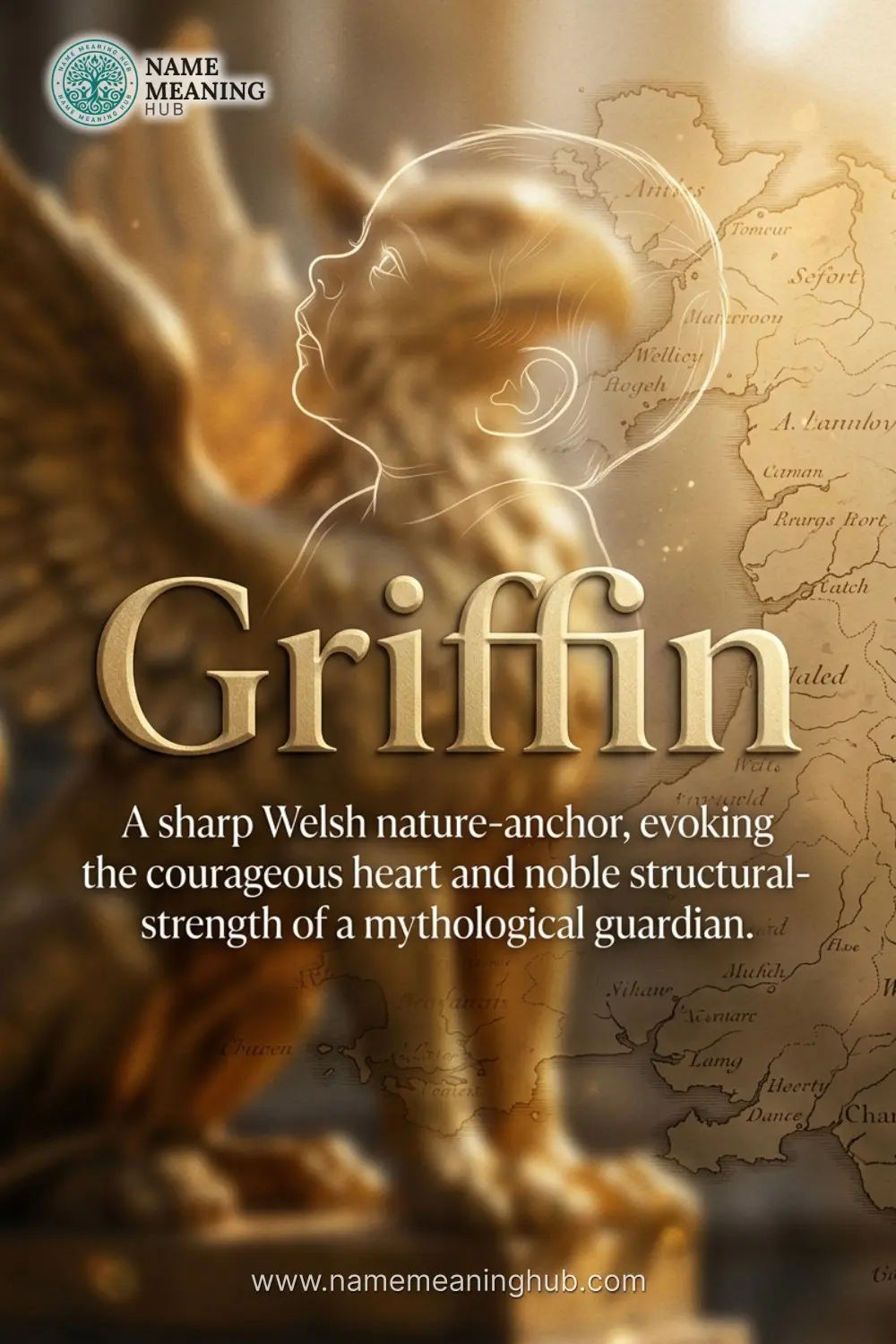
Most parents who choose Griffin are not choosing only a Welsh name, only a creature name, or only a surname-style modern name. They are hearing all three layers at once. They hear competence. They hear story. They hear a name that sounds strong enough to stand alone, but rich enough to hold a larger personality inside it. Griffin is especially good for families who want a name that can be spirited without becoming silly, noble without becoming stiff, and imaginative without losing adult credibility.
There is another reason the name lasts in the ear. Griffin sounds like it already knows who it is. Some names need context before they come alive. Griffin arrives with outline and atmosphere intact. That makes it easier to picture on a real child, which is one of the hidden tests every name must eventually pass.
Three next questions Griffin naturally opens
Because Griffin is already so well formed, the choices around it become especially meaningful. The name has enough definition that middle names, nicknames, and pronunciation details noticeably affect its final feel.
Middle names that balance Griffin’s force and imagination
Griffin can lean either more grounded or more lyrical depending on the middle name. The right pairing decides whether the full name sounds tailored, adventurous, or quietly traditional. If you want the full pairing logic behind that contrast, see Griffin middle names.
Nicknames that make Griffin warmer or rougher
The nickname field around Griffin is unusually useful because shorter forms can change the whole social temperature of the name. A full Griffin feels different from a boy everyone calls Griff. To see how those different moods shorten in real life, explore Griffin nicknames.
Pronunciation that keeps Griffin crisp without turning it hard
The pronunciation is stable, but the balance between the forceful first syllable and the softer ending is part of what makes the name work so well in ordinary life. For the detailed stress pattern, accent notes, and IPA, see Griffin pronunciation guide.
Why Griffin remains Griffin
In the end, Griffin succeeds because it lets several desirable things happen at once without asking parents to sacrifice one for another. It offers Welsh depth and present-day clarity. It carries a meaning of leadership without sounding authoritarian. It absorbs the legendary prestige of the griffin creature without becoming trapped in fantasy. It is strong, but not blunt. Vivid, but not unserious. Established, but not overhandled.
That is why Griffin lingers after simpler names have disappeared from the ear. It has narrative, but also discipline. It sounds like a name for someone who can take up space responsibly, someone with imagination but also backbone. In literary terms, it is the rare modern name that seems to arrive with both a crest and a pulse. That is what gives Griffin its staying power. That is what makes Griffin, finally, more than stylish—it makes Griffin memorable.