
How to Choose Spanish Names That Feel Global

Spanish names often seem to begin with an advantage.
They are warm without sounding weak. Familiar without becoming flat. Open-voweled, rhythmic, and social in a way that makes them feel easy to say, easy to hear, and easy to imagine on a real person. Parents may arrive through heritage, family tradition, bilingual life, Catholic or biblical familiarity, global mobility, or simple love of the sound.
The attraction is clear.
It is also slightly deceptive.
A Spanish name can feel naturally global until the choice becomes real. At first, the shortlist may seem unusually usable: many names read well across languages, sound open in conversation, and already circulate beyond Spanish-speaking countries. Then the finer tensions appear. The most international option may feel too smoothed out. The more rooted form may carry the warmth you love but invite more correction. A name that looks easy on paper may lose its music in another accent. A simplified spelling may lower friction while quietly flattening the rhythm.
That is the real decision.
The best Spanish names that feel global are not the ones that erase their Spanish identity. They keep enough warmth, rhythm, and clarity to move well across borders without disappearing into international sameness.
This is not a list of the “best Spanish baby names.” It is a framework for choosing a Spanish name that can feel rooted, recognizable, and naturally wearable in more than one setting.
Start with baby names by origin when you are still exploring the broader cultural landscape. Use How to Choose a Baby Name by Origin if Spanish is one of several origin lanes you are considering. Once style, visibility, or symbolism begins shaping the shortlist, keep baby names by style, baby names by popularity, and baby names by theme nearby. Spanish names are rarely only about portability; they ask how much warmth, culture, and movement you want the name to carry.
Spanish Names Appeal Because They Feel Socially Alive
Many Spanish names feel spoken rather than displayed.
That matters more than parents sometimes realize. A name can be beautiful and still stiff. It can be meaningful and still hard to use. Spanish names often avoid that problem because many of them move easily through conversation. Their vowels open. Their rhythm is clear. Their tone often feels affectionate, grounded, and publicly usable at the same time.
For heritage families, that warmth may connect directly to language, relatives, faith, place, migration, or family continuity. For non-heritage parents, the appeal may be less specific but still real: Spanish names often sound human before they sound styled.
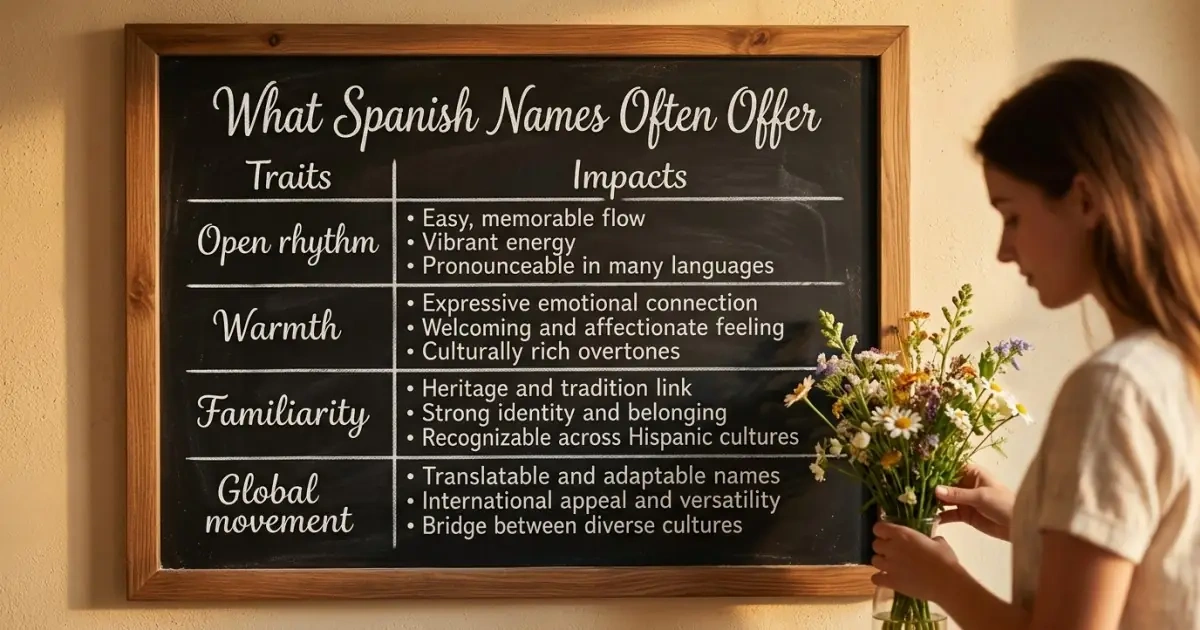
| What Spanish Names Often Offer | Why Parents Notice It |
| Open rhythm | The name feels easy to say and hear |
| Warmth | The sound often feels socially alive |
| Familiarity | Many names are recognizable across cultures |
| Family texture | The name can feel rooted in real communities |
| Global movement | Some forms travel with relatively little friction |
| Bridge potential | Accent marks, variants, and short forms create options |
Names such as Mateo, Sofía, Elena, Leo, and Lucía show why Spanish names can feel both rooted and mobile. They do not sound invented for style. They sound lived with.
That is the advantage.
The work is making sure global ease does not strip away the warmth that made the name appealing in the first place.
Global Does Not Mean Neutral
A global Spanish name does not need to become culturally blank.
That mistake weakens many shortlists. Parents begin with a name that feels warm, rhythmic, and rooted, then smooth away everything distinctive in the hope that the name will work everywhere. The result may be easy, but it can also feel disappointingly generic.
A stronger standard is mobility with identity.
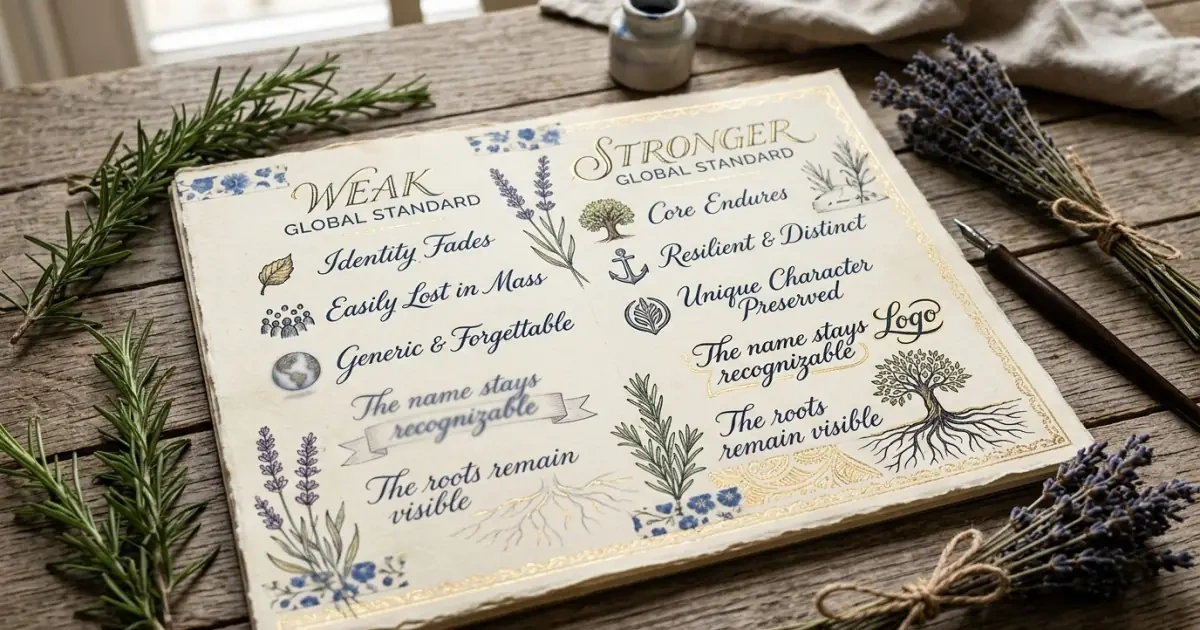
| Weak Global Standard | Stronger Global Standard |
| The name feels neutral everywhere | The name stays recognizable across settings |
| No one ever asks about it | Any correction feels manageable |
| The spelling is stripped of texture | The chosen form still feels alive |
| The name loses its Spanish signal | The roots remain visible enough to matter |
| Ease decides everything | Ease and emotional connection work together |
Sofía may travel well because its sound and structure are already clear. Mateo feels internationally friendly without losing its Spanish warmth. Joaquín carries more visible texture and will ask for more correction in some environments, but that does not automatically make it weaker.
Portability is not the same as invisibility.
The best Spanish names move well because their structure supports movement, not because their identity has been erased.

The Core Tension Is Portability Without Flattening
Most parents are not choosing between Spanish and non-Spanish.
They are choosing between movement and texture.
The name needs to work outside one room, one accent, or one country. It may also need to preserve family warmth, cultural identity, rhythm, or a meaningful connection to Spanish-speaking life. A name that travels easily can still feel too smoothed out. A name with stronger Spanish texture can remain perfectly livable if the family accepts its specific friction.
| Naming Pull | What It Protects | What It Can Risk |
| Global familiarity | Ease, readability, fewer corrections | Loss of distinctiveness |
| Original Spanish form | Rhythm, identity, emotional texture | More spelling or pronunciation repair |
| Simplified spelling | Administrative ease | Flattened tone |
| Short form | Portability and social warmth | Weaker root signal |
| Regionally anchored choice | Stronger identity | More explanation outside familiar contexts |
The strongest Spanish names usually keep enough warmth while reducing unnecessary friction.
Not international sameness.
Not impractical purity.
A name that feels global in the best way still sounds alive when spoken casually.
Spanish Names Do Not All Travel the Same Way
“Spanish name” is not one portability category.
Some names feel clean, simple, and widely mobile. Others carry stronger Spanish texture while still working outside Spanish-speaking environments. A few are internationally familiar because they overlap with biblical, saintly, or pan-European forms. Another group feels distinctly rooted and will ask the family to value identity over effortless global use.
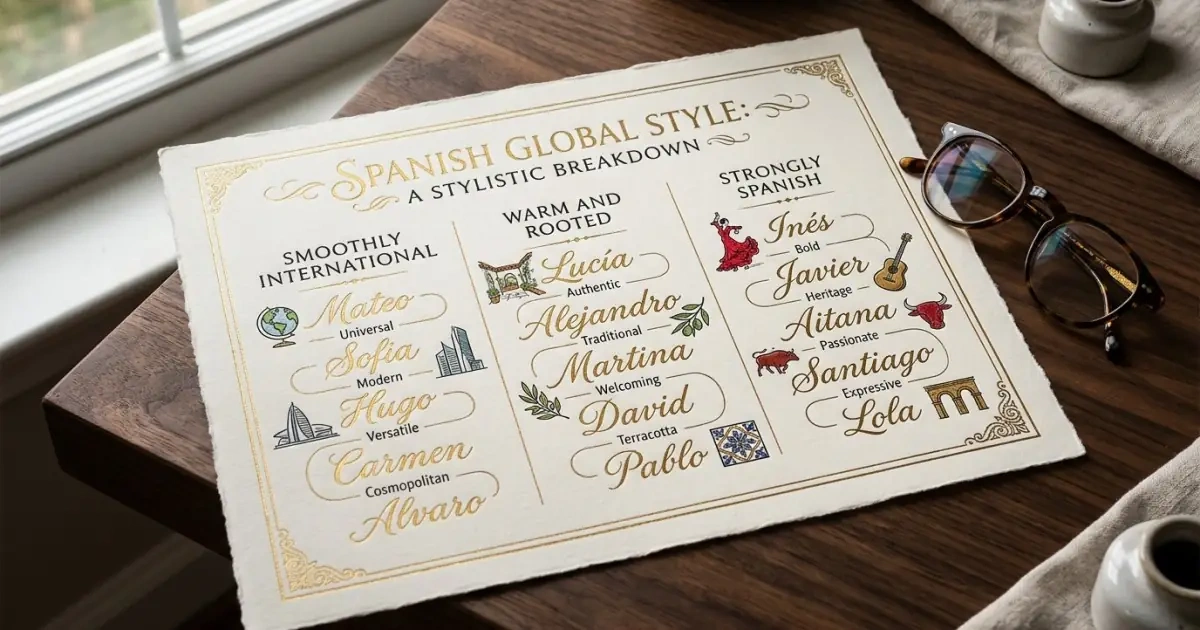
| Spanish Global Style | What It Often Feels Like |
| Smoothly international | Mateo, Leo, Elena-like ease |
| Warm and rooted | Lucía, Tomás, Nicolás-like texture |
| Strongly Spanish but usable | Joaquín, Inés-like identity |
| Familiar across languages | Sofia, Adrian, Gabriel-like movement |
| Short and mobile | Nico, Leo, Mira-like portability |
| Lyrical and visible | Names with more rhythm, accent, or cultural signal |
Inés does not create the same global feeling as Elena. Tomás carries a different texture from Mateo. Nicolás and Nico sit inside the same family of choice, but the full name and short form do not ask the same thing from daily life.
Use baby names by style when the shortlist feels scattered. You may not be undecided about Spanish names. You may be undecided about the kind of Spanish global style that actually fits your family.
Spanish Names Often Travel Well Because Their Structure Helps Them
Spanish names have several structural advantages.
Open vowels help. Clear syllables help. Many forms are easy to repeat after hearing them once. Biblical, saintly, and European overlaps can also support movement, giving some Spanish names familiar cousins in other languages.
That does not mean every Spanish name is effortless.
It means many begin with a useful shape.
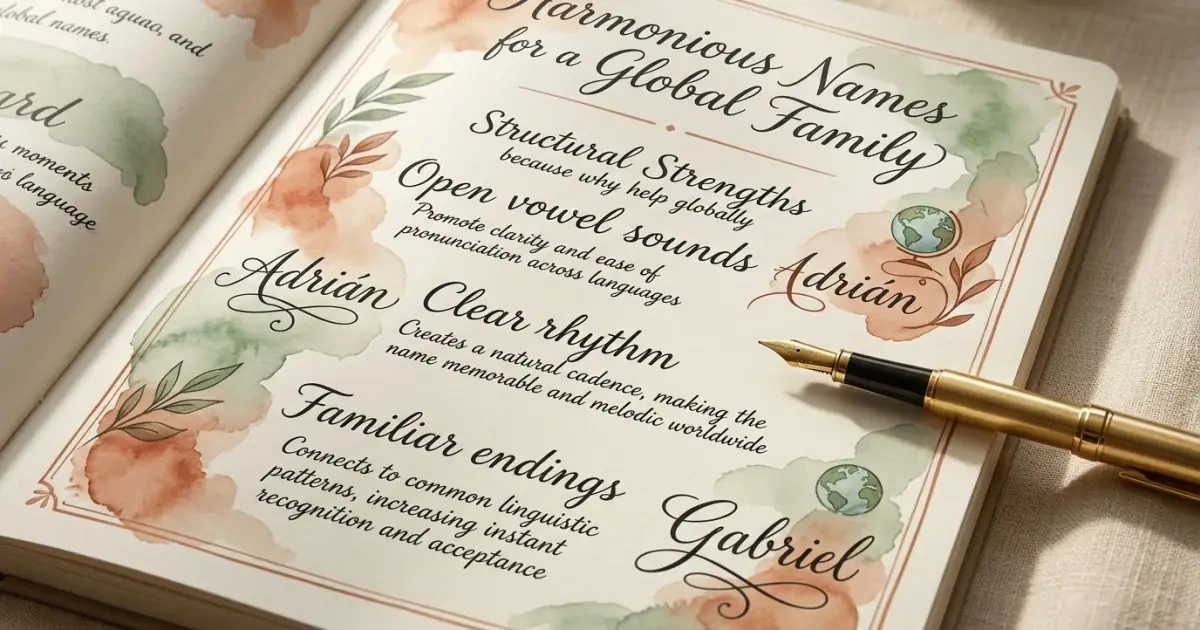
| Structural Strength | Why It Helps Globally |
| Open vowel sounds | Easier for many speakers to repeat |
| Clear rhythm | Less hesitation in introductions |
| Familiar endings | The name feels approachable |
| Pan-European overlap | Recognition spreads beyond one language |
| Short forms | Daily use becomes flexible |
| Simple consonant patterns | Fewer pronunciation barriers |
Adrián and Adrian show how a small visual shift can change the level of Spanish signal. Gabriel may feel biblical, international, and Spanish-friendly at once. Mira can feel short, soft, and mobile while still connecting to broader Romance-language sound.
A Spanish name may travel well because it is already well-built for speech.
That is different from being generic.

Pan-Hispanic Familiarity Is Not the Same as Global Familiarity
A name can be widely known across Spanish-speaking communities and still feel more regionally textured elsewhere.
That distinction matters.
Pan-Hispanic familiarity means a name may feel natural across many Spanish-speaking countries or families. Global familiarity means it is also widely readable, pronounceable, and recognizable outside those contexts. The two overlap, but they are not identical.
| Type of Familiarity | What It Means |
| Pan-Hispanic | Known across Spanish-speaking regions or families |
| Global | Recognizable across many language environments |
| Local | Familiar in your child’s immediate community |
| Family-specific | Meaningful because relatives already use it |
| Faith or saintly familiarity | Recognizable through religious tradition |
| Pop-culture familiarity | Known widely, but sometimes less rooted |
A more regionally anchored name is not a flaw. It may be the richer choice for a family that wants visible roots. A globally familiar name is not automatically bland either. It may be exactly right for a child likely to move between languages, countries, or multicultural schools.
The strongest choice depends on the child’s real path.
A name does not need to work everywhere. It needs to work where your child is actually likely to be known.

Pronunciation Usually Helps Spanish Names, but Tone Still Matters
Many Spanish names are easier internationally than parents expect.
That is real.
Still, small pronunciation shifts can change warmth, rhythm, and identity. A vowel may flatten. Stress may move. A soft name may become sharper in another accent. The name may remain usable, but the family should hear what it becomes before committing.
| Pronunciation Result | What It Means for the Name |
| Slight accent shift | Usually manageable |
| Vowels flatten | Warmth may soften or dull |
| Stress changes | Rhythm can feel less Spanish |
| Accent mark is ignored | The intended sound may drift |
| Name becomes a familiar local version | Public identity may shift |
| Family dislikes the common version | Friction may feel larger over time |
The practical question is not whether everyone will say the name perfectly.
Listen for whether the name still feels like itself.
When pronunciation is doing more work than expected, use How to Evaluate Pronunciation Ease, How to Choose Names That Work Across Different Accents, and How to Choose a Name That Works in Two Languages to test the name beyond its best accent.
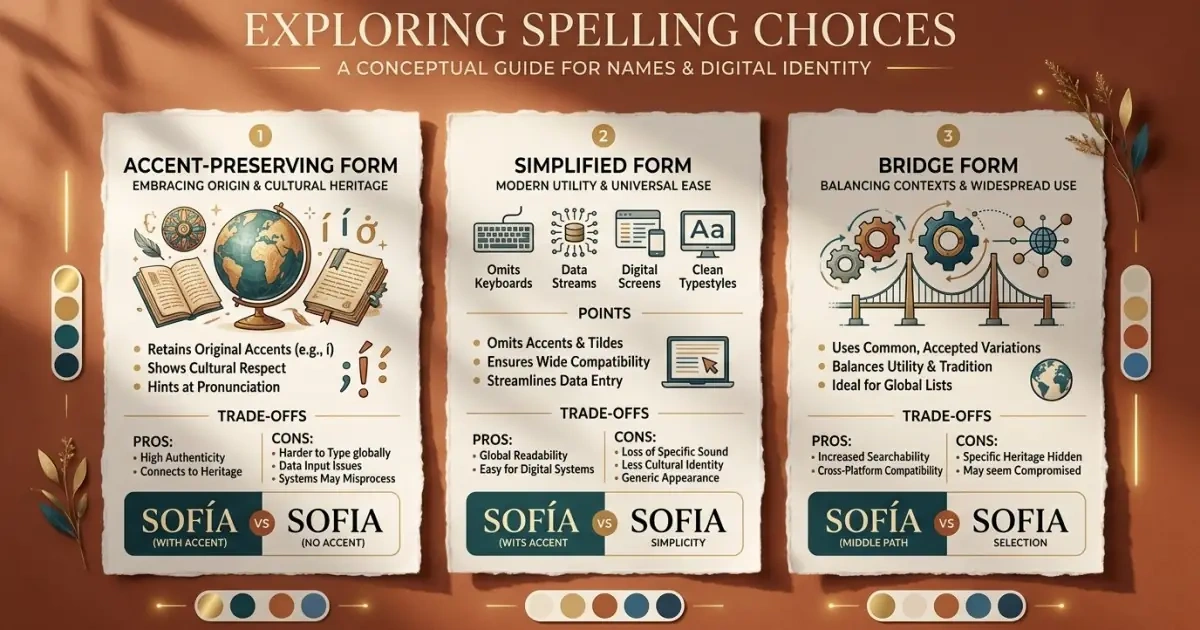
Accent Marks and Spelling Choices Change the Name’s Texture
Accent marks are not decoration.
In many Spanish names, they carry rhythm, stress, and identity. Removing them may reduce typing friction, but it can also shift the way the name feels. That trade-off deserves more attention than parents often give it.
| Spelling Choice | What It Protects | What It May Cost |
| Accent-preserving form | Rhythm, accuracy, visible identity | More typing or form friction |
| Simplified form | Administrative ease and global readability | Softer Spanish signal |
| Bridge form | Balance of roots and portability | Possible compromise feeling |
| Short form | Daily mobility | Less formal depth |
| Familiar international form | Wider recognition | Possible flattening |
Sofía and Sofia may feel close, but they do not create the same written experience. Nicolás and Nicolas shift the stress signal. Tomás and Tomas carry different rhythm. Lucía and Lucia sit near each other while changing tone, readability, and visual texture.
Neither choice is automatically correct.
The best form is the one your family can use consistently without feeling the name has lost its center.
When spelling becomes the main pressure point, How to Keep a Cultural Spelling Without Creating Constant Friction and How to Adapt a Traditional Name for Modern Everyday Use can keep the decision from turning into a vague argument about “ease” versus “authenticity.”
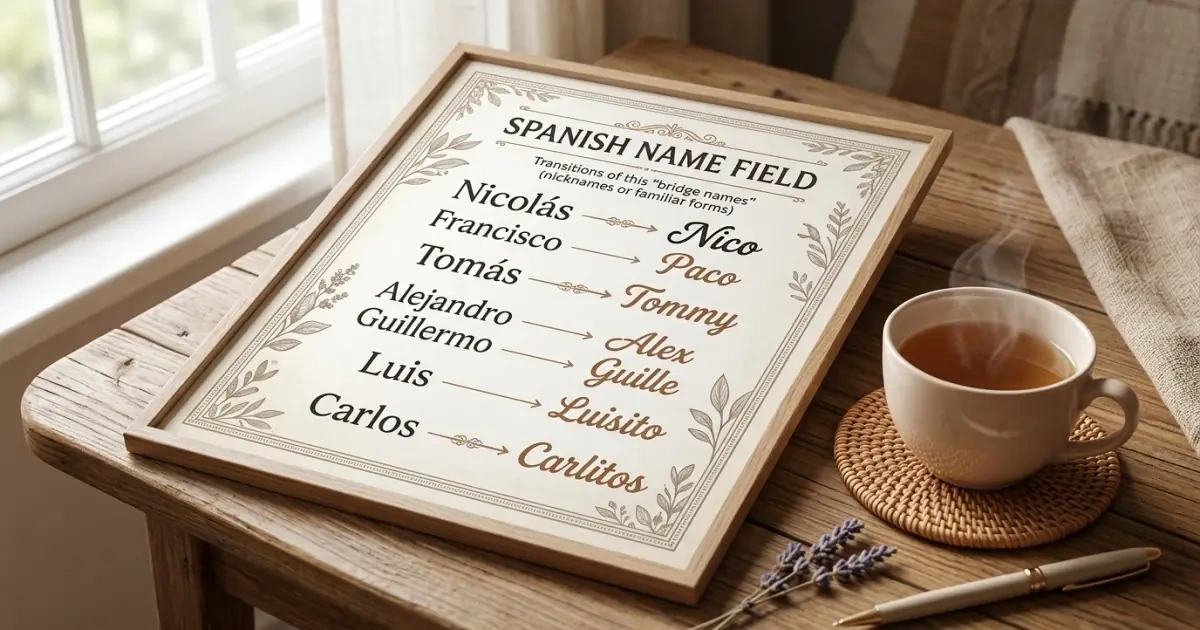
Bridge Forms Can Keep Spanish Warmth Portable
Some Spanish names already have natural bridges.
A bridge may be an accent-free form, a nickname, a related international variant, or a short form that travels easily while preserving enough warmth. These forms can reduce friction without emptying the name.
| Spanish Name Field | What the Bridge Changes |
| Sofía / Sofia | Rhythm signal and administrative ease |
| Nicolás / Nicolas / Nico | Rooted full form and mobile short form |
| Lucía / Lucia | Visual texture and pronunciation expectation |
| Adrián / Adrian | Spanish signal and international readability |
| Tomás / Tomas / Tommy | Rooted warmth and casual global use |
| Joaquín / Quin | Strong texture and lighter daily access |
A bridge form is not automatically weaker.
Sometimes it is the structure that lets the name travel without becoming thin. Nico may give Nicolás a highly usable social form. Adrian may move more easily in some English-speaking systems, while Adrián keeps a clearer Spanish rhythm. Sofia may be easier administratively, while Sofía preserves the intended stress more visibly.
The bridge works only when the family accepts what it changes.
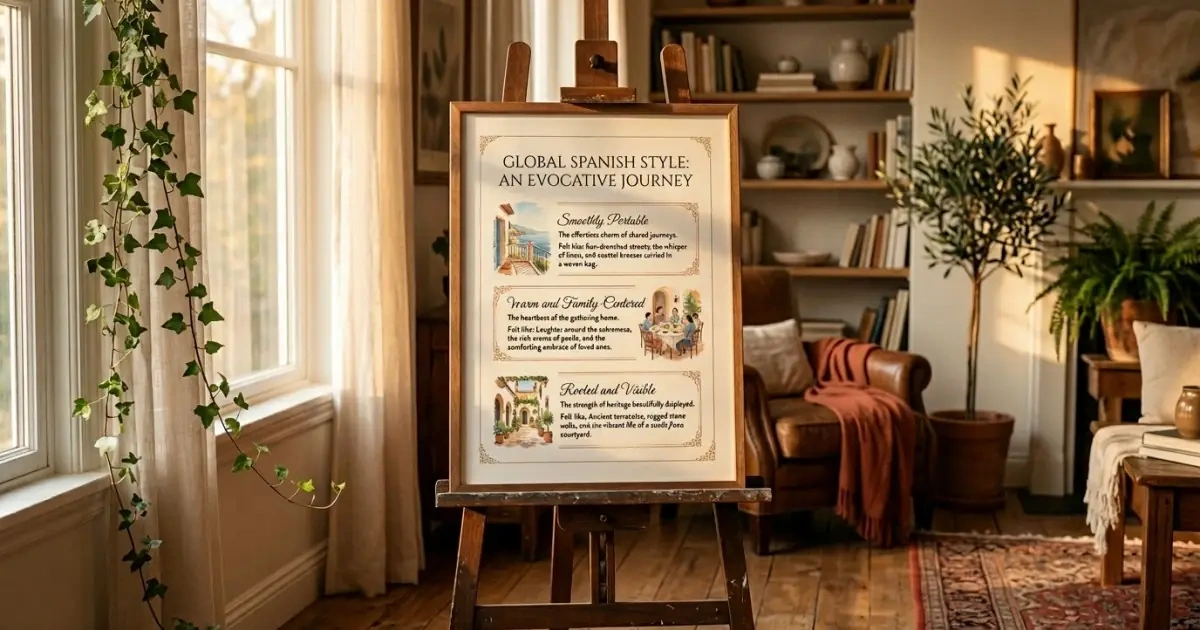
Global Spanish Style Can Be Warm, Smooth, Rooted, or Mobile
Global Spanish names do not all offer the same feeling.
Some move almost invisibly across languages. Others remain distinctly Spanish while staying easy enough to use. Some feel soft and elegant; others feel bright, sturdy, affectionate, or sleek.
That matters because global ease alone is too blunt a filter.
| Global Spanish Style | What It Feels Like |
| Smoothly portable | Easy across languages, low correction |
| Warm and family-centered | Social, affectionate, grounded |
| Rooted and visible | Spanish identity remains clear |
| Soft and elegant | Open rhythm with gentler sound |
| Modern and mobile | Short, clean, internationally flexible |
| Strong and textured | More identity, more presence |
| Familiar but alive | Recognizable without feeling empty |
While one family might want a name that crosses borders almost invisibly, another may need a Spanish signal strong enough to remain visible — or simply seek a choice that sounds effortless in English while retaining warmth in everyday family speech.
Once you name the kind of global feel you want, the shortlist becomes sharper.
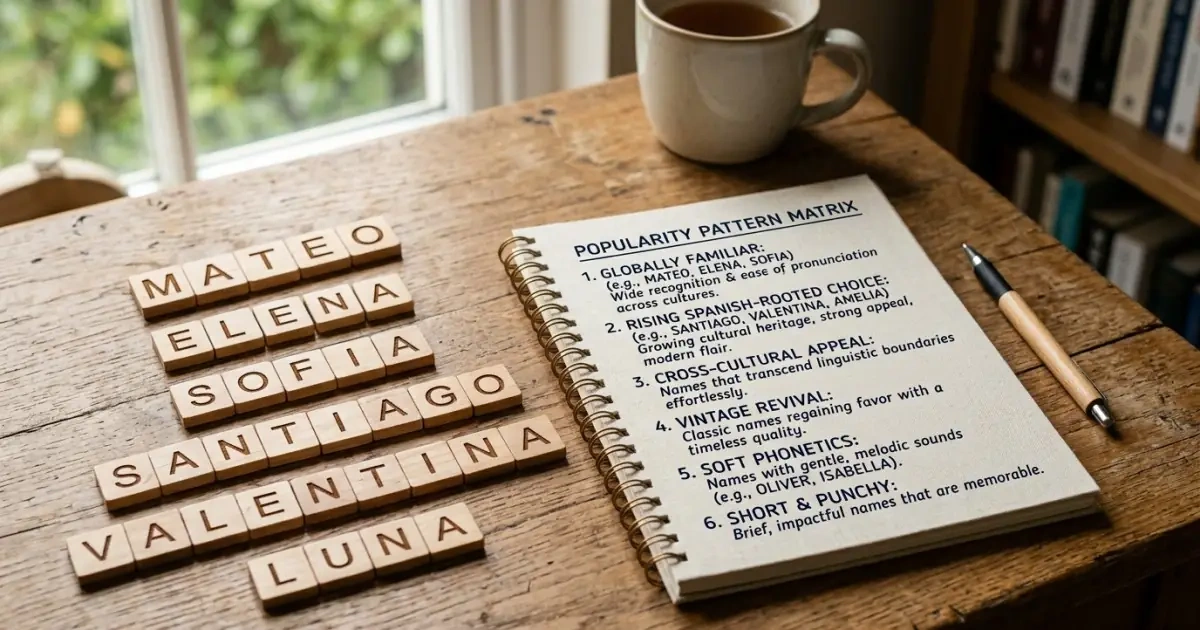
Popularity Can Make a Spanish Name Feel Natural or Too Universal
Familiarity can make a Spanish name easier to carry.
That is valuable. People hesitate less with names they already know how to read, say, or place. A familiar Spanish name may feel relaxed, warm, and globally usable.
The trade-off is texture.
A name that once felt distinctive may become so widely used that parents start hearing it as universal rather than rooted. That does not make it bad. It simply changes the emotional tone.
| Popularity Pattern | What It Can Do |
| Globally familiar | Reduces correction and hesitation |
| Rising Spanish-rooted choice | Feels fresh, may date faster |
| Common in Spanish-speaking families | Feels warm and lived-in |
| Rare locally | Preserves distinction, increases explanation |
| Popular short form | Improves ease, may weaken roots |
| Familiar across many cultures | Adds mobility, may flatten specificity |
Mateo, Sofia, Elena, Leo, and Gabriel may feel very different depending on where the child will live. In one school, they may feel warm and familiar. In another, they may feel extremely common.
Use baby names by popularity when visibility starts changing your reaction. Popularity should clarify the trade-off, not make the decision for you.

International Ease Is Not the Same as Emotional Fit
This is one of the most important tests for Spanish names.
A name can be globally usable and still not feel emotionally right. Ease is useful, but it is not attachment. A baby name is not only a passport through systems; it still has to feel loved.
Strip away the practical advantage for a moment.
Would you still want to say the name every day? Does it sound right in your voice? Does it work with your surname? Does it feel connected to your family’s sense of self? Does the name become warmer through repetition, or merely more convenient?
| Ease-Led Attraction | Whole-Name Fit |
| “Everyone can say it.” | “We love saying it.” |
| “It travels well.” | “It still feels like our child’s name.” |
| “It is familiar internationally.” | “It has enough warmth and identity.” |
| “It will be easy on forms.” | “It works in our family rhythm.” |
| “It avoids correction.” | “It does not feel flattened.” |
Parents sometimes become so relieved by portability that they stop checking whether the name still feels alive.
A Spanish name that feels global should not only move well.
It should still matter.

When a Spanish Name Starts Feeling Too Generic
Do not abandon the name immediately.
Name the flattening first.
Is the issue popularity? Accent removal? Loss of rhythm? A nickname that feels too general? A version that sounds global at the expense of sounding Spanish? Once the problem has shape, the fix becomes clearer.
| What Feels Flattened | Stronger Response |
| Rhythm | Restore the accent mark or fuller form |
| Spanish visibility | Choose a more rooted variant |
| Warmth | Test the name in Spanish family speech |
| Distinctiveness | Compare less common names in the same style lane |
| Nickname | Keep the full name in stronger use |
| Emotional center | Return to why the name appealed originally |
A little more texture may be exactly what the shortlist needs.
The goal is not to make the name harder. It is to keep the name from becoming so smooth that it loses its life.
When the More Rooted Form Feels Harder to Carry
The opposite problem is just as common.
Parents love the rooted form but fear the correction burden. Before simplifying, identify the actual friction. The imagined version may be worse than the real one.
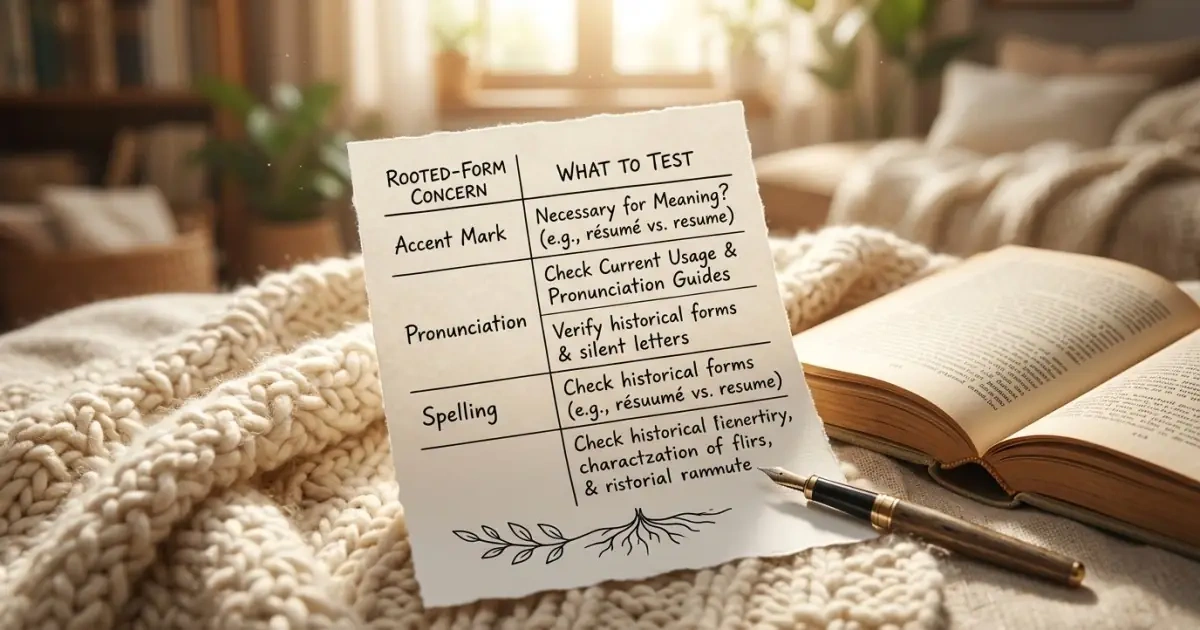
| Rooted-Form Concern | What to Test |
| Accent mark | Does it create real administrative trouble or only mild correction? |
| Pronunciation | Can people learn it after one correction? |
| Spelling | Is the form readable enough in your environment? |
| Nickname | Does a lighter short form solve daily use? |
| Global travel | Will the name bend or break across borders? |
| Family identity | Would simplification remove too much warmth? |
Sometimes the original form is worth the small extra effort. A bridge form may solve the real issue. A short form can make public life easier while the full name preserves the root.
Portability should make the name easier to carry, not emptier.
Spanish Names Still Need Everyday Tests
Global ease matters. It is not enough.
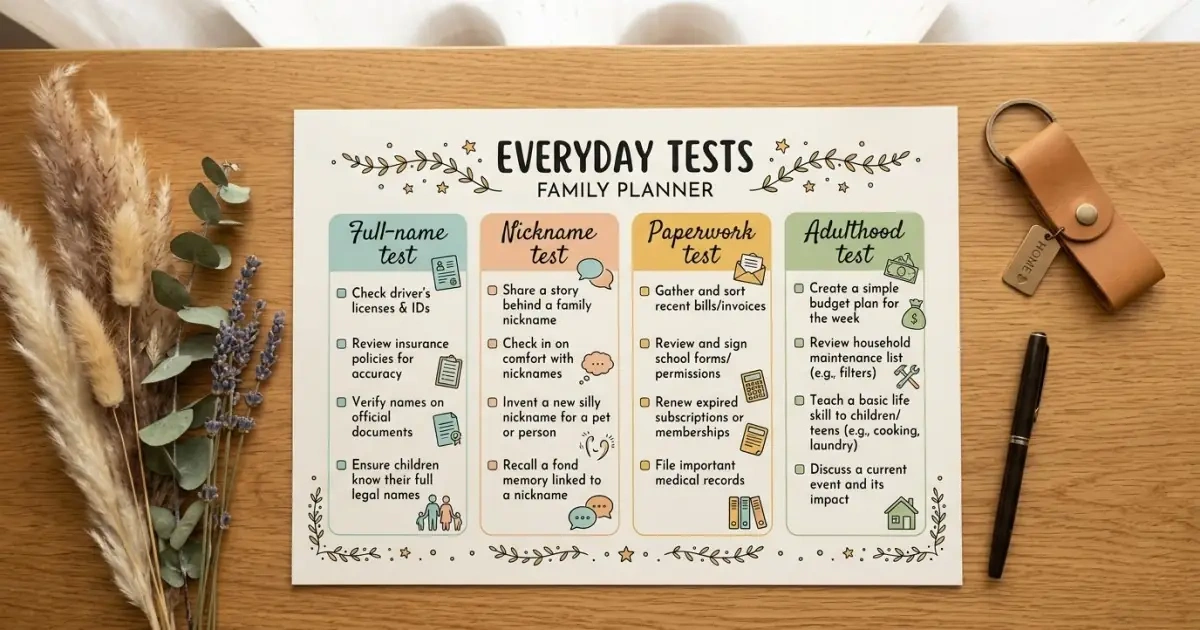
A Spanish name must still sit naturally beside the surname, allow nicknames the family can accept, and survive initials, monograms, paperwork, school rosters, and adult introductions. Even a globally usable name should feel warm in ordinary rooms, not merely efficient in systems.
| Everyday Test | What It Reveals |
| Full-name test | Whether the Spanish name balances with the surname |
| Nickname test | Whether casual use supports or weakens the name |
| Initials check | Prevents awkward combinations |
| Out-loud test | Whether the name feels natural in family speech |
| Paperwork test | Any spelling or accent-mark friction |
| Adulthood test | Long-term range |
| Backstory-free test | Whether the name works without explanation |
This is where easy-looking names often change position. A name may travel smoothly yet feel flat with the surname, while a more rooted form can become surprisingly natural once you say it often. Even a name with excellent international range still has to sound believable on a child, a teenager, and an adult.
For specific friction, use How to Match a First Name With Your Surname, How to Check Nickname Potential Before You Choose, How to Check Initials, Monograms, and Awkward Combinations, or How to Choose a Name That Ages Well. When the broader question is whether the name still works once portability fades into the background, What Makes a Good Baby Name? gives the shortlist a stronger standard.

Mistakes That Weaken Global Spanish Name Choices
Most mistakes with Spanish names come from trusting ease too quickly.
International familiarity can make a name feel safer than it really is, just as a simplified spelling may hide the loss of rhythm that made the name feel warm. The more rooted form may be easier than parents fear, while the most portable version may turn out to be the least emotionally convincing.
| Mistake | Why It Weakens the Choice | Cleaner Move |
| Choosing only by global familiarity | The name may feel convenient but thin | Test emotional fit |
| Assuming easy means better | Portability may outrank connection | Compare warmth and identity |
| Simplifying too early | Rhythm or texture may disappear | Test the original form first |
| Treating rooted forms as impractical | You may reject the best version too soon | Measure actual friction |
| Ignoring pronunciation drift | The name may lose warmth in another accent | Hear it in real voices |
| Forgetting nicknames | The short form may become the daily name | Pressure-test casual use |
| Skipping surname fit | A portable first name may still fail as a full name | Use the full-name test |
Spanish names often feel easy at first.
That ease is a strength only when the name still feels loved.
A Practical Framework for Choosing Spanish Names That Feel Global
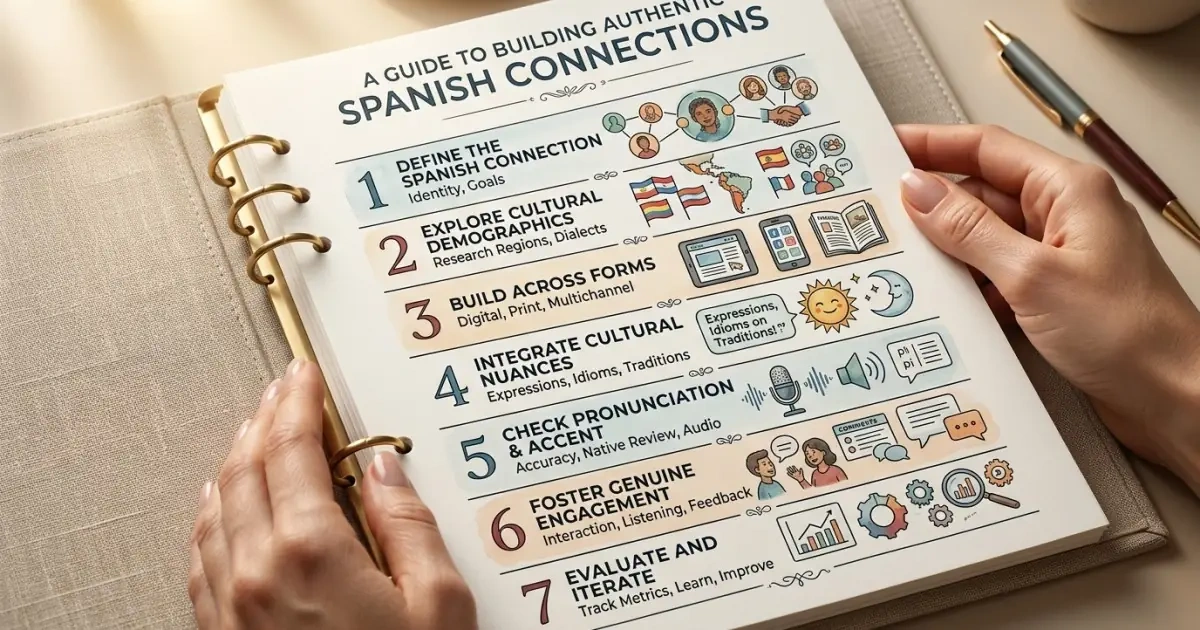
Use this process when your Spanish shortlist feels caught between warmth and portability.
| Step | What to Do | Why It Matters |
| 1. Define the Spanish connection | Heritage, sound, warmth, rhythm, family continuity, faith, or global movement | Clarifies what must be preserved |
| 2. Build across forms | Include rooted forms, simplified forms, bridge variants, and nicknames | Avoids false extremes |
| 3. Test global ease against emotional fit | Let practicality support the name, not replace attachment | Keeps the choice human |
| 4. Check pronunciation, spelling, and correction burden | Use the environment where your child will be known | Reveals friction early |
| 5. Test surname, nickname, initials, and adulthood fit | Treat the name as a full life name | Protects usability |
| 6. Notice where the name feels rooted or flattened | Diagnose the imbalance clearly | Points toward the right form |
| 7. Keep the name that feels warm, clear, and portable | Choose ease that still has life | Builds confidence |
Once the contenders are real, How to Compare Baby Names Objectively and How to Test a Baby Name Before Finalizing It can move the choice from theory into proof.
Signs a Spanish Name Choice Is Getting Stronger
A strong Spanish name gains confidence through use.
It still feels Spanish, but not high-friction. The sound is natural in your real voice. Global ease supports the name instead of erasing its identity. Nicknames feel acceptable. The surname does not fight the rhythm. Childhood and adulthood both feel plausible.
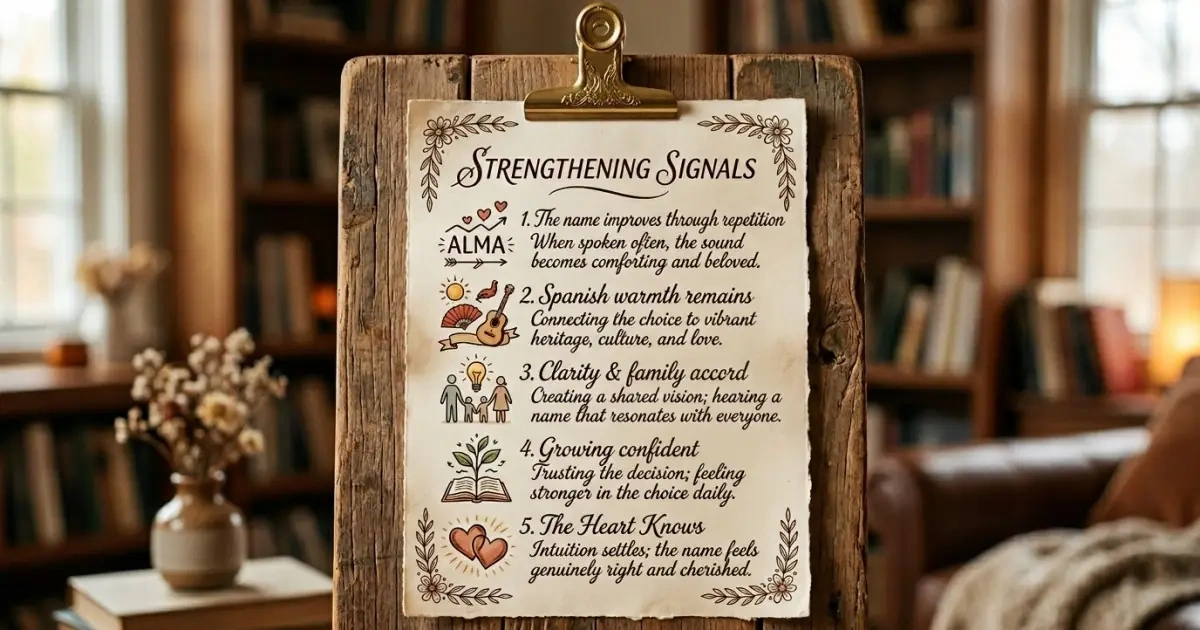
| Strengthening Signal | What It Suggests |
| The name improves through repetition | It may be livable, not only practical |
| Spanish warmth remains | The name has not been flattened |
| Pronunciation friction feels manageable | The burden is chosen |
| The spelling feels worth keeping | The form matters enough |
| Nicknames feel natural | Daily life has room |
| Both parents use it with ease | The choice has family ownership |
A Spanish name is not stronger because it is easier everywhere.
It is stronger when it remains itself under movement.
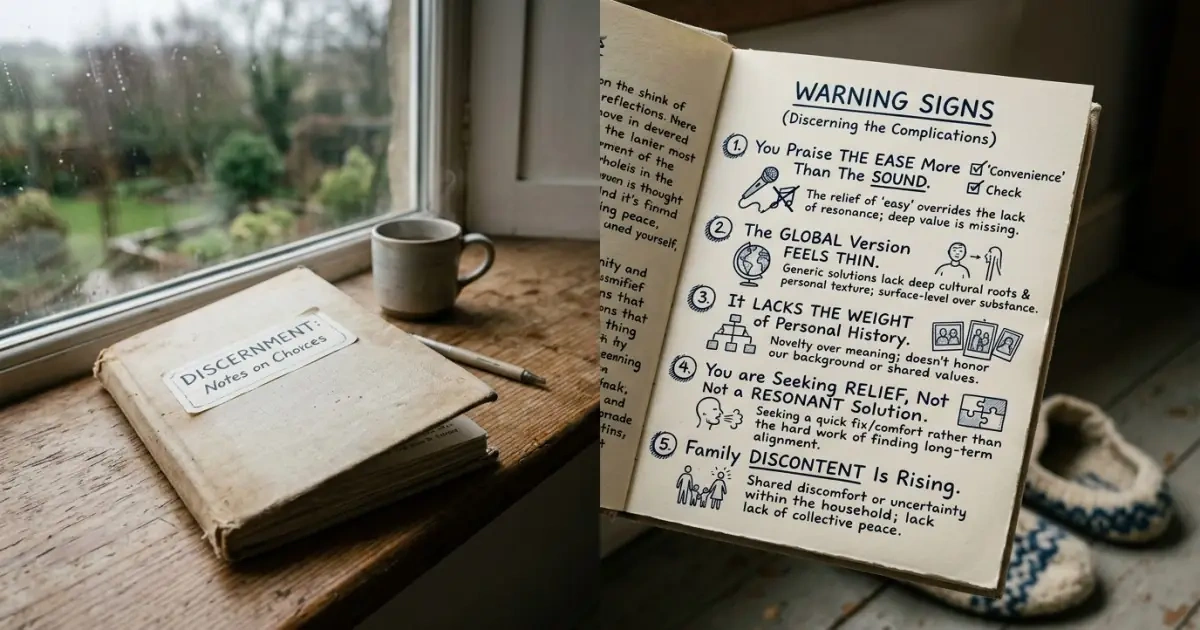
Signs the Name May Be Better Admired Than Used
Some Spanish names are discoveries rather than final choices.
They may reveal your love of warmth, rhythm, heritage, bilingual ease, or international movement. That discovery still matters. It does not mean the name belongs on the birth certificate.
| Warning Sign | What It May Mean |
| You praise the ease more than the sound | Portability may be carrying the choice |
| One parent misses the rooted form | Simplification may have gone too far |
| The global version feels thin | The name may need more texture |
| The rooted form seems impossible only in theory | Actual testing may surprise you |
| Nicknames feel wrong | Daily use is unresolved |
| The name works mainly as a practical solution | Emotional connection may be weak |
A Spanish name can be useful and still not feel like your child’s name.
That is not a failure. It is discernment.

Warm, Clear, and Stable Is the Strongest Standard
The best Spanish names that feel global do something subtle.
They keep enough Spanish identity without becoming hard to carry. They move through modern life without losing rhythm or warmth. They feel internationally usable without dissolving into neutrality.
That balance is the point.
| Strong Global Spanish Name | Weak Compromise |
| Keeps warmth and rhythm | Relies only on ease |
| Feels natural in daily speech | Sounds flattened outside Spanish |
| Looks readable without feeling erased | Removes too much identity |
| Has manageable pronunciation | Creates correction no one wants |
| Works as a child and adult name | Lives mainly as a practical solution |
The strongest global Spanish names are not simply the easiest or most familiar.
They remain themselves under movement.
A Spanish name that feels global should still feel alive when spoken casually. When it does, the balance is usually right.

Questions Parents Ask About Spanish Names That Feel Global
Does a Spanish name need to lose accent marks to feel global?
No. Some names travel well with their original form. The strongest choice is the one your family can use consistently without flattening rhythm or identity.
What if a Spanish name feels too simplified in international use?
That usually means the practical version is solving a real problem at too much emotional cost. A fuller form, accent-preserving spelling, or warmer nickname strategy may restore what you loved.
Should you choose the rooted form or the easier global form?
Neither answer wins automatically. The stronger choice preserves what matters most while still working in your actual environment.
Can a Spanish name feel global without becoming generic?
Yes. Many of the best choices travel well because they keep warmth, rhythm, and clarity instead of disappearing into neutrality.
Is the most familiar Spanish name usually the safest choice?
Not always. Familiarity can reduce friction, but it can also flatten the name. The best choice balances ease with emotional texture.
Can a Spanish name work better as a middle name?
Yes. A middle name can preserve family, cultural, or language connection when the first-name role would create more friction than the family wants.

Where to Go Next When a Spanish Shortlist Feels Close
Let your exact friction point dictate the final move. If your focus is active bilingual life rather than broad travel, the phonetic strategies in How to Choose a Name That Works in Two Languages and How to Choose Names That Work Across Different Accents will serve you better than generic global lists. Names meant for wider travel, relocation, or international schools deserve the sharper framework in How to Choose a Name That Travels Well Internationally, especially when ease starts to blur into flattening.
For names caught between cultural reverence, spelling friction, and modern adaptation, How to Choose Names With Strong Cultural Roots Respectfully and How to Keep a Cultural Spelling Without Creating Constant Friction provide precise architecture. Once your finalists are real, push them through How to Compare Baby Names Objectively before allowing portability to outrank daily fit. For the broader editorial path through naming decisions, Expert Baby Naming Guides for Choosing the Right Name keeps the search organized once Spanish-name admiration starts branching into origin, style, pronunciation, surname fit, popularity, or final testing.
Spanish names feel global in the strongest way when they keep their cultural center without asking the family to carry more correction, flattening, or compromise than they actually want. That is what makes the name not only portable, but fully alive.