
How to Choose Irish Names for Everyday Life

Irish names often create a particular kind of love at first sight.
A parent sees one written down, hears it spoken properly, or remembers it from a family story, and the name seems to hold more than sound. There is language in it. Landscape. Saints, poetry, migration, revival, family memory, and a history that feels older than trend.
That depth is part of the pull.
It is also where the difficulty begins.
Many Irish names are easier to admire than to use. A spelling that looks beautiful once explained may still invite the wrong pronunciation at school, in forms, or in a waiting room. A name that sounds luminous in an Irish voice can become a steady correction in an English-speaking environment. Parents may love the rooted form, then hesitate when they imagine their child explaining it hundreds of times. A bridge spelling may solve the public friction while quietly losing the exact texture that made the name matter.
That is the real decision.
The best Irish names for everyday life are not always the easiest forms, and they are not always the most traditional forms either. They are the names that keep enough Irish identity while remaining livable in real speech, real paperwork, real surnames, real nicknames, and real adulthood.
This is not a ranking of the “best Irish names.” It is a framework for choosing the Irish name your family can use clearly, proudly, and often.
Start with baby names by origin if you are still exploring the wider cultural landscape. Use How to Choose a Baby Name by Origin when you are deciding whether Irish is the right origin lane at all. This guide begins after that point: Irish names already appeal to you, and the real question is which one can live well beyond the beauty of the page.

Irish Names Carry More Than Style
Irish names often feel richer than trend-led names because they rarely arrive empty.
They may come through saints, mythology, old language, family lines, migration stories, literary memory, or cultural revival. Some feel compact and sturdy. Others bring a lyrical quality that is hard to imitate. Many sit inside a naming tradition shaped by survival, anglicisation, preservation, and re-adoption.
That gives Irish names their emotional charge.
Parents drawn to them are often looking for more than something fashionable. They want character. They want roots. They want a name that feels as though it belonged somewhere before it appeared on a modern shortlist.
| What Parents Often Love About Irish Names | Why It Matters |
| Visible heritage | The name carries a cultural signal rather than a generic style |
| Sound texture | Many Irish names feel musical, spare, or rhythmically distinctive |
| Mythic and saintly associations | The name can feel tied to story, faith, or history |
| Family memory | Irish names can reconnect a child to ancestry or migration |
| Distinctiveness | The names can feel uncommon without feeling invented |
| Revival energy | Some names feel old and newly alive at the same time |
The danger is falling for the depth before testing the mechanics.
A name can be meaningful, beautiful, and historically grounded while still creating more daily work than a family wants to carry. Irish naming rewards admiration. Everyday life requires evidence.
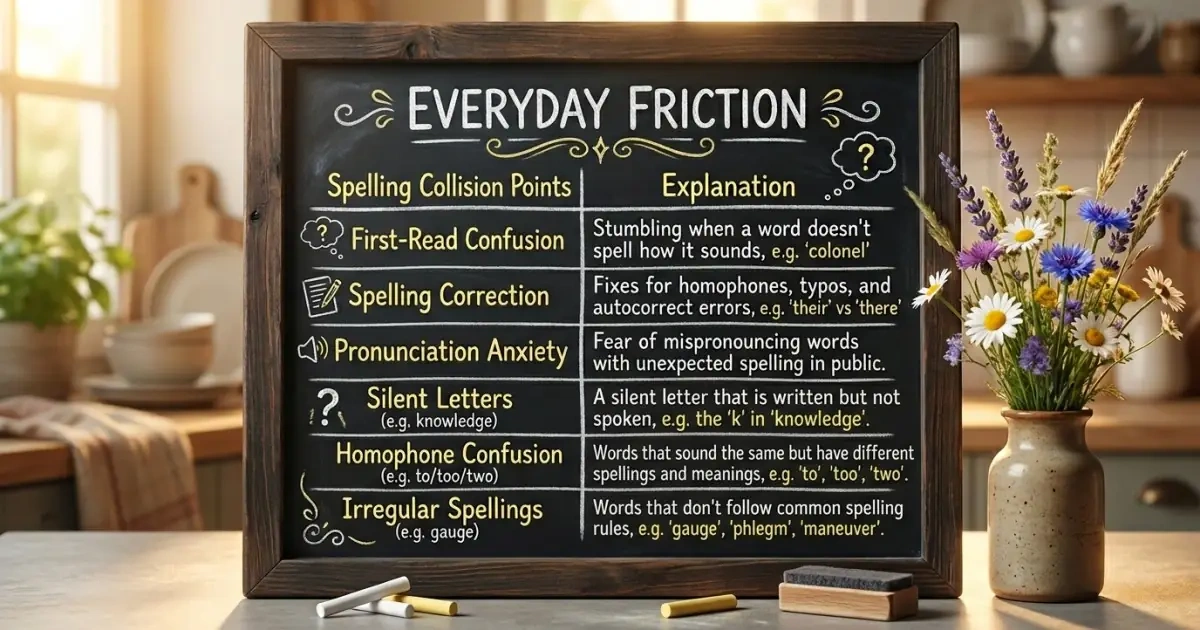
Irish Names Become Harder When Spelling Systems Collide
The difficulty is usually not the name itself.
It is the reading environment.
Irish spelling follows its own logic. English readers bring another set of instincts. The collision between those systems creates much of the friction parents notice: letters that appear silent, sounds that do not arrive where English expects them, vowel patterns that make sense inside Irish but mislead outsiders, and stress patterns that shift once the name enters another accent.
That is why some Irish names sound easier than they look, while others look manageable and still get misread.
| Everyday Friction | What Is Usually Happening |
| First-read confusion | English spelling habits are being applied to Irish forms |
| Repeated wrong stress | Readers are guessing from a different sound system |
| Spelling correction | The written form does not match public expectation |
| Pronunciation anxiety | People hesitate before saying the name aloud |
| Unwanted simplification | Others create a shortcut because the original feels unfamiliar |
| Family fatigue | Parents begin to resent explaining a name they genuinely love |
Once parents recognize the pattern, the decision becomes less vague.
The useful question is not whether an Irish name is “too hard.” It is what kind of friction it will create in the actual environment where the child will live. That question becomes even sharper for families also weighing How to Choose a Name That Works in Two Languages or How to Choose a Name That Travels Well Internationally.

Everyday Life Is the Real Test for an Irish Name
Everyday life is where admiration turns into confidence or starts to weaken.
A name has to work when parents say it casually, not just when they explain its history. It has to survive school registers, introductions, text messages, birthday invitations, medical forms, emails, nicknames, sibling pairings, and adult use. It also has to feel manageable across years, not only meaningful during the choosing process.
| Everyday Context | What the Name Has to Do |
| Family speech | Feel natural in the parents’ real voices |
| School and childcare | Survive first reading and repeated public use |
| Extended family | Work across accents and pronunciation habits |
| Paperwork | Remain clear enough for forms and records |
| Friend groups | Produce nicknames or short forms the family can accept |
| Adulthood | Feel credible beyond childhood |
| Surname pairing | Create a full name with rhythm and balance |
This matters especially with Irish names because their cultural appeal can be intense. A name may feel extraordinary in isolation, then become harder once you imagine saying it ten times a day, spelling it over the phone, or hearing it read aloud by people who do not know the tradition.
A strong everyday Irish name does not need to avoid all correction. It needs the right amount of correction for the value it carries.

The Real Tension Is Authenticity and Friction
Most parents are not choosing between Irish and non-Irish.
They are choosing between authenticity and friction.
The rooted Irish form may be the place where the name’s identity lives. The spelling, rhythm, and cultural specificity are part of what makes it beloved. A more familiar bridge form may lower the daily burden, but it can also feel like a loss if the original form carried the emotional charge.
There is no single morally superior answer.
Some families will happily correct pronunciation because the rooted form matters deeply. Others want a name that keeps Irish character without making every first encounter into a lesson. Both positions can be thoughtful. The key is knowing which kind of responsibility you are actually willing to carry.
| Naming Instinct | What It Protects | What It May Cost |
| Keep the rooted Irish form | Visible language, cultural specificity, family identity | More correction and slower first reads |
| Choose an anglicised form | Daily ease, public readability, wider recognition | Less visible Irish texture |
| Use a bridge variant | Balance between roots and usability | Possible feeling of compromise |
| Move the Irish name to the middle | Heritage without first-name pressure | Less public visibility |
| Choose another Irish name | Keeps the origin lane while reducing friction | Lets go of the first admired option |
When cultural respect and authenticity anxiety start crowding the decision, How to Choose Names With Strong Cultural Roots Respectfully can help keep the reasoning clean. Pride in the name should not require pretending the daily friction is smaller than it is.

Pronunciation Has to Be Tested Early
Pronunciation is not a side issue with Irish names.
It is often the central test.
Irish names can carry sound patterns that are hidden to readers trained in English. Once the name leaves a context where people know the system, the spelling may offer little guidance. That does not make the name defective. It means the family needs to understand how much teaching the name will require.
Some names survive approximation gracefully. The sound may shift, but the identity remains recognizable. Others lose too much when misread: a key syllable disappears, the stress moves, or the name begins to sound like a poor substitute for the form the family chose.
| Pronunciation Outcome | What It Suggests |
| Slight accent shift | Usually manageable |
| Repeated wrong stress | Worth testing seriously |
| First reading collapses | Correction burden will be high |
| Name becomes a different familiar name | Confusion may be persistent |
| Family dislikes the common mispronunciation | Long-term frustration is likely |
| Child can teach it simply | Friction may be acceptable |
The early test should be practical. Say the name in the accents it will actually meet. Ask a few trusted people to read it fresh. Hear it with the surname. Notice whether the common mistake merely changes the accent or weakens the name itself.
When pronunciation is the main pressure point, use How to Evaluate Pronunciation Ease and How to Choose Names That Work Across Different Accents. When the written form keeps producing the wrong sound, How to Keep a Cultural Spelling Without Creating Constant Friction becomes just as important.
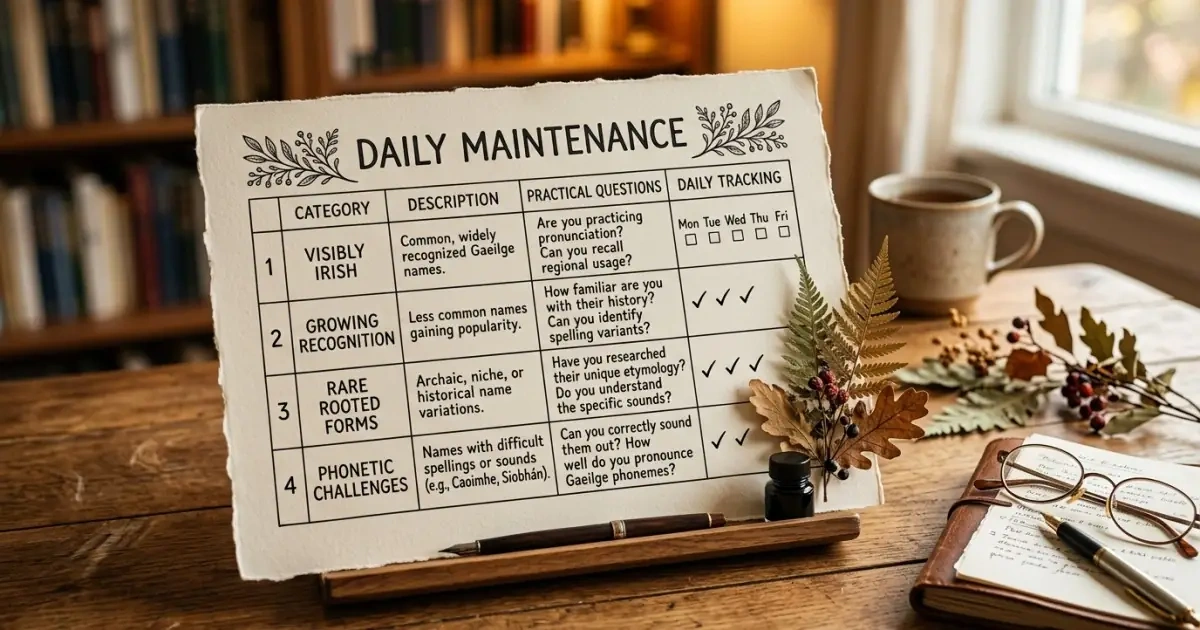
Some Beautiful Irish Names Ask for More Daily Maintenance
Names such as Aisling, Niamh, Saoirse, Tadhg, and Amhlaoibh show different kinds of Irish-name friction.
They are not “difficult” in the same way. While a few are widely recognized yet non-intuitive abroad, others rely heavily on mythic or literary atmosphere or offer a beautifully compact sound hidden behind spelling that remains entirely opaque to outsiders. The shared issue is not weakness. It is maintenance.
A widely admired name can still require constant explanation outside familiar environments.
Popularity in Ireland, or among people who already know Irish names, does not guarantee ease elsewhere. That distinction matters. Parents sometimes assume broader Irish familiarity means global usability. Often, the name still needs teaching.
| Name Type | Everyday Question to Ask |
| Visibly Irish spelling | Are we ready to teach the pronunciation repeatedly? |
| Irish form with growing recognition | Has recognition reached our actual community? |
| Name with strong literary or mythic appeal | Do we love using it, or mainly explaining it? |
| Compact Irish name | Does the spelling still trigger disproportionate confusion? |
| Rare rooted form | Is the cultural depth worth the daily correction? |
Cormac is useful here because it feels sturdy, visible, and historically grounded while still attracting pronunciation variation outside certain contexts. That does not make it a poor choice. It makes it a realistic one.
The question is whether the name’s rewards are equal to its maintenance.

Irish Form, Anglicised Form, or Bridge Variant
This is often the heart of the decision.
A rooted Irish form may carry the strongest language connection, while an anglicised version can make the name easier to read and use in public. Between those poles, a bridge variant may preserve more identity than parents expect. The best answer is rarely ideological; it is the form your family can say with pride and ease.
| Choice | What It Offers | What to Watch |
| Irish form | Strongest visible roots and language connection | Higher pronunciation and spelling burden |
| Anglicised form | Familiarity and smoother public use | Possible loss of texture |
| Bridge variant | Balance of identity and usability | May feel neither fully rooted nor fully easy |
| Nickname strategy | Daily warmth and flexibility | Short form may overtake the full name |
| Middle-name placement | Heritage with less daily correction | Less visible Irish identity |
Ciarán and Kieran are clearly connected, yet they behave differently in everyday life. Brigid and Bridget carry related saintly continuity but not the same atmosphere. Fionn and Finn sit close together while giving parents different levels of visible Irishness, pronunciation ease, and public familiarity.
The goal is not to win a purity contest.
Choose the form that keeps what matters most while remaining livable enough to trust. When the adaptation question becomes central, How to Adapt a Traditional Name for Modern Everyday Use will be more useful than debating authenticity in the abstract.
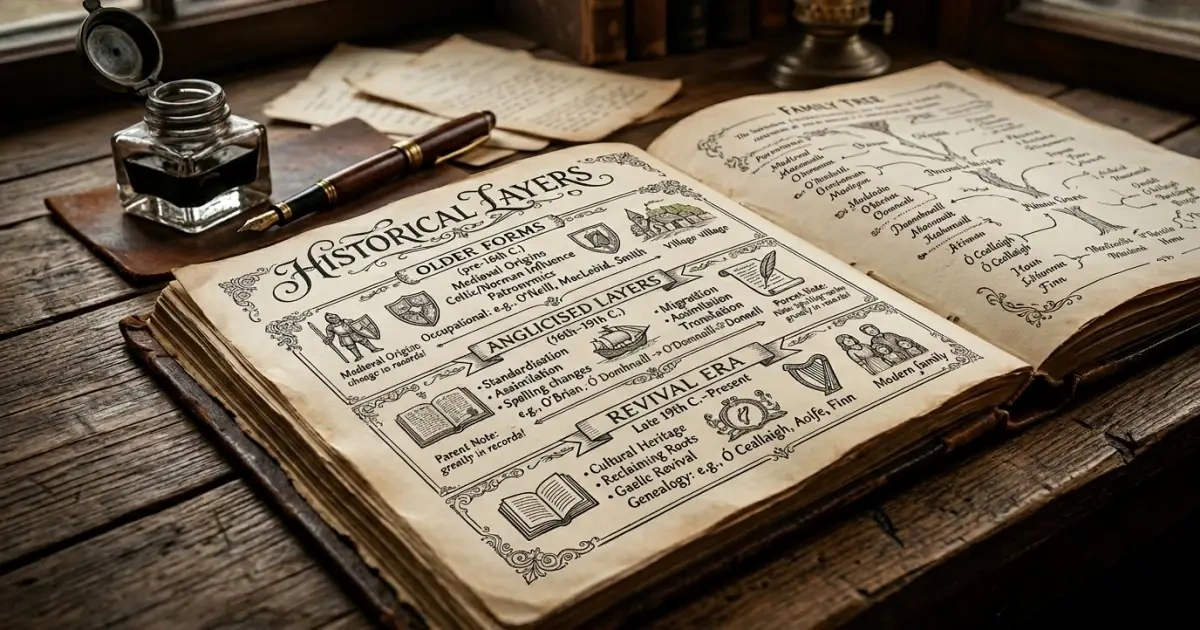
Revival and Anglicisation Are More Complicated Than “Original vs Diluted”
Parents often imagine Irish names in two categories: original and diluted.
The history is messier and more interesting.
Some names are ancient and continuously rooted. Others moved through Irish, English, religious, literary, revivalist, and migration contexts. Several now exist in parallel forms because families carried them across language systems for generations.
Understanding that history can lower the pressure.
Not every familiar bridge form is a betrayal. Not every Irish-looking form carries the same age, usage history, or everyday function. A modern parent is often choosing among historically meaningful pathways, not between a pure original and a false substitute.
| Historical Layer | Why It Matters for Parents |
| Older Irish forms | Strong language and heritage visibility |
| Anglicised forms | Often shaped by real family and migration history |
| Revival-era names | May feel both historic and newly energized |
| Saintly names | Carry religious and cultural continuity |
| Literary names | Bring story, image, and atmosphere |
| Diaspora forms | Reflect how families actually carried names abroad |
This perspective makes the decision calmer. The present-day question becomes clearer: which form keeps enough Irish identity while still working in ordinary life now?
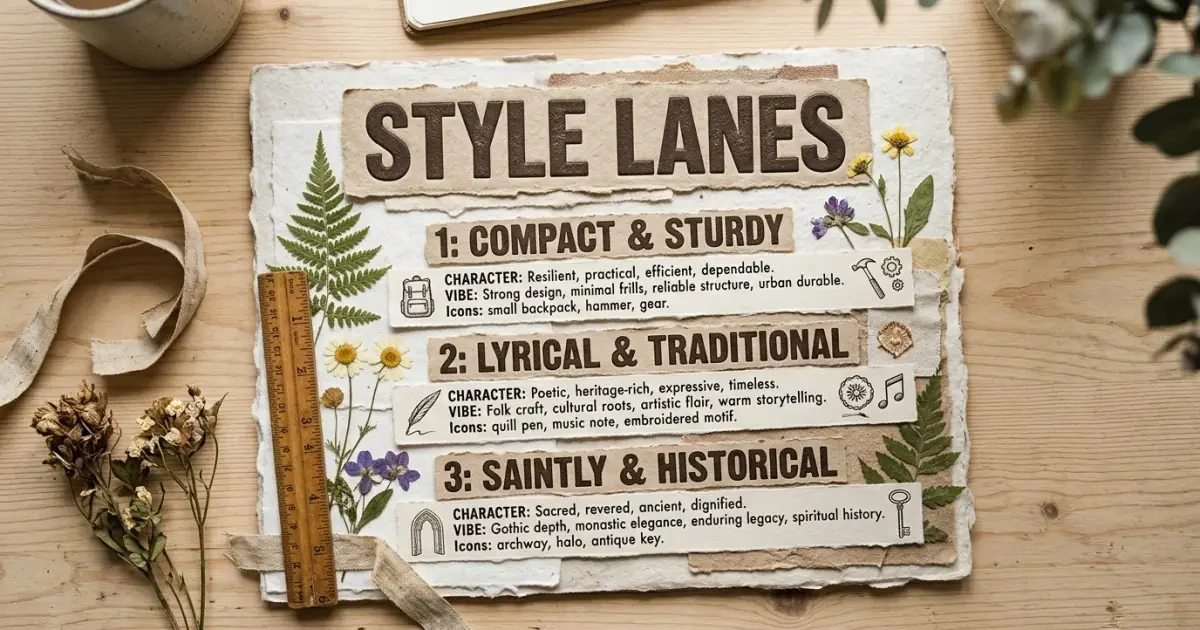
Irish Names Belong to More Than One Style Lane
“Irish name” is not one style.
That phrase can cover compact modern choices, lyrical traditional names, saintly forms, rugged surnames, revivalist names, poetic spellings, familiar bridge variants, and names that feel almost global because they have traveled so widely.
A parent can love one Irish name and reject another without contradiction. They may not be rejecting Irishness at all. They may be responding to rhythm, formality, softness, strength, visibility, or the amount of cultural explanation the name carries.
| Irish Style Lane | What It Often Feels Like |
| Compact and sturdy | Finn, Cormac, Rory-like energy |
| Lyrical and visibly Irish | Niamh, Saoirse, Aisling-like texture |
| Saintly and historical | Brigid, Bridget, Patrick-adjacent forms |
| Familiar bridge style | Kieran, Finn, Bridget, Nora-like usability |
| Mythic or literary | Story-rich, image-heavy, more marked |
| Revivalist | Cultural depth with modern rediscovery |
| Surname-influenced | Strong, grounded, often easier in English contexts |
Use baby names by style when your Irish shortlist feels confusing even though the origin lane is clear. Style may be the real reason one option feels wearable and another feels too ceremonious. When visibility or classroom familiarity is influencing your comfort with names such as Finn, Cormac, or Bridget, check those instincts through baby names by popularity rather than guessing from mood alone.
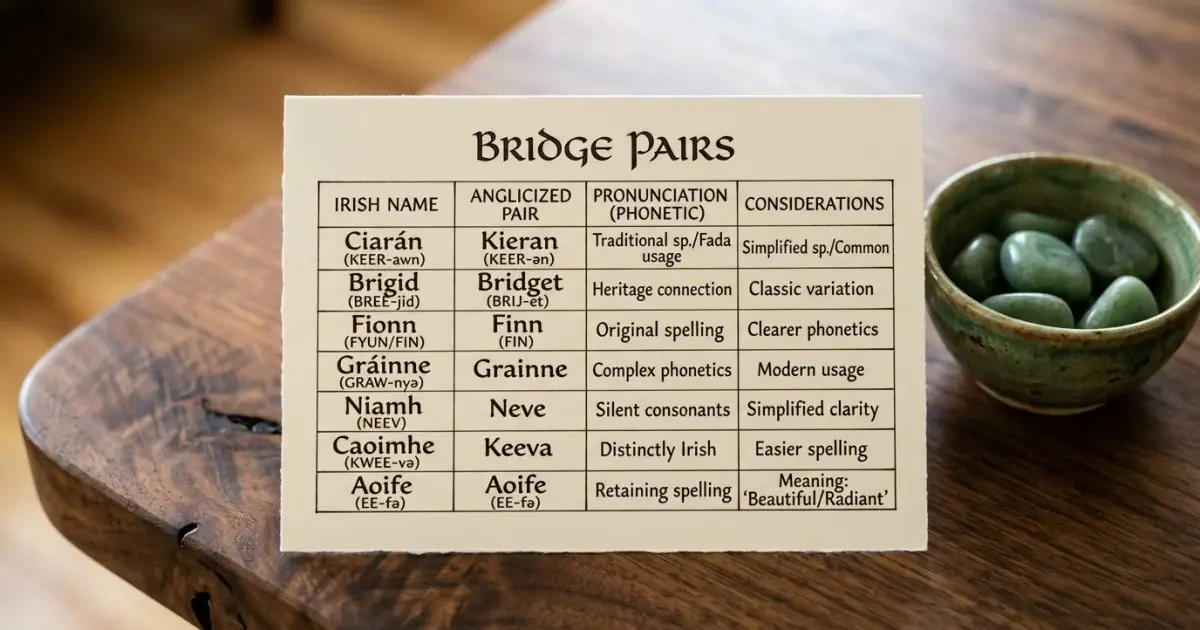
Familiar Bridges Can Keep Irish Roots Alive
Some Irish names work well in everyday life because they already have bridges.
A bridge form can lower the correction burden while keeping a clear connection to Irish naming. That does not automatically make it weaker. In many families, the bridge is what allows the name to remain in live use instead of becoming a beautiful but impractical admiration name.
Ciarán and Kieran show the tension between visible Irish spelling and wider readability; Brigid and Bridget carry saintly continuity through different surfaces; Fionn and Finn ask how much Irish signal the family wants in exchange for everyday ease. Each pair is less a verdict than a small lesson in trade-offs.
| Bridge Pair | What Parents Are Really Choosing |
| Ciarán / Kieran | Visible Irish spelling vs wider readability |
| Brigid / Bridget | Older saintly texture vs familiar English-use form |
| Fionn / Finn | Stronger Irish signal vs simpler everyday travel |
| Niamh / Neve | Original spelling vs sound-based accessibility |
| Saoirse / related easier forms | Cultural specificity vs reduced public correction |
Bridge forms deserve careful treatment. They should not be dismissed as automatic dilution, nor should they be chosen only because they are easier.
The right bridge keeps enough of the root to feel meaningful and enough usability to feel alive.
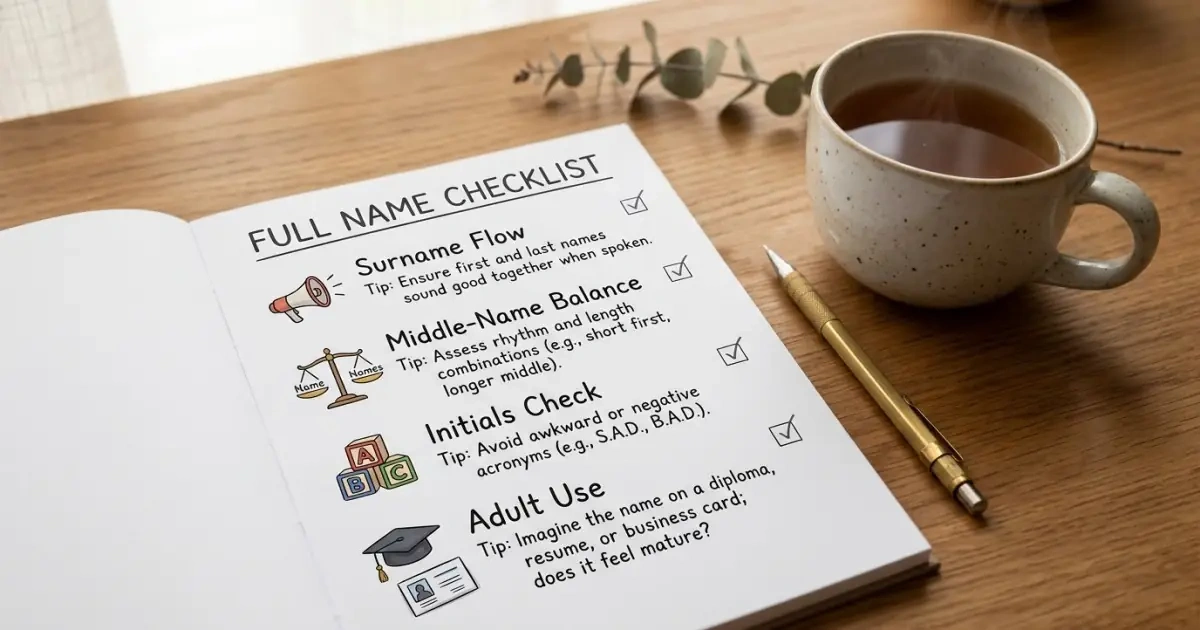
Everyday Use Depends on the Full Name, Not Only the First Name
Pronunciation matters most, but it is not the only layer.
An Irish name still has to work with the surname. It needs nicknames the family can accept, initials that do not create problems, and enough adult range for the child’s future. A name that demands explanation should reward the effort.
| Practical Layer | What to Check |
| Surname flow | Say the first and last name together in ordinary speech |
| Middle-name balance | Make sure the full name does not become too heavy |
| Nicknames | Notice likely short forms and public shortcuts |
| Initials and monograms | Check awkward combinations before committing |
| Administrative readability | Imagine school forms, emails, appointments, and records |
| Adult use | Picture introductions beyond childhood |
| Story independence | Ask whether the name works even without explanation |
A visibly Irish spelling may feel worth the effort until you imagine your child introducing themselves in a room where no one knows the story. That is the moment admiration needs practical support.
For specific friction, use How to Match a First Name With Your Surname, How to Check Nickname Potential Before You Choose, How to Check Initials, Monograms, and Awkward Combinations, and How to Choose a Name That Ages Well. When the broader question is whether the name holds beyond its Irish backstory, What Makes a Good Baby Name? gives the decision a wider standard.
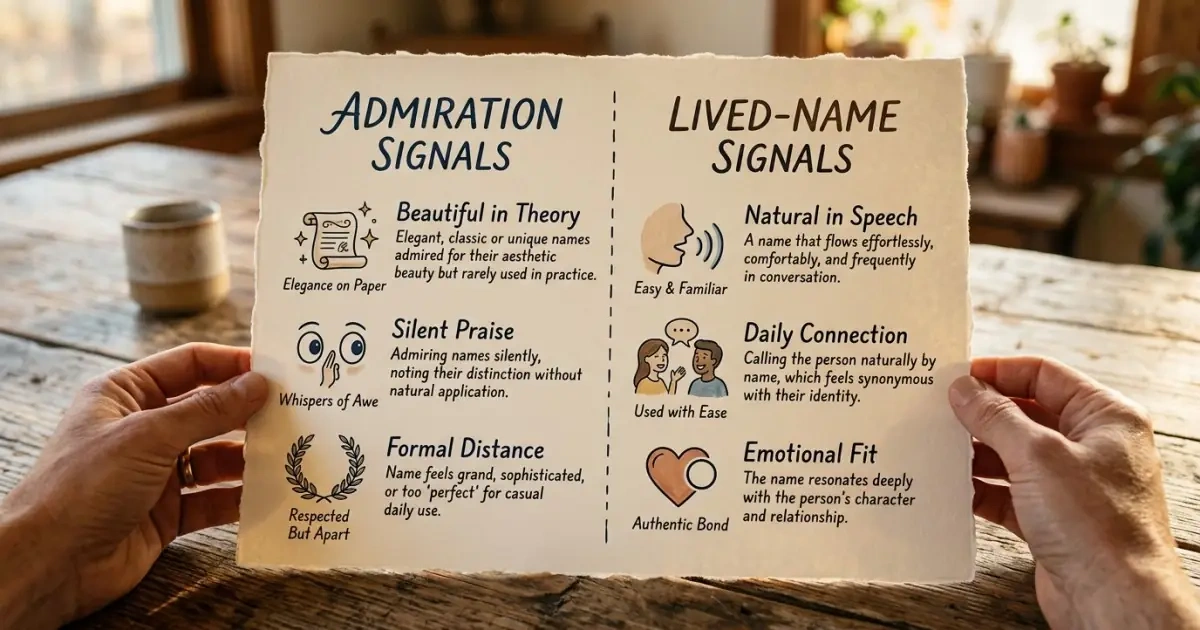
Admiring an Irish Name Is Not the Same as Living With It
Some names are beautiful from a distance.
Parents may love the correct sound, the cultural weight, the literary texture, or the idea of being the kind of family who uses a name that distinctive. Then daily speech begins. The name is said in a tired voice, typed into forms, shortened by relatives, paired with the surname, and heard through other people’s accents.
In that repeated use, the truth becomes clearer.
A name you truly love usually survives ordinary repetition. It begins to sound like your child, not like a cultural object you are handling carefully. You do not need to perform the name every time you say it.
| Admiration Signal | Lived-Name Signal |
| You love explaining the name | You enjoy saying it even without explanation |
| It feels beautiful in theory | It feels natural in daily speech |
| You defend the spelling often | You accept the spelling burden calmly |
| The history carries most of the appeal | The name itself carries enough appeal |
| You hesitate to use it casually | The name fits ordinary family life |
Irish names can be especially vulnerable to admiration because their cultural and poetic appeal is so strong. When that line starts to blur, How to Test a Baby Name Before Finalizing It is the right next step.
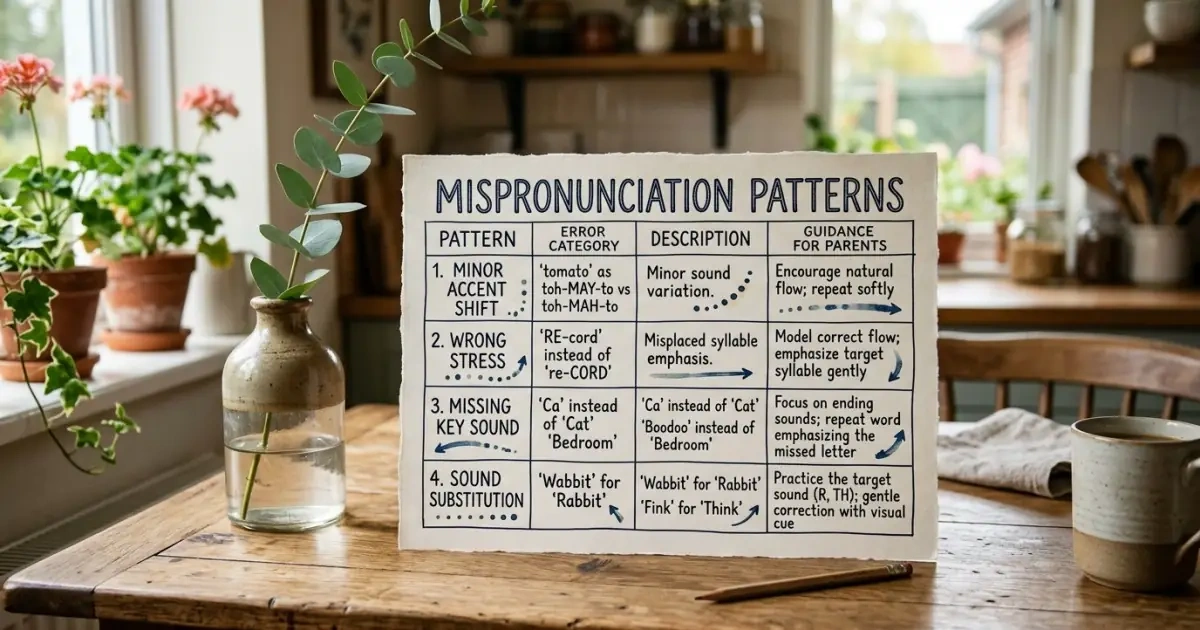
When You Love the Irish Form but Expect Mispronunciation
Do not treat all mispronunciation risk as equal.
First, identify the kind of mistake the name is likely to invite. A small vowel shift is different from a total first-read collapse. A stress change may be manageable, while a pronunciation that turns the name into something else may not be.
| Mispronunciation Pattern | What to Consider |
| Minor accent shift | Usually easier to accept |
| Wrong stress | May change the feel of the name |
| Missing key sound | Can weaken identity |
| Name read as another name | Confusion may be constant |
| Spelling and pronunciation both need teaching | Correction burden is higher |
| Family dislikes the common wrong version | The name may become tiring |
After that, test whether a variant solves the real problem. A bridge spelling, a related form, or a nickname may preserve enough Irish identity while reducing the daily repair work. The rooted form may still win when it matters enough. That is a valid choice when the family understands the cost.
Choose from correction tolerance, not guilt.

When the Easier Variant Feels Too Flattened
The opposite problem is just as real.
Parents try the easier form and feel the loss immediately. The spelling may be simpler, but the rhythm is gone. The name becomes more legible and less alive. The visible Irishness, family connection, or emotional charge weakens more than expected.
That reaction matters.
| What Feels Lost | Possible Response |
| Original spelling | Keep the Irish form or place it in the middle |
| Rhythm | Test nearby Irish names with stronger sound shape |
| Visible Irish identity | Use a bridge form with clearer roots |
| Family connection | Keep the family form as a middle name |
| Cultural depth | Choose a different Irish name rather than flattening this one |
| Sound texture | Look for a short form that preserves the feel |
Ease should not erase the part of the name you actually loved.
A rooted full name with a lighter nickname may work better than a fully flattened form. A middle-name strategy can preserve the Irish name with dignity. Another Irish option may give you the depth you want with less daily friction.
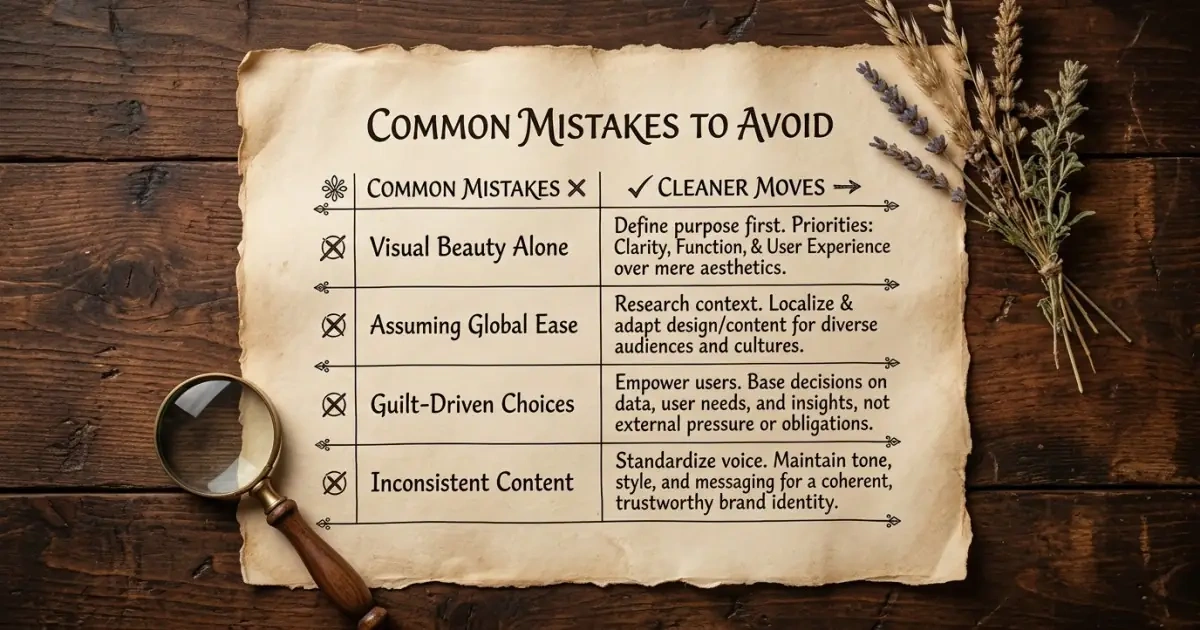
Mistakes That Weaken Irish Name Choices
Most mistakes with Irish names come from love.
Parents fall for the beauty, the story, the cultural depth, or the look of the spelling. That affection is real. It still needs structure.
| Mistake | Why It Weakens the Choice | Cleaner Move |
| Choosing by visual beauty alone | The name may fail in speech | Test pronunciation early |
| Assuming Irish popularity equals global ease | Familiarity may not travel | Test in your actual environment |
| Treating anglicised forms as automatically inauthentic | Useful bridges get dismissed too quickly | Compare what each form preserves |
| Treating the Irish form as morally mandatory | Guilt replaces judgment | Name your real correction tolerance |
| Ignoring nicknames and surname flow | Daily use becomes harder later | Test the full name |
| Protecting the name from ordinary speech | Admiration hides practical weakness | Use it casually before deciding |
| Choosing the easiest form without checking meaning | Portability may flatten the name | Preserve enough roots to matter |
Irish names deserve care, not defensiveness.
The strongest choice will survive both admiration and testing.

A Practical Framework for Choosing Irish Names for Everyday Life
Use this process when Irish names are your lane but the shortlist feels caught between beauty and usability.
| Step | What to Do | Why It Matters |
| 1. Name the Irish connection you want | Heritage, language, saintly history, mythology, sound, style, or family line | Clarifies what must be preserved |
| 2. Build a shortlist across forms | Include Irish spellings, anglicised forms, bridge variants, and related names | Prevents false either-or thinking |
| 3. Test pronunciation in real voices | Hear the name in your family, accent environment, and likely public settings | Reveals the actual correction burden |
| 4. Compare spelling and readability | Decide which written form you are willing to support | Makes friction visible |
| 5. Check surname, nickname, initials, and adulthood fit | Treat the name as a full life name, not only a heritage object | Protects everyday usability |
| 6. Separate admiration from use | Notice whether the name improves or weakens through repetition | Prevents romantic overreach |
| 7. Keep the name that feels rooted and livable | Choose the form you can use often without resentment | Builds confidence |
Once the shortlist becomes serious, How to Compare Baby Names Objectively and How to Test a Baby Name Before Finalizing It can help you move from cultural attachment to practical proof.
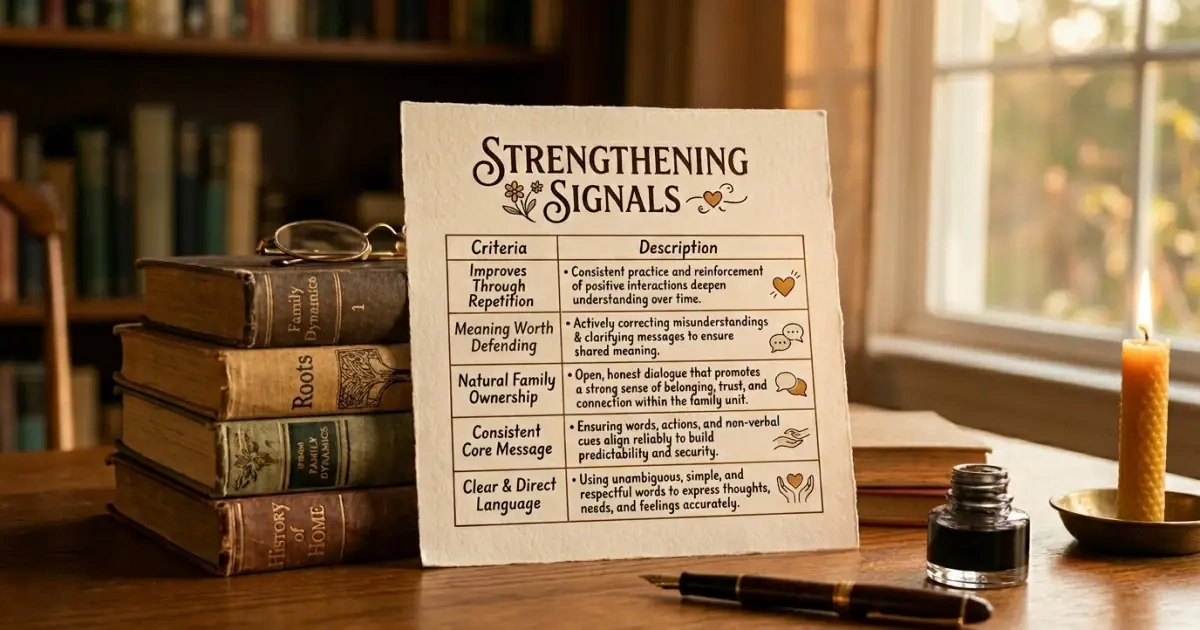
Signs an Irish Name Choice Is Getting Stronger
A strong Irish name gains confidence through use.
You can say it naturally without performing it. The spelling still feels worth keeping, or the bridge form still feels respectful. The name sounds like a real child and a believable adult. The surname works. The nickname layer does not undermine the choice.
| Strengthening Signal | What It Suggests |
| The name improves through repetition | It may be livable, not only admired |
| Pronunciation correction feels acceptable | The burden is chosen |
| The spelling feels worth defending | The form matters enough |
| A variant brings relief without guilt | The bridge may be working |
| The name fits the surname | The full identity is stable |
| Both parents use it naturally | The choice has real family ownership |
These signs matter more than whether the name is the most traditional option on the list.
A usable Irish name does not need to be culturally maximal. It needs to carry enough root and enough calm.
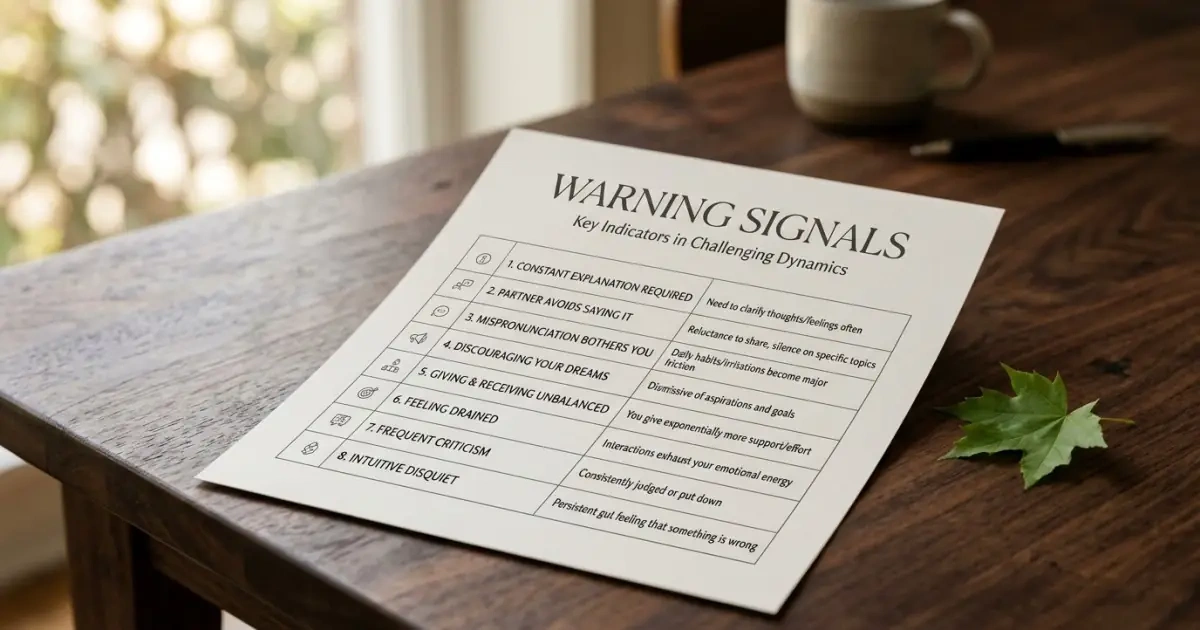
Signs the Name May Be Better Admired Than Lived
Some Irish names are discoveries rather than final choices.
They may open a beautiful lane, teach you what you love, or point toward a better option nearby. That does not mean they belong on the birth certificate.
| Warning Sign | What It May Mean |
| You keep explaining why it is beautiful | The story may be carrying the name |
| One parent avoids saying it aloud | The name has not become natural |
| The common mispronunciation bothers you every time | Daily use may be tiring |
| The easier variant feels disconnected | This cluster may not have the right solution |
| The name works best in imagination | Admiration is outrunning livability |
| The surname makes the full name heavy | The first name cannot be judged alone |
A name can be beautiful and still not be your child’s name.
That is not failure. It is discernment.
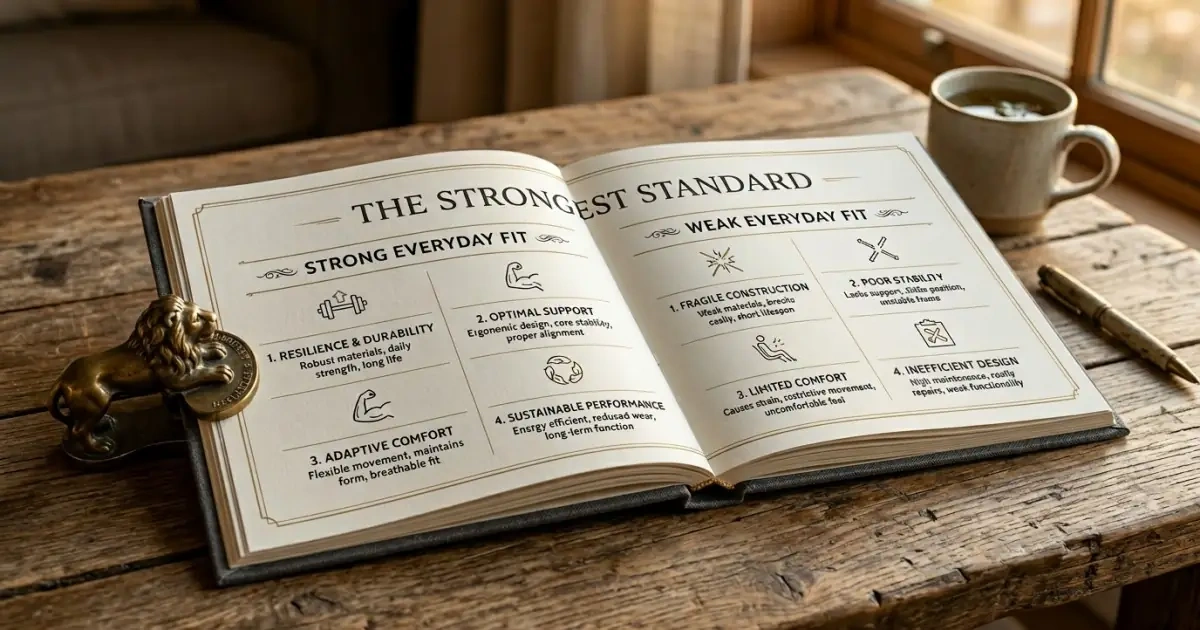
Rooted, Sayable, and Calm Is the Strongest Standard
A strong Irish name does not need to become generic.
It does need everyday stability.
That is the point many parents eventually reach after moving through pronunciation guilt, spelling debates, family heritage, and authenticity anxiety. The best choice is rarely the name that wins the purest cultural argument. It is the name that still feels Irish, still feels chosen, and still works in the life your child is likely to have.
| Strong Everyday Irish Name | Weak Everyday Fit |
| Keeps meaningful roots | Relies only on cultural explanation |
| Feels natural in family speech | Feels ceremonial every time |
| Has chosen friction | Creates correction no one wants |
| Works with the surname | Struggles as a full name |
| Survives ordinary repetition | Works mainly as admiration |
The strongest Irish names feel lived, not merely admired.
They keep their roots without turning daily introductions into performance. That calm is not boring. In naming, calm is often the sign that the choice is truly working.

Questions Parents Ask About Irish Names for Everyday Life
Do you need to keep the original Irish spelling?
No. The right form depends on what you are trying to preserve. Original spellings can be powerful, but bridge forms, anglicised forms, nicknames, and middle-name placement can also carry Irish identity well.
What if an Irish name is beautiful but constantly mispronounced?
Test whether the mispronunciation is minor or identity-changing. A name worth occasional teaching may still be strong. Constant repair that the family already resents is a warning sign.
Are anglicised Irish forms less meaningful?
Not automatically. Many anglicised or bridge forms carry real family, religious, migration, and cultural history. The question is whether the form still preserves enough of what matters to you.
How do you know whether an Irish name will work outside Ireland?
Test it where the child will actually live. Say it aloud, ask others to read it fresh, pair it with the surname, check likely nicknames, and imagine it in school, documents, and adult introductions.
Is a simpler Irish name better than a more traditional one?
Neither answer wins automatically. The strongest choice is the form your family can use with pride, clarity, and consistency.
Can an Irish name work as a middle name instead?
Yes. A middle name can carry heritage, language, or family meaning without asking the first name to absorb every correction burden.
Where to Go Next When an Irish Shortlist Feels Close
Let the exact friction point guide your final steps. A broad origin reset belongs in How to Choose a Baby Name by Origin, but an Irish shortlist usually needs a sharper question: what are you protecting, and what are you asking the child to carry?
When the tension is authentic roots versus daily readability, How to Choose Names With Strong Cultural Roots Respectfully and How to Keep a Cultural Spelling Without Creating Constant Friction will help you weigh what is truly worth preserving. For families juggling Irish names across multiple accents, bilingual homes, or modern bridge forms, the practical architecture in How to Choose a Name That Works in Two Languages, How to Choose Names That Work Across Different Accents, and How to Adapt a Traditional Name for Modern Everyday Use can keep the choice from becoming a purity test.
Once the contenders are real, push them through How to Compare Baby Names Objectively and How to Test a Baby Name Before Finalizing It so the most beautiful story does not outrank the name that will actually work. For the wider editorial path through naming decisions, Expert Baby Naming Guides for Choosing the Right Name can help you move from Irish-name admiration into the guide that matches the exact problem in front of you.
Irish names become strongest in everyday life when they keep their roots without asking your family to perform constant repair.
That does not mean choosing the easiest form. It means choosing the Irish name you can actually live with clearly, proudly, and often.