
Nicknames for Zoe: Cute, Cool, and More Unexpected Options
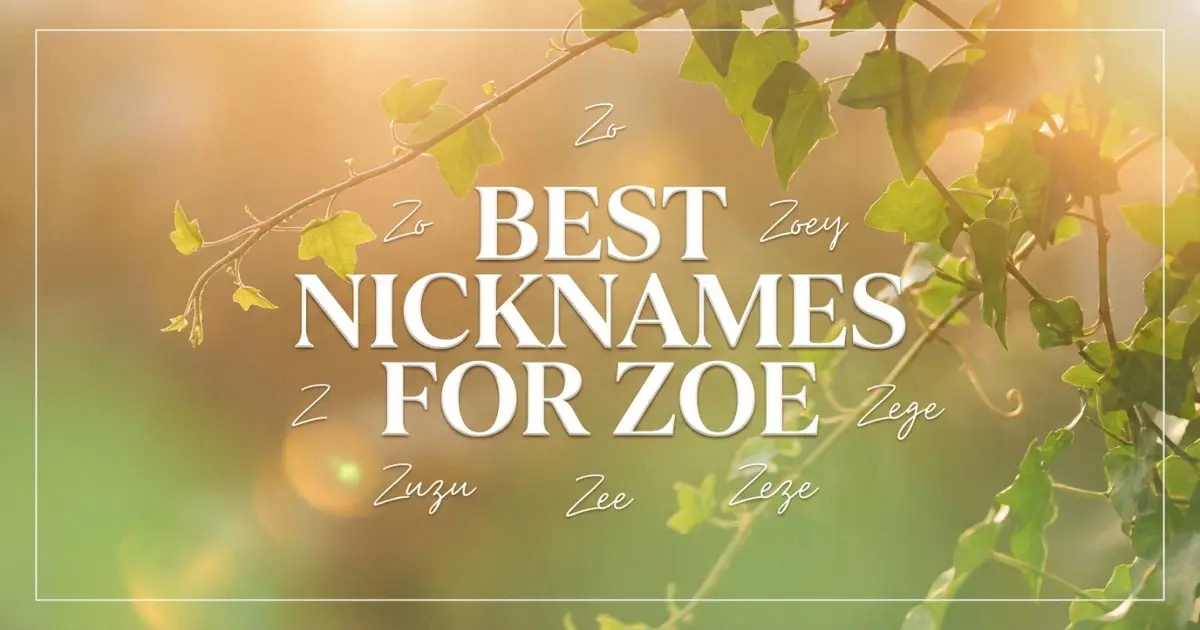
A nickname is often less about shortening a name than about changing its social temperature. The full name belongs to the public world: attendance sheets, passports, classroom walls, first impressions. The nickname belongs to relationships. It tells you who is close enough to be less formal, who prefers warmth to precision, and what version of a person they are really speaking to. Some nicknames sound like siblings calling down a hallway. Some belong to text threads and friend groups. Others stay locked inside the family and never need to make sense to anyone else. That is why nickname logic is never purely mechanical. It is social, emotional, and slightly improvised.
That is especially true with Zoe. Official data shows the name is highly familiar in the United States, which means most people meet it already feeling accessible and complete. It is only two syllables, carries its stress immediately, and rarely feels cumbersome in daily life. So unlike a long formal name, Zoe does not naturally invite shortening for convenience. If a nickname develops, it usually develops because someone wants to make the name softer, faster, cuter, or more private. That gives Zoe an unusually small but very real nickname ecosystem: not endless options, but a handful of believable ones that reveal how intimacy actually works. Nicknames add personality at the surface, but the deeper weight of the name still sits in Zoe meaning.
What Zoe starts to sound like once people know her well
| Group | Suggested Nicknames | Persona | Use Context |
|---|---|---|---|
| Direct cuts | Zo, Z | Clean, modern, quick | Friends, siblings, texting, casual peer use |
| Sound-play forms | Zee, Zee-Zee | Bright, teasing, upbeat | Family circles, camp names, close friends, playful social use |
| Doubled affection forms | Zozo, Zoe-Zoe | Warm, childlike, intimate | Parents, grandparents, early childhood, home use |
| DIY pet forms | Zo-Bear, Zoe-girl | Personal, tender, relationship-specific | Private family use, one-on-one bonds, romantic use |
| Minimal cool forms | Zo, Z | Spare, current, effortlessly social | Teens, college, creative circles, digital communication |
Zoe has a small nickname world, and that is part of its strength
Why short names rarely produce endless believable options
One of the first things to understand about Zoe is that it does not behave like a longer name with layers to peel away. A name such as Victoria or Francesca can generate multiple socially accepted short forms because there is enough internal material to work with. Zoe is different. It arrives already compact, already balanced, already easy to say. That means its nickname world is not built from necessity. It is built from affection and tone.
This is not a limitation so much as a clue. Research and naming guides often note that nicknames emerge in a few predictable ways: by obvious shortening, by familiar inherited forms, or by playful sound changes that become private habit. Zoe only really supports the first and third routes. It does not have a large inherited nickname tradition in common English use. The attached name books mostly present Zoë, Zoey, Zooey, Zoia, and Zoya as spelling or language variants rather than as true nicknames. That means when families nickname Zoe, they are usually doing something more personal than simply following a long-established diminutive ladder.
That is why the believable options matter more than the number of options. A good nickname for Zoe should feel like something real people would actually say after months or years of closeness, not something invented to fill a list.
Why tone matters more than structure with Zoe
Because Zoe is already so concise, a nickname rarely changes its practical length very much. Instead, it changes the emotional register. Zo sounds cooler and quicker. Zee sounds brighter and more playful. Zozo sounds smaller and more intimate. That is the true nickname logic here. The sound does not have much room to shrink, so it changes mood instead.
This is useful for parents to know because it keeps expectations realistic. If you choose Zoe, the likely nicknames will not radically transform the identity of the name. They will act more like social shading. That often turns out to be a good thing. The child can remain Zoe almost everywhere, while still having smaller names reserved for the people who know her best.
Zoe’s opening sound carries nearly all the public nickname logic
The opening zone: why Zo feels the most organic
The most natural public nickname for Zoe is Zo. This happens for a simple reason: the stressed opening of the name already contains its strongest identity. People tend to shorten from the part of a name that hits the ear first, especially when that part is already complete enough to stand alone. Zo feels modern, minimal, and socially believable. It is the kind of nickname that can appear in a friend group almost without announcement.
Zo is also flexible. On a child, it feels easy and bright. On a teenager, it can sound sharp and current. On an adult, it still feels plausible because it does not sound babyish. That age range matters. One reason some nicknames fail is that they only belong to one life stage. Zo can move through several.
There is also a visual advantage. In text messages and social media, Zo looks effortless. That matters more than people admit. Many modern nicknames survive because they are easy to type, easy to tag, and easy to say aloud without explanation. Zoe lends itself well to that kind of compression.
Why Z belongs more to peers than to parents
The other opening-based minimal form is simply Z. This is less traditional, but increasingly plausible in contemporary social life. Single-letter nicknames tend to emerge in fast-moving peer environments: school, sports, group chats, college houses, workplaces where everyone abbreviates everything. Z works not because it is sentimental, but because it is efficient and slightly cool.
That also means it tends to belong more to peers than to older relatives. A grandmother is more likely to say Zozo than Z. A best friend is more likely to say Z than Zoe-girl. Understanding that difference helps make the nickname set feel more human. Different relationships gravitate toward different kinds of economy.
The center of Zoe is really folded into the opening, so the ending does the emotional work
In a two-syllable name like Zoe, the stressed center and opening overlap
With longer names, it makes sense to talk about the opening, the stressed center, and the ending as separate nickname zones. Zoe is too short for that kind of clean division. The stressed center is effectively folded into the first syllable: ZOH. That is why almost every public nickname comes from the front half of the name. There is simply not enough internal distance for a center-led nickname to form the way it does in Victoria or Francesca. These nickname choices read more clearly once the spoken shape of the full name is in view, so see how to pronounce Zoe.
This is where many list-style baby-name articles go wrong. They force more complexity onto short names than short names naturally have. In real life, a name like Zoe does not usually split itself into several neat structural pieces. It gives you one strong opening and then a softer ending. That is enough.
The ending zone: why Zee and Zee-Zee feel affectionate, not formal
If the opening carries the public forms, the ending carries the playful ones. The final -ee sound in Zoe naturally invites affectionate echoing, which is why Zee and Zee-Zee feel plausible. These are not formal shortenings. They are sound-based pet forms. They happen because the name is bright, easy to repeat, and pleasant to play with in the mouth.
Zee has a lightly comic, upbeat quality. It can work with family, siblings, and close friends, especially where teasing affection is part of the social style. Zee-Zee is softer and more childlike, which usually pushes it deeper into the private zone. It feels especially believable for a grandparent, parent, or very close sibling who repeats the name often enough that rhythm matters more than exactness.
These ending-led forms are important because they show how nicknames for Zoe typically behave. They are less about trimming away syllables and more about making the existing sound feel more intimate.
The pet-name versions of Zoe are where families become inventive
Why Zozo and Zoe-Zoe happen so easily
When people love a short name, they often double it. That is how you get Zozo and Zoe-Zoe. These are not dictionary nicknames. They are relationship nicknames, the kind that arise through repetition, early speech, or simple delight in the sound of the name itself. Because Zoe is already compact and musical, doubling it feels natural rather than forced.
Zozo is especially plausible because it keeps the bright beginning and adds warmth without changing the identity of the name. It is easy to imagine on a toddler and equally easy to imagine lingering for years inside a family even if it never leaves the house. Zoe-Zoe is slightly more explicit and may feel more obviously baby-centered, but it follows the same emotional logic.
DIY forms are real because intimacy is not tidy
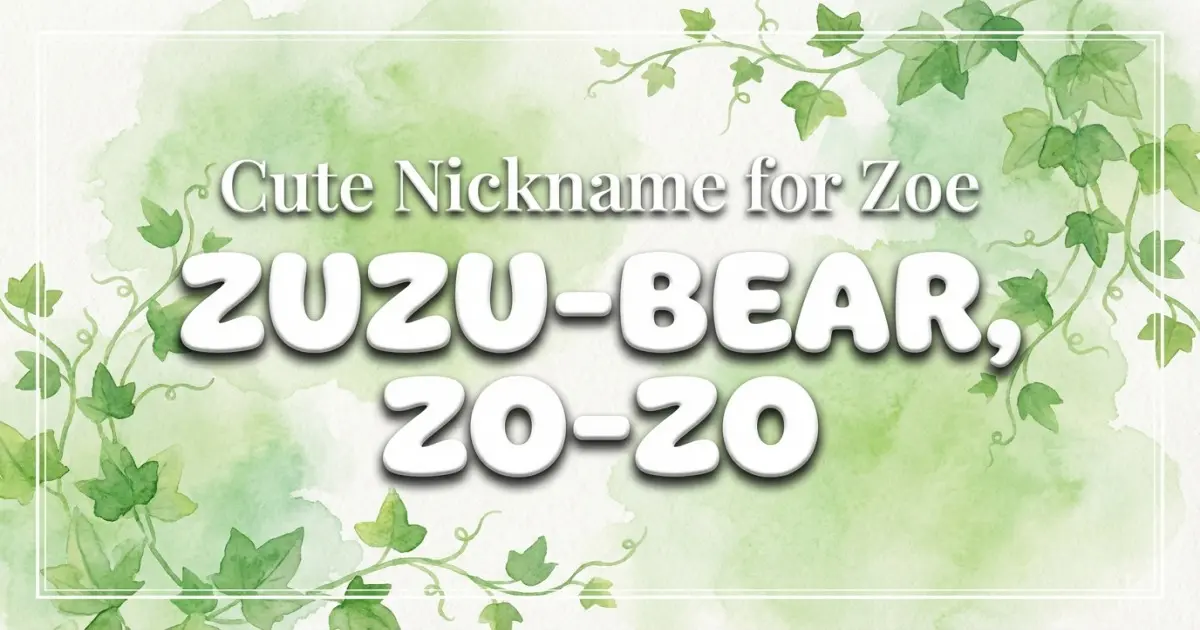
Nicknames are not always elegant. Sometimes they are compounds, soft add-ons, or highly specific private inventions. That is where forms like Zo-Bear or Zoe-girl live. These are not universal nicknames and are not meant to be. They are the names that emerge when closeness matters more than style. They are plausible precisely because they are a little unselfconscious.
This part of the nickname ecosystem is worth naming because it explains why short names still produce emotional variety. Even when the structural nickname options are few, the relational ones are endless. A Zoe may remain Zoe to the world and still collect several entirely private pet names over the course of childhood and adulthood.
Which Zoe nicknames actually last as she grows
If the question is durability, the strongest options are Zo and Z. They can move through adolescence and adulthood without sounding either childish or overly stylized. Zee can also survive, though it remains more playful and relationship-sensitive. Zozo and Zoe-Zoe are the forms most likely to stay inside family or intimate circles rather than becoming broad public identities.
That distribution makes sense. Zoe is already brief enough that a public nickname does not need to do much. It only needs to feel slightly more casual. The private nicknames, by contrast, do more emotional work because that is where the real room for invention lies.
In the end, Zoe is the kind of name that often keeps its full form in public and collects smaller names only from the people who matter most. That is not a lack of nickname potential. It is a sign of a name that is already socially efficient. The nicknames it does produce tend to be honest ones: Zo for ease, Zee for play, Zozo for love.