
How to Pronounce Zoe: An Easy Sound-by-Sound Breakdown
The pronunciation of Zoe often becomes visible in a very ordinary social moment: a teacher reading a class list, a host checking a reservation, or a nurse calling a waiting room and deciding, in half a second, whether this is a name to glide through or a name to pause over. That tiny pause happens because Zoe looks simple, but its spelling has lived in several neighboring forms for a long time. Historically and in baby-name guides, readers may also encounter Zoë, Zoé, Zoey, and Zooey, so the eye sometimes hesitates even when the ear already knows the answer.
Once spoken, though, the name usually clears itself immediately. The intended everyday pronunciation is ZOH-ee. It is two syllables, with the stress on the first, and it moves quickly from a rounded opening into a bright, light ending. That shape is part of why Zoe has remained so durable. It sounds cheerful without sounding flimsy, and familiar without losing its crispness. The trick is not complexity. It is simply knowing that the name opens fully and then finishes lightly.
What the spelling Zoe is really asking the voice to do
| Element | Phonetic Detail | Quick Tip |
|---|---|---|
| Everyday pronunciation | ZOH-ee | Give the first syllable the weight, then let the second one stay quick and bright. |
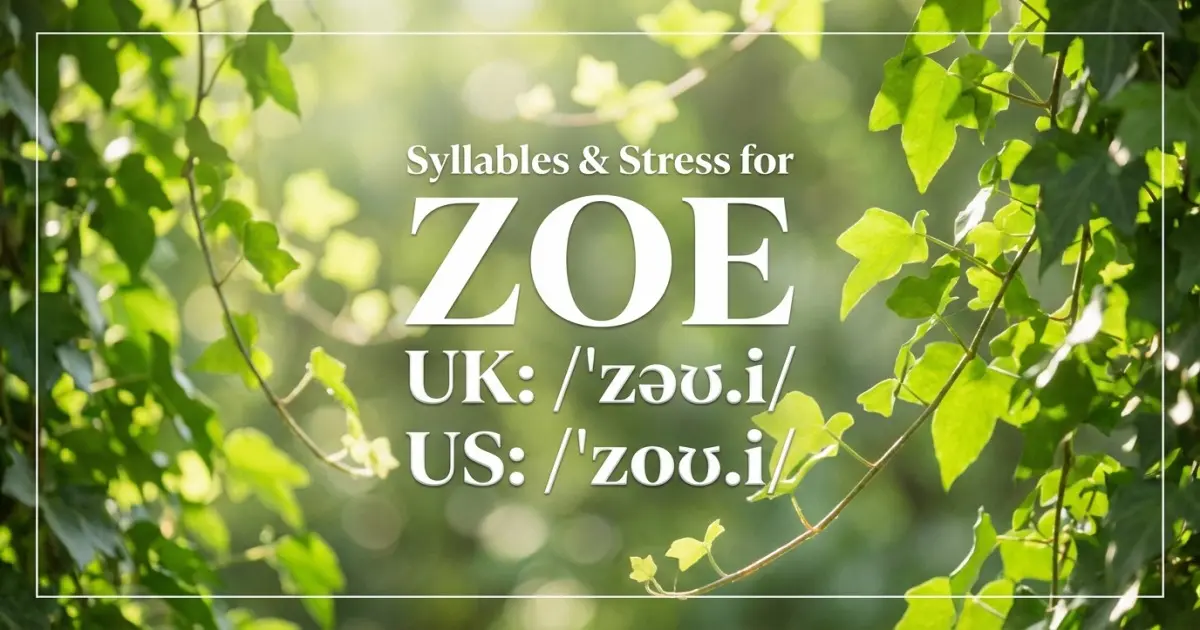
| IPA (US) | /ˈzoʊi/ | The stress mark shows that the first syllable leads the name. |
| IPA (UK) | /ˈzəʊi/ | The structure is the same in British English, even if the vowel color shifts slightly. |
| Syllable count | 2 syllables | Think of it as one rounded beat followed by one light beat. |
| Stress pattern | ZOH-ee | Do not flatten both syllables equally; the first does the real work. |
| Ending sound | Clean -ee | Finish lightly and clearly, not with a swallowed ending. |
Zoe works because the first syllable carries the whole name
Why the opening matters more than the ending
In a short name like Zoe, the opening sound does almost everything. The first syllable is where the name establishes its identity. In both the U.S. and U.K. phonetic forms, the stress falls there: /ˈzoʊi/ and /ˈzəʊi/. That means the voice should not rush past the beginning. The opening ZOH is the anchor. The second syllable is lighter and quicker, but it is not insignificant. It gives the name its brightness. Before focusing only on syllables and stress, it helps to step back into the fuller frame of Zoe meaning.
This matters because many pronunciation mistakes happen when a short name is treated as if it were even shorter than it is. People see a familiar cluster of letters and assume the whole name can be said in one breathy blur. Zoe resists that. It wants two clear beats, not one smudged sound. The first syllable should be rounded and audible. The second should follow immediately after, but still be heard.
The sound mechanics underneath Zoe
Phonetically, Zoe begins with a voiced fricative: the z sound. That matters because voiced fricatives start with smooth airflow and vibration, which helps the name feel energetic rather than blunt. After that comes a rounded vowel glide, heard in the ZOH part. Then the name moves into the lighter -ee ending. The result is a name that sounds airy and modern, but still precise.
That clean movement is one reason Zoe often feels easier to say than it looks to spell. The spelling may suggest alternatives because of its historical variants, but the actual mouth-feel of the name is simple: open, brighten, finish.
Zoe across accents stays stable even when the vowel color changes
What remains the same in U.S. and U.K. speech
The supplied IPA shows a subtle but useful truth about Zoe. In American English it appears as /ˈzoʊi/; in British English it appears as /ˈzəʊi/. Those are not two different names. They are two versions of the same sound pattern. In both cases, the name keeps first-syllable stress, two syllables, and a bright final -ee. That stability is important. It means the name travels well.
For parents, that matters more than any fine-grained phonetic difference. A name that remains structurally stable across accents is socially easy. It does not constantly ask to be corrected. Zoe fits that category. Someone from London and someone from Los Angeles may shade the first vowel a little differently, but the name still sounds recognizably the same because the rhythm does not move.
What listeners may notice first
The biggest accent difference sits in the rounded opening vowel. In American English, the first syllable often sounds closer to a fuller ZOH. In many British accents, the same syllable may feel a touch narrower or more centered before it glides forward. But in ordinary conversation, most people do not hear this as a conflict. They hear it as regional color.
The second syllable, by contrast, stays comparatively stable. That final -ee remains bright in both forms, which helps keep the name clear. So even when the opening shifts slightly, the overall effect remains crisp and recognizable.
Where Zoe gets mispronounced, and why the mistakes are predictable
Mistake pattern one: turning Zoe into one syllable
The most common problem is overcompression. Because Zoe is short and visually simple, some speakers slide through it too quickly and make it sound almost monosyllabic. That usually happens when they treat the name as if the letters merely spell one long opening vowel. But Zoe is not a one-beat name. It needs that second light syllable to finish properly.
In practice, this means the name should never sound like a truncated Zo. Even though Zo may function as a nickname, the full name needs the final -ee to sound complete.
Mistake pattern two: overreacting to alternate spellings
Another common issue comes from the wider spelling family around Zoe. Name guides often list alternatives such as Zoë, Zoé, Zoey, and Zooey. Those variants can make readers second-guess themselves and add unnecessary complication. They may wonder whether the dots, accent, or extra letters must radically alter the sound. In most everyday English use, they do not change the core spoken identity very much. The name still centers on ZOH-ee.
The point is not that spelling never matters. It is that the basic pronunciation remains remarkably stable even when the written form changes. Readers often make Zoe harder than it is because the visual family looks more varied than the actual speech family sounds.
Mistake pattern three: confusing Zoe with neighboring names
The name also sits near several sound neighbors that can subtly interfere. Guides frequently list related or variant forms such as Zoya, Zoia, and Zoey, while other short Zo- names like Zoha or Zora may influence expectations in multicultural settings. That does not usually create serious confusion, but it can create a moment of hesitation. People recognize the broad family of sounds and then have to decide which exact branch they are seeing.
Again, the solution is rhythmic. Say the first syllable clearly, then finish with the bright -ee. Once that movement is in place, the name usually resolves itself.
Zoe becomes easiest when you practice it in real speech
Practice lines that let the rhythm settle naturally
The simplest way to practice Zoe is not by staring at phonetic symbols but by saying the name in the kinds of phrases where it actually lives:
“Zoe, your table is ready.”
“This is Zoe from the office.”
“Can Zoe come to the front desk?”
In each line, the first syllable should sound rounded and settled. The second should stay light. If the name sounds rushed, you are probably swallowing the ending. If it sounds stiff, you are probably overseparating the syllables. The best version feels natural and almost effortless.
A practical memory cue for Zoe
If someone needs a quick pronunciation reminder, the easiest one is this: open on ZOH, finish on ee. That is enough for most speakers. The name does not need academic complexity. It needs confidence in the first syllable and a clear, quick finish.
Zoe sounds best when the speaker trusts its simplicity
The best pronunciation of Zoe is not the most elaborate one. It is the one that respects the name’s two-part structure without trying to decorate it. The name is short, bright, and historically well established. It does not want ceremony. It wants clarity.
That is part of why Zoe has remained so resilient. It looks stylish on the page, but becomes even easier once it is heard correctly. Two syllables. First-syllable stress. A bright ending. When those three things are in place, the name sounds exactly as it should: lively, clean, and completely at home in everyday speech.