
Imogen Name Meaning: A Closer Look at Its Meaning and Appeal
Some names feel born from paperwork; others feel as if they stepped out of a scene already carrying light, weather, and character. Imogen belongs to the second group. It is a name many people meet first through literature rather than through family repetition, and that changes the way it lands. Even before its meaning is explained, Imogen tends to sound like someone with inner life: observant, self-possessed, emotionally alert. That impression matters because the literal meaning, “maiden,” could easily have drifted into something fragile or ornamental. Instead, the name has survived by doing something more difficult. It keeps an old word for girlhood, but makes it feel intelligent rather than decorative.
That is the central tension that gives Imogen its staying power. Official Social Security Administration (SSA) data shows it ranked No. 1126 for girls in the United States in 2024, so this is not a name carried by sheer mass popularity. It persists because it offers parents a rare combination: literary prestige without stiffness, Celtic depth without obscurity, and femininity without softness becoming the whole story. Imogen sounds delicate at a distance, but up close it has more structure than that. Its meaning may begin with youth, yet its cultural life has given it composure, moral steadiness, and a kind of quiet brightness that feels older than fashion.
Imogen's U.S. popularity rank over time, 1915–2024
Popularity statistics are based on official data from the Social Security Administration baby name records.
Imogen: A Literary and Distinctive Choice
Imogen presents as a name with one unmistakable center of gravity, where the girls’ side of the chart carries nearly all of its public visibility. Its profile likely reflects a naming culture interest in “literary and noble” names that feel “distinctive without becoming difficult”.
The absence of usage in the boys’ lane helps maintain a clear and singular present-day identity. Popularized by Shakespeare and meaning “maiden,” its three-syllable rhythm provides a texture of artistic polish.
What Imogen reveals before the story even begins
Imogen is one of those names whose basic facts already explain much of its appeal. Its origin, meaning, sound, and chart position all point toward the same impression: a name that is cultured, intimate, and underused without feeling invented.
| Key Facts | Information | Quick Insight |
|---|---|---|
| Name | Imogen | It looks literary on the page and sounds warm in the mouth, which is a rare combination. |
| Primary Gender Usage | Female | The name is distinctly feminine, but not sugary or overly ornamental in tone. |
| Origin | Celtic | The Celtic background gives it age and texture, helping it feel rooted rather than merely whimsical. |
| Meaning | Maiden | The meaning points toward youth and girlhood, but the name’s long cultural life makes that idea feel deeper and more self-possessed. |
| Pronunciation | IM-uh-juhn | The stressed opening keeps the name from floating away; it sounds clear, not breathy. |
| IPA | /ˈɪmədʒən/ | The compact three-syllable pattern helps the name feel easier to wear than its literary image might suggest. |
| Syllable Count | 3 | That moderate length gives Imogen elegance without pushing it into grandeur. |
| U.S. girls’ rank (2024) | No. 1126 | It remains uncommon enough to feel found rather than borrowed from the center of the charts. |
Imogen makes “maiden” sound more intelligent than fragile
The meaning “maiden” is one reason Imogen feels older than many fashionable girls’ names. It belongs to a vocabulary of personhood that predates modern branding language. But that same meaning can also create misunderstanding. In contemporary ears, “maiden” may sound ornamental, passive, or simply antique. Imogen survives because the name itself resists that flattening. It carries the idea of girlhood, but not as decoration. It makes youth sound inward, thoughtful, and alert. To compare tone, familiarity, and fit across similar names, explore more girl names and meanings.
Why “maiden” does not make Imogen weak
A name meaning “maiden” could easily have become all lace and sentiment. Imogen does not. Historically, words for youth often held more than innocence; they also suggested a stage of becoming, a life not yet finished but already distinct. That older sense matters here. Imogen does not sound like a porcelain figure. It sounds like a person at the threshold of her own story.
That distinction is part of why the name feels so appealing to many modern parents. It offers femininity without asking the child to perform sweetness all the time. The meaning carries grace, but the sound and literary associations keep that grace from collapsing into prettiness alone. Imogen suggests interior strength rather than spectacle.
The sound of Imogen gives the meaning more spine
The pronunciation helps enormously. IM-uh-juhn begins with a firm, stressed opening. The first syllable lands quickly and clearly, then softens into the quieter second and third beats. This matters because names are judged by the ear as much as by the dictionary. A name that begins weakly can feel hazy; Imogen does not. It starts with clarity.
The central consonant sound also helps. That soft j in the middle prevents the name from sounding brittle, while the final unstressed ending keeps it intimate. The result is balance: enough firmness to feel capable, enough softness to feel personal. In a practical sense, this is why Imogen can be literary without becoming remote. Its sound keeps it human-sized.
What Imogen tends to suggest in modern social life
Names often create an immediate professional and social impression long before anyone consciously analyzes them. Imogen tends to read as articulate, perceptive, and slightly bookish in the best sense. It suggests someone who is thoughtful without being severe. Unlike overtly glamorous names, it does not arrive asking for attention. Unlike very clipped modern names, it does not feel stripped of atmosphere. It sits in a middle ground that many parents want but few names achieve.
That social impression is one of the name’s quiet advantages. Imogen can belong to a child, a student, an artist, a lawyer, or a woman in public life without needing to change register. It has personality, but it is not a costume. That is a large part of what makes it durable.

How Imogen moved from Celtic root to literary afterlife
Imogen is now so strongly associated with literature that it is easy to forget the name’s older layer. Its primary root is Celtic, and the meaning “maiden” preserves that older inheritance. But modern recognition owes much to the way the name entered English literary memory. Historically, Imogen is inseparable from Shakespeare’s Cymbeline, where the heroine gave the name one of its most lasting identities. That literary turn did not replace the older meaning. It gave the meaning a face, a temperament, and a story.
The older Celtic thread beneath Imogen
The Celtic root matters because it explains why the name feels older than its current rank suggests. It is not a recent invention dressed in antique spelling. It comes from a deeper naming stream, one where personal names were often bound to kinship, physical traits, or stages of life. “Maiden” fits naturally into that world. Even when parents do not consciously think about Celtic naming traditions, they often respond to the atmosphere such roots create: age, place, and a sense that the name belongs to something inherited rather than assembled. If you want to compare Imogen with names from the same heritage, browse related names from Celtic heritage.
That depth is especially important for Imogen because the name is unusual enough in the United States to risk feeling invented to those who do not know it. The older root prevents that. It gives the name legitimacy beneath its polish.
Shakespeare gave Imogen a mind, not just a melody
What literature gave Imogen was not merely visibility, but character. In Cymbeline, Imogen is not decorative background. She is one of Shakespeare’s most admired heroines: loyal, intelligent, emotionally resilient, and morally central to the play. That matters because literary names do not all survive in the same way. Some remain attached only to glamour or tragedy. Imogen remained attached to integrity.
That connection changed the emotional temperature of the name. It meant that “maiden” no longer floated as an abstract label. It now carried associations of courage, feeling, and endurance. Even for people who have never read Cymbeline, the literary afterlife still lingers in the name’s cultural texture. Imogen sounds like a heroine because, for generations, it has been heard as one.
Why Imogen kept its literary aura without becoming theatrical
Many literary names become too bound to one setting. They feel grand in theory but impractical in ordinary life. Imogen escaped that trap because it is neither excessively ornate nor weighed down by a single blockbuster association. It has enough recognition to feel established, but not so much that every bearer is read as a costume reference. That is a subtle but important distinction.
In other words, literature elevated Imogen, but did not imprison it. The name can still sound fresh on a modern child because its beauty lies less in grandeur than in poise. It brings a bookish glow into daily life without making the child sound staged.
Why Imogen still sounds intimate rather than antique
One of the most impressive things about Imogen is that it manages to sound cultivated without sounding cold. Many older girls’ names split into two camps: the antique names that feel charming but fragile, and the polished revival names that feel elegant but distant. Imogen sits outside that divide. It has age, but also nearness. It sounds like a real person one could know, not just a character in a portrait.
Imogen’s style neighbors show its real lane
If you place Imogen beside names such as Beatrix, Eloise, Ingrid, or Genevieve, its particular lane becomes clearer. Beatrix is drier and more angular. Eloise is airier and more Parisian in mood. Ingrid feels cooler and more severe. Genevieve is richer and more decorative. Imogen sits among them as the one that feels most inward and quietly literary. It is feminine, but not ornate. Distinguished, but not grand. Uncommon, but not bizarre.
That balance is difficult to manufacture. It depends on several layers working together at once: the Celtic root, the literary afterlife, the manageable three-syllable structure, and the modern rarity that keeps the name from flattening into cliché. Imogen sounds discovered rather than designed.
The pronunciation helps Imogen stay modern
Pronunciation often decides whether a literary name remains usable. Imogen has an advantage here. Its three-syllable rhythm is clean and compact, and the stress falls right where English speakers can hear it easily. The name looks more elaborate than it sounds. Once spoken aloud, it becomes friendlier than many people expect.
This is part of why Imogen feels more contemporary than some of its aesthetic cousins. It does not drag. It does not require ceremonial pacing. It can be said briskly, affectionately, or formally without losing shape. That everyday usability is one of the quiet reasons the name has continued to circulate instead of remaining purely admired from afar.
What kind of versatility Imogen offers
Imogen is versatile in a very specific way. It is not a blank slate name that can become anything because it means almost nothing socially. It already carries atmosphere. But it is versatile enough to adapt across ages and settings. It can sound imaginative on a child, intellectually appealing on a teenager, and polished on an adult. That progression matters. Some unusual names shine in infancy and then feel harder to carry later. Imogen tends to grow more convincing with time.
Research on naming perception often suggests that names with moderate rarity and strong cultural associations can feel especially memorable without sounding unstable. Imogen benefits from exactly that position. It is uncommon, but not unanchored.
Imogen in the rankings: uncommon enough to feel privately chosen
Official SSA data shows Imogen ranked No. 1126 for girls in the United States in 2024. That figure gives the name an important kind of freedom. It is visible enough to exist in the culture, but far enough from the top tier that most parents choosing it are not simply following the center of fashion. They are making a more interpretive choice.
That ranking also helps explain the emotional appeal of the name now. Imogen is not obscure in the way that truly unfamiliar names are obscure. Many educated English speakers have seen it before, heard it before, or encountered it in literary settings. Yet it still feels special in practice because it is unlikely to be heavily repeated in every classroom or neighborhood. That is often the sweet spot for parents who want distinction without social risk.
The chart position, then, reinforces the same impression created by the meaning and sound. Imogen is not a loud statement. It is a deliberate one.
Where Imogen opens into family life next
No name lives as meaning alone. Once parents begin imagining a child rather than a dictionary entry, practical questions appear. With Imogen, those questions are especially interesting because the name already has so much atmosphere built in.
Middle names decide whether Imogen feels sharper, softer, or more romantic
Because Imogen is balanced and moderately rare, the middle-name choice can shift it in several directions. A crisp middle can make it feel more tailored and modern, while a longer lyrical middle can deepen its literary softness. The full-name rhythm matters more here than parents sometimes expect. If you want the full pairing logic behind that contrast, see middle names for Imogen.
Nicknames show whether Imogen becomes intimate, bright, or more playful
Imogen is formal enough to invite affectionate short forms, but not so stiff that it needs shortening to function. That creates an interesting nickname landscape: the full name remains fully usable, while nicknames can reveal a family’s private tone or the child’s own chosen style later on. To see how those different moods shorten in real life, explore Imogen nicknames.
Pronunciation is one reason Imogen feels easier than it looks
On the page, Imogen can appear more mysterious than it sounds. In speech, the rhythm is compact and approachable. That difference between visual elegance and spoken ease is part of what makes the name so enduringly attractive. If you want the full sound pattern behind that rhythm, read Imogen pronunciation guide.
Why Imogen still feels like a found character rather than a manufactured trend
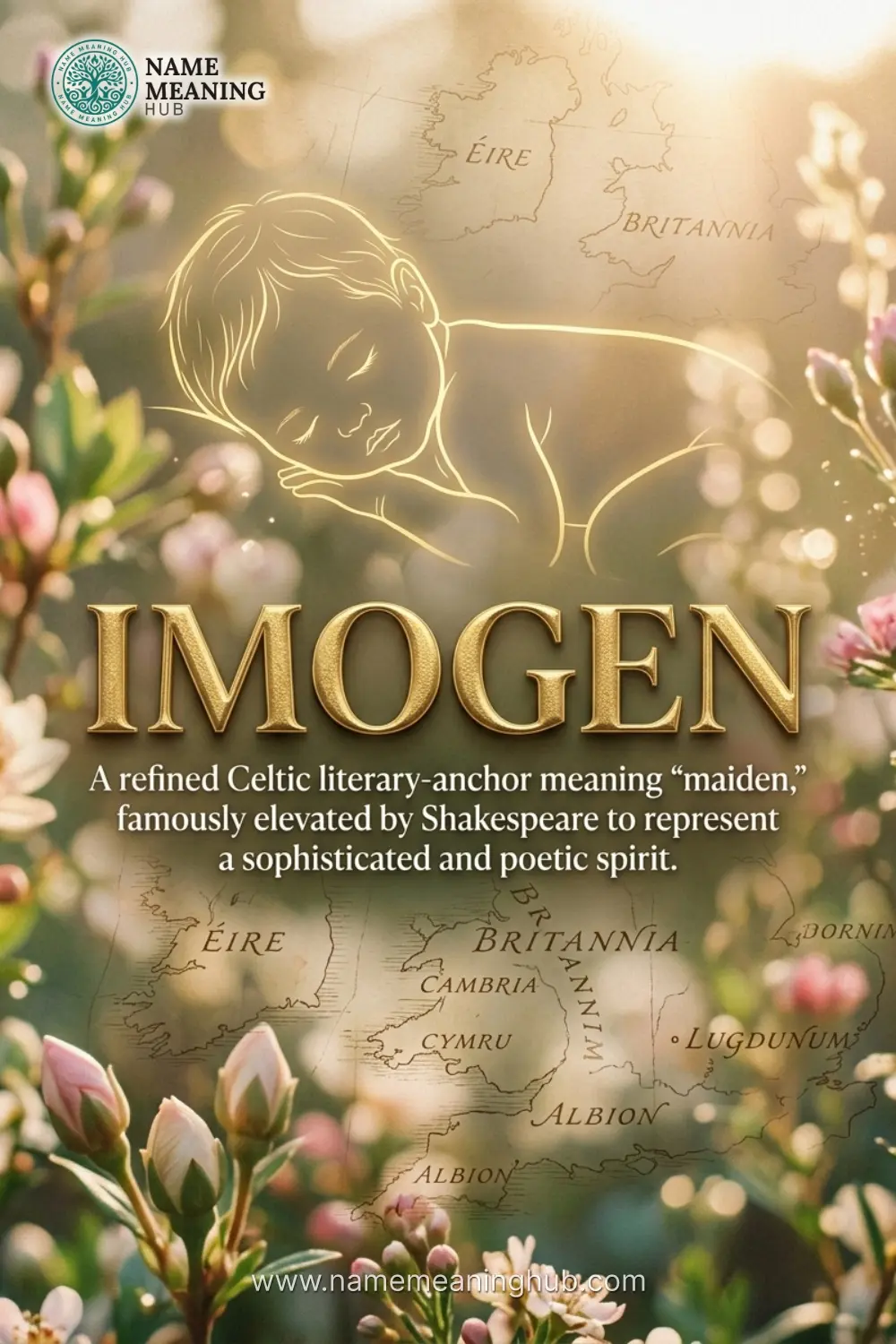
The deepest appeal of Imogen is that it gives modern parents access to a very old emotional register without sounding trapped inside it. Its Celtic root provides age. Its meaning, “maiden,” provides the original image of youth. Shakespeare gives it moral intelligence and narrative memory. The pronunciation gives it modern livability. And the modest chart position keeps it from becoming overexposed. Each layer is doing a different kind of work, but all of them point in the same direction: toward a name that feels composed, inward, and quietly alive.
That is why Imogen can seem at once delicate and durable. It carries an old word for girlhood, but not as a fragile relic. It carries it as a beginning – a poised, alert, self-possessed beginning. In literary terms, that is one of the best things a name can offer. Imogen does not only sound beautiful. It sounds as though a story could happen inside it, and as though the person bearing it would be equal to that story.
The Meaning of Imogen: Common Questions
Does Imogen feel too literary for everyday life?
For most families, no. Imogen has literary associations, but its three-syllable rhythm and straightforward spoken form make it easier in daily life than its written elegance might suggest.
What does the meaning “maiden” really add to Imogen?
It gives the name an older emotional register tied to youth and girlhood, but the name’s cultural history keeps that meaning from feeling weak or ornamental. In practice, Imogen often reads as thoughtful and self-possessed rather than fragile.
Is Imogen rare enough to feel distinctive?
Yes. Official data places Imogen well outside the mainstream top tier in the United States, which means it can feel individual without seeming completely unfamiliar.
Does Imogen age well from childhood to adulthood?
It usually does. One of Imogen’s strongest qualities is that it can sound imaginative on a child, intelligent on a teenager, and polished on an adult without needing to reinvent itself.