
Nicknames for Francesca: Cute and Casual Picks for Daily Use
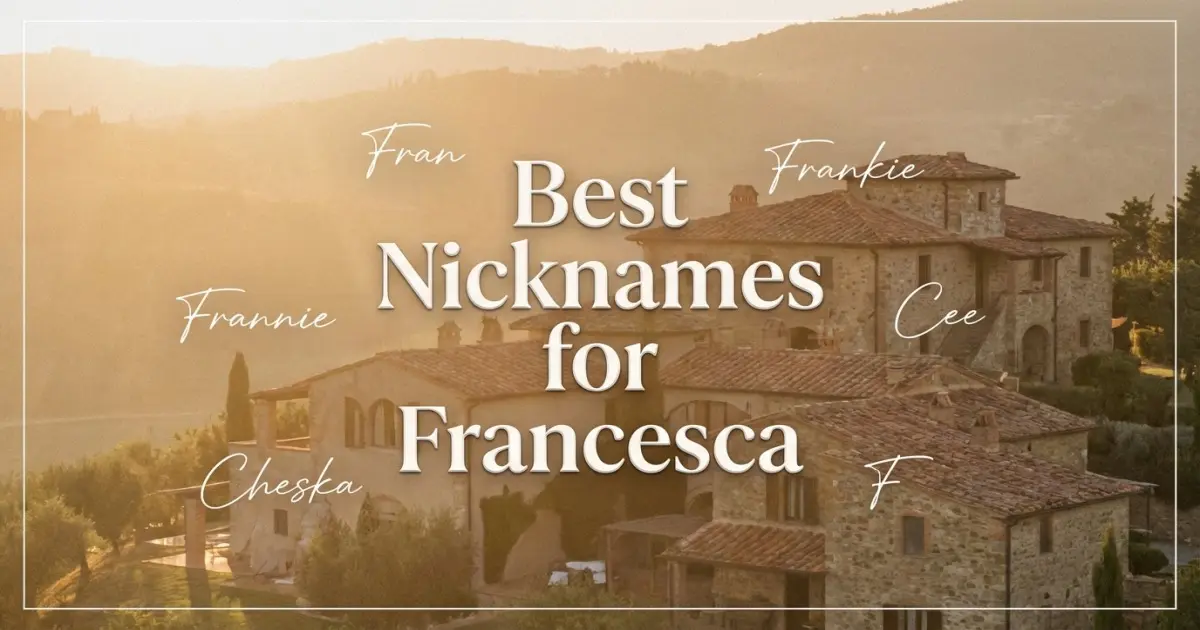
A nickname is not just a smaller version of a name. It is a social signal: who is close enough to use it, what mood it carries, and which side of a person it brings into view. Some nicknames sound like family kitchens and old photo albums. Others belong to school hallways, sports teams, text threads, or the first years of adult independence. A long, expressive name often produces more than one nickname because different people shorten it in different emotional directions. That is why nicknames rarely stay fixed. They move with age, intimacy, and personality.
That is especially true of Francesca. Official data shows the name is established and recognizable in the United States, but it still feels more tailored than generic. It has the kind of three-syllable shape that sounds complete in formal life and flexible in private life. Because Francesca is already strong, nicknames are not needed to rescue it from length. They exist to change its temperature. A nickname can make Francesca feel brisker, sweeter, cooler, more Italian, more playful, or more intimate. And because the name has such clear internal sound zones, the most believable nicknames usually come from one of three places: the opening, the stressed center, or the softened ending. Nicknames add personality at the surface, but the deeper weight of the name still sits in Francesca meaning.
What Francesca starts to reveal once people stop being formal
| Group | Suggested Nicknames | Persona | Use Context |
|---|---|---|---|
| Classic shortenings | Fran, Frankie, Frannie | Familiar, friendly, socially easy | School, family, everyday introductions, adult friends |
| Italian-leaning forms | Cesca, Franca | Sleek, heritage-aware, slightly more distinctive | Family use, style-conscious circles, adult identity |
| Short modern cuts | Fran, Frank, Chess | Direct, cool, lightly unconventional | Teens, text culture, creative friend groups |
| Soft affectionate forms | Frankie, Frannie, Fran-Fran | Warm, playful, close-up | Parents, siblings, childhood, romantic use |
| DIY private forms | Chesca, Ces, Chessie | Homegrown, intimate, relationship-specific | Family-only use, close friends, names that evolve naturally over time |
The front of Francesca produces the nicknames most people will actually hear
The opening zone: why Fran stays the social default
The most natural public shortening of Francesca is still Fran. It comes from the strongest and most recognizable part of the name, and it works because it sounds complete rather than partial. Some shortenings feel like clipped leftovers. Fran does not. It feels stable, adult, and socially easy, which is why it tends to survive across generations.
Fran is also the nickname least likely to confuse anyone. It is the version that teachers, colleagues, and casual acquaintances can adopt without feeling as if they are crossing into private territory. On a child, it can sound brisk and slightly mature. On an adult, it sounds efficient and grounded. That flexibility is one reason it endures.
Why Frankie and Frannie do different emotional work
Once people move beyond pure efficiency, the opening zone of Francesca begins to soften. That is where Frankie and Frannie come in. Both are plausible because the wider Frances family has long generated those affectionate forms, and both sit naturally behind Francesca even though they change the vibe of the full name.
Frankie is the more kinetic option. It feels sporty, lively, and a little more modern. It often suits the version of Francesca that a family wants to keep loose and unprecious. On a little girl it feels playful; on a grown woman it can sound charismatic and cool. It is one of those rare nicknames that can pass between age brackets without much strain.
Frannie, by contrast, is softer and more obviously affectionate. It feels closer to home, closer to childhood, and often closer to older relatives. That does not make it unusable in adulthood, but it usually carries more visible warmth. It sounds less like a public brand and more like a name spoken by people who have known her for a very long time.
The center of Francesca is where style starts to split
The stressed center: why Cesca feels elegant rather than cute
The most interesting nicknames for Francesca come from the middle, where the stress of the name really lives: CHESS. That is why Cesca works so well. It feels recognizably tied to Francesca, but it carries a very different social texture from Fran or Frankie. It sounds sleeker, more European in mood, and a little less expected. Many short forms only become obvious once the opening sound is clear, which is why how to pronounce Francesca belongs naturally here.
Cesca is especially appealing because it does not behave like a childish diminutive. It feels like a genuine alternative identity, one that could plausibly be used by friends, siblings, or even by Francesca herself if she wanted a nickname that preserved style without losing sophistication. In that sense, Cesca is a strong middle-ground nickname: more distinctive than Fran, but more mature than something overtly cute.
Why Chesca and Chess can emerge in real families
Once the stressed center becomes the playground, other forms can appear naturally. Chesca is one of them. It is basically a phonetic leaning into the middle and ending of Francesca, and it feels plausible in families that love the musical, Italian side of the name. Chess, meanwhile, is the sharper, more contemporary cut. It works best as a private or peer nickname rather than as a formal introduction, but it has real charm.
These center-led forms are not as universal as Fran or Frankie, and that is exactly their appeal. They tend to signal taste, closeness, or a family style that prefers less obvious shortenings. They are believable, but not automatic. In practice, they usually emerge because someone begins using them affectionately and the sound sticks.
The end of Francesca rarely stands alone, but it shapes the intimate versions
The ending zone: why Franca feels more like a sleek parallel identity
The final part of Francesca does not usually produce the most obvious English-language nicknames, but it still matters. It is the zone that makes forms like Franca feel possible. Franca is less a casual chop than a refined reshaping of the name. It carries Italian warmth and quiet confidence, and it often feels more like a parallel short form than a childhood pet name.
That makes Franca especially useful for someone who loves the origin and tone of Francesca but wants a nickname with less frill and more edge. It is not as instantly expected as Fran, but it has coherence and elegance. In the right family or social circle, it can feel deeply natural.
Cute doubled forms belong to intimacy, not to the classroom
The ending also helps fuel more playful private forms. A name like Fran-Fran may arise in childhood because repetition is how affection often sounds at home. Chessie may appear in a close friendship because someone softens the center-led nickname one more step. These are not official nicknames in the broad social sense. They are domestic ones, the sort that belong to grandparents, siblings, cousins, or romantic partners.
That distinction matters. A strong nickname ecosystem includes both public and private versions. With Francesca, the private forms often sound sweeter and less polished than the public ones. That is not a weakness. It is how many real nicknames behave.
Which Francesca nicknames actually survive as she grows
The forms most likely to travel from childhood to adulthood
Some nicknames work beautifully on toddlers and then become difficult later. Others stay surprisingly strong across decades. For Francesca, the most durable options are usually Fran, Frankie, and Cesca. Each offers a different social identity. Fran is the most stable and least interpretive. Frankie is the most playful and charismatic. Cesca is the most stylish and distinctive.
Franca can also travel well, though it usually feels more deliberate and less spontaneous. It is often the kind of form a person might choose for herself rather than simply inherit from playground speech. That makes it elegant, but slightly less universal as a nickname story.
The names that tend to stay inside close circles
Frannie, Fran-Fran, Chessie, and sometimes Chesca usually stay more intimate. That does not mean they disappear with age. Many adults are still called by soft childhood names in private. It simply means those forms are less likely to become the default identity in public. They belong to closeness more than convenience.
The larger truth is that Francesca is generous but not chaotic when it comes to nicknames. It offers a real range, yet most of the believable options still feel tied to its sound. That is usually a sign of a strong naming structure. The name is expressive enough to produce variation, but coherent enough not to fracture into anything goes.
In the end, the best nickname for Francesca depends on what version of the name the family wants to live with day to day. If they want clarity, Fran will probably win. If they want warmth and energy, Frankie may become inevitable. If they want elegance with a little privacy, Cesca or Franca may be the more compelling answer. And if the family simply lets affection do its work, Francesca will often find her own smaller names in time.