
Nicknames for Elsie: Sweet Short Forms for Everyday Use
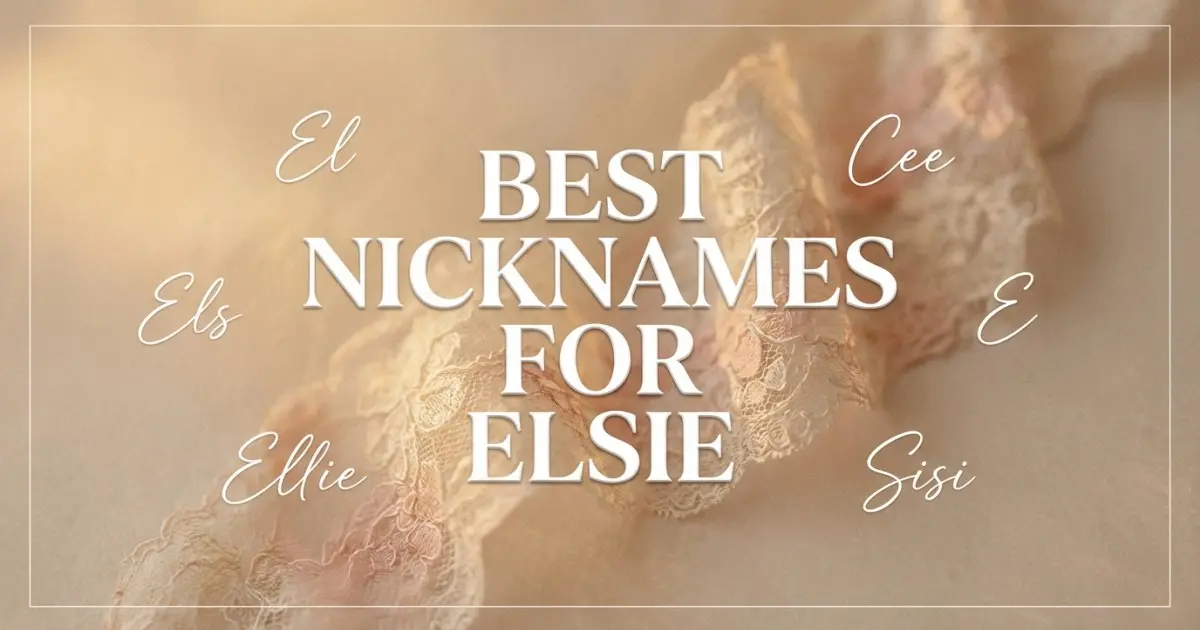
A nickname is not only a shortcut. It is a signal of access. The full name belongs to school lists, official forms, introductions, and the public version of the child. The nickname belongs to closeness: the voices that call from the kitchen, the text messages that arrive without punctuation, the grandparents who soften everything, the siblings who change a name just enough to make it theirs. That is why nicknames often tell you more about a relationship than about the name itself. They reveal who is allowed to step closer and what kind of warmth that closeness takes.
Elsie is especially interesting in this way because it already begins life sounding intimate. Historically, it has long functioned as a familiar form inside the Elizabeth family, and even now it arrives with that built-in warmth. That means Elsie does not need much trimming to become usable. It is already small, affectionate, and bright on the tongue. So the nickname world of Elsie is less about making the name shorter and more about deciding what kind of affection to add: softer, cuter, brisker, more playful, or more private. In other words, Elsie’s nicknames are not about necessity. They are about tone. If these shorter forms feel natural, it is usually because the full name is already doing something strong and clear, which you can see in Elsie meaning.
What the nickname world of Elsie is quietly revealing
| Group | Suggested Nicknames | Persona | Use Context |
|---|---|---|---|
| Full-form loyalty | Elsie | Warm, vintage, naturally complete | Everyday public use, school, family life, introductions |
| Classic short forms | Els, El, Ellie | Friendly, affectionate, lightly familiar | Close friends, siblings, casual daily use |
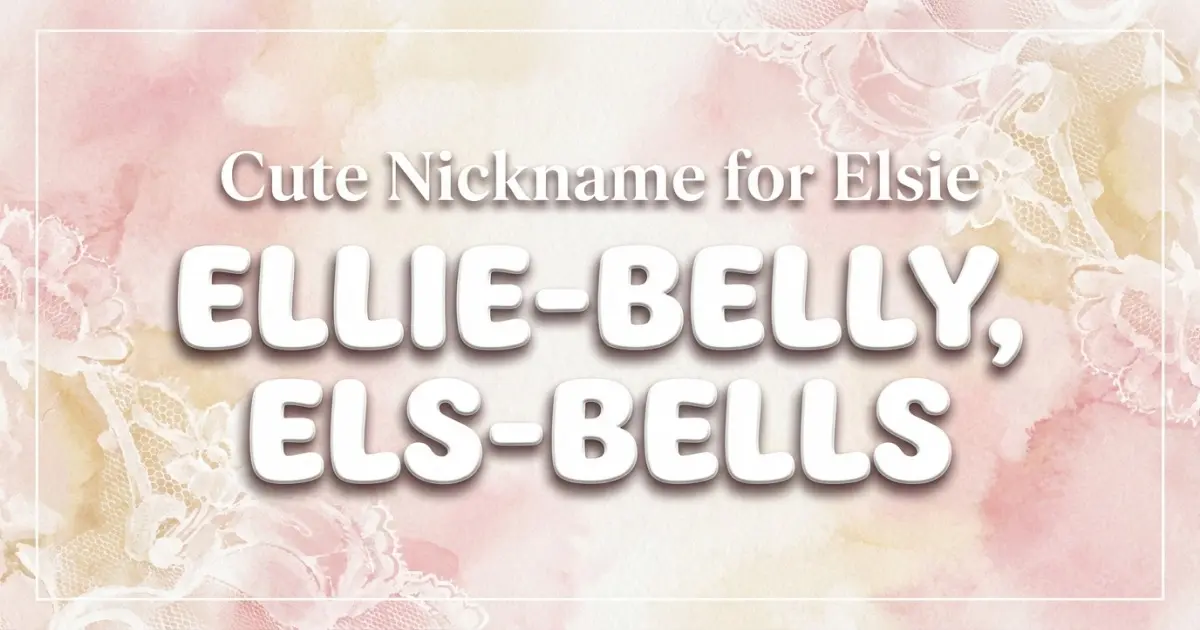
| Soft home-circle forms | Elsie-girl, Elsie-bug, Elsie-bear | Tender, playful, family-centered | Parents, grandparents, home use, baby years |
| Ending-based sweetness | Essie, Cee, Cici | Gentler, more selective, slightly whimsical | Very close family, one-on-one friendships, private pet names |
| Modern minimal forms | E, E.B., L.C. (with a fitting middle name) | Cool, contemporary, self-styled | Texts, saved contacts, teen years, digital spaces |
Elsie is one of the rare names that often stays whole
The first thing to notice about Elsie is that many families never feel a strong need to alter it at all. The name is already only two syllables, already affectionate in tone, and already easy to call across a room. That makes Elsie one of those names that can function beautifully in both public and private life without any nickname intervention. A teacher can say it naturally. A parent can say it warmly. A friend can say it casually. The form itself already carries a built-in softness.
This matters because it changes the nickname logic. For a longer name, nicknames often arise from practicality. For Elsie, they arise mostly from mood. The full name is not too long, too formal, or too ceremonious for ordinary speech. Instead, it is already close to the body. That means keeping Elsie untouched can actually feel like the strongest, most confident nickname choice available.
Why full-form Elsie still sounds intimate
Some full names remain public and polished until someone shortens them. Elsie does not work that way. It already sounds familiar. That is one reason it is so appealing. The full form can be used by parents, siblings, classmates, and later colleagues without sounding stiff in any of those settings. The name does not have to change registers to stay warm.
Why this changes the entire nickname landscape
Because Elsie is already intimate, any further nickname becomes a deliberate emotional choice. It does not solve a practical problem. It signals a specific kind of closeness. That is why Elsie’s nicknames often feel more revealing than the nicknames of longer names. They tell you what kind of relationship is being claimed.
Elsie’s strongest nickname zone is the opening EL sound
Phonetically, the clearest nickname territory in Elsie is the opening El-. That is where the stress falls, and in spoken language the stressed opening of a name is often what people reach for first when shortening it. This is especially true when the rest of the name is already soft. The opening gives you the identity; the ending gives you the warmth. Many short forms only become obvious once the opening sound is clear, which is why Elsie pronunciation guide belongs naturally here.
Els is the crispest natural cut-down form
Els is probably the cleanest direct short form for Elsie. It keeps the stressed opening and removes the lighter ending, which makes the nickname feel brisker and slightly older. Els works particularly well among siblings, close friends, or in text messages where people like a tidy, one-beat form. It sounds less overtly sweet than Elsie, but it still stays close enough to the original to feel believable.
This is often the nickname for families who love Elsie but want one version of it to feel a little sharper. It does not erase the vintage warmth of the full name. It simply pulls the name into a more pared-back register.
El and Ellie take the opening in different directions
El is the most minimal option. It feels modern, almost understated, and works best in very close relationships or in digital shorthand. Ellie, by contrast, moves in the opposite direction. It takes the opening of Elsie and makes it softer, more familiar, and slightly more playful. Historically, Ellie belongs to a much larger family of names, which is why it sounds so natural in the ear.
That said, Ellie changes the mood more noticeably than Els does. Elsie feels vintage and lightly buttoned-up. Ellie feels rounder and more openly childlike. Some families will love that. Others will prefer to keep Elsie’s more distinct identity intact.
Elsie’s ending gives the name its sweetness, and that is where the private pet names live
The second syllable of Elsie, the soft -see, is what gives the name its bright finish. It is also the part of the name most likely to generate affectionate house forms rather than formal nicknames. Ending-based nicknames tend to feel more private because they are less obvious and less widely shared. With Elsie, they often belong inside the home first.
Essie is the most believable ending-based alternative
Essie is one of the most plausible softer alternatives because it echoes the central sibilant music of Elsie while shifting the emotional texture. Essie sounds gentler, more old-fashioned, and slightly more secretive than Elsie. It does not feel like the public default, but it is extremely believable as a family nickname or a grandparent name.
The reason it works is that it stays close to the acoustic core of Elsie. It does not sound invented. It sounds like something that emerged naturally from frequent affectionate use.
Cee and Cici should stay playful and private
Cee or Cici can happen in real families, especially if siblings start playing with the bright ending of Elsie, but they are less structurally obvious than Els or Ellie. That does not make them wrong. It simply means they are more selective. These are the kinds of nicknames that work because one particular relationship keeps using them until they stick. They feel homemade, which is often exactly what makes them charming.
Elsie changes nickname style by age more than by structure
Because Elsie is already small, its nickname life tends to change by social stage rather than by dramatic phonetic need. In the baby and toddler years, families usually add softness and repetition. Later, the child may either stay Elsie in every setting or drift toward one of the cleaner, more peer-friendly forms.
Early Elsie usually invites sweetness
In early childhood, forms like Elsie-girl, Elsie-bug, or Elsie-bear are completely natural. These are not meant to be polished. They are meant to feel loved. Because Elsie already sounds tender, it takes these additions easily. They do not feel overly forced or disconnected from the full name.
Older Elsie often returns to the whole name
As the child grows, many EIsies simply remain Elsie. That is one of the elegant things about the name. It does not trap the bearer inside a babyish nickname that later has to be escaped. Even if a family used Elsie-bug at home in the early years, the transition back to full-form Elsie is effortless. If an older child wants something brisker, Els or El is there. But nothing in the structure requires that shift.
Why believable Elsie nicknames stay simple
The strongest nickname advice for Elsie is to resist over-inventing. A name this compact already contains most of what it needs. The best nicknames are the ones that sound like people would truly say them more than once: Elsie, Els, El, Ellie, and Essie. Everything beyond that works best when it arises from family humor or private affection rather than from a search for originality.
That is especially important because Elsie itself began historically as a familiar form. In a way, the full name has already done one round of nickname work in its deeper naming history. That may be one reason it still feels so intimate today. Any further nickname should feel earned by relationship, not by obligation.
In the end, Elsie’s nickname landscape is revealing because it is so modest. The name does not demand reinvention. It allows it only where love or personality truly asks for it. That is often a sign of a very strong name. Elsie begins close, and every nickname simply marks a slightly different degree of closeness around a form that already knows how to be loved.