
Elsie Name Meaning: Roots, Mood, and Timeless Appeal
Elsie is one of those names that can fool a listener on first hearing. It sounds small, affectionate, almost nursery-soft, as if it belongs entirely to the world of lace collars, family photographs, and a child being called in from the garden at dusk. But the meaning beneath it is much more solemn than the sound suggests. Elsie means pledged to God, and that gives the name a surprising gravity. Beneath the bright two-syllable surface is the language of vow, devotion, and being set apart. It is a name that feels light in the mouth but carries the emotional architecture of a promise.
That contrast is the real secret of Elsie’s endurance. Many revived vintage names return because they sound charming again. Elsie has certainly benefited from that. But it has lasted because charm is not all it offers. Historically, it comes into use as a pet form of Elspeth, itself a Scottish form of Elizabeth, and so it inherits one of the deepest and most durable meanings in the Western naming tradition. That inheritance matters. Official data shows Elsie still active in the United States in 2024, but its appeal is not merely a matter of trend. It is a name in which tenderness and seriousness coexist. The child sounds approachable; the meaning speaks of commitment. That tension is what makes Elsie more substantial than it first appears.
Elsie's U.S. popularity rank over time, 1880–2024
Popularity statistics are based on official data from the Social Security Administration baby name records.
Elsie: A Vintage Diminutive with Modern Revival Energy
Elsie presents a chart pattern of one unmistakable center of gravity, with the girls’ side of the chart providing its primary visibility and cultural weight. Its current momentum likely suggests a fit with the “vintage revival” trend, as parents look for names that feel classic without being heavy .
The absence of usage in the boys’ lane reinforces its firm, traditional feminine profile. As a diminutive of Elizabeth, its soft-vowel ending makes it feel both spirited and heritage-driven.
What Elsie carries behind its softness
| Key Facts | Information | Quick Insight |
|---|---|---|
| Name | Elsie | The form feels intimate and vintage, but it stands on a much older and more formal name-history beneath it. |
| Primary Gender Usage | Female | Elsie reads clearly as feminine, yet it avoids the elaborate softness that can make some girls’ names feel overly ornamental. |
| Origin | Hebrew | The deepest root matters here because Elsie’s apparent lightness is anchored to one of the strongest covenant meanings in name history. |
| Core Meaning | Pledged to God | This is not a decorative meaning. It places Elsie in the moral and spiritual language of vow, belonging, and devotion. |
| Pronunciation | EL-see | The name sounds quick and affectionate, which makes the seriousness of the meaning feel more human and less heavy. |
| Syllable Count | 2 | Two syllables keep Elsie nimble and memorable, helping it feel usable in everyday life rather than ceremonially distant. |
| U.S. girls’ rank (2024) | No. 155 | Elsie is familiar enough to feel established, but not so common that it loses individuality in contemporary use. |
| Style Position | Vintage revival, nickname-name, gentle classic | Its current appeal comes from the way it sounds affectionate and old-fashioned while still feeling socially fresh. |

Elsie carries a promise, not just a pretty sound
The most important thing to understand about Elsie is that its meaning changes the atmosphere of the name. Pledged to God is language of dedication. It belongs to the world of promises made before life has fully begun, of a child imagined as entrusted, not merely adored. In many naming traditions, this kind of meaning gives a name moral depth. It suggests not only affection for the child, but a sense that the child is bound to something larger than family taste or social fashion.
That does not mean Elsie sounds severe. In fact, one reason the name works so well is that the meaning and the sound are not identical in tone. A heavily formal name with this meaning might feel imposing. Elsie does not. It allows the idea of vow to come through softened by intimacy. The child sounds loved first and dedicated second. That order matters. It keeps the name from becoming overburdened by its own seriousness.
Research across naming traditions often shows that names linked to devotion or covenant endure because they are more than aesthetically pleasing. They offer parents a way to express responsibility, gratitude, and hope. Elsie belongs to that group. Even in families where the meaning is not consciously foregrounded every day, the structure of the name still carries that inheritance. A promise sits inside it.
There is also a subtle emotional elegance to the meaning. “Pledged to God” is not triumphant language. It is not about conquest, prestige, or display. It is quieter than that. It speaks of constancy, obligation, faithfulness, and being claimed in a loving but serious way. These are enduring virtues, which is one reason Elsie can feel so warm without ever becoming trivial.
How Elsie traveled from Elizabeth through Elspeth into modern life
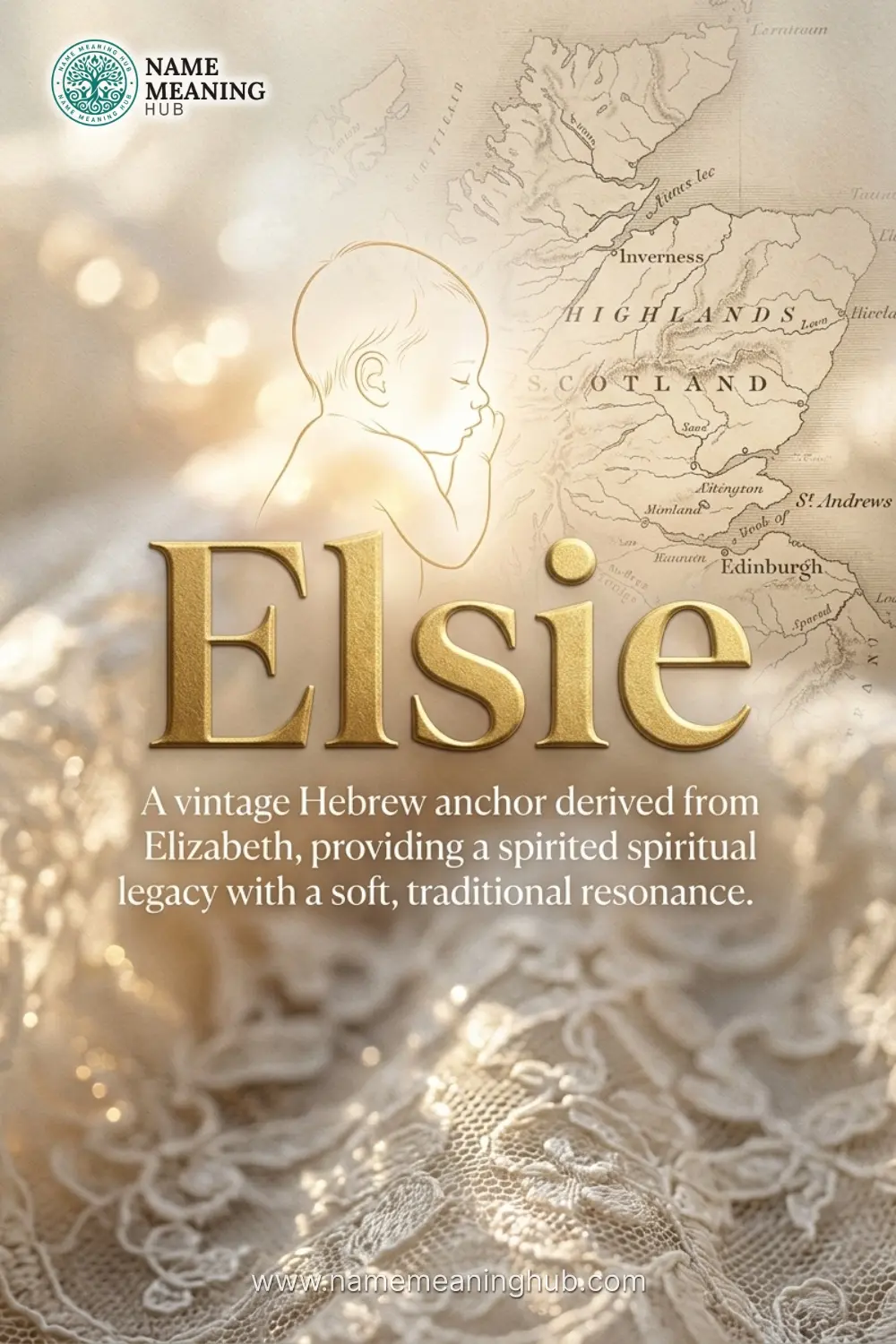
Historically, Elsie is not an isolated invention. It belongs to one of the largest and most traveled naming families in the Western world. Naming references consistently describe it as a pet form of Elspeth, and Elspeth itself as a Scottish variation of Elizabeth. That chain matters because it explains why such a small, affectionate name carries such deep roots. Elsie may look modest on the page, but behind it stands Elizabeth, a name with centuries of religious, royal, literary, and domestic history. To discover what else belongs to this origin group, browse a wider list of Hebrew names.
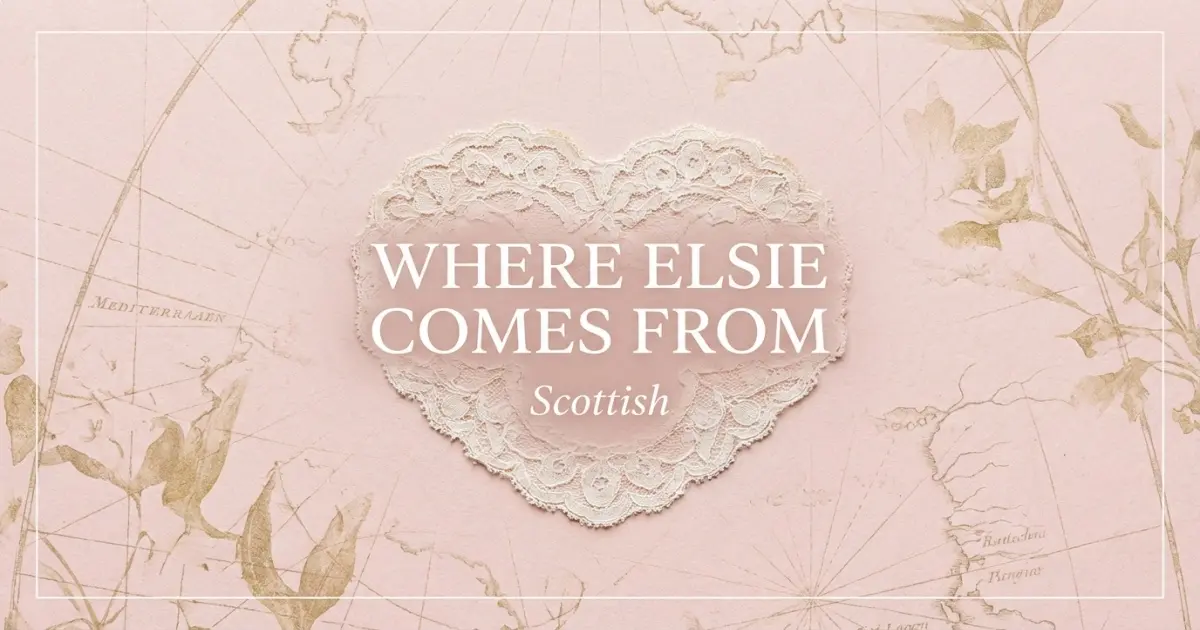
That older route also explains the coexistence of delicacy and authority in Elsie. Elizabeth is grand, formal, and monumental in the cultural imagination. Elspeth softens and localizes that grandeur through Scottish usage. Elsie then makes another turn, becoming even more intimate, more household-sized, more accessible. The result is a name that has descended through layers of affection without losing the core meaning that made the original powerful.
Why the Elspeth link matters
If Elsie came only from Elizabeth in a flat straight line, it might sound merely like a shortened form. But the Elspeth connection gives it a different texture. Elspeth adds a specifically Scottish and historic bridge between formal biblical inheritance and familiar everyday speech. It makes Elsie feel not only diminutive, but regional, lived-in, and old in a more particular way. The name sounds as though it came down through kitchens and parishes, not just through records.
That is part of what gives Elsie its special warmth. It is not simply a clipped formal name. It is a name that arrived through use, affection, and repetition. That kind of evolution often produces forms that feel especially human because they were shaped by ordinary speech rather than by theory.
Why Elsie became a full name in its own right
Many pet forms remain permanently secondary to their parent name. Elsie did not. Over time, it became strong enough to stand independently. This shift is important in modern naming culture. Parents increasingly choose names that already feel intimate, rather than formal names that will later need softening. Elsie fits that preference perfectly. It offers immediate warmth without demanding a longer official form behind it.
That transition from nickname to full name also reflects a broader naming movement. Modern parents often admire names that sound human-scale and emotionally available. Elsie does exactly that. It comes pre-softened, but not emptied out. Unlike some pet-form names that can feel too cute to age well, Elsie retains enough history and enough moral depth to sustain full-name status.
Why Elsie sounds lighter than its meaning
Phonetically, Elsie is one of those names whose sound creates instant welcome. EL-see begins with a familiar, grounded opening and moves quickly into a bright second syllable. The effect is friendly, clear, and lightly musical. There is almost no friction in it. Most English speakers can say it at once, spell it at once, and remember it after one hearing. That fluency is one of the reasons Elsie has revived so successfully.
But the sound does something more interesting than mere ease. It also disguises weight. If one heard the meaning first—pledged to God—one might imagine a more formal, perhaps more solemn name. Elsie resists that expectation. It sounds companionable. The bright -sie ending has a domestic softness to it, and because of that the name reads as affectionate before it reads as religious. This lets the meaning work quietly instead of theatrically.
That pattern can be a gift to the child. Some spiritually weighty names arrive already carrying visible seriousness, which can be beautiful but also socially heavy. Elsie balances differently. It lets the child sound approachable in everyday life while still holding a deeper inheritance in reserve. The name can move through school, work, and social introductions without feeling overannounced.
Its written form helps too. Five letters, no complications, no ornamental excess. The spelling looks just as straightforward as the pronunciation sounds. That practical simplicity makes Elsie especially usable in contemporary life, where many parents want history and beauty but also want administrative ease. Elsie offers both. It looks tidy, but not bare.
Elsie after the nursery: revival, rank, and modern versatility
There was a period when Elsie would have sounded unmistakably old-fashioned, tied to an earlier era of family nicknames and Edwardian or interwar domestic life. Many vintage names pass through that valley and do not return. Elsie did return, and its return is revealing. Earlier naming guides were already remarking that the name was undergoing a surge in popularity, which suggests that its revival was recognized well before the present moment. Official Social Security Administration (SSA) data now places it at No. 155 for girls in 2024, confirming that Elsie has not merely flickered back as a novelty. It has settled into contemporary use. For parents considering similar names, this guide to Girl Names names is a useful next step: girl naming ideas.
This placement is important. Elsie is visible, but not exhausted. It is familiar enough to feel legitimate and current, but not so common that it loses charm or individuality. That middle ground often produces the most livable names. A child named Elsie is unlikely to spend her life explaining the name, but she is also unlikely to find herself one of several Elsies in every room.
The revival also makes social sense. Contemporary parents have shown strong interest in names that feel vintage, emotionally available, and smaller in scale than the elaborate formal names that dominated some earlier revival waves. Elsie fits that mood exactly. It sounds old-fashioned in a way that now reads as dear rather than dusty. At the same time, because the name is brief and clear, it also feels unexpectedly modern. It has the charm of the past with the efficiency of the present.
Elsie among its style neighbors
Elsie sits near names like Ellie, Eliza, Elsa, Millie, Maisie, and Evie, but it does not collapse into them. Ellie is softer and more generic in current use. Eliza is more literary and adult. Elsa carries a more continental and, for many listeners, pop-cultural association. Millie and Maisie share the vintage sparkle, but not the same devotional depth. Elsie therefore occupies a useful middle position: affectionate, recognizable, slightly antique, but still distinct.
That distinctness is part of why the name works so well now. It participates in the vintage revival without sounding interchangeable. The El- opening links it to a familiar family of names, but the full result remains unmistakably its own.
Why Elsie ages better than some pet-form revivals
A common concern with names like Elsie is whether they can travel into adulthood. In Elsie’s case, the answer is usually yes, because the name carries enough lineage behind its charm. It sounds friendly on a child, but it does not sound unserious on an adult. Part of that comes from its history, part from its meaning, and part from the fact that it has already functioned independently for generations. Elsie is not trying to become a full name. It already is one.
Where Elsie leads next
Middle names can give Elsie either gravity or polish
Because Elsie is warm and approachable, middle names often change its temperature rather than its identity. A formal middle can add depth and adult weight, while a leaner or more polished one can make the full name feel cleaner and more modern. The best combinations usually recognize that Elsie already brings affection on its own. If you want the full pairing logic behind that contrast, see Elsie middle names.
Nicknames are possible, but Elsie already feels like the softened form
One of the interesting things about Elsie is that it begins where many names end. It already sounds like a household version, which means additional nicknames tend to be even more intimate, more playful, and more family-specific rather than socially necessary. The name arrives with built-in warmth. To see how those different moods shorten in real life, explore Elsie nicknames.
Pronunciation is one of Elsie’s quiet advantages
Elsie succeeds partly because nobody has to fight with it. The pronunciation is intuitive, the spelling is stable, and the sound is immediately recognizable. That low-friction quality helps explain why the name feels vintage but not cumbersome in modern life. If you want the full sound pattern behind that rhythm, read Elsie pronunciation guide.
Why Elsie lasts beyond its own charm
What makes Elsie memorable is not only that it sounds sweet, but that its sweetness is underwritten by seriousness. It is a name that has traveled from the monumental world of Elizabeth into the intimate world of daily speech without dropping its core promise. That journey is what gives the name its emotional reach. Elsie feels light because people have loved it enough to shorten it, but it feels durable because the meaning beneath it was always larger than the shortened form.
In the best sense, Elsie is a name of tenderness disciplined by vow. It does not have to announce the pledge hidden inside it. The promise is simply there, quiet and structural. That makes the name feel both affectionate and trustworthy. It is not a name built on spectacle, cleverness, or novelty. It is built on loyalty and made lovable by sound.
That is why Elsie continues to return. It offers something modern parents still want, even when fashions change: a name that feels intimate without being flimsy, old without being stale, meaningful without becoming heavy-handed. In the end, Elsie survives not because it is cute, though it is, but because it binds charm to devotion. The name sounds like a hand held gently. The meaning sounds like a promise kept. Together, those two things make Elsie much stronger than it first appears.