
Nicknames for Dakota: Friendly, Playful, and Pretty Choices
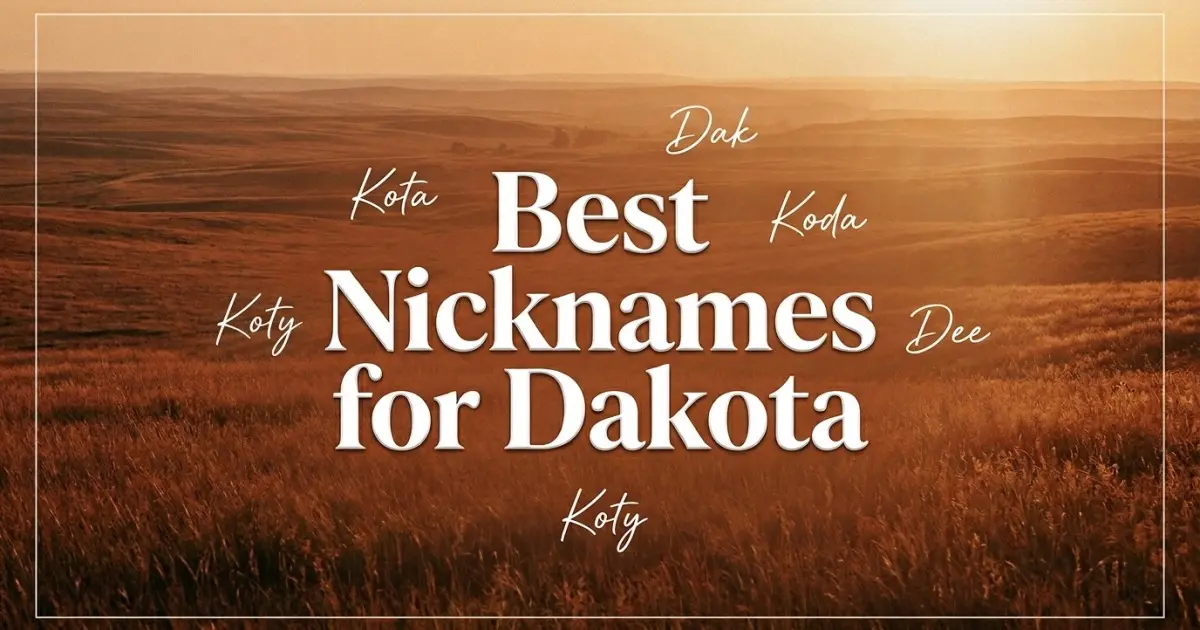
A nickname is never only a shorter sound. It is a social decision about distance. It tells you who gets to be casual, who prefers warmth, who wants the more athletic version of a name, and who hears a more playful self inside the formal one. That is why nicknames matter even when the original name is already relaxed and accessible. They do not merely reduce. They recast. A nickname can make a name feel younger, tougher, sweeter, more private, or more modern without changing the person at the center of it.
Dakota is especially interesting in this respect because the full name already sounds easygoing, current, and highly wearable. It does not need a nickname to become livable. That means any nickname attached to Dakota usually says more about relationship and tone than about convenience. A clipped form can make it sound brisker and cooler. A softer form can make it feel more affectionate and home-based. A playful form can turn a broad, confident name into something only family would say. In other words, Dakota has a strong nickname life not because it is difficult in full, but because it contains several distinct social versions of itself. If these shorter forms feel natural, it is usually because the full name is already doing something strong and clear, which you can see in Dakota meaning.
What Dakota’s nickname range reveals about the name itself
| Group | Suggested Nicknames | Persona | Use Context |
|---|---|---|---|
| Classic shortenings | Kota, Kody, Dak | Friendly, direct, highly usable | Works well in family life, school, and everyday social settings where a shorter form feels natural |
| Opening-sound forms | Dak, D, Day | Brisk, sporty, modern | Most plausible with siblings, friends, teammates, and text-message culture |
| Center-driven nicknames | Ko, Koko, Kody | Playful, energetic, more distinctive | Good for families who want a nickname that feels livelier than the most obvious shortening |
| Ending-based options | Kota, Tota, Kota-B | Softer, more personal, slightly more intimate | Best when the child or family gravitates toward the smoother second half of the name |
| Playful home forms | Koko, Daky, Daks, Kota-Bear | Affectionate, homegrown, highly relational | Most natural in toddler years, inside the family, or among people with permission to be silly |
| No-shortening route | Dakota | Open, complete, quietly strong | Ideal when the family likes the full name’s friendliness and sees no reason to trim it down |
Dakota is one of those names that can stay fully Dakota
Why Dakota does not require a nickname to function
Some names almost force a nickname because they are too long, too formal, or too elaborate for daily life. Dakota does not have that problem. At three syllables, it has enough rhythm to feel complete, but not so much that it becomes cumbersome. It is the sort of name teachers can say, friends can remember, and adults can carry into work without feeling either overdesigned or unfinished. That alone means many families may simply use Dakota as Dakota from day one onward.
This matters because it changes what a nickname is doing. If the formal name is already easy, then a nickname becomes a choice about emotional temperature rather than practical efficiency. Dakota in full already sounds friendly. It does not need to be softened in order to feel usable. That gives parents unusual freedom. They can keep the full form central and allow nicknames to emerge only where real closeness creates them.
Why that makes Dakota nicknames more revealing
When a name does not need shortening, every shortened form says something extra. If a sibling says Dak, that is different from a grandmother saying Koko. If a teammate says D, that is different from a parent saying Kota-Bear. Each nickname reveals not just sound preference, but relationship style. Some people hear Dakota and want the cool clipped front. Others hear the rounded middle and want warmth. That is what makes the name socially interesting. It does not force one obvious diminutive. It offers several believable ones, each with its own mood.
The opening of Dakota gives the cleanest and coolest nicknames
Dak is the most direct cut from the front
The first sound zone in Dakota is the opening Da-, and this is where the sharpest, fastest nicknames live. Dak is the clearest example. It feels brisk, slightly sporty, and very easy to imagine in real speech. Friends, siblings, and teammates could arrive at Dak without thinking about it much. That is usually a good sign. The best nicknames tend to sound like they could happen on their own.

Dak works especially well because it preserves Dakota’s strong first impact. The opening of the name carries attitude. Shorten it to Dak, and you keep the confidence while changing the texture. The full name sounds broad and balanced. Dak sounds clipped and agile.
D and Day belong more to casual circles
D is the minimalist version of this same instinct. It is less a formal nickname than a shorthand used by close friends or in digital spaces. Day is a softer variation, though a less automatic one. It can work, but it feels more stylized and less inevitable than Dak. In real life, Dak is usually the more grounded front-end option because it sounds like a natural reduction rather than a reinterpretation.
These opening-based nicknames are best for people who like Dakota’s confidence and want to amplify its edge rather than its softness.
The center of Dakota is where the warmest nickname energy lives
Ko and Koko change the mood immediately
The stressed center of Dakota is KOH, and that is where the name’s brightest, roundest energy sits. Nicknames from this zone often feel more playful and affectionate than the opening cuts. Ko is the simplest form. It is short, easy, and slightly unusual in a good way. Because it comes from the most stressed part of the name, it still feels recognizably connected.
Koko goes one step further. It turns Dakota from a broad, grounded name into something much more intimate and domestic. Koko is the kind of nickname that sounds especially plausible in early childhood or in families that naturally like doubled pet names. It is affectionate rather than sleek, and it clearly belongs more to relationship than to official identity.
Kody as a center-driven adaptation
Kody is slightly different. It is not a perfect mechanical shortening, but it is a very believable social adaptation because the middle consonant and vowel cluster of Dakota can naturally lead people there. Kody feels familiar, accessible, and highly usable in school or family settings. It is also one of the nicknames that could plausibly last beyond childhood because it already sounds established in wider naming culture.
Families who like Dakota but want a nickname that feels warm without being overly cutesy often end up gravitating toward this center zone. It has the most emotional flexibility.
The ending of Dakota offers the most natural long-term alternative
Kota is the strongest full-bodied nickname for Dakota
The third nickname zone is the ending: -kota. This is where Kota becomes especially important. Kota is arguably the strongest all-around nickname for Dakota because it sounds complete on its own. It preserves much of the original name’s rhythm and still feels polished enough for broader public use. A child could easily be Dakota on formal paperwork and Kota in daily life without any sense of mismatch. These nickname choices read more clearly once the spoken shape of the full name is in view, so see Dakota pronunciation guide.
That is one reason Kota often feels more durable than Dak or Koko. It keeps the warmth and width of the full name while trimming away one syllable. The result is still friendly and modern, but slightly more personal and intimate.
Why ending-based forms often age well
Ending-based nicknames are often strong long-term solutions for names like Dakota because they sound less obviously cut down. Kota can move from childhood into adult life without much friction. It does not sound like a temporary family pet form, and it does not sound as clipped as Dak. That makes it especially attractive for parents who want a nickname option that feels genuine, but not fleeting.
More playful variants such as Tota or Kota-B may emerge in individual households, but Kota is usually the most socially portable ending-based choice.
Dakota nicknames often change with age and setting
The forms most believable in early childhood
In toddler years and early family life, the warmest versions usually arrive first. Koko, Kota-Bear, Daky, or another soft household form can sound entirely natural in that phase. These names are not meant to be strategic. They are meant to be easy to say and satisfying to repeat. In many families, that is exactly how the best nicknames are born.
These early forms do not have to survive forever. They only need to belong honestly to the child as she or he is known at that moment.
The versions that tend to last later on
As children grow, nicknames usually become leaner. With Dakota, the forms most likely to remain in adolescence and adulthood are Dakota itself, Kota, Dak, and sometimes Kody. These each offer a different tone. Dakota stays open and complete. Kota feels friendly and slightly softer. Dak is cooler and more clipped. Kody is more familiar and boyish or unisex depending on context. None of them feels implausible, which is one of the name’s strengths.
The important point is that Dakota offers more than one believable aging path. A child is not locked into a babyish nickname or forced to abandon the sound world of the original name in order to grow up.
What to avoid when shortening Dakota
- Avoid nicknames that look clever on paper but sound unnatural aloud.
- Do not force a nickname if the family clearly prefers the full openness of Dakota.
- Be careful with highly playful forms if the goal is a nickname that can travel into adulthood.
- Choose by tone: Dak feels brisk, Kota feels balanced, Koko feels domestic, and Kody feels familiar.
The deepest strength of Dakota is that it can stay whole in public while still opening into several believable private forms. That is exactly what many parents want from a unisex modern name: flexibility without shapelessness. The best nickname will usually be the one that emerges from the family’s real voice, but the sound structure already tells you where the strongest options live. Dakota is generous that way. It offers room for affection without ever losing the calm confidence of the full name.
Nicknames for Dakota: Common Questions
What is the most natural nickname for Dakota?
Kota is often the strongest all-around option because it keeps much of the original rhythm while still feeling like a complete nickname in its own right. Dak is also very natural if you prefer something shorter and sharper.
Can Dakota go by Kody?
Yes. Kody is a believable social adaptation of Dakota, especially for families who want a familiar-feeling nickname with a softer, more everyday tone.
Is Koko too childish for Dakota?
Not in family use. Koko is a very plausible affectionate nickname in early childhood or at home. It simply belongs more clearly to intimate family speech than to broader public life.
Does Dakota need a nickname at all?
No. Dakota is already friendly, balanced, and easy to use in full. Its nicknames are a bonus rather than a necessity, which is part of what makes the name so adaptable.