
How to Pronounce Dakota: Where People Hesitate and Why
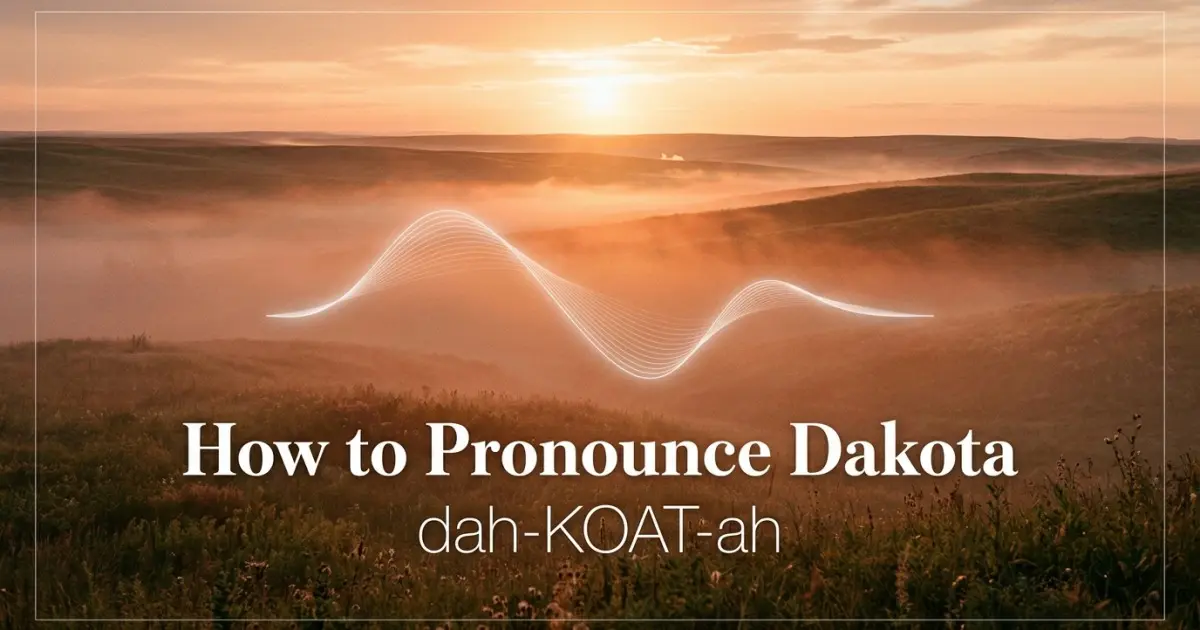
The pronunciation test for a name almost never happens in a careful, private moment. It happens when a teacher pauses at a class roster, when a nurse calls from a waiting room, when a coach reads a sign-up sheet, or when a new friend says the name aloud after seeing it on a screen for the first time. Dakota is a name that usually passes that test well. It looks modern, sounds familiar, and moves easily in spoken English. But the ease of the name depends on one important thing: the stress belongs in the middle. If that center is right, the whole name sounds calm, grounded, and natural. If it is wrong, Dakota can flatten quickly.
That is what makes the pronunciation worth understanding. Dakota is not difficult, but it is rhythm-sensitive. The everyday form, duh-KOH-tuh, has a light opening, a strong rounded center, and a soft ending. That pattern is what gives the name its approachable confidence. It sounds friendly, but not flimsy. Relaxed, but not careless. In other words, Dakota works because it is balanced. Once the middle syllable lands properly, the rest of the name tends to fall into place.
How Dakota is actually said when people say it with confidence
| Element | Phonetic Detail | Quick Tip |
|---|---|---|
| Everyday pronunciation | duh-KOH-tuh | Think of three steps, with the second step clearly carrying the weight. |
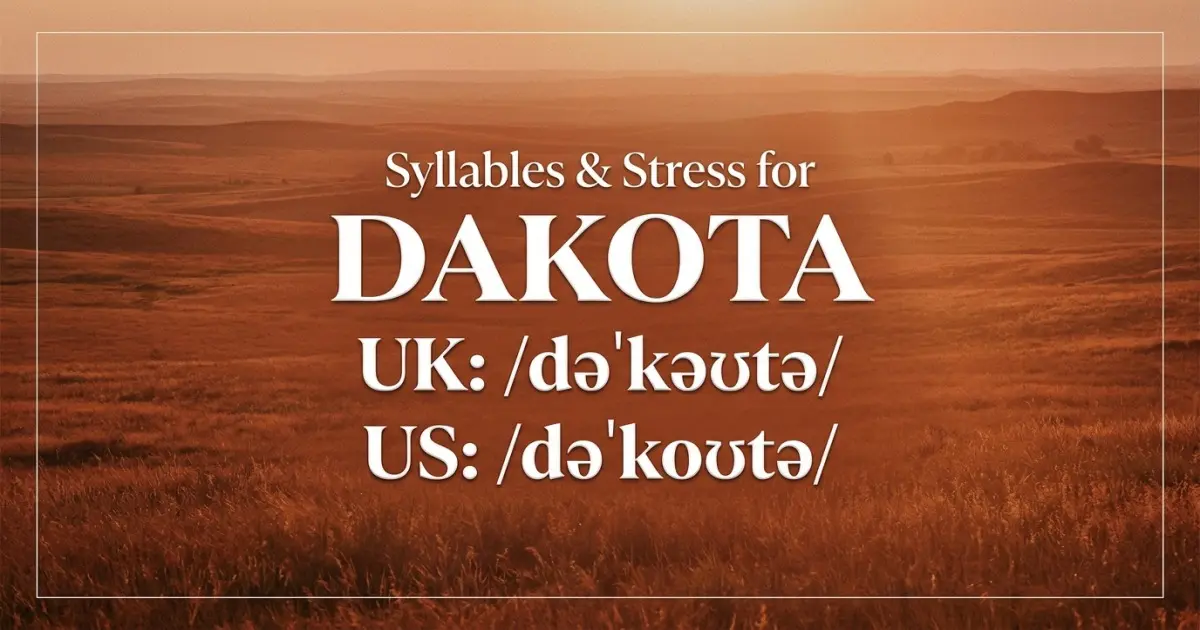
| IPA (US) | /dəˈkoʊtə/ | The center vowel is the anchor. If the KOH is clear, the name usually sounds right. |
| IPA (UK) | /dəˈkəʊtə/ | The British form stays very close to the American one, so the name travels well across accents. |
| Syllable count | 3 syllables | Say it as duh | KOH | tuh, not as one blur and not as three equal beats. |
| Primary stress | Second syllable | The middle should stand out. Dakota loses shape when the stress slides away from the center. |
| Opening sound | Light unstressed duh | Keep the first syllable easy and brief. It introduces the name, but does not carry the drama. |
| Center sound | Rounded long KOH | This is the part listeners remember most strongly. Let it sound full and clear. |
| Ending sound | Soft final tuh | The last syllable should taper off gently instead of hitting with equal force. |
Why the middle of Dakota does the real work
The stressed center gives Dakota its confidence
Dakota is one of those names whose identity lives in the middle. The opening syllable is light and practical. The ending is soft and easy. But the second syllable, KOH, is where the name becomes fully itself. That is where the voice settles, where the rhythm becomes memorable, and where the name gains its calm strength. This is why Dakota sounds much better once heard than some people expect from the spelling. The pattern is straightforward: quick start, strong center, gentle release. Pronunciation lands more fully when the name’s roots and history are already in view, so begin with Dakota meaning.
That strong center is also why the name feels so stable in everyday life. English speakers are very comfortable with names that rise into a middle-stressed syllable and then soften again. Dakota follows that pattern naturally. It sounds relaxed, but not loose. The center gives it backbone.
The sounds of Dakota are sturdy without being harsh
Phonetically, Dakota has a useful mix of firmness and openness. The k at the start of the stressed syllable is a stop consonant, which means the airflow briefly closes and releases. That gives the middle of the name a crisp edge. Right after that comes the rounded vowel, which opens the sound and prevents the name from feeling blunt. The final t in the last syllable is lighter because it sits inside an unstressed ending, so the name closes gently rather than sharply.
This combination is one reason Dakota feels socially versatile. It has enough structure to sound grounded, but enough open vowel sound to remain warm and easy. The name never becomes too soft, and it never hardens into something aggressive. The pronunciation supports that balance beautifully.
Dakota stays stable across American and British speech
The American and British forms are close enough to feel the same
One advantage of Dakota is that standard American and British English pronounce it in almost the same way. The IPA forms differ only slightly in the center vowel quality, but the rhythm remains unchanged. In both varieties, the second syllable carries the stress, and the first and third syllables stay lighter. That kind of consistency matters because it keeps the name recognizable across different English-speaking settings.
Some names change a great deal when accents shift. Dakota usually does not. It may sound a little rounder or a little tighter from one speaker to another, but it still remains unmistakably Dakota. That makes it a very practical name to live with.
What small differences still happen in real life
Even with that stability, small natural differences can still appear. Some speakers may make the first syllable almost disappear into a very soft duh. Others may articulate the last syllable more clearly. Some may make the center vowel slightly broader. None of those changes affects the identity of the name very much. The main thing that must stay constant is the stress. Once the center remains strong, the name keeps its shape.
This is part of why Dakota sounds so socially easy. It is flexible at the edges, but stable at the core.
The Dakota mistakes people make first
Moving the stress away from the middle
The most common pronunciation problem is stressing the first syllable too much or trying to give all three syllables equal force. That makes the name sound heavier and less natural. Dakota works because the first syllable leads lightly into the stronger middle. If every part is hit with the same weight, the rhythm loses its ease.
Overpronouncing the last syllable
Another common issue is treating the final tuh as if it deserves the same prominence as the middle. In ordinary speech, it usually should not. The ending is there to release the name, not to compete with it. When speakers overwork the last syllable, Dakota can start to sound more mechanical than conversational.
Letting the spelling slow the voice down
Dakota is not a difficult spelling, but some people still become overly careful when saying a name they have only seen written. That often creates an unnecessary stiffness. The solution is simple: hear the name as a rhythm instead of a set of letters. Once you think duh-KOH-tuh, the pronunciation becomes intuitive.
Dakota sounds best when practiced like real speech
Use short everyday phrases instead of isolated repetition
The easiest way to settle Dakota into the mouth is to use it in the kinds of phrases where names actually live:
- “Dakota, your turn.”
- “This is Dakota.”
- “Has Dakota called yet?”
These lines help because they show how the name behaves at natural speed. Dakota usually performs well there. The strong middle syllable keeps it audible, and the lighter opening and ending keep it from sounding stiff or overformal.
How to know you are saying Dakota naturally
You are probably pronouncing Dakota comfortably when the name feels like one smooth motion with a strong center. The first syllable should be quick. The middle should feel full. The last should soften. If you hear three equally heavy chunks, the name is being overmanaged. If you lose the center, the name will feel flat. Dakota works best when the voice trusts the middle and lets the rest support it.
That is the real pronunciation lesson of the name. Dakota does not need special care. It needs the correct balance. Once that balance is in place, the sound becomes what the name already suggests: open, dependable, and easy to carry through real life.
Common Questions About Pronouncing Dakota
How do you pronounce Dakota in everyday English?
The standard everyday pronunciation is duh-KOH-tuh, with the main stress on the middle syllable.
Is Dakota pronounced differently in American and British English?
Only slightly. The U.S. and UK forms are very close, and both keep the same three-syllable pattern with stress on the center.
What is the most common pronunciation mistake with Dakota?
The most common issue is stressing the wrong syllable or giving all three syllables equal force. Dakota sounds best when the middle syllable stands out clearly.
Why does Dakota sound so easy to say?
It has a very natural English rhythm: light opening, strong center, soft ending. That pattern makes the name easy to hear, easy to remember, and easy to say in daily life.