
Nicknames for Anne: Everyday Nicknames with Real Charm
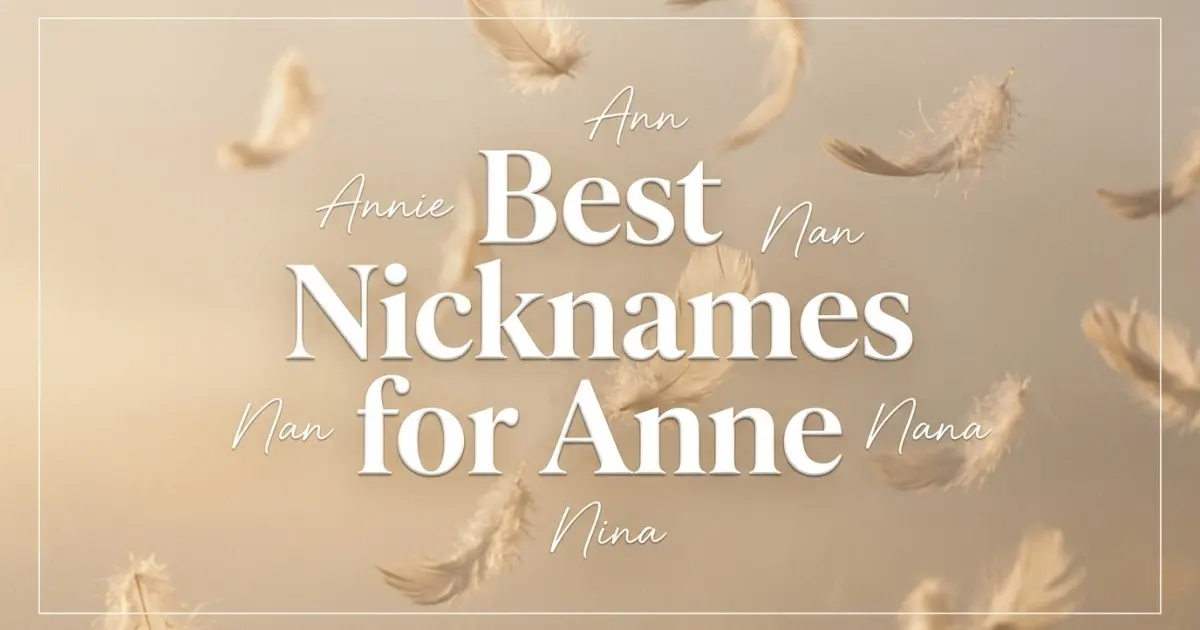
A nickname is rarely just a shorter version of a name. It is usually a clue about distance, affection, and permission. Parents use one form, siblings another, friends invent a third, and by the time a child becomes an adult the nickname history around her can tell a quiet social story: who knew her first, who made her laugh, who saw her as serious, who saw her as soft. That is why nicknames matter. They are not random extras. They are social signals, small verbal shortcuts that mark intimacy and personality in ways the formal name often does not.
Anne is especially interesting on this front because it begins already compressed. It is only one syllable. It does not obviously need shortening. So when Anne receives a nickname, the movement usually goes in the opposite direction: outward rather than inward. Instead of cutting the name down, people tend to add warmth, rhythm, or play. That is why the nickname world around Anne feels revealing. It shows how families and friends make a compact, composed name feel softer, younger, sweeter, or more private without losing the original clarity that makes Anne so enduring in the first place. Nicknames add personality at the surface, but the deeper weight of the name still sits in Anne meaning.
What the Nickname World Around Anne Reveals
| Group | Suggested Nicknames | Persona | Use Context |
|---|---|---|---|
| Classic familiars | Ann, Annie | Warm, traditional, immediately legible | Family use, school years, everyday introductions when a softer tone is wanted |
| Old-fashioned but usable | Nan, Nannie | Vintage, affectionate, slightly storybook | Home use, grandparents, families that enjoy older nickname traditions |
| Minimal modern forms | An, A | Lean, cool, understated | Texting, close-friend shorthand, highly casual circles |
| Playful expansions | Annie-Bee, Annie Lou, Annie-Girl | Cheerful, child-centered, intimate | Early childhood, family pet names, private household language |
| Historical branch-offs | Nancy, Nanette | More stylized, less direct, historically connected | Best treated as inspiration or family-honor logic rather than default everyday nicknames |
| DIY initials and hybrids | AJ, Annie C, Anne-Marie style blends | Practical, personal, context-built | Useful when middle names, repeated initials, or same-name households create a need |
Anne Is the Rare Short Name That Expands in Private
Most nickname systems begin with subtraction. Elizabeth becomes Liz. Katherine becomes Kate. Josephine becomes Jo. Anne does not really behave that way, because there is almost nothing to remove. That changes the nickname logic completely. With Anne, intimacy usually adds something rather than taking something away. A new ending, a doubled consonant feeling, a playful tag, a family-only extension: these are the tools people reach for.
The opening zone in Anne is all about the clean A- entry
The first sound in Anne is open and immediate. That is why stripped-back forms like An or even the ultra-casual A can work in modern social spaces, especially in texts, among teenagers, or in friend groups that naturally abbreviate everything. These are not the most traditional nicknames, but they are plausible because Anne already starts with a strong, simple vowel sound. The catch is context. A is too thin for formal use and too dependent on tone to serve as a full-time nickname. It works better as shorthand than as identity. These nickname choices read more clearly once the spoken shape of the full name is in view, so see how to pronounce Anne.
The bright AN center is where Anne gets its real nickname energy
The heart of Anne is the stressed AN sound. That is the part people instinctively keep. It is stable, familiar, and emotionally recognizable. From there, the most natural move is to attach a warmer ending, which is exactly how Annie becomes the dominant affectionate form. Annie is not just common; it makes emotional sense. It preserves the core sound while adding a lift at the end. The result feels more playful, more childlike, and more conversational than Anne, but still clearly connected to it.
The ending zone is where warmth gets added back in
Because Anne ends with a firm n, many nicknames soften that stop by adding an -ie, -y, or another extra beat. That is why Annie, Anni, and Anny all feel intuitive. They do not fight the structure of Anne; they release it into a friendlier rhythm. In practical life, this means Anne can remain poised and formal in public while Annie becomes the household version. Many parents like exactly that split.
Anne at Three Distances: Formal, Familiar, and Playful
The best way to judge Anne nicknames is not by cuteness alone but by social distance. Who is speaking? How old is the child? Is the nickname meant to soften, distinguish, or simply amuse?
When Anne stays Anne
Some names resist nicknames because they sound incomplete without their full form. Anne is the opposite. It sounds fully finished from the start. That means many girls named Anne will simply remain Anne in most public settings. Teachers, colleagues, and acquaintances are likely to keep the formal form because it is already short, elegant, and effortless to say. This is a strength. It gives the bearer control. She does not have to accept a nickname in order to feel approachable.
When Annie becomes the lived-in version
Annie is the strongest everyday nickname for Anne because it changes mood without changing identity. It feels younger, brighter, and a little more emotionally exposed. Historically, it has been the obvious pet form, and it still works because it sounds human rather than manufactured. A child may begin as Annie at home, move between Annie and Anne in school, and later choose which version suits her adult self. That flexibility is one of the best things Anne offers.
When play enters and the nickname becomes family language
This is where forms like Annie-Bee, Annie Lou, Annie-Girl, or Annie Banannie appear. These are not lifelong identity labels; they are affection devices. Used well, they make early childhood sweeter without trapping the child in a babyish public image. The rule here is simple: playful nicknames should stay private unless the child clearly enjoys them beyond the family circle.
Anne Has a Small Vintage Shadow, and That Can Be Charming
Older nickname traditions around Anne are worth mentioning because they still influence how the name feels, even when families do not use them directly. Nan is the clearest example. It is historically linked to Ann and Anne, and it carries a compact, old-fashioned charm that some families genuinely love. Nannie and historically related forms such as Nancy belong to the same wider story, though Nancy now reads much more as an independent given name than as a direct nickname in everyday American life.
That distinction matters. A historical derivative is not always the same thing as a realistic current nickname. For most modern families, Nancy would feel less like “what we call Anne at home” and more like “a related name in the same lineage.” Nan, by contrast, can still work as an actual nickname if the family likes a vintage tone. It is short, distinctive, and surprisingly crisp beside Anne’s formal calm.
This is also where personal style matters most. If a family likes antique, literary, or grandmother-chic naming language, Nan can feel delightful. If their taste leans modern and streamlined, Annie will almost certainly feel more natural.
Where Anne Nicknames Stay Plausible in Real Life
The biggest danger with a short name is overengineering. Because Anne does not provide much material, parents can be tempted to force creativity where simplicity would work better. The safest principle is this: the best Anne nicknames still sound like something a real person would actually say twice a day for years.
- Best all-purpose option: Annie. It is classic, warm, and socially legible at every age.
- Best minimal option: Ann. Useful when someone wants only the slightest softening or prefers a cleaner visual form.
- Best vintage option: Nan. Short, affectionate, and best for families who enjoy historical texture.
- Best playful private option: an Annie- compound built inside the family rather than announced publicly.
- Best DIY option: initials such as AJ or a middle-name blend when Anne is shared across generations or repeated in the household.
Research on nickname use suggests that the most durable pet forms are usually the most obvious ones. That is especially true for Anne. Since the formal name is already concise, the nickname has to earn its existence by adding warmth or social specificity. If it does not do that, Anne itself is usually the better choice.
Anne Does Not Need a Nickname to Feel Loved
That may be the final truth about Anne. Some names feel unfinished until affection reshapes them. Anne does not. Its dignity is built in. Nicknames around Anne are not repairs; they are permissions. They let the name become lighter in childhood, softer in private, or more playful among the people who know the bearer best. But Anne never depends on them. It can remain fully itself in every room.
That balance is rare. It means a girl named Anne can have a nickname life if she wants one, yet never be forced into a smaller form. She can be Anne at work, Annie to siblings, Nan to one grandparent, and something entirely improvised in family jokes. The core name is strong enough to hold all of that. In that sense, Anne offers one of the best nickname arrangements available: flexibility without pressure, intimacy without distortion, and affection without loss of form.
Popular Nicknames for Anne: FAQ
What is the most natural nickname for Anne?
Annie is the most natural and widely recognizable choice. It keeps the core sound of Anne while adding warmth and a more familiar social tone.
Does Anne even need a nickname?
Not at all. Anne is already complete, short, and easy to use. Many people named Anne will stay Anne in most public settings and use nicknames only in close relationships.
Is Nan a realistic nickname for Anne today?
Yes, but it reads as more vintage than Annie. It works best for families who like older nickname traditions and want something compact and slightly distinctive.
Can playful Anne nicknames age badly?
They can if they are used as public labels for too long. Family-only forms such as Annie-Bee are often charming in childhood, but the strongest long-term options for public use remain Anne, Ann, and Annie.