
Anne Name Meaning: Symbolism, Heritage, and Everyday Appeal
Anne is one of those names that reveals its character by refusing excess. It does not arrive trailing ornament, novelty, or noise. It is short, direct, and finished almost as soon as it begins. Yet that brevity is exactly why it lasts. Anne carries a meaning of grace, but not the decorative kind of grace that belongs only in portraits or ceremonies. Its power is quieter. It suggests steadiness under attention, courtesy without performance, and a kind of inner balance that does not need to advertise itself. In a naming culture that often swings between the elaborate and the invented, Anne survives by doing something harder: it remains clear.
That clarity gives Anne an unusual kind of reach. It can belong to a queen and still feel plausible on a child in a modern classroom. It can sit in a family tree without looking dated, then return in a new generation without seeming like a revival project. Official Social Security Administration (SSA) data places Anne at No. 649 for girls in 2024, which tells an interesting story. The name has not disappeared into obscurity, but it no longer feels crowded either. It lives in that narrow and useful space where almost everyone knows it, few people misunderstand it, and almost no one mistakes it for a passing fad. Anne is not trying to be rediscovered. It simply waits for parents who value precision, restraint, and a name that already knows how to hold its shape.
Anne's U.S. popularity rank over time, 1880–2024
Popularity statistics are based on official data from the Social Security Administration baby name records.
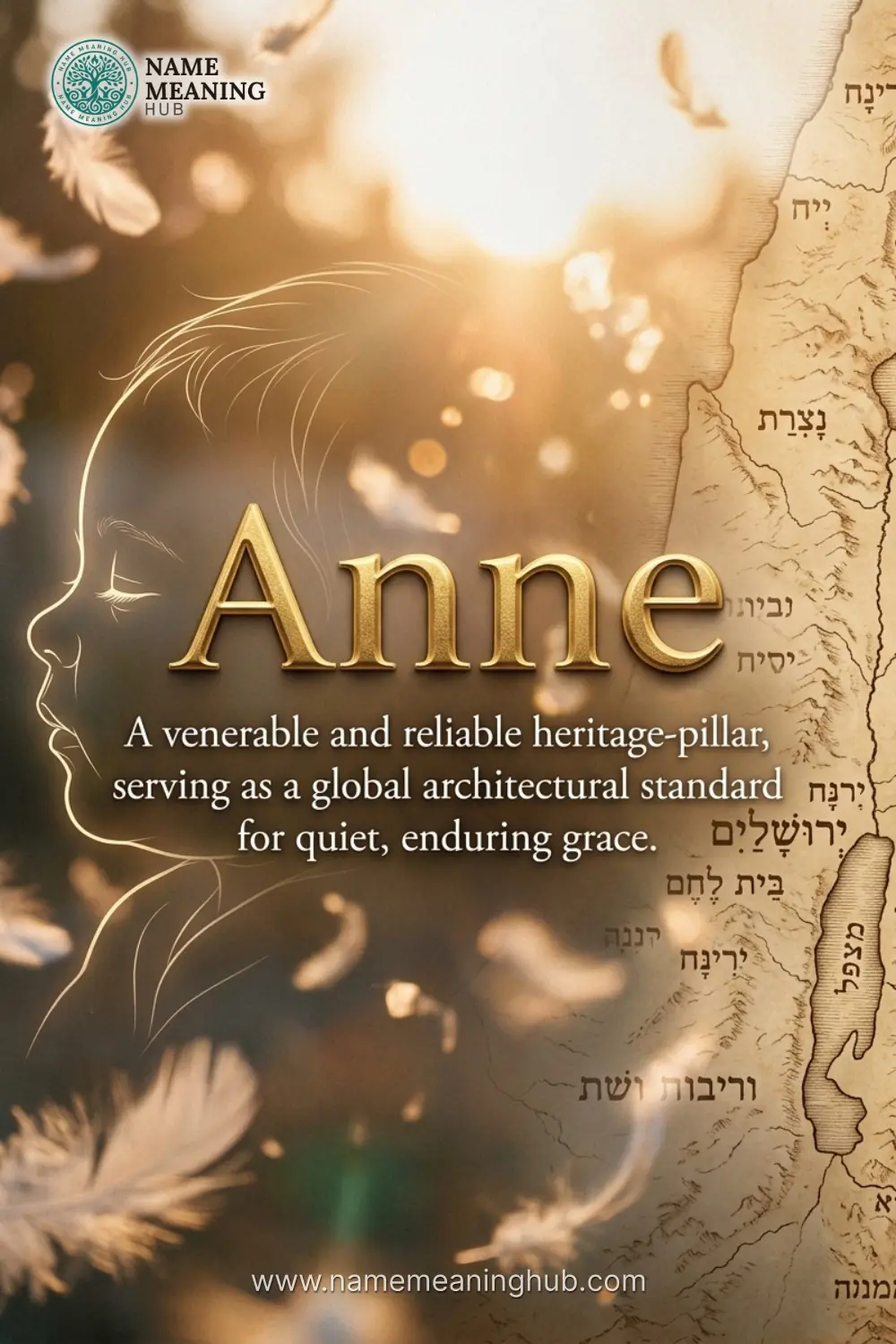
Anne: A Venerable Pillar of Enduring Grace
Anne functions as a name with one unmistakable center of gravity, sustained by its standing as a perennially popular choice for girls for generations . This Hebrew classic often reflects a preference for choices that provide a sense of reliability and quiet strength .
The trace presence in other tracks behaves more like scattered experimentation than a broad identity shift . Reaching a significant height in 1915, its single-syllable punch provide a sense of permanence and ancient resonance .
Anne, Seen Clearly Before It Is Chosen
| Key Facts | Information | Quick Insight |
|---|---|---|
| Name | Anne | Its visual simplicity is part of its appeal: four letters, no clutter, no guesswork. |
| Primary Gender Usage | Female | Anne reads as firmly feminine without relying on softness or ornament to make the point. |
| Primary Origin | French | The French form gives Anne a polished, continental finish while keeping the name extremely accessible in English. |
| Core Meaning | Grace | This is a meaning with moral and social depth, which helps explain the name’s long shelf life. |
| Pronunciation | AN | What you see is what you say, and that ease is one of Anne’s biggest practical strengths. |
| IPA | US /æn/; UK /æn/ | No regional split complicates the name, so it travels cleanly across accents. |
| Syllable Count | 1 | Its one-syllable form gives Anne composure and snap, especially beside longer surnames. |
| U.S. girls’ rank (2024) | No. 649 | Recognizable without being saturated, Anne now offers familiarity with breathing room. |
Why Anne Makes Grace Feel Usable
Many names with virtuous meanings feel heavier than the children who are meant to carry them. They can sound aspirational in a way that borders on theatrical, as though the name is making a public announcement about the family’s values. Anne avoids that problem because its meaning and its sound agree with each other. Grace is a compact idea here. The word does not come wrapped in extravagance. Instead, it becomes something lived: tact, composure, generosity, poise under pressure, and the ability to move through the world without unnecessary friction.
That is one reason Anne ages so well. On a child, grace can suggest gentleness and steadiness. On an adult, it matures into self-command. The name does not trap its bearer inside one narrow personality. It leaves room for brightness, seriousness, humor, ambition, reserve, and warmth. Anne can belong to someone bookish, athletic, formal, artistic, or practical because the name’s center is not a fashion image but a human quality. It points to conduct more than style.
The sound structure helps. Anne begins with an open vowel and closes with a neat final n, giving it a shape that feels both welcoming and complete. There is no trailing softness, no decorative ending, no sense that the name needs an extra flourish to become memorable. It is memorable because it stops cleanly. In spoken English, that makes Anne feel trustworthy. It lands quickly, registers instantly, and leaves almost nothing to clarify. Parents often talk about names that work in both the playground and the boardroom; Anne is a strong example of that balance because it never sounds out of place in either setting.
There is also a social intelligence in the name’s restraint. Anne does not dominate a room on introduction, but it does not disappear either. It gives the bearer the chance to make the impression herself. That may be one of the deepest forms of grace a name can offer. Rather than performing identity too early, Anne creates space for character to arrive first.
Anne Moves Through History Without Losing Its Shape
Historically, Anne has had remarkable staying power because it has occupied several worlds at once. It is courtly without being inaccessible, religious without sounding sectarian, literary without becoming fragile, and international without losing its local readability. Naming guides still note Anne as the name of multiple English queens, including Anne Boleyn and Anne of Cleves. That matters because royal usage tends to test a name in public memory. Some regal names become overly ceremonial. Anne did not. It kept its dignity, but it also remained human-sized.

Its French identity is part of that durability. Anne feels refined, but not remote. Unlike names that require accent marks, unusual endings, or highly specific pronunciation rules to preserve their European character, Anne passes easily into English while keeping a distinctly French silhouette. That balance has helped it remain legible across centuries and countries. It looks finished on paper, and it sounds natural aloud.
The wider family around Anne also shows how adaptable the core form is. Naming books place it beside relatives and developments such as Ann, Annie, Anna, Annette, Anaïs, Anya, and Annika. That surrounding network matters because it shows Anne is not isolated; it sits inside one of the most traveled and flexible naming families in modern use. But Anne itself remains the most concentrated version of the idea. It gives the family’s familiarity without adding extra sweetness, length, or embellishment.
Its literary presence strengthens that concentration. Anne Brontë alone would be enough to keep the name attached to seriousness, authorship, and interior life. Her place beside Charlotte and Emily means Anne continues to appear in one of English literature’s most recognizable family constellations. That is a different sort of cultural anchor from queens and courts. It proves that Anne can bear intellect as naturally as it bears ceremony. The name does not need grand architecture around it. It works equally well on a spine of poetry, a parish register, a classroom list, or a modern résumé.
Even French naming habits quietly reinforce Anne’s versatility. Traditional French combinations such as Anne-Laure show how easily the name works as a lead element when families want a fuller construction. That is revealing. A name only functions well in compounds when it is stable enough to carry another rhythm beside it. Anne can do that because its own shape is so clean. It neither overwhelms what follows nor fades under it.
In other words, Anne has historical depth without becoming a museum piece. It is not preserved because people are afraid to let it go. It survives because every era seems to find a fresh use for the same virtues: clarity, balance, and dignity under light pressure.
What Anne Sounds Like in a Modern American Life
In present-day use, Anne benefits from something many parents actively seek but few names achieve: immediate comprehension. It is easy to spell, easy to pronounce, and easy to remember. Those qualities can sound almost too basic when written down, but they matter more in daily life than many families anticipate. A child with a highly stylized or frequently corrected name spends years explaining it on forms, in classrooms, on phone calls, and in introductions. Anne avoids nearly all of that friction.
Its one-syllable structure is especially useful in contemporary naming, where many first names are long, airy, and vowel-heavy. Anne offers contrast. Next to multisyllabic surnames, it creates balance. Next to clipped surnames, it creates elegance. It also performs well in formal settings because it already sounds complete. Some short names feel like nicknames waiting for their longer originals. Anne does not. It enters as a full name, not a placeholder. To continue exploring names from this part of the naming world, visit baby names in this origin group.
That completeness affects how the name is perceived. Anne does not ask for diminutives in order to sound affectionate, though affectionate forms certainly exist around the wider name family. It can remain Anne at every age and in every register. That continuity is valuable. A toddler can be Anne, a teenager can be Anne, a judge can be Anne, a painter can be Anne. The name does not require reinvention in order to travel through life stages.
It also avoids several common modern drawbacks. There is very little pronunciation risk. There is minimal spelling risk. It does not court novelty so aggressively that it may date itself. It is not burdened with a strongly trendy image that narrows who the child is allowed to become. And because Anne is so established, it tends to feel culturally legible even to people who do not share the same background as the family choosing it.
Perhaps the most interesting modern feature of Anne is that it now reads as intentional. A generation ago, some people may have overlooked it for being too familiar. Today, in a landscape crowded with elaborate revivals and hyper-distinctive inventions, Anne can feel almost radical in its discipline. Choosing it says something subtle but clear: the parents are not trying to outshout the room. They trust refinement over novelty.
Anne at No. 649: Familiar, Unforced, and Available Again
The current U.S. ranking gives Anne one of the most attractive popularity profiles a classic name can have. At No. 649 for girls in 2024, it sits well below the crowded center of the charts while remaining instantly recognizable. That means Anne no longer functions as a default choice, yet it still carries none of the risk attached to obscure or experimental names. For many families, that is ideal territory. If you are building a shortlist around names like Anne, browse more feminine name ideas.
A ranking like this usually signals a name that has moved out of mass rotation but not out of cultural memory. Anne has not become strange. It has become selective. Parents choosing it now are less likely to be following a trend and more likely to be making a considered stylistic decision. They may want a name that feels intelligent, clean, classic, and calm. They may want something that grandparents recognize, teachers can spell, and peers will not share five times over in the same class.
There is also a deeper advantage to this middle ground. Extremely popular names can lose some individuality in daily use, while extremely rare names can carry too much explanatory burden. Anne occupies a better equilibrium. It gives a child an established name with enough social familiarity to feel easy, but enough distance from the very top of the charts to feel personal again.
In practical terms, this makes Anne especially appealing for parents who like classics but do not want the obvious classics. It belongs to the same broad world of enduring names, yet it offers more air around it. That breathing room is one reason Anne feels ready for another season of appreciation.
Three Doors Anne Opens Without Leaving Itself Behind
Middle names that let Anne stay crisp
Because Anne is brief and self-contained, it pairs especially well with longer middle names that add movement after its clean stop. It also works beautifully as the first element in more French-leaning combinations, where its restraint keeps the full name from becoming overdone. The best pairings usually preserve Anne’s clarity rather than competing with it. If you want the full pairing logic behind that contrast, see Anne middle names.
Nicknames that Anne does not need but can tolerate
Anne is one of the rare names that does not depend on a nickname to feel intimate. That is a strength, not a limitation. Families who like formal completeness often appreciate that Anne can remain unchanged at home and in public, while still sitting naturally beside affectionate relatives in the wider name family such as Annie or Ann. To see how those different moods shorten in real life, explore Anne nicknames.
Pronunciation that keeps Anne nearly frictionless
With the same IPA in both U.S. and UK usage, Anne belongs to the small class of names that cross accents with almost no turbulence. That simplicity matters in real life. It reduces correction, keeps introductions clean, and helps the name feel stable no matter where it is spoken. For the detailed stress pattern, accent notes, and IPA, see Anne pronunciation guide.
Why Anne Still Feels Like Anne
Some names survive because they are endlessly reinvented. Anne survives because it does not need to be. It keeps returning in recognizable form, carrying the same essential virtues from generation to generation: clarity, discipline, grace, and enough quiet confidence to stand without ornament. That kind of consistency is difficult to fake. It can only be earned over time.
What makes Anne moving, finally, is not grandeur but proportion. The name gives enough history to feel anchored, enough softness to feel humane, enough firmness to feel adult, and enough simplicity to let a child grow freely inside it. It does not prescribe a performance of femininity. It does not demand trend awareness. It does not depend on eccentric spelling, niche reference, or borrowed spectacle. It offers a cleaner bargain: a real name, with a real center, that trusts character to do the rest.
That is why Anne remains so persuasive. It takes a large idea like grace and carries it in a form small enough to use every day. On the page, Anne is brief. In a life, it is anything but small.
The Deeper Meaning of Anne: FAQ
Does Anne feel too plain for a modern baby?
Not really. Anne feels edited rather than plain. In a naming climate full of excess, its restraint can read as more intentional and more distinctive than a heavily decorated choice.
Is Anne easy for most people to spell and pronounce?
Yes. Anne is one of the easiest classic names to handle in everyday life. Its spelling is familiar, its pronunciation is stable, and there is little regional confusion around it.
Does Anne age well from childhood to adulthood?
Very well. Anne is complete at every stage of life, which is one of its biggest strengths. It can sound natural on a child, a student, and a professional without needing a different public form.
Does Anne work well with long surnames?
Usually yes. Its one-syllable structure gives it excellent balance beside longer last names, and its clean ending helps the full name sound controlled rather than crowded.