
Yasmin Name Meaning: Meaning, Legacy, and Style
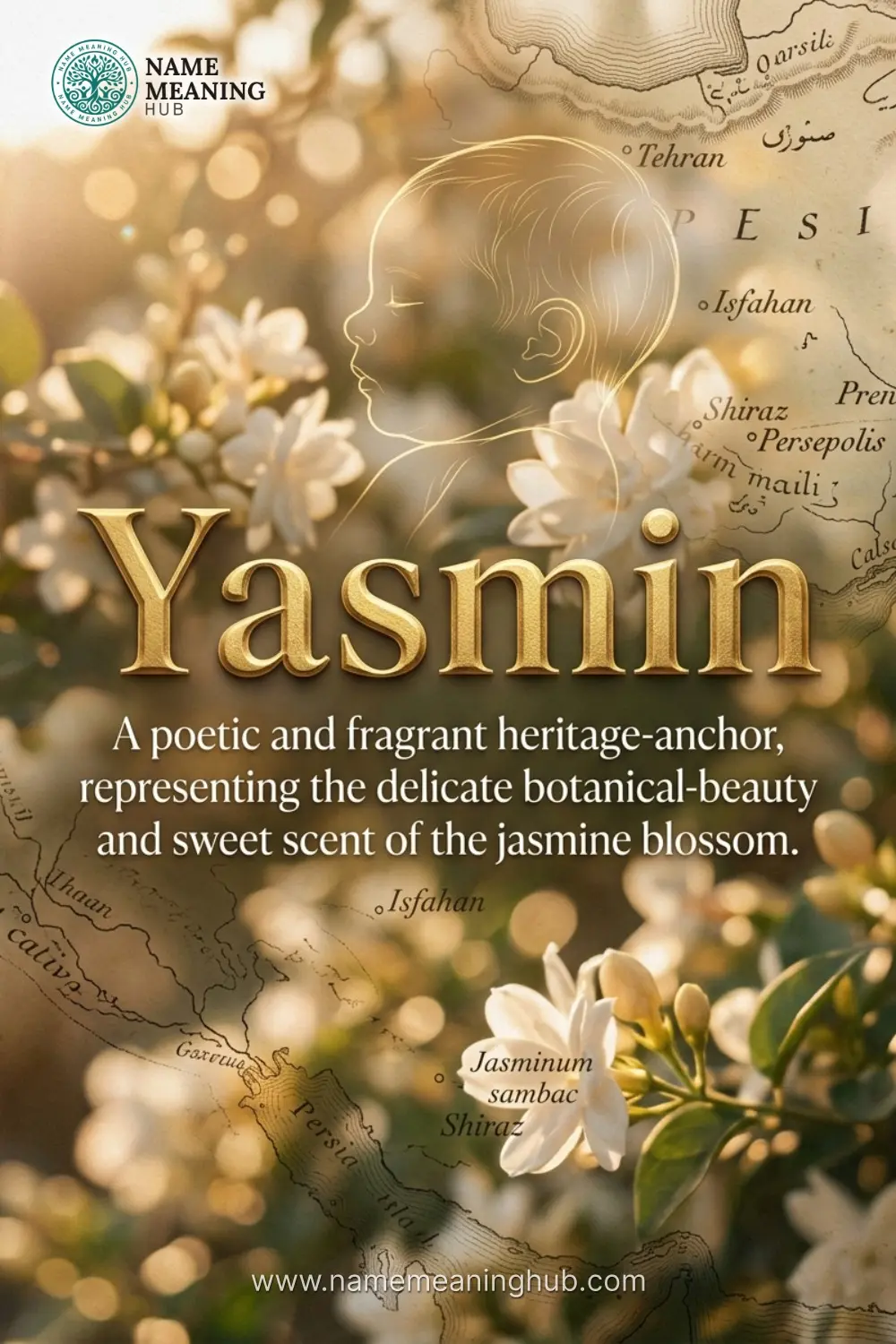
Some flower names are chosen for prettiness alone. Yasmin is not one of them. Its meaning, “jasmine flower,” certainly places it in the floral tradition, but the name has never behaved like a fragile ornament. It has traveled too far, adapted too widely, and stayed too structurally disciplined for that. The central truth of Yasmin is that it turns fragrance into form. Jasmine is one of the world’s most recognizable flowers not because it dominates a landscape by size, but because it changes the atmosphere around it. That makes Yasmin an unusually revealing name: soft in image, precise in sound, and quietly powerful in effect.
Official data shows Yasmin remains in use in the United States in 2024, but the name’s real story is larger than one chart position. This is a Persian flower name that moved across languages, entered different naming systems, and kept its identity even as spellings shifted around it. That kind of survival usually belongs to names with more than beauty behind them. Yasmin suggests elegance without excess, cultural depth without heaviness, and femininity without ornamental weakness. It is a flower name, yes, but more importantly it is a flower name that learned how to travel.
Yasmin's U.S. popularity rank over time, 1949–2024
Popularity statistics are based on official data from the Social Security Administration baby name records.
Yasmin: A Radiant and Melodic Multicultural Pillar
Yasmin functions as a name with one unmistakable center of gravity, sustained by a clear and steady identity in the girls’ lane. Reaching its height in 2003, it continues to behave as a reliable choice parents trust for its soft sound and international flair.
The lack of a secondary track reinforces its firm and focused public identity. Named after the fragrant jasmine flower, its simple two-syllable structure remains both polished and widely recognized across generations.
Yasmin, before the flower opens fully
| Key Facts | Information | Quick Insight |
|---|---|---|
| Name | Yasmin | The spelling is spare and clean, which helps the name feel stronger and more tailored than some floral names. |
| Primary usage | Female | Yasmin is feminine without sounding overly delicate, which is part of its long-term appeal. |
| Primary origin | Persian | The Persian root gives the name cultural depth and helps explain its long international life. |
| Meaning | Jasmine flower | This is not just a botanical label; it brings scent, atmosphere, and a long tradition of floral symbolism into the name. |
| Pronunciation display | yaz-MEEN | The stressed second syllable gives the name lift and polish, keeping it from sounding too plain. |
| IPA | US: /jæzˈmiːn/ · UK: /ˈjæzmɪn/ | The two major English-language pronunciations differ slightly, but both preserve the name’s crisp core. |
| Syllable count | 2 | Two syllables make Yasmin efficient and memorable, a major reason it ages so well. |
| U.S. girls’ rank (2024) | No. 917 | It remains visible enough to feel established, yet rare enough to avoid sounding overused. |
Yasmin turns a flower into a way of moving through the world
The flower in Yasmin is not merely decorative
Jasmine is one of the most useful flower images a given name can carry because it does not rely on visual extravagance alone. Many floral names signal color first. Some suggest brightness, some softness, some pastoral sweetness. Jasmine does something subtler. It is associated with scent, atmosphere, and proximity. You do not always notice jasmine by seeing it from far away. You notice it when it changes the air around you. That gives Yasmin a more intimate kind of beauty than names built around larger or more visibly dramatic flowers.
That distinction matters in naming. A flower name can sometimes feel too obviously symbolic, as though parents are choosing an emblem rather than a person’s future public identity. Yasmin avoids that risk because the image it carries is refined rather than theatrical. The name does not shout blossom. It suggests presence. It evokes a person who alters a room quietly, who leaves an impression without demanding that everyone stop and look. That is one reason the name still feels modern. Contemporary naming increasingly values restraint paired with memorability, and Yasmin does exactly that.
Research and long-standing naming culture both show that floral names tend to survive when they offer something beyond prettiness. Yasmin does. The jasmine image brings delicacy, but also persistence. Fragrance travels. It lingers. It returns in memory. Those are unusually strong qualities for a name to inherit from a flower. They give Yasmin emotional reach without burdening it with anything heavy-handed.
Why Yasmin feels intimate rather than ornamental
The difference between a merely pretty name and a lasting one often lies in scale. Names that seem too embellished can feel pinned to one life stage. Yasmin feels more intimate because it stays compact. It does not arrive in a cloud of syllables. It arrives, almost unexpectedly, in two clean beats. That compactness prevents the floral meaning from becoming excessive. A longer, more decorative form might lean toward perfume-counter luxury. Yasmin leans toward human warmth.
There is also something emotionally balanced in the name’s structure. It is feminine, but not sugary. It is refined, but not chilly. It belongs to a family of names that sound complete without sounding overexplained. That is a rare balance, and it helps explain why Yasmin has been able to travel across generations and communities without ever sounding entirely trapped by one era’s style rules.
How Yasmin traveled without losing its scent
From Persian root to international circulation
Modern naming references consistently place Yasmin within a Persian root family connected to jasmine, and just as consistently show how far that root has spread. In English-language naming books, Yasmin sits beside forms such as Yasmine, Yazmin, Jasmin, and Jasmine. That cluster tells an important story. Some names travel by changing beyond recognition. Yasmin did not need to. It adapted, but remained legible. The core sound and floral meaning stayed intact even as different languages and spelling habits shaped the edges.
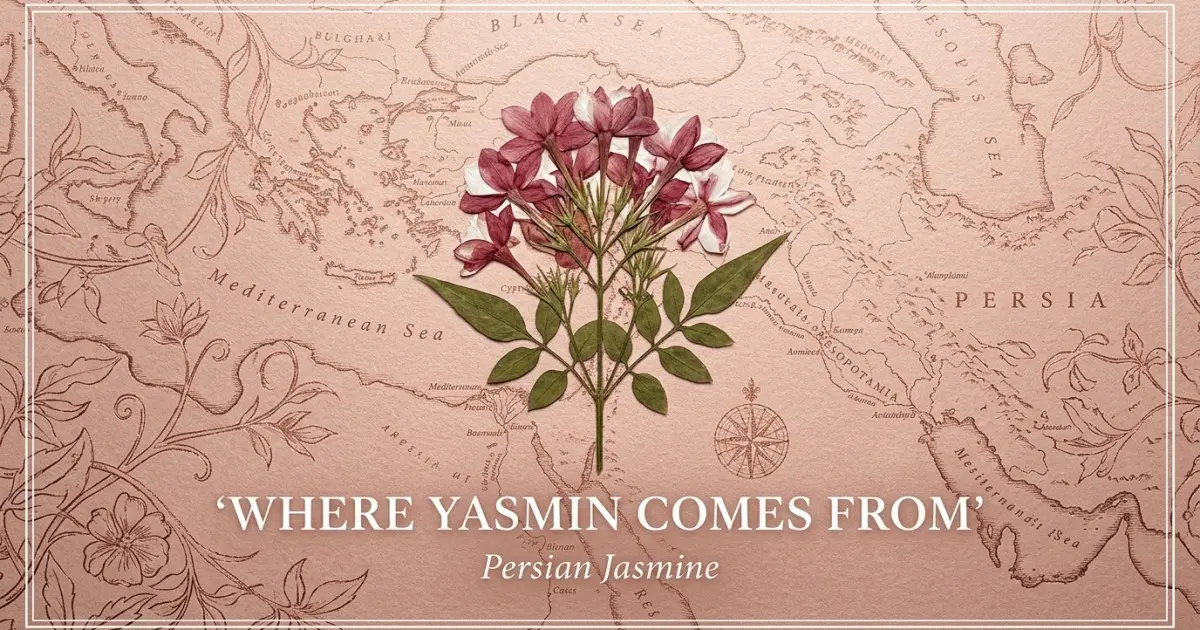
This is part of what gives Yasmin its quiet authority. It does not feel provincial or locked inside one linguistic tradition. It feels portable. Parents can hear the name as Persian in origin and still recognize it as internationally usable. That portability matters more than ever in modern naming, where a child may move across countries, classrooms, and digital spaces where names are constantly being read by people from different backgrounds. Yasmin survives that exposure well because it is both specific and adaptable. To discover what else belongs to this origin group, browse names linked to Persian history.
Some modern references also describe Yasmin as a variant of Jasmine and note its strong establishment in Britain. That kind of observation matters less as a trend report than as evidence of cultural travel. A Persian flower name not only entered English-speaking use but became natural enough to be treated as part of everyday naming. That is the sort of transition that usually belongs to names with lasting phonetic and social advantages.
What the jasmine image carries across cultures
Flower meanings do not stay perfectly stable as they move from one culture to another, but jasmine has shown unusual resilience. In one modern naming reference, jasmine is noted as a symbol associated with motherhood in Thailand. That detail is worth lingering over, not because it changes the Persian origin of Yasmin, but because it shows how the flower’s emotional range widened as it traveled. Jasmine can signify tenderness, nurture, beauty, or memory depending on the context. Few flowers carry that much interpretive flexibility without becoming vague.
That flexibility helps Yasmin feel culturally rich without becoming overloaded. The name is not bound to a single narrow symbolic reading. It can feel classic, romantic, cosmopolitan, or quietly traditional depending on who is using it and where. This is exactly the kind of semantic depth that gives a name longevity. People can inhabit it differently without breaking it.
Historically, that is what the strongest traveling names do. They preserve a core image while allowing the surrounding culture to hear new shades inside it. Yasmin has done that elegantly. It remained a flower, but became much more than a botanical reference.
Why Yasmin sounds cleaner than many flower names
The sound of Yasmin keeps the flower under control
Phonetically, Yasmin benefits from discipline. The American pronunciation given here, yaz-MEEN, puts the stress on the second syllable, which gives the name upward motion and a touch of brightness at the end. The British pronunciation often shifts the emphasis forward and shortens the ending slightly. Yet in both cases the name stays compact, efficient, and clear. That is a major advantage. Many flower names are sonorous but soft-edged; Yasmin has enough consonant structure to keep its polish.
The opening y sound is gentle, but it quickly meets the voiced z, which adds a fine line of energy. Then the name closes with m and n, both nasal consonants that soften the finish without making it vague. In plain terms, Yasmin sounds elegant because it mixes softness and definition well. It is not all petal. It has stem.
That is one reason Yasmin ages better than some names that share its floral category. It sounds mature even when the meaning is delicate. A child can wear it easily, but so can an adult in professional life. The name does not have to outgrow its own charm. Its sound already contains enough composure.
Yasmin beside Jasmine, Yasmine, and Yazmin
One of the most revealing ways to understand Yasmin is to compare it to its close neighbors. Jasmine, in English-speaking use, can feel slightly more familiar and more explicitly floral because the full flower word is right there on the surface. Yasmine often feels a touch more elongated and continental. Yazmin brings a more phonetic modern sharpness. Yasmin sits between them with unusual balance. It keeps the Persian identity visible, but it is still easy for English speakers to process.
That balance gives the name a kind of editorial neatness. It does not feel overstyled. It feels chosen with care. Among its close variants, Yasmin may be the one that best combines international resonance with everyday usability. It sounds cultured, but not self-conscious.
Yasmin in the 2024 naming field
A low-chart name with high recognizability
Official Social Security Administration (SSA) data places Yasmin at No. 917 for girls in 2024. That ranking is quietly favorable. The name is clearly in circulation, yet it sits far enough from the center of the chart to avoid feeling common. For many parents, that is ideal. They want a name other people can recognize without having to explain it, but they do not want a child sharing it with several classmates. Yasmin lands neatly in that territory. For a broader shortlist in the same group, visit popular girl names and meanings.
A name in this part of the chart often produces a specific social effect: it feels established rather than experimental, but personal rather than ubiquitous. Yasmin benefits from that. It is familiar enough to be legible and uncommon enough to feel chosen. That combination is often stronger than sheer uniqueness, because it gives a child both individuality and ease.
How Yasmin is likely to be perceived now
Socially, Yasmin tends to read as elegant, internationally aware, and quietly feminine. It does not carry the aggressively vintage aura of a revival name, nor the frictionless gloss of a newly engineered modern invention. Instead, it feels like a name that has already passed through several cultures and kept only what was necessary. That is why it can sound sophisticated without sounding formal.
It also fits well with current interest in names that are culturally rooted, concise, and globally intelligible. Research suggests modern parents are increasingly drawn to names that feel connected rather than fabricated. Yasmin answers that desire cleanly. It has real history, clear meaning, strong cross-cultural life, and a sound that remains easy to wear.
Style neighbors might include names like Amira, Samira, Lina, Leila, Nadia, and Jasmine, but Yasmin differs from them in an important way. It is less overtly romantic than some, less familiar than others, and more compressed than many of its floral cousins. It carries scent without excess. That keeps it from becoming soft-focus.
Where Yasmin opens into the rest of a naming life
Part of Yasmin’s usefulness is that it creates natural pathways into the surrounding decisions parents make. It pairs easily, shortens plausibly, and supports more than one accepted pronunciation in English-speaking life without losing itself. That makes it a cooperative name beyond its own meaning.
Middle names that either sharpen or soften Yasmin
Because Yasmin is already concise, middle names can take it in several directions: classic and formal, airy and romantic, or crisp and modern. The pairing question is not how to rescue the name, but how to frame it. If you want the full pairing logic behind that contrast, see Yasmin middle names.
Nicknames that live naturally inside Yasmin
Modern naming references frequently place nicknames such as Yas, Yaz, and related cuts around the jasmine family. That gives Yasmin real flexibility in private life without making the full form feel dependent on shortening. To see how those different moods shorten in real life, explore nicknames for Yasmin.
Why pronunciation becomes part of Yasmin’s identity
With both American and British forms in play, pronunciation is not a side note. It is one of the ways the name reveals its international life. Yet even across these shifts, Yasmin remains recognizably itself. If you want the full sound pattern behind that rhythm, read how to pronounce Yasmin.
Why Yasmin keeps its fragrance after the trend passes
Many names survive because they are classic. Others survive because they are endlessly reinventable. Yasmin survives for a different reason: it remains itself while moving through different worlds. Its Persian root gives it solidity. Its floral meaning gives it beauty. Its sound gives it control. Those three strengths rarely meet in one name without one overwhelming the others. Here they do.
That is why Yasmin resists reduction. It is not merely a flower name, not merely an international variant, not merely a stylish alternative to Jasmine. It is a name that has learned how to hold image, history, and usability in a single small shape. The jasmine flower in its meaning offers atmosphere rather than spectacle; the consonants in its sound offer discipline rather than softness alone; the record of its travel offers proof that it can belong in more than one world without becoming generic in any of them.
In the end, the deepest appeal of Yasmin may be that it teaches a subtler version of beauty. Not beauty as display, but beauty as presence. Not scale, but influence. Not volume, but persistence. The fragrance of jasmine changes a room without announcing itself first. Yasmin does much the same. It is precise, portable, and quietly memorable, and that is exactly why Yasmin continues to feel alive.