
Nicknames for Wolfgang: From Classic Favorites to Fresh Twists
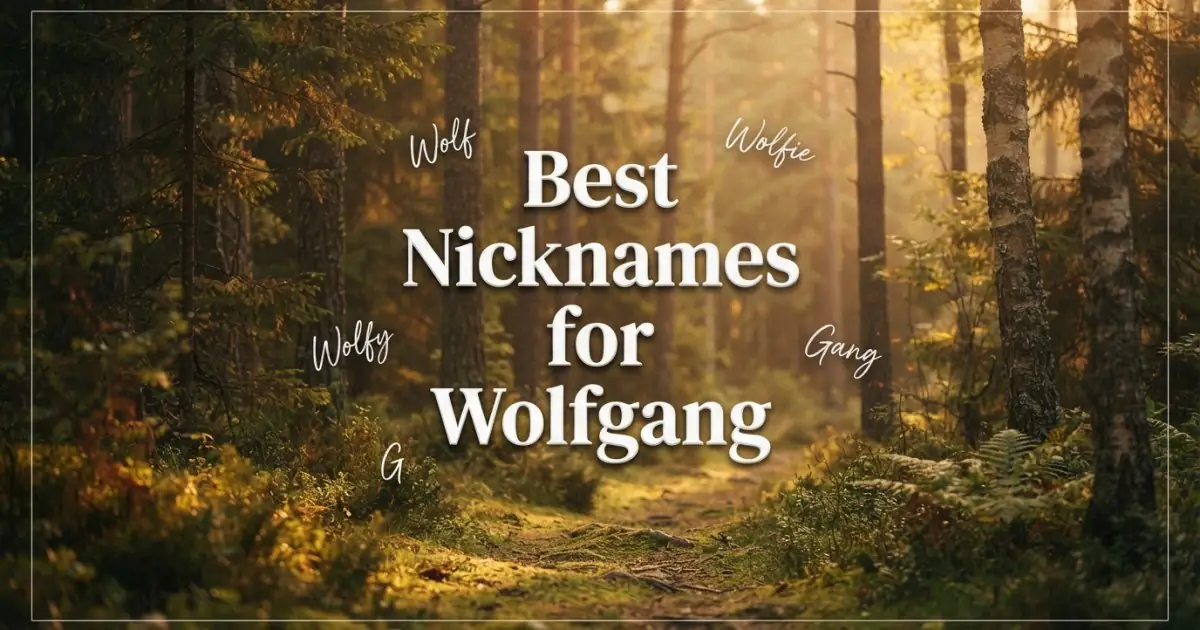
Nicknames are the private weather around a formal name. The full name may be chosen for meaning, origin, family history, or sound, but the nickname shows how that name lives when people are close enough to soften it. Wolfgang is a strong example because the full name has immediate force: German origin, two syllables, the meaning “path of the wolf,” and a spoken shape that lands firmly as WOLF-gang.
Because Wolfgang already sounds complete, its nicknames do not need to rescue it from difficulty. Instead, they reveal different sides of it. Wolf is direct and grown-up. Wolfie is affectionate. Wulf feels old-world. Wolfy is playful. WG or W can work in casual shorthand. The name’s nickname landscape is smaller than that of a long four-syllable name, but it is unusually vivid because the first syllable carries so much identity. Before judging which short form feels right, it helps to look again at the full identity of the name in Wolfgang meaning.
Wolfgang’s Nicknames Reveal the Softer Life Inside a Strong Name
| Group | Suggested Nicknames | Persona | Use Context |
|---|---|---|---|
| Classic short forms | Wolf, Wolfe, Wulf | Strong, direct, heritage-aware | Everyday use, older child, adult, formal-casual settings |
| Cute family forms | Wolfie, Wolfi, Wolfy, Little Wolf | Warm, affectionate, childhood-friendly | Parents, grandparents, siblings, close family |
| Initial-based nicknames | W, WG, Dub | Minimal, modern, informal | Texting, friend groups, sports teams, school circles |
| Playful personality names | Wolfster, Wolfman, Wolfgangy | Humorous, high-energy, personality-driven | Home, teammates, siblings, affectionate joking |
| Full-name affection | Wolfgang, Mister Wolfgang, Sir Wolf | Proud, theatrical, ceremonial | Family humor, special moments, affectionate emphasis |
The Opening of Wolfgang Gives Wolf Its Most Natural Nickname
The strongest nickname inside Wolfgang is already visible in the first syllable: Wolf. This makes nickname formation unusually simple. Unlike names where the short form has to be created by trimming, reshaping, or borrowing from a middle sound, Wolfgang offers Wolf immediately. It is short, vivid, and clearly connected to the full name. Many short forms only become obvious once the opening sound is clear, which is why how to pronounce Wolfgang belongs naturally here.
Wolf keeps Wolfgang’s meaning close to the surface
Wolf is not just a convenient shortening. It preserves the central image of the name. Since Wolfgang means “path of the wolf,” the nickname Wolf keeps the meaning alive in daily use. It feels direct, outdoorsy, and strong, but it also has a serious enough shape to age well.
That age range matters. A baby can be Wolf at home, a teenager can use Wolf among friends, and an adult can still carry Wolf without it sounding childish. It is bold, but not flimsy. It works because Wolfgang already gives it structure and history.
Wolfe and Wulf change the texture without changing the sound
Wolfe and Wulf are spelling-based nickname variations. Wolfe feels surname-like, literary, and polished. Wulf feels more old-world and Germanic. Neither is necessary, but both can be useful if parents like the sound of Wolf and want a written form with a slightly different style.
These versions are best used intentionally. If the child’s legal name is Wolfgang, most people will naturally write the nickname as Wolf. Wolfe and Wulf may need occasional clarification, but they can add personality in family notes, creative settings, or personal preference later in life.
Wolfie Turns Wolfgang From Commanding to Affectionate
For many families, the most realistic childhood nickname for Wolfgang is Wolfie. It softens the name without disconnecting it from the full form. The ending -ie is one of the most familiar affectionate patterns in English, which is why Wolfie immediately feels warmer than Wolf.
Wolfie is the clearest cute form
Wolfie works especially well for a baby or young child because it gives the strong first syllable a friendly ending. It keeps the charm of the wolf image but removes some of the intensity. A small child named Wolfgang may feel easier to imagine as Wolfie in family life, while the full name remains ready for formal settings.
The best part of Wolfie is that it can grow naturally. Parents may start with Wolfgang on paper, use Wolfie at home, and later let the child choose whether he prefers Wolf, Wolfgang, or another form. Wolfie does not have to be permanent to be meaningful.
Wolfi and Wolfy offer slightly different family moods
Wolfi can feel a little more European in spelling, while Wolfy feels more playful and English-friendly. Both are plausible, though Wolfie is the most intuitive for many families. Wolfy may suit a funny, energetic child; Wolfi may suit a family that likes a softer, more international-looking form.
These small spelling differences show how nicknames often become emotional choices rather than strict linguistic choices. The sound may be similar, but the visual style changes the feeling.
The Ending of Wolfgang Is Strong, but It Is Less Useful for Nicknames
Wolfgang’s second syllable, gang, gives the full name its distinctive finish. It is firm, memorable, and important to the name’s structure. As a nickname source, however, it is more difficult. In English, gang is already a common word, so using Gang as a nickname can feel awkward outside very private family joking.
Gangy is possible, but best kept playful and private
Gangy may emerge in a family as a baby-talk form, especially if siblings are experimenting with the ending of Wolfgang. It can sound affectionate in a private context, but it is unlikely to be the strongest public nickname. Wolf, Wolfie, and Wulf are clearer and more flattering.
This is a useful caution for parents: not every sound inside a name needs to become a nickname. The ending of Wolfgang does its job beautifully in the full name. It gives weight and closure. The opening syllable simply offers better nickname material.
Wolfgangy works only when the humor is the point
Wolfgangy is not a polished everyday nickname, but it can be a family joke or sibling form. It stretches the full name instead of shortening it, which can make it funny and affectionate. This type of nickname usually works only when it arises naturally. If it is forced, it may feel too silly for such a strong name.
For daily use, the better strategy is to let the ending remain part of the full name and build nicknames from the more expressive opening.
Wolfgang Nicknames Can Shift Naturally With Age
A name as strong as Wolfgang benefits from flexibility. The full name may feel dramatic on a newborn, charming on a child, distinctive on a teenager, and powerful on an adult. Nicknames help the name move through those stages without losing its identity.
Childhood favors warmth and repetition
In early childhood, Wolfie, Wolfy, Little Wolf, and Wolf-Wolf are the most natural affectionate forms. These are names that belong to bedtime, family photos, grandparents, and siblings. They make the strong sound feel cuddly.
Some of these may not survive into adolescence, and that is normal. Childhood nicknames often become family keepsakes rather than public identities. A grown Wolfgang may still be Wolfie to one parent and Wolf to everyone else.
Teen and adult use usually becomes cleaner
As Wolfgang grows, the nickname may simplify. Wolf is the strongest teen and adult option because it is short, confident, and directly tied to the full name. W or WG can work in texting, sports, or friend groups. Wulf may appeal later if he likes a more distinctive written form.
The key is not to lock the child into one version too early. A formal name like Wolfgang gives him options. He can be Wolfie at home, Wolf with friends, Wolfgang professionally, and W in quick casual use.
DIY Nicknames for Wolfgang Should Stay Human, Not Over-Themed
Because Wolfgang already contains a powerful animal image, invented nicknames should be handled with care. It is easy to push the name too far into wilderness or fantasy territory. A nickname like Wolfman might be funny within a family, but it may feel too theatrical as a regular public nickname. Wolfster can be playful for a sociable child, while Sir Wolf or Mister Wolfgang can work as affectionate family humor.
The best DIY nicknames keep one clear anchor: Wolf, Wulf, W, or the full Wolfgang. From there, the family can adapt naturally. Wolfie J may come from a middle initial. W.G. may come from initials. Little Wolf may suit the baby years and disappear later. The nickname should feel like something people actually say, not a label designed only to sound clever.
For most families, the most durable path is simple: use Wolfgang proudly as the full name, Wolf as the clean everyday form, and Wolfie for affection. That gives the name strength, warmth, and room to grow.