
Tzvi Name Meaning: Its Roots, Symbolism, and Lasting Identity

Tzvi is a small name with a quick, bright movement inside it. It does not unfold across several syllables or soften itself for instant familiarity. It arrives in one concentrated sound: TSVEE. The name’s meaning, “deer; gazelle,” gives that compact sound an image of alertness, grace, speed, and watchfulness. Tzvi feels like a name caught in motion: light-footed, attentive, and impossible to reduce to plainness.
Part of Tzvi’s power comes from its difference. In English-speaking settings, the Tz opening asks the eye and ear to slow down for a moment, but the pronunciation itself is clean once learned. Its Hebrew origin gives it depth, while its one-syllable shape gives it strength. Official Social Security Administration (SSA) data shows Tzvi ranked No. 1168 for boys in the U.S. in 2024, a position that makes it rare but visible. For parents drawn to meaningful Hebrew names with a distinctive sound, Tzvi offers something unusually concentrated: a name that feels ancient, alive, and swift in a single beat.
Tzvi's U.S. popularity rank over time, 1961–2024
Popularity statistics are based on official data from the Social Security Administration baby name records.
Tzvi: A Soulful and Ancient Hebrew Nature-Spirit
Tzvi functions as a name with one unmistakable center of gravity, reaching a significant peak for boys in 2024. Its appeal often reflects its standing as a “safe but polished” cultural choice that parents trust for its connection to nature and its deep spiritual roots.
The lack of a secondary track reinforces its firm, traditional masculine identity. Meaning “deer,” its simple structure provides an approachable rhythm that has stood the test of time across style cycles.
Tzvi’s Core Facts Reveal a Brief Name With Living Movement
| Key Facts | Information | Quick Insight |
|---|---|---|
| Name | Tzvi | The spelling gives the name immediate distinction, while the one-syllable sound keeps it compact and strong. |
| Primary gender usage | Male | Tzvi is primarily used for boys, with a clear masculine profile in current ranking data. |
| Origin | Hebrew | The Hebrew origin gives Tzvi cultural depth and a direct connection to meaningful word-based naming. |
| Meaning | Deer; gazelle | The meaning suggests lightness, alertness, speed, grace, and a vivid natural image rather than an abstract virtue. |
| Pronunciation | TSVEE | The pronunciation is short and bright, but the initial consonant cluster may need guidance in English. |
| U.S. IPA | /tsviː/ | The American pronunciation keeps the ts opening and ends with a long ee sound. |
| U.K. IPA | /tsviː/ | The matching U.K. form makes the pronunciation stable across major English accents once the opening is learned. |
| Syllable count | 1 | One syllable gives Tzvi intensity and makes each sound inside the name especially noticeable. |
| Latest U.S. year | 2024 | The name’s current position can be understood through recent official usage rather than older impressions alone. |
| U.S. boys’ rank (2024) | No. 1168 | Tzvi is rare but present, making it distinctive without being completely absent from modern use. |
| U.S. girls’ rank (2024) | No current listed rank | The absence of a current girls’ rank reinforces Tzvi’s strongly masculine public profile. |
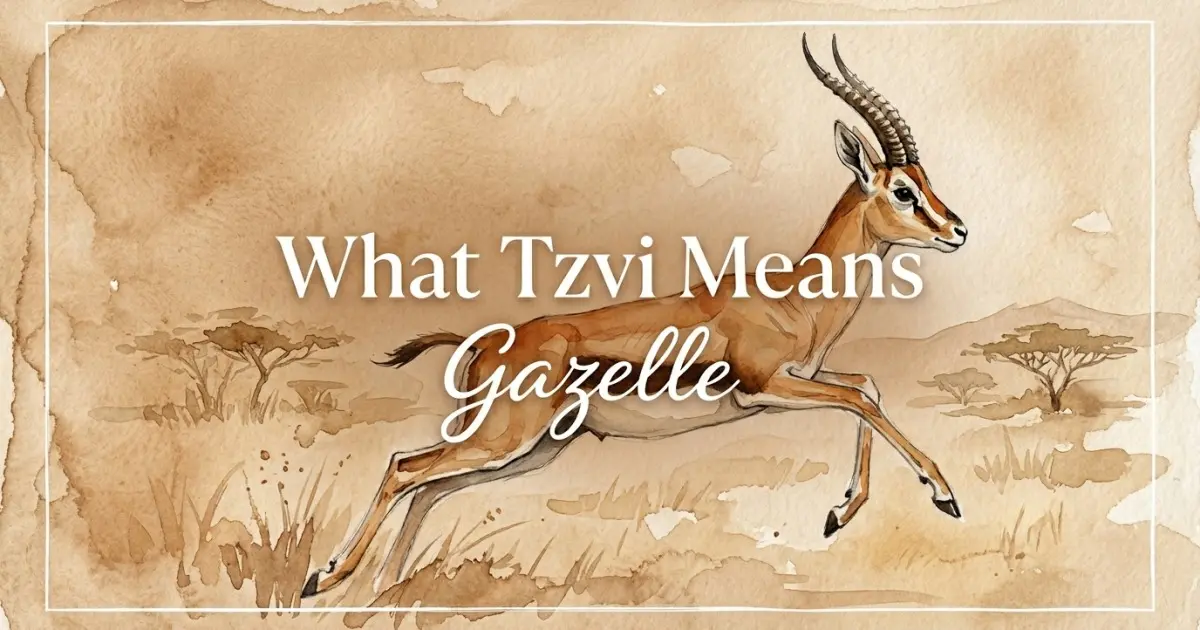
Tzvi Means “Deer; Gazelle,” a Meaning of Grace in Motion
The meaning of Tzvi, “deer; gazelle,” gives the name a rare kind of visual immediacy. Many names carry abstract meanings such as strength, peace, wisdom, or honor. Tzvi is different. It does not begin with an idea. It begins with a living creature: swift, alert, elegant, and quick to notice movement in the world around it.
That makes Tzvi feel both gentle and powerful. A deer or gazelle is not strong in the blunt, heavy way of a stone wall or a warrior’s title. Its strength is responsiveness. It survives through attention, speed, lightness, and grace. This gives the name an active quality without making it aggressive. Tzvi feels alive, not forceful; watchful, not severe.
The deer image gives Tzvi quiet alertness
A deer is often imagined as attentive before it is anything else. It listens, pauses, notices, and moves when the moment changes. That quality gives Tzvi a meaning tied to awareness. The name can suggest a child who is perceptive, sensitive to surroundings, and quick in both body and mind.
This is not a fragile image. Alertness is a form of intelligence. A name meaning “deer” can imply an ability to read the world carefully, to respond rather than simply react, and to move with instinctive timing. Tzvi’s meaning therefore carries delicacy and survival together.
The gazelle side of Tzvi adds speed and elegance
The gazelle meaning gives Tzvi a brighter, more kinetic energy. Where “deer” may feel quiet and woodland-like, “gazelle” suggests swiftness, open space, and graceful motion. This side of the meaning makes the name feel less still. It carries momentum.
That movement fits the sound of Tzvi. The name is one syllable, but it is not flat. The tsv opening feels quick and precise, and the final long ee gives the name a clean release. The meaning and sound seem to move together: alert at the start, bright at the finish.

Tzvi’s Hebrew Origin Gives the Name Cultural Depth Without Extra Length
Tzvi’s Hebrew origin is central to its identity. The name belongs to a naming tradition where sound, meaning, and inheritance can sit very close together. It does not need many syllables to feel meaningful. Instead, its depth comes from compression: a short name carrying a vivid image and a long cultural memory. For parents interested in this heritage, a good next step is names with Hebrew roots.

For English speakers, Tzvi may look unfamiliar at first because of the opening Tz. That spelling makes the name visually distinctive and signals that it does not come from the most common English naming patterns. But once the pronunciation is heard, the name is simple in length. It is not a long or complicated name. It is a concentrated one.
Tzvi feels rooted rather than invented
Some rare names feel new because they are recently created or styled for novelty. Tzvi feels rare in a different way. It feels rooted. Its Hebrew origin and direct animal meaning give it substance beyond sound. The name’s uncommonness is not a decorative trick; it comes from linguistic and cultural specificity.
This can matter deeply for parents. A distinctive name can sometimes feel risky if it has no clear foundation. Tzvi has foundation. Its meaning is clear, its origin is defined, and its pronunciation is stable once taught. The name may be unusual to some ears, but it is not empty.
The one-syllable form makes Tzvi both ancient and modern
Short names often feel modern because they are efficient, clean, and easy to use. Tzvi has that advantage, even though its roots are much older than contemporary naming style. This creates an appealing tension. The name is compact enough for modern life, but deep enough to feel inherited.
That balance is one of Tzvi’s strengths. It can feel traditional within Hebrew naming contexts and strikingly fresh in broader English-speaking settings. It does not need to choose between old and new. It carries both.
The Sound of Tzvi Makes the Name Crisp, Bright, and Unmistakable
Phonetically, Tzvi is small but dense. It is pronounced TSVEE, with one syllable. The opening begins with a ts sound, like the ending of “cats” moved to the front of the name. That opening may be unfamiliar at the beginning of an English name, but it is not impossible. It simply asks the speaker to start with a sound English usually places elsewhere.
After the ts comes the v, a voiced fricative, meaning the sound is made with a light friction while the vocal cords vibrate. In everyday terms, it gives the name a buzzing, living texture. The final ee sound then brightens the whole name. The result is a name that feels quick, precise, and memorable.
The “Tz” opening gives Tzvi its distinctive edge
The opening of Tzvi is the part most likely to catch attention. It does not begin like Tyler, Theo, or Zion. It begins with a compact consonant cluster that gives the name energy from the first moment. That cluster can make Tzvi feel sharper and more specific than many softer vowel-led names.
This edge is not harsh when pronounced correctly. It is brisk. The sound moves quickly into the final vowel, so the name does not linger heavily. That suits the meaning beautifully. A name meaning “deer; gazelle” should feel light on its feet, and Tzvi does.
The final “ee” keeps Tzvi bright and approachable
The final vowel in Tzvi is long and clear: ee. This gives the name brightness after its dense opening. Without that vowel, the name might feel too compressed. With it, Tzvi becomes crisp but friendly, distinctive but not severe.
This final sound also makes the name easy to call once the opening is learned. TSVEE is brief, clean, and complete. Its difficulty is mostly visual at first glance, not structural after pronunciation is explained.
Tzvi’s 2024 Popularity Shows a Rare Name With Measurable Presence
Official SSA data places Tzvi at No. 1168 for boys in 2024. That ranking gives the name a very different social position from common favorites. Tzvi is not a name a child is likely to share with several classmates. It sits outside the mainstream top tier, but it is not invisible. It has a measurable presence in current use.
This kind of rarity can be meaningful. Some parents want a name that reflects specific heritage, faith, language, or family identity more than broad popularity. Tzvi fits that desire. It is distinctive enough to stand apart, but grounded enough to feel purposeful rather than merely unusual.
Tzvi is rare in a way that feels intentional
There is a difference between a name that is rare because it is confusing and a name that is rare because it belongs to a more specific tradition. Tzvi belongs to the second category. It has clear origin, clear meaning, and a stable pronunciation. Its rarity is part of its identity, not a flaw to hide.
For a child, that may mean occasional explanations. The spelling may need to be taught. The opening sound may need to be modeled. But those explanations are short and meaningful: “Tzvi, pronounced TSVEE. It means deer or gazelle.” That is a memorable introduction.
The absence of a girls’ rank keeps Tzvi’s profile clearly masculine
Current data shows no listed girls’ rank for Tzvi, while boys’ usage is present. That gives the name a strongly masculine public profile. Unlike some short names that move easily across gender lines in modern usage, Tzvi remains clearly positioned as a boy’s name in the available ranking data. To keep exploring names in this same lane, visit strong boy names and meanings.
At the same time, the meaning is not heavy-handed. “Deer; gazelle” gives Tzvi grace and lightness. The name can feel masculine without depending on bluntness.
Tzvi’s Style Neighbors Show Its Place Among Compact Hebrew Names
Tzvi shares broad style territory with short Hebrew-rooted names such as Avi, Levi, Ezra, Zev, Noam, and Ari. These names often appeal to parents who like meaningful roots, compact sound, and a balance between heritage and modern usability. Tzvi stands apart because its opening consonant cluster is more distinctive than many of its neighbors.
Compared with Levi, Tzvi feels rarer and sharper. Compared with Ezra, it feels more compressed. Compared with Ari, it is less gentle in sound but similarly brief. Compared with Zev, it shares a compact Hebrew strength, though Tzvi has a brighter final vowel. This makes Tzvi especially appealing for families who want a name that is short, meaningful, and unmistakably specific.
Tzvi feels less mainstream than many familiar Hebrew names
Some Hebrew names have become widely familiar in English-speaking baby-name culture. Tzvi remains more specialized. That can be a strength for parents who want the name to retain a stronger cultural signal. It does not blend easily into generic style trends.
This means Tzvi may feel especially resonant in families where Hebrew language, Jewish heritage, or meaningful traditional naming matters. It is not simply a fashionable short name. It carries a deeper linguistic identity.
Tzvi’s brevity makes it easier to pair than its spelling first suggests
Although Tzvi looks unusual to some English readers, it is only one syllable. That makes it surprisingly flexible in full-name rhythm. Longer middle names can give it balance, while classic or Hebrew middle names can deepen the full name’s tone. Because Tzvi is brief, it can carry a substantial middle name without becoming too long overall.
The main pairing challenge is sound transition. A middle name beginning with a heavy consonant cluster may make the full name feel crowded. A middle beginning with a vowel or softer consonant can help the name flow more smoothly.
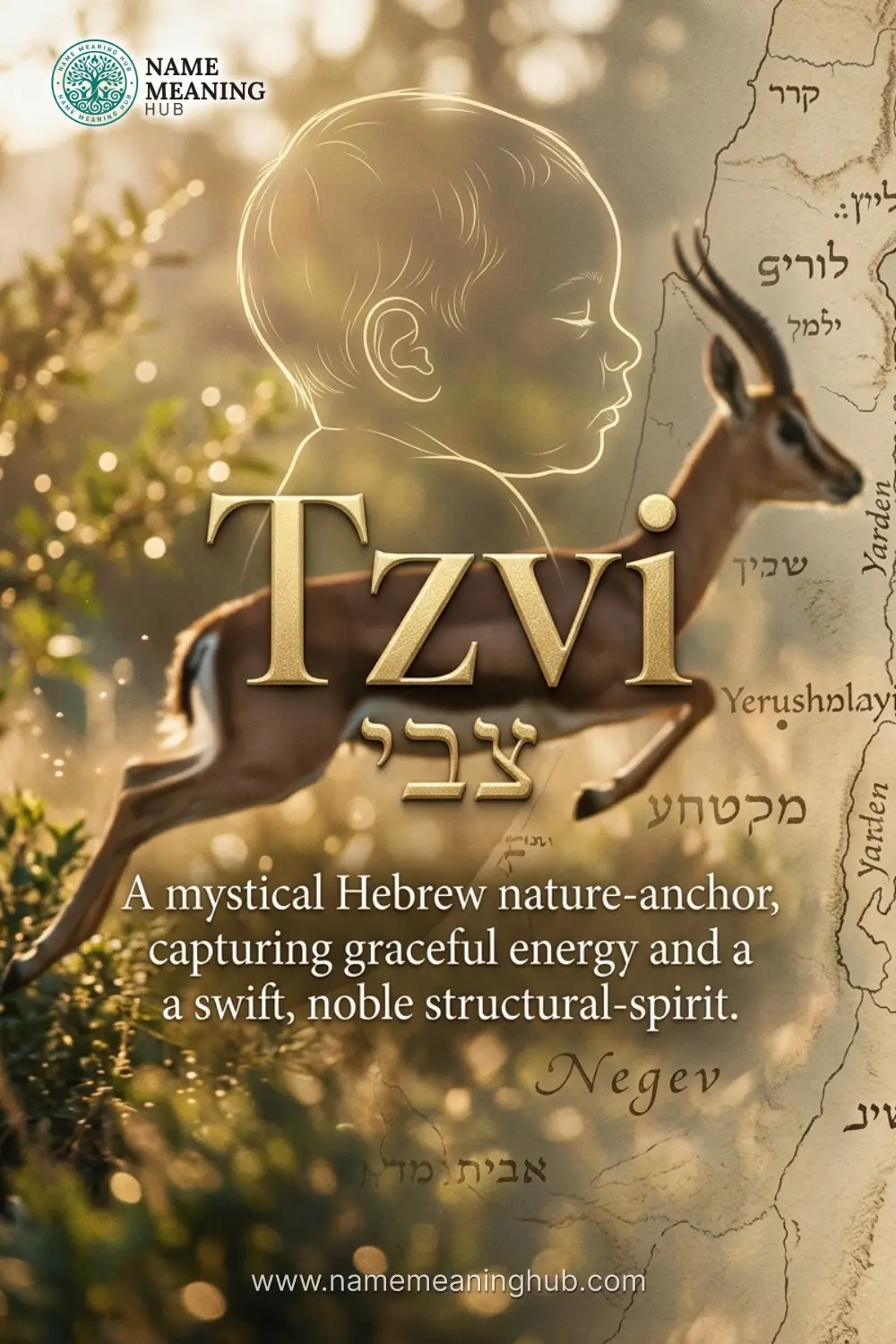
What Parents Should Notice Before Choosing Tzvi
Tzvi is meaningful and striking, but it is not a name that disappears quietly into English spelling expectations. Parents should be comfortable teaching the pronunciation and spelling. The payoff is a name with unusual clarity and depth: one syllable, one vivid meaning, one strong cultural line.
The name also asks for thoughtful full-name pairing. Since Tzvi is so compact, the middle name and surname will shape its public rhythm. A longer middle can make the full name feel balanced. A very short middle plus a short surname may sound abrupt. The best combination should let Tzvi remain bright and distinct while giving the full name enough breath.
Middle names can give Tzvi balance and smoothness
Because Tzvi is one syllable and begins with a dense consonant cluster, middle names can help soften the full name. A longer or more open middle can create balance. Names with clear vowels after Tzvi may be especially useful because they let the full name move naturally from the crisp first name into a smoother second element. If you want the full pairing logic behind that contrast, see Tzvi middle names.
Nicknames for Tzvi may be minimal or unnecessary
Tzvi is already very short, so it does not need a nickname for convenience. Some families may use Tz, T, Vivi, or affectionate private forms, but the full name is likely to remain the strongest everyday form. Its brevity is part of its identity. To see how those different moods shorten in real life, explore Tzvi nicknames.
Pronunciation of Tzvi is distinctive but teachable
Tzvi is pronounced TSVEE. The U.S. and U.K. IPA forms are both /tsviː/, which means the pronunciation is stable across major English accents. The only real challenge is the opening tsv cluster. Once modeled, the name is short and memorable. For the detailed stress pattern, accent notes, and IPA, see Tzvi pronunciation guide.
The Lasting Grace Inside Tzvi
Tzvi is a name of concentration. It holds a living image — deer, gazelle — inside one bright syllable. It carries Hebrew origin, masculine usage, rare current presence, and a pronunciation that stands apart from ordinary English patterns. It is brief, but not simple in the shallow sense. It is small the way a spark is small: compressed, vivid, and alive.
Its meaning gives the name motion. A deer watches. A gazelle moves. Both images suggest a kind of strength that depends on attention, grace, and quickness rather than heaviness. Tzvi therefore offers a different model of masculine energy: alert, agile, rooted in tradition, and bright in sound.
For a son, Tzvi is a name that asks to be carried with intention. It may need explanation, but the explanation is beautiful. It may look unfamiliar to some, but its sound is clean once heard. The enduring gift of Tzvi is that it does not waste a syllable. In one swift name, it holds heritage, movement, grace, and the living image of a creature ready to leap.