
How to Pronounce Theodora: An Easy Sound-by-Sound Breakdown
The moment most parents discover whether a name truly works is rarely on a spreadsheet. It happens in a waiting room, at the pediatrician’s desk, on the first day of school, or when a grandparent says the name aloud for the first time without rehearsal. Theodora is exactly that kind of name. On paper it looks stately and unmistakably historical, but in real speech it succeeds because it is more fluid than it first appears. Once spoken correctly, it does not feel heavy. It moves.
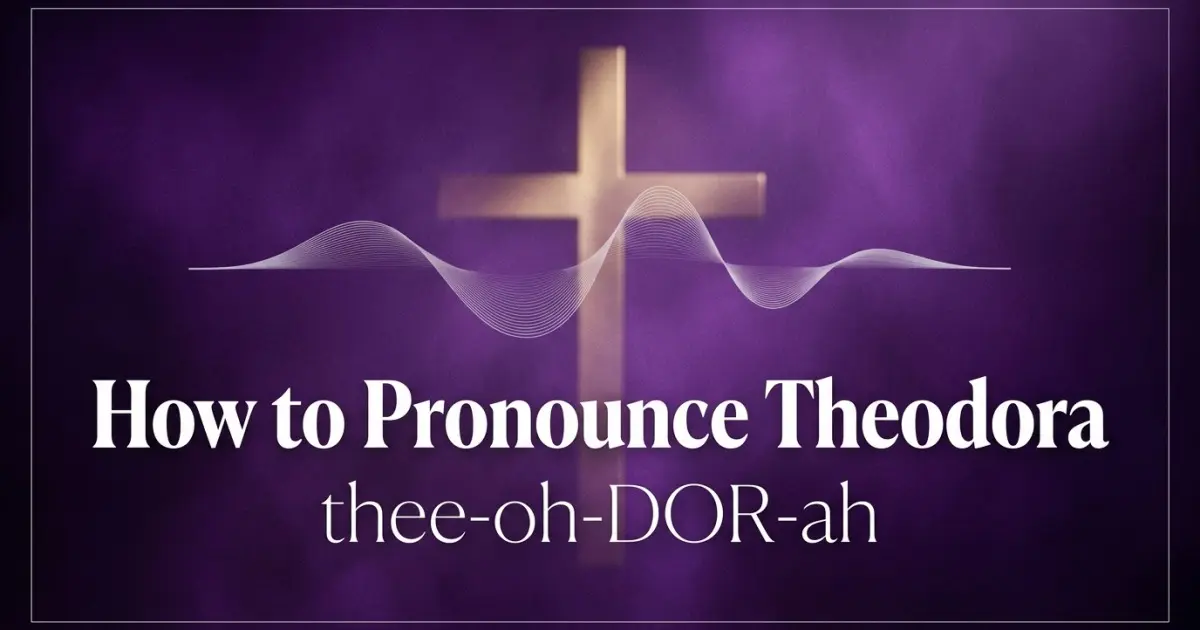
That is why pronunciation matters so much here. Theodora belongs to the class of names that carry visible history, and names like that often invite hesitation. People see four syllables, a Greek origin, and the familiar shadow of Theodore, and they begin to guess. But everyday English has already solved most of the work. In current use, Theodora is usually said as thee-uh-DOR-uh, with the stress clearly falling on the third syllable. The name sounds formal only when it is overhandled. In normal speech, it is poised, clear, and easier than it looks.
What Theodora Clarifies Once You Hear It Properly
| Element | Phonetic Detail | Quick Tip |
|---|---|---|
| Everyday pronunciation | thee-uh-DOR-uh | Say it in four beats and let the third one carry the weight. |
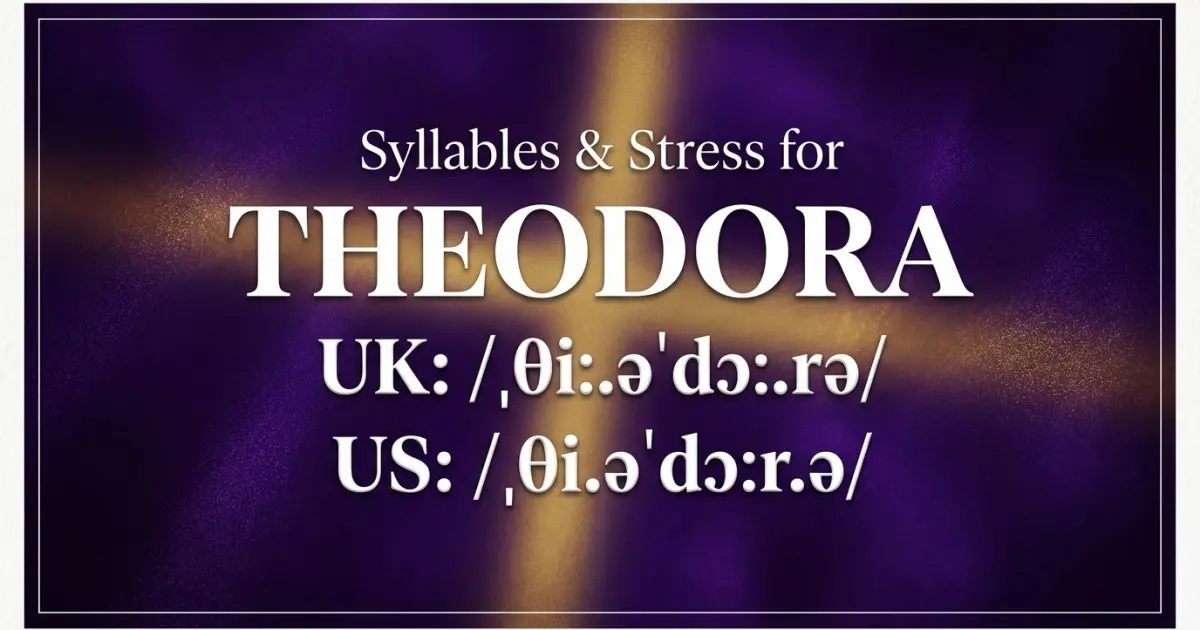
| IPA (US) | /ˌθiəˈdɔːrə/ | The opening begins with the soft English “th” sound, not a hard “t.” |
| IPA (UK) | /ˌθiəˈdɔːrə/ | In this case, British and American forms line up closely, so the overall rhythm stays stable across accents. |
| Syllable count | 4 syllables | Do not compress it into three. The small second syllable keeps the name from sounding abrupt. |
| Primary stress | DOR | If you stress the beginning instead, the name starts to sound guessed rather than established. |
| Opening consonant | /θ/ as in “think” | It is a fricative, not a stop. Let air pass softly rather than hitting the sound like a “t.” |
| Key vowel movement | thee + uh + DOR + uh | The opening glides lightly; the center gives the name its authority. |
Theodora in Everyday English: Where the Stress Actually Falls
Theodora is easiest to pronounce when you stop trying to make every syllable equally grand. In ordinary English, the name falls into a simple pattern: thee-uh-DOR-uh. The first two syllables are light and forward-moving. The third syllable, DOR, takes the stress. The final uh releases the name gently instead of ending it sharply. That stress pattern is what makes the name sound natural rather than ceremonial. Before focusing only on syllables and stress, it helps to step back into the fuller frame of Theodora meaning.
Linguistically, the opening begins with the /θ/ sound, the same fricative heard in words like “think” or “theory.” That matters because many pronunciation errors come from replacing it with a hard “t” or from overcorrecting it into something theatrical. The correct English opening is simpler than that: just a clean, soft “th” followed by “ee.” After that comes a quick neutral vowel, the kind of light “uh” sound English uses all the time. Then the name lands on DOR, where the rounded vowel and the liquid consonant r give Theodora its depth.
Why four syllables do not make Theodora difficult
Some four-syllable names are hard because they have unclear stress or too many competing vowels. Theodora is not one of them. Its internal structure is orderly. The first half prepares the sound; the third syllable carries the name; the fourth closes it. That is why the pronunciation settles quickly once heard aloud. Even people meeting the name for the first time usually learn it after one correction, because the rhythm makes sense to the English ear.
How Theodore influences Theodora’s sound
One reason people misread Theodora is that they already know Theodore. That familiarity is helpful up to a point, because both names share the same opening material. But Theodore often encourages listeners to lean too heavily on “THEE-oh,” which can make Theodora drift into a more mechanical THEE-oh-dora pattern. Everyday usage usually softens that middle transition instead. Theodora sounds more natural when the second syllable stays light and the main emphasis waits for DOR.
Theodora Across Accents, IPA, and the Greek Shadow Behind the Name
The recorded American and British forms align closely here: /ˌθiəˈdɔːrə/ in both cases. That is useful for a name article because it means there is no major split between transatlantic standards. In real speech, individual accents will still color the vowels slightly. Some speakers will make the first section sound more clearly like “thee-uh,” while others will smooth it into a quicker “thee-ə.” Some will give the stressed syllable a rounder aw-quality, while others may approach something closer to “door.” But the basic contour remains stable.
Historically, Greek usage can sound different from modern English use. In more classically informed pronunciation traditions, the name may sound closer to theh-oh-DOR-ah. That older shape helps explain the written form and the Greek lineage, but it is not the everyday English default. For most English-speaking families, especially in the United States, thee-uh-DOR-uh is the form that sounds current, intuitive, and socially legible.
What the IPA is telling you in plain English
The IPA may look technical, but here it is straightforward. The beginning /θiə/ means a soft “th” followed by an “ee” sound that opens into a light schwa-like glide. The stress mark before /dɔːr/ tells you that DOR is the strong syllable. The final /ə/ is the relaxed “uh” sound that English speakers naturally use at the ends of many names. So the IPA is not complicating Theodora. It is simply confirming what the ear already prefers.
Where accent differences matter least
The good news is that Theodora is not the kind of name that changes identity from one English accent to another. The vowels may shade slightly, but the stress pattern holds. That means a child named Theodora is unlikely to encounter the sort of constant cross-accent confusion that affects names with multiple accepted stress points. Here, the center stays anchored.
Where People Usually Mispronounce Theodora
Most mistakes happen for predictable reasons. The first is over-loyalty to spelling. People see Theo and want to say THEE-oh in a heavy, fully separated way, producing something like THEE-oh-DOR-uh. That is understandable, but in everyday English the name usually moves faster through that second syllable. The second common mistake is misplacing the stress, especially by hitting the first syllable too hard. Once that happens, the whole name sounds off-balance.
The most common mistake patterns
One pattern is compression: turning the four-syllable name into something closer to three and a half beats. Another is overexpansion: saying every written vowel so distinctly that the name sounds staged. A third is substituting a hard “t” for the opening fricative, which can happen in fast speech or with speakers who are unsure of the name. None of these errors is catastrophic, but they do change the feel of the name. Theodora sounds best when the opening is soft, the second syllable light, and the stress delayed until DOR.
Sound neighbors that can help, and sound neighbors that can mislead
Helpful neighbors include Thea and Dora, because they let you hear the opening and the stressed center separately. Misleading neighbors include overly Theodore-shaped pronunciations that tempt speakers to over-pronounce the “Theo” section. If you need to coach someone quickly, it is often easiest to say: “It’s thee-uh-DOR-uh, like Thea plus Dora, with the emphasis on DOR.” The way the name resolves at the end often decides which short forms feel natural in speech, and that becomes clearer in nicknames for Theodora.
Practicing Theodora Until It Sounds Like a Real Person’s Name
The best pronunciation practice is never isolated chanting. It is sentence use. A name becomes natural when it sits inside ordinary speech. Try these aloud at conversational speed: Theodora is ready. Please call Theodora to the front desk. Theodora loves that book. You will notice that the name holds together well when it is allowed to flow rather than be displayed.
Another good technique is beat practice. Tap four times: thee | uh | DOR | uh. Keep the third tap strongest. Then say the full name without pausing between the beats. This helps speakers who keep over-separating the first two syllables. If a family member still hesitates, break it into two familiar pieces: Thea plus Dora, then smooth the gap. That usually gets you very close to the everyday form.
Once learned, Theodora tends to stay learned. That is one of its quiet strengths. It may invite one moment of hesitation, but it rewards the listener with a pronunciation that is balanced, memorable, and satisfying to say. A name does not need to be monosyllabic to be practical. It needs rhythm, and Theodora has that in abundance.