
How to Pronounce Teddy: How to Hear the Stress More Clearly
The pronunciation of Teddy usually reveals itself in ordinary places: on a daycare sign-in sheet, at the doctor’s office, in a park where one parent calls across the grass and three adults instantly know which child is being addressed. Some names live mainly on the page and require correction before they settle. Teddy tends to do the opposite. It lands in the ear before anyone has time to overthink it. That is part of its cultural strength. Official data shows Teddy was ranked No. 898 for boys in the United States in 2024 and also appeared, much more rarely, for girls at No. 3,494, which means most people already carry some spoken familiarity with it even if they meet it first in writing.
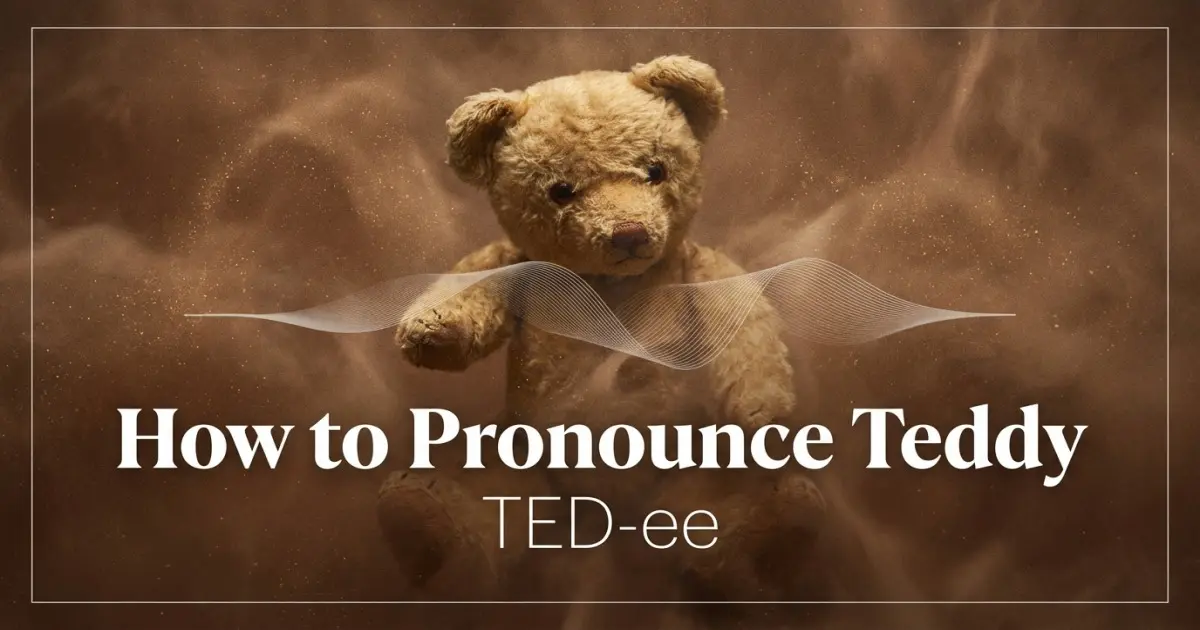
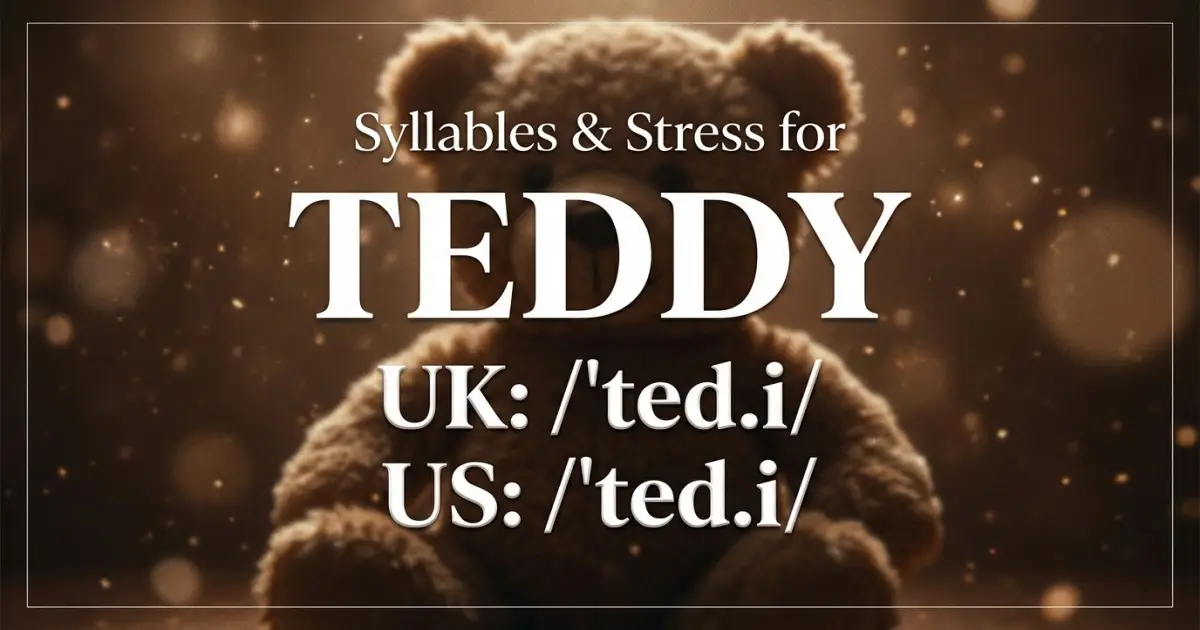
Still, even simple names benefit from being explained clearly. Teddy is often treated as obvious, but “obvious” can hide small differences in stress, vowel quality, and accent. The pronunciation used here is TED-ee, with the IPA given as /ˈtɛdi/ in both U.S. and U.K. reference style. That tells you almost everything you need to know: two syllables, stress on the first, and a light second syllable that keeps the name friendly and easy. The trick with Teddy is not complexity. It is rhythm.
How Teddy is actually said when it moves from paper into speech
Teddy looks straightforward, and in most cases it is. But the details below help explain why it sounds so relaxed in conversation and why it stays easy across accents and age groups.
| Element | Phonetic Detail | Quick Tip |
|---|---|---|
| Everyday pronunciation | TED-ee | Say it in two clean beats, with the first one stronger. |
| IPA (U.S.) | /ˈtɛdi/ | The stress mark before the first syllable shows where the voice should land. |
| IPA (U.K.) | /ˈtɛdi/ | The core pronunciation is the same in both reference styles. |
| Syllable count | 2 syllables | Think of it as a strong opening followed by a light ending. |
| Stress pattern | First-syllable stress | Emphasize TED, not the second half. |
| Final vowel | Long “ee” sound | End lightly and clearly, without turning it into “uh” or clipping it too short. |
Teddy is only two syllables, but the first one does most of the work
The opening sound in Teddy is firm, brief, and easy to hear
The first syllable in Teddy is TED, and it carries the stress. In phonetic terms, it begins with /t/, a voiceless alveolar plosive. That label sounds technical, but the effect is simple: the name starts with a crisp stop of air. It does not slide in. It arrives. Then comes /ɛ/, the vowel English speakers know from words like “bed” and “red.” This is one reason Teddy feels so accessible. Its opening sound pattern belongs to the most familiar part of English speech. Pronunciation lands more fully when the name’s roots and history are already in view, so begin with Teddy meaning.
That first beat matters because it gives the name its shape. If you underplay it, Teddy can sound mushy. If you over-hit it, it can sound scolded rather than spoken. The best everyday version lands somewhere in the middle: clear, friendly, and direct. In natural conversation, people rarely stretch the first syllable. They simply give it enough weight to lead the name cleanly.
The second syllable in Teddy keeps the name warm
The ending -ee is where Teddy softens. Phonetically, it ends in /i/, the close front vowel heard in words like “see.” This matters socially as much as it matters linguistically. Names ending in that bright “ee” sound often register as approachable, affectionate, and easy to repeat. That is part of why Teddy feels so usable in family life and public life at the same time.
Unlike names with heavy consonant endings, Teddy does not shut down abruptly. It tapers. The second syllable should stay lighter than the first, but it should still be audible. You do not want it swallowed into something like “Teddyuh,” nor clipped so tightly that it sounds unfinished. The smoothest version is simply TED-ee, with the second syllable acting as a quick release after the stressed opening.
Why Teddy sounds simple, yet still invites a few predictable pronunciation habits
Most mistakes with Teddy come from rhythm, not from the letters
Teddy does not usually get mangled because the spelling is obscure. The more common issue is misplaced emphasis or a slightly distorted ending. Some speakers flatten both syllables so evenly that the name loses its bounce. Others rush through it so fast that the second syllable almost disappears. In both cases, the fix is the same: restore the contrast between the stronger first beat and the lighter second one.
Another occasional issue comes from over-formality. Because Teddy can be used as a full given name but is also familiar as a shorter form of Theodore or Edward, some speakers unconsciously handle it as though it should sound more ceremonial than it does. But Teddy is at its best when said plainly. It is not a name that benefits from dramatic enunciation.
Accent differences are real, but Teddy stays stable
The reference pronunciation here is identical in U.S. and U.K. IPA: /ˈtɛdi/. That stability is useful. It means the core sound structure does not depend on a major regional shift. In real life, accents may still color the name slightly. An American speaker may soften the d between the vowels in quick speech, producing a gentler middle consonant. A British speaker may keep the consonant a bit more defined. But the name remains unmistakably Teddy either way.
That middle consonant is worth noticing. In careful speech, it is /d/. In very casual American speech, the sound may move toward a quick tap between vowels, which is common in English and does not change the identity of the name. The important point is that Teddy does not depend on a fragile sound distinction. Its overall rhythm is strong enough to survive normal accent variation with ease.
What Teddy does not usually become
Teddy is not typically confused with a name ending in “ay” or “uh,” and that is part of its advantage. The spelling with final -y strongly supports the long “ee” sound for most readers. The more plausible slip is not a different name altogether, but a slightly flatter delivery. That is why Teddy benefits less from spelling guidance than from hearing guidance. Once spoken aloud once, it is usually fixed in memory.
Teddy sits near many familiar English sounds, which is why it is so easy to repeat
The sound neighbors make Teddy feel instantly knowable
Teddy lives in a highly familiar English sound neighborhood. The ted- opening is close to many ordinary English word shapes, and the final -ee ending belongs to a huge family of approachable two-syllable forms. That does not make Teddy generic. It makes it learnable. Listeners do not have to process unusual fricatives, hard consonant clusters, or unstable stress. The name offers a clear consonant, a common short vowel, a medial /d/, and a bright ending. Every piece is accessible. The way the name resolves at the end often decides which short forms feel natural in speech, and that becomes clearer in Teddy nicknames.
That is one reason Teddy can sound youthful without sounding flimsy. Linguistically, it is soft around the edges but structurally solid. The opening plosive gives it shape. The final vowel gives it warmth. Together they produce a name that feels friendly from the first hearing.
Practice lines that make Teddy feel natural at speaking speed
The best way to confirm pronunciation is to place the name inside ordinary speech. Try these at a normal pace:
“Teddy, your turn.”
“I met Teddy this morning.”
“Teddy will be here after lunch.”
These work because they force the name into real conversational rhythm. If the first syllable is clear and the second stays light, the name will sound right without effort. You can also try contrast practice: say “TED-ee” once slowly, then once at the speed you would naturally use in a sentence. The faster version should still keep the first syllable in charge.
Why Teddy keeps its pronunciation advantage in real life
Some names look good in theory but require constant correction in the wild. Teddy has the opposite gift. It is readable, memorable, and easy to say across generations. Children can manage it early. Adults can say it without stumbling. Teachers, relatives, and strangers are unlikely to need multiple repetitions. Even when accent shades the consonant slightly, the structure remains intact: TED-ee, two syllables, stress first.
That practical ease is part of what gives Teddy its staying power. It sounds warm, but not vague. Familiar, but not empty. It can appear on a birth announcement, a classroom roster, or a business card and keep the same basic spoken identity. For a pronunciation page, that is the real conclusion: Teddy does not ask much from the speaker. It simply rewards saying it with confidence and the right rhythm.