
Nicknames for Teddy: Memorable Short Forms with Personality

A nickname is never just a shorter sound. It is a social signal, the version of a name that tells you how close someone is allowed to come. Parents use one form when affection softens the room. Grandparents drift toward another. Classmates and teammates choose the quickest version that can survive motion, noise, and repetition. Later, the person carrying the name begins deciding which form feels most like the self he wants the world to meet. That is why nickname culture matters. It shows how a name behaves under intimacy, speed, and personality.
Teddy is unusually interesting because it already lives in that intimate zone. Official data shows Teddy ranked No. 898 for boys in the United States in 2024, which means it is recognized, but still uncommon enough to feel like a deliberate choice. More importantly, Teddy is one of those names that already sounds halfway between a public name and a family nickname. It is warm, bright, and emotionally close from the first moment. That changes the whole nickname landscape. People are not trying to rescue Teddy from formality. They are deciding whether to clip it into something brisker, soften it into something more domestic, or leave it exactly as it is because the full form already feels human-sized. Nicknames add personality at the surface, but the deeper weight of the name still sits in Teddy meaning.
What Teddy becomes once people start using it from different distances
Teddy does not produce a huge jungle of nicknames, but the forms it does create are clear, believable, and socially distinct. That is part of its strength. The field is smaller than it would be for a longer formal name, but richer than it first appears.
| Group | Suggested Nicknames | Persona | Use Context |
|---|---|---|---|
| Classic clipped forms | Ted, T | Steady, practical, more grown | School, work, sports, quick introductions, adult use |
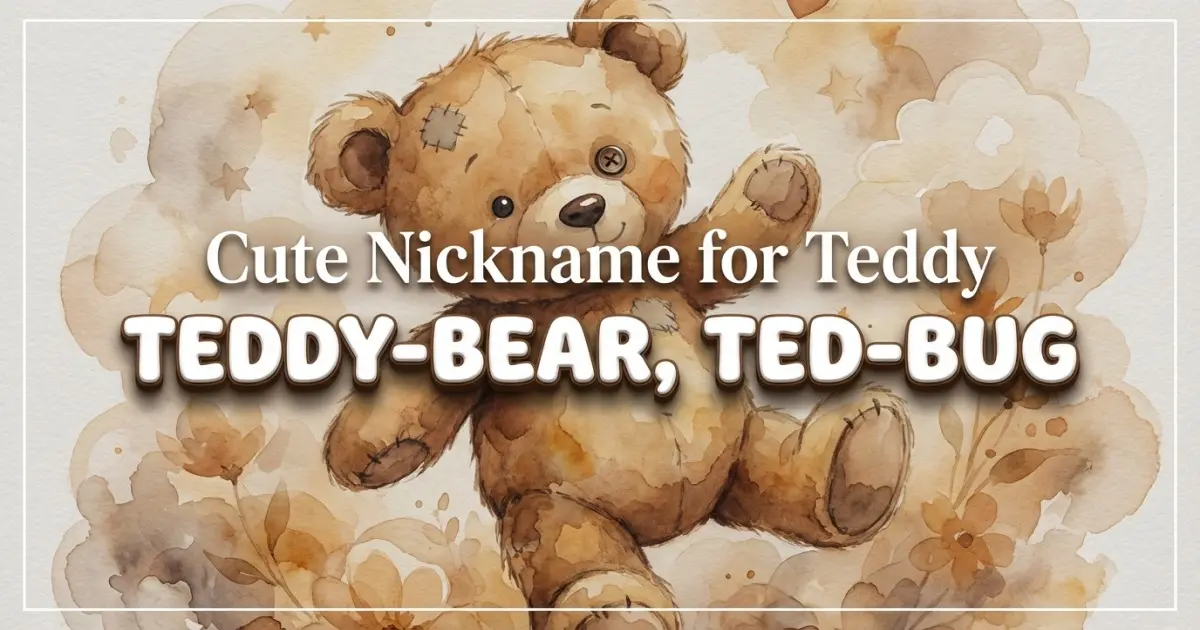
| Warm childhood forms | Ted-Ted, Teddy-Bear | Affectionate, bright, family-centered | Toddler years, home life, grandparents, bedtime routines |
| Peer-shaped casual forms | Teds, Tedsie | Friendly, playful, informal | Friends, teammates, school years, college circles |
| Playful DIY forms | Tedster, T-Bear | Humorous, personality-driven, situational | Close family, sports teams, joking friend groups |
| Full-name holdout | Teddy | Warm, complete, old-soul | Public use, family life, self-introduction, all ages |
Teddy is already nickname-shaped, and that changes what shortening means
Some names begin as formal structures and only become intimate later. Teddy works in reverse. It arrives already carrying softness and familiarity, which means any further nickname has to do a very particular job. It either makes the name brisker, more private, or more playful. It rarely makes it more lovable, because Teddy already took care of that.
Why Teddy often stays Teddy in public life
Teddy is only two syllables, easy to pronounce, and immediately recognizable. Research suggests that names with this kind of compact rhythm often remain unshortened because they are already efficient in speech. That is especially true here. Teddy is not difficult to say in a classroom, on a sports roster, or in an email signature. It does not need trimming to function.
That is a major reason many families simply keep Teddy as Teddy. The full form already sounds friendly on a child and socially usable on an adult. In that sense, the full name behaves almost like a nickname that became strong enough to stand on its own.
Why people still reshape Teddy anyway
Even when a name is short, affection changes language. Naming guidance often notes that friends and family naturally shorten multi-syllable names, but nicknames do not always come from pure shortening. Sometimes they come from repetition, personality, household habit, or team culture. Teddy is a perfect example. A parent may use Teddy in public, but drift into Ted-Ted at home. A coach may reach for Ted for speed. A group of friends may produce Teds because that is how familiarity tends to make language looser and more insider-coded.
So the question with Teddy is not whether it has nicknames. It is what kind of closeness each version represents.
Teddy really has two sound zones, and most practical nicknames come from the front
Teddy is too short to divide into three equally strong nickname zones the way a longer name can. There is no independent middle engine here. The opening and the stressed center are basically the same place, while the ending supplies softness more than it creates separate public identities. That structure makes the nickname behavior of Teddy highly readable.
The opening of Teddy gives you the strongest everyday form
Ted is the clearest clipped form because it keeps the stressed opening intact. The first syllable already carries the name’s identity, so shortening to Ted feels natural rather than abrupt. It also changes the social tone immediately. Teddy sounds warmer and younger; Ted sounds plainer, steadier, and more adult. That does not make one better than the other. It simply shows how much weight the final -ee sound is carrying in the full form.
This is why Ted is the nickname most likely to survive introductions, email signatures, team rosters, and adult work life. It is compact enough to move quickly, but still strongly linked to the original name.
The stressed center of Teddy does not split off into its own lane
Because the name is so short, there is no separate middle zone producing an alternate identity. The strength of Teddy is concentrated up front. That is actually an advantage. It keeps the nickname landscape from becoming messy. The public choices remain clear: Teddy if you want warmth, Ted if you want brevity and slightly more edge. These nickname choices read more clearly once the spoken shape of the full name is in view, so see how to pronounce Teddy.
For many families, this clarity is part of the appeal. The child is unlikely to end up with an unrelated nickname that feels disconnected from the original name unless peers or circumstance invent one later.
The ending of Teddy creates softness rather than strong public nicknames
The final -ee sound is doing emotional work. It is what makes Teddy feel affectionate and approachable. But it does not usually produce a powerful standalone public short form of its own. Instead, it tends to feed repetition and pet-name logic. That is why forms such as Ted-Ted or Teddy-Bear feel natural in family life. The ending makes the name easy to repeat, soften, and cuddle into speech.
In other words, the front of Teddy makes the name usable. The end of Teddy makes it lovable. Both matter, but they matter in different social settings.
Why Teddy changes nickname style more by age than by structure
Because Teddy is already such a complete small name, its nickname story tends to shift with life stage rather than with pure name mechanics. The same child may move through several forms without ever abandoning the original identity.
Teddy in the early years often becomes doubled or softened
For babies and younger children, forms like Ted-Ted and Teddy-Bear are especially believable. They sound like what they are: names shaped by repetition, affection, and the intimacy of home. These are not meant for the boardroom. They are meant for bedtime, grandparents, siblings, and the years when a child’s name is spoken more as affection than as address.
This is also the age when a family might use something highly private and fleeting, such as T-Bear. The important thing is not whether it looks elegant in print. The important thing is whether it sounds like a real household.
Teddy in school years usually begins to split into Teddy and Ted
As children move into wider social life, nicknames often simplify. That is when Ted becomes more plausible, especially in sports, among peers, or in any environment where speed matters. At the same time, many children will remain Teddy everywhere because the full name is already short. This split often depends on temperament as much as on phonetics. A child may like the softer warmth of Teddy, or may lean toward the cleaner edge of Ted as he gets older.
Peer culture can also create forms like Teds or Tedsie. These sound more group-generated than parent-generated. They are believable because nicknames in school and team life often add an -s or playful suffix to create familiarity without changing the root too much.
Teddy in adulthood often chooses between Teddy and Ted
By adulthood, the most durable split is simple: Teddy for those who want to keep the warmth of the full name, and Ted for those who prefer something plainer in public life. Both are plausible. That is one of the best things about the name. Teddy does not collapse under adult use, but it does offer an easy exit into Ted if the bearer wants a slightly more restrained social version.
This dual track is part of what makes the name age well. It gives the child room to decide whether his adult identity feels more tenderly distinctive or more classically clipped.
Where Teddy feels classic, cute, or clearly homemade
Not every nickname for Teddy belongs to the same emotional category, and it helps to separate the durable from the deeply private.
Classic Teddy nicknames are the ones that survive introductions
Teddy itself belongs here first, because it is already a recognized public name. Ted belongs here too. These are the forms that can move through school, formal use, and adulthood without much friction. They sound real because they are.
Cute Teddy nicknames work best when they stay relational
Ted-Ted and Teddy-Bear are warm precisely because they do not try to do too much. They belong to family life. They sound like closeness, not branding. That is why they work.
DIY Teddy nicknames need to sound like speech, not strategy
This is where restraint matters. Teds works because it sounds like something a friend group would actually say. Tedster works because it has the familiar joking shape of many light social nicknames. T-Bear can work when it clearly belongs to family play. But anything more elaborate risks sounding less like a nickname and more like a character concept. Teddy already has plenty of personality. The best DIY forms simply nudge it, rather than rebuilding it.
The Teddy nickname cautions are gentle, but they still matter
- If you strongly dislike Ted, remember that it is the most natural clipped form and other people may reach for it.
- Teddy-Bear is affectionate and highly plausible in family life, but it is usually a household name rather than a lasting public identity.
- Teds and Tedster are believable in friend groups, but they tend to be socially selective rather than universal.
- Because Teddy is already nickname-like, forcing extra nicknames too early can feel unnecessary. Sometimes the full name is already doing everything it needs to do.
- Age matters. A form that sounds perfect at two may not be the one the child wants at sixteen.
Why Teddy does not need a huge nickname field to feel emotionally rich
The real strength of Teddy is not that it becomes many radically different things. It is that the forms it does produce belong to clear human distances. Teddy is warm and public. Ted is shorter and more grown. Ted-Ted is purely affectionate. Teds is social and peer-shaped. That is enough to give the name a real emotional range.
In the end, Teddy behaves like a strong affectionate name should. It remains usable in full, but leaves just enough room for family tenderness, peer shorthand, and adult self-editing. The best nickname is usually not the cutest or the most inventive one. It is the one that sounds true to the voice using it and the life stage it belongs to. With Teddy, that truth is usually easy to hear.
Shortening Teddy: FAQ
Does Teddy really need a nickname?
Usually not. Teddy is already short, warm, and complete enough for everyday public use. Its nicknames tend to come from affection or peer culture rather than necessity.
Is Ted the most natural nickname for Teddy?
Yes. Ted is the strongest clipped form because it keeps the stressed opening of Teddy and gives the name a slightly more adult, practical feel.
Are forms like Teddy-Bear or Ted-Ted too childish?
They are usually childhood- and family-centered rather than public, but that is exactly where they work best. Their value is intimacy, not broad social use.
Can Teddy stay Teddy in adult life?
Yes. One of Teddy’s advantages is that the full form is already recognized and usable. Some adults may shift toward Ted, but others can comfortably remain Teddy without sounding out of place.