
Sylvia Name Meaning: Its Roots, Symbolism, and Lasting Identity
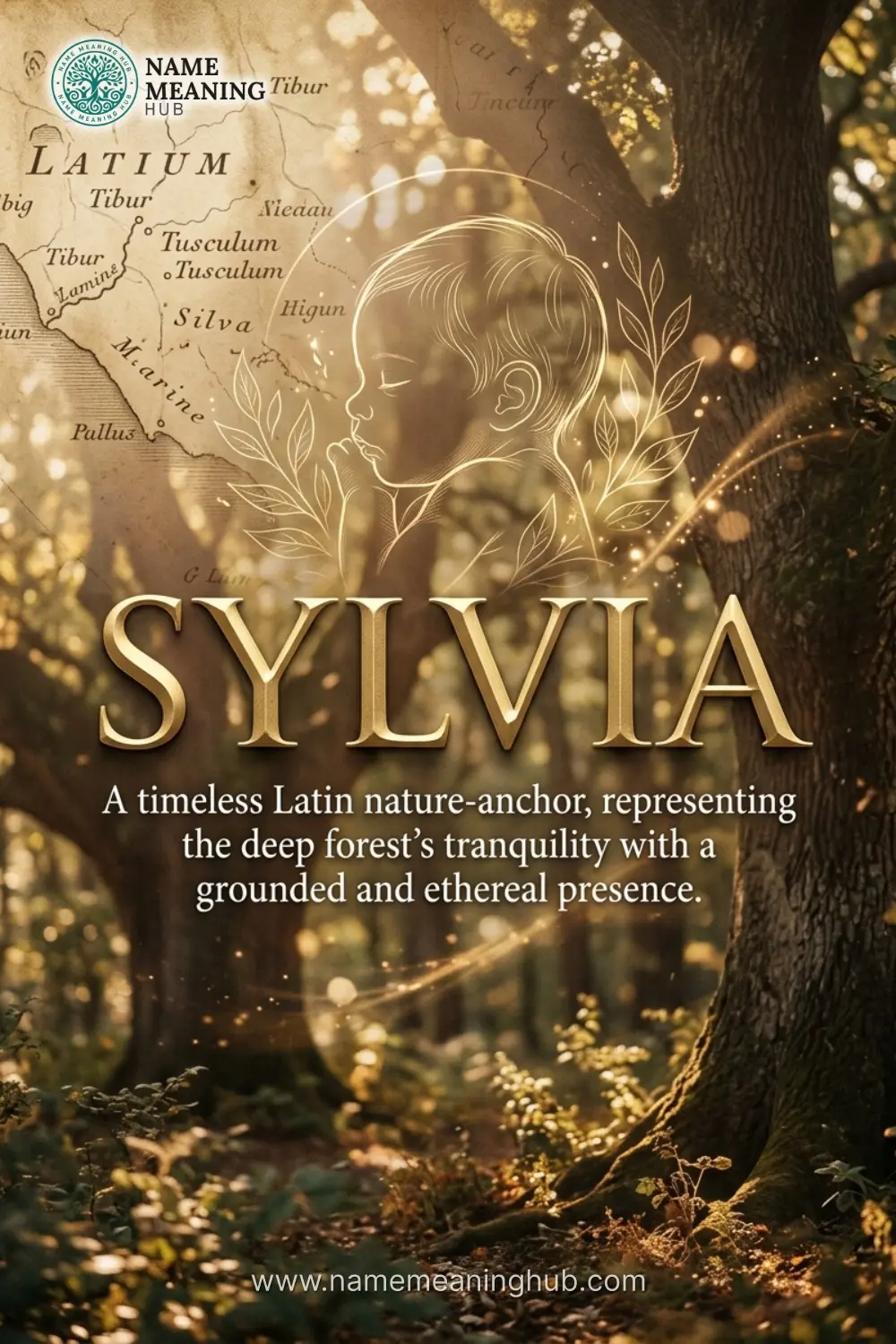
Sylvia is one of those names that seems calm on the surface because it has already done the work of becoming durable. It does not arrive like a novelty. It arrives like a landscape people have known for a long time. Its meaning, “from the forest,” places it inside one of the oldest naming territories there is: woods, trees, shelter, shade, and the sense that human life begins not in abstraction, but in relation to the living world around it. Yet Sylvia does not sound wild. That is what makes the name so interesting. It takes the forest and gives it form. It turns a place of growth and depth into something composed enough to wear every day.
That balance is what has kept Sylvia alive across centuries. In naming references, the name is consistently traced to Latin silva, “woods” or “forest,” and one guide notes that Sylvia was already a familiar name in Roman times because it belonged to the mother of Romulus and Remus, the legendary founders of Rome. That detail matters. Sylvia is not merely a nature name. It is a nature name that entered public history early and stayed there. The result is a rare combination: a name that feels literary without becoming brittle, natural without becoming rustic, and classical without becoming stiff. Sylvia is the forest remembered by civilization rather than left outside it.
Sylvia's U.S. popularity rank over time, 1880–2024
Popularity statistics are based on official data from the Social Security Administration baby name records.
Sylvia: A Classic Pillar with a Renewed Presence
Sylvia presents a chart pattern of a broader past with a clearer present, reflecting high naming momentum in the early 20th century that now offers the name renewed force. This choice often reflects a preference for “heritage classics” that feel polished but still offer an easy rhythm .
The name has resisted broad crossover shifts, maintaining a stable center in its primary lane. Meaning “from the forest,” its three-syllable structure carries a sense of character-rich nature texture.
Sylvia in the facts that still make the name legible
| Key Facts | Information | Quick Insight |
|---|---|---|
| Name | Sylvia | The form feels established and literary, which helps the name sound rooted rather than trend-driven. |
| Primary usage | Female | Its current social identity is clearly feminine, but the woodland meaning gives it more depth than a purely decorative choice. |
| Origin | Latin | The Latin base gives Sylvia its classical steadiness and explains why the name has traveled so well across languages and eras. |
| Meaning | From the forest | This meaning gives the name more than natural charm. It ties Sylvia to place, rootedness, and an older sense of human belonging. |
| Pronunciation | SIL-vee-uh | The clear three-syllable pattern keeps the name graceful while still feeling easy in everyday speech. |
| IPA | US: /ˈsɪlviə/ · UK: /ˈsɪlviə/ | The broad sameness across accents helps Sylvia remain stable and recognizable in both formal and casual life. |
| Syllables | 3 | Three syllables give the name a little more breadth than shorter woodland names, which adds to its classic feel. |
| U.S. girls’ rank (2024) | No. 361 | Official data shows a name that is known and revived enough to feel current again, but not so common that it loses its individuality. |
Sylvia carries the woods into language
The first thing that makes Sylvia unusual is that its forest meaning does not sound raw. Many modern nature names emphasize directness. They sound like trees, flowers, rivers, or seasons with very little cultural filtering in between. Sylvia is different. The forest is still there, but it has already been translated into language, literature, and social memory. That is why the name feels so composed. It does not point toward wilderness in a loud way. It carries woodland depth in a civilized register.
This distinction matters more than it may seem. A name that means “from the forest” can suggest different things depending on the form it takes. In some names, the forest feels dark, enchanted, or rough. In Sylvia, it feels cultivated, shaded, and enduring. The trees behind the name are not merely decorative. They suggest age, continuity, and an older relationship between people and the natural world. There is a sense of rootedness in Sylvia that goes beyond prettiness.
That rootedness also helps explain why the name sounds steadier than many names that occupy similar feminine territory. Sylvia is gentle in the ear, but not flimsy. It has a real object behind it. Woods are not passing images. They are environments, ecosystems, and places that outlast individual human moods. Names tied to that kind of landscape often carry more endurance than they first appear to.
It is also worth noticing that Sylvia does not isolate one flower or one tree. It names the forest as a whole. That gives it broader imaginative space. A rose is one thing. A willow is one species. A forest is a world. This makes Sylvia feel larger than many botanical names, even though the name itself remains elegant and manageable.
Why Sylvia feels classical without sounding remote
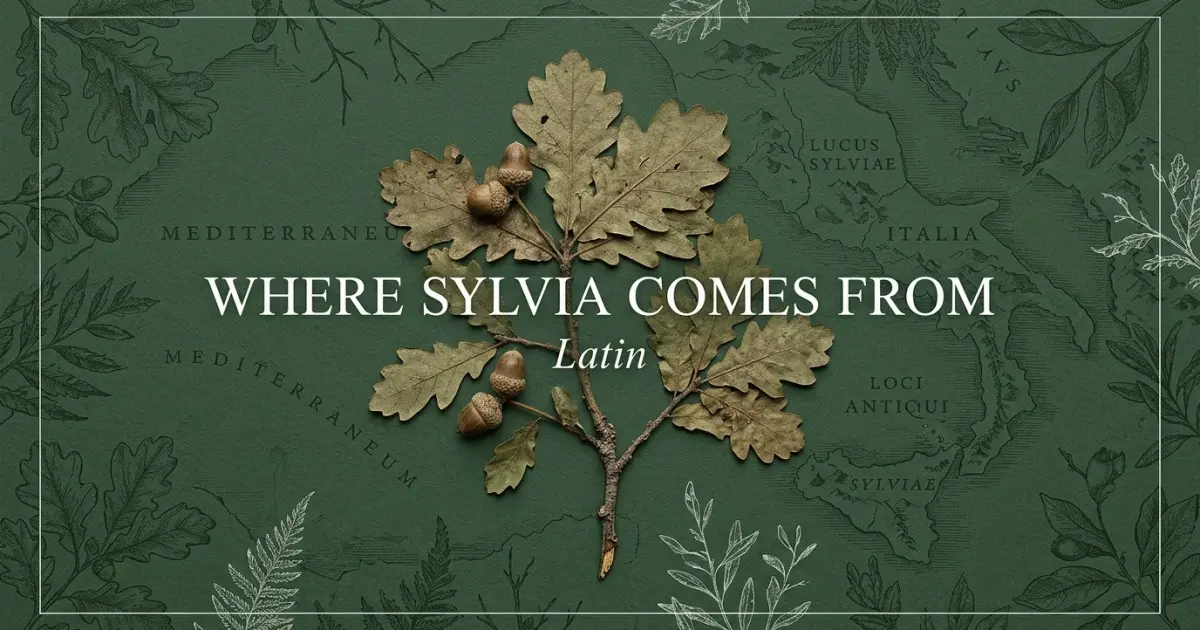
Reference works consistently connect Sylvia to Latin silva, and that Latin lineage explains a great deal about the name’s tone. Latin-rooted names often carry a certain architectural quality. Even when they are soft in sound, they feel built rather than improvised. Sylvia has that quality. It sounds finished. The form is balanced, the stress pattern is stable, and the meaning is clear enough to deepen the name without weighing it down.
Sylvia was already old when many modern names were still unborn
One naming guide notes that Sylvia was a popular name in Roman times because it was the name of the mother of Romulus and Remus, the founders of Rome. That historical anchor matters because it places Sylvia unusually early in the recorded life of women’s names still in modern use. The name does not merely feel classical in the vague sense of sounding old. It has an actual place inside the remembered world of Rome.
This is one reason Sylvia carries gravity so quietly. It does not need dramatic mythic styling to sound significant, because historical memory has already done that work. Yet the name remains fully usable because the form is not cumbersome. It has history without weightiness, which is a rare thing.
Sylvia became literary because the form invited it
The classical base also helped Sylvia move into literature. A name tied to woods and already stabilized in Latin was especially suited to poetry, drama, and romantic writing. Even without citing any single literary figure, it is easy to hear why the name would survive in books. Sylvia has a softness that welcomes lyric use, but also enough structure to avoid dissolving into sentiment. That balance has allowed the name to feel serious and beautiful at the same time.
This literary air is part of what still distinguishes Sylvia from some newer nature names. It sounds as though it has already passed through pages, not just gardens. That gives the name a second kind of depth: not only place, but language.
Sylvia and Sylvie reveal two ways of carrying the forest
Modern naming culture often hears Sylvia beside Sylvie, and the contrast is useful. Naming references explicitly treat Sylvie as a French form or diminutive form of Sylvia, both ultimately linked to Latin silva. That relationship is revealing because it shows how one root can produce very different social impressions while keeping the same woodland meaning.
Sylvia is the fuller, more classical form. It sounds more formal, more literary, and slightly more architectural. Sylvie, by contrast, feels brighter, lighter, and more intimate. Parents choosing between them are not choosing between two unrelated names. They are choosing between two different registers of the same forest inheritance.
This comparison helps clarify Sylvia’s special value. It preserves the depth of the root while keeping a stronger sense of historic continuity than the lighter French form. Sylvia does not feel severe, but it does feel complete in a more formal way. For parents who want a woodland name with genuine classical footing, Sylvia often carries more authority.
At the same time, the existence of Sylvie and related forms such as Silvia helps keep Sylvia from sounding fossilized. It belongs to a living family of names, not to a museum case. That family resemblance keeps the name fresh by reminding listeners that its root still has room to move.
Sylvia sounds rooted because the sound itself is well built
Phonetically, Sylvia is a good example of how structure can create elegance. The first syllable, SIL, is clear and slightly firm. The second, -vee-, gives the name brightness and lift. The third, -uh, softens the ending without letting it disappear. The result is a name that feels composed rather than ornate.
The opening consonants do quiet but important work. The s begins softly, while the liquid l makes the first syllable flow rather than stop abruptly. The central v adds enough edge to keep the name from becoming too airy. Then the last syllable relaxes. This combination is part of why Sylvia sounds feminine without sounding fragile. There is always a little framework inside the softness.
The fact-packet pronunciation also shows a useful practical strength: the broad pronunciation is the same in American and British English. That stability matters. It means Sylvia can travel easily through English-speaking life with very little correction or friction. For a classical name, that kind of modern usability is a major advantage.
Another part of the name’s appeal is that it sounds more expansive than very short names, but not as formal as many other three-syllable classics. It occupies an unusually graceful middle. This helps explain why Sylvia can feel both old and surprisingly contemporary when it returns.
Sylvia belongs to the present because its oldness is usable
Official Social Security Administration (SSA) data shows Sylvia ranked No. 361 for girls in the United States in 2024. That is a telling position. The name is clearly known, clearly revived enough to feel visible, but not so frequent that it has flattened into the background. This is often where a classical name does its best work. It has enough familiarity to feel safe, enough distinctiveness to feel chosen, and enough history to outlast sudden shifts in taste. To discover related options in this naming space, explore girl baby names.
Its current appeal is not hard to understand. Parents increasingly want names that sound grounded, literary, and meaningful without becoming cumbersome. Sylvia does that unusually well. It is a nature name, but not a trendy one. It is a Latin name, but not an overly ornate one. It is vintage-adjacent, but not brittle. That combination makes it appealing to families who want a name with soul and history rather than just surface style. If the origin of Sylvia is part of its appeal, you may also like names by origin.
Sylvia also fits into the broader return of names that feel both botanical and classical. As trends move beyond blunt word-names and toward forms with more linguistic depth, Sylvia benefits. It gives the woods, but through centuries of use. That often feels richer than a more literal nature choice.
The next questions families usually ask once Sylvia feels right
What kind of middle names help Sylvia sound warmer, sharper, or more personal?
Because Sylvia already has a complete classical shape, the middle name often becomes the place where parents decide whether the full name leans more literary, more family-rooted, or more modern in contrast. If you want the full pairing logic behind that contrast, see middle names for Sylvia.
Will Sylvia naturally shorten into nicknames, or does it usually stay whole?
Sylvia can remain whole very comfortably, but it also belongs to a family of familiar shortened and related forms, which gives it real private flexibility without weakening the public form. To see how those different moods shorten in real life, explore Sylvia nicknames.
Is Sylvia easier to carry than some other Latin-rooted classics?
Yes. Its pronunciation is stable, its spelling is familiar, and its three-syllable pattern is smooth enough to feel graceful without becoming cumbersome. For the detailed stress pattern, accent notes, and IPA, see Sylvia pronunciation guide.
Why Sylvia still sounds like the forest made civilized
What finally distinguishes Sylvia is not simply that it means “from the forest.” It is that the name translates the forest into a human register without draining away its depth. The woods remain present in the meaning, but the sound of the name turns them into something livable: shade without gloom, growth without chaos, rootedness without heaviness.
That is why Sylvia can feel at once natural and literary, old and newly available. It is built on an image large enough to outlast fashion, yet shaped into a form gentle enough for daily use. The forest behind the name is not wildness for its own sake. It is continuity, memory, and a sense of belonging inside something older than the self.
In the end, Sylvia is not merely a classic woodland name. It is the name of a landscape that has already passed through history, language, and story. That is why it sounds so calm. Sylvia does not need to prove its depth. It already carries a forest within it, and it wears that inheritance with remarkable ease.