
How to Pronounce Shane: How to Say It Clearly and Naturally
The clearest place to hear how Shane is pronounced is in a room where no one has time to be uncertain. A teacher pauses over the attendance sheet on the first morning of class. A coach calls players from the edge of a field. A nurse steps into a waiting room and says a name once, expecting it to land immediately. Shane survives those moments well because it is compact, familiar, and acoustically efficient. It does not ask the speaker to search for a second syllable, guess where the stress belongs, or negotiate between multiple likely readings. It arrives in one clean movement.
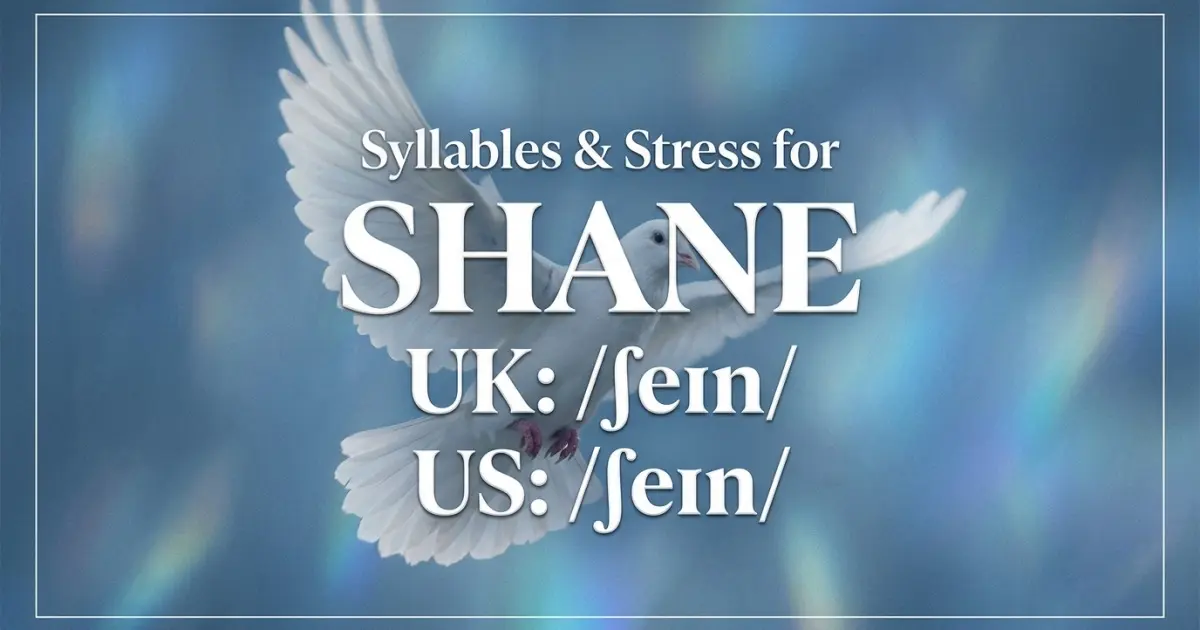
That matters because Shane is one of those names whose simplicity can hide how carefully built it really is. The everyday guide is SHAYN. The U.S. IPA is /ʃeɪn/, and the U.K. IPA is also /ʃeɪn/. In both cases, the same basic facts hold: one syllable, one stress, one long vowel glide, and one neat consonant ending. Shane sounds plain only because it is well made. The name is smooth enough to feel effortless, but structured enough to feel memorable.
What Shane is really doing when people say it aloud
| Element | Phonetic Detail | Quick Tip |
|---|---|---|
| Everyday pronunciation | SHAYN | Say it in one clean beat, without adding any extra vowel at the end. |
| U.S. IPA | /ʃeɪn/ | The vowel is a diphthong, so it moves slightly, like the sound in “day.” |
| U.K. IPA | /ʃeɪn/ | British and American pronunciation match closely, which makes Shane unusually stable across accents. |
| Syllable count | 1 syllable | Shane should feel quick and self-contained, never stretched into two beats. |
| Stress | Full stress on the only syllable | The entire name carries its own emphasis naturally, so there is no internal stress decision to make. |
| Opening consonant | Sh begins with a voiceless fricative | Let the opening flow softly rather than hitting it too hard. |
| Vowel movement | ay glide | Keep the vowel open and smooth, not flat or shortened. |
| Ending | Final n close | Finish cleanly without swallowing the last consonant. |
Shane is one syllable, and that single beat does all the work
The first thing to understand about Shane is that it is fully one syllable. That may sound too obvious to matter, but it explains almost everything about the name’s social effect. One-syllable names tend to feel direct, self-possessed, and easy to remember because they arrive all at once. There is no buildup and no trailing second beat. Shane belongs to that category, and that is part of why it sounds so clean in everyday life. The sound matters more once you know what the name is meant to carry, which is why the wider frame starts in Shane meaning.
Why one-syllable names feel so decisive
Because Shane has only one syllable, the stress is automatic. No speaker has to decide where the emphasis should go. The name carries its full weight in a single unit. That gives it clarity. It also gives it a certain calm authority. Names with multiple syllables sometimes sound more decorative because they have to unfold. Shane simply lands. That is one reason it feels modern even though its lineage is much older.
This compact structure also means there is very little slack inside the pronunciation. Every sound matters. The opening sh begins softly, the long vowel opens the name, and the final n closes it without harshness. Nothing is ornamental. That economy is one of Shane’s strongest assets.
How the sounds keep Shane from feeling blunt
Although Shane is short, it does not sound hard-edged. The opening consonant is a fricative rather than a stop, which means the name starts in airflow instead of impact. Then comes the long ay sound, which broadens the name and gives it light. The final n provides closure without the clipped sharpness of a final t or k. This is why Shane can feel masculine and compact without sounding severe. The sound pattern is smooth, not aggressive.
Shane stays remarkably stable across accents
Many names change color when they move between American and British English. Shane changes very little. The IPA is the same in both forms here, and that reflects how the name behaves in real speech. Individual speakers may tint the vowel slightly, or use a lighter or heavier final n depending on region, but the structure remains intact. Shane stays Shane.
What may vary a little from speaker to speaker
The most likely variation is not in syllable count or stress, but in the exact shape of the diphthong. Some speakers make the ay slightly brighter or longer. Others keep it tighter. But these are fine shades, not major differences. The name still sounds like one smooth unit with the same opening and same finish.
This is useful practically. A name that stays stable across accents tends to move well through different schools, workplaces, countries, and social circles. People do not need much coaching once they have heard it. Shane benefits from that stability more than many short names do.
Why this consistency matters in public life
When a name is stable across accents, it often feels more socially secure. It reduces correction fatigue. It also helps the name sound familiar even to listeners who have never met someone with that exact name before. Shane has that advantage. It is short, easy to hear, and resistant to distortion. The result is a name that feels low-friction in the best way.
Where Shane gets mispronounced, and how to keep it natural
Because Shane looks simple, most mistakes come from overhandling it rather than misunderstanding it. People sometimes flatten the vowel, add an extra sound, or blur the ending in fast speech. None of these errors are difficult to fix, but they do change the feel of the name.
Mistake pattern one: flattening the vowel
The vowel in Shane should move. It is not a short flat e. It is the same general vowel glide English speakers hear in words like “day” or “lane.” If that glide disappears, the name begins to lose some of its openness. A flatter version can sound less natural and less polished.
Mistake pattern two: adding an extra vowel at the end
Some speakers, especially when trying to over-enunciate, may accidentally let the final n open into a second beat, almost as if the name were “Shay-un.” That is not how Shane works. The final consonant should close the name in the same syllable. The whole point is that the pronunciation arrives in one breath.
Mistake pattern three: swallowing the final consonant
The opposite problem also happens. A speaker may start the name clearly but fail to articulate the ending, producing something closer to “Shay.” That can make the name sound unfinished. The final n is not heavy, but it matters. It gives the name its shape and stops the long vowel from floating away.
Shane becomes easiest when heard inside ordinary speech
One reason Shane is such a usable name is that it fits naturally into everyday English rhythm. It does not need a special setup or careful pacing. In fact, it often sounds most correct when spoken inside normal sentences rather than isolated too dramatically. That is how most people will hear it in real life anyway.
Useful sound neighbors for Shane
If someone needs a quick guide, it can help to think of Shane as living near words like “chain” without the initial ch, or “lane” with a different opening consonant. Those are not perfect substitutes, but they place the vowel and one-syllable closure in the right zone. The key is still the same: smooth opening, long glide, clean final n. The way the name resolves at the end often decides which short forms feel natural in speech, and that becomes clearer in Shane nicknames.
Practice Shane in full lines
Try these aloud:
“Shane, your table is ready.”
“Please welcome Shane.”
“I’m here to meet Shane.”
“Shane will call you back this afternoon.”
Each line reinforces the same pattern. Say the name once, in one beat, with a clear vowel and a clean final consonant. That is all Shane needs. Its strength lies in how little has to be added.