
How to Pronounce Rosalina: How the Name Is Usually Said
The real pronunciation test for a name rarely happens in a quiet room with a phonetic guide nearby. It happens in motion: a teacher reading the class list for the first time, a receptionist calling into a waiting room, a grandmother sounding out the name from a birth announcement and hoping to get it right before anyone has to correct her. Rosalina is exactly the kind of name that creates a pause of admiration followed by a quick practical question. People can tell immediately that it is beautiful. What they want to know next is where the stress belongs, whether the middle stays soft, and whether the ending should glide or stop.
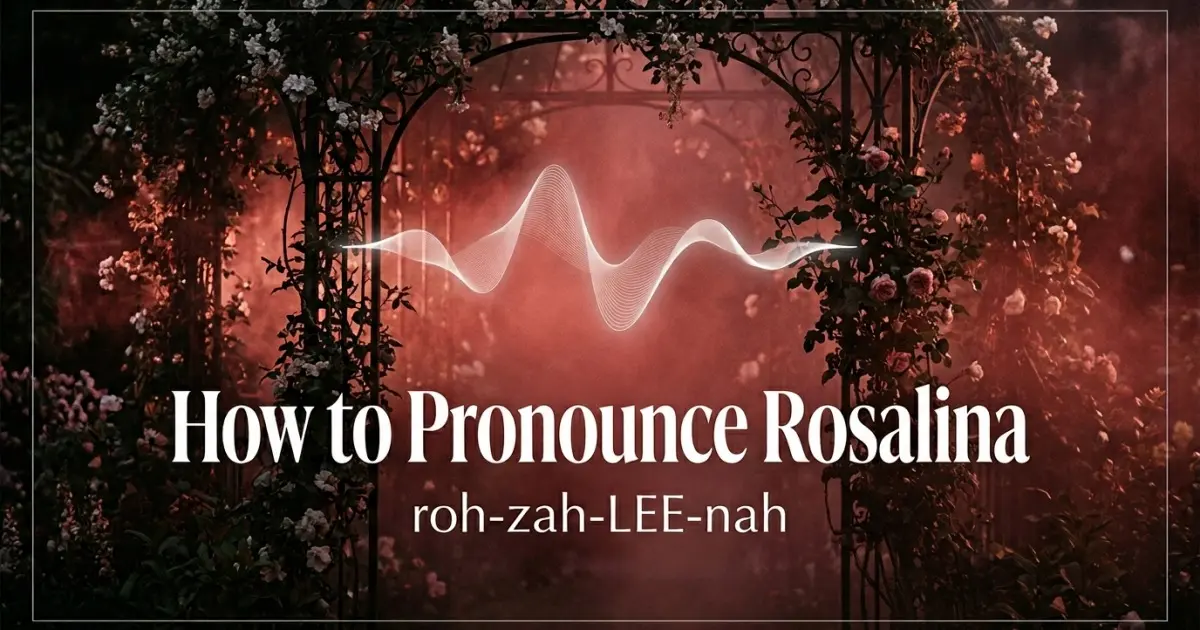
That is why Rosalina is best understood as a name with a clear internal architecture. It is not hard because it is foreign-looking or crowded with unusual letters. It is hard only when the speaker does not hear its shape. In everyday English, the reliable guide is roh-zuh-LEE-nuh. The name has four syllables, but the third is the true center of gravity. Once that middle syllable is stressed correctly, the whole line falls into place. Official American and British pronunciation guidance supports the same broad structure, which makes Rosalina easier to carry across accents than many people first assume.
What people are really listening for when they ask how Rosalina is said
| Element | Phonetic Detail | Quick Tip |
|---|---|---|
| Everyday pronunciation | roh-zuh-LEE-nuh | Keep the first two syllables light, stress the third, and let the last syllable soften the landing. |
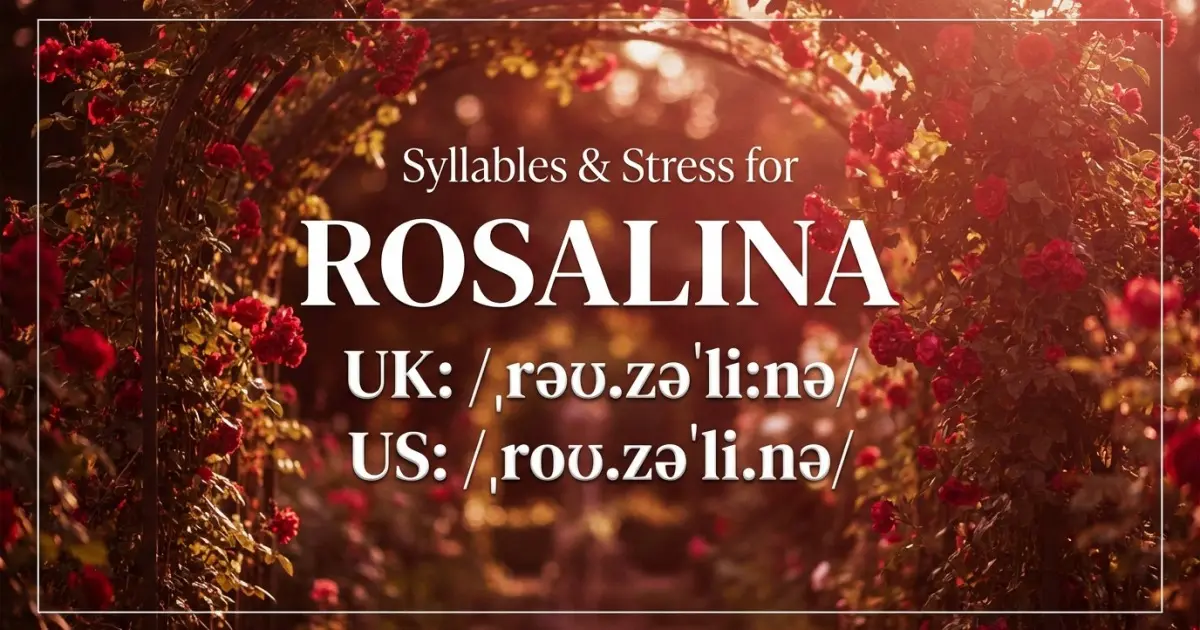
| US IPA | /ˌroʊzəˈliːnə/ | The primary stress mark before liː shows that the third syllable carries the main emphasis. |
| UK IPA | /ˌrəʊzəˈliːnə/ | The British form keeps the same rhythm, with only a slight difference in the opening vowel quality. |
| Syllable count | 4 syllables | Do not compress Rosalina into three beats. It sounds most natural when all four syllables are heard. |
| Stress pattern | Light-light-strong-light | The third syllable is the peak of the name. Everything before it leads there. |
| Opening sound | /roʊ/ or /rəʊ/ | Begin with a smooth “roh,” not a clipped “rah” and not a fully flattened “row.” |
| Middle transition | /zə/ | The second syllable should stay light and quick, almost like a bridge into the stressed center. |
| Core stressed syllable | /liː/ | The name brightens on “LEE.” This is the part listeners remember most clearly. |
| Ending sound | /nə/ | The last syllable is soft and unstressed, closer to “nuh” than a heavy “nah.” |
Rosalina sounds graceful because the stress arrives late
The easiest way to pronounce Rosalina correctly is to understand that the name is built to rise. It does not begin with its strongest sound. Instead, it opens gently, moves through a soft middle, and blooms on the third syllable. That delayed stress is one of the reasons the name sounds elegant rather than abrupt. It behaves more like a melodic phrase than a clipped label. Before focusing only on syllables and stress, it helps to step back into the fuller frame of Rosalina meaning.
The first syllable of Rosalina should open smoothly
The first syllable is roh. In American English, it is usually heard as /roʊ/, while in British English it often shades toward /rəʊ/. For everyday purposes, both are close enough to think of as “roh.” The key is smoothness. Rosalina should not start with a hard attack. The opening is rounded and gentle, which prepares the ear for the longer musical line that follows.
This first syllable also carries only secondary emphasis at most. It matters, but it is not the star of the name. Speakers who make the opening too forceful can accidentally flatten the entire rhythm.
The second syllable of Rosalina is a bridge, not a spotlight
The second syllable, zuh, is often where overcareful speakers go wrong. Because Rosalina is long and elegant, some people assume every syllable must be given equal weight. But the second syllable should stay light. Its job is to connect the opening to the stressed center. It should not slow the name down or turn it into a sequence of four equal beats.
That soft middle bridge is what keeps Rosalina from sounding stiff. It lets the name move naturally toward its peak.
The third syllable is where Rosalina becomes itself
The core of the name is LEE. This is the syllable that carries the primary stress in both the American and British forms. It is long, bright, and clear. If the speaker gets this syllable right, Rosalina usually sounds correct even if the accent colors the surrounding vowels slightly differently.
This matters because long names often depend on one syllable doing the central work. In Rosalina, that role belongs entirely to the third syllable. It is the point of lift, the point of clarity, and the point that gives the name its airy finish.
Rosalina keeps its shape well across American and British speech
Official pronunciation guidance lists the American form as /ˌroʊzəˈliːnə/ and the British form as /ˌrəʊzəˈliːnə/. The useful thing here is not the tiny difference in the first vowel. It is the fact that the stress pattern stays the same. Both versions build toward LEE. That makes Rosalina more stable across accents than some equally long names.
How Rosalina sounds in American English
In American English, the opening tends to sound slightly fuller and more rounded, with the roh more clearly heard. The r is also typically stronger in speech, which can make the name feel a touch more anchored at the front. But the overall rhythm still depends on that bright third syllable.
How Rosalina sounds in British English
In British English, the opening vowel can feel a little lighter, but the name still unfolds in the same way. The melody remains intact. This is what makes Rosalina so usable internationally. The accent may tint the opening, but it does not disturb the central pattern.
Why Rosalina remains recognizable even when accents shift
Some names lose their identity when accents move the stress or flatten different syllables. Rosalina is more resilient because its shape is so clearly organized. The late stress, soft second syllable, and gentle final nuh create a frame that survives small regional differences. In practical terms, this means most people will hear the same name even when the accent changes around it.
Where Rosalina usually gets mispronounced
Most mistakes with Rosalina do not come from the length alone. They come from trying to regularize the name into something more familiar. Speakers often want to shorten it, over-stress the opening, or make the final syllable heavier than it needs to be.
Mistake pattern one: stressing the wrong syllable
The most common mistake is placing too much emphasis on the first syllable, producing something closer to ROH-zuh-lee-nuh as though the name peaks immediately. That weakens the natural rise of the name. Rosalina should not sound front-loaded. It should bloom later.
Mistake pattern two: flattening the middle
Another issue is treating the name as four equally weighted syllables. This can make Rosalina sound mechanical, almost as though it were being read off a list rather than spoken as a living name. The second syllable especially should stay light.
Mistake pattern three: making the ending too heavy
The final syllable sometimes gets over-pronounced as a broad nah. But in everyday English use, the ending is usually softer, closer to nuh. The name should taper, not thump to a stop.
Rosalina becomes easier the moment you say it in full lines
The best way to learn Rosalina is not to chant it slowly in isolation, but to place it inside normal speech. That is where its rhythm becomes intuitive. Once it moves through an actual sentence, the name often stops feeling long and starts feeling natural.
Practice lines that teach the rhythm of Rosalina
Try these aloud at a comfortable pace:
“Rosalina, your table is ready.”
“This is Rosalina from my class.”
“I’m calling for Rosalina Torres.”
“Rosalina will be right with you.”
When you say these lines, notice where the voice naturally lifts. It should rise on LEE. If the name feels heavy, the usual fix is not to slow down more. It is to lighten the first two syllables and let the third do the work.
Sound neighbors that help without distorting Rosalina
The most useful guide is to hear the name as moving through roh, zuh, LEE, nuh. That is more helpful than forcing it to match another name too closely. Rosalina has its own shape, and once that shape is heard, the pronunciation tends to settle very quickly. When the stress sits in the center, the nickname logic often follows that same center of gravity, which is why nicknames for Rosalina is the natural next step.
Common Questions About Pronouncing Rosalina
How do you pronounce Rosalina in everyday English?
Rosalina is usually pronounced roh-zuh-LEE-nuh, with the main stress on the third syllable.
How many syllables does Rosalina have?
Rosalina has four syllables. Keeping all four helps the name sound complete and graceful.
Is Rosalina pronounced the same in American and British English?
The overall rhythm is essentially the same. The main difference is a slight shift in the opening vowel, while the stress stays firmly on the third syllable in both accents.
What is the most common pronunciation mistake with Rosalina?
The most common mistake is stressing the opening too much or giving all four syllables equal weight. Rosalina sounds best when the first two syllables stay lighter and the voice lifts on LEE.