
How to Pronounce Roger: Clear Pronunciation Help for Everyday Use
Imagine a teacher on the first morning of class, pausing at the attendance sheet and calling a name into a room full of half-listening students. Roger is the kind of name that usually lands on the first try. It is familiar enough that most people think they already know it, but it is also one of those names whose actual sound is a little more precise than its casual reputation suggests. The name does not wander far, yet it does have a distinct shape: a broad first syllable, a soft middle consonant, and a relaxed ending that changes slightly depending on whether you are listening in American or British English.
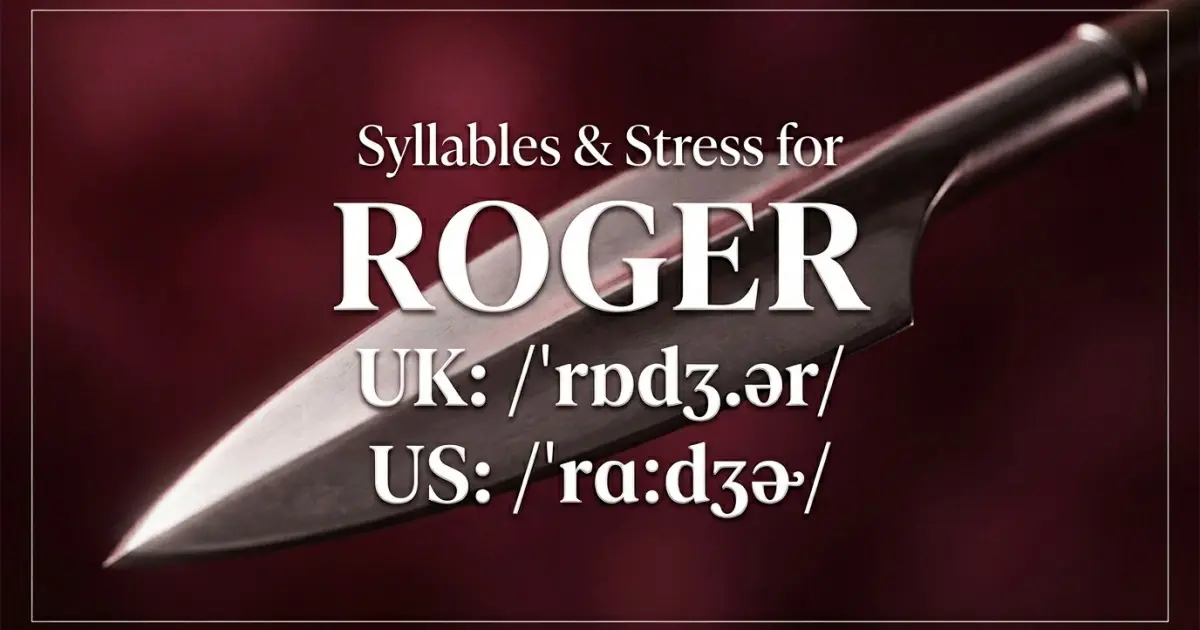
That is what makes Roger a good pronunciation study. It feels simple, but it is not flat. The everyday spelling guide for this profile is RO-jer, while the detailed sound map is /ˈrɑːdʒər/ in American English and /ˈrɒdʒə/ in British English. In ordinary life, most listeners will hear “Roger” as easy and familiar. But under the surface, the first vowel, the soft j sound, and the ending all do important work. Roger sounds settled because those parts cooperate so smoothly.
What Roger Is Actually Doing When You Say It
| Element | Phonetic Detail | Quick Tip |
|---|---|---|
| Everyday form | RO-jer | Use this as the practical guide, but remember the first syllable is broader in actual speech than the spelling might suggest. |
| IPA (U.S.) | /ˈrɑːdʒər/ | In American English, the opening vowel is closest to “rah,” not a pure long “oh.” |
| IPA (U.K.) | /ˈrɒdʒə/ | In British English, the first vowel is shorter and rounder, and the final r usually drops away. |
| Syllable count | 2 syllables | Roger should sound like one strong beat followed by one lighter beat, never like a single compressed word. |
| Stress | First syllable stressed | Say RO-jer, not ro-JER. |
| Opening sound | /r/ liquid consonant | Start clearly on the r; do not swallow it or add an extra vowel before it. |
| Middle sound | /dʒ/ affricate | The middle should sound like the j in “jar” or “judge,” not like a hard g. |
| Ending | U.S. /ər/, U.K. /ə/ or “uh” | American speech keeps a faint final r; British speech usually relaxes into a schwa. |
Roger in Everyday English Starts Broad and Softens Fast
The opening R gives Roger its social ease
Roger begins with /r/, a liquid consonant. Liquids are sounds that flow rather than strike, and that matters here. Roger does not begin with a hard stop like k or t. It begins with movement. That gives the name a smoother entry than many older masculine names. One reason Roger continues to sound civilized rather than severe is that its opening already softens the whole shape. Pronunciation lands more fully when the name’s roots and history are already in view, so begin with Roger meaning.
That smooth beginning also helps in real speech. A teacher, receptionist, or colleague can say Roger quickly without the name catching awkwardly in the mouth. It opens cleanly and moves forward almost immediately.
The first vowel is where the “RO-jer” spelling can mislead
The most important thing to understand is that the familiar spelling guide RO-jer is useful but not exact. In American English, the IPA /ˈrɑːdʒər/ means the first vowel is broader than a pure “roh.” It is closer to “rah” for many speakers. In British English, /ˈrɒdʒə/ makes that first vowel shorter and rounder, closer to the sound in “hot” or “lot” in many British accents.
This does not mean the practical guide is wrong. It means that respellings flatten real sound. Roger is one of those names that people can say correctly without thinking about the phonetics, but when you slow the sound down, the first syllable is richer than the spelling hint implies.
The middle consonant is a soft j, not a hard g
Roger contains the affricate /dʒ/, the same basic sound heard in words like “judge” and “bridge.” This is crucial. The name should not sound like “rog-ger” with a hard g. The middle consonant is softened and fused. That soft j sound is one reason Roger feels socially polished. It takes an old, martial-rooted name and gives it a more conversational center.
The result is a name that sounds mature but not rough. The opening liquid and the middle affricate work together to keep Roger from feeling too stiff or too blunt.
Roger Changes Slightly Between American and British Speech
American Roger keeps the final r
In American English, the standard form is /ˈrɑːdʒər/. The first syllable is broad, and the ending includes a rhotic r. That final sound is not usually emphasized heavily, but it remains audible. So an American Roger often sounds more like “RAH-jer” than “ROH-juh,” especially when spoken carefully.
This gives the American form a slightly fuller, heavier finish. It feels more anchored at the end because the final r keeps the name from fading out too quickly.
British Roger relaxes more at the end
In British English, the form /ˈrɒdʒə/ typically drops the final rhotic sound and ends in a schwa, the relaxed “uh” sound heard in many unstressed syllables. This makes British Roger sound a bit lighter and brisker. The name opens strongly, then releases more quickly.
This is a classic rhotic versus non-rhotic contrast. It does not create two completely different names, but it does subtly change the impression. American Roger sounds a little rounder and more grounded at the end. British Roger sounds slightly cleaner and more clipped.
Other language traditions do sound different, but this profile stays English
Historically, Roger has also been pronounced differently in French and German contexts, where the sound can move closer to forms like roh-ZHEH or ROH-jehr. Those are real traditional variants. But for this English-language profile, the working forms are the American and British pronunciations above. That is what most modern English-speaking readers and listeners will expect.
This distinction helps keep the page practical. Roger may be multilingual in history, but in everyday English it stays inside a fairly stable two-syllable pattern.
Where Roger Usually Gets Misheard or Mispronounced
The most common mistake is overtrusting the spelling guide
The most common issue with Roger is assuming that the first syllable is a clean, long “roh.” In actual English speech, especially in American English, the vowel is usually broader than that. The respelling is useful because it gets the stress and general shape right, but the IPA explains why the sound may not match the visual guide perfectly.
Another mistake is over-enunciating the two syllables so heavily that the name becomes stiff. Roger should flow. It is not supposed to sound like two disconnected blocks.
The second mistake is hardening the middle consonant
Roger should not be pronounced with a hard g as in “go.” The middle needs the affricate /dʒ/. If that soft j disappears, the whole character of the name changes. The easiest anchor is “judge.” Roger shares that same central consonant family.
Useful sound neighbors include “dodger,” “lodger,” and “roger” itself in radio speech. None of these is a perfect naming model in tone, but they help listeners hear the soft middle and the two-beat rhythm.
Practicing Roger Until It Sounds Natural in Real Life
How to build the name cleanly
The easiest way to practice Roger is to feel it in three steps: r + ah/oh + jer. In American English, let the first vowel open a little broader. In British English, keep it rounder and shorter. In both, the second syllable should be lighter than the first and should contain the soft j sound.
Useful practice lines include:
“Roger is here.”
“I spoke with Roger this morning.”
“Roger and Daniel are ready.”
“Please ask Roger to come in.”
Say these aloud and listen for two things: whether the first syllable carries the stress clearly, and whether the middle consonant sounds like j rather than hard g. If both are in place, the name usually sounds right.
Why Roger sounds so settled when spoken well
Roger works because its sounds moderate its meaning. Historically, it comes from a forceful image, but the pronunciation has been smoothed by centuries of use. The liquid opening, softened middle, and lighter second syllable all help the name sound socially established rather than aggressive. Roger is one of those names whose pronunciation does not merely label the person. It interprets the history for modern ears.