
Randolph Pronunciation: Speaking Tips for a Natural Sound
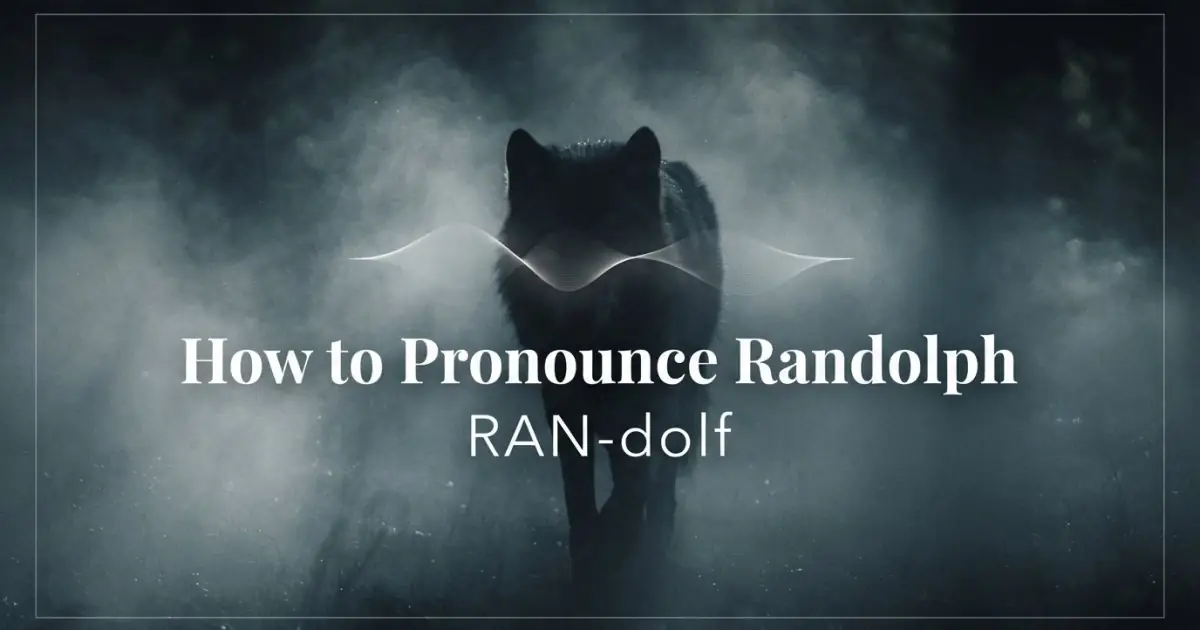
A receptionist sees Randolph on an appointment list and slows down near the ending. The first half looks familiar, but the cluster of letters in -dolph can invite an extra vowel, a misplaced stress, or an ending modeled on the word dolphin. The intended pronunciation is more compact: RAN-dolf. The name has two syllables, not three, and the first syllable carries the main emphasis.
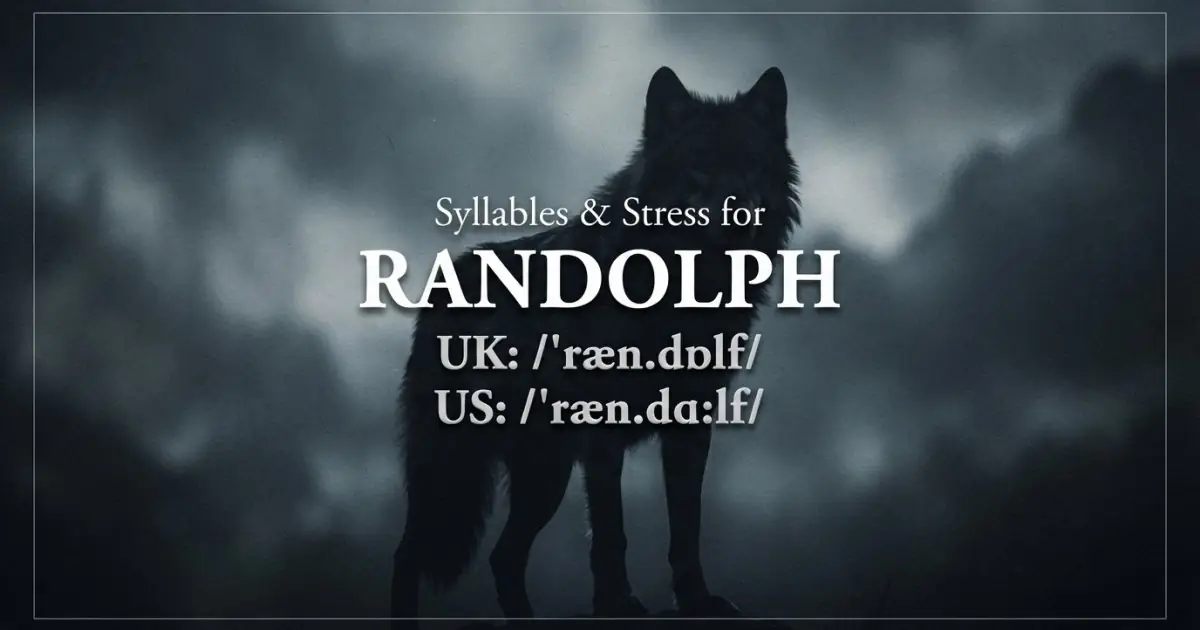
Both the supplied American and British IPA forms are /ˈrændɒlf/. The pronunciation begins with a clearly articulated r, moves through the stressed vowel in RAN, and closes with the dense but manageable sequence dolf. Randolph may look longer than it sounds because eight written letters are compressed into two strong movements: RAN-dolf.
How Randolph Compresses Eight Letters into Two Clear Beats
| Element | Phonetic Detail | Quick Tip |
|---|---|---|
| Everyday pronunciation | RAN-dolf | Stress RAN and keep the second syllable compact. |
| Syllable count | 2 syllables: RAN + dolf | Do not insert an extra vowel between the final consonants. |
| Primary stress | First syllable | The name begins at its strongest point: RAN-dolf. |
| U.S. IPA | /ˈrændɒlf/ | The stress mark appears before the opening syllable. |
| U.K. IPA | /ˈrændɒlf/ | The supplied British form keeps the same sound sequence and stress. |
| Opening vowel | /æ/ | Use the vowel heard in cat, hand, or ran. |
| Second vowel | /ɒ/ | Keep it short and rounded rather than turning it into a long oh. |
| Final consonants | /lf/ | Move directly from the liquid l into the voiceless f. |
Randolph Begins Openly and Ends with a Dense Consonant Close
The core rhythm is: The sound matters more once you know what the name is meant to carry, which is why the wider frame starts in Randolph meaning.
RAN-dolf
The capital letters show the stressed syllable. Randolph begins with a broad, clearly articulated first beat and then contracts into a shorter second syllable. The ending feels substantial because it contains several consonants, but it should not be stretched into another syllable.
The opening RAN carries the name’s main weight
The first sound is /r/, a liquid consonant. The exact tongue position may vary by accent, but the sound should begin cleanly rather than disappearing into a vague vowel. Because the strongest energy lands early, the shorter forms often grow from the opening of the name, and that pattern is easier to see in nicknames for Randolph.
The stressed vowel /æ/ is the sound heard in words such as cat, hand, and ran. This is the clearest anchor for the opening syllable:
RAN-dolf
The first syllable should not become RAIN, RON, or run. Keeping the vowel close to the word ran preserves the intended pronunciation.
The central D marks the shift into the second syllable
The /d/ begins the second syllable and acts as a hinge between the open first beat and the compact ending. It is a voiced stop consonant, produced by briefly blocking airflow with the tongue and releasing it while the vocal cords vibrate.
In careful speech, the boundary is easy to hear:
RAN + dolf
In natural conversation, the two parts should remain connected. An exaggerated pause can make Randolph sound overly formal or mechanical.
The final DOLF should stay compact
The second vowel is represented as /ɒ/. It should remain short rather than becoming the long oh heard in go. The syllable then moves through /l/, another liquid consonant, and closes with /f/, a voiceless fricative.
A fricative is created by forcing air through a narrow opening. For /f/, the lower lip approaches the upper teeth while the vocal cords remain still. The name should end clearly on that f sound:
RAN-dolf
There is no extra vowel after the final consonant. The name ends with f, not fuh.
Why Randolph Is Sometimes Given an Extra Syllable
Randolph contains a dense ending, and English speakers sometimes simplify difficult consonant clusters by inserting a brief vowel. That instinct can turn the intended two-syllable name into a three-syllable version.
RAN-duh-lolf adds a vowel that is not present
This reading separates the final consonants too aggressively and inserts an extra uh. Randolph has only two syllables:
RAN + dolf
A useful correction is: “The whole ending is one syllable: dolf.”
RAN-dol-uff releases the final F too heavily
Some speakers add a small vowel after the final /f/, especially when pronouncing the name slowly. The intended form ends immediately after the consonant.
Compare:
RAN-dol-uff — ending expanded
RAN-dolf — intended two-syllable form
ran-DOLF moves the stress too late
This version keeps the correct syllable count but emphasizes the ending. The primary stress belongs on the first syllable:
RAN-dolf
The second syllable remains audible and firm, but it should not overpower the opening.
RAIN-dolf changes the first vowel
The opening should not use the diphthong heard in rain. Randolph begins with the shorter vowel in ran.
A concise correction is: “RAN, like the past tense of run.”
RAN-dohlf lengthens the second vowel
The second syllable should not contain a long oh. Keep the vowel short and move quickly into the final lf cluster.
Randolph Remains Structurally Stable Across U.S. and U.K. English
The supplied American and British IPA forms are identical: /ˈrændɒlf/. Both preserve two syllables, first-syllable stress, the /æ/ vowel in the opening, and the compact /ɒlf/ ending.
Regional accents may shade the vowels differently
Actual vowel quality can vary slightly from one English accent to another. Some speakers may produce the opening or second vowel with a somewhat different mouth shape, even while following the same overall pronunciation.
Those differences do not alter the essential structure. Randolph remains RAN-dolf, with the first syllable stressed and no added vowel inside the ending.
The final consonant sequence should remain intact
Across accents, the most important practical feature is the compact ending. The /l/ should flow directly into /f/. Speakers do not need to exaggerate the cluster, but both consonants should remain recognizable.
Dropping the /l/ can make the ending sound closer to doff, while adding a vowel can create a third syllable. The intended middle path is a smooth but complete dolf.
Sound Anchors Make Randolph Easier to Remember
Randolph can be learned through several familiar cues:
- RAN sounds like the word ran.
- The opening syllable receives the primary stress.
- dolf is one compact syllable.
- The final f closes the name without an added vowel.
- The full name has two syllables despite its eight-letter spelling.
The simplest memory line is:
RAN + dolf = RAN-dolf
The formula helps establish the syllables, but the name should flow naturally once the pattern is familiar.
Practice Randolph in Introductions and Everyday Speech
Build Randolph in three steps
- Say RAN with the main stress.
- Say dolf as one compact syllable.
- Join them smoothly: RAN-dolf.
Use Randolph in natural sentences
- “This is Randolph.”
- “Randolph will be joining the class today.”
- “Have you met Randolph?”
- “Please give the folder to Randolph.”
- “Randolph is waiting near the entrance.”
- “We saved a seat for Randolph.”
Keep pronunciation corrections brief
- “It’s pronounced RAN-dolf.”
- “The first syllable sounds like the word ran.”
- “The stress is on RAN.”
- “Dolf is one syllable.”
- “It has two syllables, not three.”
Randolph may look more complicated than it sounds because the final letters create a dense visual cluster. Once the ending is kept together and the opening stress is established, the pronunciation is direct, stable, and easy to repeat.
Common Questions About Pronouncing Randolph
How do you pronounce Randolph?
Randolph is pronounced RAN-dolf. It has two syllables, with the primary stress on the first.
How many syllables are in Randolph?
Randolph has two syllables: RAN + dolf.
Which syllable is stressed in Randolph?
The first syllable carries the primary stress: RAN-dolf.
Is the ending of Randolph one syllable or two?
The ending dolf is one syllable. No extra vowel should be inserted between or after the final consonants.
Do American and British speakers pronounce Randolph differently?
The supplied U.S. and U.K. IPA forms are identical: /ˈrændɒlf/. Regional accents may shade the vowels slightly differently, but the two-syllable structure and first-syllable stress remain unchanged.