
Paisley Pronunciation: Speaking Tips for a Smoother Guide
Paisley is the kind of name that gets tested in ordinary life almost immediately. A teacher says it from a roster on the first day of school. A receptionist repeats it back over the phone. A grandparent reads it off a card and decides in one second whether it feels natural in the mouth. That is where pronunciation really matters. A name can look stylish on paper and still feel awkward once spoken aloud. Paisley usually passes that test because its rhythm is clear, its sounds are familiar, and the stress falls exactly where most English speakers expect it to.
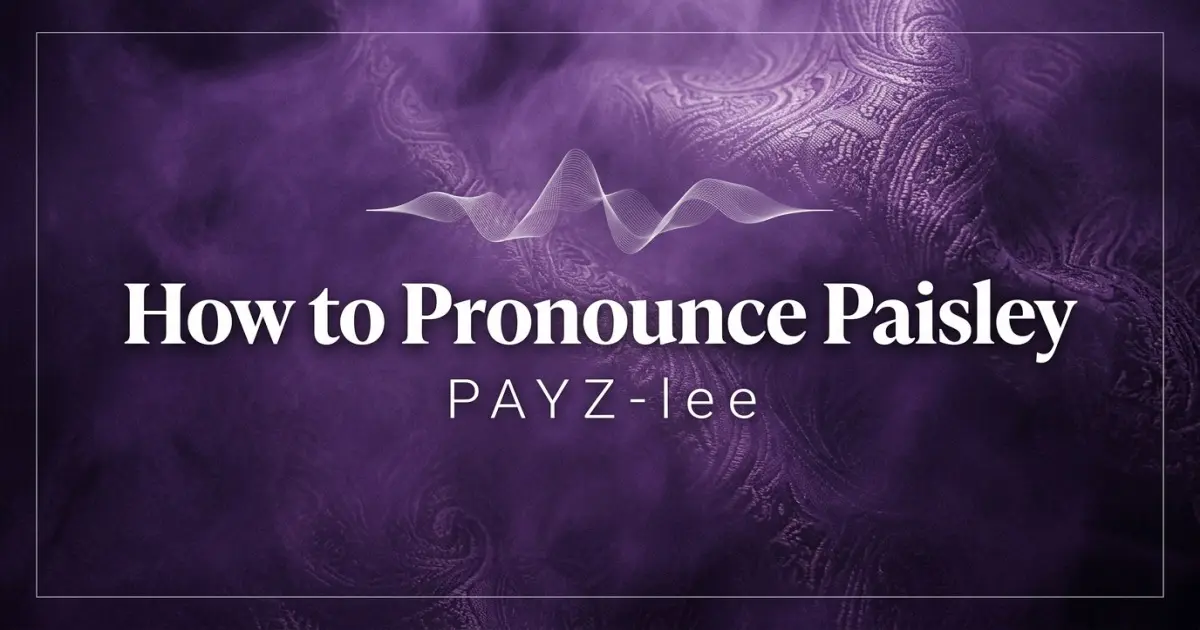
The practical everyday form is PAYZ-lee. The first syllable carries the stress, the middle consonant gives the name its little spark, and the second syllable finishes softly. That combination is a large part of why the name feels so socially easy. Paisley does not require guesswork once it is heard. It has brightness at the front and softness at the end, which keeps it sounding lively instead of sharp and modern instead of mechanical.
What Paisley’s pronunciation is really clearing up
| Element | Phonetic Detail | Quick Tip |
|---|---|---|
| Everyday pronunciation | PAYZ-lee | Start with a strong pay sound, then let the second syllable land lightly. |
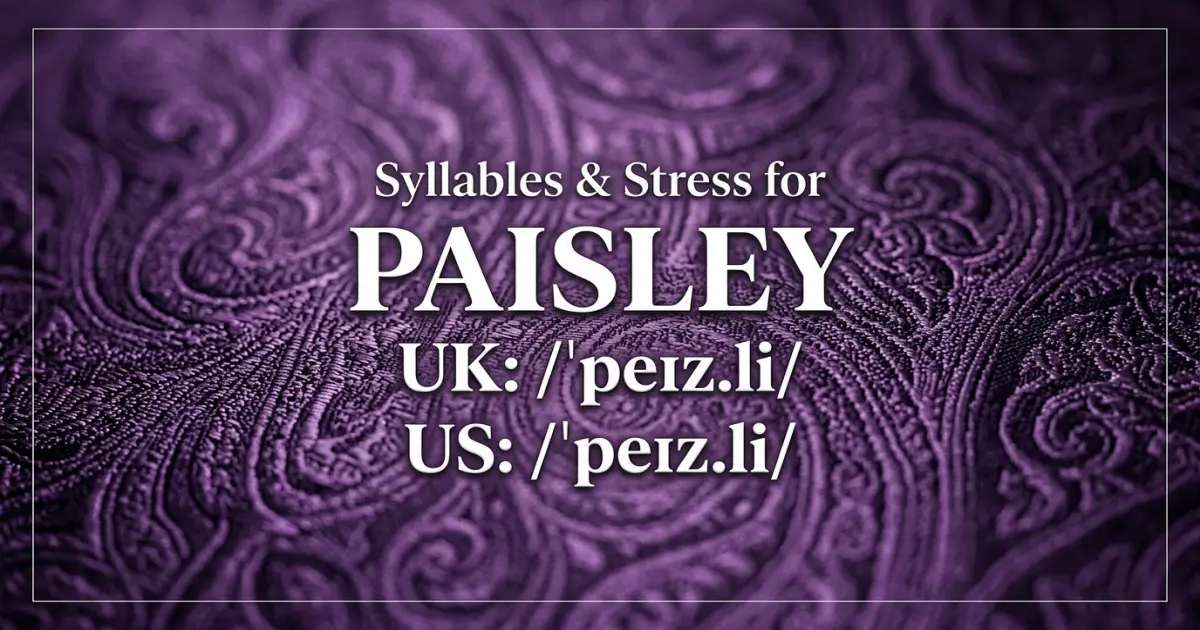
| IPA (US) | /ˈpeɪzli/ | The stress mark shows the first syllable does the main work. |
| IPA (UK) | /ˈpeɪzli/ | The structure is the same in standard British and American pronunciation. |
| Syllable count | 2 syllables | Think of one bright stressed beat followed by one softer finishing beat. |
| Primary stress | First syllable | If the opening is weak, the name loses the crispness that makes it sound so easy. |
| Key consonants | Voiced fricative z plus liquid l | The z gives Paisley its sparkle; the l keeps the ending smooth. |
| Ending texture | Light -lee finish | Do not hit the last syllable too hard; it should soften the name rather than compete with it. |
How Paisley moves in ordinary speech
Paisley sounds easier than it looks because its sound pattern is highly natural in English. The first syllable opens with a long a vowel, like the word “pay,” which immediately gives the name brightness. Then comes the voiced z in the middle. A voiced fricative is simply a consonant made with a smooth buzzing sound, and that buzz is part of what makes Paisley feel lively rather than plain. The last syllable, -lee, ends with a liquid l sound, which softens the exit and keeps the whole name from sounding abrupt. Before focusing only on syllables and stress, it helps to step back into the fuller frame of Paisley meaning.
Why the first syllable matters most in Paisley
The main stress belongs on PAYZ. That is the anchor of the name. If the opening syllable is clear and confident, the rest falls into place quickly. This is one reason Paisley works well in everyday life. Speakers do not usually have to hunt for the rhythm. The name tells them where to begin and where to lean.
That first stressed beat also does a lot of the social work. It gives Paisley energy without making it aggressive. A weaker opening would make the name feel blurrier. A harsher opening would make it feel more brittle. Paisley lands in a useful middle: bright, but not harsh.
The second syllable should finish, not dominate
The ending -lee is essential, but it should be lighter than the first part of the name. It gives Paisley warmth and familiarity, but it should not sound as though it is carrying equal weight. When both syllables are stressed too evenly, the name starts to feel choppier and less natural.
The best version has a clear front and a soft landing. That pattern is what makes Paisley sound polished rather than overly patterned. The sound should move forward cleanly, not bounce in place.
Paisley in IPA, stress, and accent
The supplied IPA for both American and British English is /ˈpeɪzli/. For most parents, the most useful thing in that transcription is the stress mark. It confirms that the first syllable is the strongest. After that, the rest of the notation supports what the ear already expects: a long opening vowel, a clear z in the middle, and a lighter ending.
Paisley changes very little across major English accents
Some names divide noticeably between American and British speech. Paisley usually does not. The overall structure stays the same: strong first syllable, soft second syllable, no hidden consonants, no ambiguous stress. Accent may color the vowels slightly, but most listeners will still hear the same name with the same basic rhythm.
That stability is a practical advantage. It means Paisley travels well. Families do not usually have to choose between a formal pronunciation and a casual one, or between an American and British version that feel meaningfully different. The name remains recognizable and natural across settings.
Why Paisley sounds modern without sounding flimsy
Paisley feels current not because it is hard-edged, but because it is compact and clear. The voiced z keeps the name from sounding too soft, while the -lee ending keeps it from sounding too sharp. That balance gives the name a modern brightness. It sounds stylish, but it is not fragile in the mouth.
Linguistically, you could say Paisley combines an energetic center with a gentle finish. Socially, that translates into a name that sounds friendly and memorable at the same time. It is easy to say, but it does not disappear.
Where people usually get Paisley wrong
Paisley is not a difficult name, but there are a few predictable ways speakers can go off course. Most of them happen when people either flatten the first vowel or overwork the ending.
Flattening the opening weakens Paisley first
The first thing to avoid is shortening or dulling the opening vowel. Paisley should begin with PAY, not with a flatter sound closer to peh or anything more muted. The long a is part of what makes the name sound bright and socially easy. If that disappears, the name loses much of its identity.
Over-stressing the ending makes it sound more sing-song
Another mistake is giving too much weight to the -lee ending. The last syllable should be clear, but lighter than the first. If both syllables are pronounced with equal punch, Paisley can start to sound more juvenile or overly stylized. The best version lets the second syllable finish the name rather than compete with it.
Rushing the middle can hide the name’s most distinctive sound
The z in the middle gives Paisley much of its sparkle. When speakers rush, that sound can blur. The name is still usually understandable, but it loses some of its vividness. You do not need to exaggerate the consonant. You just should not swallow it.
Paisley beside its sound neighbors
It helps to hear Paisley next to nearby names. Hadley shares a similar modern two-syllable structure, but its consonants make it feel less vivid and a little more grounded. Kinsley and related names share the bright ending pattern, but often sound more trend-driven because their openings are less distinctive. Presley has some of the same surname-style energy, though the opening cluster gives it a different texture. Paislee and other spelling variants usually keep the same pronunciation, even when the visual tone changes. Because the strongest energy lands early, the shorter forms often grow from the opening of the name, and that pattern is easier to see in Paisley nicknames.
What makes Paisley distinct is the combination of the open pay beginning and the buzzing z center. That pair gives it more internal motion than some neighboring names. It sounds decorative in a good way: textured, but still easy to pronounce.
How to practice Paisley until it feels automatic
The easiest way to settle Paisley into the mouth is not to repeat it abstractly, but to place it into the kinds of phrases where names actually live. Pronunciation gets easier when rhythm becomes ordinary.
Three useful practice lines for Paisley
Paisley is here.
Paisley Jane Morgan.
Hello, Paisley.
These lines help because they test the name in greeting, in a full-name combination, and in direct address. If the first syllable stays bright, the z remains audible, and the ending softens naturally, the pronunciation is doing exactly what it should.
The easiest memory cue for Paisley
If you want one quick memory guide, keep this: PAYZ-lee. Think “pay” plus “zlee,” with the first part stronger than the second. That is the pattern most English speakers already expect, and it is the one that keeps Paisley sounding bright, clear, and unmistakably itself.