
Nicknames for Olivia: Sweet Short Forms for Everyday Use
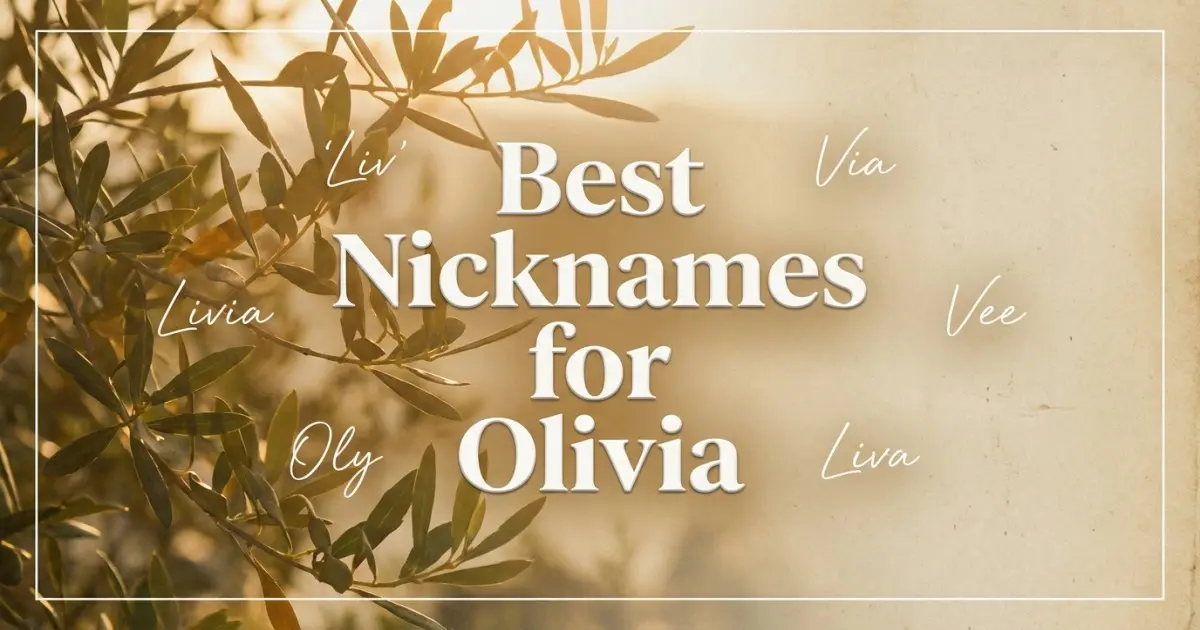
A nickname is rarely just a shorter version of a name. More often, it is the version that appears when other people step closer. Teachers use one kind, cousins another, grandparents another still. A nickname can signal ease, affection, mischief, status, or simply the speed of everyday life. It often reveals what part of a name people instinctively hold onto when they know the person behind it. That is why nicknames matter more than they first appear to matter. They are not just cute add-ons. They are social shorthand. They show which version of a child the world begins to recognize.
That makes Olivia especially interesting. Official data shows Olivia is one of the most publicly established girls’ names in current U.S. use, so the nickname often becomes the place where individuality re-enters the picture. The full name is polished, familiar, and widely understood. The nickname is where warmth, play, and personality start to change the silhouette. With Olivia, that process works unusually well because the name contains several distinct sound pockets. It can become brisk, sweet, playful, or quietly modern depending on which part people shorten. In other words, Olivia does not produce only one obvious nickname. It produces a small social vocabulary. Nicknames add personality at the surface, but the deeper weight of the name still sits in Olivia meaning.
What Olivia’s nickname landscape reveals at a glance
Olivia has more than one believable shortening because different parts of the name give off different moods. Some feel classic and inevitable. Others sound playful or family-made. The most durable choices are the ones that still feel like they belong to the full name rather than floating too far away from it.
| Group | Suggested Nicknames | Persona | Use Context |
|---|---|---|---|
| Classic everyday | Liv, Livvy, Livi | Warm, easy, widely intuitive | Family, school, close friends, daily introductions |
| Opening-sound playful | Ollie, Oli | Sporty, lively, a little tomboyish | Home use, sibling nicknames, casual social circles |
| Ending-sound airy | Via, Vivi | Light, stylish, slightly more distinctive | Creative circles, family pet names, self-chosen teen nicknames |
| Short and cool | Liv | Clean, modern, self-possessed | Older child, teen years, professional-friendly casual use |
| Affectionate home-made | Livs, Livvie-girl, O, V | Private, intimate, family-specific | Inside-family use rather than public everyday naming |
Olivia breaks naturally into three nickname zones
The opening zone gives Olivia its bouncier nicknames
The first zone is the opening sound: O- / Ol-. This is where Oli and Ollie come from. These are not the most formal shortenings, but they are believable because they capture the energetic front of the name. Ollie in particular gives Olivia a more playful, sporty, and slightly less polished social face. It often feels younger than the full name, which is part of its appeal. For toddlers, siblings, and parents who like nicknames with a bit of bounce, Ollie can feel spontaneous and affectionate.
That said, opening-sound nicknames for Olivia are usually more informal than enduring. They work best when the family enjoys a nickname that feels lived-in rather than elegant. A child may be Ollie at home and Olivia everywhere else. That is a perfectly realistic pattern. The key is that Ollie sounds like a social pet form, not necessarily the nickname most strangers would invent on first meeting.
The stressed center is where Olivia’s strongest nicknames live
The second zone is the heart of the name: LIV. Because this is the stressed syllable, it carries the most natural nickname weight. This is where Liv, Livvy, and Livi come from, and these are the most stable Olivia nicknames by far. They sound intuitive because they grow from the strongest part of the name rather than from its edges. These nickname choices read more clearly once the spoken shape of the full name is in view, so see Olivia pronunciation guide.
Liv is the cleanest and most durable of the group. It feels modern, capable, and surprisingly versatile. A child can wear Liv in kindergarten, in university, or in a professional setting without the nickname feeling outgrown. Livvy is softer and younger, often used by family or close friends. It carries more sweetness and movement, which makes it especially common in early childhood. Livi sits somewhere between the two: affectionate but not overly juvenile. It is friendly, plausible, and easy to imagine crossing from childhood into the teen years.
The ending gives Olivia its lightest and rarest options
The third zone is the ending: -via. This is where Via and sometimes Vivi emerge. These nicknames are less automatic than Liv, but they can feel fresh and stylish because they pull from a part of the name that many people ignore. Via is the more elegant of the two. It sounds light, modern, and a little more design-conscious. Vivi is cuter and more decorative, often better as a family pet name or a self-invented nickname among friends.
Ending-based nicknames tend to be most successful when they arise organically. They can sound wonderful on the right child, but they usually need a social reason to stick: a sibling who cannot say Olivia yet, a family phrase that shortens naturally, or a girl who simply prefers the feel of Via to Liv.
Why Liv is Olivia’s most durable short form
Liv keeps the strength of the full name
Every long name has one shortening that feels especially inevitable. For Olivia, that is Liv. The reason is structural, not just fashionable. Liv comes from the stressed center of the name, which means it preserves the name’s strongest sound. It also retains much of Olivia’s character: concise, feminine, polished, and quietly self-possessed. Liv does not feel like a joke, a baby word, or a private in-house abbreviation. It feels like a genuine alternate register of the same identity.
This matters because some nicknames survive only in childhood. Liv is not one of them. It has enough sharpness and dignity to function almost like a separate public name. A girl might be Olivia on official paper, Liv to her peers, and still sound completely coherent across both settings. That is one reason Liv appeals to parents who want nickname flexibility without sacrificing seriousness.
Livvy and Livi soften Olivia without losing it
Where Liv sounds pared down, Livvy and Livi keep more overt warmth. Livvy is especially affectionate. It sounds like something spoken by parents, cousins, and early school friends. Livi is slightly neater and often easier to imagine lasting longer. Both work because they still sit close to the core of Olivia. They do not ask listeners to decode a big jump from full name to nickname.
For many families, this becomes a natural progression: Livvy in toddlerhood, Livi in middle childhood, Liv in adolescence or adulthood. It does not have to unfold that way, of course, but Olivia is one of those names that allows age-based nickname evolution without strain.
Olivia nicknames change as the child grows
Early childhood tends to favor softness and repetition
In the early years, nicknames are often chosen less for style than for mouth-feel. Repeated sounds, bouncing endings, and cheerful rhythm matter more than sleekness. That is why Livvy, Livi, Ollie, and Vivi often belong most naturally to infancy and early childhood. They are easy to call across a room, easy for siblings to imitate, and rich in affection.
At this stage, the nickname may also come from mispronunciation or family habit rather than strategy. Some of the most believable nicknames are simply what a household ends up saying often enough that it sticks.
Older Olivias often move toward cleaner forms
As children grow, nicknames usually simplify. Friends prefer speed. Teenagers often want a form that feels more self-directed. Adults tend to keep what sounds easy without sounding babyish. That is where Liv becomes especially strong, and where Via can sometimes appear as a more stylized choice. Olivia is well suited to this shift because the full name remains elegant while the short form can become leaner and cooler.
This is worth considering from the start. A nickname does not need to be permanent, but it helps when a name offers more than one believable stage of familiarity. Olivia does.
Which Olivia nicknames actually feel human in daily life
The best nickname advice is usually the least theatrical. Not every clever shortening will survive ordinary use. With Olivia, the most realistic public options are Liv, Livvy, Livi, and sometimes Ollie. Via can work, but often feels more selective and personality-dependent. Vivi, O, or V are better understood as private family forms rather than everyday public names.
That does not mean families should avoid homemade nicknames. Quite the opposite. Private nickname language is part of how intimacy forms. The only useful caution is to separate affectionate household language from realistic social identity. A name can absolutely support both. Olivia is particularly good at this because the full form is strong, while the nickname pool is broad enough to allow mood, age, and closeness to shape which version appears.
In the end, Olivia’s nickname strength comes from the same thing that makes the full name durable: structure. The name has enough length to invite shortening, enough rhythm to make those shortenings memorable, and enough internal variety to support more than one social version. That is why Olivia can be polished in public, playful at home, and quietly distinctive among people who know her well.